
BLS Exam: Complete 2026 October Guide to Passing Your Basic Life Support Certification Test
Master the BLS exam with our 2026 October guide covering AHA & Red Cross formats, 🧠 pass rates, study tips, free practice questions, and renewal requirements.
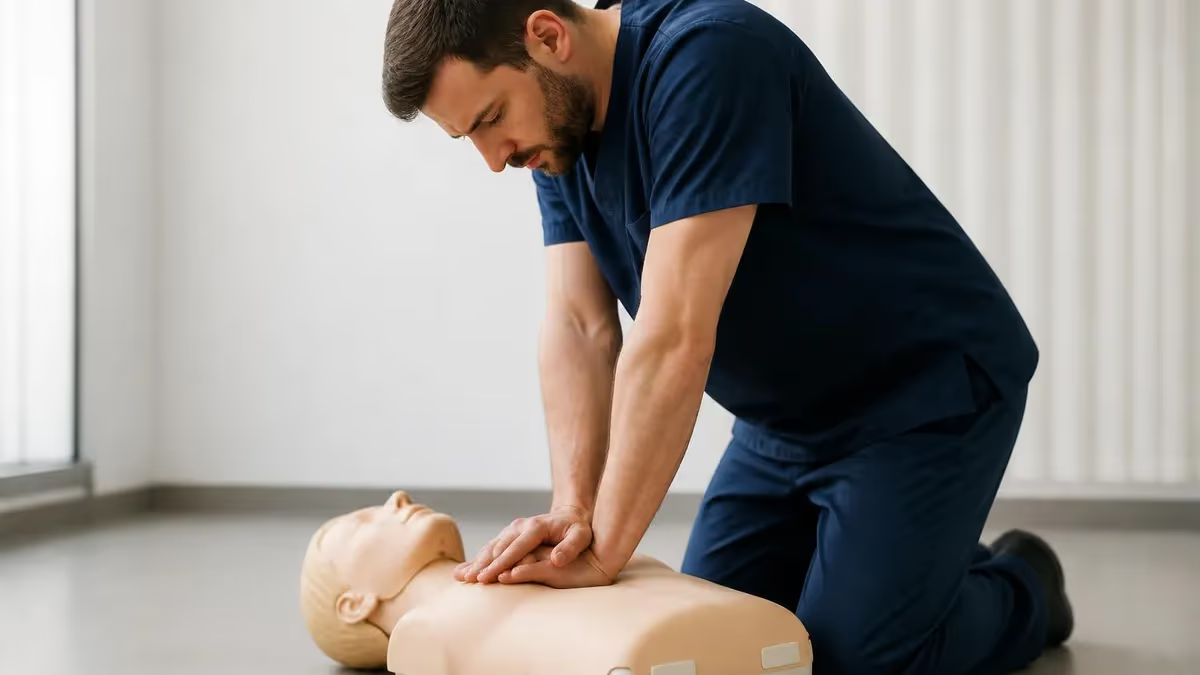
The bls exam is the final hurdle between healthcare providers and the credential that proves they can deliver life-saving care during cardiac arrest, choking, and respiratory emergencies. Whether you are taking the test for the first time as a nursing student or recertifying for the fifth time as a seasoned ICU nurse, the exam structure remains consistent: roughly 25 multiple-choice questions, a passing score of 84 percent or higher, and a hands-on skills evaluation that verifies you can perform high-quality CPR on adult, child, and infant manikins under pressure.
Understanding what is a bls certification helps clarify why the exam carries so much weight in clinical hiring decisions. BLS is the foundational credential required by hospitals, ambulance services, dental offices, physical therapy clinics, and most allied health programs across the United States. Without an active BLS card, you cannot legally function in patient-facing roles at the vast majority of accredited healthcare facilities, which is why understanding the test inside and out is non-negotiable for clinical career progression.
The two dominant providers are the American Heart Association and the American Red Cross, and while their content is functionally identical because both organizations follow the same International Liaison Committee on Resuscitation guidelines, the exam delivery, question style, and skills checklist differ in small but meaningful ways. Knowing is bls and cpr the same is also a common point of confusion, since the answer depends on which version of CPR you mean and which audience the training targets.
This guide walks through every component you will encounter on test day, including the precompulsory online cognitive portion, the in-person skills station, the algorithm-based scenario questions, and the team dynamics assessment that trips up more candidates than any other section. We will also cover the question types most commonly missed, such as questions about chest compression depth on infants versus adults, the correct ventilation rate during two-rescuer CPR with an advanced airway, and switch timing during the two-rescuer cycle.
You will learn the exact passing thresholds for both AHA and Red Cross, how to register, what to bring, how long the certification lasts, and what to do if you fail. We will also highlight the most efficient two-week study plan that has helped thousands of working clinicians pass on their first attempt despite hectic schedules, plus three practice quizzes drawn directly from current exam blueprints so you can identify your weak spots before they cost you a retake fee.
If you have already booked your test date and are looking for last-minute prep, skip to the practical tips section near the end. If you are still researching which provider to choose or wondering whether your employer will accept an online-only certificate, the early sections will give you the comparison data you need to make a confident decision before you spend any money on training materials.
BLS Exam by the Numbers
Key Facts at a Glance
| Item | Value | Details |
|---|---|---|
| Minimum Passing Score | 84% | AHA cognitive exam threshold |
| Multiple-Choice Questions | 25 | Standard test length |
| Certification Validity | 2 yrs | Both AHA and Red Cross |

BLS Exam Format Breakdown
| Section | Questions | Time | Weight | Notes |
|---|---|---|---|---|
| Cognitive Multiple Choice | 25 | 30 min | 60% | Open-book equivalent in blended format |
| Adult CPR & AED Skills | 1 | 15 min | 15% | Manikin-based skills station |
| Infant CPR Skills | 1 | 10 min | 10% | Two-thumb encircling technique required |
| Bag-Mask Ventilation | 1 | 10 min | 10% | Two-rescuer scenario |
| Choking Relief | 1 | 10 min | 5% | Conscious adult and infant |
| Total | 25 | 75 minutes | 100% |
When students compare the basic life support exam american heart association version with the Red Cross alternative, the surface-level differences are minimal but the practical implications can shape whether your employer accepts your card on day one. The AHA has historically dominated hospital credentialing because its course was the first nationally standardized program, and most credentialing offices still default to AHA language in their job descriptions even when they technically accept Red Cross equivalents.
The aha basic life support exam uses a 25-question multiple-choice format delivered online for blended learners or paper-based for full classroom courses. Questions are scenario-driven and often present a vignette such as a 56-year-old male who collapsed in a grocery store followed by a question about your next immediate action. The Red Cross uses 35 questions delivered through their digital learning platform, with a passing threshold of 80 percent rather than the AHA 84 percent benchmark.
Knowing what does bls stand for, basic life support, helps frame why both programs emphasize the same core competencies: scene safety, early recognition of arrest, activation of emergency response, high-quality chest compressions, early defibrillation, and effective ventilation. The differences come down to terminology preferences, the order in which topics are introduced during training, and minor variations in the skills checklist scoring criteria used by instructors during the in-person evaluation portion.
One area where students get confused is the question of whether is bls the same as cpr. The short answer is that BLS includes CPR but goes beyond it by adding team dynamics, AED operation, two-rescuer techniques, bag-mask ventilation, and choking algorithms for all age groups. A community CPR class teaches the compression and breath portion, while BLS prepares healthcare workers to function as part of a resuscitation team in a clinical environment with adjuncts and advanced airways present.
For healthcare providers wondering about the credential timeline and renewal options, our guide on basic life support for healthcare providers covers the two-year cycle, the grace period rules, and the exact differences between initial and renewal course content. Renewal courses are shorter because they assume mastery of fundamentals and focus instead on guideline updates, algorithm changes, and skills refresh.
Cost-wise, AHA classroom courses typically run between 80 and 110 dollars depending on training center markup, while Red Cross courses fall in a similar range. Online-only courses without a skills check are cheaper, often around 30 to 50 dollars, but these are not accepted for clinical credentialing in most states because they lack the hands-on skills verification component that hospital privileging committees require for patient-facing employees.
Both providers issue digital certification cards that can be verified online by employers through a unique e-card ID number, eliminating the old paper-card fraud problem that plagued the industry for decades. Your card becomes available within 24 hours of completing the skills check, and you can download it as a PDF or share a verification link directly with your human resources department for credentialing files.
BLS Practice Test Questions
Prepare for the BLS - Basic Life Support exam with our free practice test modules. Each quiz covers key topics to help you pass on your first try.
BLS High-Quality CPR & Provider Skills
BLS Exam Questions covering BLS High-Quality CPR & Provider Skills. Master BLS Test concepts for certification prep.
BLS Special Situations & Scenarios
Free BLS Practice Test featuring BLS Special Situations & Scenarios. Improve your BLS Exam score with mock test prep.
BLS Adult, Child & Infant Resuscitation
BLS Mock Exam on Adult, Child & Infant Resuscitation. BLS Study Guide questions to pass on your first try.
BLS Airway Management & Ventilation
BLS Test Prep for Airway Management & Ventilation. Practice BLS Quiz questions and boost your score.
BLS Automated External Defibrillator (AED)...
BLS Questions and Answers on Automated External Defibrillator (AED) Use. Free BLS practice for exam readiness.
BLS Certification: Cardiac Arrest
BLS Mock Test covering Certification: Cardiac Arrest. Online BLS Test practice with instant feedback.
BLS Certification: Choking
Free BLS Quiz on Certification: Choking. BLS Exam prep questions with detailed explanations.
BLS Certification: Respiratory Arrest
BLS Practice Questions for Certification: Respiratory Arrest. Build confidence for your BLS certification exam.
BLS Chain of Survival
BLS Test Online for Chain of Survival. Free practice with instant results and feedback.
BLS CPR Techniques & Procedures
BLS Study Material on CPR Techniques & Procedures. Prepare effectively with real exam-style questions.
BLS Legal & Ethical Considerations
Free BLS Test covering Legal & Ethical Considerations. Practice and track your BLS exam readiness.
BLS Post-Resuscitation Care
BLS Exam Questions covering Post-Resuscitation Care. Master BLS Test concepts for certification prep.
What the Basic Life Support Exam Covers
The adult portion of the exam tests your ability to recognize cardiac arrest within 10 seconds, activate emergency response, and initiate compressions at a rate of 100 to 120 per minute with a depth of at least 2 inches but no more than 2.4 inches. You will be evaluated on minimizing interruptions, allowing full chest recoil, and switching compressors every two minutes to prevent fatigue-induced quality decline.
Questions also cover AED use including pad placement, the importance of resuming compressions immediately after a shock, and the modifications needed for hairy chests, pacemakers, and transdermal medication patches. Expect at least two questions about compression-to-ventilation ratios in single-rescuer versus two-rescuer adult scenarios, where the 30:2 ratio shifts to continuous compressions once an advanced airway is in place.

Online vs In-Person BLS Exam: Which Is Right for You?
- +Flexible scheduling around clinical shifts and family obligations
- +Self-paced cognitive portion allows mastery before testing
- +Lower cost for blended learning compared to full classroom courses
- +Identical certification card valid for two full years
- +Digital verification accepted by hospital credentialing offices
- +Reduces travel time for rural healthcare professionals
- +Faster completion for experienced providers who only need refresh
- −Skills station still requires in-person manikin evaluation
- −Online-only courses without skills check are not employer-accepted
- −Technical issues during proctored exam can delay completion
- −Less peer learning and team-practice opportunity than classroom
- −Requires reliable webcam and stable internet for proctored portion
- −Some employers explicitly require classroom-only initial certification
- −Self-discipline needed to complete cognitive modules thoroughly
Pre-BLS Exam Day Checklist
- ✓Complete the entire online cognitive module at least 48 hours before your skills test
- ✓Print or save your precourse completion certificate to show your instructor
- ✓Review the current AHA Highlights of the 2020 Guidelines PDF one final time
- ✓Practice 30:2 compressions on a pillow at home to build muscle memory
- ✓Memorize the BLS algorithm flowcharts for adult, child, and infant arrest
- ✓Bring a government-issued photo ID and your registration confirmation email
- ✓Wear comfortable clothing that allows kneeling and bending over manikins
- ✓Eat a balanced meal and hydrate well two hours before your scheduled time
- ✓Arrive 15 minutes early to complete sign-in paperwork without rushing
- ✓Bring a pen, your reading glasses if needed, and a water bottle for breaks

Practice questions are the single strongest predictor of passing on the first attempt
Students who complete at least 100 practice questions before sitting for the bls exam pass at a rate of 92 percent on their first attempt, compared to just 67 percent for those who rely solely on the course textbook. Spaced repetition over 7 to 14 days outperforms cramming, and reviewing rationales for incorrect answers builds the pattern recognition needed for vignette-style questions during the live test.
The skills station portion of the bls exam intimidates more candidates than the written test, even though the actions being evaluated are simple in concept. Instructors use a standardized checklist with discrete pass-fail criteria for each skill, and missing even one critical action results in a remediation requirement. Critical actions include assessing scene safety, checking for responsiveness, calling for help, palpating a carotid pulse for no more than 10 seconds, and initiating compressions within the first 10 seconds of recognizing arrest.
For adult single-rescuer CPR, you will be expected to perform two minutes of high-quality compressions at the correct rate and depth, deliver effective breaths using a pocket mask, and demonstrate proper hand placement at the lower half of the sternum. The instructor uses a feedback device on the manikin that records your actual compression rate and depth in real time, eliminating subjective scoring and making it impossible to fake adequate performance. Pacing your compressions to the beat of Stayin Alive at 103 beats per minute is the time-tested mnemonic that delivers reliable results.
Two-rescuer adult CPR requires demonstrating smooth switch timing between compressor and ventilator every two minutes, with switches taking less than five seconds to minimize the interruption in chest compressions. You must also demonstrate proper bag-mask ventilation technique using the E-C clamp grip with one hand while the other squeezes the bag to deliver a one-second breath that produces visible chest rise without overinflating the lungs and causing gastric insufflation.
The infant skills station tests the two-thumb encircling technique for two-rescuer scenarios and the two-finger technique for single-rescuer scenarios. Compression depth should be approximately one and a half inches, and the compression-to-ventilation ratio is 15:2 with two rescuers but 30:2 with a single rescuer. You will also demonstrate infant choking relief using five back slaps followed by five chest thrusts on a conscious infant manikin, repeating until the object is dislodged or the infant becomes unresponsive.
AED skills are evaluated by your ability to power on the device, attach pads correctly without delay, clear the patient during analysis and shock delivery, and resume compressions immediately after a shock is delivered or no shock is advised. Common point deductions occur when candidates pause too long after a shock waiting for the AED to give further instructions rather than immediately resuming compressions for the next two-minute cycle.
The bag-mask ventilation station is often where unexpected failures occur. Many test-takers compress the bag too quickly or too forcefully, producing pressures high enough to push air into the stomach instead of the lungs. The correct technique is a smooth one-second squeeze delivering approximately 500 to 600 milliliters of volume, just enough to produce visible chest rise without exceeding it. Practice this with a study partner observing your bag squeeze duration before the exam.
Neither the AHA nor the Red Cross offers an official grace period after your certification expiration date. If your card expires on June 1, you are technically uncertified on June 2, which can lead to suspension from clinical duties at strict employers. Schedule your renewal course at least 30 days before expiration to avoid lapses, and confirm your hospital's specific policy on expired credentials.
Renewing your BLS certification is significantly easier than the initial credentialing process because the renewal course assumes you already understand the fundamentals and focuses instead on guideline updates, algorithm refresh, and skills verification. Renewal courses typically run two to three hours rather than the four to five hours required for initial certification, and the cognitive test contains fewer questions targeting the most commonly missed concepts from the previous edition rather than covering the entire curriculum from scratch.
Both major providers allow renewal up to 30 days before your current card expires, with the new two-year validity period starting from the date of renewal rather than the original expiration date. This means renewing early does not cost you any certification time, so there is no reason to wait until the last minute. Many healthcare employers track BLS expiration dates through their learning management system and send automated reminders 60 and 30 days before the deadline to help staff plan ahead.
If your card has already expired, you must take the full initial certification course rather than the abbreviated renewal version, and you should expect to be removed from the clinical schedule until your new card is issued. Some employers will allow a brief administrative leave to complete renewal, but others treat expired credentials as a hard stop on patient-facing work. The financial cost of a lapsed certification often exceeds the time investment of timely renewal by a significant margin.
For those exploring options beyond the AHA, the american red cross basic life support program offers an equally valid alternative that is accepted by most US hospitals. The Red Cross digital platform is often praised for its modern user interface, mobile responsiveness, and integrated practice questions woven throughout the course modules rather than concentrated only at the end of each chapter as the AHA platform does.
Retake policies vary by training center but generally allow one free retake within 30 days of the initial attempt if you fail the cognitive portion, the skills portion, or both. After the second failure, most centers require you to repurchase the full course at the original price. Failing the cognitive exam by a small margin sometimes allows oral remediation with the instructor on the spot rather than a full retake, depending on the policies of the specific training site you visited.
The most common reasons candidates fail the bls exam are inadequate compression depth measured by the feedback device, taking longer than 10 seconds to check for a pulse, forgetting to call for help before starting compressions in the witnessed adult arrest scenario, and missing too many ventilation timing questions on the cognitive portion. Each of these failure modes is easily preventable with structured practice and a thorough review of the algorithm flowcharts available in the provider manual or online supplementary materials.
If you anticipate needing extra practice or have struggled with previous certification attempts, schedule a private skills coaching session at your training center before exam day. Most centers offer 30-minute one-on-one practice sessions for around 25 dollars, and a single focused session often makes the difference between passing comfortably and failing by one or two critical actions on the standardized checklist.
Final exam-day preparation begins the night before with a full night of sleep rather than last-minute cramming that elevates anxiety and impairs memory recall. Review only the high-yield reminders such as compression rate ranges, ventilation timing for advanced airways, and the order of actions in the BLS algorithm. Pack your bag the night before with your ID, registration confirmation, and a water bottle so you are not scrambling in the morning when stress levels are already elevated and small details get forgotten.
On the morning of the test, eat a balanced meal containing protein and complex carbohydrates rather than a sugary breakfast that produces a midmorning crash during the exam. Avoid excessive caffeine that can produce hand tremors during the skills station, which makes manikin chest compressions feel less controlled and can throw off your rhythm. Arrive at the training center 15 minutes early to find parking, locate the classroom, and settle in without rushing through sign-in paperwork while flustered.
During the cognitive portion, read each question completely before looking at the answer choices, and pay particular attention to qualifying words like first, most appropriate, next, or best. These words signal that multiple answers may be technically correct but only one represents the highest priority action. Eliminate obviously wrong answers first, then weigh the remaining options against the BLS algorithm priorities of scene safety, recognition, activation, compressions, and defibrillation in that specific order.
For the skills station, take a slow deep breath before approaching the manikin and verbally narrate your actions as you perform them. Saying scene is safe, patient unresponsive, calling for help, no breathing detected, no pulse felt, starting compressions out loud helps both you and the instructor track that critical actions are not being skipped. This verbal narration also slows down your pace just enough to prevent the common error of rushing through the assessment steps and missing the pulse check window.
If you make a mistake during the skills station, do not panic or try to start over. Acknowledge the error verbally and continue with the correct action, as instructors are looking for self-correction ability as much as flawless execution. Pausing to apologize or asking to restart wastes precious time and signals lack of confidence to the evaluator, while a quick verbal acknowledgment followed by the correct technique demonstrates clinical maturity and learning agility.
For those considering remote renewal options, our complete walkthrough of the red cross basic life support course covers the technical requirements, proctored exam logistics, and skills check verification process that has made online renewal the default choice for working clinicians who cannot easily attend daytime classroom sessions due to shift schedules or family responsibilities.
After passing your exam, download your digital certification card immediately and email it to your employer's credentialing office to update your file before the old card expiration date reaches their system. Set a calendar reminder for 90 days before your new expiration date so you can begin shopping for your next renewal course well in advance, taking advantage of group discounts at your hospital or specialty pricing offered to healthcare association members through partnership programs.
Sample BLS - Basic Life Support Practice Questions
Try these questions from our free BLS - Basic Life Support practice tests. The correct answer and an explanation follow each question.
Which of the following rescuer actions is most likely to decrease CPR quality?
- A. Allowing full chest recoil between compressions
- B. Keeping elbows locked during compressions
- C. Leaning on the chest between compressions
- D. Compressing at a rate of 110/min
Answer: C. Leaning on the chest between compressions
Leaning on the chest prevents full recoil, reducing venous return and cardiac filling — directly degrading CPR quality.
A nearby button marked "code blue" is pressed. Nobody has yet shown up to offer assistance. As a single rescuer, what should you do at this point?
- A. begin CPR
- B. call 911
- C. Get an AED or defibrillator and emergency equipment
- D. go find help
Answer: C. Get an AED or defibrillator and emergency equipment
As a single rescuer, after activating the emergency response system (pressing 'code blue'), the next priority is to retrieve an Automated External Defibrillator (AED) and any other emergency equipment. Early defibrillation is critical for survival in many cardiac arrest cases. While waiting for help to arrive, the rescuer should bring the AED back to the patient to be ready for use.
What does 'allowing full chest recoil' mean during CPR?
- A. Pausing compressions for 5 seconds between each one to allow rest
- B. Releasing all downward pressure so the chest fully rises between compressions
- C. Reducing the compression rate by half to allow cardiac recovery time
- D. Using only 2 fingers so the chest can recoil freely
Answer: B. Releasing all downward pressure so the chest fully rises between compressions
Full recoil between compressions allows the heart to refill with blood, optimizing venous return and coronary perfusion pressure.
A rescuer notices they are delivering rescue breaths too quickly. What is the most likely consequence?
- A. Increased oxygen delivery to the lungs
- B. Gastric inflation and risk of aspiration
- C. Faster return of spontaneous circulation
- D. Deeper chest compressions
Answer: B. Gastric inflation and risk of aspiration
Breaths delivered too quickly or forcefully cause air to enter the stomach, leading to gastric inflation and risk of vomiting and aspiration.
BLS Questions and Answers
Pediatric BLS Algorithm: Complete 2026 Guide for Healthcare Providers
How Long Does BLS Certification Last? Complete 2026 Renewal Guide
American Heart Association BLS: Certification, Renewal, Cost & What to Expect
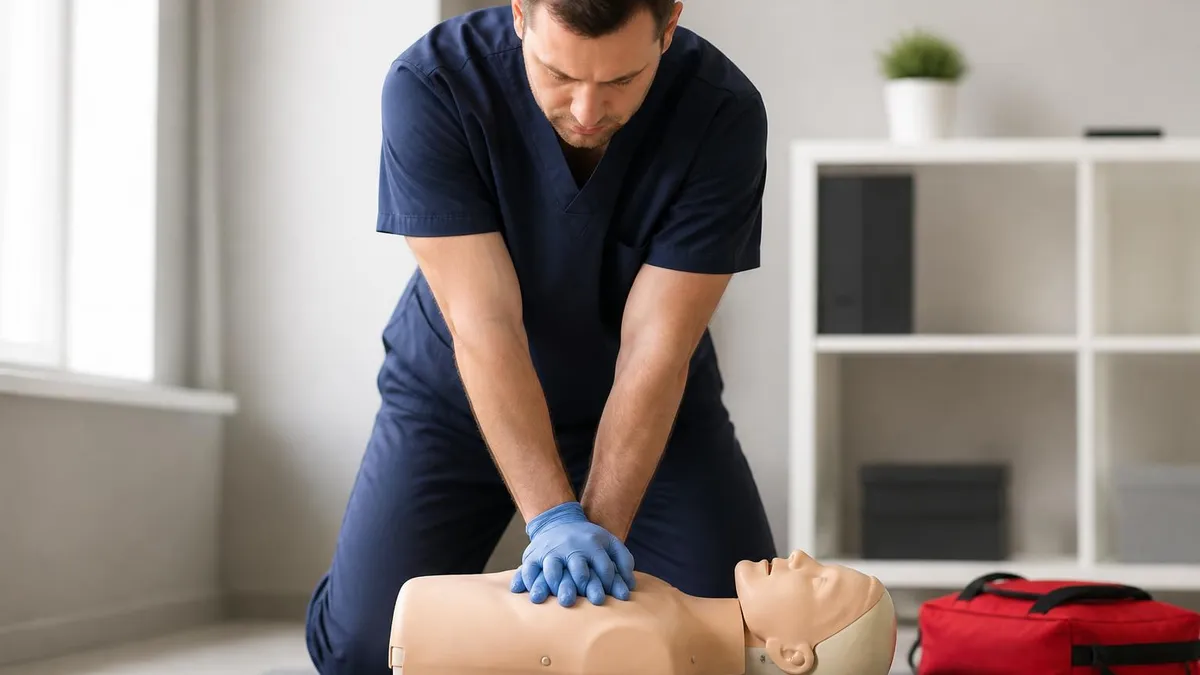
Online BLS Renewal: Complete 2026 Guide to Recertifying Your Basic Life Support Card
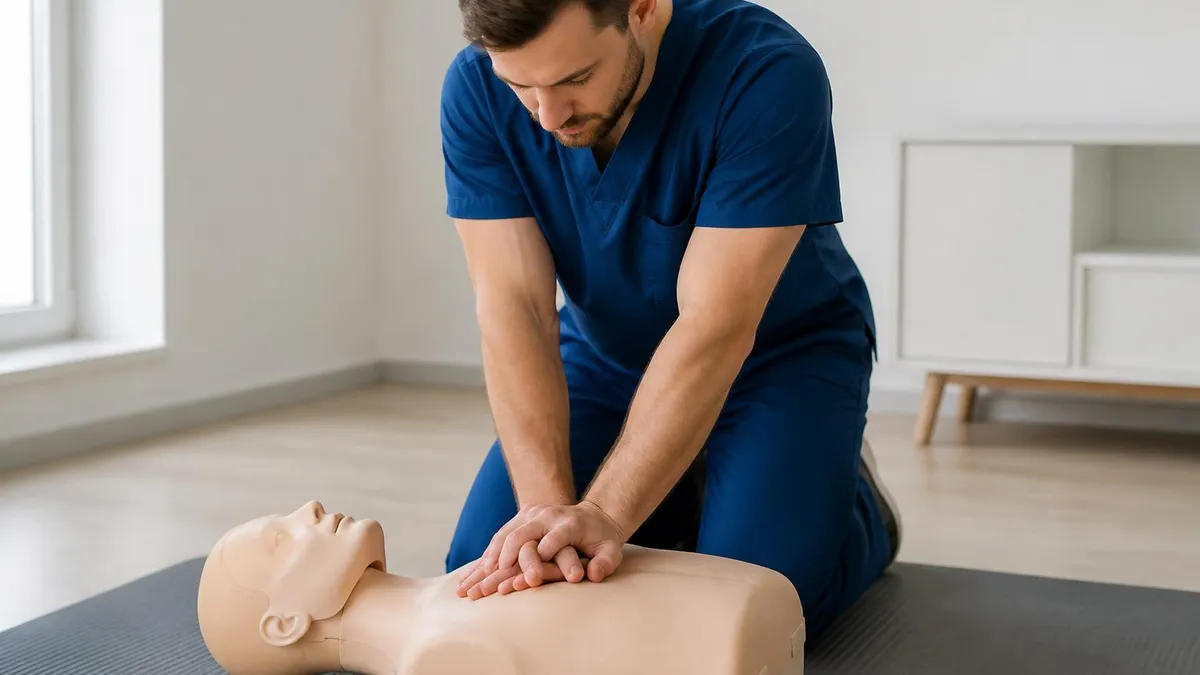
BLS vs ALS: Complete Comparison of Basic and Advanced Life Support
About the Author

Registered Nurse & Healthcare Educator
Johns Hopkins University School of NursingDr. Sarah Mitchell is a board-certified registered nurse with over 15 years of clinical and academic experience. She completed her PhD in Nursing Science at Johns Hopkins University and has taught NCLEX preparation and clinical skills courses for nursing students across the United States. Her research focuses on evidence-based exam preparation strategies for healthcare certification candidates.
Join the Discussion
Connect with other students preparing for this exam. Share tips, ask questions, and get advice from people who have been there.
View discussion (8 replies)