
BLS Provider Certification: Complete Guide to Course, Exam, and Card 2026
BLS provider course explained: 4-5 hour class, 25-question exam at 84% pass, hands-on skills check, 2-year card. Study tips, ratios, and renewal info. ⏳
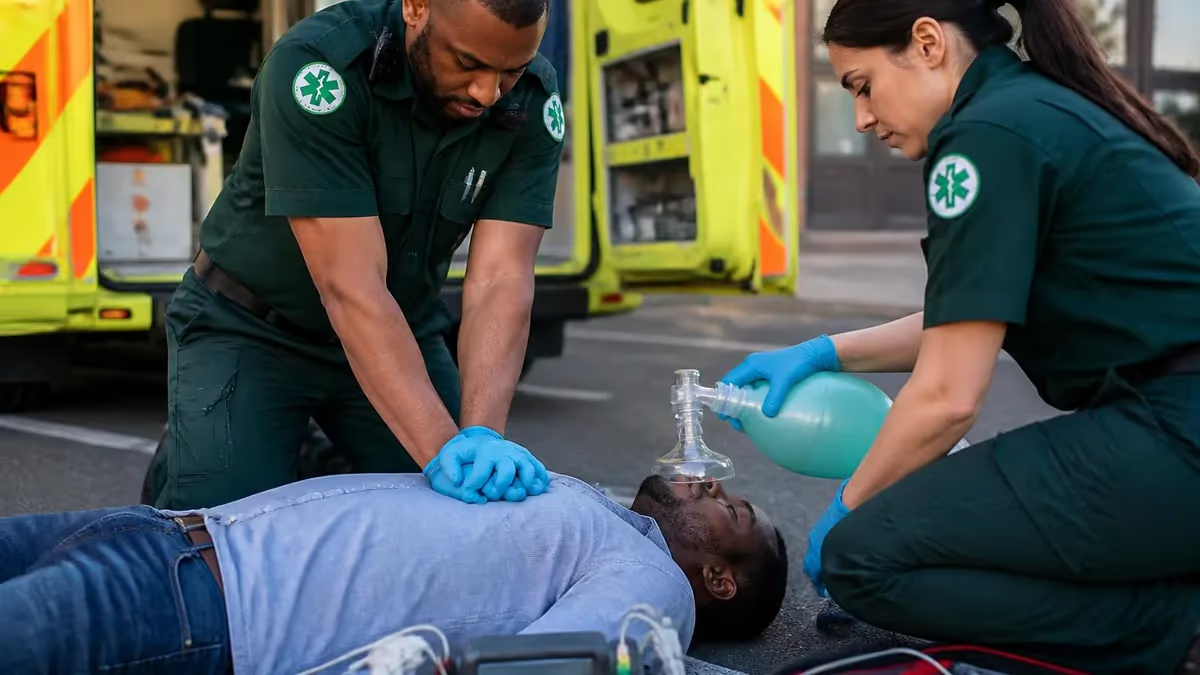
Becoming a BLS provider means more than passing a class. It is the credential healthcare professionals, lifeguards, and first responders rely on when a patient suddenly stops breathing or loses a pulse. The provider-level course goes deeper than community CPR. It covers high-quality chest compressions, ventilations with a bag-mask device, AED operation in adults, children, and infants, choking relief for every age, and team-based resuscitation. If you work in a clinical environment, this card is usually mandatory before you can clock in.
The certification is short. Most courses run four to five hours and end with a written exam plus a hands-on skills check. But the muscle memory you build during practice is what saves a life weeks later, when the lights flicker on at 3 a.m. and a code is called. Below you will find what the BLS provider role covers, how the exam works, what to expect on test day, and how to study so the card on your badge actually means something.
If you want a feel for the test style before you sit through a class, run our BLS practice test first. It mirrors the AHA-style multiple choice block and will tell you fast whether you remember compression depth, the ratio for one rescuer infant CPR, and when to switch from BLS to ACLS algorithms.
BLS Provider Course Snapshot
BLS: upcoming dates and official changes
- Mar 1, 2026: AHA required US BLS courses to use the 2025 course materials starting March 1, 2026. (American Heart Association)
Facts verified Oct 15, 2026 against American Heart Association. Dates that have passed are removed automatically.
- The AHA BLS Provider instructor-led course exam contains 25 questions. (American Heart Association)
- The AHA BLS Provider course requires an exam score of at least 84%, alongside successful completion of its practical requirements. (American Heart Association)
- AHA BLS course fees are set by the Training Center offering the training. (American Heart Association)
- American Red Cross BLS course costs vary by course format and location. (redcross.org)
- AHA BLS students are allowed no more than two attempts to pass the online exam administered for the instructor-led course. (American Heart Association)
- The AHA BLS Provider Course Completion Card is valid for two years after all course requirements are completed. (American Heart Association)
- American Red Cross BLS certification is valid for two years. (redcross.org)
- American Red Cross BLS certification is renewed through a BLS recertification course. (redcross.org)
- American Red Cross blended BLS certification combines online coursework with a required in-person skills session. (redcross.org)
Facts verified Oct 15, 2026 against American Heart Association. Dates that have passed are removed automatically.
BLS Exam at a Glance
| Item | Detail | Official source |
|---|---|---|
| Number of questions (AHA BLS Provider — instructor-led) | 25 questions | American Heart Association |
| Passing score (AHA BLS Provider — instructor-led) | At least 84% | American Heart Association |
| Exam fee (AHA BLS Provider) | Set by the Training Center | American Heart Association |
| Exam fee (American Red Cross BLS) | Varies by format and location | redcross.org |
| Retake policy (AHA BLS Provider — instructor-led) | Maximum two attempts for the online exam | American Heart Association |
| Validity (AHA BLS Provider) | Two years | American Heart Association |
| Validity (American Red Cross BLS) | Two years | redcross.org |
| Renewal (American Red Cross BLS) | Complete a BLS recertification course | redcross.org |
| Delivery (American Red Cross BLS — blended learning) | Online coursework plus required in-person skills session | redcross.org |
Facts verified Oct 15, 2026 against American Heart Association. Dates that have passed are removed automatically.
A BLS provider is trained to recognize cardiac arrest, respiratory arrest, and acute obstruction of the airway, then act within seconds. The role assumes you may be alone or part of a team. You activate emergency response, you start compressions, you use the AED the moment it arrives, and you coordinate with arriving rescuers without breaking the rhythm of CPR.
Unlike basic bystander CPR, the provider course teaches the high-performance habits hospitals expect. Compressions go at 100 to 120 per minute, two inches deep in adults, with full chest recoil between each push. Pauses for ventilation, pulse checks, or AED analysis stay under ten seconds. You rotate compressors every two minutes to keep fatigue from cutting blood flow. None of this is intuitive. You build it through repetition on a manikin while a coach calls out timing.
The certification is recognized in hospitals, dental offices, surgery centers, dialysis clinics, EMS agencies, fire houses, gyms, and a long list of non-clinical jobs where employers want a faster response to a collapse. If you are prepping for healthcare school, the card is often a prerequisite for clinical rotations.
The American Heart Association BLS Provider course is the standard credential for healthcare workers, EMS personnel, and trained responders. Expect about four to five hours of class time, a 25-question written exam at an 84 percent pass mark, and a hands-on skills check covering adult, child, and infant CPR, AED operation, bag-mask ventilation, and choking relief. The certification card stays valid for two years from your skills check date, after which you complete a renewal course or repeat the full provider course to maintain certification.
Core BLS Skills by Age Group
Compressions two inches deep at 100 to 120 per minute with full chest recoil between pushes. Use the 30:2 compression-to-ventilation ratio with one rescuer, then switch to two-rescuer 30:2 when help arrives so compressors rotate every two minutes and stay fresh.
Compressions about two inches deep at 100 to 120 per minute, hands or two thumbs depending on size. Use 30:2 with one rescuer, drop to 15:2 with two rescuers because children rely more on adequate ventilation than adults do during a resuscitation.
Two fingers or the two-thumb encircling-hands technique, 1.5 inches deep at 100 to 120 per minute. Use 30:2 with one rescuer and 15:2 with two rescuers. Cover the mouth and nose together when delivering breaths and watch for visible chest rise.
Adult pads on a bare chest in either anterolateral or anterior-posterior placement. Use child or infant pads on patients under eight years if available. Clear the patient before analysis and before delivering a shock. Resume compressions immediately after the shock cycle ends.
The written portion uses 25 multiple choice questions. You need 84 percent to pass, which is 21 correct answers. The questions are scenario-driven. You may be told a patient is unresponsive with agonal breathing and asked what to do first. You may be given a strip of CPR with a witnessed collapse and asked whether to deliver a shock immediately or do two minutes of compressions first. Memorization helps, but the questions reward you for thinking about the algorithm in sequence.
The skills check is the harder half for most students. The instructor will hand you a scenario card and watch you run it. For adult one-rescuer BLS, you assess the scene, check responsiveness, shout for help, send someone for the AED, check breathing and a carotid pulse together within ten seconds, then start compressions.
For two-rescuer BLS, you swap to a 30:2 ratio in adults and 15:2 in children and infants once a second rescuer arrives. The bag-mask station tests whether you can deliver a one-second breath that produces visible chest rise without over-inflating. AED stations test pad placement, clearing the patient before analysis, and shock delivery.
You also run a choking station. For a conscious adult, abdominal thrusts. For an infant, five back slaps and five chest thrusts. If the patient becomes unresponsive, you lower them to the floor and start CPR, checking the mouth for the object before each ventilation but not blind-sweeping.

BLS Provider Exam Format
The written section contains 25 multiple choice questions covering recognition of cardiac and respiratory arrest, the BLS algorithm by age, AED operation, choking response, and team dynamics with closed-loop communication. The time window is generous and most students finish the section comfortably in 20 to 30 minutes. You must score at least 84 percent, which means at least 21 correct answers to pass the written portion. Many questions are scenario-driven and reward sequential thinking through the algorithm.
Adult chest compressions must be at least two inches deep but no more than 2.4 inches. Allow full chest recoil between each push. Soft compressions are the most common reason students fail the skills check.
Walk in early. Most testing centers want you fifteen minutes before the listed start time so you can sign waivers, present photo ID, and pick up a textbook if you did not pre-read. Wear clothes you can kneel in. You will be on the floor for most of the hands-on time. Lace-up shoes are easier than slip-ons because they do not fly off when you adjust position.
Eat before class. Low blood sugar makes CPR exhausting and your form falls apart. Bring water. A snack helps during the lunch break if it is a full-day course. Phones go in airplane mode during testing. Some instructors collect them for the skills portion.
If you booked a renewal course, expect a faster pace. The full provider course assumes no prior knowledge. The renewal assumes you remember the framework and just need an update on the latest algorithm changes. Renewal usually skips the introductory video and goes straight to skills practice. You still take the same exam.
Day-of Test Day Checklist
- ✓Arrive 15 minutes early with photo ID
- ✓Read the provider manual cover to cover beforehand
- ✓Wear clothes and shoes you can kneel in
- ✓Eat a normal meal and bring water
- ✓Practice compression depth with the manikin feedback
- ✓Drill the ratios out loud: 30:2 adult, 15:2 child two-rescuer
- ✓Know the ten-second rule for pulse checks
- ✓Charge your phone in case the eCard claim email arrives during class
Two things separate students who pass the first time from students who repeat. First, they read the manual before class. The provider manual is short, maybe 70 pages, and it walks through every algorithm with diagrams. If you show up cold, the video pace will outrun you. If you have read it, the class becomes review and the skills stations become the focus.
Second, they drill scenarios out loud. Pick a partner and run through pediatric one-rescuer BLS until you can say the steps without thinking. Quiz each other on the ratios: 30:2 for adults, 30:2 for child one-rescuer, 15:2 for child two-rescuer, 15:2 for infant two-rescuer. Drill the AED differences for child and infant pads. Drill the choking algorithm by age. Saying the steps locks them in faster than rereading the book.
Use practice tests for the written exam. A timed quiz exposes the questions that trip you up so you can target your review. After the practice round, look up every wrong answer in the manual and read the surrounding paragraph. Do not just memorize the right letter. Understand why the wrong options are wrong, because the test rotates phrasings.
If you are prepping in a healthcare program, layer the BLS material with your other certifications. Many students take the ACLS practice test in the same week because the rhythms and drug doses overlap with the BLS foundation. Working both at once strengthens both.

The provider card stays valid for two years from the date of your skills check. After that, you renew. Some employers send you to a refresher every year to keep compliance tight, but the official AHA validity is two years. If your card lapses, you take the full course again rather than the shorter renewal.
Keep a digital copy of your card. The AHA eCard system stores it online and you can pull it up from your phone for an employer check. Lost paper cards are a common headache. If you have the eCard reference, you never have to reprint.
Many providers stack other certifications on top of BLS. Pediatric Advanced Life Support, Advanced Cardiovascular Life Support, and Neonatal Resuscitation are common next steps in hospital roles. Each one assumes you already have a current BLS card. Without BLS, you cannot enroll in the others. So this card is the foundation. Get it solid and the rest fall into place.
BLS Provider Course Pros and Cons
- +Required credential for nearly every direct-patient-care role in hospitals, clinics, dental offices, and dialysis centers
- +Short course, usually completed in one half-day session including both written and hands-on testing
- +Skills transfer directly to home, community, and workplace emergencies far beyond clinical settings
- +Foundation prerequisite for ACLS, PALS, and NRP, plus instructor-level pathways for educators
- +AHA eCard system stores the credential digitally for quick employer verification and replaces lost paper cards
- +Wide range of authorized training centers means flexible scheduling across most metropolitan areas
- −Hands-on skills test intimidates first-time students who may not have practiced on a manikin before
- −84 percent written cut score leaves little room for error and requires careful manual review
- −Card expires every two years, creating an ongoing cost for healthcare workers across their careers
- −Must use AHA-authorized centers for a valid card, which limits some low-cost online-only options
- −Compression fatigue during the skills test surprises students who underestimate the physical demand
- −Algorithm updates between cycles can confuse renewal students who learned earlier versions
Most candidates fail in the same two spots. Compression depth is the first. Adult depth is at least two inches, no more than 2.4 inches. Students often push too softly, especially as fatigue sets in. Use the manikin feedback indicator if your testing site provides one. Listen for the click. Watch the visual depth bar. Build that depth into your form during practice.
Ventilation rate is the second. After a shockable rhythm is converted or after you have established an advanced airway, the rate becomes one breath every six seconds, or ten breaths per minute. Without an advanced airway, you give two breaths after every 30 compressions in adults. Mixing these up costs points on the skills exam and shows the instructor you do not yet have the algorithm clean.
The third pitfall is pulse-check time. Take longer than ten seconds and the instructor stops you. The fix is counting out loud. Say one-one-thousand, two-one-thousand while you palpate the carotid. If you cannot feel a pulse by ten, you have already started compressions before the buzzer.
If you work in dental, you will run BLS scenarios specific to office emergencies. Cardiac arrest in the chair, allergic reaction post-anesthesia, syncope. The skills are the same but the setting changes how you set up. Practice retrieving the AED from a cabinet, kneeling in a tight operatory, and coordinating with a receptionist who is calling 911 while you start compressions. Pre-class drills inside your real workplace shave seconds off your response when the moment comes.
If you work in EMS, BLS feeds into your protocols for medical and trauma calls. You are often the first hands on a chest before the medic arrives. Strong BLS technique buys time for ACLS interventions and improves survival rates. Your skills check matters because it sets the tone for everything that follows.
If you are a lifeguard or fitness professional, your BLS provider card may be the difference between a save and a fatality at your facility. Pool decks, gyms, and pickleball courts all see sudden cardiac arrest. The provider-level training prepares you for a wider age range than community CPR alone.
For a broader review of life-support fundamentals before class, our CPR practice test covers the basics that overlap with BLS, and a brief warm-up before class can sharpen your timing on compressions and ventilations.
Once you pass, your name goes into the AHA eCard system. Your instructor uploads your roster within a few days. You will get an email with a claim link, which is how you generate your digital card. Print one copy for your personnel file at work and save the PDF to your phone.
Your employer may verify the eCard QR code or reference number against the AHA database. This is the standard verification step. Counterfeit cards are easy to spot because the verification check returns no match. Always use an authorized AHA training center to avoid this issue.
Mark your calendar with the renewal date. Two years passes faster than you think. Most providers schedule the renewal class three months before expiration so they have buffer if the date does not fit. Some employers track this and send reminders. If yours does not, set your own alarm.
Take no more than ten seconds to check for a carotid pulse. If you cannot feel one, start chest compressions. Counting one-one-thousand to ten-one-thousand keeps your timing honest under stress.
The team dynamics piece of BLS provider training is more important than students realize at first. Real codes are noisy. Family in the room, an alarm system ringing, two or three rescuers arriving at different moments, supplies being passed across the bed. Without a designated team leader, those seconds bleed into minutes and outcomes slip.
The course drills closed-loop communication, where the leader assigns a role by name, the team member repeats the task back, performs it, and confirms it is done. This sounds simple in a quiet classroom. It feels harder during a code, which is exactly why you practice it.
The provider course also covers de-escalation when family members are present. A clear voice, simple language, and one designated person communicating with the family keeps the resuscitation focused. If you have ever been on the receiving end of a code in your own family, you know how chaotic the room can feel. Strong team habits soften that for everyone, including the patient.
Rotating compressors is another team rule worth knowing cold. Every two minutes, the compressor and the ventilator swap. The swap takes less than five seconds if practiced. You announce it on the previous cycle so the team is ready. Without rotation, compression depth drops within ninety seconds as fatigue kicks in. The whole reason this rule exists is to keep blood flow to the brain steady through the entire arrest.
Reflective practice matters too. After class, replay each station in your head while it is fresh. What did the instructor flag? Was your pad placement off by an inch? Did you forget to clear the patient before pushing the shock button? Write those notes down. The next time you walk into the room, you have a checklist of your own weak spots, and you can fix them on the first try instead of the third.
For students who plan to keep this card for life, the AHA also offers instructor-level training. After holding a provider card for at least two years and proving steady clinical practice, you can train to teach the course yourself. Many hospital educators and EMS preceptors hold the instructor credential because it lets them keep the unit current without sending people off-site. It also reinforces your own technique, since teaching forces a deeper level of mastery.
Finally, build a habit of running through the algorithm in low-stakes moments. Walking the dog, riding the bus, falling asleep at night. Pick a scenario in your head and run it. Unwitnessed adult collapse in your office. Witnessed pediatric collapse on a basketball court. Choking infant at a family dinner. The point is to keep the response automatic. When the real moment arrives, you do not think about steps. You do them.
One last note on cost. The provider course typically runs between sixty and one hundred and twenty dollars depending on region, training center, and whether you include the manual. Some employers reimburse the fee, especially for hospital staff. Many community colleges and fire departments host classes at a lower rate. Check your local options before booking the first center you find online. The course content is standardized by the AHA, so you can shop by price and schedule with confidence the curriculum will be the same.
And remember: the card you walk out with is only as strong as the practice you put behind it. Read your manual once a quarter. Keep a manikin or even a folded pillow handy and run a thirty-second compression drill weekly. Those small habits keep your provider-level skill where it should be on the day someone needs you to act.
Many readers pair this guide with the aha bls practice questions to check their readiness before exam day.
BLS Questions and Answers
How this page was made: written with AI tools and published by Nathan Beja, founder of Practice Test Geeks, who is responsible for its content. Exam facts are checked against the official sources listed below. Not reviewed by a subject-matter expert. Editorial policy
Sources & references
Exam facts on this page (fees, format, dates, passing scores) are checked against these official sources; the date is our last check. Editorial policy
- redcross.org — Renewal, test delivery, fees, score validity · verified Oct 2026
- cpr.heart.org — Test delivery, exam format, passing score, retake policy, fees, score validity · verified Oct 2026