
Phlebotomy Technician Program: Complete Training Guide, Curriculum, Cost, Duration, and Career Outcomes
🎓 Phlebotomy technician program guide: curriculum, length, cost, clinical hours, certification options, online vs in-person, and career outcomes after
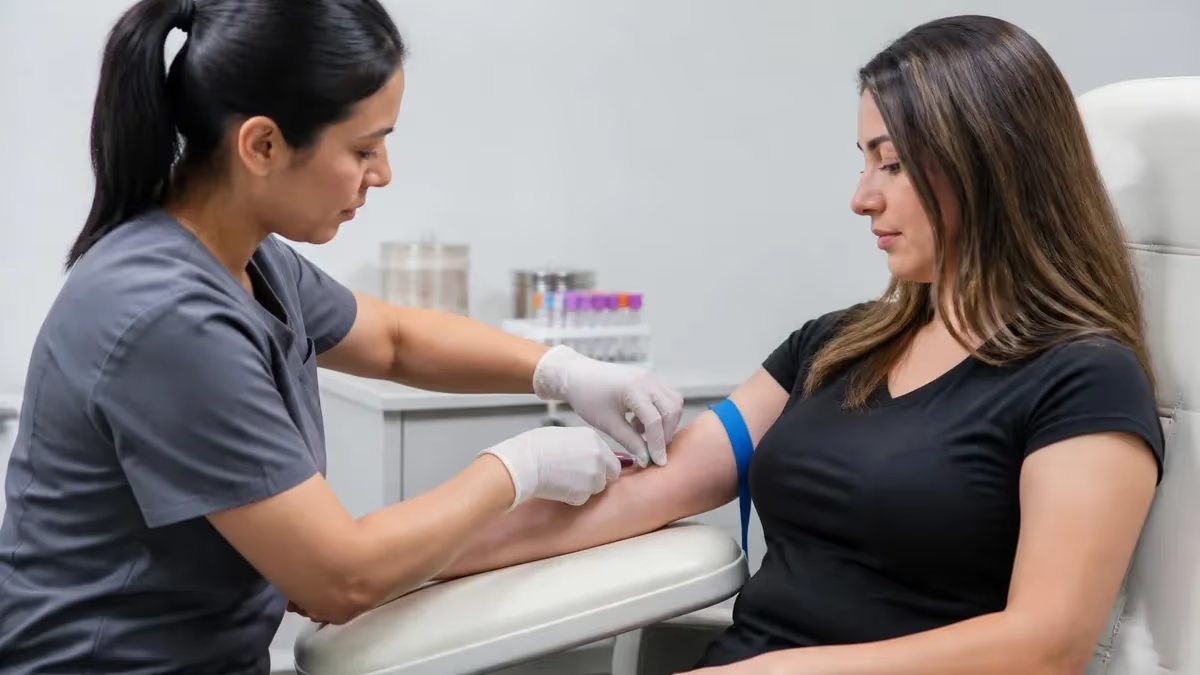
A phlebotomy technician program trains students to draw blood safely and accurately for medical testing, donations, and procedures. These programs prepare graduates for one of healthcare's most accessible entry-level careers — fast training, steady demand, and a clear pathway to broader healthcare roles. Most programs run 4-12 weeks and cost $500-3,000.
What phlebotomy technicians do. Draw blood from veins (venipuncture), capillaries (skin punctures), and occasionally arteries. Label and transport specimens. Verify patient identity and orders. Maintain equipment and supplies. Practice strict infection control. Calm anxious patients. Document procedures accurately. Most phlebotomists work in hospitals, clinics, blood banks, plasma centers, or independent labs.
Why phlebotomy is an attractive career. Low barrier to entry — high school diploma or GED is typically the only education requirement. Short training timeline — 4-12 weeks beats 2-year nursing or 4-year medical programs. Job availability — Bureau of Labor Statistics projects 8% growth 2023-2033, faster than average. Steady pay — median ~$40,610/year nationally (2024), $19.52/hr. Career mobility — many phlebotomists advance to medical assistant, lab tech, or nursing roles.
Program types. Vocational/technical schools: most common path. Community college programs: 1-2 semesters, often connect to lab tech or nursing pathways. Hospital-based programs: directly tied to employment. Online programs: theoretical coursework remote; clinical hours in-person required. Standalone certification courses: shortest option, focuses on exam prep.
This guide covers program types, curriculum content, accreditation, cost, financial aid, certification pathways, and what to expect after graduation. It's intended for prospective phlebotomy students choosing between programs.

What to Expect
- Duration: 4-12 weeks typical (some up to 6 months)
- Cost: $500-3,000 (varies by program type and location)
- Prerequisites: High school diploma or GED; minimum age 18
- Clinical hours: 40-120 required (varies by state)
- Curriculum: Anatomy, venipuncture, safety, regulations, patient communication
- Certification: ASCP, NHA, AMT, or NCCT exam after graduation
- Job outlook: 8% growth 2023-2033 (BLS)
- Median pay: $40,610/year ($19.52/hr) nationally (2024)
- Top employers: Hospitals, LabCorp, Quest Diagnostics, blood banks
- Career mobility: Common bridge to medical assistant, lab tech, nursing
Program types in detail. Knowing your options helps you pick the right fit.
Vocational/technical school programs. Most common option. Examples: National Phlebotomy Association programs, Penn Build Career School, Stanbridge College, Brookline College. Length: 4-8 weeks typically. Cost: $1,000-2,500. Strengths: Quick completion, focused curriculum, often include certification exam prep. Weaknesses: Limited financial aid options, variable quality, some not eligible for federal student loans.
Community college programs. Length: 1-2 semesters (16-32 weeks). Cost: $1,500-3,500 in-state tuition. Strengths: Accredited, federal financial aid eligible (Pell grants, loans), credits may transfer to other healthcare programs, broader curriculum (often includes other lab skills). Weaknesses: Longer timeline, sometimes more theory than hands-on.
Hospital-based programs. Some hospitals run their own phlebotomy training. Length: 6-12 weeks. Cost: often free or low-cost (employer-paid in some cases). Strengths: Job placement often guaranteed, real clinical environment, taught by working phlebotomists. Weaknesses: Limited slots, competitive, may require employment commitment.
Online + clinical hybrid programs. Length: 4-12 weeks online + 40-120 clinical hours in-person. Cost: $800-2,500. Strengths: Flexibility for working students, self-paced coursework, can complete on your schedule. Weaknesses: Limited hands-on practice during didactic phase, clinical site requires travel.
Standalone certification courses. Length: 1-4 weeks. Cost: $250-1,500. Strengths: Fastest option, focused on certification exam, low cost. Weaknesses: Limited hands-on training, less comprehensive curriculum, may not meet state requirements for licensure in some states. Best for: someone with existing healthcare background, prior phlebotomy exposure, or planning to do most training on-the-job.
Apprenticeship-style. Less common in U.S. but growing. On-the-job training with structured curriculum. Length: 3-6 months. Cost: usually paid by employer. Strengths: Earn while you learn, direct path to employment, hands-on from day one. Weaknesses: Limited availability, competitive entry, employer-tied.
Program Types
4-8 weeks, $1k-2.5k. Quick, focused. Most common path.
16-32 weeks, $1.5k-3.5k. Accredited, Pell-eligible, credits transfer.
6-12 weeks, free or low cost. Direct pathway to employment.
4-12 weeks. Flexible coursework, in-person clinical hours required.
1-4 weeks, $250-1.5k. Fastest, certification-exam focused.
3-6 months, employer-paid. Earn while learning. Growing option.
Curriculum — what you'll learn.
Anatomy and physiology. Cardiovascular system (heart, arteries, veins, capillaries). Vein anatomy of upper extremity (median cubital, basilic, cephalic veins). Skin layers and structures. Blood composition (RBCs, WBCs, platelets, plasma). Coagulation cascade. Diagnostic significance of common blood components.
Venipuncture technique. Site selection (median cubital first, then cephalic, basilic). Antecubital fossa anatomy. Difficult vein recognition (small, mobile, sclerosed). Pediatric vs adult considerations. Order of draw (cultures, blue, gold, green, lavender, gray — critical for accurate testing). Tourniquet application and timing. Needle sizes and gauges (21-23G typical). Vacutainer system. Butterfly needles for difficult draws.
Capillary collection. Fingerstick technique. Heelstick (infant). Indications (small volume tests, point-of-care). Order of draw still important. Common errors (excessive squeezing causing hemolysis).
Patient communication. Identifying patient (2 identifiers required). Explaining procedure. Managing anxious patients, kids, elderly. Cultural sensitivity. HIPAA basics. Informed consent considerations. De-escalating difficult situations.
Infection control. Standard precautions. Hand hygiene. PPE use. Sharps safety. Bloodborne pathogen exposure protocols. OSHA bloodborne pathogen standard. Tuberculosis precautions. Needlestick injury response.
Laboratory operations. Specimen handling and transport. Centrifugation principles. Temperature requirements (refrigerated, frozen, room temp). Tube labeling protocols. Specimen rejection criteria. Chain of custody for legal blood draws. Workflow with phlebotomy carts.
Documentation. Patient records. Labeling tubes correctly. Order entry. Specimen accessioning. Quality control documentation. Variance reporting.
Regulations and ethics. CLIA (Clinical Laboratory Improvement Amendments). State-specific regulations. Professional boundaries. Confidentiality. Reporting suspected abuse. Workplace safety laws.
Special procedures. Blood culture collection (sterile technique critical). Arterial blood gases (with respiratory therapy in some settings). Therapeutic phlebotomy. Plasma donation collection. Pediatric and geriatric techniques. Forensic specimen collection.
Curriculum Topics
Cardiovascular, vascular access points, skin layers, blood composition. Understanding what you're sticking into and why. ~10-15 hours of coursework typical.
Clinical hours requirements. The hands-on practice that turns book learning into competency.
Why clinical hours matter. Phlebotomy is largely hands-on. You can't learn venipuncture from a video alone — you need to actually do it on real patients (or initially, on practice arms and fellow students). Clinical hours ensure you've done enough draws under supervision to be safe alone.
State-by-state requirements. California: 40 hours clinical + 20 successful venipunctures + 10 skin punctures (CPT-I certification). Most other states don't license phlebotomy specifically but follow program/certification requirements. Louisiana, Washington, Nevada have state-specific licensure with their own clinical requirements.
Certification body requirements. NHA Certified Phlebotomy Technician (CPT): 30 successful venipunctures + 10 capillary punctures + 40 clinical hours. ASCP (American Society for Clinical Pathology) BOC PBT: requires completion of an accredited program OR work experience plus exam. AMT Registered Phlebotomy Technician (RPT): completion of accredited program with clinical practicum.
How clinical hours work. Phase 1 (lab/classroom): students practice on simulation arms and each other. Phase 2 (externship/clinical rotation): students work in real healthcare setting under preceptor supervision. Phase 3 (employment): real-world experience after graduation.
Finding a clinical site. Programs typically arrange this — major reason to choose accredited programs. For online programs: site arrangement may be your responsibility (verify before enrolling). Common clinical sites: hospitals, outpatient labs, blood donation centers, urgent care facilities.
What to expect during clinicals. 4-8 hours per day, 5 days/week typical. Wear scrubs. Be on time, professional. Initially observe; gradually take over draws under preceptor supervision. Document each draw in your log. Build relationships with staff — many job offers come through clinical placements.
Program Stats

Choosing the right program. Accreditation and quality indicators.
Accreditation. Most important factor. Look for: NAACLS (National Accrediting Agency for Clinical Laboratory Sciences) accreditation. ABHES (Accrediting Bureau of Health Education Schools) for allied health programs. Regional accreditation for community colleges (helps with credit transfer). State approval for vocational programs.
Why accreditation matters. Eligibility for federal financial aid. Acceptance by certification bodies (some certifications require accredited program graduation). Credit transferability (important if you plan to continue education). Employer recognition. Quality assurance.
Red flags to avoid. Schools demanding payment in full upfront with no refund policy. Promises of guaranteed placement with no track record. Excessively short programs (less than 3 weeks may not provide adequate training). No clinical hours included. Outdated curricula. No state approval. Poor reviews on Reddit, Google, Glassdoor.
Questions to ask programs. Are you accredited? By whom? What's your certification exam pass rate? What's your job placement rate? Where do graduates find work? What's the total cost (tuition, books, fees, certification exam)? Are clinical hours arranged or my responsibility? Can I see the curriculum? Can I speak with current students or graduates?
Visit before enrolling. Tour the facility if local. Meet instructors. See the lab where you'd practice. Talk to current students about their experience. Get a sense of culture and quality.
Compare programs. Don't just pick the cheapest or fastest. Consider: total cost (including hidden fees), certification exam included or extra, clinical hours adequacy, accreditation, schedule fit, location/commute, employer reputation. The 'best' program depends on your situation.
Evaluation Checklist
NAACLS, ABHES, or regional accreditation. Non-negotiable.
Certification exam pass rate. 80%+ is reasonable.
Job placement within 6 months. 70%+ is reasonable.
40+ hours minimum. Arranged by program preferred.
Tuition + books + fees + certification. No hidden costs.
Day/evening/weekend options. Matches your availability.
Certification after graduation. Required for most jobs.
Why certification matters. Most employers require certification (even when state doesn't legally require it). Certified phlebotomists earn 10-15% more than uncertified. Certification proves competency. Required by quality lab certifications (some labs require all staff to be certified). Easier mobility between jobs and states.
Major certifying bodies. NHA Certified Phlebotomy Technician (CPT) — widely accepted, $117 exam fee. ASCP Board of Certification Phlebotomy Technician (PBT) — gold standard, recognized internationally, $135 exam fee. AMT Registered Phlebotomy Technician (RPT) — well-respected, $120 exam fee. NCCT National Certified Phlebotomy Technician — accepted by many employers, $90 exam fee.
Exam content. All cover similar material: anatomy, venipuncture procedure, order of draw, safety, regulations, patient communication. ~100-150 multiple choice questions. 2-3 hours. Computer-based. Pass scores: 70-80% typically.
How to prepare. Review your program curriculum thoroughly. Use exam prep books (NHA Phlebotomy Study Guide, ASCP study materials). Take practice tests (PracticeTestGeeks free practice tests are commonly used). Form study groups with classmates. Aim for 2-4 weeks of focused review after graduation before testing.
What if you fail. Most certifications allow retake after waiting period (typically 30-60 days). $50-150 retake fee. Use first attempt as learning experience. Identify weak areas. Many pass on second attempt.
Maintenance. CE requirements: typically 6-10 CE hours per renewal cycle (every 1-2 years). Renewal fees: $50-100. Most employers cover continuing education.
Specialty certifications. Once certified, consider specialty additions: pediatric phlebotomy, geriatric phlebotomy, blood donation specialist. Each adds career value and pay.
Certification Bodies
Gold standard. American Society for Clinical Pathology Board of Certification. International recognition. Required by many hospital systems. Most rigorous. $135 exam fee. Pass rate ~80%. Best for: hospital phlebotomists, those planning career mobility.
Cost and financial aid. Phlebotomy programs vary widely in cost.
Total cost breakdown. Tuition: $500-3,000 (varies dramatically by program type). Books and supplies: $100-300 (textbooks, scrubs, watch with second hand). Certification exam: $90-135. Background check and drug screen (often required for clinical placement): $50-100. Optional: study guides, practice tests, professional liability insurance.
Cheapest options. Free hospital-based programs (highly competitive). Community college Pell-eligible programs (often free for low-income students with Pell grants). Adult education programs through public schools or community colleges. Some labs and blood banks offer paid training.
Federal financial aid. Pell Grant: up to $7,395/year for eligible low-income students (academic year 2023-24). Federal student loans: Direct Subsidized/Unsubsidized for federal-aid-eligible programs. Work-study: some programs offer on-campus work-study. Vocational programs: some are eligible; many are not.
State financial aid. Most states have their own grant programs. Workforce Investment Act (WIA) funding for displaced workers. State-specific scholarships for healthcare workers.
Employer assistance. Some employers (hospitals, large clinics) pay for phlebotomy training in exchange for employment commitment (typically 1-2 years). Loan repayment programs in healthcare. Tuition assistance for current employees.
Scholarships. American Society for Clinical Pathology offers some scholarships. Local healthcare foundations. Diversity-focused healthcare scholarships. Search 'phlebotomy scholarship' in your area.
Out-of-pocket. If paying personally, budget for full program cost plus 3 months living expenses post-graduation while job-searching. Many find phlebotomy work within 1-3 months of certification.
1. Certification exam. Sometimes not included in tuition. Add $90-135.
2. Background check + drug screen. Required for clinical placement. $50-100.
3. Health requirements. Vaccinations (hep B series, COVID, flu), TB testing. Some need physical exam. $100-300 if not covered by insurance.
4. Uniforms. Scrubs, closed-toe shoes, watch with second hand. $75-150.
5. Books. Sometimes included, often extra. $100-200.
6. Transportation. Getting to clinical site can add costs (gas, parking). Budget for variable schedule.
7. Loss of income. If working full-time and reducing hours for school, factor in the income gap.
8. Certification renewal. Every 1-2 years. CE requirements + renewal fee = $100-200/year ongoing.
What to expect after graduation. The transition to working phlebotomist.
Job search timing. Apply for jobs during your final 2-4 weeks of school. Many positions can start within 2 weeks of certification. Most graduates find work within 1-3 months.
Where to apply. Hospitals (largest employers). LabCorp and Quest Diagnostics (national labs, often hiring). Local independent labs. Blood banks (Red Cross, Vitalant). Plasma donation centers (BioLife, CSL, Octapharma — often hire entry-level). Outpatient clinics. Specialty clinics (oncology, dialysis, donation). Mobile phlebotomy services. Forensic labs. Government (VA, military, public health).
Application process. Online application (LinkedIn, Indeed, Glassdoor, employer career pages). Resume highlighting program completion, certification, clinical hours, soft skills. Cover letter explaining interest. Phone screen (15-30 min). In-person interview (technical questions + behavioral). Skills test (sometimes — demonstrate drawing on a manikin or simulator).
What employers value. Certification (from major body). Clinical hours documented. Hands-on demonstration of competency. Communication skills (anxious patients are common). Reliability. Ability to work independently and as team. Bilingual a major plus (Spanish especially in many regions).
Starting pay. New phlebotomist median: $17-22/hr ($35-46K annually). Hospital jobs typically pay 10-15% more than independent labs. Specialty (oncology, pediatric) often pays slightly higher. Bonuses for evening/weekend/holiday shifts ($1-3/hr premium).
Career growth. After 1-2 years: lead phlebotomist or specialty phlebotomist ($45-55K). Bridge to medical assistant (often 4-6 month additional training) — broader scope, slightly higher pay. Bridge to lab technician with associate's degree ($45-65K). Bridge to RN with 2-4 years additional training ($60-90K+).
Continuing education. Maintain certification with CE hours. Consider specialty certifications. Take community college courses toward AS in medical lab tech or AAS in nursing. Build toward longer-term healthcare career.

First-Year Strategy
Start job search 2-4 weeks before certification. Many employers hire pending cert.
Best pay, benefits, and learning. Apply broadly to local hospitals.
Spanish speakers in high demand. Add $1-3/hr to typical pay.
First 6 months focus on consistent quality. Speed comes with reps.
After 1 year, pursue pediatric, oncology, donation specialties for $$ premium.
Phlebotomy is gateway. After 1-2 years, consider MA, lab tech, or nursing bridge.
Common challenges and how to handle them.
Difficult draws. Some patients have small, mobile, or sclerosed veins. Strategies: Use butterfly needles for small or fragile veins. Warm the area to dilate veins. Try the other arm. Use hand veins as backup. Don't probe (causes bruising and pain). After 2 failed attempts, ask another phlebotomist. Document attempts.
Anxious patients. Sit them comfortably. Explain what you're doing. Use distraction (conversation, TV). Reassure they won't see the needle. For severe anxiety, allow extra time. Some patients faint — be prepared to lay them flat.
Pediatric patients. Different technique (smaller needles, more capillary draws). Parent involvement is helpful. Reassuring language ('just a quick pinch'). Toys or distraction items. Take extra time. Some hospitals have specialty pediatric phlebotomists.
Geriatric patients. Fragile skin and veins. Use smaller needles (23G butterfly common). Apply light tourniquet pressure. Hold pressure longer post-draw. Watch for bruising and discomfort. Patience is essential.
Difficult coworkers and demanding doctors. Stay professional. Document accurately. Communicate problems through chain of command. Don't take it personally. Some healthcare environments have intense personalities.
Burnout prevention. Phlebotomy is repetitive. After 6-12 months it can feel monotonous. Strategies: pursue specialty draws for variety, advance to lead phlebotomist role, plan continuing education to build toward next career step, maintain work-life balance, find peer support among coworkers.
Needlestick injuries. Always a risk. Strategies for prevention: use safety needles, dispose immediately in sharps container, never recap needles. If you do get stuck: report immediately to occupational health, document, follow institutional protocol, get tested per protocol.
Hemolysis (lyzed blood). Common issue, requires redraw. Prevention: appropriate needle size, gentle aspiration, correct order of draw, gentle tube inversion. Don't shake tubes.
Career Trajectories
Many people make phlebotomy a 20+ year career. Specializations (pediatric, oncology, donation). Lead phlebotomist or trainer roles. Department supervisor positions. Salaries up to $55-65K with experience. Steady, in-demand work.
Best phlebotomy programs in the U.S. Worth considering.
National providers. Penn Build Career School — Online + clinical, well-established, federally accredited. Stanbridge College (CA) — strong reputation, accredited, in-person and hybrid options. Brookline College — Multiple locations, healthcare focus. Carrington College — Multiple locations.
Community colleges (search for in your state). Many community colleges offer 1-2 semester phlebotomy programs. Pell-grant eligible. Strong clinical placements. Easier to bridge to RN or MLT programs later.
Hospital-based programs. UCLA Medical Center (CA), Mayo Clinic (MN), Cleveland Clinic (OH), Johns Hopkins (MD) all have or have had phlebotomy training programs. Application is competitive but training is free with employment commitment.
Online programs. Penn Build (mentioned above). Phlebotomy USA — fully online theoretical + clinical placement assistance. Allied Health Career Training — online options. Pearson Education — online courses tied to certification.
State-specific options. California requires state CPT certification — programs must meet CA requirements. Texas has competitive vocational schools. New York has strong community college programs. Florida community colleges offer good value.
Apprenticeship programs. American Society for Clinical Laboratory Science has apprenticeship initiatives. Some states have workforce development apprenticeships paying training costs.
How to verify quality. Check NAACLS or ABHES accreditation status. Look up your state's approved phlebotomy programs. Read reviews on Reddit, Glassdoor, Google. Talk to local lab managers about which programs they hire from.
Common red flags. Schools without accreditation. Promised job guarantees without data. High-pressure sales tactics. No clinical hours. Outdated facilities. No state approval where required.
Phlebotomy Pros and Cons
- +Phlebotomy has a publicly available content blueprint — you know exactly what to prepare for
- +Multiple preparation pathways accommodate different schedules and budgets
- +Clear score reporting shows specific strengths and weaknesses
- +Study communities share current insights from recent test-takers
- +Retake policies allow recovery from a difficult first attempt
- −Tested content scope requires substantial preparation time
- −No single resource covers everything optimally
- −Exam-day performance can differ from practice test performance
- −Registration, prep, and retake costs accumulate significantly
- −Content changes between versions can make older materials less reliable
Pros and Cons at a Glance
| Pros | Cons |
|---|---|
| Phlebotomy has a publicly available content blueprint — you know exactly what to prepare for | Tested content scope requires substantial preparation time |
| Multiple preparation pathways accommodate different schedules and budgets | No single resource covers everything optimally |
| Clear score reporting shows specific strengths and weaknesses | Exam-day performance can differ from practice test performance |
| Study communities share current insights from recent test-takers | Registration, prep, and retake costs accumulate significantly |
| Retake policies allow recovery from a difficult first attempt | Content changes between versions can make older materials less reliable |
Sample Phlebotomy Practice Questions
Try these questions from our free Phlebotomy practice tests. The correct answer and an explanation follow each question.
What organization accredits phlebotomy training programs recognized by the ASCP Board of Certification?
- A. NAACLS
- B. JCAHO
- C. CLIA
- D. CAP
Answer: A. NAACLS
NAACLS (National Accrediting Agency for Clinical Laboratory Sciences) accredits programs accepted by ASCP BOC.
What is a primary eligibility requirement for the AMCA Phlebotomy Technician Certification exam?
- A. Completion of a formal phlebotomy training program
- B. Bachelor’s degree in a medical-related field
- C. One year of work experience in a non-medical role
- D. Supervisory experience in a clinical laboratory
Answer: A. Completion of a formal phlebotomy training program
To be eligible for the AMCA Phlebotomy Technician Certification exam, candidates must typically complete a formal phlebotomy training program. This requirement ensures they have received comprehensive instruction and practical experience in venipuncture techniques, safety protocols, and specimen handling. This foundational training is crucial for safe and effective practice.
Which of the following is a primary responsibility of a Certified Phlebotomy Technician (CPT)?
- A. Prescribing medical tests
- B. Drawing blood and ensuring proper specimen labeling
- C. Interpreting laboratory test results
- D. Supervising laboratory operations
Answer: B. Drawing blood and ensuring proper specimen labeling
A Certified Phlebotomy Technician (CPT) holds the primary responsibility for accurately and safely drawing blood samples from patients. A critical aspect of this role is ensuring that all specimens are correctly labeled with patient information and collection details to prevent errors in laboratory testing. This meticulous attention to detail is vital for patient safety and accurate diagnoses.
How often must the AMCA Phlebotomy Technician Certification be renewed?
- A. Every 1 year
- B. Every 2 years
- C. Every 3 years
- D. Every 5 years
Answer: B. Every 2 years
The AMCA Phlebotomy Technician Certification (PTC) requires renewal every two years. To maintain active certification, professionals must typically complete continuing education requirements and pay a renewal fee. This regular renewal process ensures that certified phlebotomists stay updated with current best practices and advancements in the field.
Phlebotomy Questions and Answers
Final thoughts. A phlebotomy technician program is one of the most accessible paths into healthcare — quick, focused, affordable, and leads to steady employment with real career mobility.
Choose your program carefully. Accreditation matters most; everything else follows. Verify clinical placement support before enrolling. Get certified after graduation through a major body (ASCP, NHA, AMT, NCCT). Then start your job search — many find work within 1-3 months of certification.
The work itself is rewarding. You're a critical link in patient care, providing the samples that drive diagnoses, treatment plans, and patient outcomes. Many phlebotomists report deep satisfaction from helping patients through one of healthcare's most universal experiences — the blood draw.
Plan ahead. Phlebotomy can be a long career or a stepping stone. Either path is legitimate. Many career phlebotomists thrive in the role for 20+ years. Others use the 4-12 weeks of phlebotomy training as the start of a healthcare journey leading to medical assistant, lab tech, nursing, or even physician roles. Both paths begin the same way: choose a quality program, complete it well, get certified, and start drawing blood. The career grows from there.
About the Author

Registered Nurse & Healthcare Educator
Johns Hopkins University School of NursingDr. Sarah Mitchell is a board-certified registered nurse with over 15 years of clinical and academic experience. She completed her PhD in Nursing Science at Johns Hopkins University and has taught NCLEX preparation and clinical skills courses for nursing students across the United States. Her research focuses on evidence-based exam preparation strategies for healthcare certification candidates.