
Mobile Phlebotomy: Services, Salary, and How to Start a Business in 2026 October
Mobile phlebotomy guide for 2026 October: at-home blood draw services, mobile phlebotomist salary, how to start a mobile phlebotomy business, top employers. ⏳
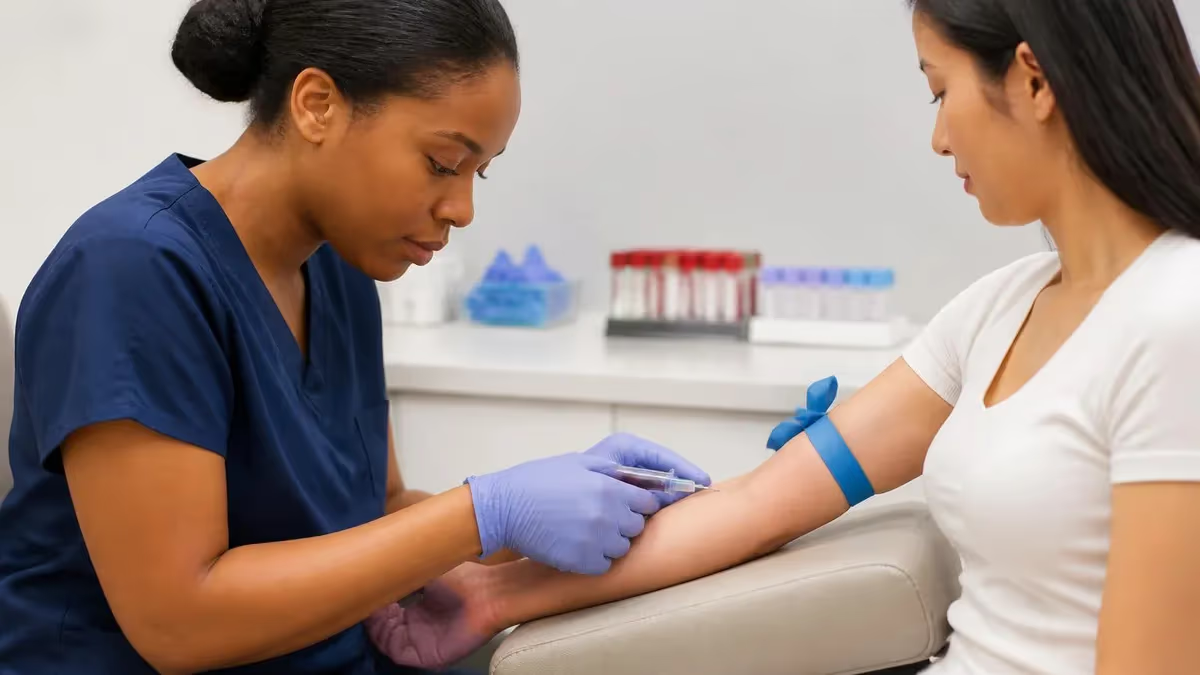
Mobile phlebotomy is one of the fastest-growing corners of the lab industry in 2026, and it's reshaping how millions of Americans get their blood drawn. Instead of driving to a Quest or LabCorp draw station and waiting in a crowded lobby, patients book a certified phlebotomist who shows up at home with a portable kit.
The draw takes about ten minutes. Specimens go to a courier or back to the lab the same day. The patient never leaves their couch. For homebound seniors, busy executives, anxious kids, and life-insurance applicants, that convenience isn't a luxury — it's the only realistic way to keep up with the bloodwork their doctors order.
The pandemic kicked it off. Telehealth visits exploded, and people figured out fast that they didn't need to sit in a clinic for a routine blood draw. Labs that already had small mobile fleets scaled them up. Independent operators popped up in every metro. By 2026 the model is mainstream — your grandmother's doctor probably mentions it as standard.
The market keeps expanding for three big reasons: an aging Baby Boomer population that needs more bloodwork every year, a wave of decentralized clinical trials that pay phlebs to visit research participants at home, and consumer demand for at-home health testing that the major labs are racing to capture.
Mobile phlebotomy sits at the intersection of all three trends. That's why the work isn't going away — it's compounding every quarter as more patients refuse to go back to clinic waiting rooms. Smart phlebs are positioning themselves now while the market is still wide open in most counties.

Mobile phlebotomy means blood specimens are collected outside a traditional clinic — at the patient's home, workplace, hotel, or care facility. A certified phlebotomist travels with a portable kit (chair, vacutainer system, cooler, sharps container) and either couriers specimens to the lab or hands them off at a daily drop-off. The field exploded during COVID and kept growing because of aging demographics, telehealth, and decentralized clinical trials. Pay ranges from $18–$30/hr as an employee to $60K–$200K+ as a business owner with steady contracts.
If you're already a phlebotomist, going mobile is one of the cleanest ways to raise your income without leaving the profession. You trade a fluorescent-lit draw station for your own car, your own schedule, and your own roster of contracts.
If you're still studying for certification, knowing the mobile path exists changes how you should plan your first three years. Below we cover what mobile phlebotomy actually looks like day-to-day, who pays for it, what you'll earn, and how to launch a business without burning $20K on rookie mistakes.
Think of this guide as the conversation you'd have with a mobile phleb who's been at it five years. We'll skip the resume-padding and tell you the parts that actually matter — which contracts pay first, which equipment is overpriced, which states make licensing a headache, and which marketing tactics generate calls within a week. Bookmark it and come back when you're ready to start signing contracts.
Mobile Phlebotomy by the Numbers (2026)
Who actually uses mobile phlebotomy services? The patient mix is broader than people think. Elderly and homebound patients are the biggest single bucket — they can't easily get to a clinic, and Medicare often covers the visit when it's ordered as part of home health.
Disabled patients use it for the same reason. Busy professionals book draws at the office on a lunch break. Parents skip the toddler meltdown in a waiting room. Hospice patients get end-of-life monitoring at home without leaving their bed.
Clinical-trial participants, concierge-medicine clients, and life-insurance applicants whose policies require labs before underwriting round out the demand. Workplace drug testing and post-accident specimen collection fill in the gaps. Anxious patients who used to skip their bloodwork entirely now schedule it from their kitchen table.
If you want to build a steady book of business, look for phlebotomy technician jobs that flex into mobile work as you build contracts. Many phlebs start full-time at a draw station, pick up 1099 mobile shifts on weekends, then transition fully once their book is big enough. That ramp keeps your income steady while you build the brand.
Mobile Phlebotomy: Three Angles
A mobile phlebotomist handles almost every routine specimen a traditional draw station does. Standard work includes CBC, CMP, lipid panels, hormone panels (testosterone, thyroid, fertility), HbA1c, vitamin D and B12, allergy panels, paternity testing, blood typing, COVID and flu testing, and drug screens. You'll also collect urine for many of the same panels. Insurance physicals add vitals — height, weight, BP, pulse — plus blood and urine. Concierge clients sometimes request specialty draws like food-sensitivity panels or hormone-optimization labs. The one thing you generally won't do mobile is anything requiring immediate spin-down beyond your portable centrifuge — those still go to a draw station.
Costs vary widely. If a doctor orders the draw and you're insured, you might pay nothing or a $0–$50 copay. Self-pay retail draws run $50–$150 for routine work; bundled panels can hit $200.
Concierge home visits to wealthy clients fetch $150–$500 because the client is paying for discretion and convenience, not the test itself. Insurance physicals are free to the applicant because the life-insurance carrier foots the bill — that's why insurance-exam contracts are such a sweet spot for new mobile businesses.
Hospice and skilled-nursing draws are usually covered by Medicare or Medicaid through the facility's billing arrangement, so you invoice the agency, not the patient directly. That's a cleaner billing setup than chasing individual copays.
Clinical-trial participants are paid by the trial sponsor, and the per-visit rate is set up front in the trial contract — usually $25–$60 per stop plus mileage. Plan your pricing around payer mix, not retail headlines. The healthier your contract portfolio (agency, insurance carrier, trial sponsor), the less you depend on cash-pay one-offs that take forever to chase down.

Mobile Phlebotomy Career Paths
- Top employers: Quest In-Home, LabCorp at Home, BioReference
- Pay: $18–$30/hr + mileage
- Best for: New phlebotomists wanting steady income
- Top clients: Insurance exam companies, home health
- Pay: $25–$80 per draw + mileage
- Best for: Self-starters with reliable vehicle
- Top employers: ExamOne, Portamedic, EMSI
- Pay: $35–$150 per exam
- Best for: Phlebs who can also do vitals
- Clients: VIP private, executives, biohackers
- Pay: $150–$500 per visit
- Best for: Experienced phlebs in metro markets
Let's talk salary in real numbers. As a W-2 employee at Quest In-Home or LabCorp at Home, you're looking at $18–$30/hr depending on metro area and experience, plus mileage at the federal rate ($0.65/mile in 2026) or a company rate.
Insurance-exam companies pay per visit — $35–$150 — and a productive examiner doing 6–10 exams a day can clear $90K. Independent 1099 contractors charging $40–$80 per draw and running 8–12 stops daily land somewhere between $55K and $120K depending on overhead.
Overhead is the variable nobody talks about. Gas, oil changes, tires, insurance, supplies, taxes, and the inevitable speeding ticket on a rural route all come out of that gross. Smart operators track every mile and every receipt — the deductions on a 1099 mobile business are substantial, but only if you actually log them.
Owners who hire staff and build multi-county territories regularly exceed $200K, but that takes 2–3 years of grinding through contracts. If you'd rather travel further afield, travel phlebotomy jobs are a parallel option with similar pay structures and often a housing stipend on top. Many phlebs cycle between mobile and travel work depending on life stage and family commitments.
How to Start a Mobile Phlebotomy Business
Get Certified and Licensed
Form an LLC and Get EIN
Buy Liability Insurance
Equip Your Vehicle
Sign Lab Contracts
Set Up Google Business Profile
Land First Clients
Build Recurring Revenue
Hire and Scale
Equipment doesn't have to be fancy, but it has to be right. Specimen integrity is your professional reputation — a hemolyzed sample or a tube collected out of sequence is a callback you cannot afford as a mobile operator.
Mastering order of draw phlebotomy is non-negotiable when you're working alone in a patient's living room without a senior tech to double-check you. A standard mobile kit fits in one rolling case plus a soft cooler.
Many mobile phlebs upgrade to a small portable centrifuge if they're doing serum separator work that needs spin-down within 30 minutes. Buy two coolers and rotate ice packs so one is always frozen and ready to go on short notice.
Carry double the tubes you think you'll need. The cost of an extra box of lavender tops is nothing compared to the cost of a missed draw two counties away. Keep a printed laminated order-of-draw card clipped inside your case as a visible reminder. Vet techs who used to roll their eyes at the laminated card now thank themselves on the third draw of a chaotic Monday morning.
Mobile Phlebotomy Starter Kit
- ✓Portable folding phlebotomy chair with armrest
- ✓BD Vacutainer needles (21G and 22G), tube holders
- ✓Full color-coded tube set: light blue, red, gold/SST, green, lavender, gray
- ✓Butterfly needles for difficult-vein and pediatric draws
- ✓Alcohol prep pads, 2x2 gauze, paper tape, self-adherent wrap
- ✓Tourniquets (latex-free) and disposable backup tourniquets
- ✓Insulated cooler with frozen ice packs for specimen transport
- ✓Approved sharps container — never reuse
- ✓Disposable gloves (nitrile), hand sanitizer, surface disinfectant
- ✓Lab requisition forms, printed labels, label printer (optional)
- ✓Order-of-draw reference card laminated in your kit
- ✓GPS-enabled phone with offline maps backup
- ✓BP cuff, scale, urine collection cups for insurance exams
- ✓Spare car key, roadside kit, full-size spare tire

Certification is the front door. To work mobile under any reputable lab or insurance-exam company you'll need a recognized credential — and earning a phlebotomy certification through ASCP, NHA, or AMT is the standard pathway in 2026.
Becoming a certified phlebotomy technician usually takes 4–8 months of training plus 30–100 successful draws to sit for the national exam. Four states — California, Washington, Louisiana, and Nevada — layer an additional state license on top of national certification.
If you're in one of those four states, factor in another 40 hours of state-specific coursework plus a separate exam. Renewal cycles run 1–2 years depending on the state. Failing to renew on time can pause your business overnight.
Annual HIPAA and bloodborne-pathogen (OSHA) training is required everywhere. Most lab contracts will want to see your current CPR/BLS card before you collect a single specimen for them. Background checks and drug screens are standard for insurance-exam work.
Budget about $400–$800 a year for keeping all your credentials, training, and renewals current. It's a write-off against business income. Mark renewal dates on your calendar 60 days in advance and treat them like real deadlines. Lab contracts will pause the moment a credential lapses — don't give them that excuse.
Don't drive a single mile on business without commercial vehicle coverage and professional liability insurance. A personal auto policy will deny any claim involving business use, and a HIPAA breach in a patient's home (lost paperwork, visible specimen, photo posted to social media) can mean five-figure fines plus contract termination. Carry $1M minimum professional liability. Train yourself on HIPAA before you take your first home visit. The patients trusting you in their living rooms have less protection than they would in a clinic — your discretion is the protection.
The top mobile employers in 2026 are the names you'd guess. Quest Diagnostics In-Home Services and LabCorp at Home dominate by sheer volume — between them they cover most of the country and run their own dispatch software.
BioReference Laboratories handles regional mobile in the Northeast and parts of the Midwest. For insurance physicals, ExamOne (a Quest subsidiary), Portamedic, and EMSI are the three names that matter. Smaller players include APPS Paramedical, Superior Mobile Medics, and dozens of regional independents.
Home-health agencies and hospice companies hire mobile phlebs directly too — those jobs are often W-2 with benefits if you want stability over hustle. The Red Cross runs mobile blood drives that hire seasonal staff in most regions.
Veterinary mobile phlebotomy is a niche but growing market for techs willing to handle anxious dogs and cats at home. Don't sleep on the smaller fish — local independents often pay better per stop than the national giants do because they're competing on service, not scale.
The trick to finding employers nobody else has found is searching Indeed for "mobile phlebotomist" with a 50-mile radius, then cross-referencing those companies on LinkedIn. You'll uncover regional players that pay well but don't advertise heavily.
Apply broadly, work for two or three at once if their non-competes allow, and pick the best fit after 90 days of real shifts. The big national chains pay reliably but rarely above market. The regional independents are where you find above-market hourly rates, real mileage reimbursement, and managers who actually know your name when you call.
Mobile Phlebotomy: Pros and Cons
- +Schedule flexibility — block your own hours
- +Higher pay ceiling than draw-station work
- +Autonomy and independence
- +Less crowded waiting room stress
- +Growing demand from aging population and telehealth
- +Path to business ownership and six-figure income
- +Meaningful help for homebound and elderly patients
- +Work-from-anywhere mindset, no fluorescent lights
- −Vehicle wear and rising maintenance costs
- −Driving fatigue, especially in rural territories
- −Unpredictable schedules and weather disruptions
- −Professional isolation — no team around you
- −Irregular income as a 1099 contractor
- −HIPAA risk is higher in uncontrolled home settings
- −Tech requirements: phone, GPS, scheduling software
- −You handle every problem alone — no backup tech
Pros and Cons at a Glance
| Pros | Cons |
|---|---|
| Schedule flexibility — block your own hours | Vehicle wear and rising maintenance costs |
| Higher pay ceiling than draw-station work | Driving fatigue, especially in rural territories |
| Autonomy and independence | Unpredictable schedules and weather disruptions |
| Less crowded waiting room stress | Professional isolation — no team around you |
| Growing demand from aging population and telehealth | HIPAA risk is higher in uncontrolled home settings |
| Path to business ownership and six-figure income | Tech requirements: phone, GPS, scheduling software |
Pricing strategy makes or breaks a new business. Set rates too low and you'll work yourself into the ground covering gas and supplies; set them too high and you won't land contracts.
A workable framework: charge $50–$80 per single draw to cash-pay clients, $40–$60 to home-health agency contracts (volume discount), $35–$70 per insurance physical (set by the carrier), and $150–$300 for concierge home visits where the patient values privacy above all else.
Always bake mileage into your quote — don't itemize it for cash-pay clients, but do invoice it separately on agency contracts. A 24-hour cancellation policy with a 50% no-show fee protects your calendar. Get it in writing on every contract.
Review your rates every six months and raise them on existing clients with 60 days' notice. Most won't blink at a 5–8% annual bump if your service has been reliable and your specimens never came back rejected. Loyal clients are easier to upsell than they are to replace — your reliability is a real lever you can pull.
Marketing a mobile phlebotomy business is mostly local and mostly free. Google Business Profile is the single most important asset — claim it, fill out every field, post weekly photos, and chase reviews relentlessly from day one.
Healthcare-provider outreach (small clinics, home-health agencies, hospice providers, concierge MD practices, fertility clinics, anti-aging clinics) is the second pillar. Drop off business cards and a one-page service sheet at every office in a 20-mile radius.
Senior centers and assisted-living facilities are gold for word-of-mouth referrals. Workplace wellness contracts are slower to close but extremely sticky once you land them — corporations don't switch vendors lightly once you're in the rotation.
Skip print ads and direct mail in 2026; the ROI just isn't there anymore. Spend that budget on a clean website, branded scrubs, a vehicle wrap, and review-generation tools that turn happy patients into permanent Google review assets. A 4.9-star Google profile with 80+ reviews will book more appointments than any paid ad campaign you could run in your county. Reviews compound. Ads don't.
Sample Phlebotomy Practice Questions
Try these questions from our free Phlebotomy practice tests. The correct answer and an explanation follow each question.
Which of the following is a key responsibility of a Registered Phlebotomy Technician (RPT)?
- A. Analyzing lab test results
- B. Drawing blood samples from patients
- C. Administering intravenous medications
- D. Supervising laboratory operations
Answer: B. Drawing blood samples from patients
A key responsibility of a Registered Phlebotomy Technician (RPT) is drawing blood samples from patients. RPTs are skilled in venipuncture and other blood collection techniques, ensuring patient comfort and sample integrity. Their accurate collection of samples is vital for proper diagnostic testing and patient treatment.
What is one benefit of earning the AMCA Phlebotomy Technician Certification?
- A. Guaranteed employment in healthcare facilities
- B. Recognition of professional competency by healthcare employers
- C. Automatic eligibility for supervisory roles
- D. Exemption from continuing education requirements
Answer: B. Recognition of professional competency by healthcare employers
Earning the AMCA Phlebotomy Technician Certification provides official recognition of an individual's professional competency in phlebotomy. This credential assures healthcare employers that the phlebotomist has met established standards of knowledge and skill, making them a more desirable candidate for employment. It signifies a commitment to quality patient care and professional excellence.
For a school-age child (7–10 years), which distraction technique during phlebotomy is MOST evidence-supported for reducing pain perception?
- A. Telling the child to be brave and not cry
- B. Active distraction (video games, counting, engaging conversation)
- C. Restraining the child to minimize movement and complete the draw quickly
- D. Giving candy or food reward before the procedure
Answer: B. Active distraction (video games, counting, engaging conversation)
Active distraction (engaging the child's attention with interactive activities) has strong evidence for reducing pain perception and anxiety during pediatric procedures.
Which certification is commonly associated with the Association of Phlebotomy Technicians?
- A. Certified Phlebotomy Technician (CPT)
- B. Registered Medical Assistant (RMA)
- C. Clinical Laboratory Scientist (CLS)
- D. Certified Surgical Technician (CST)
Answer: A. Certified Phlebotomy Technician (CPT)
The certification most commonly associated with the Association of Phlebotomy Technicians (APT) is the Certified Phlebotomy Technician (CPT). This credential demonstrates that an individual has met specific standards of knowledge and skill in phlebotomy. Achieving CPT certification validates a phlebotomist's competency and professionalism in blood collection.
Mobile Phlebotomy Questions and Answers
What does it really look like on the ground? Picture this. You wake up at 5:45 AM, check your route in the dispatch app, and load your cooler with fresh ice packs from last night's freezer rotation.
First stop at 6:45 is Mrs. Patel — fasting lipid panel for her cardiologist. You're in and out in 12 minutes, three tubes labeled and on ice. Second stop is a corporate wellness draw at a tech office in the suburbs: five employees, 45 minutes, batched paperwork.
You drop specimens at the regional Quest courier hub at 10:30, grab coffee, and head to your 11 AM insurance physical — vitals, blood, urine, paid $85 by ExamOne. Three more home draws in the afternoon fill the rest of the day.
Paperwork at 5, home by 6. That's a $400 day, repeated five days a week. The mobile phlebotomy world rewards consistency over heroics — show up, draw clean, label correctly, deliver on time, and the contracts compound.
Two years in, you'll be turning down work. That's when you hire the next phleb and start cutting your real money out of the territory you built. Mobile phlebotomy is one of the few healthcare paths where a single certificate, a reliable car, and 24 months of grinding can turn into a real business with employees, six-figure margins, and the freedom to choose your own schedule for the rest of your career.
About the Author

Registered Nurse & Healthcare Educator
Johns Hopkins University School of NursingDr. Sarah Mitchell is a board-certified registered nurse with over 15 years of clinical and academic experience. She completed her PhD in Nursing Science at Johns Hopkins University and has taught NCLEX preparation and clinical skills courses for nursing students across the United States. Her research focuses on evidence-based exam preparation strategies for healthcare certification candidates.