
Phlebotomy Jobs Near Me 2026 September: How to Find & Get Hired Fast
🎯 Free Phlebotomy Jobs Near Me practice test with instant feedback and detailed answer explanations. Prepare for your exam.
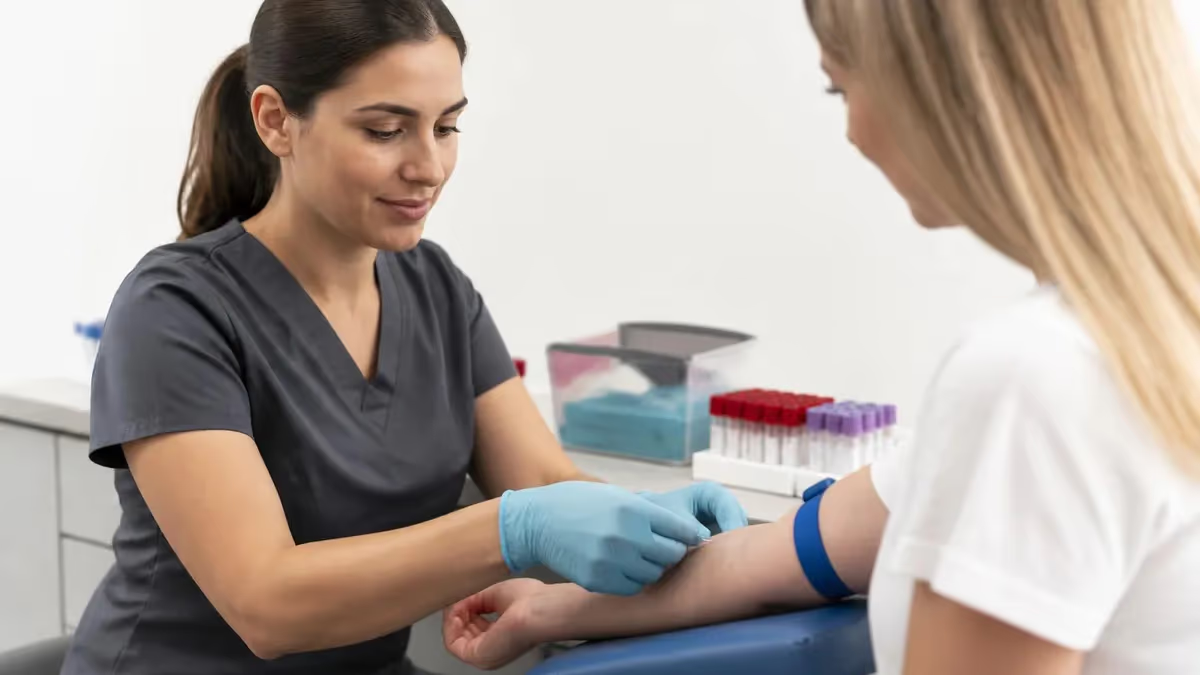
What Does a Phlebotomist Do — and Why Is Demand Growing?
If you've been searching for phlebotomy jobs near me, you're not alone. The U.S. Bureau of Labor Statistics projects 8% employment growth for phlebotomists through 2032 — faster than the average for all occupations. That translates to roughly 19,500 new positions opening up over the next decade, driven by an aging population that needs more blood work, more diagnostic testing, and more preventive health screenings.
A phlebotomist's core job is drawing blood from patients for testing, transfusions, donations, or research. It sounds simple, but employers value people who can handle nervous or difficult patients with calm reassurance, locate difficult veins, label and process specimens correctly, and follow strict infection-control protocols. These aren't skills you pick up overnight — they take hands-on training and, increasingly, formal certification.
Training programs are short. Most community college and vocational phlebotomy courses run 3 to 6 months, and some hospital-run programs take as little as 8 weeks. You can be job-ready within a single semester — a big reason phlebotomy attracts career changers who want into healthcare without committing to a two- or four-year degree.
Where Phlebotomists Work: Your Local Options
When you search for phlebotomy jobs near me, you'll find openings across a wide range of settings. Understanding each workplace type helps you target your search and frame your application correctly.
Hospitals and Health Systems
Hospitals are the single largest employer of phlebotomists. Large hospital systems — think HCA Healthcare, CommonSpirit, Ascension, Kaiser Permanente — hire phlebotomists across inpatient floors, emergency departments, and outpatient labs. Hospital jobs often come with the best benefits packages: health insurance, retirement contributions, tuition assistance, and shift differentials for nights and weekends. The tradeoff is that hospital blood draws are fast-paced, high-volume, and involve critically ill patients. Many hospital positions require at least one certification before hire.
Reference and Diagnostic Laboratories
National reference labs — Quest Diagnostics and LabCorp are the two giants — operate thousands of patient service centers across the country. These centers are often located in strip malls, medical office buildings, or inside pharmacies. The work environment is more predictable than a hospital: set hours, a steady flow of scheduled patients, and less clinical complexity. Quest and LabCorp both hire entry-level phlebotomists regularly and often provide on-the-job training alongside your certification prep.
Blood Banks and Donation Centers
The American Red Cross, Vitalant, OneBlood, and other blood collection organizations hire phlebotomists to staff fixed donation centers and mobile drives. These roles involve healthy volunteers rather than patients — donors are nervous but not sick, and the focus is on hospitality as much as clinical skill. Pay can be slightly lower than hospital rates, but scheduling is often more predictable.
Physician Offices and Group Practices
Private doctor's offices, multi-specialty group practices, and urgent care clinics all draw blood on-site. These positions often suit people who want a quieter, relationship-driven environment — you'll see many of the same patients week after week. Hours tend to align with standard business hours, which makes these roles attractive if you're balancing family responsibilities.
Mobile Phlebotomy Services
Mobile phlebotomy is one of the fastest-growing niches in the field. Companies like ExamOne (a subsidiary of Quest), Getlabs, and regional mobile health businesses send phlebotomists directly to patients' homes, assisted living facilities, corporate wellness events, and nursing homes. Mobile roles typically require a reliable vehicle, strong time-management skills, and comfort working independently. Pay often runs $1–$3 per hour above clinic rates to compensate for drive time and fuel.
Long-Term Care and Skilled Nursing Facilities
Nursing homes and long-term care facilities need regular blood draws for resident monitoring. These positions are often part-time or per-diem, making them popular as a second job or stepping stone while you build your resume. Dealing with elderly residents who may have difficult venous access sharpens your technical skill faster than almost any other setting.
Is Phlebotomy a Good Career Choice?
For people who want to enter healthcare quickly, work directly with patients, and maintain a stable income, phlebotomy is an excellent starting point. The field rewards reliability, attention to detail, and genuine empathy for patients — qualities that no credential can substitute for. Many phlebotomists use the role as a foundation for advancing into medical laboratory technology, nursing, or physician assistant programs. If you enjoy procedural work, don't mind early mornings, and want a career with consistent demand, phlebotomy jobs near you are worth serious consideration.

Phlebotomist Salary: What You Can Expect in 2026
Salary is one of the first things people check when searching for phlebotomy jobs near me — and the numbers are better than many expect for an entry-level healthcare role. According to BLS data, the median hourly wage for phlebotomists is $19.07, or about $39,660 per year.
Geography matters enormously. States like California, Alaska, Washington, and Massachusetts pay phlebotomists significantly above the national median — California's median is over $24/hr. Rural areas and Southern states tend to pay closer to $16–$18/hr for entry-level positions. When you search phlebotomy jobs near me, sorting by pay rate on Indeed or Glassdoor gives you a real-time picture of what your local market looks like right now.
Shift differentials add up fast. Many hospitals pay an extra $2–$4/hr for evening shifts, $3–$5/hr for nights, and weekend differentials on top of that. A phlebotomist working night shifts at a major hospital can realistically earn $45,000–$50,000 without supervisory responsibility.
Phlebotomist Salary by Experience Level
Hourly: $17–$19/hr
Annual: $35,000–$39,500
Settings: Reference labs (Quest, LabCorp), urgent care clinics, physician offices.
Notes: Certification required or expected within 90 days. Clinical draw hours from training program count toward experience. Expect morning draw shifts and per-diem availability to be valued.

Certifications That Get You Hired
Certification is the single biggest factor in landing your first phlebotomy job. Most hospitals, Quest, and LabCorp either require it at hire or within 6–12 months of starting. Even employers who don't mandate it prefer certified candidates — it signals you've passed a standardized competency exam and understand proper venipuncture technique, specimen handling, and safety protocols.
ASCP Phlebotomy Technician (PBT)
The American Society for Clinical Pathology credential is the most recognized in hospital settings. To sit for the PBT exam, you need either an accredited phlebotomy training program plus 100 hours of clinical experience, or one year of full-time phlebotomy work. The exam covers anatomy, venipuncture, specimen processing, and quality control. Hospitals that specify a certification almost always accept ASCP.
NHA Certified Phlebotomy Technician (CPT)
The National Healthcareer Association CPT is the most widely held phlebotomy credential in the country, partly because many vocational schools and community colleges partner directly with NHA for their exam. The CPT is accepted by Quest, LabCorp, and most clinic networks. Exam prep resources are widely available, and the test is offered at Pearson VUE testing centers across the country.
AMT Registered Phlebotomy Technician (RPT)
The American Medical Technologists RPT is common in physician office and outpatient clinic settings. It's also a pathway favored by candidates who have work experience but didn't complete a formal training program — AMT's experience pathway lets you qualify through documented work hours.
NCCT Phlebotomy Technician (NPT)
The National Center for Competency Testing NPT is less universally recognized than ASCP or NHA but is accepted by many clinics and long-term care facilities. It's a solid option if you're in a market where NPT-holding candidates are in demand, or if your training school is an NCCT partner.
Having any nationally recognized credential puts you ahead of uncertified candidates. Having ASCP or NHA specifically gets you past automated applicant tracking systems that screen for those acronyms.
How to Find Phlebotomy Jobs Near Me: The Best Platforms
You don't need a recruiter or a professional network to land a phlebotomy job — most hiring happens through a handful of straightforward channels.
Indeed and ZipRecruiter
Indeed is the highest-volume job board for phlebotomy in the U.S. Search "phlebotomy technician" or "phlebotomist" with your ZIP code and set alerts for new postings. The site aggregates listings from hospital career pages, staffing agencies, and employer direct postings. Filter by full-time, part-time, or per-diem depending on your availability.
Hospital and Health System Career Pages
Going direct to hospital career portals bypasses competition and often surfaces positions not listed on third-party boards. If there are major health systems in your metro area — HCA, CommonSpirit, Dignity Health, Mayo Clinic, Cleveland Clinic affiliates, or regional community hospital networks — bookmark their career pages and check weekly. Most allow you to create a profile and set up job alerts by role category.
Quest Diagnostics and LabCorp Career Portals
Both Quest and LabCorp have dedicated career sites with phlebotomy openings organized by state and city. Because they operate thousands of patient service centers, there are almost always openings within commuting distance of major metro areas. These employers hire at scale and move quickly from application to interview.
Healthcare Staffing Agencies
Staffing agencies fill per-diem and temporary slots that hospitals can't fill through direct hire. AMN Healthcare, Maxim Healthcare Staffing, Aya Healthcare, and Cross Country Allied all place phlebotomists in contract roles. Agency work pays a premium rate and exposes you to multiple facilities — which builds your resume fast. Many agency placements convert to permanent positions once you've worked a facility for a few months.
LinkedIn is increasingly useful for healthcare hiring. Keeping your profile current with your certification, clinical hours, and any phlebotomy coursework makes you findable to hospital recruiters. Follow major health systems in your area and turn on job alerts for "phlebotomist" in your location. Connecting with nurse managers or lab directors can move your application to the top of the pile.

Tips for Your First Phlebotomy Job Application
- ✓Tailor your resume to each listing — mention pediatric draws, specimen processing, or specific tube types if the job posting emphasizes them
- ✓Put your certification (e.g., NHA CPT, Certificate No. XXXXXX) in the header of your resume, directly under your name — never bury it at the bottom
- ✓Get a reference letter from the phlebotomist or lab manager who supervised your clinical hours — ask before you start applying
- ✓Apply Monday through Wednesday — research shows applications submitted early in the week receive faster recruiter responses
- ✓Follow up after 10 days with a brief email expressing continued interest — this alone moves many applications to the active pile
- ✓Consider per-diem or agency work to start — 3 months at 3–4 facilities is a stronger resume than 6 months of unanswered applications
- ✓Be honest about your draw count — interviewers know entry-level candidates have 50–100 draws, not 500
- ✓Prepare to discuss your protocol for fainting patients (syncope) — this question appears in almost every phlebotomy interview
Phlebotomy Jobs: Pros and Cons to Consider
- +Short training — most programs completed in one semester
- +Strong job security — 8% projected growth through 2032
- +Multiple work settings: hospitals, labs, mobile, clinics
- +Shift differentials significantly boost hospital earnings
- +Entry point to broader healthcare careers (MLT, RN, PA)
- +Consistent demand regardless of economic conditions
- −Entry-level pay ($17–$19/hr) is modest in high-cost cities
- −Early morning shifts (5–6 AM) common in hospital settings
- −Physically demanding — standing, walking, extended shifts
- −Dealing with patients who are afraid of needles daily
- −Limited advancement without additional education/credentials
- −Exposure to bloodborne pathogens requires strict PPE discipline
What Employers Screen For in Phlebotomy Interviews
Once you land an interview, knowing what hiring managers care about helps you walk in prepared. Phlebotomy hiring is fast — many employers move from application to offer in 1–2 weeks — but they're screening for specific qualities that go beyond technical skills.
Bring your certification card or a printed certificate to the interview. If you're still awaiting your exam date, say so explicitly and give a specific timeline. Employers who are willing to hire pre-certification want to know you're actively pursuing it, not vaguely planning to.
Be ready to state how many venipunctures you've performed — this is almost always asked. If you completed a training program, you had at minimum 50–100 clinical draws. That's low but honest. If you supplemented with volunteer hours at a blood bank or additional clinical rotations, mention that. Employers know entry-level candidates don't have 500 draws; they want to see that you take the skill seriously.
Fear of needles is nearly universal — at least 25% of patients are anxious about blood draws. Interviewers will ask how you handle nervous patients, fainters, or children. Have a specific answer ready: describe the calm, conversational approach you use to distract patients, how you recognize pre-syncope warning signs, and what your protocol is if a patient feels faint.
Mislabeled specimens are among the most serious errors in clinical labs — they can result in wrong diagnoses and patient harm. Interviewers want to see that you understand why two-identifier verification matters, how you handle specimens at the collection site, and what temperature or processing requirements different tube types have.
Labs run early — many hospital phlebotomy shifts start at 5 AM or 6 AM for morning draw rounds. Employers value candidates who can occasionally cover weekend or holiday shifts. Flexibility is one of the most frequently mentioned hiring criteria in lab manager surveys.
Getting Certified: The Foundation for Getting Hired
Whether you've already completed a training program or are just starting to research the field, passing a nationally recognized phlebotomy certification exam is the clearest path to getting hired at competitive wages. The four major exams — ASCP PBT, NHA CPT, AMT RPT, and NCCT NPT — all cover overlapping content: anatomy and physiology of the circulatory system, venipuncture technique, capillary puncture, order of draw, specimen processing, infection control, and patient communication.
Practice testing is one of the most effective ways to prepare. Working through realistic exam questions under timed conditions reveals which content areas need more review, reduces test anxiety through familiarity, and builds the quick pattern recognition that multiple-choice certification exams reward. Use the phlebotomy practice tests below to benchmark your readiness before you schedule your exam.
Entry-Level vs. Experienced Phlebotomist Positions
Understanding what employers actually mean by "entry-level" saves you time when filtering listings. True entry-level positions — often labeled "Phlebotomist I" or "Patient Services Representative" by labs — require a current certification (or willingness to obtain within 90 days) and completion of a formal training program. They don't require prior paid work experience, because they assume your clinical hours from training count. Quest and LabCorp both explicitly hire new grads into entry-level PSR roles.
Mid-level positions ("Phlebotomist II" or "Senior Phlebotomist") require 1–2 years of documented venipuncture experience, often with a specified minimum number of successful draws — 500 to 1,000 is common. These roles may include training new hires, handling pediatric or geriatric patients with difficult access, or processing specimens in the lab.
Lead and supervisor positions usually require 3–5 years of experience plus demonstrated leadership and sometimes additional credentials in lab science. These are beyond the entry-level search but worth tracking as a 3–5 year career goal.
If you're applying for your first position, focus your search on listings that explicitly say "new grads welcome," "training provided," or don't list a years-of-experience minimum. Applying to roles that require 2+ years when you have zero wastes time and can deflate your confidence. Filtering your search correctly on Indeed or LinkedIn saves hours of frustration.
Phlebotomy Questions and Answers
Phlebotomy Practice Test Questions
Prepare for the Phlebotomy Test exam with our free practice test modules. Each quiz covers key topics to help you pass on your first try.
Phlebotomy American Medical Certification ...
Phlebotomy Exam Questions covering American Medical Certification Association Phlebotomy. Master Phlebotomy Test concepts for certification prep.
Phlebotomy American Medical Technologists ...
Free Phlebotomy Practice Test featuring American Medical Technologists Phlebotomy. Improve your Phlebotomy Exam score with mock test prep.
Phlebotomy American Society for Clinical P...
Phlebotomy Mock Exam on American Society for Clinical Pathology Phlebotomy. Phlebotomy Study Guide questions to pass on your first try.
Phlebotomy Association of Phlebotomy Techn...
Phlebotomy Test Prep for Association of Phlebotomy Technicians. Practice Phlebotomy Quiz questions and boost your score.
Phlebotomy National Center for Competency ...
Phlebotomy Questions and Answers on National Center for Competency Testing Phlebotomy. Free Phlebotomy practice for exam readiness.
Phlebotomy National Healthcareer Associati...
Phlebotomy Mock Test covering National Healthcareer Association Phlebotomy. Online Phlebotomy Test practice with instant feedback.
Phlebotomy Order of Draw and Additives
Free Phlebotomy Quiz on Order of Draw and Additives. Phlebotomy Exam prep questions with detailed explanations.
Phlebotomy Legal and Ethics
Phlebotomy Practice Questions for Phlebotomy Legal and Ethics. Build confidence for your Phlebotomy certification exam.
Phlebotomy Safety and Infection Control
Phlebotomy Test Online for Safety and Infection Control. Free practice with instant results and feedback.
Phlebotomy Special Collection Procedures
Phlebotomy Study Material on Special Collection Procedures. Prepare effectively with real exam-style questions.
Phlebotomy Specimen Processing and Handling
Free Phlebotomy Test covering Specimen Processing and Handling. Practice and track your Phlebotomy exam readiness.
Phlebotomy Test Arterial Blood Gas Collection
Phlebotomy Exam Questions covering Test Arterial Blood Gas Collection. Master Phlebotomy Test concepts for certification prep.
Phlebotomy Test Capillary and Dermal Puncture
Free Phlebotomy Practice Test featuring Test Capillary and Dermal Puncture. Improve your Phlebotomy Exam score with mock test prep.
Phlebotomy Test Pediatric Blood Collection
Phlebotomy Mock Exam on Test Pediatric Blood Collection. Phlebotomy Study Guide questions to pass on your first try.
Phlebotomy Test Phlebotomy Anatomy and Phy...
Phlebotomy Test Prep for Test Phlebotomy Anatomy and Physiology. Practice Phlebotomy Quiz questions and boost your score.
Phlebotomy Test Phlebotomy Exam Simulation
Phlebotomy Questions and Answers on Test Phlebotomy Exam Simulation. Free Phlebotomy practice for exam readiness.
Phlebotomy Test Phlebotomy Patient Identif...
Phlebotomy Mock Test covering Test Phlebotomy Patient Identification and Communication. Online Phlebotomy Test practice with instant feedback.
Phlebotomy Test Point of Care Testing
Free Phlebotomy Quiz on Test Point of Care Testing. Phlebotomy Exam prep questions with detailed explanations.
About the Author

Registered Nurse & Healthcare Educator
Johns Hopkins University School of NursingDr. Sarah Mitchell is a board-certified registered nurse with over 15 years of clinical and academic experience. She completed her PhD in Nursing Science at Johns Hopkins University and has taught NCLEX preparation and clinical skills courses for nursing students across the United States. Her research focuses on evidence-based exam preparation strategies for healthcare certification candidates.