
Phlebotomy Certification: How to Get Certified in 2026 September
Phlebotomy certification guide: top exams, costs, online options, license vs certification, and how to become a certified phlebotomy technician fast. 💡
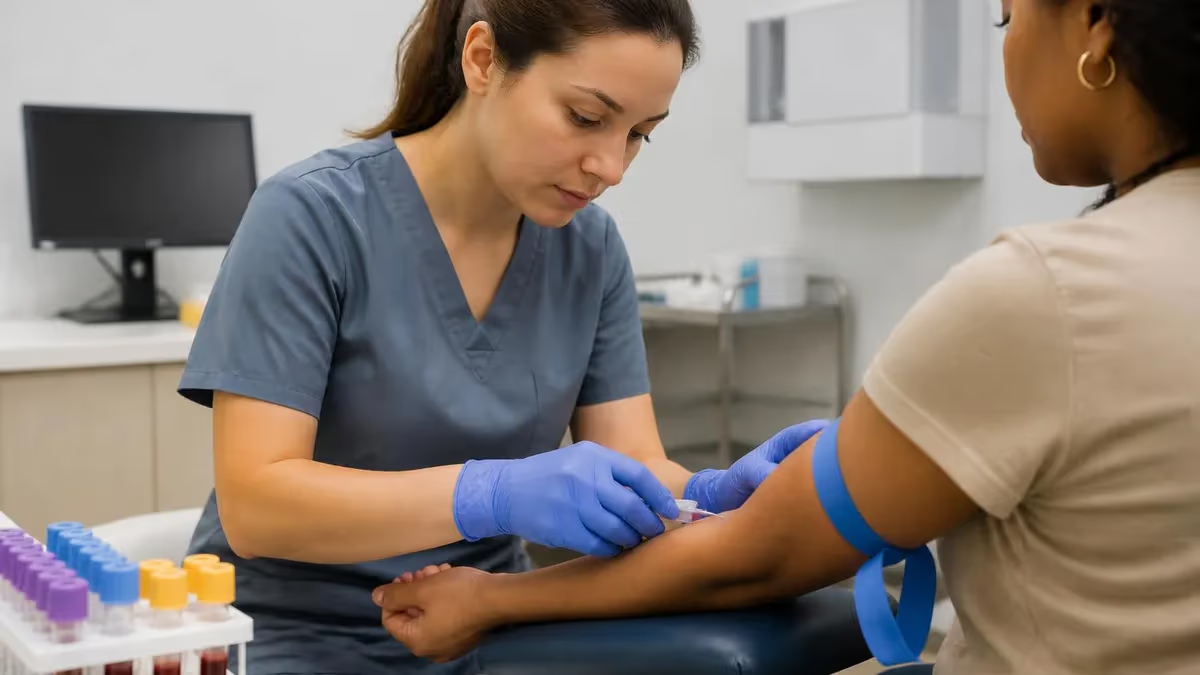
Phlebotomy certification is the single most important credential you can earn before stepping into a clinical lab or hospital draw station. Whether you're just starting out or you've already finished a training program and need to know what comes next—this guide covers everything: the best exams, what they cost, how long it takes, and what actually matters when employers look at your résumé.
The job title certified phlebotomy technician isn't just a fancy label. In many states, certification is required to work legally. In others it's technically optional—but any hospital or clinic worth working at will expect it. So let's break this down clearly.
What Is Phlebotomy Certification?
Certification means a national credentialing body has verified that you meet a defined standard of knowledge and skill. It's separate from a state license (more on that difference below). The most widely recognized credentials come from four organizations:
- ASCP (American Society for Clinical Pathology) — the PBT(ASCP) is considered the gold standard in most hospital systems
- NHA (National Healthcareer Association) — the CPT credential, very popular for students coming out of vocational programs
- NCCT (National Center for Competency Testing) — the NCP credential, accepted across most states
- AMT (American Medical Technologists) — the RPT credential, strong in the Midwest and Southwest
Any of these four gets you in the door. That said, if you're targeting large health systems or academic medical centers, ASCP carries the most weight—so it's worth the extra prep if you have the time.
Phlebotomy License vs Certification: What's the Difference?
This trips up a lot of people. A certification is issued by a private credentialing organization after you pass their exam. A license is issued by a state government and is legally required to practice in that state.
Right now, only a handful of states—California, Louisiana, Nevada, and Washington—actually require a state phlebotomy license. California's is the strictest: you must complete an approved training program, log 50+ venipunctures and 10 skin punctures, then pass a state-approved certification exam before you can legally draw blood for pay.
Everywhere else, national certification functions as the practical standard even without a formal licensing requirement. So even if you live in Texas or Florida where there's no license requirement, you still need a national cert to get hired at any reputable facility.
How to Get Phlebotomy Certification: Step by Step
The path looks roughly the same across all four major orgs, though the specific numbers vary:
- Finish an accredited training program — most programs run 4–8 weeks (some community colleges stretch to a semester). Look for programs accredited by NAACLS if you're targeting ASCP.
- Log your clinical hours — you need documented venipuncture experience. ASCP requires 100 successful venipunctures; NHA requires 30–50 depending on your program.
- Apply to the exam body — submit transcripts, clinical records, and pay the application fee.
- Pass the exam — most exams are 100–120 multiple-choice questions, 2 hours, administered at Pearson VUE or PSI testing centers.
- Maintain your credential — most certifications require renewal every 2–3 years via continuing education (CEUs).
That's it. There's no magic to it—but the clinical hours piece catches people off guard. You can't just take an online class and sit for the exam; you need hands-on draws documented by a supervisor.
Online Phlebotomy Certification: What's Real and What's Not
Here's where a lot of students get burned. You'll see ads for "100% online phlebotomy certification" for $99 and a weekend of your time. Ignore them. No legitimate employer recognizes a purely online credential because phlebotomy is a hands-on skill—you can't learn venipuncture from a YouTube video.
What is legitimate: hybrid programs where the didactic (classroom theory) portion is delivered online, and you complete your clinical rotations in person at a local hospital or lab. Many community colleges and vocational schools offer these. They're a great option if you have scheduling constraints—you do the coursework on your own time, then show up for your clinical shifts.
The NHA and NCCT do accept some online hybrid programs for their certification pathways. ASCP is stricter about program accreditation. Always verify that a program meets the requirements of whichever exam you plan to sit for before you enroll.
Phlebotomy Certification Near Me: Finding Local Programs
The fastest way to find legitimate phlebotomy certification programs near you is to search the NAACLS program directory (naacls.org) or the NHA school finder. These pull only accredited programs.
Community colleges almost always have the best price-to-quality ratio. Expect to pay $800–$2,500 for a full program including clinical placement. Private vocational schools can run $1,500–$5,000, but they often have faster start dates and more flexible scheduling.
If you're in a rural area, look into programs at regional hospitals—many run their own in-house phlebotomy training for prospective hires, and completing their program often fast-tracks you to a job offer.
How Long Does Phlebotomy Certification Take?
Realistically, plan for 2–4 months from enrollment to credential-in-hand. Here's a rough breakdown:
- Training program: 4–8 weeks for a dedicated phlebotomy program, 1 semester if through a community college
- Clinical hours: often completed concurrently with the program (1–3 weeks of shifts)
- Exam application processing: 2–4 weeks
- Exam scheduling and sitting: typically within 2–4 weeks of approval
- Score reporting: immediate (computer-based exams) or within 2–4 weeks
The fastest path is an accelerated program designed specifically for working adults—some get students through in 5–6 weeks total. The slowest path is a semester-length community college course, which is usually cheaper but takes 16 weeks.
National Phlebotomy Certification Exams Compared
Here's a quick side-by-side of the four main national phlebotomy certification exams so you can see how they stack up:
The PBT(ASCP) exam is 80 questions, 2 hours, costs $175 for first-time applicants, and requires 100 documented venipunctures. It's the hardest to qualify for but carries the most prestige, especially at academic medical centers.
The CPT (NHA) exam is 100 questions, 2 hours, costs $155, and requires proof of training plus 30 documented venipunctures. It's the most popular among recent graduates of vocational programs and is widely accepted.
The NCP (NCCT) exam is 100 questions, 3 hours, costs around $95–$135 depending on whether you take it at a testing center or online proctored. It has less strict prerequisite documentation, making it accessible if your program didn't track venipunctures formally.
The RPT (AMT) exam is 210 questions, 3.5 hours, costs $135, and overlaps significantly with the medical assistant scope—useful if you want a broader credential.
For most students, NHA CPT or ASCP PBT is the right call. NHA if you want flexibility and quick turnaround; ASCP if you're aiming for hospital systems and don't mind extra prep time.
What Does the Phlebotomy Certification Exam Cover?
All four exams test roughly the same core competencies, just weighted differently. The major content areas are:
- Anatomy and physiology — vascular anatomy, circulatory system basics, relevant organ systems
- Specimen collection procedures — venipuncture technique, order of draw, site selection, pediatric and geriatric considerations
- Specimen handling and processing — tube types (color-coding), anticoagulants, centrifugation, chain of custody
- Safety and infection control — standard precautions, sharps disposal, PPE, OSHA bloodborne pathogen standards
- Quality assurance and documentation — labeling requirements, chain of custody, pre-analytical errors
- Healthcare system and professional issues — HIPAA, patient rights, scope of practice
The exam isn't designed to trick you—it tests whether you can safely collect blood specimens without harming patients or creating unreliable samples. If you've done your clinical hours seriously, most of this will feel familiar.
To prepare, most candidates use a combination of a study guide (ASCP's own prep book is solid), flashcards for tube types and order of draw, and phlebotomy practice exam questions. Aim for 70–75% on practice tests before scheduling—most exams require 70–75% to pass, so you want comfortable margin.
Certified Phlebotomy Technician Salary and Career Outlook
Certification pays off financially. According to BLS data, phlebotomists earn a median of around $40,000 per year, but certified technicians at hospitals consistently earn $3,000–$6,000 more annually than non-certified workers doing similar work. In high-cost-of-living states like California and New York, experienced CPTs can clear $55,000–$60,000.
The job market is strong. Healthcare employment is growing faster than average, and phlebotomy specifically benefits from aging population demographics—more blood draws ordered per year, more staff needed to do them. Travel phlebotomy (contract assignments at different facilities, often paying a premium) is an increasingly popular path for certified techs who want variety and higher pay.
Beyond salary, certification opens doors to advancement. Many lab technician roles and phlebotomy supervisor positions require your national cert as a baseline. It's also a common stepping stone into medical laboratory science, nursing, or other allied health careers.
Renewing Your Phlebotomy Certification
Don't let your cert lapse—it's harder to get it back than to keep it. Renewal timelines and requirements:
- ASCP PBT: renewal every 3 years, requires 36 CME credits or retesting
- NHA CPT: renewal every 2 years, requires 10 CE hours (many free options available through NHA's portal)
- NCCT NCP: renewal every 3 years, requires 14 CE hours
- AMT RPT: annual renewal, requires ongoing CE through AMT's Continuing Competency program
Set a calendar reminder 6 months before your renewal date. CE courses are cheap and often free through employer education benefits or professional association membership. The renewal fees themselves are modest ($60–$100 range), so there's no good reason to let a credential expire.

Start Preparing Today
Getting your phlebotomy certification doesn't have to be overwhelming. Pick your target exam (ASCP or NHA for most people), find an accredited program in your area or a legitimate hybrid option, log your clinical hours seriously, and then prepare with real practice questions before you sit.
The phlebotomy training path is well-documented and well-traveled. Thousands of techs get certified every year—it's not an elite credential that requires years of study. With focused effort over a few months, you can go from zero background to a nationally certified phlebotomy technician ready to work.
Use our phlebotomy practice test questions to test your readiness before exam day. Cover your weak areas, especially order of draw and tube types—those are the most commonly tested topics across all four national exams.
About the Author

Registered Nurse & Healthcare Educator
Johns Hopkins University School of NursingDr. Sarah Mitchell is a board-certified registered nurse with over 15 years of clinical and academic experience. She completed her PhD in Nursing Science at Johns Hopkins University and has taught NCLEX preparation and clinical skills courses for nursing students across the United States. Her research focuses on evidence-based exam preparation strategies for healthcare certification candidates.