
Phlebotomy Classes: Programs, Cost & What to Expect 2026 September
Find phlebotomy classes near you — compare program types, costs, length, and what you'll learn. Plus how classes connect to certification and job 💡
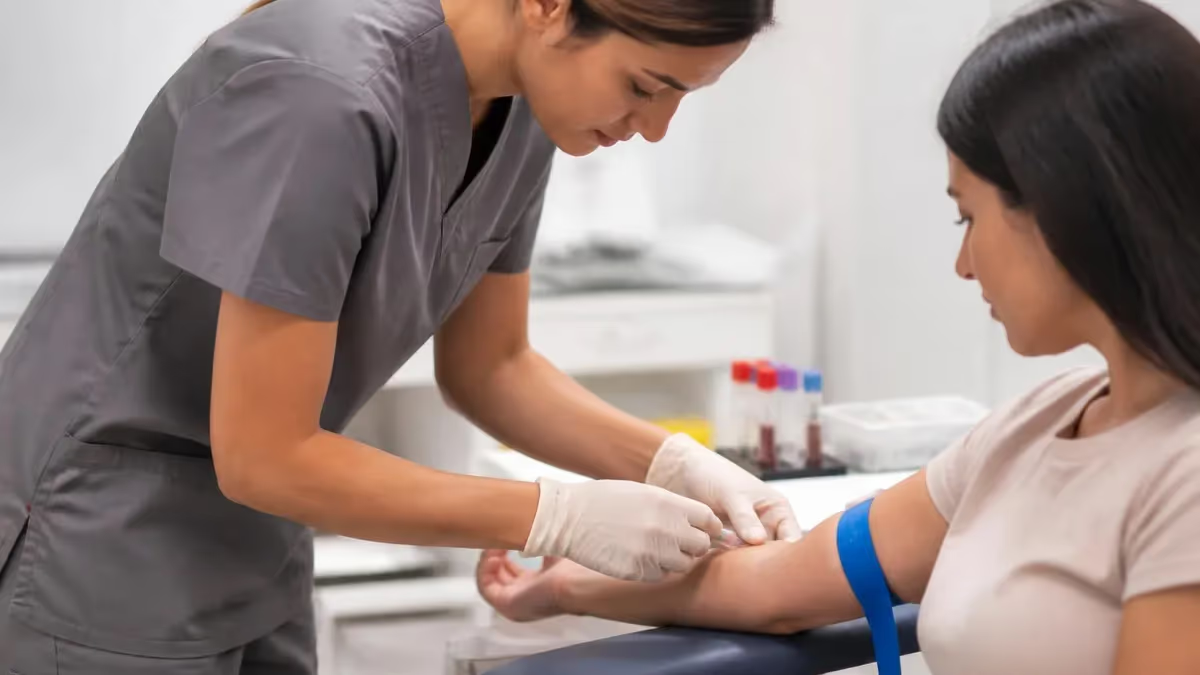
Phlebotomy Classes at a Glance

Phlebotomy classes are short-term training programs that teach the skills required to work as a phlebotomist — specifically venipuncture (drawing blood from veins), capillary puncture, patient interaction, specimen handling, and laboratory safety. You can't sit for most national phlebotomy certification exams without completing an accredited training program first, which makes choosing the right class one of the most consequential early decisions in a phlebotomy career.
The good news is that phlebotomy training is one of the most accessible entry points into healthcare. Programs are short — most certificate courses run four to eight weeks — and relatively affordable compared to other healthcare credentials. Community colleges, vocational schools, hospital-based training programs, and private career schools all offer phlebotomy training, which means most people can find phlebotomy classes near me without traveling far or disrupting a current work schedule.
What you learn in a phlebotomy class goes well beyond the physical skill of drawing blood. Strong programs cover anatomy and physiology of the circulatory system (so you understand what you're accessing and why technique matters), medical terminology relevant to blood collection orders, infection control and OSHA bloodborne pathogen standards, proper labeling and chain-of-custody procedures for specimens, and patient communication — how to explain the procedure, manage needle anxiety, and handle difficult sticks professionally.
The clinical component of your training is equally important as the classroom component. Classroom hours teach you the theory; clinical hours give you supervised practice on real patients until your technique is confident and reliable. Most accrediting bodies require a minimum number of successful venipunctures — typically 100 or more — before a student is eligible to sit for certification exams. Your training program is responsible for arranging your clinical placement, which is one reason why selecting an accredited, established program matters: programs with strong clinical partnerships give students access to high-volume settings that accelerate skill development.
This article walks through the different types of phlebotomy classes available, what to look for in a program, typical costs and schedules, and how your training connects to certification, employment, and long-term career advancement in clinical laboratory services.
Beyond basic technique, quality phlebotomy classes also introduce students to the laboratory testing system as a whole — how orders are generated electronically in a hospital EMR, how specimens are tracked through the lab information system (LIS), and how errors at the collection stage ripple into test result quality downstream.
This broader systems awareness makes you a more effective collaborator with laboratory scientists, nurses, and physicians who depend on the integrity of your work. Phlebotomists who understand the full journey of a specimen — from patient to report — approach their role with greater care and professionalism than those who see their job as simply "sticking needles."
Not all phlebotomy programs are equal. To sit for national certification exams from ASCP, NHA, or NCCT, your training program must meet specific accreditation and clinical hour requirements. Before enrolling, verify that the program is recognized by the certifying body you plan to use — some programs advertise phlebotomy training but don't fulfill the clinical requirements needed for certification eligibility.
Phlebotomy training is available through several different program types, each with different schedules, costs, and accreditation profiles. Understanding the differences helps you choose the format that fits your timeline, budget, and career goals.
Community college certificate programs are the most widely recommended option for most students. They're offered through accredited institutions, tend to have well-established clinical placement agreements, and are often the most affordable option — particularly for students who qualify for financial aid. Costs typically run $700 to $1,500 for the full program. Many community colleges offer both day and evening sections, making it easier to maintain employment while training.
The phlebotomy training specialists at vocational and career schools offer an alternative for students who want a faster, more focused experience. Private career schools may run programs on accelerated schedules and offer more flexible start dates throughout the year rather than working within a semester calendar. Costs tend to be higher — $1,200 to $2,500 is common — but the tradeoff is often a more dedicated, career-focused environment with direct job placement support.
Hospital-based training programs are offered by some health systems as a combination of training and early hiring pipeline. These programs are often free or subsidized by the employer in exchange for a commitment to work at the sponsoring facility for a defined period after training. Availability varies by region and is typically limited — these programs are often not publicly advertised and are filled through referral or direct inquiry to hospital HR departments.
Online phlebotomy courses exist but require careful evaluation. The classroom theory component of phlebotomy training can be delivered online effectively, but the clinical component cannot — it requires hands-on supervised practice. Programs that offer a fully online curriculum without an in-person clinical component don't qualify students for national certification. Look for hybrid programs that deliver theory online but arrange in-person clinical placement locally.
Military and correctional facility training programs provide phlebotomy instruction in specialized settings. Veterans and active military may have access to phlebotomy training through military occupational specialty (MOS) pipelines. Some state departments of corrections offer phlebotomy training to incarcerated individuals as a workforce reentry program — credentials earned through these programs are generally recognized by employers upon release.
When comparing programs, don't overlook the importance of the program director's credentials and the school's relationship with local healthcare employers. Programs whose instructors maintain active clinical certifications (MT, MLT, PBT) tend to deliver more current and practically grounded curriculum. Schools with formal partnerships with regional hospital systems and outpatient laboratory chains — where they regularly place students for clinical rotations — have a measurable advantage in job placement outcomes.
Ask admissions representatives directly: "Which healthcare facilities do your students complete clinical rotations at, and do you have formal agreements with those facilities?" Programs that can name specific partner sites are far more credible than those that answer vaguely about "clinical arrangements."

Phlebotomy Class Curriculum: What You'll Learn
Phlebotomy classes cover the anatomy of the venous and arterial systems — specifically the antecubital veins most commonly used for venipuncture, alternative sites, and the structure of blood vessels that affects technique. You'll study the composition of blood, the role of different blood components, and why specific tube types (EDTA, SST, citrate) are used for different tests. Understanding the 'why' behind every step of the draw makes you a more adaptable and safer practitioner.
Phlebotomy class costs vary considerably depending on program type, location, and whether you're attending as an in-state or out-of-state student at a public institution. Community college programs typically charge $700 to $1,500 for the full program including lab fees. Private career school programs run $1,200 to $2,500. Hospital-based programs are often free or subsidized. When comparing program costs, make sure you're comparing total program cost including lab fees, supplies, uniform requirements, and background check fees — not just tuition.
Financial aid is available for phlebotomy programs at accredited institutions. Federal Pell Grants and subsidized loans are available to eligible students at community colleges and accredited career schools. Some state workforce development programs offer specific funding for healthcare training, including phlebotomy. Employer tuition assistance programs are another option — if you're already working in a healthcare setting (as a medical assistant, patient services representative, or dietary aide), your employer may fund or partially fund phlebotomy training as part of a career ladder program.
Phlebotomy courses near me — particularly at community colleges — typically run for one semester (16 weeks) but many also offer accelerated eight-week and four-week intensive options. The accelerated formats cover the same content in compressed timeframes, which demands more time commitment per week but allows students to enter the workforce sooner. Intensive programs are better suited for students who can dedicate full days to training rather than fitting it around a full-time job.
Program schedules matter significantly for working adults. Day programs typically run Monday through Friday from morning to early afternoon. Evening programs run two to three nights per week and may pair weeknight classroom sessions with weekend clinical hours. Hybrid programs deliver lecture content asynchronously online with in-person lab and clinical components on set days. Know your scheduling constraints before committing to a program — it's better to take a few extra weeks finding the right schedule fit than to enroll in a format you can't sustain through completion.
Some students find that taking a phlebotomy class while simultaneously working in a healthcare adjacent role — as a medical receptionist, hospital unit clerk, patient transporter, or dietary aide — dramatically accelerates their learning. The terminology, patient interaction protocols, and hospital workflow basics they encounter on the job reinforce what they're learning in class. If you currently work in a healthcare setting and are considering phlebotomy as a career move, the overlap between your existing workplace knowledge and the classroom content can meaningfully reduce the cognitive load of training and improve your performance in the clinical phase.
One often overlooked aspect of phlebotomy program selection is class size. Programs with smaller student-to-instructor ratios — ideally 8:1 or lower in the lab component — give each student more hands-on time with training arms and more direct feedback from instructors during supervised practice. Larger classes may be cheaper but can result in students waiting long periods between practice repetitions, which slows skill development.
When evaluating programs, ask directly how many students are in each lab section and what the maximum enrollment is. This single factor can be the difference between leaving the program with confident technique and leaving with just enough exposure to pass the minimum requirements.

What to Look for Before You Enroll
- Accreditation: Verify the program is recognized by your target certification body (ASCP, NHA, NCCT)
- Clinical hours: Ask exactly how many supervised venipunctures students complete — the minimum for most exams is 100
- Clinical placement sites: Programs with hospital and outpatient lab partnerships give you higher-quality clinical experience
- Pass rates: Ask for the program's certification exam pass rate — strong programs report 85%+ first-attempt pass rates
- Job placement: Ask what percentage of graduates are employed within 90 days of completing the program
- Instructor credentials: Instructors should be certified phlebotomists or MT/MLT professionals with active clinical experience
The best time to start reviewing certification exam content is during your training program — not after. Concepts covered in your classes directly map to what's tested on the ASCP, NHA, and NCCT phlebotomy exams. Using practice tests while the material is fresh reinforces retention and reduces study time after graduation. See the phlebotomy practice tests at PracticeTestGeeks for exam-style questions you can review alongside your coursework.
Community College vs. Private Career School
- +Community college: lower tuition, financial aid eligible, public institution accreditation
- +Community college: semester-paced schedule with day and evening options
- +Private school: faster start dates, accelerated schedules, focused career environment
- +Private school: often includes active job placement support and employer relationships
- +Hospital programs: free or subsidized training with immediate job pipeline
- +Hospital programs: high-quality clinical environment in accredited facility
- −Community college: semester start dates limit flexibility (Aug/Jan only at many schools)
- −Community college: class sizes may be larger with less individualized instruction
- −Private school: higher tuition, not always eligible for federal Pell Grant
- −Private school: quality varies — research thoroughly before committing
- −Hospital programs: limited availability, competitive, often require internal referral
- −Hospital programs: employment commitment may limit early career flexibility
Completing a phlebotomy class is step one — sitting for and passing a national certification exam is step two, and it's the credential that employers and most healthcare systems require for permanent employment. The three most recognized phlebotomy certifications are the ASCP Phlebotomy Technician (PBT), the NHA Certified Phlebotomy Technician (CPT), and the NCCT Phlebotomy Technician (NCPT). All three require completion of an accredited training program, documented clinical hours, and a written examination.
Your training program is your primary resource for guidance on which certification is most appropriate for your target employment market. Some regions and health systems have a strong preference for ASCP certification. Others accept all three equally. The NHA CPT is particularly widely accepted across hospital systems and national laboratory chains like LabCorp and Quest Diagnostics.
Exam preparation is a genuine investment of time separate from your training program. The certification exams cover the full scope of phlebotomy practice — anatomy, technique, specimen handling, safety, and quality assurance — and while your classes prepare you for this content, dedicated exam review in the weeks before your test date meaningfully improves first-attempt pass rates.
The what is phlebotomy articles at PracticeTestGeeks complement the practice test materials by giving you context on the career landscape — where phlebotomists work, how roles differ between hospital, outpatient, and mobile settings, and what advancement looks like from an entry-level phlebotomy technician position.
Job placement after completing a phlebotomy class and earning certification is generally strong for candidates who target the right settings. Hospitals, outpatient labs, blood donation centers, physician offices, and reference laboratories all employ phlebotomists. Entry-level positions typically pay $16 to $22 per hour depending on the region, with hospital positions at the higher end and physician office positions at the lower end. Cities with major medical centers — Houston, Chicago, Atlanta, Phoenix, and the broader Midwest — consistently have high demand for phlebotomy technicians due to large healthcare system footprints and high patient volume.
Advancement within phlebotomy often comes through specialization. Therapeutic phlebotomy specialists work with patients who have conditions like hemochromatosis or polycythemia vera requiring regular blood removal as treatment — a more complex clinical scenario than diagnostic draws. Pediatric phlebotomy specialists develop advanced technique for collecting specimens from infants and young children, where standard venipuncture approaches don't work and capillary collection technique is paramount. Both specializations command higher pay and are in demand at children's hospitals and specialty clinics.
If you have a criminal history, verify your eligibility for healthcare employment in your state before investing in phlebotomy training. Some states and some employers have restrictions on healthcare employment for individuals with certain conviction types. Most states offer background check advisory opinions that let you assess your employability before completing training.
Phlebotomy is often the entry point into a healthcare career rather than a final destination. Many phlebotomy technicians use the credential as a stepping stone into medical laboratory technology (MLT/MT), clinical lab science, nursing, or other allied health fields. The clinical exposure you gain working as a phlebotomist — patient interaction, specimen handling, lab workflow — directly supports the experiential requirements of many advanced healthcare programs.
Some phlebotomists advance into donor center roles at blood banks, where the work involves automated collection systems and apheresis procedures alongside standard venipuncture. Others move into supervisory or training roles within high-volume outpatient labs or hospital phlebotomy departments. Mobile phlebotomy is a growing niche — technicians who travel to patients' homes or care facilities command premium rates and offer a flexible working arrangement that appeals to experienced practitioners.
The connection between phlebotomy classes near me and long-term career outcomes is real: programs with strong clinical placement networks accelerate your initial job search, and the certification credential you earn after training determines which employers and positions are open to you from day one. Choosing a quality accredited program, completing your clinical hours thoroughly, and sitting for certification promptly after graduation puts you in the strongest possible position for employment in one of healthcare's most reliably in-demand entry-level roles.
The phlebotomy field continues to grow — the Bureau of Labor Statistics projects steady demand growth driven by aging population demographics and expanding outpatient care settings. For anyone looking for a healthcare career that can be entered quickly, affordably, and without a four-year degree, phlebotomy classes remain one of the most direct routes to a stable, patient-facing clinical role with genuine upward mobility.
Students who approach their phlebotomy training as the beginning of a professional identity — not just a job requirement — consistently report better outcomes: more confidence in the clinical phase, stronger references from clinical supervisors, and faster job placement after certification. The technical skills are learnable by almost anyone willing to practice; the professional mindset is what separates candidates who advance quickly from those who plateau at entry level.
Phlebotomy Certification Options After Training
The American Society for Clinical Pathology certification is the most widely requested credential in hospital hiring — particularly at academic medical centers and large health systems.
- :
- :
- :
- :
The National Healthcareer Association CPT is broadly accepted across outpatient labs, physician offices, and hospital systems. Particularly strong recognition at national lab chains.
- :
- :
- :
- :
The National Center for Competency Testing certification is a cost-effective option recognized by outpatient clinics, physician offices, and some hospital systems.
- :
- :
- :
- :
Phlebotomy Questions and Answers
About the Author

Registered Nurse & Healthcare Educator
Johns Hopkins University School of NursingDr. Sarah Mitchell is a board-certified registered nurse with over 15 years of clinical and academic experience. She completed her PhD in Nursing Science at Johns Hopkins University and has taught NCLEX preparation and clinical skills courses for nursing students across the United States. Her research focuses on evidence-based exam preparation strategies for healthcare certification candidates.