
Phlebotomy Technician: Job Duties, Pay, and How to Become One 2026 September
🏆 Learn what a phlebotomy technician does, how much they earn, what certifications you need, and the steps to start your career in phlebotomy.
What Is a Phlebotomy Technician?
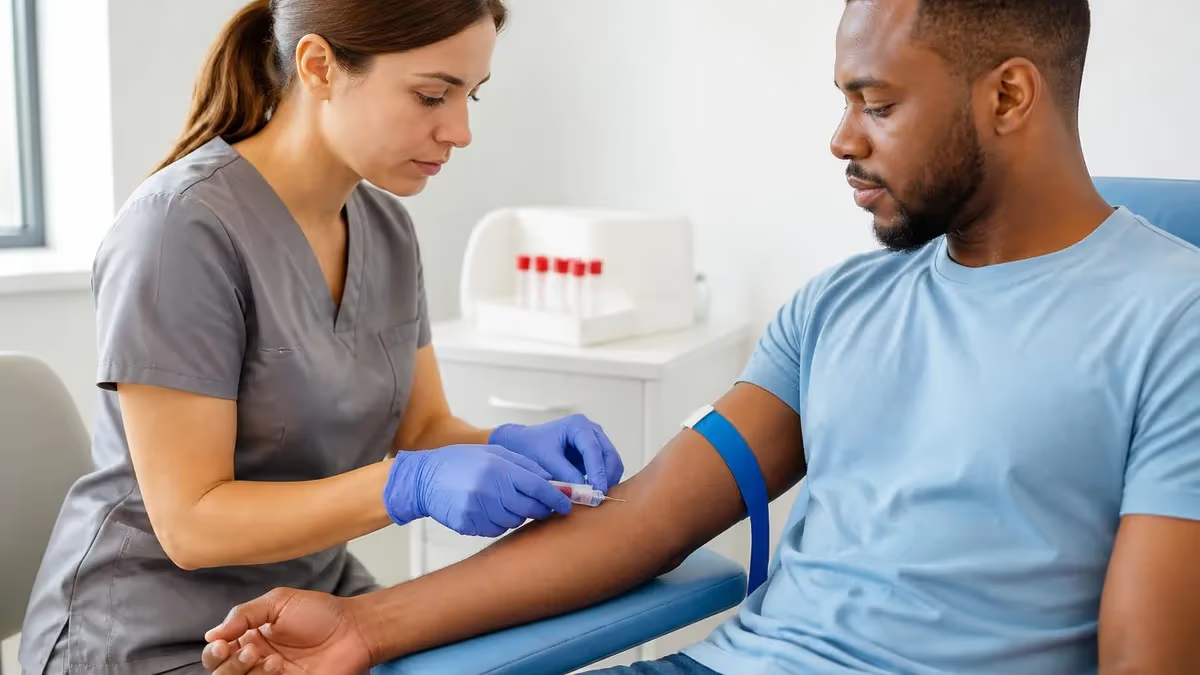
A phlebotomy technician is a healthcare professional trained to draw blood from patients for laboratory testing, transfusions, donations, or research. It's one of the most direct entry points into healthcare — you can go from zero experience to employed in under a year with the right training and certification. Phlebotomists work in hospitals, clinics, blood banks, diagnostic labs, and mobile collection units, interacting with patients across every age group and health condition.
The job sounds narrow — drawing blood — but it covers a wider skill set than most people expect. You're responsible for patient identification and verification, correct tube selection and labeling, maintaining sterile technique, managing needle-averse or anxious patients, handling and processing specimens, and documenting collections accurately. Errors at any of these steps can compromise test results, leading to misdiagnoses or repeat draws that cause patient discomfort and lab delays.
Phlebotomy technicians are distinct from phlebotomists in some state and employer contexts, though the terms are often used interchangeably. 'Technician' sometimes implies formal certification through a national organization (like NHA, ASCP, or AMT), while 'phlebotomist' can refer to anyone drawing blood regardless of credentialing. In practice, most healthcare employers use the titles interchangeably and focus on certification status and clinical experience when hiring.
The role fits people who are comfortable with repetitive clinical procedures, enjoy patient interaction, and want stable healthcare employment without a multi-year degree commitment. It's also frequently used as a stepping stone — many nurses, medical assistants, and lab technicians began their healthcare careers as phlebotomy technicians. A full overview of what the field covers, including educational paths, is in the phlebotomy career guide.
Phlebotomy is also appealing because the work is immediately visible and meaningful — the blood you collect directly enables the lab results that doctors use to diagnose illness, monitor chronic conditions, and guide treatment decisions. That direct connection to patient care gives the work significance beyond the mechanical task of needle insertion. It's a job where quality and precision have real consequences, which many phlebotomists find rewarding even within a clinical support role that isn't often in the spotlight.
- Primary duty: Collect blood specimens from patients for lab testing, transfusions, or donation
- Median salary: ~$39,000–$42,000/year (US Bureau of Labor Statistics, 2024 data)
- Training time: 4–8 months for a certificate program; some employers offer on-the-job training
- Certification: NHA CPT, ASCP PBT, AMT RPT — not legally required in all states but expected by most employers
- Work settings: Hospitals, outpatient labs, blood donation centers, mobile collection, physician offices
- Job outlook: 8–10% growth projected over the next decade (faster than average)
- Schedule: Available in day, evening, night, and weekend shifts — common in 24/7 healthcare facilities
How to Become a Phlebotomy Technician
Complete a Phlebotomy Training Program
Complete Clinical Hours
Pass a National Certification Exam
Apply for Phlebotomy Positions
Maintain Certification and Advance

Phlebotomy Technician Duties and Daily Work
A phlebotomy technician's core task is venipuncture — inserting a needle into a vein to collect blood into the correct collection tubes in the correct order. The 'order of draw' is a standardized sequence for filling different tube types to prevent additive cross-contamination between tubes. Following this sequence precisely is a basic competency tested on certification exams and enforced in every clinical setting. Errors in tube order or labeling are among the most common causes of specimen rejection in labs.
Beyond blood draws, phlebotomists perform capillary punctures (fingersticks or heelsticks for infants), collect arterial blood gases in some settings, and process and centrifuge specimens before transport to the lab. They also handle patient registration verification — confirming the patient's identity against the order using two identifiers (typically name and date of birth) — to prevent specimen mix-ups that can have serious medical consequences.
Patient communication is a larger part of the job than most people anticipate. A significant percentage of patients are needle-averse, anxious, or have difficult veins from illness, dehydration, or prior medical procedures. A skilled phlebotomist knows how to calm a nervous patient, identify viable veins through palpation rather than sight, and adjust technique for difficult draws without escalating patient stress. These soft skills often differentiate a highly valued phlebotomist from an average one.
Documentation is continuous throughout the shift. Each collection is logged with the patient identifier, time, collection site, tube types, technician ID, and any special handling notes (protect from light, keep on ice, stat priority). Electronic health records have replaced paper logs in most facilities, so comfort with basic EHR navigation and label printing systems is a practical necessity in modern phlebotomy positions.
Mobile phlebotomists work outside fixed lab settings — traveling to patient homes, long-term care facilities, or corporate sites for blood collection. Mobile work requires additional organizational skills (route planning, specimen temperature management during transport) and often more independent patient interaction since there's no immediate supervisor or clinical team nearby. The phlebotomy technician breaks down workplace types and how pay varies by setting.
Shift-to-shift variability is real in hospital phlebotomy. One shift might be steady and manageable; the next might involve a surge of stat orders, a string of difficult venipunctures, or a high-acuity patient area that requires extra care and patience. Part of building clinical competence as a phlebotomist is learning to manage that variability — staying methodical when volume spikes, communicating clearly with nursing staff about priority specimens, and knowing when to ask for help with a draw rather than attempting multiple unsuccessful sticks that increase patient discomfort.
Phlebotomy Technician Work Settings
Inpatient and outpatient hospital draws. Fast-paced, high volume, wide variety of patients (critical care, pediatrics, geriatrics). Typically offers full benefits, union protections in some regions, and structured advancement. Shift work including nights and weekends is standard.
Standalone labs like LabCorp, Quest Diagnostics, or hospital-affiliated outpatient centers. Typically daytime hours, Monday-Friday with some Saturday hours. Lower acuity than hospital, but high volume and often faster pace than a physician office.
Collections from healthy donors rather than patients. Focuses on donor screening, whole blood and apheresis collection, and component processing. Lower medical acuity but requires strong interpersonal skills — donors are volunteers, not patients, and retaining them matters.
Travel to patient locations (homes, care facilities, workplace wellness events) for blood collection. Higher pay in some markets, more independence, but requires reliable transportation and stronger specimen handling and documentation discipline without on-site support.
Phlebotomy Technician Certifications Compared
The National Healthcareer Association's Certified Phlebotomy Technician (CPT) exam is one of the most widely accepted credentials in the US. It's a 100-question multiple-choice exam covering phlebotomy procedures, specimen collection and processing, safety, and patient communication. The exam fee is approximately $117 for NHA members.
NHA CPT requires completion of a phlebotomy training program and a minimum number of documented venipunctures (typically 30 documented successful draws with instructor verification). Renewal is required every 2 years via 10 continuing education hours. Many community college phlebotomy programs are specifically designed to prepare students for the NHA CPT, making it a natural first choice for recent graduates of those programs.

Phlebotomy Technician Salary and Job Outlook
According to the US Bureau of Labor Statistics, the median annual salary for phlebotomists is approximately $39,000–$42,000, with hourly wages typically ranging from $17 to $22 for entry-level positions. Pay varies significantly by region — phlebotomists in California, Washington, Massachusetts, and New York consistently earn above-average wages compared to the national median. Hospital-based positions generally pay more than outpatient or physician office roles, and night/weekend shift differentials can add several dollars per hour.
Experience increases earning potential substantially. A phlebotomist with three to five years of experience in a high-volume hospital setting can expect wages in the $22–$28 per hour range, with senior and lead technician roles pushing higher in major metro areas. Some specialized roles — therapeutic phlebotomy (treating conditions like hemochromatosis), apheresis, or point-of-care testing coordination — command premium pay due to additional skill requirements.
Job outlook is strong. The BLS projects 8–10% growth for phlebotomist positions over the next decade, driven by aging population demographics, expanded laboratory testing volumes, and increased preventive health screening. Blood testing demand grows consistently with healthcare utilization, making phlebotomy a stable employment field that's resistant to the economic cycles that affect other industries.
Geographic flexibility is an advantage of phlebotomy certification — the credential is recognized nationwide, and phlebotomists who relocate can typically find employment quickly in a new city. Travel phlebotomy (working through agencies on short-term contracts at hospitals with staffing shortages) offers significantly higher hourly rates, typically $25–$40+, for phlebotomists with two or more years of experience willing to travel. This is a growing segment of the phlebotomy job market worth considering once you've built clinical experience. For more detail on finding positions, see the phlebotomy.
Benefits eligibility varies significantly by setting. Hospital and large health system phlebotomy positions typically include health insurance, retirement contributions, paid time off, and tuition reimbursement — making them attractive beyond the base wage. Contract and per-diem positions pay higher hourly rates but provide no benefits, so the true compensation comparison requires accounting for the cost of health insurance and other benefits when evaluating offers between staff and contract roles.
Phlebotomy Technician Career Checklist
- ✓Research phlebotomy training programs at local community colleges, vocational schools, or hospital-based programs — confirm they prepare you for national certification
- ✓Choose a nationally recognized certification target: NHA CPT, ASCP PBT, or AMT RPT — check which credential your target employers prefer
- ✓Track all clinical venipunctures with supervisor sign-offs — most certification exams require documented proof of completed draws
- ✓Study specimen collection order of draw, tube additives, and rejection criteria — these appear on every phlebotomy certification exam
- ✓Practice patient communication skills alongside technical skills — nervous patients and difficult draws are daily realities in phlebotomy
- ✓Review safety protocols: needle disposal, biohazard handling, needlestick response procedures, and PPE standards
- ✓After certification, apply broadly — hospitals, outpatient labs, blood banks, and mobile collection all hire entry-level phlebotomists
- ✓Ask about shift differential pay and advancement pathways when interviewing — some employers offer tuition assistance for additional credentials
- ✓Maintain certification through continuing education — mark your renewal date and track CE credits from the start to avoid lapses
- ✓Consider specialty areas (pediatric phlebotomy, therapeutic phlebotomy, travel phlebotomy) as advancement paths once you have 1–2 years of experience
Is Phlebotomy Technician the Right Career?
- +Short training time — most programs complete in 4–8 months, far shorter than nursing or other healthcare degrees
- +Clear entry path into healthcare — phlebotomy certification is a proven stepping stone to nursing, medical lab, and other clinical careers
- +Stable job market — consistent demand driven by lab testing volume and aging population demographics
- +Patient interaction — daily work involves direct patient contact if you prefer relationship-oriented healthcare roles over purely behind-the-scenes lab work
- +Geographic flexibility — certification is recognized nationally, making relocation straightforward
- −Starting pay is modest — entry-level phlebotomy wages ($17–$22/hour) are lower than many healthcare roles requiring similar time to train
- −Repetitive physical demands — standing, bending, and repeated needle procedures throughout shifts can cause cumulative strain
- −Shift work common — many phlebotomy positions in hospitals require nights, weekends, and holidays, which doesn't fit every lifestyle
- −Needlestick exposure risk — despite safety protocols, phlebotomists have higher needlestick risk than many other healthcare workers
- −Advancement ceiling within phlebotomy — moving to higher-paying healthcare roles typically requires additional education and credentialing beyond the phlebotomy certificate

Phlebotomy Technician Training and Certification Requirements
Most phlebotomy training programs run 4–8 months and combine classroom instruction with supervised clinical practice. Classroom content covers human anatomy (focusing on circulatory system and vein anatomy), phlebotomy techniques, specimen types, laboratory safety, infection control, and medical terminology. Clinical rotations put this content into practice, with students drawing blood under supervision from real patients in hospital or lab settings.
Program costs vary from roughly $800 at community colleges to $2,500–$3,500 at vocational schools and some hospital-affiliated programs. Community college programs are often the most affordable and tend to be NAACLS-accredited, which strengthens certification eligibility and employer recognition. Some hospitals offer their own phlebotomy training programs specifically designed to pipeline graduates into open positions within the same facility — these programs sometimes pay a training stipend and offer job placement assistance upon successful completion.
Certification requirements differ slightly between credentialing bodies, but most require proof of a completed phlebotomy program and a documented clinical experience log showing a minimum number of successful venipunctures (ranging from 30 to 100+ depending on the organization). After passing the exam, most certifications require renewal every 2–3 years via continuing education units to keep credentials current. Letting a credential lapse creates additional paperwork to reinstate and can complicate employment verification with new employers.
Some states have specific phlebotomy regulations worth checking before choosing a program. California, Louisiana, Nevada, and Washington require phlebotomists to hold state-issued licenses in addition to national certification — California has among the most detailed requirements, with multiple license categories tied to specific collection methods.
In states without licensing requirements, employer hiring standards effectively set the bar, and most major health systems require NHA CPT, ASCP PBT, or AMT RPT as a baseline. Research your state's specific rules as part of your program selection process. More detail on program types is in the phlebotomy training guide and phlebotomy classes overview.
If you're choosing between two programs of similar cost and length, check each program's first-time certification exam pass rate — accredited programs are sometimes required to publish this data. A program with a 90%+ first-attempt pass rate on the NHA CPT or ASCP PBT tells you that graduates are well-prepared for the exam, while a lower pass rate may indicate weaker curriculum or clinical placement quality.
Phlebotomy Technician: Key Numbers
Phlebotomy Technician vs Medical Assistant vs Lab Technician
Phlebotomy technicians are frequently confused with medical assistants and laboratory technicians, but the roles are distinct. A phlebotomy technician's scope of practice centers on specimen collection — drawing blood, processing samples, and ensuring correct chain of custody from patient to lab. Medical assistants have a broader scope covering both clinical (vital signs, injections, EKGs) and administrative (scheduling, billing) duties, and phlebotomy is typically one component of the MA role rather than the entire job.
Medical laboratory technicians (MLTs) and technologists (MLTs/MTs/CLTs) work on the other side of the specimen — they're the professionals who analyze blood, urine, and tissue samples in the lab after collection. Lab techs need associate or bachelor's degree programs and separate certification from phlebotomy credentials. A phlebotomist collects; a lab tech analyzes. Some phlebotomists work in settings where they also perform basic point-of-care testing (glucose meters, rapid strep tests), but this is distinct from full laboratory analysis.
Training time and cost also differ significantly. Phlebotomy certificate programs are the shortest and lowest-cost pathway into healthcare clinical work — 4–8 months versus 18–24 months for medical assistant programs and 2–4 years for lab technician programs. If you want to enter healthcare quickly and affordably, phlebotomy is often the fastest legitimate clinical credential available. The phlebotomy certification details exactly what each credentialing body requires and how to choose between them based on your career goals.
In California, Louisiana, Nevada, and Washington, phlebotomists must hold a state license in addition to national certification. California has the most detailed requirements — including specific venipuncture and skin puncture practice hour minimums and multiple license categories. If you plan to work in one of these states, research state licensing requirements before choosing a training program, as some programs specifically prepare students for state licensure while others do not. Working as a phlebotomist without the required state license in these states is a regulatory violation regardless of your national certification status.
Building a Career as a Phlebotomy Technician
Entry-level phlebotomy positions typically expect you to have certification and your training program's clinical hours — you don't need years of work experience to land your first role. Many new phlebotomists start in outpatient lab settings or blood donation centers where draw volumes are high and you rapidly build skill and speed. After six to twelve months of experience, most phlebotomists find it easier to move into hospital positions, which often have more competitive pay and benefits but prefer applicants with demonstrated clinical experience.
Advancement within phlebotomy follows a relatively predictable path: entry-level tech → senior phlebotomist (handling more complex patients or training newer staff) → lead phlebotomist (shift coordination, quality assurance) → phlebotomy supervisor or training coordinator. Each step typically requires 2–4 years at the previous level and some demonstrated leadership or training experience. In larger health systems, lead and supervisor phlebotomy roles can reach salaries in the $50,000–$65,000 range.
Many phlebotomy technicians use their clinical experience as a foundation for further healthcare credentials. The hands-on patient interaction and clinical environment experience make phlebotomists strong candidates for accelerated medical assistant programs, nursing prerequisites, or directly into LPN programs in some states. Some phlebotomists pursue the medical laboratory science pathway — adding coursework to become a medical laboratory technician and eventually a medical laboratory scientist, which significantly increases earning potential. The decision to advance depends on whether you want to stay in collection-focused work or broaden into lab science, nursing, or other clinical fields.
Professional development doesn't stop at the credential. Joining professional organizations like the American Society of Phlebotomy Technicians (ASPT) or the National Phlebotomy Association (NPA) provides access to continuing education resources, industry networking, and updates on regulatory changes that affect phlebotomy practice. These organizations also advocate for phlebotomy standards and licensure requirements — relevant if you follow developments in state-by-state phlebotomy regulation. Connecting with other phlebotomy professionals early in your career builds a network that's useful for job referrals, specialty area information, and navigating the practical realities of clinical work that no exam prep covers.
One underutilized resource for phlebotomy career development is the mentorship relationship with experienced phlebotomists or lab managers in your facility. Many of the practical skills that make a phlebotomist exceptional — positioning for difficult draws, reading patient anxiety early, handling pediatric or elderly patients with fragile veins — are best learned by watching experienced techs in real clinical situations.
If your training program or first employer offers a formal mentorship or preceptorship, take full advantage of it. The knowledge transfer from a seasoned phlebotomist who has handled thousands of draws is worth more than any additional certification study on its own. Combining strong technical training with the american society of phlebotomy technicians gives you a credential that reflects both your classroom preparation and your clinical judgment.
Phlebotomy Questions and Answers
About the Author

Registered Nurse & Healthcare Educator
Johns Hopkins University School of NursingDr. Sarah Mitchell is a board-certified registered nurse with over 15 years of clinical and academic experience. She completed her PhD in Nursing Science at Johns Hopkins University and has taught NCLEX preparation and clinical skills courses for nursing students across the United States. Her research focuses on evidence-based exam preparation strategies for healthcare certification candidates.