
Phlebotomy Training: Programs, Cost & How Long It Takes 2026 September
❓ Phlebotomy training options explained — online, in-person, Red Cross, and free programs. Learn how long training takes, what it costs, and how to get
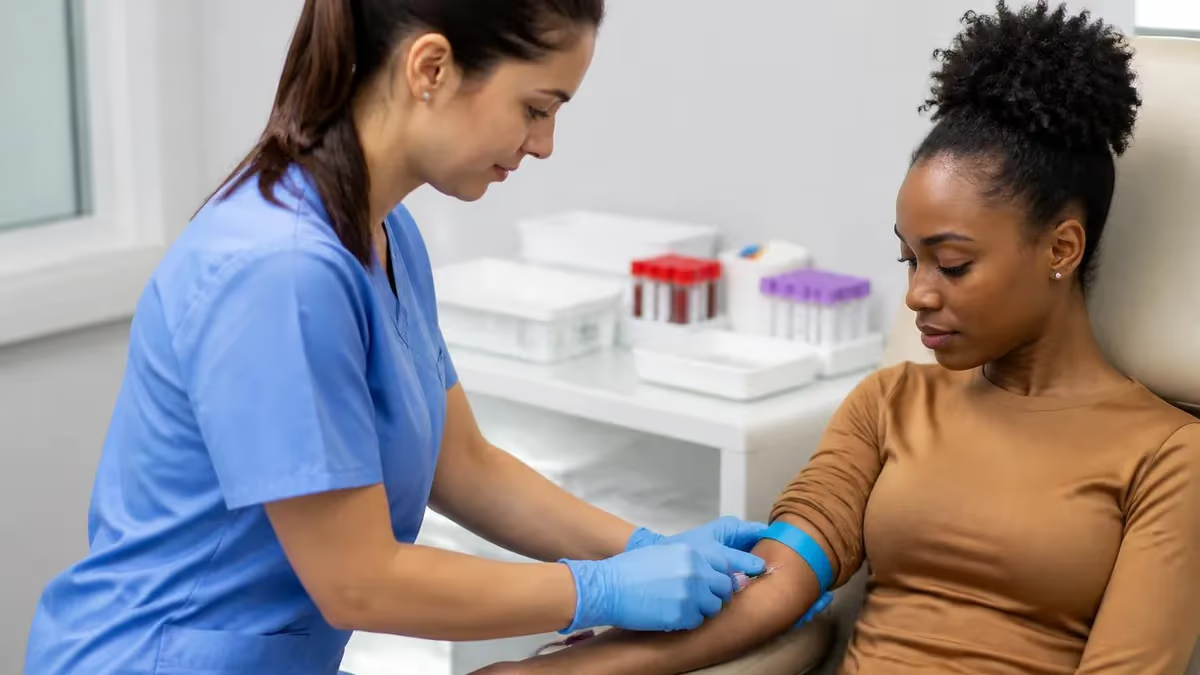
What Is Phlebotomy Training?
Phlebotomy training is the first real step toward a career drawing blood — and it's shorter than most people expect. Whether you're looking at a community college program, an online course, or a Red Cross certification track, the core goal is the same: build the clinical skills to safely collect blood specimens from patients, label them correctly, and handle them without incident.
You'll learn venipuncture (drawing from a vein), capillary puncture (fingerstick or heelstick), infection control, medical terminology, and how to work with patients who are nervous or have difficult veins. That last part matters more than most instructors tell you upfront — a calm bedside manner gets blood drawn faster than perfect technique alone.
Training programs sit somewhere between a short certificate course and a two-year associate degree, depending on how deep you want to go. Most entry-level jobs only require a certificate. That means you could be job-ready in as little as a few weeks if you choose the right program.
How Long Does Phlebotomy Training Take?
The most common question from people considering this field is: how long is this actually going to take? The honest answer depends on the format you choose.
- Certificate programs at community colleges or vocational schools: typically 3–6 months, including classroom instruction and a clinical externship
- Hospital-based programs: 4–6 weeks of intensive training, usually offered to current healthcare employees or hospital affiliates
- Online phlebotomy training with in-person practicum: 4–12 weeks for coursework, plus you arrange local hours for hands-on draws
- Associate degree programs: 18–24 months — useful if you plan to advance into lab science or clinical roles later
Here's a detail that trips people up: the classroom part is just the beginning. Most certification bodies require you to complete a set number of venipuncture draws — often 100–200 successful sticks — before you're eligible to sit for the certification exam. Finding a clinical site that will take you is often the slowest part of the whole process, not the coursework itself.
If you're asking yourself "how long for phlebotomy training" with a specific job start date in mind, build in extra time for the clinical hours. Schools don't always make this transparent.
Phlebotomy Training Options: What's Actually Available
Community College and Vocational School Programs
These are the most common entry point. Programs range from a single semester to a full academic year. You'll get structured classroom time, lab practice on mannequin arms before working with real patients, and a supervised externship. Tuition varies widely — from under $1,000 at some community colleges to $3,000–$5,000 at private vocational schools.
The advantage here is structure. You're accountable to a schedule, instructors give real-time feedback, and the externship is usually arranged through the school. If you're someone who needs that external accountability, this is probably your best bet.
Red Cross Phlebotomy Training
The American Red Cross offers phlebotomy training through its Biomedical Services division. This program is primarily designed to train staff for Red Cross blood collection operations — think blood drives and donation centers. It's intensive, hands-on, and focused on high-volume draws.
Red Cross phlebotomy training isn't exactly a public-facing course you sign up for on a website. Most participants are hired or sponsored through the Red Cross itself. That said, completing red cross training and working in their system for even a short period builds the draw count you need for national certification faster than almost any other path.
If your goal is to eventually work in a hospital or clinic rather than a donation center, Red Cross experience still looks strong on a resume — especially for employers who care about high draw volume and standardized technique.
Online Phlebotomy Training
Online phlebotomy training covers the theory side well: anatomy, lab safety, specimen handling, OSHA compliance, patient communication, and medical terminology. What it can't teach you is the actual stick. Every accredited online program requires an in-person clinical component — usually arranged by the student themselves at a local clinic, hospital, or drawing center.
Costs for online programs range from $300–$1,500 for coursework alone. They work well for people who are already working in a healthcare setting and just need the formal credentials to start drawing. If you don't have a clinical placement lined up, figure that out before you enroll — it's the one piece the school won't solve for you.
Free Phlebotomy Training
Genuinely free phlebotomy training does exist, but it comes with conditions. The most common route is employer-sponsored training — some hospitals, blood banks, and lab companies will train you on the job if you're hired in an entry-level support role. You work, you learn, and you build your draw count during your shifts.
Workforce development programs through state unemployment agencies sometimes fund phlebotomy training for eligible workers in transition. Income-based grants and scholarships at community colleges can also bring the out-of-pocket cost to zero. None of these paths are quick or guaranteed, but they're real options worth exploring before assuming you have to pay full tuition.
Some websites market "free phlebotomy training" that's really just a long recruitment funnel for a paid program. If someone is offering a free certificate without any clinical component, that credential won't be recognized by employers or certification bodies. It's not worth your time.
Phlebotomy Training Specialists and Certification Exams
Once you complete your training and clinical hours, you'll want a national certification to make yourself competitive. The main certifying bodies are the National Healthcareer Association (NHA) and the American Society for Clinical Pathology (ASCP). Both are widely recognized by employers.
The NHA's Certified Phlebotomy Technician (CPT) exam covers specimen collection, processing, safety, and professional compliance. The ASCP's Phlebotomy Technician (PBT) exam is a bit more technical and carries strong recognition in hospital laboratory settings.
Phlebotomy training specialists — instructors who focus specifically on phlebotomy skills rather than broader clinical lab training — tend to produce students who pass certification exams at higher rates. If you're comparing programs, ask about first-time pass rates on the NHA or ASCP exam. A program with a 90%+ pass rate is doing something right.
For people already working in healthcare who want to specialize, phlebotomy technician training adds a formal credential to skills you may already be using informally. Many CNAs, medical assistants, and emergency room techs pursue phlebotomy certification specifically because it increases their value and often their hourly pay.
phlebotomy certification resources can help you understand exactly what's on these exams and how to prepare.What to Expect During Phlebotomy Training
The first week of most programs is pure classroom: anatomy of the circulatory system, types of blood collection tubes and their additives, order of draw, and infection control protocols. Don't underestimate this material. Mix up a red-top and a lavender-top tube, and you've contaminated a sample — and potentially affected a patient's diagnosis.
Week two or three usually brings you to the skills lab. You'll practice on fake arms (called venipuncture training arms) before moving to classmates or volunteers. This is where the nerves hit. Most students miss their first few real draws, and that's normal. The technique clicks faster than you'd expect with repetition.
Clinical hours are the final phase. You're in a real healthcare setting — hospital outpatient lab, urgent care, doctor's office, blood bank — working under supervision. This is also the phase that varies most by program. Some schools have established clinical sites and place you automatically. Others hand you a list of approved locations and tell you to call around. Ask about this specifically before you enroll.
Skills You'll Actually Use
Beyond the stick itself, working phlebotomists spend a lot of time on things training programs cover unevenly:
- Patient communication — explaining what you're doing, managing anxiety, handling pediatric or elderly patients with difficult veins
- Specimen labeling and chain of custody — one mislabeled tube can cascade into multiple test errors
- Equipment troubleshooting — what to do when the tube doesn't fill, when you lose the vein, when a patient faints
- Lab information systems — most clinical sites use electronic ordering systems you'll need to learn on the job
The best training programs build all of this in. The weakest ones teach you the textbook and assume the rest comes naturally on the floor. It doesn't — budget time to learn those systems when you start your first job, even if you felt confident leaving school.
Cost of Phlebotomy Training Programs
Here's a realistic breakdown of what you're looking at, depending on your path:
- Community college certificate: $800–$3,000 total (tuition + supplies)
- Vocational or trade school: $1,500–$5,000
- Online program (coursework only): $300–$1,500
- Hospital-based training: often free if employer-sponsored
- Red Cross phlebotomy training: covered for employed Red Cross staff
On top of tuition, budget for supplies: a phlebotomy kit (needle holders, butterflies, tourniquets, gauze) typically runs $75–$150 if your school doesn't supply one. Certification exam fees add another $120–$200 depending on the credentialing body. And if you need a background check or health screening for your clinical placement — common in hospital settings — that's another $50–$100.
The return on that investment can be fast. phlebotomy technician are in consistent demand, with national median pay around $38,000–$42,000 annually and higher rates in urban markets, lab settings, and travel phlebotomy roles.
Accreditation: Why It Matters More Than You'd Think
Not all phlebotomy training programs are equal in the eyes of certification bodies. The National Accrediting Agency for Clinical Laboratory Sciences (NAACLS) and the Commission on Accreditation of Allied Health Education Programs (CAAHEP) are the two main accreditors for phlebotomy programs.
If you want to sit for the ASCP PBT exam, your program needs to meet ASCP-specified requirements or you need documented clinical experience that meets their draw count thresholds independently. The NHA CPT is a bit more flexible on program source, but still requires verifiable clinical hours.
Before enrolling anywhere: ask directly whether graduates of that specific program have been accepted to sit for NHA or ASCP exams. If the school hedges on that answer, walk away. A certificate from a non-accredited program may not qualify you for the exam — which means it may not qualify you for the job either.
For people serious about phlebotomy certification, the phlebotomy training program you choose is the foundation everything else builds on. The clinical hours matter. The exam pass rate matters. The accreditation matters. Get those three things right and the rest is manageable.
Choosing the Right Program for Your Situation
There's no universally "best" phlebotomy training program — it depends on your starting point, schedule, and goals.
If you're working full-time and need flexibility: an online program with self-paced coursework plus a local clinical arrangement fits best. You'll take longer to finish, but you won't have to quit your job first.
If you want the fastest possible path to employment: find a hospital-sponsored program or a community college with established clinical placement at local healthcare facilities. These compress the timeline because the externship is built into the schedule rather than something you're chasing separately.
If cost is the primary constraint: start with your state's workforce development office and the financial aid office at your nearest community college before assuming you need to pay full price. Free or heavily subsidized training exists — it's just not advertised as loudly as the paid options.
If you're already working in healthcare and want to add phlebotomy to your credentials: check whether your employer has a training budget or tuition reimbursement. Many hospitals will fund this entirely if you commit to staying in the role for a defined period after certification.
Whatever path you choose, the goal is the same: get to your clinical hours, build your draw count, pass a recognized certification exam, and hit the job market with documentation that proves your skill. The rest is showing up and getting better at it every day.

Preparing for Your Phlebotomy Certification Exam
Finishing training doesn't mean you're automatically ready for the certification exam. Most programs teach you to draw blood — they don't always teach you how to take a standardized test about drawing blood. Those are different skills.
The NHA CPT exam covers five main domains: safety and compliance, patient preparation, routine blood collection, special collection procedures, and specimen handling and processing. The ASCP PBT covers similar ground with a stronger emphasis on laboratory science fundamentals. Both are multiple-choice, timed, and administered at testing centers.
The students who pass on the first attempt tend to do a few things consistently: they review the exam content outline (published by both NHA and ASCP on their websites), they use practice questions to identify weak spots, and they don't wait too long after finishing their clinical hours to schedule the exam. Your procedural memory is freshest right after you've been drawing — that's when the test questions about order of draw and tube additives feel most intuitive.
Practice tests are useful specifically because they show you how the questions are phrased, not just whether you know the content. A question about a patient who has small, rolling veins is testing your decision-making, not your recall. Knowing the material is necessary but not sufficient — you need to think through scenarios the way the exam presents them.
If you're preparing for your phlebotomy certification, use phlebotomy certification programs and official exam outlines together. Study the content, practice the question format, and schedule the exam before your hands-on skills start to fade. That combination gets most people through on the first try.
About the Author

Registered Nurse & Healthcare Educator
Johns Hopkins University School of NursingDr. Sarah Mitchell is a board-certified registered nurse with over 15 years of clinical and academic experience. She completed her PhD in Nursing Science at Johns Hopkins University and has taught NCLEX preparation and clinical skills courses for nursing students across the United States. Her research focuses on evidence-based exam preparation strategies for healthcare certification candidates.