
Travel Phlebotomy Jobs: Pay, Agencies, Requirements & How to Land One
Travel phlebotomy jobs pay $1,500-$2,500/wk on 13-week contracts. ❓ Compare top agencies, requirements, tax-free stipends, and how to land your first
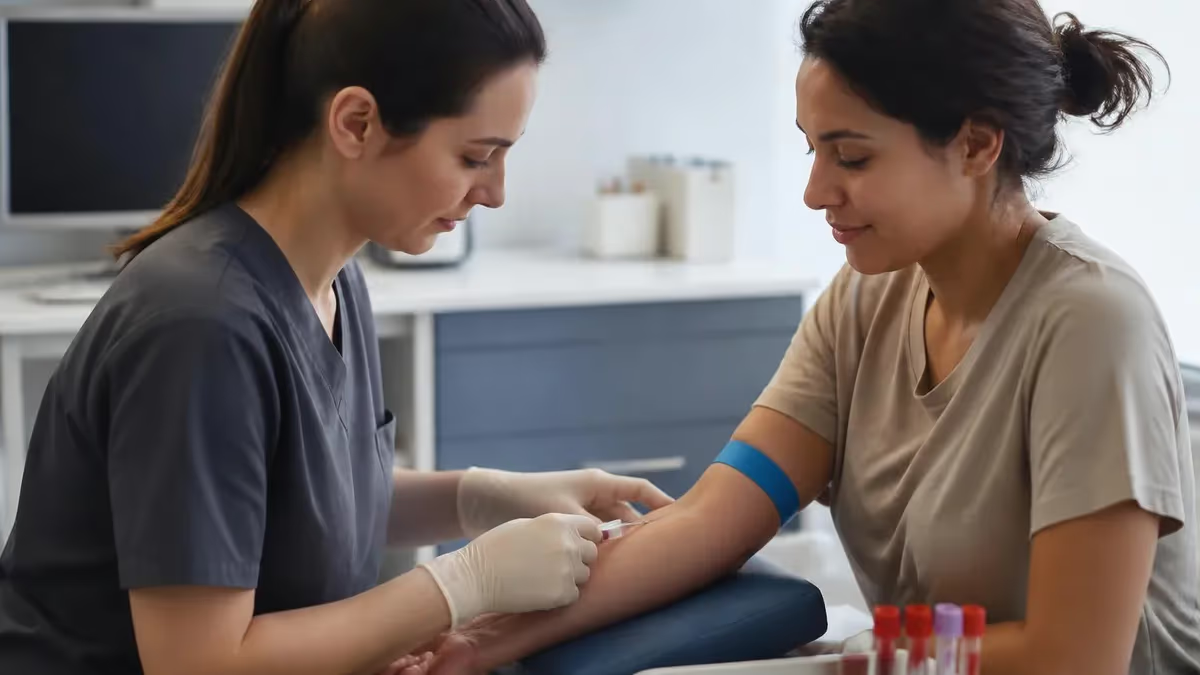
Travel phlebotomy: Pay, Agencies, Requirements & How to Land One
What Travel Phlebotomy Jobs Actually Are
Travel phlebotomy jobs are short-term, contract-based draw assignments — usually 8 to 26 weeks, with 13 weeks being the industry standard. You sign with a staffing agency, the agency places you at a hospital, blood bank, plasma center, or mobile draw company, and you work that contract until it ends. Then you pick the next one. You're not a hospital employee. You're an agency W-2 traveler (sometimes 1099, but W-2 is more common in 2026).
The core work is identical to a staff phlebotomy role: morning rounds, ER draws, outpatient lab, blood culture sticks, line draws, pediatric collections at some sites. What changes is the lifestyle. You're rarely working in your home city. You move every few months. And the pay package looks very different from a staff paycheck because of how stipends are structured.
Travel phleb work isn't usually entry-level. Most contracts want at least one to two years of recent draw experience, a clean certification, and a willingness to onboard fast — sometimes you're on the floor day one with a four-hour orientation behind you. If you're brand new to phlebotomy, finish a year staff first. Then travel. Compare what travel pays versus typical phlebotomy jobs in your home market and the math usually moves you toward travel quickly.
The travel phleb market exploded between 2020 and 2024 and hasn’t really cooled since. Hospitals that used to never hire travel allied health staff now budget for it as a standard line item. Permanent staffing has gotten harder for lab departments because phleb pay at the staff level hasn’t kept up with cost of living in most cities, so existing phlebs leave for travel work and create the very gaps travelers fill. The cycle keeps the demand steady and the rates competitive year over year.
- Contract Length: 8-26 weeks (13 weeks standard)
- Hourly Wage: $20-$35/hr taxable base
- Total Weekly Comp: $1,200-$2,500/wk including stipends
- Annualized: $60,000-$120,000+ working full-year
- Staff Phleb Average: ~$40,000-$50,000/yr
- Required Cert: CPT, PBT, or RPT (ASCP, NHA, AMT, NCCT)
- Required Experience: 1-2 years recent (most contracts)
- Top Settings: Hospitals, plasma centers, blood banks, mobile draw
- Work Auth: Active state license/permit if applicable (CA, WA, NV, LA)
- Tax Status: Must keep a permanent tax home for stipends
Why Hospitals and Plasma Centers Hire Travelers
Demand for travel phlebs hasn't slowed since the pandemic-era staffing crunch. Several things keep driving it: chronic lab tech and phleb shortages in regional hospitals, seasonal blood drive surges around holidays, FMLA and parental leave gaps that need filling for 12-week stretches, plasma center expansion across the southern US, and hospital census spikes during flu season and respiratory virus waves. Employers don't want to commit to permanent headcount for short-term needs. They want a credentialed body, fast.
Plasma centers in particular are aggressive recruiters right now. CSL Plasma, BioLife, Grifols, and Octapharma have all expanded their footprints. They run their own internal traveler programs that pay slightly less per hour than hospital travel but offer steadier back-to-back contracts and less onboarding pain because the protocols repeat across sites.
You’ll also see surge demand around major insurance enrollment seasons when annual physical bookings jump, and during natural disaster recovery when displaced staff create instant gaps. Travelers who keep an eye on these patterns and pre-position themselves geographically tend to lock in the best contracts before they hit the open job boards.

Travel Phleb Pay Snapshot (2026 US)
Breaking Down the Pay Package
This is where most new travelers get confused. A travel contract isn't quoted as one hourly rate. It's quoted as a blended weekly package made up of several pieces. Understanding the breakdown is how you avoid getting underpaid.
The taxable hourly wage is usually the smallest portion — agencies keep it low so the rest of the package can flow as tax-free reimbursements. Then you've got a tax-free housing stipend that varies based on the GSA rate for the assignment city (San Francisco pays way more than rural Iowa). On top of that you get a tax-free meals and incidentals (M&IE) per diem, also GSA-pegged. Travel reimbursement covers your trip out and your trip home — usually $500-$1,000 each direction, paid as a lump on contract start and completion.
Bonuses sit on top: completion bonus (paid only if you finish the full contract — quit early and you forfeit), sign-on bonus for high-need locations, and referral bonuses if you bring another phleb into the agency. When you compare two offers, always compare total weekly take-home, not the hourly rate. A $22/hr contract with a $1,600 housing stipend can beat a $30/hr contract with $700 housing easily.
Compensation Components Explained
This is your taxable W-2 wage, typically $20-$35/hr depending on location and shift. Overtime kicks in at 40 hours/week and is paid at 1.5x. Some California contracts pay daily OT after 8 hours due to state law. Night and weekend differentials usually add $1-$3/hr on top.
Critical: To receive tax-free stipends legally, you must maintain a permanent tax home — a residence where you have ongoing duplicated expenses (rent or mortgage you keep paying while you're on contract). Without a tax home, the IRS will reclassify your stipends as taxable wages and you'll owe back taxes plus penalties. Document everything: lease, utilities in your name, mail going to that address, return visits at least once every 12 months. Talk to a traveler-specialty CPA before your first contract.
Top Travel Phlebotomy Staffing Agencies
You don't sign with one agency exclusively. Most successful travelers work with two or three at once so they can compare offers each cycle and never sit unemployed waiting for one recruiter to get back to them. Agencies aren't equal — some specialize in allied health, some are nurse-focused with phleb as an afterthought, and pay packages can vary by hundreds per week for the exact same hospital contract.
Major Travel Phlebotomy Agencies
- Specialty: Nursing + allied health, large phleb desk
- Strength: Highest volume of open phleb contracts nationally
- Benefits: Day-one health, 401k match, free CEUs
- App: Aya Connect (mobile, fast applications)
- Specialty: Allied health veteran, strong hospital network
- Strength: Long-running facility relationships, repeat contracts
- Benefits: Standard health/dental/401k, license reimbursement
- Pay: Competitive but rarely top of market
- Specialty: Allied health focused, traveler-friendly culture
- Strength: Recruiters that actually return calls, fast credentialing
- Benefits: Health day one, $0 deductible plan available
- Pay: Often top quartile for phleb specifically
- Specialty: Allied + lab specialty, strong west coast
- Strength: Lab traveler expertise, MLT/MLS pipeline
- Benefits: Comprehensive package, license reimbursement
- Pay: Mid-to-high market, transparent quotes
- Specialty: Large national, all healthcare disciplines
- Strength: Massive contract inventory, app-based browsing
- Benefits: Health, 401k, traveler loyalty bonuses
- Pay: Variable — negotiate every offer
- Specialty: Plasma center work only, in-house program
- Strength: Steady back-to-back contracts, same protocols
- Benefits: Full CSL employee benefits, PTO accrual
- Pay: Lower hourly than hospital travel, more consistent
Requirements to Become a Travel Phlebotomist
Travel work is gatekept by credentials. Hospitals can't risk an under-trained traveler at a busy ER station, so the documentation requirements are stricter than what staff jobs ask for. Get these lined up before you start applying — agencies move fast and a missing immunization record can cost you a contract.
Your foundation is national certification through one of the recognized bodies: ASCP (PBT), NHA (CPT), AMT (RPT), NCCT, or ASPT. Most contracts will accept any of these. Beyond cert, you'll need recent draw experience — usually one to two years documented at a moderate-to-high volume site. Per-diem or hospital-based experience carries more weight than draw station work because hospital travel contracts are the bulk of what's available. Working toward your certified phlebotomy technician credential through ASCP or NHA is the cleanest path because both are universally accepted by every major agency.
Travel Phleb Requirements Checklist
- ✓National certification: ASCP PBT, NHA CPT, AMT RPT, NCCT, or ASPT
- ✓1-2 years recent phlebotomy experience (hospital preferred)
- ✓Active state license/permit where required (CA, WA, NV, LA)
- ✓Current BLS/CPR (American Heart Association preferred)
- ✓Hep B vaccine series + titer documentation
- ✓MMR titer (or two-dose vaccination record)
- ✓Varicella titer (or two-dose vaccination record)
- ✓TDaP within last 10 years
- ✓Annual flu shot (October-March requirement at most facilities)
- ✓COVID vaccine (per facility — varies in 2026)
- ✓PPD/TB skin test or QuantiFERON within 12 months
- ✓Negative drug screen (10-panel typically)
- ✓Clean criminal background check (state + federal)
- ✓Government photo ID + Social Security card (I-9)
- ✓Direct deposit info + voided check for payroll setup
- ✓Completed agency skills checklist (signed)

State License and Permit Requirements
Four states require state-specific phlebotomy licensing on top of national certification: California, Washington, Nevada, and Louisiana. California is the strictest — you need a CPT-1 or CPT-2 issued by the California Department of Public Health (CDPH) before you can stick a patient. Processing takes 6-8 weeks if your application is clean, longer if anything is missing. Don't apply for California contracts before your CPT-1 is in hand.
Washington requires a Medical Assistant-Phlebotomist credential through the state Department of Health. Nevada requires registration with the Office of Laboratory Services. Louisiana requires a state phlebotomy license. Every other state recognizes national certification only, so you can move freely. Plan your geography around licensing if you want to avoid the CA paperwork — but California pays the most, so the trade-off is real. Solid phlebotomy training from an accredited program covers the technical foundation; the state license layer is purely paperwork.
Where Travel Phlebs Actually Work
The setting shapes everything: pace, patient mix, hours, even the kind of pay package you can expect. Most travelers cycle through different setting types over a year — a hospital contract, then a plasma center, then a blood bank — to keep the work interesting and avoid burnout from any single environment.
Common Travel Phlebotomy Settings
- Pace: Fast, especially morning rounds 4-7am
- Volume: 30-100+ draws per shift
- Pay Tier: Highest — top of market for travelers
- Skills: Difficult sticks, peds, ICU, ER
- Pace: Steady, repetitive workflow
- Volume: 20-40 donors per shift
- Pay Tier: Mid-tier hourly, very steady contracts
- Skills: Plasmapheresis machines, donor screening
- Pace: Variable — quiet days and drive surges
- Volume: 10-30 donors per shift typically
- Pay Tier: Mid-tier, occasional travel-included assignments
- Skills: Donor management, mobile drive setup
- Pace: Variable, route-based
- Volume: 15-30 home/facility draws per shift
- Pay Tier: Mid-tier, mileage reimbursement common
- Skills: Independent driving, patient privacy at home
- Pace: Walk-in steady, peaks at lunch and after work
- Volume: 30-60 patients per shift
- Pay Tier: Lower-tier travel pay generally
- Skills: Order entry, multi-test panels, billing
- Pace: Slow, protocol-driven
- Volume: 5-15 subjects per shift
- Pay Tier: Mid-tier, often longer contracts
- Skills: GCP compliance, exact timing, multiple tubes per draw
The Lifestyle: Pros and Cons
Travel phleb work isn't a fit for everyone. The money is real but so is the disruption. Before you sign your first contract, sit with both columns honestly. People who quit mid-contract usually do so because they didn't think hard enough about the lifestyle side before they signed.
Travel Phlebotomy Lifestyle Trade-offs
- +Pay is significantly higher than staff — often double
- +See new cities every few months without paying tourist prices
- +Flexible time off between contracts (2-4 weeks if you want)
- +Build a diverse resume across hospital systems and lab settings
- +Network grows fast — recruiters, managers, fellow travelers
- +No office politics — you're in and out before drama matters
- +Tax-free stipend portion stretches your income further
- +Try cities before committing to relocate permanently
- −New housing search every 13 weeks gets exhausting
- −Onboarding fatigue — new EMR, new badges, new protocols every contract
- −Less strong benefits than staff jobs at top hospitals
- −Holiday and weekend coverage is standard, not exceptional
- −Income gaps if contracts don't line up back-to-back
- −Tax filing is genuinely complicated — pay a CPA
- −Hard on relationships and family routines
- −Healthcare coverage gaps between contracts can be a problem
- −No retirement match consistency unless agency offers it
- −Some hospitals treat travelers as second-class — be ready for it
Pros and Cons at a Glance
| Pros | Cons |
|---|---|
| Pay is significantly higher than staff — often double | Onboarding fatigue — new EMR, new badges, new protocols every contract |
| See new cities every few months without paying tourist prices | Less strong benefits than staff jobs at top hospitals |
| Build a diverse resume across hospital systems and lab settings | Holiday and weekend coverage is standard, not exceptional |
| Network grows fast — recruiters, managers, fellow travelers | Income gaps if contracts don't line up back-to-back |
| No office politics — you're in and out before drama matters | Tax filing is genuinely complicated — pay a CPA |
| Tax-free stipend portion stretches your income further | Hard on relationships and family routines |
How to Land Your First Travel Contract
Your first contract is the hardest. Once you've completed one cleanly, the next ones come easier — recruiters trust you, your skills checklist is proven, and your reference list grows. The first one is mostly about being prepared, flexible, and patient.
Start by making sure your fundamentals are solid. Your phlebotomy certification needs to be active and not expiring within six months. Your immunizations need to be documented with actual lab titers, not just verbal confirmation that you got the shots. Your resume needs to be specific: list daily draw volumes, the EMRs you've used (Epic, Cerner, Meditech), the equipment (BD Vacutainer, Greiner, butterfly experience, line draws), and any specialty work like peds, neonatal heel sticks, or arterial draws.
Path to Your First Travel Contract
Build 1-2 Years Solid Experience
Lock In Your Certification
Document Health Records
Apply with 2-3 Agencies
Complete Skills Checklists
Stay Flexible on Location
Negotiate the Total Package
Complete the Contract Cleanly

Hot Markets in 2026
Where the contracts are right now matters. California pays the highest weekly take-home for travel phlebs because the GSA stipend rates in San Francisco, San Jose, and Los Angeles are the highest in the country — but you need a CPT-1 license first. New York City and Boston are close behind, with major academic medical centers (Mass General Brigham, NYU Langone, Mount Sinai) hiring travelers consistently. The Pacific Northwest — Seattle, Portland — pays well and the Washington phleb credential is easier to get than California's.
The southern states are the plasma center boom. Texas, Florida, Georgia, and Tennessee are seeing aggressive plasma center expansion from CSL, BioLife, Grifols, and Octapharma. If you want steady plasma work and don't mind the heat, those four states have the most consistent year-round openings. Hospital travel pay there is a tier below coastal cities but cost of living offsets a lot. If you're searching for phlebotomy and your home market is saturated, traveling out to one of these growth regions for 13 weeks can reset your earnings ceiling.
Top Travel Markets Compared
Pay tier: Highest in the US. Hourly: $28-$38. Weekly take: $2,000-$2,800 in Bay Area. Catch: CPT-1 license required (6-8 week processing). Cities: San Francisco, San Jose, Los Angeles, San Diego, Sacramento. Worth the paperwork once.
Plasma Center Travel Programs
Plasma centers run their own internal traveler programs that work differently from agency travel. CSL Plasma's program is the largest. You're a CSL employee with full benefits, and you rotate between centers based on company need — sometimes 4-6 weeks at a location instead of 13. Pay is lower hourly than agency travel but you don't deal with stipend math, you don't worry about contracts ending, and you accrue PTO. BioLife (a Takeda company) and Grifols offer similar internal programs.
If you want consistency and predictability over maximum pay, plasma center travel programs are worth a look. They also tend to be more open to phlebs with less hospital experience — strong basic stick skills and a good attitude can land you a spot even if you don't have a year of hospital phleb under your belt yet.
Plasma Center Travel Quick Facts
- ✓CSL Plasma is the largest in-house traveler program in the US
- ✓BioLife (Takeda) and Grifols run smaller but growing programs
- ✓Rotations are typically 4-6 weeks, not the standard 13
- ✓Lower hourly rates but full benefits and PTO accrual
- ✓More open to phlebs with under one year of hospital experience
- ✓Steady year-round work with very little contract gap risk
- ✓Protocols repeat across centers — minimal onboarding fatigue
Housing Logistics That Trip Up New Travelers
Agencies will sometimes offer agency-provided housing instead of a stipend, but the math almost never favors you — agencies negotiate group rates and pocket the difference. Take the stipend. Use Furnished Finder (built for travel healthcare workers), Airbnb monthly stays (request a discount, hosts often have one not listed), Marriott Residence Inn or Extended Stay America for short-term flexibility, or local Facebook groups for traveling nurses (phlebs are welcome too).
Some travelers go full RV — buy a travel trailer, park at a campground or extended-stay RV resort near the contract, pocket nearly the entire housing stipend. The startup cost is real ($25K-$60K for a usable rig) but if you commit to travel as a multi-year career, the math works out fast. RV travel is most common in the southern states where weather cooperates year-round.
Read every contract before signing. Watch for: shifts that change after you arrive ("we said days but we need you on nights"), guaranteed hours that aren't actually guaranteed (low-census cancellation clauses), housing stipend that drops mid-contract if GSA rates change, completion bonus tied to perfect attendance (one sick day kills it), or non-compete clauses preventing you from working that hospital for 6-12 months after. If a recruiter pressures you to sign without reading, find a different recruiter.
Continuing Education and Career Growth
Your certification needs CEUs to stay active. ASCP requires Credential Maintenance Program (CMP) participation with CEUs every three years. NHA requires 10 CEUs every two years. Most agencies offer free CEU libraries to their travelers — use them. Track your CEUs in a single document so you're never scrambling at renewal time.
Travel phleb is rarely a forever career — most travelers do it 2-5 years, bank serious money, then pivot. Common paths: bridge into Medical Laboratory Technician (MLT) through a 2-year program, then Medical Laboratory Scientist (MLS) for higher pay. Some travelers go RN through accelerated nursing programs while doing per-diem phleb on weekends. Others move into phlebotomy supervisor roles, lab management, or healthcare staffing recruiting on the agency side. The travel years build a network you can use no matter which direction you go.
Sample Phlebotomy Practice Questions
Try these questions from our free Phlebotomy practice tests. The correct answer and an explanation follow each question.
Which ASCP certification is specifically designed for phlebotomy technicians who have completed an accredited phlebotomy program?
- A. MLT(ASCP)
- B. PBT(ASCP)
- C. MLS(ASCP)
- D. CLSup(ASCP)
Answer: B. PBT(ASCP)
PBT(ASCP) stands for Phlebotomy Technician certified by the American Society for Clinical Pathology.
Which of the following is a primary responsibility of a Certified Phlebotomy Technician (CPT)?
- A. Prescribing medical tests
- B. Drawing blood and ensuring proper specimen labeling
- C. Interpreting laboratory test results
- D. Supervising laboratory operations
Answer: B. Drawing blood and ensuring proper specimen labeling
A Certified Phlebotomy Technician (CPT) holds the primary responsibility for accurately and safely drawing blood samples from patients. A critical aspect of this role is ensuring that all specimens are correctly labeled with patient information and collection details to prevent errors in laboratory testing. This meticulous attention to detail is vital for patient safety and accurate diagnoses.
What is one major responsibility of a phlebotomy technician?
- A. Administering medications intravenously
- B. Performing diagnostic imaging tests
- C. Drawing blood for laboratory testing
- D. Prescribing treatment plans
Answer: C. Drawing blood for laboratory testing
One of the major responsibilities of a phlebotomy technician is drawing blood for laboratory testing. Phlebotomists are trained to safely and accurately collect blood samples from patients. These samples are then used by laboratories to perform various diagnostic tests crucial for patient care.
Which of the following veins is considered the FIRST choice for routine adult venipuncture according to standard phlebotomy guidelines?
- A. Median cubital vein
- B. Basilic vein
- C. Cephalic vein
- D. Dorsal hand veins
Answer: A. Median cubital vein
The median cubital vein in the antecubital fossa is the preferred site because it is large, well-anchored, and least painful.
Travel Phlebotomy Jobs Questions and Answers
Final Take: Is Travel Phlebotomy Worth It?
For experienced phlebotomists who want significantly more income, the freedom to live in different cities, and a career that doesn't lock them into one hospital's politics for decades, travel phleb work is one of the best deals in allied health right now. The pay differential over staff is real — often $30K-$60K more annually for the same hours — and demand isn't slowing.
It's not for everyone. If stability matters to you more than money, if you've got young kids in school, if you don't want to manage your own taxes and housing search every 13 weeks, staff phleb at a good hospital is a perfectly fine career.
But if you're young or family-flexible, certified, experienced, and want to bank serious cash for a few years while seeing the country, travel phleb is one of the cleanest paths in healthcare to do exactly that. Get your certification solid, build a year of hospital experience, line up your immunization records, sign with two agencies, take the first solid offer, complete it cleanly — and the rest of your travel career builds itself from there.
One last note. Travel phleb is a craft career, not a desk one. Your hands get tired, your back will ache after a 12-hour shift on hospital tile, and you’ll have hard days with rough sticks and hostile patients. None of that goes away because you’re getting paid more. What changes is that you’re building a financial cushion fast and you’re not stuck doing it forever in one place. Treat travel as a chapter, not a destination, and you’ll come out of it with savings, stories, and options that staff phleb work alone rarely provides.
About the Author

Registered Nurse & Healthcare Educator
Johns Hopkins University School of NursingDr. Sarah Mitchell is a board-certified registered nurse with over 15 years of clinical and academic experience. She completed her PhD in Nursing Science at Johns Hopkins University and has taught NCLEX preparation and clinical skills courses for nursing students across the United States. Her research focuses on evidence-based exam preparation strategies for healthcare certification candidates.