
Part Time Phlebotomy Jobs: Schedules, Pay, and Where to Find Them 2026 October
Part time phlebotomy jobs guide: 🗨️ typical schedules, pay ranges, top employers (Quest, LabCorp, mobile services), benefits, and how to find openings.
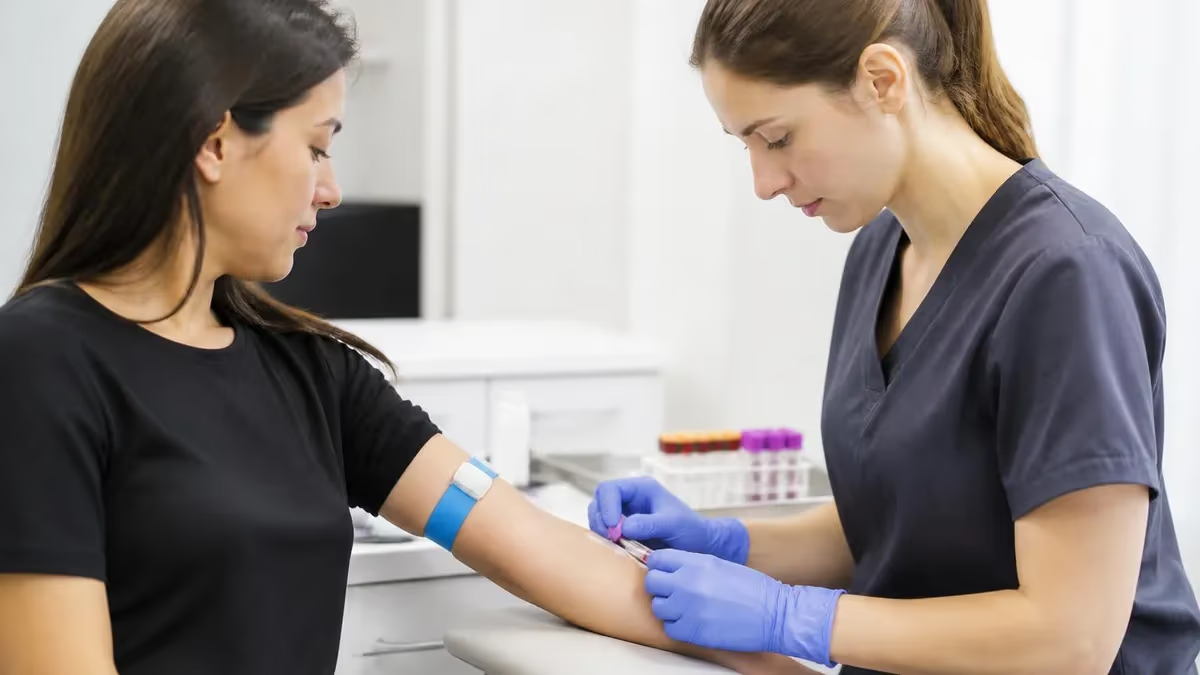
Part Time phlebotomy: An Overview
Part time phlebotomy technician are widely available across the United States and represent a practical entry point into healthcare for students, career-changers, retirees, and anyone needing income flexibility. Phlebotomy is one of the few healthcare credentials that genuinely supports part-time work — most outpatient labs, plasma centres, hospital outpatient phlebotomy units, and mobile phlebotomy services hire part-time staff routinely.
Typical part-time schedules run 16 to 24 hours per week across two to three working days, with early morning shifts at outpatient labs (6 AM to noon), evening shifts at urgent care (4 PM to 9 PM), or weekend-only positions in hospital labs.
Pay ranges for part time phlebotomy roles run $15 to $22 per hour for standard outpatient and lab settings, with mobile phlebotomy and specialty work paying $20 to $28 hourly. Per-draw home health phlebotomy gigs pay $25 to $50 per visit. Hourly rates are higher in coastal urban markets and lower in rural regions, with cost-of-living variation typical of healthcare wages generally. Benefits packages for part-time roles vary substantially — most part-time positions do not include full healthcare benefits, but some offer pro-rated PTO at 24+ weekly hours and tuition reimbursement that applies even to part-time staff.
The credential requirement varies by state and employer. Many large labs hire entry-level part-time phlebotomists with employer-provided training, but most professional roles benefit from holding a Certified Phlebotomy Technician credential. California, Washington, Louisiana, Nevada, and a few other states require state licensure beyond national certification. National certifications from NHA, ASCP, AMT, and NCCT are widely accepted by part-time employers nationally. The certification path can be completed through traditional schools or through Online Phlebotomy Certification hybrid programs that balance classroom theory with in-person clinical practice.
The part-time format works because phlebotomy work is naturally chunked into shifts that align with patient draw demand. Outpatient labs see heaviest volume in early morning when fasting patients arrive; demand drops by mid-afternoon. Urgent care draws happen primarily during early evening when symptomatic patients come in after work. Hospital outpatient draws spread across morning rounds. Each demand pattern produces a natural part-time shift opportunity. The same role at full-time often combines multiple shift patterns; part-time staff cover specific patterns aligned with their availability.
Quick Reference: Part Time Phlebotomy Jobs in 2026
Typical hours: 16–24 weekly, 2–3 days. Common schedules: Early morning (6 AM–noon outpatient lab), evening (4 PM–9 PM urgent care), weekend-only. Pay range: $15–$22/hour standard, $20–$28 mobile or specialty, $25–$50 per visit home health. Top employers: Quest Diagnostics, LabCorp, hospital outpatient labs, mobile phlebotomy services, plasma centres, blood banks, urgent care, physician offices. Credential: National cert (NHA, ASCP, AMT, NCCT); state licence required in CA, WA, LA, NV. Benefits: Most part-time roles no full benefits; some offer pro-rated PTO at 24+ hours.
Where Part Time Phlebotomists Work
Quest Diagnostics and LabCorp operate Patient Service Centres (PSCs) across the country and routinely hire part-time phlebotomists. PSCs are walk-in locations where patients come for routine blood draws ordered by their physicians. Hours typically run early morning (6 AM or 7 AM) through afternoon (3 PM or 4 PM). Part-time PSC staff often cover specific days (Monday-Wednesday-Friday or Tuesday-Thursday) or partial days. Both companies have well-developed training programs that bring entry-level staff up to professional standards within weeks. Wages run $15 to $20 hourly for entry-level PSC staff with raises tied to tenure and experience.
Hospital outpatient labs employ part-time phlebotomists for early morning rush periods (6 AM to 10 AM is the heaviest draw window in many hospitals), evening coverage in larger facilities, and weekend coverage. Hospital part-time roles typically pay $1-3 above PSC rates and include limited benefits at higher weekly hours. Hospital phlebotomy work involves more variety than PSC work — inpatient draws, outpatient draws, special collections, and sometimes blood gas draws on respiratory care units. Skill development is faster in hospital settings than in pure outpatient PSC work.
Mobile phlebotomy services have grown substantially in recent years. These services dispatch phlebotomists to patient homes, assisted living facilities, nursing homes, and corporate offices for at-home blood draws. Pay structure is usually per-draw ($25-50 per visit) plus mileage reimbursement. Schedule flexibility is the main advantage — phlebotomists pick up assignments based on availability rather than working set shifts. The downside is variable income and travel time between draws. Mobile work suits experienced phlebotomists who want flexibility more than predictable income.
Blood banks and donor centres employ part-time phlebotomists for community blood drives, mobile collection, and fixed donor centre operations. The Red Cross, OneBlood, Vitalant, and regional blood centres all hire part-time phlebotomy staff. Pay typically $16-22 hourly with sign-on bonuses common. The work is community-oriented, focused on volunteer donors rather than clinical patients, which produces a different feel than diagnostic phlebotomy. Suits phlebotomists drawn to the public-service aspect of healthcare.

Part Time Phlebotomy Employers Compared
Largest national network of Patient Service Centres. Routinely hire part-time phlebotomists with structured training. Typical schedules: 2-3 days weekly, 6 AM-3 PM. Pay $15-20 hourly entry; raises with tenure. Career path to lead phlebotomist or PSC supervisor with full-time conversion possible. Apply through questdiagnostics.com careers page.
Second largest national lab network. Similar part-time hiring patterns to Quest. Often slightly higher entry pay in some markets. Strong continuing education and certification support. Apply through labcorp.com careers page. Both Quest and LabCorp routinely hire entry-level part-timers and provide on-the-job training to professional standard.
Higher pay than PSCs ($16-22 hourly typical), more clinical variety, often offer pro-rated benefits at 24+ hours. Common schedules: weekend-only, evening coverage, or early morning rush coverage. Apply through individual hospital system career pages — Cleveland Clinic, Mayo, Kaiser, HCA, Trinity, Ascension, etc.
Per-draw pay $25-50 per visit plus mileage. Flexible scheduling — phlebotomists pick up assignments based on availability. Suits experienced phlebotomists wanting flexibility. Variable income and travel time between draws are downsides. Search 'mobile phlebotomy' on Indeed, ZipRecruiter, or LinkedIn for current openings.
Grifols, CSL Plasma, BioLife, Octapharma, and ADMA hire phlebotomists for plasma collection. Repetitive procedure work focused on plasmapheresis rather than diagnostic phlebotomy. Pay $16-20 hourly typical. Sign-on bonuses common. Schedules include evenings and weekends. Suits phlebotomists comfortable with repetitive work and steady patient flow.
Smaller part-time openings in urgent care clinics and physician offices doing in-house phlebotomy. Pay variable but often comparable to PSC ($15-20 hourly). Scope of work sometimes broader (vitals, EHR documentation, basic medical assistant tasks). Suits phlebotomists wanting more clinical variety than pure draw stations provide.
Typical Part Time Schedules
The most common part time phlebotomy schedule is 16-24 hours per week spread across 2-3 working days. Outpatient lab early morning shifts (6 AM-noon) are particularly popular because patient volume is highest in the morning when fasting labs are drawn. Evening shifts at urgent care (4 PM-9 PM) suit phlebotomists who handle daytime obligations. Weekend-only positions in hospital labs are valuable for phlebotomists working other weekday jobs or attending school during the week. Each schedule type has trade-offs in pay, benefits, and lifestyle compatibility.
On-call and PRN (as-needed) part-time roles add another layer of flexibility but reduce predictability. PRN phlebotomists work when staffing shortages occur and earn higher hourly rates ($18-25 typical) to compensate for unpredictable hours and no benefits. PRN suits phlebotomists with another stable income source who want to add hours without committing to specific shifts. Combining PRN agreements with multiple employers can produce solid total income while maintaining schedule flexibility, though it requires substantial logistical management.
The interview process usually clarifies expectations before offer acceptance. Asking specific questions during the interview about typical week patterns, on-call frequency, holiday rotation, and weekend rotation prevents misalignment after starting. Many phlebotomists who leave roles within the first 90 days cite scheduling mismatches that were not clear at the offer stage. The cost of clarifying upfront is small; the cost of leaving and restarting a job search is substantial.
Common Part Time Phlebotomy Schedule Patterns
The most common part-time pattern. Outpatient labs and PSCs see heaviest volume in early morning when fasting blood work is drawn. Schedule typically 2-3 days per week from 6 AM start to noon or 1 PM end. Suits parents with school-age children, students with afternoon classes, or anyone who is naturally a morning person. Pay $15-20 hourly typical.
Pay Ranges for Part Time Phlebotomy Work
Standard outpatient and lab phlebotomy pays $15 to $22 per hour for part-time staff. Coastal urban markets pay at the higher end of this range; lower cost-of-living regions pay at the lower end. Hospital outpatient labs typically pay $1-3 above PSC rates. Specialty and mobile phlebotomy pays $20 to $28 hourly. Per-draw home health work pays $25 to $50 per visit. Plasma donation centres pay $16-20 hourly typically with sign-on bonuses ranging $500 to $2,000 for new hires.
Differentials add meaningful income for evening, weekend, and holiday work. Typical differentials: $1-2 hourly for evening shifts, $1-3 for weekends, $5-10 for major holidays. PRN rates are 15-30 percent above standard rates to compensate for unpredictable hours. The hourly rate alone does not capture total compensation — accounting for differentials, sign-on bonuses, mileage reimbursement on mobile work, and pro-rated benefits at 24+ hours produces a more accurate comparison between offers.
Sign-on bonuses have become more common since 2022 as healthcare staffing pressures persist. Plasma centres offer $500-2,000 sign-on bonuses; mobile services sometimes offer $500-1,000; major hospital systems occasionally offer bonuses for hard-to-staff units. Sign-on bonuses typically include retention requirements (90 days, 6 months, or 1 year) before becoming non-refundable. Reading bonus terms carefully matters because leaving early can require repaying part or all of the bonus.
Tax considerations on per-draw mobile work differ from W-2 employment. Per-draw work is sometimes structured as 1099 independent contractor income, which means self-employment tax responsibility, mileage tracking for deductions, and quarterly estimated tax payments. The hourly equivalent of $30/hour W-2 work is typically $40-45/hour 1099 work after self-employment tax adjustments. Understanding the W-2 versus 1099 distinction prevents tax-time surprise on per-draw income.

Most states allow phlebotomy practice without state licensure, requiring only employer training or national certification. California, Washington, Louisiana, and Nevada specifically require state licensure beyond national certification. California has three licensure levels — CPT1 (limited), CPT2 (broader scope including arterial draws), and LPT (limited phlebotomy technician). Washington requires Medical Assistant Phlebotomy certification through the Department of Health. Confirming state requirements before applying for jobs prevents wasted application time. Most national certification bodies (NHA, ASCP, AMT, NCCT) help state licensure where required.
Getting Started in Part Time Phlebotomy Without Experience
Many large employers hire entry-level part-time phlebotomists and provide on-the-job training to professional standard. Quest Diagnostics, LabCorp, and large hospital systems all run training programs for new hires. The typical training period runs 4-8 weeks combining classroom theory, simulated practice, and supervised draws on real patients. Trainees draw practice on mannequins and other trainees before progressing to actual patient draws under direct supervision. Most programs require successful completion of competency demonstrations before unsupervised work begins.
The externship-to-part-time pipeline is another entry point. Phlebotomy training programs (community college, vocational school, online programs) include clinical externships at lab partners. Strong externship performance often produces a part-time job offer at the same facility. Treating the externship as a 4-8 week working interview rather than just a school requirement substantially improves the offer rate. Showing up on time, engaging with full-time staff, asking thoughtful questions, and demonstrating reliability during externship signals to the host site that you would be a good hire.
Some entry-level part-time roles include educational assistance for the certification process. Quest Diagnostics, LabCorp, and several hospital systems pay for or reimburse the cost of national certification exam fees ($95-$135 typical) for new hires who pass within their first 90 days. This benefit reduces the upfront cost of entering the field and signals that the employer values certified staff. Asking about certification support during the interview is appropriate even at entry level.
Part Time Phlebotomy Job Search Checklist
- ✓Active national certification (NHA CPT, ASCP PBT, AMT RPT, NCCT NCPT) or state licence if required
- ✓Updated resume highlighting phlebotomy training, externship, and any prior healthcare experience
- ✓Current CPR certification (BLS for healthcare providers)
- ✓Documented immunisations (hepatitis B, MMR, varicella, flu, COVID per employer)
- ✓Background check ready (most employers run within 24-48 hours of offer)
- ✓References from training instructor and externship preceptor
- ✓Indeed and ZipRecruiter profiles with part-time filters set
- ✓Quest Diagnostics and LabCorp careers page accounts
- ✓LinkedIn profile mentioning phlebotomy and part-time availability
- ✓Reliable transportation (essential for mobile phlebotomy roles)
Part Time Phlebotomy as a Bridge to Other Goals
Part time phlebotomy works particularly well for nursing students who need healthcare income while completing pre-requisites and nursing school. The skills overlap (venipuncture, patient communication, infection control, EHR documentation) directly support the clinical foundation that nursing programs expect. Many hospital systems offer tuition reimbursement that applies even to part-time staff, funding nursing program tuition while the student continues working part-time hours.
Career-changers entering healthcare from other fields use part-time phlebotomy as a low-commitment entry point. The training time is shorter than other healthcare roles (typically 4-8 weeks combined classroom and clinical), the certification is achievable in 3-6 months, and part-time work allows continued income from the prior career during transition. Retired professionals re-entering the workforce in healthcare also use phlebotomy as the entry point because the credential burden is lighter than nursing or medical roles. The flexibility of part-time scheduling fits varied life situations.
Long-term part-time phlebotomy careers exist for those who want to stay in the role permanently rather than using it as a stepping stone. Lead phlebotomist positions, training and quality roles, mobile service supervision, and specialty area work all support long-term part-time careers. Continuous skill investment through advanced certifications (electrocardiography, basic laboratory technology, point-of-care testing) expands options without requiring leaving phlebotomy. Career-long part-time phlebotomists often build deep expertise that employers value highly.
Where to Find Part Time Phlebotomy Job Openings
Indeed remains the largest single source of part-time phlebotomy openings nationally. Use the part-time filter to narrow results. Search terms that work well: "part time phlebotomist," "phlebotomy part time," "part time phlebotomy," "weekend phlebotomy." Quest Diagnostics and LabCorp careers pages list openings before they appear on third-party boards. ZipRecruiter aggregates listings with strong filtering. LinkedIn is increasingly useful — recruiters at major lab networks and hospital systems post directly to LinkedIn and message candidates with relevant profiles.
Networking at local healthcare events also surfaces part-time opportunities that never appear on public job boards. American Society for Clinical Pathology (ASCP) chapter events, local healthcare worker professional groups, and continuing education workshops bring together phlebotomy supervisors, lead phlebotomists, and recruiters. Mentioning that you are seeking part-time work to anyone you meet professionally produces leads through casual conversations more often than people expect. Maintaining relationships with externship preceptors and prior employers also produces leads when openings arise at their organisations.
Background checks at part-time hire stages typically include criminal history, employment verification, and sometimes drug screening. Major lab networks run standard 7-year criminal history checks; some employers run extended 10-year checks. Drug screens are typically pre-employment and may be repeated at random or for cause. Felony convictions, particularly recent or violent ones, can complicate or prevent employment depending on state law and employer policy. Older convictions with documented rehabilitation often clear review. Discussing your specific history with the recruiter before formal application prevents surprise rejection after the application has been submitted.

Part Time Phlebotomy Job Numbers
Common Challenges in Part Time Phlebotomy Work
Some part-time roles include on-call expectations that disrupt life predictability. PRN positions in particular can call you in with short notice. Reading the job posting carefully and asking specific questions about scheduling expectations during the interview prevents surprise after starting. Set personal boundaries on call frequency before accepting roles with on-call components.
Most part-time roles below 24 weekly hours offer no health insurance, retirement match, or paid time off. Some employers offer pro-rated benefits at 24-29 hours; full benefits typically require 30+ hours weekly. Spousal coverage, ACA marketplace plans, and Medicaid (where eligible) are the typical health insurance solutions for part-time phlebotomists.
Many phlebotomists piece together part-time positions at multiple employers to reach desired total hours. The logistical management is substantial — different schedules, different EHRs, different protocols, different commute patterns. Tax filing also becomes more complex with multiple W-2s. The flexibility benefits often outweigh the logistical cost, but it requires intentional management.
Working only 2-3 days weekly produces fewer draws than full-time work, which can slow skill development for newer phlebotomists. Difficult-stick patients, paediatric draws, and special collections all benefit from frequent practice. Part-time phlebotomists working low-volume sites should seek opportunities to practice on more challenging draws periodically. Continuing education and skill workshops fill the gap when work volume is light.
Interview Tips for Part Time Phlebotomy Roles
Employers hiring part-time staff prioritise reliability and quality over years of experience. Showing up on time, demonstrating proper technique on practice draws, and communicating well with patients are the core competencies they check. During interview, emphasise your reliability with specific examples (perfect attendance during externship, consistent on-time arrival, completed assignments without incident). Mentioning specific blood collection systems you have used (Vacutainer, butterfly, syringe) and EHR systems you have documented in (Epic, Cerner, Meditech) signals operational readiness without padding.
Asking thoughtful questions during the interview signals genuine interest and helps you evaluate the role fit. Good questions: What does a typical part-time week look like? How is scheduling determined for part-time staff? What's the patient volume pattern through the week? What EHR system is used? What support is provided for difficult-stick patients? These questions reveal practice culture and patient care priorities. Practices that have thought through their answers usually have better-organised work environments than those that struggle with the questions.
Bringing your own stethoscope or noting that you maintain your own draw kit signals professionalism and readiness even when not specifically requested. Demonstrating familiarity with safety protocols (sharps disposal, hand hygiene, PPE selection) during conversation about typical scenarios shows mature understanding of the role beyond just the technical draw skills. These small signals influence the hiring decision more than candidates often realise.
Many phlebotomists also build personal portfolios by photographing successful first-stick draws, recording shift patient counts, and noting any specialty draws performed (paediatric, geriatric, oncology). The portfolio supports later applications for advanced or full-time roles by demonstrating consistent performance across diverse patient populations. Building this habit from day one of part-time work pays off across the rest of the career.
Part Time Phlebotomy: Honest Pros and Cons
- +Flexible schedules that accommodate school, family, or second careers
- +Strong demand at major lab networks (Quest, LabCorp) and hospital systems
- +Multiple employer types — outpatient lab, hospital, mobile, plasma centres
- +Entry-level training programs available for newcomers
- +Path to nursing or other healthcare advancement with hospital tuition support
- +Good wages relative to training time invested
- +Per-draw home health work offers substantial flexibility for experienced phlebotomists
- −Most part-time roles do not include full benefits package
- −Income can be variable on per-draw or PRN models
- −Scattered shifts across employers requires logistical management
- −Skill development slower at low-volume part-time sites
- −On-call expectations in some roles disrupt schedule predictability
- −State licensure requirements (CA, WA, LA, NV) add complexity in those states
- −Career advancement to lead or supervisor roles typically requires moving to full-time
Pros and Cons at a Glance
| Pros | Cons |
|---|---|
| Flexible schedules that accommodate school, family, or second careers | Most part-time roles do not include full benefits package |
| Strong demand at major lab networks (Quest, LabCorp) and hospital systems | Income can be variable on per-draw or PRN models |
| Multiple employer types — outpatient lab, hospital, mobile, plasma centres | Scattered shifts across employers requires logistical management |
| Entry-level training programs available for newcomers | Skill development slower at low-volume part-time sites |
| Path to nursing or other healthcare advancement with hospital tuition support | On-call expectations in some roles disrupt schedule predictability |
| Good wages relative to training time invested | State licensure requirements (CA, WA, LA, NV) add complexity in those states |
Sample Phlebotomy Practice Questions
Try these questions from our free Phlebotomy practice tests. The correct answer and an explanation follow each question.
What is the maximum recommended time a tourniquet should remain applied during venipuncture?
- A. 30 seconds
- B. 2 minutes
- C. 1 minute
- D. 5 minutes
Answer: C. 1 minute
A tourniquet should not remain applied for more than 1 minute because prolonged application causes hemoconcentration, which can falsely elevate cell counts and large-molecule analytes.
How many times should a sodium citrate (light blue) tube be inverted after collection?
- A. 3–4 times
- B. 5–6 times
- C. 8–10 times
- D. 15–20 times
Answer: B. 5–6 times
Light blue tubes should be inverted 3–4 times according to most manufacturers; however, CLSI and many references cite 3–4 gentle inversions to mix the anticoagulant without activating platelets.
According to ASCP standards, the maximum time a tourniquet should remain applied before venipuncture is performed is:
- A. 30 seconds
- B. 1 minute
- C. 2 minutes
- D. 3 minutes
Answer: B. 1 minute
Tourniquet application should not exceed 1 minute to prevent hemoconcentration and erroneous lab results.
What is the maximum recommended tourniquet application time before venipuncture?
- A. 1 minute
- B. 3 minutes
- C. 5 minutes
- D. 10 minutes
Answer: A. 1 minute
Tourniquets should not remain on longer than 1 minute to prevent hemoconcentration, which skews test results.
Phlebotomy Questions and Answers
About the Author

Registered Nurse & Healthcare Educator
Johns Hopkins University School of NursingDr. Sarah Mitchell is a board-certified registered nurse with over 15 years of clinical and academic experience. She completed her PhD in Nursing Science at Johns Hopkins University and has taught NCLEX preparation and clinical skills courses for nursing students across the United States. Her research focuses on evidence-based exam preparation strategies for healthcare certification candidates.