
How to Ace Your Interview for a Phlebotomy Job: Complete Preparation Guide
Preparing for an interview for a phlebotomy job? 🎓 Discover top questions, salary tips, and how to stand out as a certified phlebotomy technician.

Landing your first or next interview for a phlebotomy job is a milestone that rewards every hour you spent in phlebotomy classes near me searches, hands-on venipuncture practice, and certification study. Employers at hospitals, outpatient labs, blood donation centers, and physician offices all want the same core package: technical accuracy, patient empathy, and a calm professional demeanor under pressure. Walking into the interview room ready to speak confidently about your training and competencies can set you apart from candidates who rely on vague answers.
Understanding what is phlebotomy at a deeper level than just "drawing blood" will immediately impress interviewers. Phlebotomy encompasses specimen collection, labeling, chain-of-custody compliance, patient identification protocols, and proper order of draw phlebotomy technique to prevent cross-contamination between additive tubes. When you can articulate these nuances clearly, hiring managers recognize that you have moved beyond classroom theory into genuine clinical thinking. That fluency translates directly into patient safety, which is every employer's top concern.
Your certification status matters enormously at the interview table. Candidates who hold credentials from recognized bodies — such as the NHA, ASCP, AMT, or NCCT — signal to employers that they have been independently evaluated against national standards. If you are still working toward your credential, mentioning that you are actively preparing with resources like a nha phlebotomy practice test demonstrates initiative and self-direction, qualities every supervisor values in a new hire navigating a busy clinical environment.
Salary expectations are another topic you must be ready to discuss. Phlebotomy salary data from the Bureau of Labor Statistics shows a national median around $40,000 annually, with certified phlebotomy technician roles in high-demand states like California, Washington, and Massachusetts reaching $55,000 or more. Knowing these numbers before the interview prevents you from undervaluing yourself and shows the hiring team that you have done serious research into the profession rather than treating the role as a temporary stepping stone.
Preparation for the behavioral portion of the interview is just as important as technical readiness. Questions like "Tell me about a time you had a difficult patient" or "How do you handle a needle stick incident" require structured answers that demonstrate problem-solving, accountability, and adherence to protocol. Practicing the STAR method — Situation, Task, Action, Result — gives your responses a clear narrative arc that interviewers can follow and evaluate fairly. Rehearsing with a partner or recording yourself on video reveals filler words and hesitations you might not notice otherwise.
The logistics of the interview itself deserve careful planning. Arrive ten to fifteen minutes early, dress in clean professional attire (or scrubs if the facility requests clinical dress), and bring multiple printed copies of your resume, your certification card, and a list of professional references. Review the facility's mission statement and any recent news about its services so you can ask informed questions that show genuine interest. Small details like a firm handshake, consistent eye contact, and thanking the interviewer by name at the end leave a lasting positive impression that scores of equally qualified candidates often overlook.
This guide walks you through every dimension of phlebotomy job interview preparation — from researching common questions and mastering clinical vocabulary to negotiating your first offer and following up professionally. Whether you are a newly certified phlebotomy technician entering the workforce or an experienced draw-room specialist targeting a supervisory role, the strategies here will help you present your skills with clarity, confidence, and clinical credibility.
Phlebotomy Job Interview by the Numbers

What Employers Look For in a Phlebotomy Candidate
Employers verify venipuncture technique, correct order of draw phlebotomy protocol, tube labeling accuracy, and specimen integrity. Demonstrate hands-on hours from accredited phlebotomy training specialists programs and cite specific collection volumes from your externship.
Holding a credential from NHA, ASCP, AMT, or NCCT proves you met national standards. Candidates from recognized phlebotomy courses near me or accredited schools rank higher in applicant tracking systems and clear HR screening faster.
Fear of needles is common. Employers want staff who can calm anxious patients, explain procedures in plain language, and de-escalate discomfort. Share specific examples of empathetic patient interactions during your externship or volunteer hours.
Mislabeled specimens can cause misdiagnoses. Interviewers probe for precision habits — specimen verification using two patient identifiers, legible handwriting, correct centrifuge speeds, and accurate electronic order entry in the laboratory information system.
Attendance, punctuality, teamwork, and HIPAA compliance round out the ideal profile. Reference scheduling flexibility, your track record of low absenteeism, and any cross-training experience that shows you can cover multiple collection sites.
Interviewers at clinics and hospitals lean heavily on behavioral questions because past behavior reliably predicts future performance. The most frequently asked question in phlebotomy interviews is some version of "Describe a difficult venipuncture experience and how you resolved it." The best answers move through three beats: what made the draw challenging (rolling veins, pediatric patient, anxious adult), the specific adjustments you made (changing needle gauge, using a butterfly set, warming the arm), and the successful outcome achieved. Concrete detail always beats vague generality in a clinical hiring environment.
Technical questions follow behavioral ones quickly. Be prepared to walk through the correct order of draw phlebotomy sequence from memory: sterile blood culture bottles first, then the light blue sodium citrate tube, red or gold SST, green lithium heparin, lavender EDTA, and finally gray sodium fluoride. Explain why the sequence matters — carryover of anticoagulants between tubes can alter coagulation results, glucose readings, and cell counts, leading to patient harm if the draw is done out of order. Hiring managers in laboratory settings ask this question to immediately separate trained candidates from self-taught ones.
Questions about therapeutic phlebotomy sometimes appear in interviews for hematology clinics and hereditary hemochromatosis treatment centers. If the job description mentions therapeutic phlebotomy, review the indications (polycythemia vera, hemochromatosis, porphyria cutanea tarda), the typical volume removed per session (450-500 mL), and the monitoring protocols for patient tolerance. Even if the role is primarily diagnostic, demonstrating awareness of therapeutic applications signals a broader clinical knowledge base that managers find reassuring.
Scenario questions test judgment under pressure. Examples include: "The physician's order says SST but the patient has a known allergy to the tube additive — what do you do?" or "You notice a patient's armband does not match the requisition — how do you proceed?" Always answer these questions by defaulting to the established protocol: stop the procedure, verify with the charge nurse or ordering provider, never skip the two-patient-identifier confirmation step. Employers want staff who escalate safely rather than improvise in ways that risk patient harm.
Questions about phlebotomy certification near me availability and your own credentialing journey come up when hiring managers want to assess career seriousness. If you are certified, name the body and your renewal date. If you are awaiting exam results, give the anticipated date. If you are studying for your first credential, mention the specific exam you are targeting and how you are preparing — referencing your use of online phlebotomy classes or structured practice tests adds credibility to your timeline estimate and shows you have a concrete study plan rather than a vague intention.
Salary discussions can feel awkward, but preparation removes the discomfort. Research phlebotomy salary ranges on the BLS website, Glassdoor, and Indeed before the interview. When asked about compensation expectations, provide a range based on your certification level, years of experience, and local market data. Starting with "Based on my research and NHA certification, I am targeting a range of $X to $Y" positions you as an informed professional rather than a passive candidate waiting to be assigned a number. This framing almost always results in a higher initial offer.
Closing the interview well is a skill that many candidates neglect. Ask two or three thoughtful questions about the team, the typical caseload per shift, opportunities for cross-training, and continuing education support. Express genuine enthusiasm for the facility's patient population or specialty area. End by confirming the next steps in the process and thanking each interviewer individually. A brief follow-up email within 24 hours, reiterating your interest and referencing a specific topic from the conversation, separates professional candidates from forgettable ones and keeps your application at the top of the hiring manager's mind.
Key Technical Skills to Highlight as a Phlebotomy Technician
Venipuncture is the core skill every phlebotomy technician is hired to perform, and interviewers want specific evidence of proficiency. Cite the total number of successful draws you completed during your externship, any specialty populations you worked with (pediatric, geriatric, oncology), and your familiarity with butterfly needles, vacuum tubes, and syringe methods. Mentioning your low hemolysis rate or near-zero mislabeling record provides quantifiable proof of your technical accuracy and attention to detail.
Beyond the stick itself, discuss your site-selection decision tree: antecubital fossa first, median cubital vein preferred, then cephalic or basilic veins, with dorsal hand veins as a last resort. Explain how you assess vein quality by palpation rather than relying solely on visual inspection. Describing your warm compress technique for difficult veins and your habit of releasing the tourniquet within 60 seconds to prevent hemoconcentration shows interviewers that your technique is grounded in evidence-based best practice rather than informal habit.

Pros and Cons of a Phlebotomy Career: Is It Right for You?
- +Fast entry into healthcare — most programs require only 4-8 months of training
- +Strong job growth of 22% projected through 2032, well above average
- +Direct patient interaction that makes every shift meaningful and varied
- +Portable credential — certified phlebotomy technicians are needed in all 50 states
- +Clear pathway to higher-paying roles like medical laboratory technician or nursing
- +Flexible scheduling with day, evening, and weekend shifts available at most facilities
- −Entry-level phlebotomy salary can be modest in lower cost-of-living markets
- −Physical demands include long periods of standing and repetitive motion injury risk
- −Emotionally challenging when working with pediatric, elderly, or chronically ill patients
- −Exposure to bloodborne pathogens requires strict adherence to safety protocols every shift
- −Difficult venipuncture cases can be stressful, especially in high-volume draw stations
- −Certification renewal requires continuing education credits and fees every 2-3 years
Phlebotomy Job Interview Preparation Checklist
- ✓Research the facility's services, patient population, and any recent accreditation news before the interview.
- ✓Print three copies of your resume, certification card, and professional reference list to bring on the day.
- ✓Review the correct order of draw phlebotomy sequence and be ready to recite it without prompting.
- ✓Prepare three STAR-format answers for behavioral questions about difficult patients or specimen errors.
- ✓Research local phlebotomy salary data so you can give a confident, informed compensation range.
- ✓Confirm your certification renewal date and be ready to state it clearly if asked by the interviewer.
- ✓Practice explaining what is phlebotomy and your role in patient care in two minutes or less.
- ✓Select professional attire or clean scrubs and lay everything out the night before the interview.
- ✓Write down two to three thoughtful questions to ask the interviewer about the team and daily workflow.
- ✓Send a personalized thank-you email within 24 hours referencing a specific topic from the conversation.
Certified Candidates Get More Callbacks
Studies of healthcare hiring patterns consistently show that candidates holding a recognized phlebotomy certification receive significantly more interview invitations than uncertified applicants for the same roles. If you have not yet earned your credential, even scheduling your exam date before applying demonstrates commitment. Employers see a scheduled exam as nearly equivalent to a held credential because it removes uncertainty about your timeline and professionalism.
Negotiating phlebotomy salary effectively starts with understanding how compensation is structured across different employer types. Hospital systems typically pay $2-5 per hour more than outpatient clinics or independent blood draw stations because the patient acuity is higher and the regulatory demands are stricter. Reference laboratories like Quest Diagnostics and LabCorp offer competitive base wages plus production bonuses tied to collection volume, while blood banks often add shift differentials for evening and overnight draws. Knowing which employer category you are targeting allows you to benchmark your ask against the right data set.
Certified phlebotomy technician status from the NHA, ASCP, or AMT typically commands a $1.50-$3.00 per hour premium over uncertified candidates at the same experience level. If you are negotiating your first offer, calculate the annualized value of that differential — at $2/hour over a 40-hour week, the gap is over $4,000 per year — and use it as evidence that your credential has direct financial value to the employer, not just symbolic prestige. Frame the negotiation around the employer's ROI rather than your personal financial needs, and you will almost always achieve a better outcome.
Geographic variation in phlebotomy salary is dramatic and should inform your decision about where to build your career. California leads the nation with a mean annual wage above $55,000 for phlebotomy technicians, driven largely by the state's high cost of living and strong union presence in hospital systems. Washington, New York, and Massachusetts follow closely. By contrast, states in the South and Midwest average $32,000-$38,000. If you are searching for phlebotomy classes near me in a lower-wage region, factor in whether the local market will support your income goals before enrolling in a program that leads primarily to local employment.
Benefits negotiation is often overlooked by first-time phlebotomy job seekers focused exclusively on base wage. Health insurance, paid time off, tuition reimbursement, and retirement matching can add $8,000-$15,000 in effective annual compensation. Ask specifically whether the employer will reimburse certification renewal fees or sponsor continuing education credits — both are standard benefits at larger healthcare systems and represent real savings over the course of a career. If the base salary offer is at the low end of the market, strong benefits may justify acceptance, especially for a first role that builds resume depth rapidly.
Advancement pathways deserve discussion during the interview and negotiation process, not just after you have accepted the offer. Ask whether the facility promotes internal candidates to lead phlebotomist or phlebotomy supervisor roles, whether cross-training in hematology or chemistry is available, and what the typical timeline looks like for merit-based raises. Organizations that invest in phlebotomy staff development retain employees longer and produce better patient outcomes — two facts that are good for you and good for them. Understanding the trajectory before you start prevents the frustration of a dead-end role that underutilizes your growing expertise.
Phlebotomy pay can also be supplemented through per-diem or PRN (as needed) shifts at secondary employers. Many certified phlebotomists maintain primary employment at a hospital while picking up weekend shifts at a blood bank or outpatient clinic, boosting their effective hourly rate by 15-25% through shift differentials. This strategy accelerates savings for advanced education and builds a diversified professional network simultaneously. Discuss your openness to flexible scheduling during the interview — employers who need PRN coverage view schedule flexibility as a genuine competitive advantage in a candidate.
Finally, understand the total compensation impact of your certification tier. Candidates who hold the NHA Certified Phlebotomy Technician (CPT) credential, the ASCP Phlebotomy Technician (PBT) designation, or the AMT Registered Phlebotomy Technician (RPT) typically access a wider range of facilities and higher starting wages than candidates with only a completion certificate from a vocational program. Reviewing resources like phlebotomy pay guides by state will help you calibrate your expectations before you walk into a salary negotiation and ensure you are advocating for what your credential is actually worth in your local market.

Hiring managers at busy medical facilities interview multiple candidates in the same week and make final decisions quickly. A personalized thank-you email sent within 24 hours of your interview keeps your application visible and signals the professionalism employers want from patient-facing staff. Generic emails are worse than no email — reference a specific moment from the conversation to make yours memorable and genuine.
After the interview ends, your actions in the following 48 hours can meaningfully influence the hiring decision. Send individual thank-you emails to each person who interviewed you — not a single group email — referencing a specific exchange that stood out from your conversation with that person. If the lead interviewer spent ten minutes discussing the facility's new pediatric phlebotomy protocol, mention that the conversation reinforced your enthusiasm for working with young patients. Personalized follow-up is rare enough in entry-level hiring that it almost always gets noticed and discussed by the interview panel.
If you were asked to provide supplemental materials — a copy of your externship evaluation, a clinical skills checklist, or a letter from your program director — deliver them within 24 hours, not the day before the deadline. Speed signals reliability, one of the most important traits in a phlebotomist whose colleagues depend on timely specimen collection to meet laboratory turnaround time guarantees. Tardiness with paperwork during the hiring process predicts tardiness with specimens on the floor, and hiring managers know it.
When a timeline for the decision passes without word, a brief, polite status inquiry is appropriate. Wait until at least one business day after the stated decision date, then send a single short email reaffirming your interest and asking whether there is any additional information you can provide. Avoid multiple follow-up calls or emails — persistence that crosses into pressure damages your candidacy. One well-timed inquiry is professional; three messages in four days is a red flag for supervisors who need staff who can read social and professional boundaries in patient care situations.
Use the waiting period productively by continuing your exam preparation. Reviewing practice questions for the NHA CPT, ASCP PBT, or other certifications keeps your clinical knowledge sharp and ensures you can hit the ground running on day one. Many hiring managers informally check whether candidates are staying current with professional development during the gap between interview and offer, and framing any follow-up communication around continued study signals the right kind of commitment to the role you are seeking.
If you receive a rejection, request feedback professionally. Not every employer will provide it, but those who do often share insights — weak answer on order of draw, insufficient externship hours, under-market salary expectation — that directly improve your performance in the next interview. Treating rejection as data rather than defeat is a characteristic of candidates who eventually succeed in competitive clinical hiring environments where a single open position may attract dozens of certified applicants.
Keep track of every facility where you have applied and interviewed, the names of the people you met, and the date of each interaction. This record allows you to send periodic brief updates — a newly passed certification, completion of a specialty training — that maintain your professional visibility without appearing desperate. Healthcare is a relationship-driven industry, and a hiring manager who did not select you today may actively recruit you six months later when a new position opens and your name is already in their contact list with a positive impression attached.
Consider leveraging free phlebotomy classes near me resources and professional associations like the American Society of Phlebotomy Technicians (ASPT) or the National Phlebotomy Association (NPA) to build your network between interviews. Attending a regional chapter meeting, participating in a webinar, or joining an online professional group connects you to practicing phlebotomists who often know about unadvertised openings before they are posted publicly. In a field where word-of-mouth referrals carry significant weight, your reputation within the professional community is an asset that compounds over time and dramatically shortens the job search cycle at every stage of your career.
Practical preparation for the interview goes far beyond rehearsing answers to common questions. One of the most overlooked strategies is visiting the facility before your interview day — not to speak with anyone, but simply to observe. Note the parking logistics, the check-in process, the general pace of the environment. This reconnaissance eliminates first-day anxiety about logistics so that your full cognitive bandwidth is available for the interview itself. Candidates who arrive calm and oriented make a measurably stronger first impression than those who arrive flustered by a parking garage they had never seen before.
Rehearse your technical answers out loud, not just in your head. Silent review of order of draw phlebotomy sequences, HIPAA compliance steps, and safety protocols feels complete internally but often falls apart under the mild social pressure of a real interview. Speaking your answers aloud to a mirror, a friend, or a recording device forces you to form complete sentences and reveals gaps in your reasoning that silent review conceals. Aim for answers between 90 seconds and two minutes in length — long enough to be substantive, short enough to respect the interviewer's time.
Body language communicates as much as your words in a healthcare interview. Hiring managers in clinical environments are trained to notice how candidates carry themselves because phlebotomists interact with anxious patients who read nonverbal cues constantly. Sit with your back straight but not rigid, keep your hands relaxed on the table or in your lap, and nod naturally when the interviewer is speaking. Avoiding crossed arms, excessive fidgeting, or downward gaze signals openness and confidence — the same qualities that reassure a nervous patient lying in a hospital bed waiting for a blood draw.
Dress appropriately for the environment you are entering. For most hospital and clinic interviews, business casual attire — clean slacks or a skirt, a collared shirt or blouse, closed-toe shoes — is the right choice unless the recruiter specifically asked you to arrive in scrubs for a clinical demonstration. Avoid strong fragrances entirely, as many healthcare workers and patients have chemical sensitivities. Your appearance sends an immediate signal about whether you understand the professional culture of the clinical workplace before you have spoken a single word.
Bring a portfolio that organizes your documents professionally. A clean two-pocket folder containing your resume, certification documents, externship evaluation, and a typed reference list conveys organizational competence — a direct predictor of specimen labeling accuracy and chain-of-custody reliability in the lab. If you completed a capstone project or created a study resource during your phlebotomy training specialists program, including a one-page summary of it demonstrates initiative and intellectual engagement with the field that distinguishes you from candidates who completed the minimum requirements and moved on.
Practice with sample questions drawn from real phlebotomy certification exams as well as interview prep resources. The clinical knowledge tested on the NHA CPT, ASCP PBT, and AMT RPT exams overlaps significantly with the technical questions asked in phlebotomy job interviews. A candidate who is simultaneously preparing for certification and job interviews benefits from a virtuous cycle: exam prep sharpens the clinical vocabulary needed for confident interview answers, while interview prep reinforces the practical application framing that improves performance on scenario-based exam questions. Both types of preparation feed the same core competency development.
Finally, trust the preparation you have done. Anxiety before a phlebotomy job interview is natural and even useful in small doses — it sharpens focus and signals that the outcome matters to you. But excessive self-doubt before and during an interview undermines the genuine competence you have built through your training program, externship hours, and certification study. You earned your seat at that table. Walk in ready to demonstrate what you know, ask questions that show you have done your research, and present yourself as the kind of reliable, patient-centered professional every clinical team is actively looking to hire.
Phlebotomy Questions and Answers
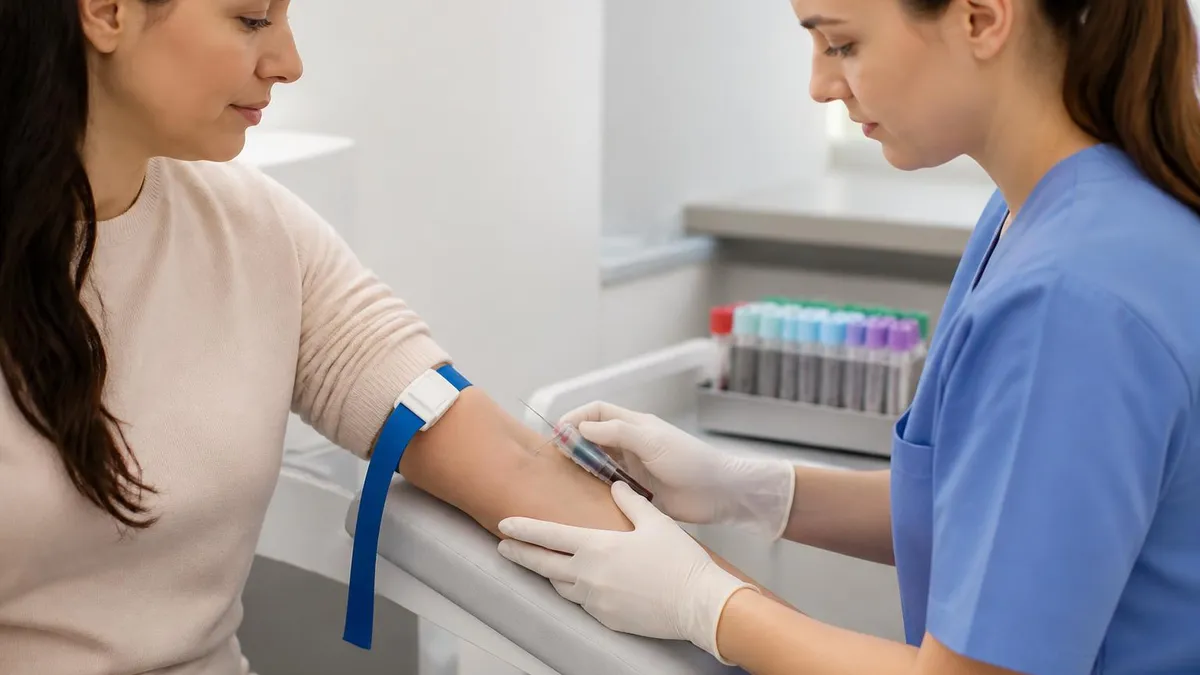
Phlebotomy Technician Salary 2026: Complete Pay Guide by State, Experience & Certification
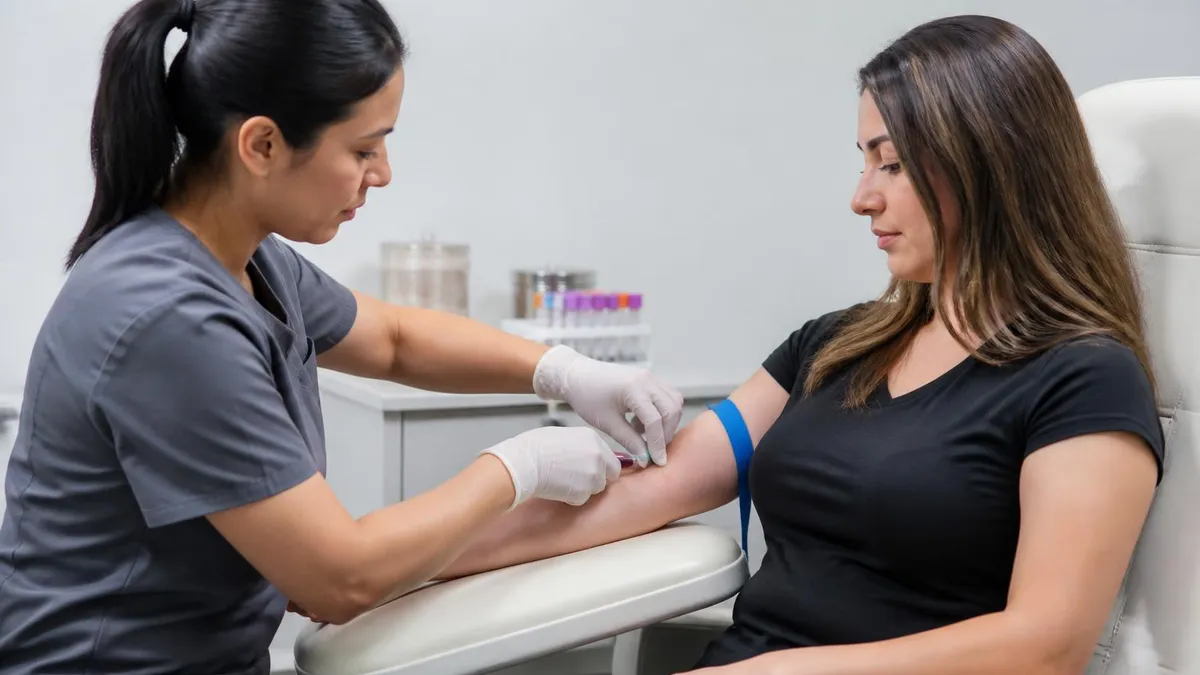
Phlebotomy Technician Program: Complete Training Guide, Curriculum, Cost, Duration, and Career Outcomes
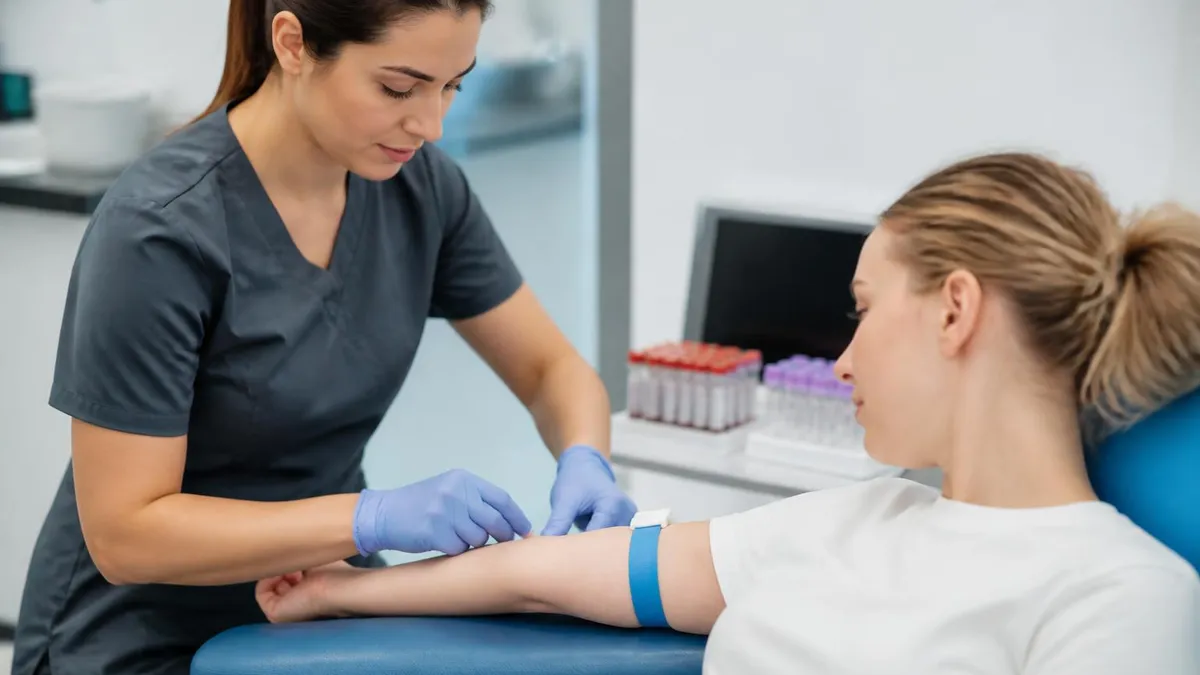
NHA Phlebotomy Practice Test: Complete CPT Exam Prep Guide

Phlebotomy Training Academy — Complete Guide (2026)
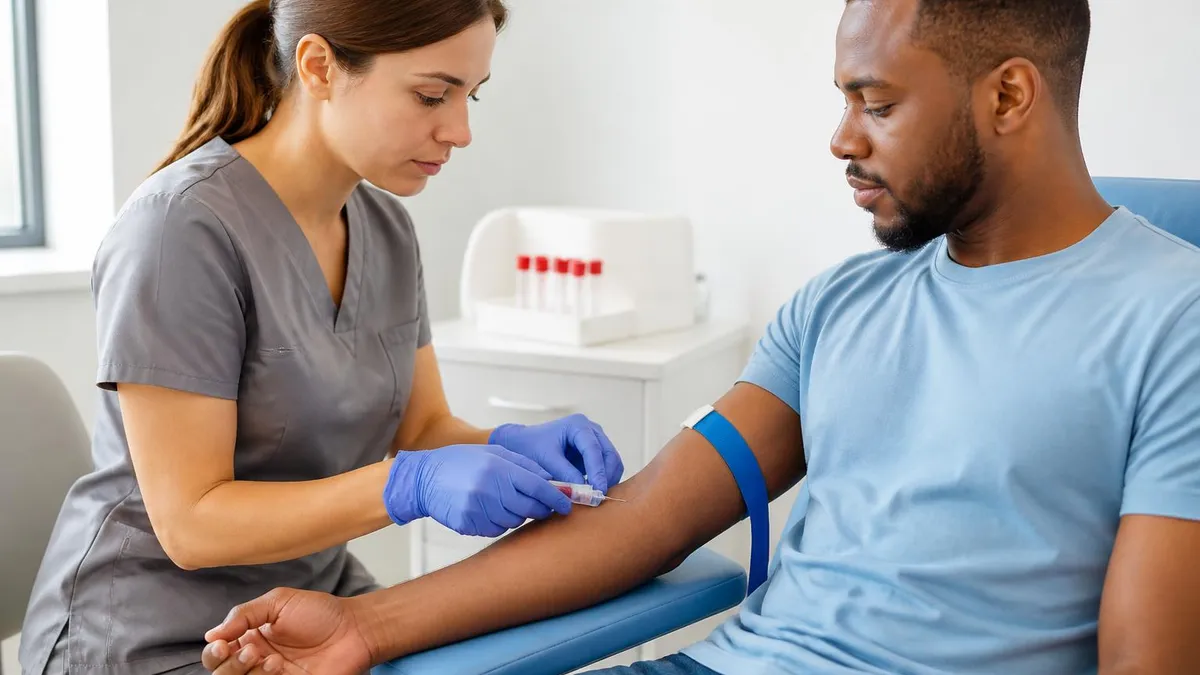
Phlebotomy Technician: Job Duties, Pay, and How to Become One
About the Author

Registered Nurse & Healthcare Educator
Johns Hopkins University School of NursingDr. Sarah Mitchell is a board-certified registered nurse with over 15 years of clinical and academic experience. She completed her PhD in Nursing Science at Johns Hopkins University and has taught NCLEX preparation and clinical skills courses for nursing students across the United States. Her research focuses on evidence-based exam preparation strategies for healthcare certification candidates.