
Phlebotomy Technician Salary 2026 October: Complete Pay Guide by State, Experience & Certification
Phlebotomy technician salary 2026 October: ❓ average pay, top-paying states, certification boost, hourly rates, and how to earn more as a certified phlebotomist.
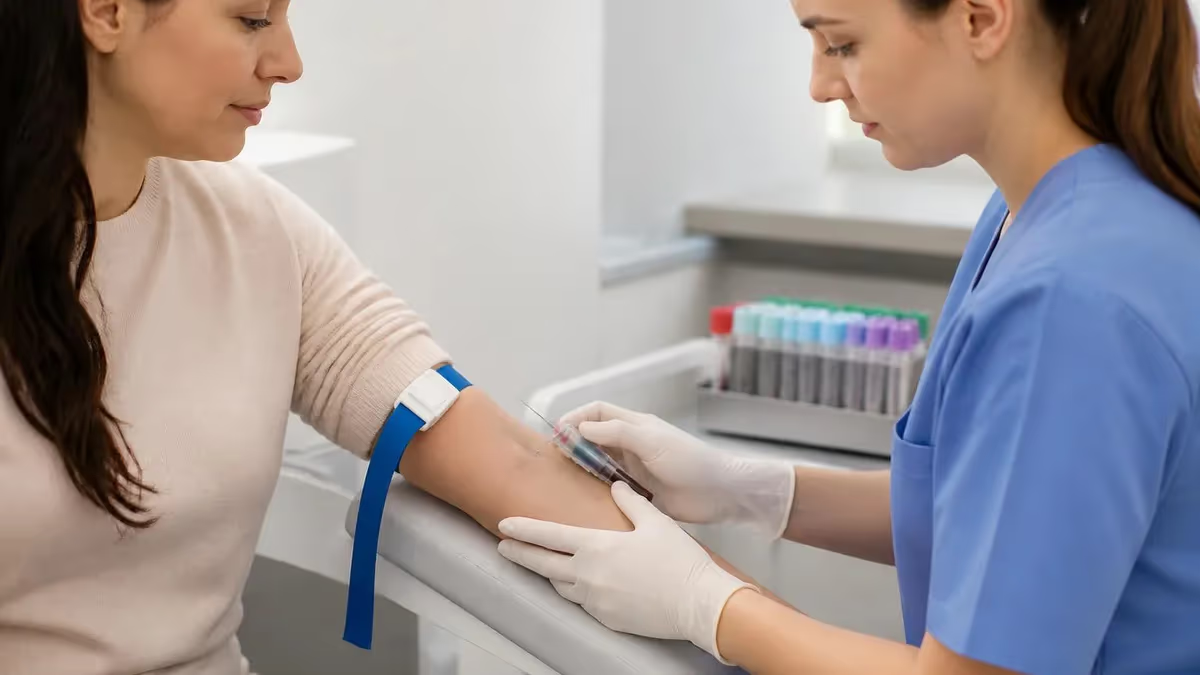
The phlebotomy technician salary in 2026 sits at a national average of $43,660 per year, or roughly $20.99 per hour, according to the most recent Bureau of Labor Statistics occupational data. That figure has climbed nearly 8% since 2023, driven by hospital staffing shortages, expanded outpatient lab networks, and growing demand for mobile blood collection services. If you are researching phlebotomy classes near me or weighing whether the career pays enough to justify training costs, the short answer is yes for most regions, but the spread between the bottom and top earners is wider than most candidates expect.
Entry-level phlebotomists in rural clinics may start near $15.50 per hour, while experienced certified phlebotomy technicians at trauma centers in California, Massachusetts, or Washington routinely earn $28 to $34 per hour with shift differentials. That four-figure monthly gap is not random. It tracks closely with certification status, employer type, years of experience, and the specific draw techniques you can perform safely under pressure.
This guide breaks down phlebotomy salary data the way hiring managers actually use it: by state, by setting, by certification body, and by years on the job. We pull from BLS Occupational Employment Statistics, hospital pay transparency disclosures published under state laws, and verified job board postings from January through April 2026. Numbers are rounded to the nearest hundred dollars and reflect base pay before overtime, on-call stipends, or sign-on bonuses.
You will also learn how a single credential, such as the ASCP Phlebotomy Technician or NHA CPT certification, can lift starting pay by $2 to $4 per hour at most large health systems. We cover what is phlebotomy in terms of job duties, the order of draw phlebotomy fundamentals employers test during interviews, and why therapeutic phlebotomy roles pay a premium over routine specimen collection.
For career switchers, the math is compelling. Most accredited programs run 4 to 8 months and cost $700 to $2,500 total. Compared to nursing or medical laboratory science pathways, phlebotomy offers the fastest legitimate entry into a clinical healthcare role with stable W-2 pay and full benefits at most hospital employers. The trade-off is a lower ceiling, since most phlebotomists max out around $55,000 to $60,000 without moving into supervisory, donor center, or laboratory assistant hybrid roles.
We will also address questions that rarely get clear answers online: whether travel phlebotomy actually pays what the agencies advertise, how shift differentials stack on weekends and overnight, and what specific skills justify asking for a raise during your first annual review. By the end, you will have a realistic salary range for your state, your credential level, and your target employer type.
Finally, a note on data quality. Salary aggregators like Indeed and Glassdoor often inflate reported pay because they oversample large metros and unionized hospital systems. Where possible, we cross-reference posted wages with state-mandated transparency filings, which give a more accurate picture of what new hires actually earn on day one rather than what experienced staff make after five years.
Phlebotomy Technician Salary by the Numbers (2026)

Phlebotomy Salary by Experience Level
Geography drives more variation in phlebotomy salary than any other single factor. California leads the nation with an average annual wage of $52,490, followed by the District of Columbia at $51,820, Massachusetts at $50,140, New York at $49,330, and Washington at $48,710. The bottom five states are West Virginia, Mississippi, Alabama, Louisiana, and Arkansas, where averages range from $34,200 to $36,800. That $18,000 spread between top and bottom states is larger than the gap between entry-level and mid-career pay nationally.
Within high-paying states, metropolitan areas concentrate the best wages. San Francisco-Oakland-Berkeley pays a median of $58,720, San Jose-Sunnyvale pays $57,910, and Boston-Cambridge-Newton pays $54,330. Searching for phlebotomy training specialists in these metros typically reveals starting wages 25% to 40% above the state average, partly because large academic medical centers like UCSF, Stanford Health, and Massachusetts General compete aggressively for credentialed staff.
Cost of living complicates the picture. A $58,000 salary in San Francisco delivers less buying power than a $42,000 salary in Phoenix or Nashville once rent, taxes, and transportation are factored in. Phlebotomists who are mobile often target second-tier cities like Minneapolis, Denver, Austin, Portland, and Raleigh-Durham, where wages run $44,000 to $48,000 against more manageable housing costs. These markets also tend to have stable hospital expansion and rising outpatient lab demand.
Rural pay deserves a separate note. Critical access hospitals in Montana, North Dakota, Wyoming, and Alaska sometimes pay above state averages to offset isolation. Alaska reports an average phlebotomy wage of $47,290, which is unusually high relative to the surrounding labor market. Sign-on bonuses of $3,000 to $7,500 and housing stipends are common in these settings, particularly for certified phlebotomy technicians willing to commit to a 12 or 24 month contract.
Texas and Florida tell an interesting story. Both states have huge phlebotomy workforces, with Texas employing roughly 14,200 phlebotomists and Florida employing 11,800. Yet their state averages, $38,940 and $37,210, sit below the national median. The reason is high concentration of for-profit lab networks like Quest Diagnostics and Labcorp patient service centers, which generally pay 10% to 15% less than hospital systems for comparable work.
Urban-rural splits within a single state matter too. A phlebotomist in upstate New York might earn $39,000 while a peer in Manhattan earns $54,000 at NYU Langone or Mount Sinai. The same pattern holds in Illinois, where Chicago hospital pay outpaces downstate clinics by $8,000 to $11,000. When evaluating a job offer, always benchmark against the specific metropolitan statistical area rather than the statewide average.
One last regional pattern: states with strong nursing union activity often have higher phlebotomy pay because collective bargaining agreements extend to allied health support staff. California, Oregon, Washington, Minnesota, and New York fit this pattern. If you are choosing between two job offers in different states, check whether the employer is unionized. Union contracts typically guarantee annual step increases of 2.5% to 4%, which compound significantly over a five-year period.

Phlebotomy Practice Test Questions
Prepare for the Phlebotomy Test exam with our free practice test modules. Each quiz covers key topics to help you pass on your first try.
Phlebotomy American Medical Certification ...
Phlebotomy Exam Questions covering American Medical Certification Association Phlebotomy. Master Phlebotomy Test concepts for certification prep.
Phlebotomy American Medical Technologists ...
Free Phlebotomy Practice Test featuring American Medical Technologists Phlebotomy. Improve your Phlebotomy Exam score with mock test prep.
Phlebotomy American Society for Clinical P...
Phlebotomy Mock Exam on American Society for Clinical Pathology Phlebotomy. Phlebotomy Study Guide questions to pass on your first try.
Phlebotomy Association of Phlebotomy Techn...
Phlebotomy Test Prep for Association of Phlebotomy Technicians. Practice Phlebotomy Quiz questions and boost your score.
Phlebotomy National Center for Competency ...
Phlebotomy Questions and Answers on National Center for Competency Testing Phlebotomy. Free Phlebotomy practice for exam readiness.
Phlebotomy National Healthcareer Associati...
Phlebotomy Mock Test covering National Healthcareer Association Phlebotomy. Online Phlebotomy Test practice with instant feedback.
Phlebotomy Order of Draw and Additives
Free Phlebotomy Quiz on Order of Draw and Additives. Phlebotomy Exam prep questions with detailed explanations.
Phlebotomy Legal and Ethics
Phlebotomy Practice Questions for Phlebotomy Legal and Ethics. Build confidence for your Phlebotomy certification exam.
Phlebotomy Safety and Infection Control
Phlebotomy Test Online for Safety and Infection Control. Free practice with instant results and feedback.
Phlebotomy Special Collection Procedures
Phlebotomy Study Material on Special Collection Procedures. Prepare effectively with real exam-style questions.
Phlebotomy Specimen Processing and Handling
Free Phlebotomy Test covering Specimen Processing and Handling. Practice and track your Phlebotomy exam readiness.
Phlebotomy Test Arterial Blood Gas Collection
Phlebotomy Exam Questions covering Test Arterial Blood Gas Collection. Master Phlebotomy Test concepts for certification prep.
Phlebotomy Test Capillary and Dermal Puncture
Free Phlebotomy Practice Test featuring Test Capillary and Dermal Puncture. Improve your Phlebotomy Exam score with mock test prep.
Phlebotomy Test Pediatric Blood Collection
Phlebotomy Mock Exam on Test Pediatric Blood Collection. Phlebotomy Study Guide questions to pass on your first try.
Phlebotomy Test Phlebotomy Anatomy and Phy...
Phlebotomy Test Prep for Test Phlebotomy Anatomy and Physiology. Practice Phlebotomy Quiz questions and boost your score.
Phlebotomy Test Phlebotomy Exam Simulation
Phlebotomy Questions and Answers on Test Phlebotomy Exam Simulation. Free Phlebotomy practice for exam readiness.
Phlebotomy Test Phlebotomy Patient Identif...
Phlebotomy Mock Test covering Test Phlebotomy Patient Identification and Communication. Online Phlebotomy Test practice with instant feedback.
Phlebotomy Test Point of Care Testing
Free Phlebotomy Quiz on Test Point of Care Testing. Phlebotomy Exam prep questions with detailed explanations.
Phlebotomy Salary by Employer Type
Hospital-based phlebotomists earn the highest base pay in the field, averaging $46,820 nationally with strong benefits packages. Large academic medical centers like Cleveland Clinic, Mayo, and Johns Hopkins pay $48,000 to $58,000 plus pension or 403(b) matching up to 6%. Trauma and emergency department phlebotomists typically earn an extra $1.50 to $3.00 per hour for high-acuity work and difficult sticks under time pressure.
The trade-off is workload. Hospital phlebotomists commonly draw 80 to 130 patients per 12-hour shift, work weekends and holidays on rotation, and respond to code situations. Night shift differential adds 10% to 15%, and weekend differential adds another 5% to 10%, pushing top hourly rates above $32 for credentialed night staff at large urban hospitals.
Is a Phlebotomy Career Worth the Pay?
- +Fastest legitimate entry into clinical healthcare, with most programs completing in 4 to 8 months
- +Stable W-2 employment with full medical, dental, vision, and retirement benefits at hospital employers
- +Low training cost of $700 to $2,500 yields strong return on investment within the first year of work
- +Consistent 7% projected job growth through 2033 across nearly every US metro area
- +Clear certification pathway boosts pay by $2 to $4 per hour and opens specialty roles
- +Transferable skills lead to medical assistant, lab technician, nursing, or perfusionist career pivots
- +Shift flexibility lets you choose 8-hour days, 12-hour nights, or weekend-only Baylor schedules
- −Salary ceiling around $58,000 to $62,000 without moving into supervisory or hybrid lab roles
- −Physical demands include 8 to 12 hours on your feet and risk of needlestick injury
- −Emotional toll from pediatric draws, oncology patients, and combative or anxious patients
- −Weekend, holiday, and overnight rotations are standard at most hospital employers
- −Pay in southern and rural states often falls below livable wage for single-income households
- −Limited remote work options compared to other allied health roles like billing or coding

Certification Steps That Raise Your Phlebotomy Salary
- ✓Complete an accredited 80-hour minimum phlebotomy training program with hands-on lab hours
- ✓Log at least 100 successful venipunctures and 25 capillary sticks on real patients during clinicals
- ✓Choose your certifying body: NHA, ASCP, AMT, NCCT, or AMCA based on employer preference in your region
- ✓Pass the certification exam on first attempt to avoid retake fees of $90 to $135
- ✓Apply for state licensure if you live in California, Washington, Louisiana, Nevada, or Puerto Rico
- ✓Negotiate a $1.50 to $3.00 per hour pay bump when starting a new job as a certified phlebotomy technician
- ✓Add a second specialty credential such as donor phlebotomy or apheresis within your first two years
- ✓Complete BLS for Healthcare Providers certification to qualify for ED and trauma center positions
- ✓Track 6 to 10 continuing education units annually to maintain credentials and qualify for step raises
- ✓Request a competency review with your supervisor every 12 months to document raise eligibility
Get certified before your first job, not after
Hospital systems use credential status as a hiring filter, not a raise trigger. Walking in with an active NHA CPT or ASCP PBT credential typically locks in $2 to $4 more per hour on day one, which compounds to $4,200 to $8,300 of extra annual income. Earning the credential after hire often results in a one-time $0.75 bump rather than full market-rate placement.
Certification has the largest single effect on phlebotomy salary outside of geography. The four most widely recognized credentials are the NHA Certified Phlebotomy Technician, ASCP Phlebotomy Technician, AMT Registered Phlebotomy Technician, and NCCT National Certified Phlebotomy Technician. Each requires completion of an accredited training program, documented clinical hours, and a proctored exam. Pass rates range from 68% to 81%, and most candidates use a structured phlebotomy salary preparation strategy that pairs question banks with mock exams.
Employers in California, Washington, Louisiana, Nevada, and Puerto Rico require state licensure in addition to national certification. California Department of Public Health Phlebotomy Technician 1, 2, and Limited licenses each correspond to different scope-of-practice levels, and pay typically rises with each tier. A California CPT2 with arterial sticks competency commonly earns $3 to $5 more per hour than a CPT1 limited to venipuncture only.
Shift differentials add meaningful income for credentialed staff willing to work nontraditional hours. A typical hospital structure pays a 10% to 15% premium for evening shifts starting at 3 PM, a 15% to 20% premium for overnight shifts starting at 11 PM, and a flat 5% to 10% premium for Saturday and Sunday hours. Stacked together, a $22 per hour base wage can climb to $28 or $30 per hour for a Friday-night-through-Sunday-morning rotation.
On-call pay is a smaller but real bonus, usually $2 to $4 per hour for being available with a 30-minute callback window, plus a minimum 2-hour call-in payment at time-and-a-half when actually called in. Trauma centers, transplant programs, and outpatient surgery centers rely heavily on on-call phlebotomy coverage, especially overnight. Across a full year, on-call premiums commonly add $2,500 to $5,000 to base pay for staff who sign up for weekly rotation.
Overtime rules favor phlebotomists because most are non-exempt hourly employees protected by the Fair Labor Standards Act. Any hours over 40 per week are paid at 1.5 times the regular rate, including any shift differential. A phlebotomist regularly picking up one extra 12-hour shift per pay period can add $12,000 to $18,000 to annual gross pay, although burnout is real and most veterans cap overtime at 8 to 16 extra hours per month.
Sign-on bonuses returned to the phlebotomy market in 2022 and have stayed since. Typical offers range from $1,500 for entry-level Quest or Labcorp roles to $7,500 at hospital systems facing staffing crises. Bonuses usually require a 12 or 24 month service commitment with prorated repayment if you leave early. Travel phlebotomy contracts through agencies like Aya Healthcare and Cross Country pay $1,800 to $2,600 per week including non-taxed stipends, but typically require 1 to 2 years of prior hospital experience.
Therapeutic phlebotomy is a niche worth understanding. Patients with hemochromatosis, polycythemia vera, or porphyria need scheduled large-volume blood removal as ongoing treatment. Programs that train phlebotomists in therapeutic phlebotomy pay $1 to $3 more per hour and offer steady weekday hours. Many freestanding therapeutic phlebotomy clinics are growing because hospital outpatient billing rules favor offsite delivery of these treatments.
Indeed, Glassdoor, and ZipRecruiter often report phlebotomy averages above $45,000 because they oversample large urban hospitals and self-reported managerial pay. State workforce dashboards and BLS Occupational Employment Statistics are more accurate. Always cross-reference with at least two sources before accepting or rejecting a job offer, and ask the hiring manager directly for the published pay range.
If you want to maximize your phlebotomy technician salary, treat the first three years as a deliberate skill-building phase rather than just a job. Document every type of draw you complete: standard adult venipuncture, hand and foot capillary, pediatric heel stick, geriatric difficult-vein, butterfly draws on chemotherapy patients, blood culture sets, and arterial gases if your scope allows. A logged competency list becomes your strongest negotiating tool at annual review time and during interviews for higher-paying roles.
Pursue secondary certifications within 18 months of your first job. The most lucrative add-ons are apheresis collection, donor phlebotomy specialist, therapeutic phlebotomy, and IV insertion certification where state scope permits. Each adds roughly $1 to $3 per hour and unlocks job titles that simply pay more, such as Apheresis Technician, Donor Specialist, or Lab Assistant II. Many hospitals will reimburse the exam fee if you stay 12 months after credentialing.
Geographic arbitrage is real. Moving from a low-paying state to a high-paying metro can deliver an immediate 30% to 50% raise. Before relocating, calculate a true cost-of-living-adjusted wage using a calculator like NerdWallet or BestPlaces. Sometimes a $44,000 job in Raleigh delivers more disposable income than a $55,000 job in Seattle once rent, state income tax, and transportation are factored in. Travel phlebotomy is a controlled way to test markets without permanent relocation.
Negotiation matters at every transition point. Most healthcare HR departments have pay bands with a 15% to 25% spread between the minimum and maximum for each job code. New hires who simply accept the first offer are typically placed at the 25th percentile of the band. Asking thoughtfully for the 50th or 60th percentile, supported by certification, prior experience, and a competing offer, often results in a $1.50 to $3.00 hourly increase before you sign.
Look for hybrid roles that combine phlebotomy with related lab functions. Phlebotomy plus EKG, phlebotomy plus point-of-care testing, phlebotomy plus specimen processing, and phlebotomy plus medical assisting all carry higher pay grades. A multi-skilled tech often earns $4 to $7 more per hour than a single-credential phlebotomist while doing essentially the same daily volume of draws. Searching for phlebotomy certification near me that includes EKG or medical assistant content can position you for these higher tiers from the start.
Consider eventual leadership pathways. Lead Phlebotomist, Phlebotomy Supervisor, and Phlebotomy Education Coordinator roles pay $55,000 to $78,000 and exist at most mid-sized to large hospital systems. The educational requirement is usually 3 to 5 years of bench experience plus internal training, not an additional degree. If you enjoy teaching new hires and managing schedules, leadership is the realistic path to a six-figure trajectory inside laboratory services without leaving the bench permanently.
Finally, plan for inflation-adjusted raises. The national average phlebotomy raise in 2025 was 3.4%, slightly behind general healthcare wage growth of 3.9%. To outpace inflation, most professionals need to change employers every 3 to 5 years. Internal raises rarely match external market rates, so a planned move to a competitor or a different health system every few years is the cleanest way to keep your real income climbing throughout a 20 to 30 year career.
Practical salary research starts before you enroll in training, not after. Call three potential employers in your target metro and ask the talent acquisition team for the published pay range for an entry-level phlebotomist with a national certification. Most HR departments will share the range honestly because pay transparency laws in Colorado, California, Washington, New York, Illinois, and several other states now require disclosure. Even in states without these laws, hiring managers usually answer the question directly when asked politely.
Once you have three real ranges, compare them against your program cost and expected time to certification. A $1,800 training program followed by a $20.50 starting wage at a local hospital network pays back the tuition cost in roughly six weeks of full-time work. Programs that cost $4,000 or more rarely deliver materially better placement than $1,500 to $2,500 community college or hospital-based programs, so be skeptical of expensive for-profit schools that lean heavily on financial aid messaging.
Build your professional brand even at the entry level. A simple one-page resume listing your certifications, clinical hours, draw count, and any specialty competencies signals seriousness. LinkedIn profiles are uncommon among phlebotomists, which actually makes them more powerful for the few who maintain them. Recruiters at large reference labs and travel agencies actively search the platform, and a clean profile with your credential numbers visible can generate inbound offers within months.
Track your own metrics throughout the year. Record draws per shift, first-stick success rate, patient complaints, and any quality assurance incidents. When review season arrives, walk into the meeting with a one-page summary showing volume, accuracy, and any extra responsibilities you absorbed. Managers approve raises faster for staff who self-document because it reduces the paperwork burden on their end and gives them clear justification for HR sign-off.
Network with other phlebotomists outside your employer. State allied health associations, NHA and ASCP local chapters, and online communities on Reddit and Facebook groups share real-time salary intelligence that almost never appears on official aggregator sites. Knowing what a peer at a competing hospital earns gives you a defensible benchmark when negotiating raises or evaluating outside offers. Be specific in conversations: ask hourly base, shift differentials, and bonus eligibility separately.
Protect your physical capacity for the long haul. Phlebotomy is a repetitive motion job, and rotator cuff strain, lower back issues, and needlestick injuries are the most common career-limiting problems. Use a phlebotomy cart instead of carrying trays whenever possible, alternate your dominant hand for routine tasks, and never recap needles. Workers compensation pays medical bills, but extended time off rarely makes up for lost wages and lost progression toward step raises.
Finally, think two careers ahead. Phlebotomy is an excellent first chapter in healthcare, but it is rarely the right place to retire. The most successful career arcs use phlebotomy as a launching pad into clinical lab science, nursing, ultrasound, or healthcare administration. Tuition reimbursement at hospital employers commonly covers $3,000 to $5,250 per year, and many phlebotomists complete an associate or bachelor degree while working full time. Treat your first phlebotomy job as a paid runway into a higher-ceiling clinical role.
Phlebotomy Questions and Answers

About the Author

Registered Nurse & Healthcare Educator
Johns Hopkins University School of NursingDr. Sarah Mitchell is a board-certified registered nurse with over 15 years of clinical and academic experience. She completed her PhD in Nursing Science at Johns Hopkins University and has taught NCLEX preparation and clinical skills courses for nursing students across the United States. Her research focuses on evidence-based exam preparation strategies for healthcare certification candidates.