
Phlebotomy Class Near Me — Complete Guide (2026 September)
Find a phlebotomy class near me: ❓ program types, costs $500-$4,000, 4-12 week length, top schools by city, NAACLS accreditation, certification paths.
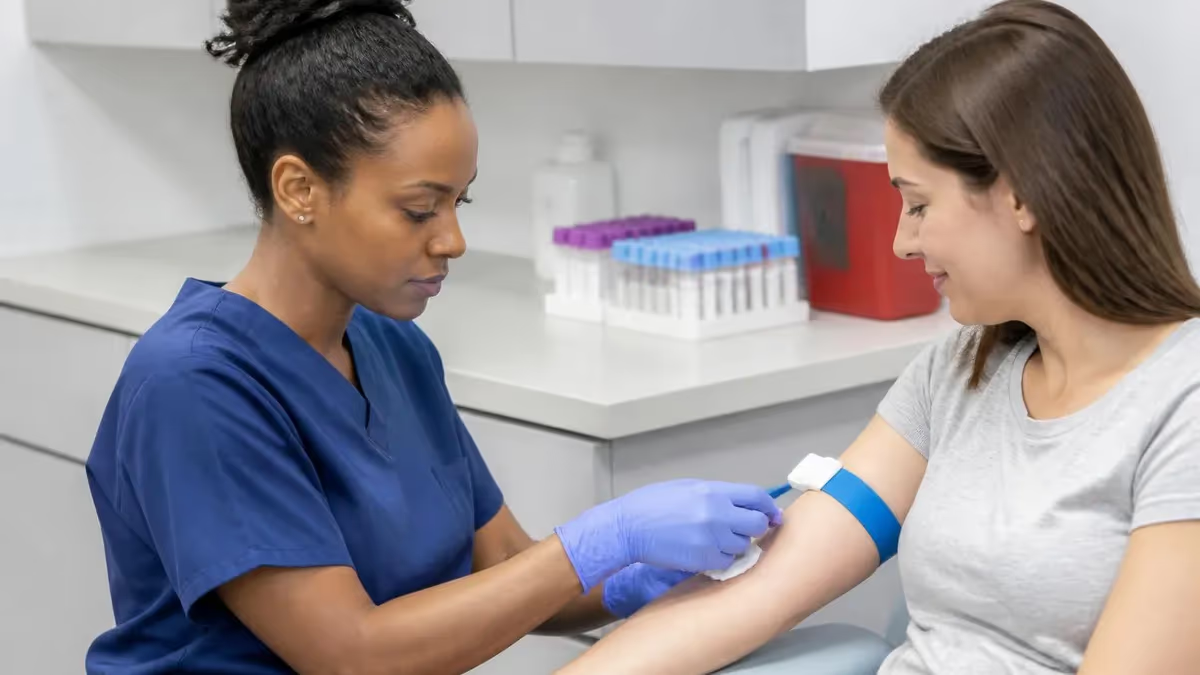
Phlebotomy Class — Key Numbers

Phlebotomy Class Near Me — Where to Look First
Looking for a phlebotomy class near me starts with one honest question: how fast do you want to be drawing blood for a paycheck? Some people finish a program in six weeks. Others stretch it across a semester at a community college. Both paths get you to the same exam — and the same starting salary.
You'll find local programs in four main places. Community colleges run them through continuing education or allied health departments. Trade schools like Lincoln Tech, Cambridge Institute of Allied Health, and Allied Health Career Institute offer accelerated tracks. Hospitals — yes, real hospitals — sometimes train you for free if you agree to work a year or two after passing. Then there are private vocational schools and Red Cross community programs in larger metro areas.
Start with Google Maps. Search "phlebotomy school" and limit the radius to 25 miles. Cross-reference what comes up with your state's department of health website — that's where licensing-required states (California, Louisiana, Nevada, Washington) list approved providers. If you're in one of those four states, you can't use just any program. Pick one that's pre-approved. Otherwise the certificate is useless.
Worth knowing: not every program prepares you for national phlebotomy certification exams. Some shorter "phlebotomy assistant" courses dump you into a hospital with zero exam prep. Ask the admissions office directly — "does this program qualify me to sit for the NHA CPT or ASCP PBT exam?" If they hedge, walk.
The honest answer about finding the right class: it's less about prestige and more about three things. Distance from home (you'll be there 4–5 days a week). Clinical placement (the school must arrange it; you shouldn't have to). And whether their phlebotomy training hits the NAACLS framework. Skip those checks and you'll waste $2,000.
Major hospital systems — HCA, Kaiser, Cleveland Clinic, Mayo, Adventist Health, Sutter — quietly run their own phlebotomy training. Some are tuition-free. The catch: you sign a 12- to 24-month work commitment after passing. You earn $16–$19/hour during your commitment, get full benefits, and the training is paid for. Search "[hospital name] phlebotomy training program" on the careers page. Not advertised broadly because they fill quickly via word of mouth. Best ROI of any path on this page.
Program Types: Which One Fits You?
Cheapest path. In-state tuition runs $500–$2,500 for a full certificate. Slower pace (10–16 weeks), but financial aid eligible. Strong NAACLS accreditation rates. Some include college credit transferable to nursing.
Lincoln Tech, Cambridge Institute, Allied Health Career Institute, Concorde, Pima Medical. Faster (4–8 weeks accelerated). Costs $1,500–$4,000. Job placement assistance built in. Watch accreditation — some are nationally accredited only, not regionally.
Often free or tuition-reimbursed. Requires a work commitment (12–24 months). Hands-on from week one. You're trained on the hospital's own protocols and IT systems. Best if you already know which hospital you want to work for.
American Red Cross runs phlebotomy training in select metros (Atlanta, DC, Detroit, Phoenix). Costs $1,200–$2,500. Reputation is strong. Slots fill fast — application periods are quarterly.
National Phlebotomy Solutions, Phlebotomy USA, Healthcare Career College, Med Cert Career Institute. Convenient locations, evening/weekend schedules. Quality is mixed — verify NAACLS or ASCP recognition before paying.
Lecture happens online; clinicals at a partner lab nearby. Costs $700–$1,800. Penn Foster, Ashworth, Phlebotomy Career Training. Works if you're disciplined. Some states won't accept fully online theory — check first.
Tuition by Program Type
Class Length & Schedule Options
The shortest legitimate path. Daytime classes Monday through Friday, 6–7 hours per day. Clinical externship runs concurrent or immediately after. Total: 80–120 classroom hours plus 40 clinical hours. You'll do 25–30 live sticks under supervision. Trade schools dominate this format. Realistic if you have no other obligations — it's full-time school for a month.
Best for: Career changers who can quit and focus. Programs include Phlebotomy USA, several Lincoln Tech campuses, Med Cert.

Top Phlebotomy Schools by Major City
Not every city has the same options. Here's a rundown of well-reviewed programs in the ten largest US metros — verified NAACLS or state-board approval for each one listed below.
New York City
BMCC (Borough of Manhattan Community College) runs an affordable, well-respected phlebotomy certificate. LaGuardia Community College offers a longer 16-week version with stronger clinical placement. ASA College in Manhattan competes on speed. Hostos Community College in the Bronx is solid for South Bronx and upper Manhattan residents.
NYC pay starts at $19–$22/hour — among the highest in the country, but tuition is also pricier here. Plenty of phlebotomy training spots open every quarter, and most pair you with a hospital network for clinicals. Bring your patience: waitlists at the community colleges can stretch a full semester. Manhattan-based programs cost the most; outer-borough community colleges run cheapest with comparable quality.
Los Angeles
Pasadena City College and East Los Angeles College both run California-approved programs (CA requires a Certified Phlebotomy Technician 1 license, so program approval matters). Concorde Career College has campuses in LA, San Diego, and North Hollywood. UEI College is faster but pricier. Phlebotomy Training Specialists has a downtown LA location — they specialize purely in phlebotomy, nothing else. They pump graduates into LabCorp, Quest, and Cedars-Sinai contracts. If you want focused training without distractions, that's the LA pick.
Chicago
City Colleges of Chicago (Malcolm X, Olive-Harvey, Wright) run affordable certificates. Triton College in River Grove is the suburban favorite. Coyne College downtown offers an accelerated track. Northwestern Medicine and Rush both run internal hospital programs worth applying to. See our city-specific Chicago training guide for deeper detail on schedules and prerequisites.
Houston, Philadelphia, Phoenix
Houston Community College (HCC) has multiple campus locations and a strong reputation. Lone Star College runs a 7-week intensive. San Jacinto College serves the eastern Houston metro. Texas doesn't require state licensure, so you have flexibility — pick the cheapest accredited option near you. Memorial Hermann and Houston Methodist both occasionally hire directly from training-program graduates with no extra hoops.
Philadelphia options center on the Community College of Philadelphia (CCP) and Allied Medical and Technical Institute. CCP offers in-state tuition that's hard to beat. Allied runs an accelerated track if you want out fast. Phoenix has three solid choices: Mesa Community College, Pima Medical Institute (multiple Arizona campuses), and Gateway Community College. Banner Health and HonorHealth both run internal hospital programs in the Valley — apply to those first if you're flexible on which hospital you'd work for.
Atlanta, Boston, Miami, Dallas
Atlanta: Georgia Piedmont Technical College and Atlanta Technical College both have state-approved programs. Emory Healthcare runs an internal training pipeline that's competitive but free. Grady Health System occasionally runs phlebotomy training tied to a service commitment. Boston: Bunker Hill Community College and Roxbury Community College — both Massachusetts state-approved. Brigham and Women's, Mass General, and Boston Children's all hire from these two programs. Tuition is moderate; pay scale is among the highest in the Northeast.
Miami: Miami Dade College has multiple campuses (Medical Campus is the main one). Florida National University is the private option. Florida requires no state license, so program flexibility is wide. Dallas: the DCCCD system (Dallas College's Eastfield, Mountain View, North Lake) covers the metroplex. Check our training academy guide for state-by-state comparisons.
Smaller metros (Denver, Minneapolis, Nashville, Portland, San Diego) follow the same template: one or two community colleges, one or two trade schools, and at least one hospital that hires directly from training graduates. If your city isn't listed, the playbook is the same — community college first, hospital program second, trade school third.
Community College vs Trade School
Two most common paths compared honestly.
- +Cheapest tuition by far — $500-$2,500 for a full certificate
- +Pell Grant and federal aid eligible at most programs
- +Credits often transfer to nursing or RT programs later
- +NAACLS accreditation common — better hiring prospects
- +Smaller class sizes, more individualized clinical time
- +Lower-pressure pace — easier to keep a job during
- −Faster: finish in 4-8 weeks vs 10-16 at community colleges
- −Job placement assistance and resume help included
- −Convenient locations and evening/weekend schedules
- −Costs $1,500-$4,000 — sometimes 4x community college tuition
- −Accreditation varies — verify NAACLS before paying
- −Some financing plans charge high interest
Accreditation That Actually Matters
Three letters: NAACLS. The National Accrediting Agency for Clinical Laboratory Sciences is the gold standard. Programs they approve meet a rigorous framework for classroom hours, clinical experience, and curriculum. Search the NAACLS website directly — if a school claims accreditation, verify it there. Schools love to use vague phrases like "recognized" or "approved" that don't mean much.
Secondary recognition that counts: ASCP-BOC (American Society for Clinical Pathology Board of Certification) approval, ABHES (Accrediting Bureau of Health Education Schools), and state-board approval where required. National certification eligibility usually hinges on completing a NAACLS-approved program OR a 1040+ hour work experience pathway. Some schools also list CAAHEP and ACEN — those are valid for related allied-health credentials but not specifically required for phlebotomy work.
Why It Matters for Jobs
Major hospital systems — LabCorp, Quest Diagnostics, BioReference, and most academic medical centers — screen resumes for NAACLS-accredited program graduates first. A cheaper non-accredited certificate might still get you a job at a smaller clinic or doctor's office. But you'll be excluded from the better-paying employers from day one. That's a $5,000–$8,000-per-year salary gap, every year, for the rest of your career.
How to Verify Accreditation in 30 Seconds
Go to naacls.org. Click "Find an Accredited Program". Filter by state. If the school you're considering doesn't show up — it's not NAACLS-accredited, full stop. Don't trust admissions reps who say "we're in the process" or "we have something equivalent". Either the school is listed on naacls.org or it isn't. Five seconds of verification saves $2,000 in mistakes.
NAACLS vs Non-Accredited — Career Impact
- ▶Eligible for NHA CPT, ASCP PBT, NCCT NCPT exams
- ▶Hired by hospitals, reference labs, academic centers
- ▶Starting pay $17–$22/hour in most metros
- ▶Federal aid eligible at most schools
- ▶Travel phlebotomy contracts open after 12 months
- ▶Limited certification eligibility (mostly ASPT only)
- ▶Hired by small clinics, doctor offices, urgent care
- ▶Starting pay $13–$17/hour, fewer raises
- ▶Often no federal aid — pay out of pocket
- ▶Travel and hospital jobs largely closed off
Certifications You'll Take After Class
Finishing the class is step one. You still need to pass a national ASCP certification exam — or another recognized credential — to be hired by most labs. Four bodies dominate the field, and the one you pick affects which jobs you're competitive for.
NHA CPT (National Healthcareer Association Certified Phlebotomy Technician) is the most popular, with a $117 exam fee and computer-based testing at Pearson VUE centers nationwide. It's accepted by most employers and recertification is straightforward — 10 continuing education hours every two years.
ASCP PBT (American Society for Clinical Pathology Phlebotomy Technician) carries the strongest reputation in hospital labs. The exam costs $135 and is harder than NHA, but it opens doors at academic medical centers and research labs. Worth the extra effort if you want the higher-tier employers.
NCCT NCPT (National Center for Competency Testing) is a solid alternative at $90 — cheaper but still widely accepted. ASPT (American Society of Phlebotomy Technicians) is the older credential, less common at large employers but still valid in many states.
Your school will usually tell you which certification their curriculum prepares you for. Some programs include the exam fee in tuition — ask. Others sell exam vouchers at a small discount. Check our online phlebotomy course roundup for programs that bundle the exam fee.
What Each Cert Tests
All four exams cover the same core ground: anatomy and physiology of veins, order of draw, blood collection tubes and additives, capillary puncture, special procedures (blood cultures, glucose tolerance), specimen handling, infection control, and patient interaction. The differences are in question depth and how strict the scoring is. NHA and NCCT favor straightforward recall. ASCP weaves in more clinical decision scenarios.
How Long After Class to Take the Exam
Most schools recommend you sit for the exam within 60 days of finishing class — while the material is fresh. Wait 6 months and you'll need a serious review block (40+ hours) to feel ready again. The exam is scheduled when you're ready; there's no fixed date like state board exams.
Recertification — What Comes After
All four major credentials require ongoing maintenance. NHA CPT renews every two years with 10 continuing education hours and a small renewal fee around $35. ASCP PBT requires you to enroll in their Credential Maintenance Program (CMP) — 9 continuing education points every three years. NCCT mandates 6 CE hours annually plus a $69 renewal.
ASPT is similar with annual CEU requirements. Most employers cover renewal costs and offer paid time off for CE courses, which makes maintaining your certified phlebotomy technician status nearly cost-free once you're working. Skip recertification and you can't legally draw blood — keep the dates in your calendar.

From Enrollment to First Paycheck
Week 1
Weeks 1–6
Weeks 4–10
Final Week
Weeks 10–14
Weeks 12–16
California requires the CPT 1 (or CPT 2 for arterial draws) license issued by the CDPH Laboratory Field Services. Louisiana requires registration with the Louisiana State Board of Medical Examiners. Nevada requires the Office of Medical Lab Personnel certification. Washington requires Medical Assistant–Phlebotomist certification through the DOH.
If you live in one of these — pick a state-board-approved program. Not optional. National certification alone doesn't qualify you to work; you also need the state-specific paperwork on file before your first shift.
What to Ask Before You Enroll
- ✓Is this program NAACLS-accredited? (Verify on the NAACLS website yourself.)
- ✓Does this program qualify me for the NHA CPT or ASCP PBT exam?
- ✓Does the school arrange my clinical externship, or do I find one myself?
- ✓How many live venipunctures will I perform during clinicals?
- ✓What's the total tuition including books, supplies, lab fees, and exam voucher?
- ✓Is federal financial aid (Pell Grant, FAFSA) accepted here?
- ✓What's the program's first-attempt certification pass rate?
- ✓What's the program's job placement rate within 6 months of graduation?
- ✓Are evening, weekend, or hybrid options available?
- ✓What immunizations, background check, and drug screen are required?
Cost vs Job Outcome — The Honest Math
Starting phlebotomy salary nationally averages $36,000–$42,000 a year. Top metros (NYC, San Francisco, Boston, Seattle) push $48,000–$52,000. The math is brutal in favor of cheaper programs.
A $1,200 community college program pays itself back in under 3 weeks of work. A $4,000 trade school program — about 9 weeks. Either way, this is one of the fastest-ROI healthcare credentials available. Don't go bigger than you need. The cheapest NAACLS-accredited option near you is usually the right answer.
Three traps to avoid. First, predatory "3-day weekend" phlebotomy bootcamps charging $2,500 with zero clinicals. These don't qualify you for the exam in most states. Second, expensive private vocational schools that double-charge for the certification exam voucher. Third, any program that asks you to find your own clinical placement — a legitimate school arranges it for you with established hospital partners.
Financial Aid Reality Check
Pell Grants cover up to $7,395/year for eligible students. Most accredited phlebotomy certificates qualify if the school accepts federal aid. Apply via FAFSA before enrolling — you might walk in with $1,500 tuition and walk out paying $0 out of pocket. Workforce Innovation and Opportunity Act (WIOA) funding through your local American Job Center covers tuition for displaced workers and career changers in many states.
Hidden Costs to Budget For
Beyond tuition: scrubs ($30–$60), closed-toe shoes ($40–$80), background check ($35–$75), drug screen ($40–$70), immunizations if you're missing any ($150–$300 if no insurance), BLS/CPR certification ($60–$100), liability insurance ($35–$50/year), exam fee ($90–$135), state license application ($30–$120 if required). Plan for $400–$700 in extras on top of tuition.
After You're Hired — Where the Money Goes Up
First year: $15–$22/hour at most labs and hospitals. Year 2–3: $18–$26/hour as you accumulate sticks-per-shift speed and add specialty draws (pediatric, geriatric, difficult-access). Travel phlebotomy contracts pay $28–$45/hour with housing stipends — a 13-week contract through Aya, AMN, or Trustaff is realistic after 12 months of experience. Mobile phlebotomy (drawing in patient homes for assisted-living facilities) typically pays $20–$28/hour with per-stop bonuses. Plasma centers (CSL, Grifols, BioLife) pay slightly less but offer guaranteed full-time hours with strong benefits.
Career Ladders That Start Here
Phlebotomy is a launchpad credential as much as it is a job. Many phlebotomy programs have direct articulation agreements with nursing schools, medical lab technician (MLT) programs, and even paramedic training. Two common ladders: phlebotomist to MLT (associate's degree, two years, $45K–$58K starting); phlebotomist to LPN (12–18 months, $48K–$62K). Both pay tuition reimbursement at most hospital employers — meaning you can stack credentials without taking on debt.
Job Markets You Might Not Have Considered
Beyond hospitals: blood donation centers (American Red Cross, Vitalant, OneBlood) need steady phlebotomists. Research labs at universities hire for clinical trial draws. Insurance medical exam services (ExamOne, Portamedic) pay per home visit. Tattoo and body-modification studios occasionally hire for blood-borne pathogen prep work. Even some specialty cannabis-testing labs are now hiring phlebotomists for human-subject research. The field is broader than "hospital draw station" — explore widely.
The 30-Day Action Plan
Day 1–3: list every program within 30 miles. Day 4–7: cross-reference with naacls.org and your state DOH. Day 8–14: contact three admissions offices. Ask about start dates, total cost, and clinical placement. Day 15–21: apply to your top two programs. Day 22–30: submit FAFSA, get immunization records updated, schedule background check. By month two you're realistically enrolled. By month four you're certified and applying for jobs. That's the honest realistic timeline from "I'm thinking about it" to first paycheck.
Phlebotomy Questions and Answers
Phlebotomy Classes Near Me: Local Training Guide
Phlebotomy Training: Programs, Cost & How Long It Takes
Phlebotomy Certification: How to Get Certified in 2026
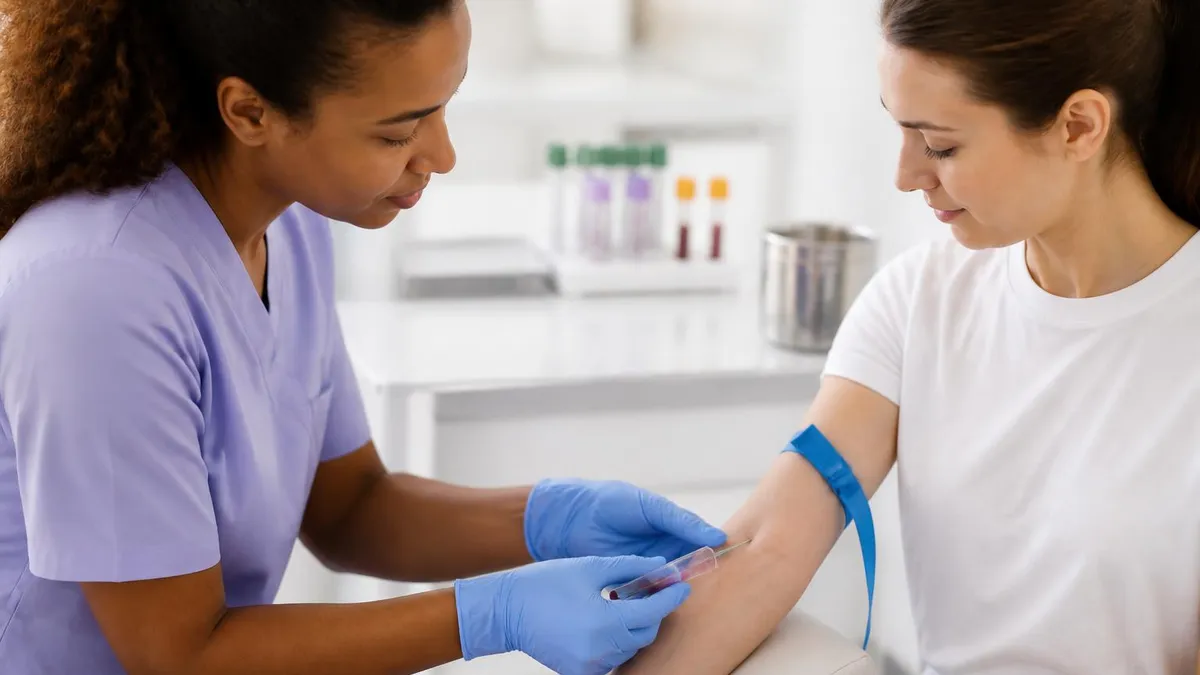
Online Phlebotomy Course: Complete 2026 Guide to Accredited Training, Cost & Certification
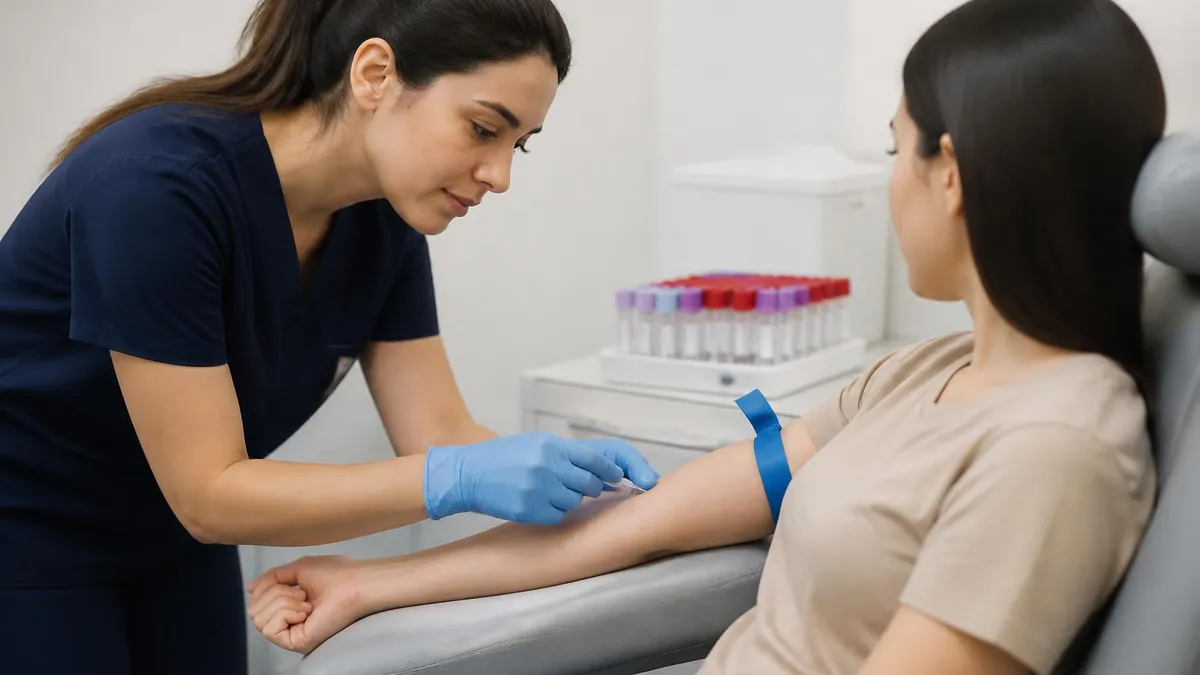
Phlebotomy Classes Chicago: 2026 Guide to Training Programs, Costs & Certification in Illinois
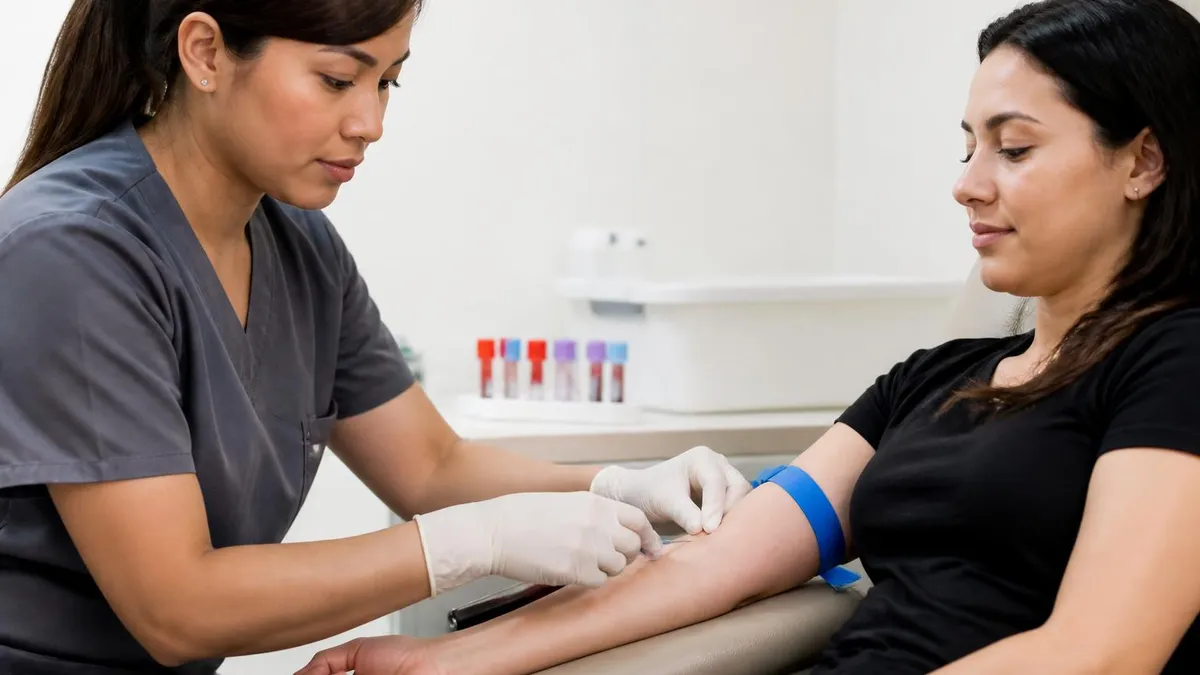
Free Phlebotomy Training Near Me: 2026 Guide to No-Cost Classes, Certification & Career Pathways
About the Author

Registered Nurse & Healthcare Educator
Johns Hopkins University School of NursingDr. Sarah Mitchell is a board-certified registered nurse with over 15 years of clinical and academic experience. She completed her PhD in Nursing Science at Johns Hopkins University and has taught NCLEX preparation and clinical skills courses for nursing students across the United States. Her research focuses on evidence-based exam preparation strategies for healthcare certification candidates.