
Phlebotomy Classes Chicago: 2026 September Guide to Training Programs, Costs & Certification in Illinois
🆕 Phlebotomy classes Chicago: compare top schools, costs ($600-$3,500), 4-12 week programs, certification paths, and salary outlook for 2026 September.
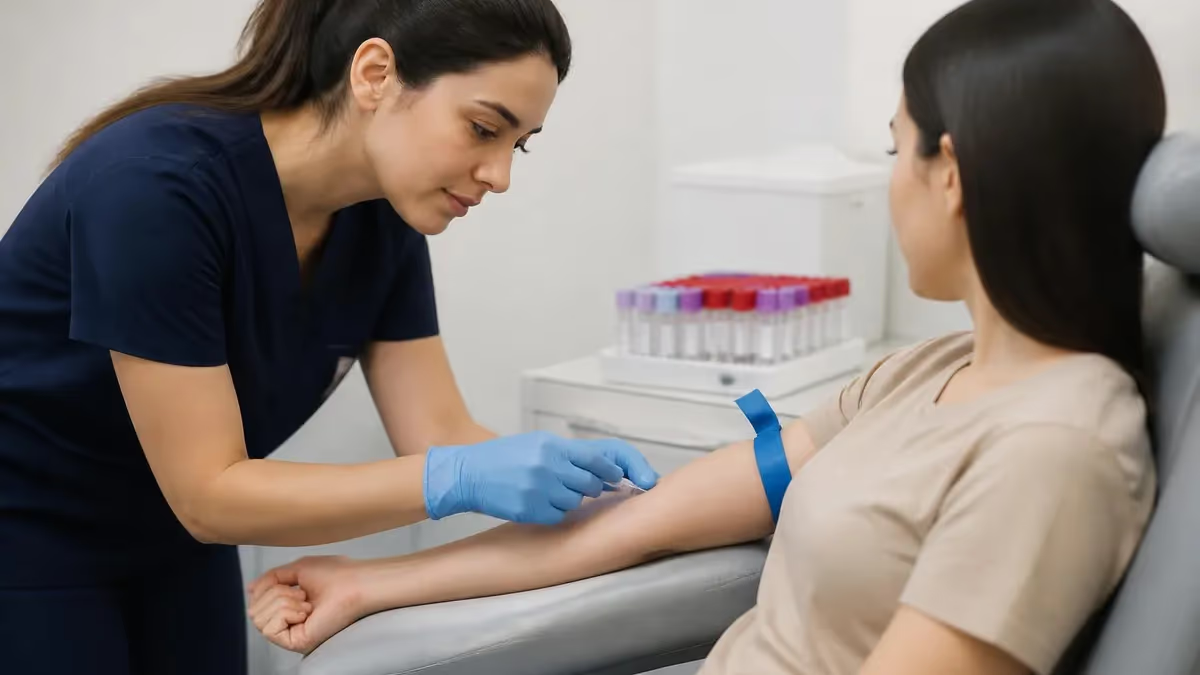
Searching for phlebotomy classes Chicago offers more options than almost any other US metro, with over 25 accredited programs scattered across community colleges, vocational schools, hospital systems, and private training centers. Whether you're looking for phlebotomy classes near me in Lincoln Park, Hyde Park, the Loop, or the suburbs of Oak Park, Evanston, and Naperville, the Chicagoland area delivers compressed 4-week bootcamps, semester-long college certificates, and even fully accredited associate degree pathways. This guide breaks down everything you need to enroll, complete training, and land your first job in 2026.
Chicago's healthcare ecosystem — anchored by Northwestern Memorial, Rush University Medical Center, University of Chicago Medicine, Advocate Aurora Health, and dozens of independent labs — creates strong demand for entry-level phlebotomists. The Illinois Department of Public Health does not require state licensure to draw blood, which means you can start working in many facilities with just a national certification from agencies like the NHA, ASCP, AMT, or NCCT. However, most reputable Chicago employers strongly prefer certified candidates, and many union hospitals require it outright before you touch a patient.
A typical phlebotomy technician program in Chicago runs between 40 and 160 classroom hours plus a clinical externship of 100 to 120 documented venipunctures and capillary draws. Costs vary widely — community college programs like Malcolm X College and Wright College start around $750, while private accelerated schools such as Phlebotomy Career Training and PhlebTech of Illinois charge $1,800 to $3,500. Tuition typically includes textbooks, lab supplies, scrubs, a CPR card, and the national certification exam voucher worth roughly $135.
The hands-on portion is where Chicago programs distinguish themselves. Top schools partner directly with Quest Diagnostics, Labcorp, Northwestern Medicine, and Saints Mary and Elizabeth Medical Center to place students in real outpatient draw stations. You'll perform live sticks on actual patients under supervision, master the phlebotomy order of draw, learn to handle pediatric and geriatric populations, and build the speed required to hit production benchmarks of 8 to 12 patients per hour in busy ambulatory settings.
Scheduling flexibility is another Chicago advantage. Many programs offer weekend-only cohorts for working adults, evening tracks for parents, and hybrid online theory paired with weekend lab intensives. CTA accessibility is built into program planning — Malcolm X College sits at the UIC-Halsted Blue Line stop, Olive-Harvey College is reachable from the Red Line, and most North Side schools cluster around the Brown and Red Lines for easy commuting from anywhere in the city.
Job placement assistance is standard at accredited Chicago phlebotomy schools, and the strongest programs report 80% to 92% placement within 90 days of graduation. Starting wages in Chicago typically range from $18 to $24 per hour — meaningfully higher than the national median because of Illinois minimum wage laws, union contracts at most major hospital systems, and the cost-of-living adjustment built into local pay scales. Within two to three years, certified phlebotomists in Chicago commonly earn $48,000 to $58,000 annually.
This guide walks through every step: choosing the right Chicago school, what you'll learn in class, exam preparation strategies, certification options, realistic costs, financial aid, and how to translate your certificate into an actual paycheck. By the end, you'll know exactly which program fits your timeline, budget, and career goals — and how to avoid the predatory schools that still operate in the region.
Chicago Phlebotomy Training by the Numbers

Top Phlebotomy Schools in Chicago
City Colleges of Chicago program at UIC-Halsted. 16-week certificate, ~$1,180 in-district tuition, includes NHA CPT exam voucher and 120-hour externship at partner hospitals across the West Side.
North Side City Colleges campus offering a phlebotomy technician certificate with daytime and evening cohorts. Strong reputation for ESL student support and pathway into the medical assisting AAS degree.
Private school in Roselle with 4 to 8-week accelerated tracks, weekend cohorts, and live externships at Quest and Labcorp draw sites. Tuition runs roughly $2,200 with payment plans available.
Downtown Loop campus offering a phlebotomy technician diploma combining classroom theory with simulated lab work. Includes career services and direct placement assistance with downtown medical offices.
Triton College in River Grove offers a one-semester continuing education certificate at community college pricing. Strong articulation into medical lab tech and nursing programs for advancement.
Every accredited phlebotomy classes Chicago curriculum follows a similar core blueprint built around National Accrediting Agency for Clinical Laboratory Sciences (NAACLS) competencies. The didactic component covers anatomy and physiology of the circulatory system, common laboratory tests, infection control under OSHA bloodborne pathogen standards, HIPAA-compliant patient identification, specimen labeling, transport requirements, and the legal scope of practice for phlebotomy technicians in Illinois. Expect roughly 40 to 80 hours of classroom instruction depending on whether you choose an accelerated bootcamp or a traditional semester-long format.
The technical skills curriculum is where Chicago programs invest the most lab time. You'll practice venipuncture on training arms (often called "Stick Sams" or Limbs & Things mannequins) before progressing to peer sticks and ultimately live patient draws. Core skills include selecting the right gauge needle (typically 21G for adults, 23G butterfly for difficult veins), palpating the median cubital and cephalic veins, anchoring skin, advancing the bevel correctly, and switching tubes without dislodging the needle. Programs typically require 50 successful peer sticks before clinical placement.
You'll memorize the CLSI-approved order of draw for phlebotomy until it becomes automatic: blood culture bottles first, then light blue citrate, red or gold serum tubes, green heparin, lavender EDTA, gray fluoride. Getting this wrong causes additive carryover and erroneous lab results, which is one of the most heavily tested topics on every national certification exam. Chicago instructors hammer this sequence through daily quizzes, color-coded flashcards, and timed lab challenges where you must build the correct tube tray in under 30 seconds.
Special populations and difficult draws receive significant attention in well-designed Chicago programs. You'll learn pediatric heel sticks for newborns, geriatric venipuncture techniques that account for fragile rolling veins, and how to handle oncology patients with limited venous access. Programs partnering with Lurie Children's Hospital or Rush emphasize pediatric scenarios, while programs feeding into Stroger Hospital or UI Health prepare students for high-volume trauma center workflows where speed and patient identification accuracy are paramount.
Pre-analytical errors form another major curriculum block. Roughly 70% of all laboratory errors originate in the pre-analytical phase — wrong patient, wrong tube, wrong volume, hemolyzed specimen, clotted EDTA, or improper transport temperature. Chicago programs teach you to spot these issues before they reach the lab bench, document corrective actions, and properly redraw when specimens are rejected. This troubleshooting mindset is what separates a competent phlebotomist from one who constantly recollects specimens and frustrates nursing staff.
Soft skills receive surprising emphasis at the better Chicago schools. Cultural competence training prepares you for the city's incredibly diverse patient population — you'll practice interactions in scenarios involving Spanish-speaking patients, recent immigrants unfamiliar with Western medicine, pediatric patients with needle phobias, and elderly patients with dementia. Programs also cover de-escalation techniques for combative patients and trauma-informed care principles increasingly required at urban trauma centers serving high-need neighborhoods.
Finally, every reputable program includes dedicated exam prep modules in the final two weeks. Expect mock NHA, ASCP, or AMT exams, timed test-taking strategy sessions, and practice with the specific question banks each certification body uses. The strongest Chicago programs report 85% to 95% first-attempt pass rates on the NHA Certified Phlebotomy Technician exam — well above the 78% national average — largely because instructors actively coach students through the exam structure, not just the content.
Phlebotomy Practice Test Questions
Prepare for the Phlebotomy Test exam with our free practice test modules. Each quiz covers key topics to help you pass on your first try.
Phlebotomy American Medical Certification ...
Phlebotomy Exam Questions covering American Medical Certification Association Phlebotomy. Master Phlebotomy Test concepts for certification prep.
Phlebotomy American Medical Technologists ...
Free Phlebotomy Practice Test featuring American Medical Technologists Phlebotomy. Improve your Phlebotomy Exam score with mock test prep.
Phlebotomy American Society for Clinical P...
Phlebotomy Mock Exam on American Society for Clinical Pathology Phlebotomy. Phlebotomy Study Guide questions to pass on your first try.
Phlebotomy Association of Phlebotomy Techn...
Phlebotomy Test Prep for Association of Phlebotomy Technicians. Practice Phlebotomy Quiz questions and boost your score.
Phlebotomy National Center for Competency ...
Phlebotomy Questions and Answers on National Center for Competency Testing Phlebotomy. Free Phlebotomy practice for exam readiness.
Phlebotomy National Healthcareer Associati...
Phlebotomy Mock Test covering National Healthcareer Association Phlebotomy. Online Phlebotomy Test practice with instant feedback.
Phlebotomy Order of Draw and Additives
Free Phlebotomy Quiz on Order of Draw and Additives. Phlebotomy Exam prep questions with detailed explanations.
Phlebotomy Legal and Ethics
Phlebotomy Practice Questions for Phlebotomy Legal and Ethics. Build confidence for your Phlebotomy certification exam.
Phlebotomy Safety and Infection Control
Phlebotomy Test Online for Safety and Infection Control. Free practice with instant results and feedback.
Phlebotomy Special Collection Procedures
Phlebotomy Study Material on Special Collection Procedures. Prepare effectively with real exam-style questions.
Phlebotomy Specimen Processing and Handling
Free Phlebotomy Test covering Specimen Processing and Handling. Practice and track your Phlebotomy exam readiness.
Phlebotomy Test Arterial Blood Gas Collection
Phlebotomy Exam Questions covering Test Arterial Blood Gas Collection. Master Phlebotomy Test concepts for certification prep.
Phlebotomy Test Capillary and Dermal Puncture
Free Phlebotomy Practice Test featuring Test Capillary and Dermal Puncture. Improve your Phlebotomy Exam score with mock test prep.
Phlebotomy Test Pediatric Blood Collection
Phlebotomy Mock Exam on Test Pediatric Blood Collection. Phlebotomy Study Guide questions to pass on your first try.
Phlebotomy Test Phlebotomy Anatomy and Phy...
Phlebotomy Test Prep for Test Phlebotomy Anatomy and Physiology. Practice Phlebotomy Quiz questions and boost your score.
Phlebotomy Test Phlebotomy Exam Simulation
Phlebotomy Questions and Answers on Test Phlebotomy Exam Simulation. Free Phlebotomy practice for exam readiness.
Phlebotomy Test Phlebotomy Patient Identif...
Phlebotomy Mock Test covering Test Phlebotomy Patient Identification and Communication. Online Phlebotomy Test practice with instant feedback.
Phlebotomy Test Point of Care Testing
Free Phlebotomy Quiz on Test Point of Care Testing. Phlebotomy Exam prep questions with detailed explanations.
Phlebotomy Training Specialists: Program Format Comparison
Accelerated bootcamps compress full phlebotomy training into 4 to 8 weeks of intensive daily or weekend instruction. Chicago bootcamps typically meet 5 days per week, 6 hours per day, packing roughly 120 to 160 contact hours into under two months. These programs work best for career changers who can dedicate full-time effort and want to start earning quickly without committing to a semester schedule.
Tuition runs $1,800 to $3,500 and usually includes all materials, scrubs, exam vouchers, and externship placement. The intensity is real — expect daily quizzes, weekly stick checkoffs, and an externship that begins immediately after didactic completion. Programs like Phlebotomy Career Training and PhlebTech of Illinois are the dominant bootcamp options in Chicagoland, with multiple cohort start dates each month.

Pros and Cons of Training in Chicago vs. Other Markets
- +Highest density of accredited programs in the Midwest with 25+ schools to choose from
- +Strong wages — Cook County median exceeds $22/hour, well above national $19.85
- +Direct externship partnerships with top-ranked hospitals like Northwestern and Rush
- +Public transit accessibility via CTA means no car required for most programs
- +Diverse patient population builds advanced skills employers nationwide value
- +Multiple union hospitals offer pension benefits and structured advancement paths
- +Illinois MAP grants and city scholarships can cover community college tuition
- −Cost of living in Chicago consumes the wage premium for many entry-level workers
- −Some predatory for-profit schools still operate — vet NAACLS accreditation carefully
- −Winter clinical commutes via CTA can be brutal during 6am externship shifts
- −Saturated job market in downtown Loop pushes new grads toward suburban positions
- −Union seniority systems mean slow advancement at major hospital systems
- −High volume settings demand 60+ sticks per shift — burnout risk is real
- −Parking costs at hospital externship sites can add $200+ monthly if you drive
Enrollment Checklist for Chicago Phlebotomy Programs
- ✓Verify the program holds NAACLS or ABHES institutional accreditation before applying
- ✓Confirm the school is on the Illinois Board of Higher Education approved list
- ✓Request the most recent certification exam pass rate — should exceed 80%
- ✓Ask for documented externship sites and average placement timeline within 90 days
- ✓Submit high school diploma or GED transcript and government-issued photo ID
- ✓Complete required immunizations — Hep B series, MMR, TDaP, flu, and TB skin test
- ✓Pass a Level 2 fingerprint background check through IDPH-approved vendor
- ✓Provide proof of health insurance or sign liability waiver before clinical rotation
- ✓Apply for FAFSA early if pursuing community college route for Pell Grant eligibility
- ✓Budget for hidden costs — scrubs ($60), stethoscope optional, parking, CTA pass
- ✓Schedule your CPR/BLS certification through American Heart Association before externship
- ✓Register for the certification exam during week 6 of your program for ideal timing
Choose your certification body BEFORE you enroll
Chicago hospital HR systems often filter resumes by specific certification acronyms. Northwestern and Rush prefer ASCP PBT, while Advocate Aurora and CommonSpirit accept NHA CPT. Ask each program which exam they prepare you for and match it to your target employer — switching certifications later costs hundreds of dollars and weeks of re-study.
The clinical externship is the single most important component of phlebotomy classes Chicago students complete, and it's where the city's healthcare infrastructure delivers extraordinary value. Most accredited programs require 100 to 120 documented successful sticks before you can sit for a national certification exam. Externship sites in Chicago range from busy outpatient draw stations at Quest Diagnostics and Labcorp patient service centers to inpatient floors at Northwestern Memorial, Rush, and University of Chicago Medicine, depending on which hospital system your school partners with.
A typical externship day starts early — often a 6:00 or 6:30 AM report time to handle the morning draw rounds when fasting labs and pre-op patients dominate the schedule. You'll shadow a credentialed phlebotomist for the first few shifts before progressing to supervised independent draws. By week two, expect to handle 20 to 40 patients per day, building the speed and confidence that translates directly into employability after graduation. Hospital-based externships also expose you to ICU draws, isolation precautions, and complex patient scenarios outpatient settings rarely encounter.
Skills assessed during externship go far beyond simply hitting a vein. Preceptors evaluate your patient identification protocol — using two identifiers per Joint Commission standards — your specimen labeling accuracy, your ability to communicate with nervous patients, your hand hygiene compliance, your sharps disposal technique, and your documentation in the electronic health record. Programs feeding into Epic-based hospitals (which is most of Chicagoland) include Epic training so you can chart your draws competently from day one of employment.
Pediatric and special populations training varies significantly by externship site. If your school partners with Lurie Children's Hospital, expect intensive pediatric heel-stick and butterfly work on infants and toddlers — a niche skill that opens doors to pediatric clinics, NICU positions, and specialty labs. Externships at Stroger Hospital or Loretto Hospital expose you to trauma patients, behavioral health holds, and underserved populations that build extraordinary clinical adaptability — qualities every Chicago hospital HR department values when reviewing new graduate applications.
Documentation is critical and frequently overlooked by students. You must maintain a daily log signed by your preceptor recording every successful and unsuccessful stick, the tube types collected, any complications encountered, and corrective actions taken. National certification agencies will audit this log if your application is randomly selected for verification. Falsifying clinical hours is grounds for permanent certification denial — the NHA and ASCP both pursue these cases aggressively, and word travels fast within Chicago's tight-knit medical community.
Externships also serve as informal job interviews. Roughly 40% of Chicago phlebotomy graduates receive employment offers from their externship site before they even sit for the certification exam. Treat every shift like a working interview: show up early, never miss a day, accept additional shifts when offered, build relationships with the lab supervisor, and ask thoughtful questions about workflow and career advancement. Phlebotomists who get hired this way bypass the resume pile entirely and often start at higher base rates because they're already trained on the facility's specific systems.
Finally, leverage your externship to build a professional reference list. You'll need three professional references for most certification applications and employer background checks. Ask preceptors, lab supervisors, and clinical instructors for LinkedIn recommendations before you finish your rotation. These references carry enormous weight in the Chicago healthcare network where everyone knows someone — a strong word from a Rush or Northwestern preceptor can move your application to the top of any hospital's hiring queue across the entire region.

Several non-accredited "phlebotomy schools" still operate in Chicago strip malls and online charging $2,000+ for certificates that don't qualify graduates to sit for national exams. Always verify NAACLS accreditation at naacls.org and confirm the program is listed on the Illinois Board of Higher Education's approved institution database before paying any tuition or signing an enrollment agreement.
Certification is the credential that converts your Chicago phlebotomy training into actual paychecks. While Illinois law does not mandate certification to perform venipuncture, virtually every hospital system, reference lab, and major clinic in Chicagoland requires national certification within 6 to 12 months of hire. The four certifications dominating the Chicago market are the NHA Certified Phlebotomy Technician (CPT), the ASCP Phlebotomy Technician (PBT), the AMT Registered Phlebotomy Technician (RPT), and the NCCT National Certified Phlebotomy Technician (NCPT). Each carries roughly equal employer recognition, though preferences vary by hospital system.
Exam costs in 2026 range from $117 (NHA CPT) to $145 (ASCP PBT), with most Chicago programs bundling the voucher into tuition. The exams themselves run 80 to 100 multiple-choice questions over two hours and cover venipuncture, capillary collection, specimen handling, safety, professionalism, and laboratory operations. National first-time pass rates hover around 75% to 80%, but graduates of strong Chicago programs consistently exceed 90%. To find a quality phlebotomy program near me in the Chicago area, prioritize schools that publish their pass rates transparently and offer free retake support.
Salary expectations in Chicago meaningfully exceed national averages. The 2025 Bureau of Labor Statistics data for the Chicago-Naperville-Elgin MSA shows median phlebotomist wages of $22.40 per hour, with the 75th percentile reaching $26.80 and the 90th percentile exceeding $31 at large academic medical centers. Starting wages for newly certified graduates typically begin at $18 to $22 hourly depending on shift, employer type, and union status. Night and weekend differentials add $2 to $4 per hour at most hospitals, and ICU or trauma center assignments command additional premiums.
Union-represented positions at Cook County Health, UI Health, and several Advocate Aurora locations offer the strongest long-term compensation packages — pension contributions, tuition reimbursement for nursing or medical lab tech advancement, paid time off accruing from day one, and structured raises tied to seniority. SEIU and AFSCME contracts in Chicago typically push experienced phlebotomists past $30 per hour by year five. Non-union positions at private labs offer faster initial hiring but slower wage growth and fewer benefits.
Career advancement opportunities are abundant. Many Chicago phlebotomists use the role as a stepping stone into medical laboratory technician (MLT) programs at Malcolm X College or College of DuPage, nursing programs at Rush or UIC, or specialty technician roles in donor centers, plasma collection, or research labs. Versiti Blood Center, Vitalant, and the multiple Octapharma plasma centers across Chicago hire phlebotomists at premium wages with comprehensive training pathways. Lead phlebotomist and phlebotomy supervisor positions typically open after 3 to 5 years of bedside experience.
Job search strategy matters in the Chicago market. The strongest tactics include applying directly through hospital career portals rather than aggregators (which often post stale listings), attending the quarterly job fairs hosted at Malcolm X College and Wright College, networking through your externship preceptors, and joining the Illinois Society for Clinical Laboratory Science. Many entry-level openings never reach Indeed or LinkedIn — they're filled from internal referral pipelines that flow directly through accredited training programs and their externship partners across the region.
Continuing education is required to maintain every certification. NHA requires 10 contact hours every two years, ASCP requires 6 hours over three years, and AMT requires 45 points every three years through their CCP program. Most Chicago employers cover the cost of continuing education and provide paid time off to attend conferences. Annual events like the ISCLS spring meeting and the Lab Tech Showcase at McCormick Place provide easy CE credits while building the professional network that drives long-term phlebotomy career training advancement.
Final preparation strategy matters enormously once you're inside a Chicago phlebotomy program. Treat the curriculum like a full-time commitment even if you're in a part-time evening track — students who skim readings and skip lab practice almost always struggle on the certification exam and in their externship. Build a daily 60-minute study routine combining order-of-draw drills, anatomy review, terminology flashcards, and at least 20 practice exam questions. Apps like Pocket Prep and Quizlet have free question banks specifically aligned to NHA and ASCP exam blueprints.
Schedule your certification exam strategically. The ideal window is 2 to 4 weeks after externship completion — recent enough that procedures remain fresh, but with enough time to systematically review weak areas. Avoid the trap of postponing the exam indefinitely "until you feel ready." Knowledge decays quickly after graduation, and Chicago employers often will not extend job offers to applicants who don't have certification in hand. Most Chicago testing centers operated by PSI and Pearson VUE offer appointments within 7 days of registration.
Master the high-frequency exam topics first. Order of draw appears on roughly 8 to 12 questions per exam, anatomy and physiology of the circulatory system covers another 10 to 15 questions, and infection control plus safety regulations consistently accounts for 15% of every certification exam. Specimen handling, transport requirements, and pre-analytical errors round out the largest content areas. Spend disproportionate study time on these topics rather than memorizing obscure facts that rarely appear.
Build practical test-taking skills. Most certification exams use straightforward multiple-choice formats but include scenario-based questions that require clinical judgment. Practice eliminating obviously wrong answers, watching for absolute qualifiers like "always" or "never" that usually signal incorrect options, and managing your pace — you have roughly 90 seconds per question on a 100-question, two-hour exam. Take at least three full-length timed practice exams before test day to build stamina and identify weak content areas systematically.
Day-of-test logistics deserve attention. Bring two forms of government-issued ID, arrive 30 minutes early, eat a real breakfast, avoid excessive caffeine that triggers anxiety, and dress in layers because testing centers are notoriously cold. Chicago has multiple PSI and Pearson VUE testing locations including downtown Loop, O'Hare area, and suburban sites — pick the location closest to home to minimize commute stress. Results typically display immediately on screen after submission, with official certificates arriving by mail within 7 to 10 business days.
After certification, optimize your job search. Build a one-page resume highlighting your externship hospital, total documented sticks, certification credential, BLS card, and any specialty experience like pediatric draws or difficult venous access. Apply to 10 to 20 positions per week across hospitals, reference labs, plasma centers, donor centers, and outpatient clinics. Customize each application to mention the specific facility — Chicago HR managers notice generic applications immediately and route them to the bottom of the stack regardless of how strong your credentials are.
Long-term success in Chicago phlebotomy requires continuous skill development beyond the entry-level certification. Pursue advanced credentials like the ASCP DPT (Donor Phlebotomy Technician) for blood bank specialization, take continuing education in pediatric phlebotomy, learn additional languages spoken by Chicago's diverse patient population, and build relationships within professional organizations. Phlebotomists who treat the role as a career rather than a stepping stone often advance into laboratory supervision, sales positions with diagnostic companies, or healthcare education roles paying $65,000 to $90,000 within a decade.
Phlebotomy Questions and Answers
Phlebotomy Exam 2026: Complete Certification Study Guide & Practice
Phlebotomy: Classes, Certification, Salary & Career Guide
Phlebotomy Certification Exam 2026: Complete Guide to NHA CPT, ASCP PBT, AMT, NCCT & ASPT
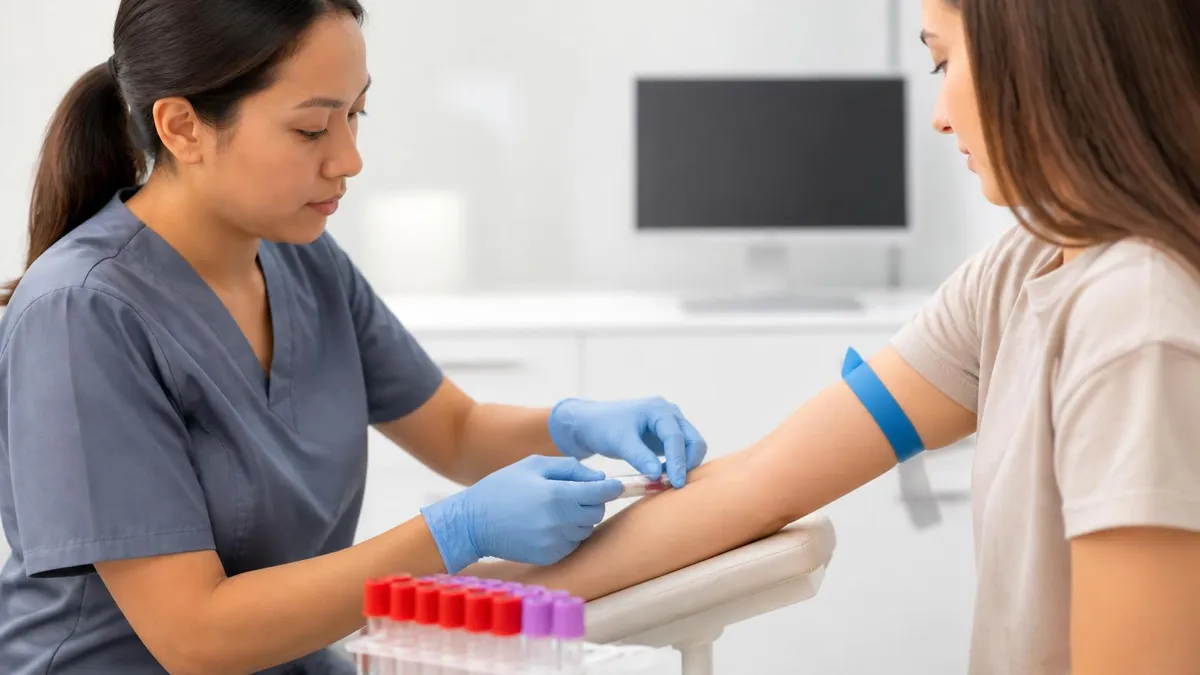
Phlebotomy Test 2026: Complete Practice Exam Prep Guide
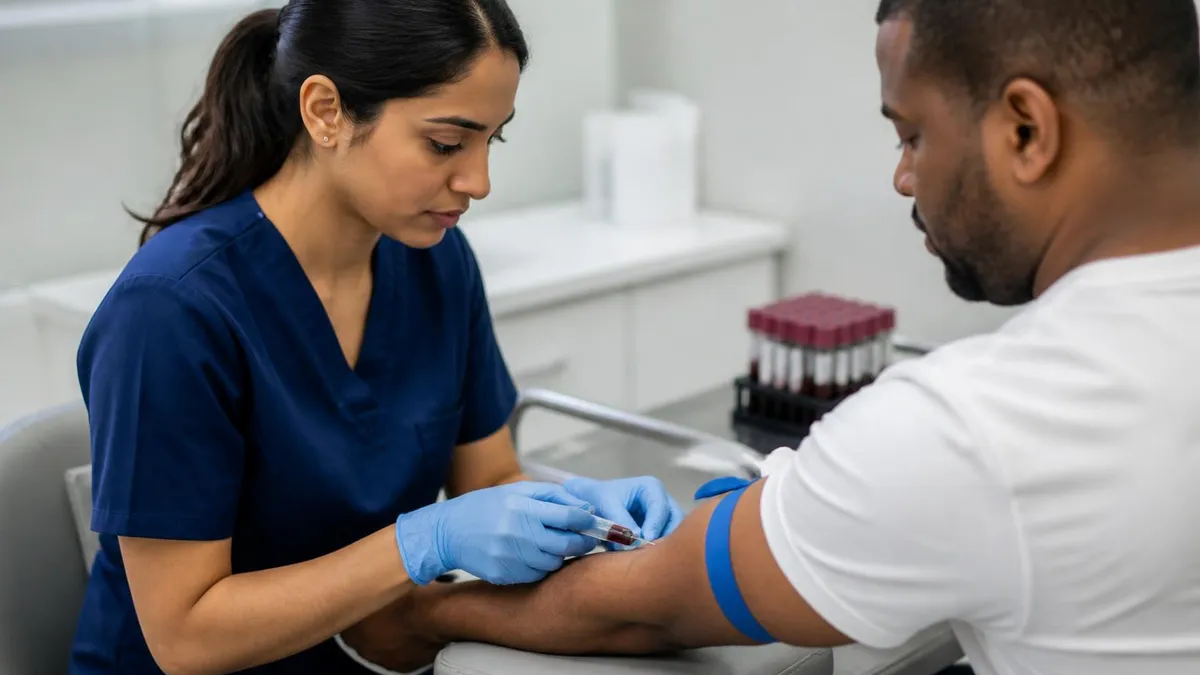
Phlebotomy Tube Colors: Complete Guide to the Order of Draw, Additives & Lab Tests
About the Author

Registered Nurse & Healthcare Educator
Johns Hopkins University School of NursingDr. Sarah Mitchell is a board-certified registered nurse with over 15 years of clinical and academic experience. She completed her PhD in Nursing Science at Johns Hopkins University and has taught NCLEX preparation and clinical skills courses for nursing students across the United States. Her research focuses on evidence-based exam preparation strategies for healthcare certification candidates.