
Online Phlebotomy Course: Complete 2026 September Guide to Accredited Training, Cost & Certification
Compare the best online phlebotomy course options for 2026 September — 📝 accredited programs, costs, clinical hours, certification pathways, and salary outcomes.
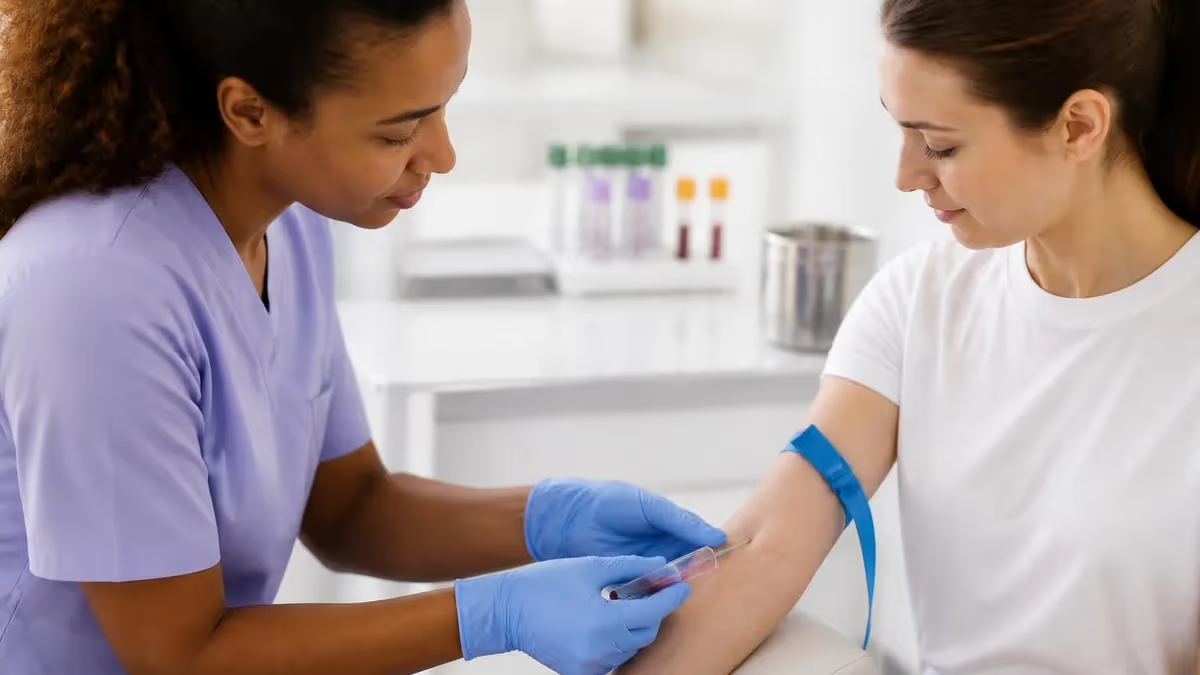
Choosing the right online phlebotomy course in 2026 can compress what used to be a year-long classroom commitment into a flexible 8 to 16 week training pathway that still leads to national certification. Whether you typed "phlebotomy classes near me" into Google and discovered hybrid programs hundreds of miles away, or you are a working CNA looking to add a credential, the online route now offers identical didactic instruction to in-person programs at roughly 30 to 50 percent lower tuition. The key is knowing which programs are legitimately accredited and which simply collect tuition.
Reputable online phlebotomy training combines self-paced video lectures, virtual lab simulations, proctored quizzes, and an in-person clinical externship arranged through partner hospitals, blood banks, or independent draw stations near your zip code. You cannot become a phlebotomist entirely online because every national certifying body — NHA, ASCP, AMT, NCCT, and ACA — requires documented hands-on venipuncture experience, usually 25 to 100 successful live draws plus 5 to 10 capillary punctures performed on real patients.
The fastest legitimate online programs run roughly 80 to 140 contact hours of theory plus a 40 to 120 hour clinical rotation, putting total completion time between 6 weeks (intensive) and 6 months (part-time evenings). Tuition typically ranges from $599 for short community-college continuing-ed courses to $2,499 for nationally branded programs that include certification exam vouchers, scrubs, supplies, and externship placement. Add another $90 to $135 for the certification exam itself.
Demand is robust. The Bureau of Labor Statistics projects phlebotomy technician roles to grow 8 percent through 2032 — faster than the all-occupation average — driven by aging baby boomers, expanded outpatient lab networks like Quest and Labcorp, and the rise of mobile and at-home blood draws. Hospitals in metropolitan markets routinely post sign-on bonuses of $500 to $2,000 for certified phlebotomists, and the median phlebotomy technician salary sits near $41,810 nationally with top earners crossing $52,000 in California, Washington, and the Northeast corridor.
This guide walks through everything you need to evaluate a program: accreditation red flags, clinical externship logistics, state-specific licensing rules (California, Washington, Nevada, and Louisiana require state licensure on top of national certification), exam preparation strategy, and what your first 90 days on the job will actually look like. We will also compare the five most-enrolled online providers in 2026, break down realistic out-of-pocket costs after financial aid, and explain how to leverage your certification into specialty roles like donor phlebotomy, therapeutic phlebotomy, or pediatric draws.
By the end you will know exactly which online phlebotomy course matches your timeline, budget, and career goals — and how to avoid the common pitfalls that cause 20 to 30 percent of distance learners to abandon training before sitting for the exam. Bookmark this page; we update tuition figures, exam pass rates, and program comparisons every quarter as schools adjust their 2026 catalogs.
Online Phlebotomy Training by the Numbers

How an Online Phlebotomy Program Is Structured
80 to 140 hours of recorded lectures covering anatomy, vein selection, infection control, OSHA bloodborne pathogen standards, and the order of draw. Most platforms use Canvas, Blackboard, or proprietary LMS dashboards with quizzes after every module.
Interactive software like SimVein, VirtualLabSchool, or Laerdal scenarios let you practice tube order, additive identification, patient identification protocols, and troubleshooting hemolysis before touching a real arm.
A mandatory 40 to 120 hour in-person rotation at an affiliated hospital, plasma center, or outpatient lab where you perform supervised live draws. Programs either arrange placement or require you to self-source a preceptor.
A cumulative assessment delivered via remote proctoring services like ProctorU or Examity, typically 100 to 150 multiple-choice questions. Passing unlocks your completion certificate and exam voucher.
Targeted review for your chosen credential — NHA CPT, ASCP PBT, AMT RPT, or NCCT NCPT — including timed practice tests, flashcards, and a printed candidate handbook covering the exam blueprint.
Accreditation is the single most important filter when comparing online programs. The gold standard is NAACLS (National Accrediting Agency for Clinical Laboratory Sciences), which approves roughly 70 phlebotomy programs nationwide — though the majority are traditional campus-based offerings. For online and hybrid courses, look instead for ABHES, DEAC, or state board of education approval, plus articulation agreements with the certifying bodies you plan to test with. A legitimate phlebotomy program near me will publish its accreditor name, accreditation ID number, and last review date on the school website.
The phlebotomy technician role has minimal entry barriers compared to nursing or radiology, but you still need to meet baseline eligibility before enrollment. Most schools require you to be 18 or older, hold a high school diploma or GED, pass a criminal background check, complete a 10-panel drug screen, and provide proof of immunizations including Hepatitis B series, MMR, Tdap, varicella, annual influenza, and a current two-step TB skin test. Programs partnering with hospital systems may also require COVID-19 vaccination depending on the facility's policy.
Healthcare experience is helpful but not required. Many successful students come from retail, food service, or stay-at-home parenting backgrounds. What matters more is comfort with technology — you will navigate an LMS, attend Zoom office hours, upload externship logs, and submit video competency check-offs from your phone. If you have never used Google Docs or attended a video call, plan to spend the first week getting comfortable with the platform before tackling actual content.
Soft skills carry equal weight. Phlebotomy is the most patient-facing role in the entire laboratory chain. You will encounter terrified pediatric patients, elderly veterans with fragile veins, oncology patients on their twentieth draw of the month, and combative ER patients. Emotional regulation, clear communication, and a steady hand under pressure separate hireable graduates from those who pass the exam but struggle in their first 90 days. Good programs build this through standardized patient scenarios and role-play exercises.
Verify clinical placement before you pay tuition. The number-one complaint from online phlebotomy students is being unable to find an externship site after completing didactic coursework. Ask the admissions counselor for a written list of partner facilities in your state, average wait time from didactic completion to externship start, and what happens if no site is available within 60 days. Reputable programs guarantee placement within a defined radius or refund a portion of tuition.
Finally, check the program's most recent certification exam pass rate. NAACLS-accredited programs must publish three-year averages, and reputable non-NAACLS programs voluntarily disclose them. A first-time pass rate below 65 percent signals weak curriculum alignment with the exam blueprint. Top online programs in 2026 — Phlebotomy Career Training, MedCerts, Penn Foster Career School, Stepful, and ACI Medical & Dental — report first-time pass rates between 78 and 89 percent on the NHA CPT exam.
One last tip: confirm that your chosen course is recognized by employers in your specific metro area. Call three local hospital HR departments and ask which programs they consider equivalent to their preferred in-house training. A nationally branded course like MedCerts may carry more weight in Phoenix than a small online-only school based in Florida.

Phlebotomy Practice Test Questions
Prepare for the Phlebotomy Test exam with our free practice test modules. Each quiz covers key topics to help you pass on your first try.
Phlebotomy American Medical Certification ...
Phlebotomy Exam Questions covering American Medical Certification Association Phlebotomy. Master Phlebotomy Test concepts for certification prep.
Phlebotomy American Medical Technologists ...
Free Phlebotomy Practice Test featuring American Medical Technologists Phlebotomy. Improve your Phlebotomy Exam score with mock test prep.
Phlebotomy American Society for Clinical P...
Phlebotomy Mock Exam on American Society for Clinical Pathology Phlebotomy. Phlebotomy Study Guide questions to pass on your first try.
Phlebotomy Association of Phlebotomy Techn...
Phlebotomy Test Prep for Association of Phlebotomy Technicians. Practice Phlebotomy Quiz questions and boost your score.
Phlebotomy National Center for Competency ...
Phlebotomy Questions and Answers on National Center for Competency Testing Phlebotomy. Free Phlebotomy practice for exam readiness.
Phlebotomy National Healthcareer Associati...
Phlebotomy Mock Test covering National Healthcareer Association Phlebotomy. Online Phlebotomy Test practice with instant feedback.
Phlebotomy Order of Draw and Additives
Free Phlebotomy Quiz on Order of Draw and Additives. Phlebotomy Exam prep questions with detailed explanations.
Phlebotomy Legal and Ethics
Phlebotomy Practice Questions for Phlebotomy Legal and Ethics. Build confidence for your Phlebotomy certification exam.
Phlebotomy Safety and Infection Control
Phlebotomy Test Online for Safety and Infection Control. Free practice with instant results and feedback.
Phlebotomy Special Collection Procedures
Phlebotomy Study Material on Special Collection Procedures. Prepare effectively with real exam-style questions.
Phlebotomy Specimen Processing and Handling
Free Phlebotomy Test covering Specimen Processing and Handling. Practice and track your Phlebotomy exam readiness.
Phlebotomy Test Arterial Blood Gas Collection
Phlebotomy Exam Questions covering Test Arterial Blood Gas Collection. Master Phlebotomy Test concepts for certification prep.
Phlebotomy Test Capillary and Dermal Puncture
Free Phlebotomy Practice Test featuring Test Capillary and Dermal Puncture. Improve your Phlebotomy Exam score with mock test prep.
Phlebotomy Test Pediatric Blood Collection
Phlebotomy Mock Exam on Test Pediatric Blood Collection. Phlebotomy Study Guide questions to pass on your first try.
Phlebotomy Test Phlebotomy Anatomy and Phy...
Phlebotomy Test Prep for Test Phlebotomy Anatomy and Physiology. Practice Phlebotomy Quiz questions and boost your score.
Phlebotomy Test Phlebotomy Exam Simulation
Phlebotomy Questions and Answers on Test Phlebotomy Exam Simulation. Free Phlebotomy practice for exam readiness.
Phlebotomy Test Phlebotomy Patient Identif...
Phlebotomy Mock Test covering Test Phlebotomy Patient Identification and Communication. Online Phlebotomy Test practice with instant feedback.
Phlebotomy Test Point of Care Testing
Free Phlebotomy Quiz on Test Point of Care Testing. Phlebotomy Exam prep questions with detailed explanations.
Online vs Hybrid vs In-Person Phlebotomy Training Specialists
True online phlebotomy courses deliver 100 percent of the didactic content asynchronously through video lectures, virtual labs, and online proctored exams. You log in whenever your schedule allows, complete modules at your own pace, and submit competency check-offs via recorded video. Tuition averages $599 to $1,499.
The catch is the mandatory in-person clinical externship — typically 40 to 100 hours at a hospital, plasma center, or independent draw station. Programs like Phlebotomy Career Training and Penn Foster help arrange placement, but in rural areas you may need to self-source a preceptor through a willing physician's office or Red Cross blood drive.
Is an Online Phlebotomy Course Right for You?
- +Self-paced scheduling fits around full-time work and family obligations
- +Tuition is typically 30 to 50 percent lower than traditional programs
- +Access to courses regardless of geographic location or local school availability
- +Recorded lectures allow unlimited review of complex topics like order of draw
- +Virtual simulation labs let you practice tube selection without supply costs
- +Most programs include certification exam voucher in tuition bundle
- −Requires strong self-discipline — 20 to 30 percent of distance students never finish
- −Externship placement can take 4 to 12 weeks after didactic completion
- −Limited real-time instructor feedback on technique during early skill building
- −Some employers still prefer graduates of established local in-person programs
- −Rural students may struggle to find clinical preceptors within driving distance
- −Technology issues with proctoring software can delay exam completion

Online Phlebotomy Enrollment & Readiness Checklist
- ✓Verify the program holds NAACLS, ABHES, DEAC, or state board accreditation
- ✓Confirm the school publishes a three-year certification exam pass rate above 70 percent
- ✓Get written confirmation of clinical externship placement within a 60-mile radius
- ✓Complete a background check and 10-panel drug screen before paying tuition deposit
- ✓Update immunization records: Hep B series, MMR, Tdap, varicella, flu, two-step TB test
- ✓Confirm your computer meets LMS requirements: webcam, microphone, stable broadband
- ✓Budget an additional $90 to $135 for your certification exam fee
- ✓Purchase scrubs, closed-toe shoes, watch with second hand, and a small penlight
- ✓Identify your target credential: NHA CPT, ASCP PBT, AMT RPT, or NCCT NCPT
- ✓Reserve 10 to 15 study hours per week for the duration of the program
State licensure trumps national certification in four states
California, Washington, Nevada, and Louisiana require a state-issued phlebotomy license in addition to your national certification. California's CPT-1 license requires 40 hours of classroom theory plus 40 hours of clinical externship from a CDPH-approved program — many online courses do not qualify. Confirm your program's state approval list before paying tuition if you live in or plan to work in these states.
Realistic out-of-pocket cost for an online phlebotomy course in 2026 ranges from $700 to $3,200 once you factor in tuition, exam fees, supplies, immunizations, background checks, and externship-related expenses like parking or scrubs. Community college continuing education divisions offer the lowest sticker price — often $599 to $899 — but rarely include exam vouchers. Nationally branded programs like MedCerts, Stepful, and Penn Foster bundle the exam fee and supplies into a single $1,599 to $2,499 package, which usually nets out cheaper once you add the pieces yourself.
Financial aid for short-term phlebotomy training has expanded dramatically since 2024. Workforce Innovation and Opportunity Act (WIOA) grants administered through your local American Job Center can cover full tuition for eligible dislocated workers and low-income adults. MyCAA grants fund up to $4,000 for military spouses. Veterans can use Chapter 31 VR&E benefits, and some programs are approved for VET TEC. Always ask the admissions counselor for a complete list of accepted funding sources before paying with a credit card or personal loan.
Beyond traditional aid, employer tuition reimbursement is one of the most underused benefits in healthcare. Hospital systems like HCA, Kaiser Permanente, Ascension, and many regional networks reimburse 80 to 100 percent of phlebotomy training costs for current employees in adjacent roles like patient access representative, EVS, or nursing assistant. If you are already employed by a hospital, talk to HR before paying tuition out of pocket — you may qualify for a fully funded internal pathway.
Salary expectations should drive your program-selection math. According to BLS, median phlebotomist pay in May 2024 was $41,810, with the top 10 percent earning more than $52,490. Geographic variation is dramatic: California phlebotomists average $50,400, Washington $48,100, Massachusetts $46,750, while Mississippi, Arkansas, and West Virginia hover near $33,000. Use the BLS Occupational Employment Statistics map to validate local pay before committing to a career change.
Specialty roles pay meaningfully more than entry-level outpatient draws. Certified donor phlebotomists at the American Red Cross or Vitalant start around $19 to $24 per hour, plasma center collection specialists earn $18 to $23 plus generous shift differentials, and therapeutic phlebotomists working in apheresis or hematology clinics frequently clear $25 per hour. Hospital lead phlebotomists supervising teams of 8 to 15 staff routinely earn $54,000 to $62,000 in metro markets.
Cost-of-living adjustments matter more than raw salary numbers. A $50,000 phlebotomy salary in San Francisco translates to roughly $26,000 in purchasing power compared to a $36,000 salary in Knoxville, Tennessee. Many graduates of online phlebotomy programs intentionally relocate after certification to optimize this ratio. Some travel phlebotomy contracts pay $32 to $40 per hour plus housing stipends in underserved markets, making 13-week assignments financially appealing for new graduates with location flexibility.
The return on investment is consistently strong. At an average tuition of $1,500 and a starting wage of $19 per hour, the typical online phlebotomy graduate recovers training costs within the first 12 weeks of employment. That payback period beats nearly every other allied health credential including medical assisting, pharmacy technician, and surgical technologist — making phlebotomy one of the highest-ROI healthcare careers available to non-degreed adults in 2026.
No legitimate certifying body — NHA, ASCP, AMT, NCCT, or ACA — will certify you as a phlebotomist without documented live venipuncture experience. If a program claims you can earn certification entirely online with zero in-person clinical hours, it is selling a worthless certificate. Always verify your certifying body directly at the source: nhanow.com, ascp.org, americanmedtech.org, or ncctinc.com before paying tuition.
Certification is the credential that converts your training into a hireable resume. The five nationally recognized phlebotomy certifications in the United States are NHA CPT (Certified Phlebotomy Technician), ASCP PBT (Phlebotomy Technician), AMT RPT (Registered Phlebotomy Technician), NCCT NCPT (National Certified Phlebotomy Technician), and ACA CPT. NHA is the most widely recognized by employers and the most affordable at $117 in 2026; ASCP carries the most prestige in academic medical centers but costs $145 and requires more rigorous documentation of training hours.
Eligibility paths vary by certifying body. NHA requires completion of a training program within the past five years OR one year of full-time supervised work experience. ASCP requires either a NAACLS-approved program OR a high school diploma plus 40 didactic hours and 100 successful unaided venipunctures plus 5 unaided skin punctures. AMT requires similar documentation. Understanding these pathways before enrolling protects you from completing a program that does not align with your target exam.
Exam content is remarkably consistent across certifying bodies. Expect 100 to 150 multiple-choice questions covering patient identification, equipment and supplies, infection control, venipuncture technique, the phlebotomy order of draw, capillary collection, specimen handling and transport, pre-analytical errors, quality assurance, and professional ethics. The order of draw is the most heavily tested topic — expect 8 to 12 questions specifically on tube sequence and additive interference.
Job placement timelines after certification depend heavily on local market saturation and your willingness to start in lower-paid settings. Plasma collection centers like CSL Plasma, Grifols, and Octapharma hire aggressively year-round and often onboard new certified phlebotomists within two weeks of credentialing. Hospital outpatient labs and Quest or Labcorp patient service centers tend to move slower with 4 to 8 week hiring cycles but offer better long-term advancement, benefits, and shift stability.
Your first 90 days on the job will determine your trajectory. Expect intense feedback from senior phlebotomists on patient identification protocols, tube labeling at the bedside (never after leaving the room), and managing difficult draws on dehydrated, oncology, or geriatric patients. Master the basics — clean technique, calm bedside manner, accurate documentation — and you will be invited to cross-train on EKG, point-of-care testing, IV insertion, or specimen processing within six months.
Career advancement after two to three years of bedside experience opens several lanes. Some phlebotomists move into laboratory assistant or medical laboratory technician roles by completing additional coursework. Others pursue donor recruitment, mobile phlebotomy entrepreneurship, plasma center supervision, or apheresis specialist certification. A growing path is healthcare informatics — phlebotomists with strong LIS (laboratory information system) skills transition into Epic Beaker or Cerner Millennium analyst roles paying $65,000 to $85,000.
Continuing education is mandatory for most credentials. NHA requires 10 contact hours every two years; ASCP requires 9 hours every three years through their Credential Maintenance Program. Most online platforms like LabCE, MediaLab, and NHA's own learning portal offer free or low-cost CEU bundles. Plan to invest 4 to 6 hours per year keeping your certification active, and never let it lapse — reinstatement is more expensive and time-consuming than maintenance.
Practical study strategy makes the difference between passing your certification exam on the first attempt and burning $117 to $145 on a retake. Begin by downloading the official candidate handbook for your target credential — NHA, ASCP, AMT, or NCCT all publish detailed exam blueprints showing exactly how many questions come from each content domain. Map your weekly study sessions to those weightings rather than spending equal time on every topic. Most students over-study anatomy and under-study pre-analytical errors, which carries 18 to 22 percent of exam weight.
Use spaced repetition for memorization-heavy content like tube color order, additive function, and tests of choice. Apps like Anki, Brainscape, and Quizlet have well-built phlebotomy decks created by previous test-takers. Twenty minutes per day for four weeks beats five hours the night before your exam. A reliable phlebotomy practice test regimen of 25 to 50 questions daily for two weeks before your exam is the single best predictor of first-attempt success.
Practice venipuncture documentation even when you cannot practice the draw itself. Pull blank requisition forms, write out hypothetical orders, and walk through patient identification, two-source verification, tube labeling at bedside, and chain of custody for legal specimens. Many exam questions test workflow knowledge rather than technical skill — knowing the correct sequence of actions matters as much as performing them.
Build relationships during your externship. Your preceptor and the lead phlebotomist at your clinical site are your most valuable career connections. Ask thoughtful questions, volunteer for difficult draws once you have basic competence, arrive 15 minutes early, and send a handwritten thank-you note at the end of your rotation. A glowing reference from a hospital lead phlebotomist outweighs any GPA or class rank.
Manage exam-day anxiety with concrete protocols. Eat a light protein-based breakfast, arrive 30 minutes early to your testing center or set up your remote proctor station, keep a sweater nearby because testing rooms run cold, and use the first two minutes to do a brain dump of the order of draw, common test tube additives, and CLSI standards on your scratch sheet. Mark difficult questions for review and answer every question — there is no penalty for guessing on any major phlebotomy certification exam.
After certification, invest in basic hand-tool quality. Buy your own quality tourniquet (not the brittle ones provided by hospitals), a reliable penlight, and a small notebook for tracking draw counts during your probationary period. Many hiring managers ask new phlebotomists how many sticks they have completed in their first month, and being able to answer with a precise number signals professionalism and engagement.
Finally, join a professional community. The American Society for Clinical Pathology, the American Society for Clinical Laboratory Science, and online groups on Reddit's r/phlebotomy and Facebook host active conversations about difficult draws, employer reviews, salary negotiations, and continuing education opportunities. Lifetime learners in this field consistently earn more, advance faster, and report higher job satisfaction than those who view phlebotomy as a static role.
Phlebotomy Questions and Answers
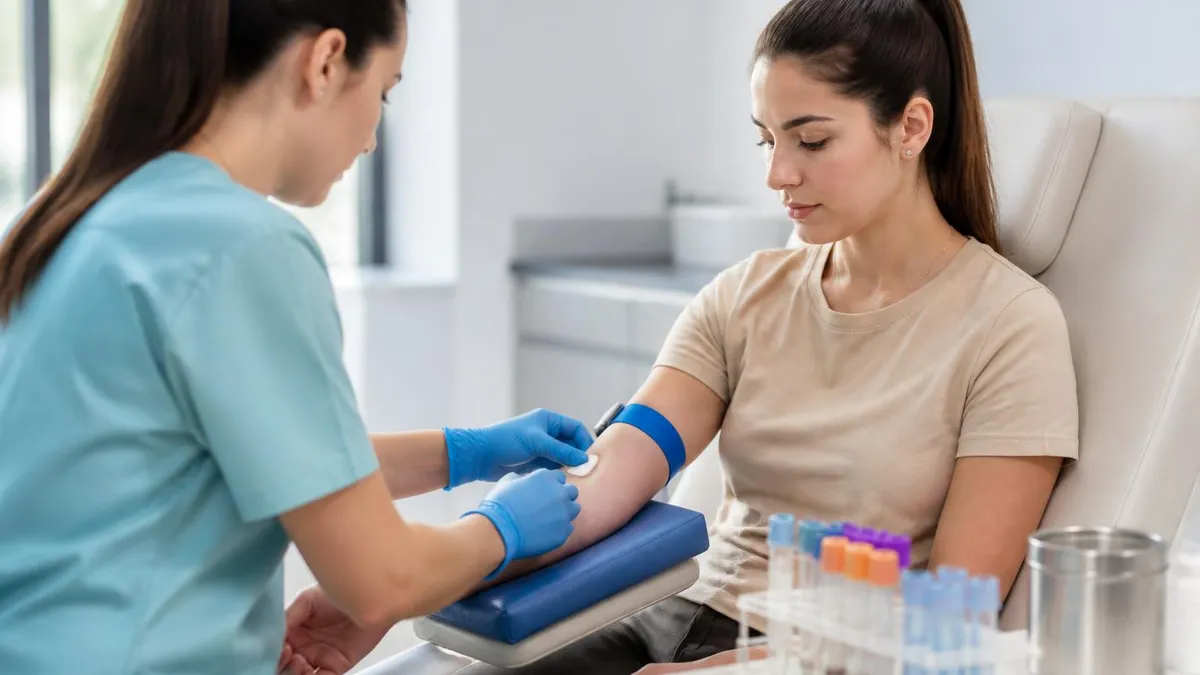
Phlebotomy Exam 2026: Complete Certification Study Guide & Practice
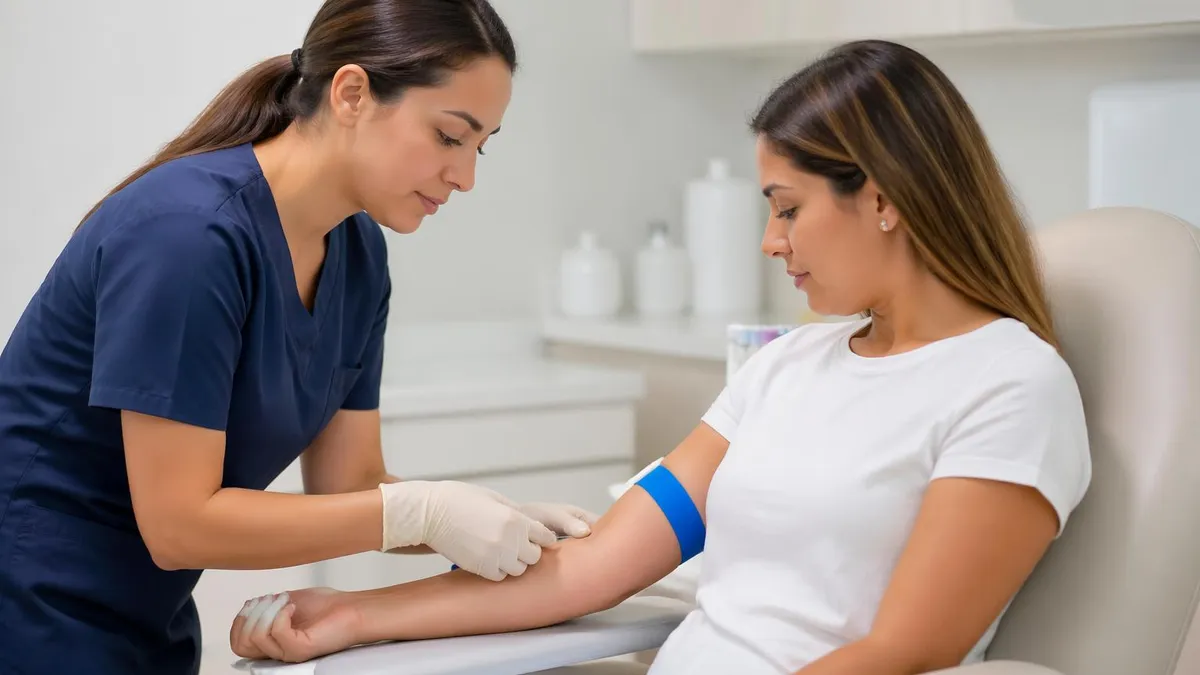
Phlebotomy: Classes, Certification, Salary & Career Guide
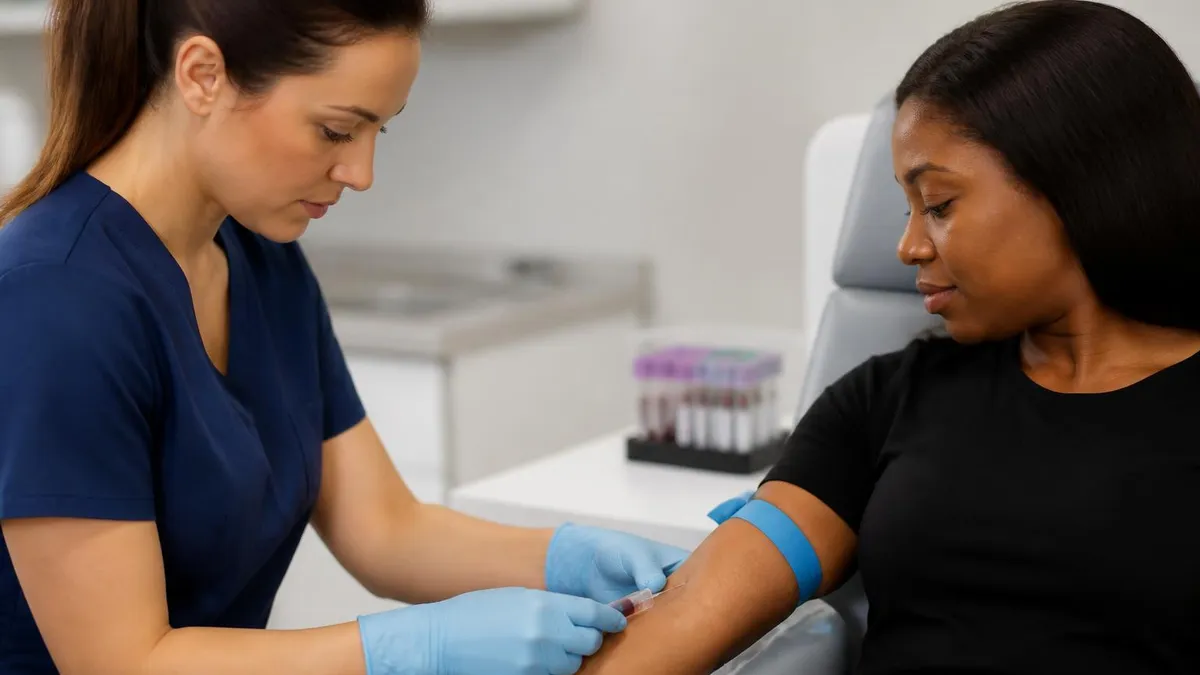
Phlebotomy Certification Exam 2026: Complete Guide to NHA CPT, ASCP PBT, AMT, NCCT & ASPT
Phlebotomy Test 2026: Complete Practice Exam Prep Guide
Phlebotomy Practice Exam: Free Questions, Format, and Scoring
About the Author

Registered Nurse & Healthcare Educator
Johns Hopkins University School of NursingDr. Sarah Mitchell is a board-certified registered nurse with over 15 years of clinical and academic experience. She completed her PhD in Nursing Science at Johns Hopkins University and has taught NCLEX preparation and clinical skills courses for nursing students across the United States. Her research focuses on evidence-based exam preparation strategies for healthcare certification candidates.