
Entry Level Phlebotomy Jobs 2026 October
Entry level phlebotomy jobs offer accessible healthcare career launch. Learn settings, salaries, certification, hiring tips, and advancement options. ⏳
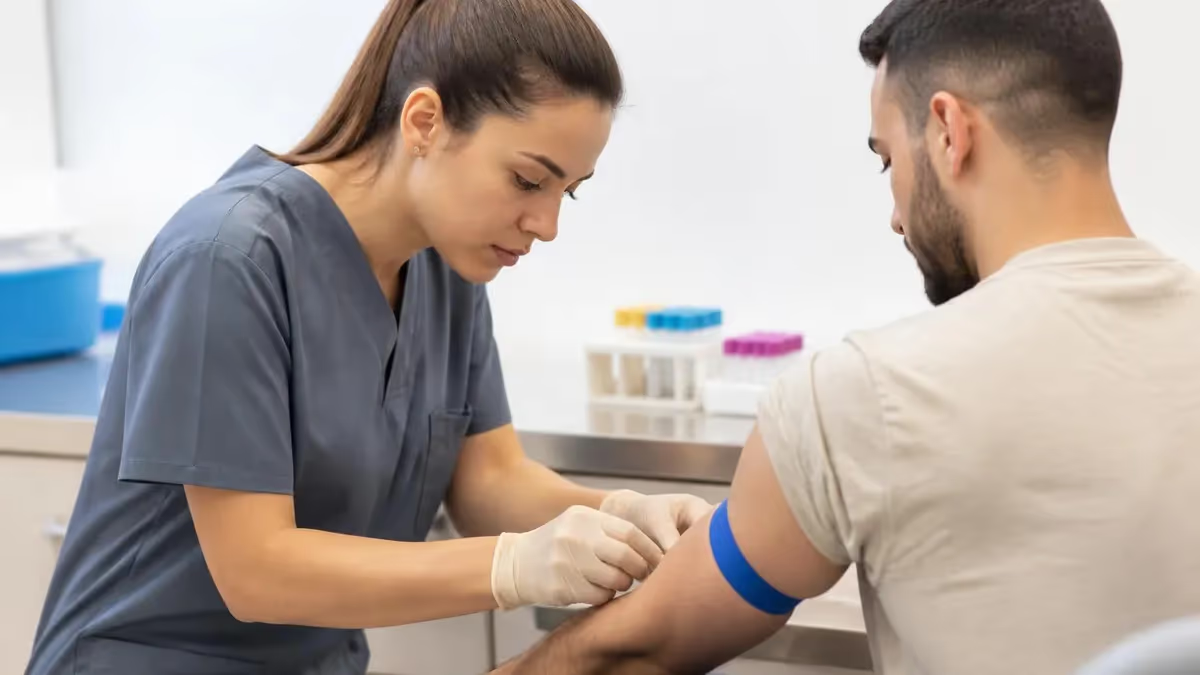
Entry level phlebotomy jobs represent accessible healthcare career entry points for newly trained phlebotomists. Phlebotomy as healthcare specialty involves drawing blood from patients for laboratory testing, blood donation, and various other medical purposes. Entry level positions provide career foundation supporting subsequent professional development and specialization. Understanding entry level phlebotomy job market helps newly trained phlebotomists identify opportunities and plan career launch effectively. The accessible healthcare entry combined with growing demand makes phlebotomy attractive career option for healthcare-interested individuals seeking faster entry than longer healthcare programs require.
Phlebotomy training represents relatively short healthcare education program supporting rapid career launch. Typical phlebotomy programs span 4 to 8 months providing classroom instruction and clinical practice. Certification through National Healthcareer Association NHA, American Society of Clinical Pathology ASCP, or various other organizations supports professional credibility. The accessible training pathway combined with growing healthcare demand produces strong entry level job market for newly certified phlebotomists. Understanding the comprehensive entry level job landscape helps phlebotomists make informed career launch decisions matching personal goals and circumstances.
This guide explains entry level phlebotomy comprehensively including common employment settings, salary expectations for entry level positions, certification requirements, hiring processes, day-to-day work activities, career advancement opportunities, specialty areas accessible from entry level start, comparison with related healthcare careers, geographic considerations, and various other aspects affecting entry level phlebotomy career launch. Whether you are completing phlebotomy training or considering phlebotomy career path, understanding entry level employment supports informed career launch matching personal circumstances and professional goals.

Entry Level Phlebotomy Jobs Key Facts
Hospital phlebotomy positions represent major entry level employment opportunity. Hospital phlebotomists work in various hospital departments drawing blood from patients for laboratory testing. Inpatient phlebotomy involves visiting hospitalized patients at scheduled times typically early morning. Emergency department phlebotomy supports urgent testing needs. Outpatient laboratory phlebotomy serves patients visiting hospital labs. Hospital positions typically offer comprehensive benefits and shift work covering 24/7 operations. The varied hospital settings provide diverse experience supporting future career advancement. Many phlebotomists begin careers in hospital settings building substantial foundational experience.
Outpatient laboratory phlebotomy positions offer different work characteristics from hospitals. Independent laboratory companies including Quest Diagnostics, LabCorp, and various other commercial laboratories operate patient service centers where outpatient phlebotomy occurs. Patients schedule appointments or walk in for blood draws. Work pace typically faster than hospital phlebotomy with substantial daily patient volume. Regular daytime hours typical with occasional Saturday hours. Quest, LabCorp, and similar major employers offer extensive entry level positions across many geographic locations. The high-volume outpatient phlebotomy builds substantial blood draw experience efficiently.
Blood donation center positions support specialized phlebotomy practice. Blood donation centers including American Red Cross, OneBlood, Vitalant, and various community blood centers employ phlebotomists drawing blood from voluntary donors. Donation phlebotomy differs from clinical phlebotomy in scale and donor versus patient context. Donors are typically healthy individuals contributing blood for community supply. Standard donation procedures and various special collection procedures both employ phlebotomists. The donation center work supports community blood supply while building phlebotomy experience in specialized donor-focused setting different from clinical patient care environments.
Entry level phlebotomy hiring reality varies across markets and employers. Some employers prefer experienced phlebotomists creating challenge for new graduates. Other employers actively hire new graduates with proper certification. Building experience through clinical externship during training supports job applications. Networking with externship supervisors and various other contacts produces hiring opportunities. Persistence through application process supports eventual hiring. Most certified phlebotomists find entry level positions within several months of completing training and certification though specific timing varies. Understanding market realities helps realistic career launch planning matching local employer hiring patterns.
Physician office phlebotomy positions provide intimate practice environment compared to hospitals or large labs. Smaller medical practices and primary care offices employ phlebotomists conducting in-office blood draws for patient laboratory work. Sometimes phlebotomy combines with medical assisting role in smaller practices. Patient relationships develop more substantially with regular patients returning for various tests. Work pace typically less hectic than hospital or commercial lab phlebotomy. The physician office setting provides good entry level option for phlebotomists preferring smaller-scale work environment with closer patient relationships matching specific work preference patterns.
Mobile phlebotomy services represent emerging entry level employment option. Mobile phlebotomy companies dispatch phlebotomists to patient homes, offices, and various other locations for blood draws. Services particularly support homebound patients, busy professionals, and various other patients unable to easily visit traditional phlebotomy locations. Mobile work requires substantial driving between patient locations. Equipment carrying and various logistics challenges differ from facility-based work. The mobile phlebotomy growth reflects healthcare delivery evolution supporting various patient situations beyond traditional facility-based care. Mobile work suits phlebotomists preferring varied locations and independent work patterns.
Nursing home and assisted living phlebotomy supports older adult populations. Long-term care facilities employ phlebotomists or contract phlebotomy services drawing blood from resident patients. Geriatric phlebotomy involves specific considerations including difficult venous access from age-related changes, careful patient handling, and various other geriatric considerations. The specialized population requires specific approach combining clinical skills with compassionate care for vulnerable populations. Working in long-term care provides meaningful work serving older adult populations while building specialized phlebotomy skills matching specific patient population needs.
Entry Level Phlebotomy Employment Settings
Major employer offering inpatient phlebotomy, emergency department work, and outpatient laboratory service. Comprehensive benefits and shift coverage. Diverse experience supporting future career advancement. Common starting point for many phlebotomists building foundational experience.
Quest Diagnostics, LabCorp, and various commercial laboratories operate patient service centers employing many entry level phlebotomists. High-volume outpatient phlebotomy builds substantial blood draw experience. Regular daytime hours with extensive geographic availability.
American Red Cross, OneBlood, Vitalant, and community blood centers employ phlebotomists drawing blood from voluntary donors. Specialized donor-focused setting differs from clinical phlebotomy. Supports community blood supply while building specialized experience.
Smaller medical practices employ phlebotomists for in-office blood draws. Sometimes combined with medical assisting role. Closer patient relationships and less hectic work pace than hospitals. Good entry level option for smaller-scale work environment preference.
Mobile services dispatch phlebotomists to patient homes, offices, and various locations. Substantial driving between locations. Equipment portability and various logistics differ from facility-based work. Emerging employment option supporting various patient situations.
Nursing homes and assisted living facilities employ phlebotomists or contract services drawing blood from resident patients. Geriatric phlebotomy involves specific considerations. Meaningful work serving older adult populations while building specialized skills.

Salary expectations for entry level phlebotomists vary across employers and geographic locations. Entry level salaries typically range from $28,000 to $38,000 annually depending on location and employer. Hourly rates typically $13 to $18 per hour. Hospital positions often pay more than commercial labs reflecting benefits and shift premiums. Metropolitan areas typically pay more than rural locations though housing costs may offset. Some specialty positions like donor phlebotomy or hospital float pool may pay premium. Understanding salary expectations helps career launch planning matching financial needs with employer options. Career advancement typically produces salary growth over time.
Career advancement from entry level phlebotomy supports long-term professional development. After 1 to 2 years experience, more specialized phlebotomy roles become accessible. Lead phlebotomist positions support phlebotomy team supervision. Phlebotomy education roles support training new phlebotomists. Advanced certifications support specialty practice. Many phlebotomists eventually transition to related healthcare careers including medical laboratory technician, medical assistant, nurse, or various other healthcare roles. Phlebotomy provides valuable healthcare experience foundation supporting various career trajectories beyond just continued phlebotomy work alone.
Certification requirements affect entry level phlebotomy hiring across most employers. National Healthcareer Association NHA Certified Phlebotomy Technician CPT represents common certification. American Society of Clinical Pathology ASCP Phlebotomy Technician PBT certification widely recognized. American Medical Technologists AMT certification also accepted. Various state-specific certifications support specific state employment. Most employers require or prefer one of these national certifications. The certification investment supports hiring competitiveness alongside training completion. Maintaining certification through continuing education requirements supports ongoing employment qualification throughout phlebotomy career.
Entry Level Phlebotomy Strategies
Job search approach combines multiple sources for comprehensive opportunity identification. Online job boards including Indeed, LinkedIn, Glassdoor, and various others list phlebotomy openings. Healthcare-specific job boards focus on medical employment opportunities. Direct application through employer websites supports targeting preferred employers. Networking with externship supervisors and various other healthcare contacts produces hiring leads. Local newspaper classifieds occasionally list local opportunities. Combining multiple search approaches maximizes opportunity identification supporting better hiring outcomes than single-source job search alone.
Day-to-day work activities for entry level phlebotomists include various technical and patient care responsibilities. Verifying patient identity through multiple identifiers represents critical safety procedure. Selecting appropriate blood collection tubes for ordered tests. Selecting appropriate venipuncture site and performing successful blood draw. Handling specimens properly including labeling and transport. Documentation of procedures and any complications. Patient communication addressing questions and concerns. Cleaning and maintaining work area between patients. The varied activities support comprehensive phlebotomy service while requiring substantial technical skill and patient care capabilities developed through training and experience over time.
Required equipment for phlebotomy work includes various supplies and tools. Sterile needles and syringes or vacutainer systems support different draw approaches. Various blood collection tubes for specific tests. Tourniquet for venous access. Alcohol prep pads for skin preparation. Gauze and bandages for post-draw care. Sharps containers for safe disposal. Laboratory requisitions and specimen labels. Personal protective equipment including gloves. Employers provide equipment for facility-based work. Mobile phlebotomists may transport their own supplies. Understanding equipment supports effective work with various phlebotomy supplies and tools.
Common workplace challenges for entry level phlebotomists include various situations requiring management. Difficult venous access for some patients requires advanced technique or assistance. Anxious patients require calming communication and supportive approach. Children require specific pediatric phlebotomy techniques. Older adults may have specific geriatric considerations. Patients with specific medical conditions may have specific concerns. Difficult coworkers occasionally affect work environment. Productivity pressures from substantial daily patient volume affect work pace. Building skills addressing challenges supports better job performance and satisfaction over time as experience develops handling various workplace challenges.
Entry level phlebotomy work involves bloodborne pathogen exposure risk requiring strict safety protocols. Following universal precautions, proper PPE use, safe needle handling, and various other safety procedures protects both phlebotomist and patients. Needlestick injuries can occur producing potential bloodborne disease exposure. Reporting all incidents immediately enables proper post-exposure protocols including testing and prophylaxis when appropriate. Hepatitis B vaccination strongly recommended for phlebotomy workers. Understanding and following safety protocols represents fundamental phlebotomy professional responsibility protecting health throughout career across various employment settings.
Geographic considerations affect entry level phlebotomy employment substantially. Metropolitan areas typically have substantially more phlebotomy positions than rural areas. Major medical centers and commercial laboratories concentrate in urban areas. Rural areas may have fewer positions though sometimes less competition. Specific states have varying healthcare employment characteristics. Job market conditions vary substantially across geographic regions. Understanding geographic employment landscape helps career launch planning matching personal location preferences with employment availability. Some new phlebotomists relocate for better employment opportunities while others adapt to local market characteristics.
Healthcare experience benefits beyond phlebotomy career affect long-term opportunities. Building healthcare experience starting in entry level phlebotomy supports various subsequent career options. Medical laboratory technician programs typically build on phlebotomy foundation. Medical assistant programs combine well with phlebotomy background. Nursing programs accept phlebotomy experience as valuable healthcare exposure. Various other healthcare careers benefit from phlebotomy foundation. The phlebotomy entry produces healthcare career foundation supporting various directions beyond just continued phlebotomy work. Many phlebotomists eventually transition to expanded healthcare roles building on phlebotomy experience.
Continuing education throughout phlebotomy career supports professional development. Certification maintenance requires specific continuing education hours periodically. Specialty courses support advanced practice areas. Various other professional development opportunities support ongoing skill development. Professional involvement through organizations like American Society for Clinical Laboratory Science ASCLS supports community connection and ongoing learning. The continuing education investment matches investment in initial training supporting career-long skill maintenance and development across the various phlebotomy career stages and specialty areas accessible after entry level career launch.

Entry Level Phlebotomy Career Launch Checklist
- ✓Complete accredited phlebotomy training program with externship
- ✓Obtain national certification through NHA, ASCP, AMT, or various other organizations
- ✓Build externship experience with documented draw counts and references
- ✓Develop resume emphasizing phlebotomy training, certification, and patient care skills
- ✓Search multiple job sources including Indeed, LinkedIn, employer websites, and various others
- ✓Apply for diverse position types across hospitals, labs, and various other employers
- ✓Prepare for interviews researching employers and practicing common questions
- ✓Complete background check and employment screening for hiring agencies
- ✓Maintain certification through continuing education requirements
- ✓Plan ongoing skill development supporting advancement beyond entry level
Soft skills supporting phlebotomy success include various interpersonal capabilities beyond just technical skills. Strong communication supports patient interactions during potentially anxiety-producing procedures. Empathy helps connect with patients facing health concerns. Patience supports working with difficult draws and anxious patients. Time management balances substantial patient volumes with quality care. Attention to detail supports specimen integrity and safety. Problem solving handles various unexpected situations. Cultural competence supports diverse patient populations. Stress management supports demanding work environment. Building soft skills alongside technical capabilities produces well-rounded phlebotomy professionals matching career demands beyond just basic technical capability.
Career change considerations for individuals entering phlebotomy from other backgrounds include various factors. Phlebotomy short training timeline enables rapid career transition. Existing customer service or healthcare experience benefits transition. Age generally not significant barrier for phlebotomy career launch. Financial considerations affect ability to complete training without income. Family circumstances affect training and work flexibility. Career change to phlebotomy represents accessible healthcare entry compared to longer programs supporting various career changers including parents returning to workforce, military veterans, and various other career changers seeking healthcare career launch through accessible training pathway.
The entry level phlebotomy career provides accessible healthcare career launch supporting various career goals. Understanding employment landscape including settings, salaries, certification, hiring processes, and various other aspects supports informed career launch decisions. The investment in phlebotomy training and certification produces career launch supporting healthcare entry. Whether intended as long-term phlebotomy career or stepping stone to expanded healthcare roles, phlebotomy entry produces valuable healthcare experience foundation supporting various career trajectories. The accessible entry pathway combined with growing demand makes phlebotomy attractive option for healthcare career launch across diverse circumstances.
Entry Level Phlebotomy Career Pros and Cons
- + —
- + —
- + —
- + —
- + —
- + —
- + —
- + —
- − —
- − —
- − —
- − —
- − —
- − —
Specialty practice considerations after entry level experience open various focused practice areas. Pediatric phlebotomy involves specific child draw techniques and pediatric population interaction. Geriatric phlebotomy addresses specific older adult considerations. Donor phlebotomy supports community blood supply through specialized donor work. Therapeutic phlebotomy supports specific medical conditions requiring blood removal. Forensic phlebotomy supports legal and law enforcement testing needs. Each specialty offers unique work characteristics matching different practitioner interests. Building specialty expertise after entry level foundation supports premium positions and varied career options matching individual specialty interests.
Professional organizations supporting phlebotomists include various groups providing community and continuing education. American Society for Clinical Laboratory Science ASCLS provides broader laboratory professional community. National Phlebotomy Association NPA focuses specifically on phlebotomy. American Medical Technologists AMT supports various allied health professionals including phlebotomists. State-specific organizations provide regional networking and continuing education. Professional involvement supports ongoing learning, networking, and career development beyond just employer relationships. Active participation in professional organizations builds career connections and supports long-term professional development.
The entry level phlebotomy career represents valuable healthcare career launch option combining accessible training timeline with growing job market and meaningful work. Understanding entry level employment comprehensively including settings, hiring, salary, advancement, and various other aspects supports informed career launch. The investment in phlebotomy training, certification, and career launch produces healthcare career foundation supporting various long-term trajectories. Whether early career launch through phlebotomy or career change to healthcare through phlebotomy entry, comprehensive understanding supports better outcomes matching individual circumstances and career goals across diverse phlebotomy employment opportunities.
Sample Phlebotomy Practice Questions
Try these questions from our free Phlebotomy practice tests. The correct answer and an explanation follow each question.
A phlebotomist is collecting a trough level specimen for therapeutic drug monitoring (TDM). When should the specimen be collected?
- A. Immediately after the next dose is administered
- B. 30 to 60 minutes after the completion of an IV infusion
- C. At a randomly selected time between doses
- D. Shortly before the next scheduled dose is administered
Answer: D. Shortly before the next scheduled dose is administered
A trough level represents the lowest concentration of a drug in the patient's bloodstream. To accurately measure this, the blood should be drawn just before the next dose is given, when the drug level is expected to be at its minimum.
Why must lithium heparin tubes NOT be used for lithium level tests?
- A. Heparin destroys lithium ions
- B. The additive lithium will falsely elevate the patient's lithium result
- C. Heparin causes lithium to precipitate
- D. Lithium levels require serum, not plasma
Answer: B. The additive lithium will falsely elevate the patient's lithium result
The lithium in lithium heparin additive would be added to the patient's own lithium, causing a falsely elevated serum lithium measurement.
A newborn requires a blood glucose test and bilirubin level. Which collection method is preferred?
- A. Heelstick into micro-collection tubes for both tests
- B. Venipuncture from the antecubital fossa for both tests
- C. Heelstick for glucose, venipuncture for bilirubin
- D. Arterial puncture to obtain adequate volume for both tests
Answer: A. Heelstick into micro-collection tubes for both tests
For newborns, heelstick into appropriate Microtainer tubes is the preferred method for small-volume tests like glucose and bilirubin, avoiding the risks of venipuncture.
When a blood culture is ordered, the skin must be disinfected with 70% isopropyl alcohol followed by which agent to achieve the highest level of antisepsis?
- A. Povidone-iodine or chlorhexidine gluconate
- B. Hydrogen peroxide
- C. Benzalkonium chloride
- D. Saline solution
Answer: A. Povidone-iodine or chlorhexidine gluconate
Blood culture sites require a two-step prep using alcohol followed by povidone-iodine or chlorhexidine to reduce skin flora and minimize contamination.
Phlebotomy Questions and Answers
Hospital float pool positions provide unique entry level phlebotomy option for some new phlebotomists. Float pool phlebotomists work across various hospital departments as needed rather than fixed unit assignments. The variety builds diverse experience faster than fixed-unit assignment. Float positions typically pay premium reflecting flexibility requirements. The varied experience supports faster skill development across diverse hospital phlebotomy situations. Some phlebotomists prefer float work for variety while others prefer fixed assignments for predictability. Understanding float versus fixed options helps choose best fit matching personal work preferences and career development goals.
Travel phlebotomy positions emerge as career option after initial experience. Travel phlebotomists work temporary assignments at various facilities across United States typically 8 to 13 weeks per assignment. Travel positions offer substantial compensation including housing allowances and travel reimbursement. Variety of work experience builds substantial skills quickly. Travel work suits phlebotomists without strong location ties or seeking varied experience. Most travel positions require 1 to 2 years experience making travel option subsequent rather than immediate entry level option. The travel pathway represents valuable career direction for experienced phlebotomists seeking premium compensation and varied experience.
The entry level phlebotomy career provides accessible healthcare career launch supporting various long-term career trajectories. Understanding entry level employment comprehensively including settings, hiring approaches, compensation, working conditions, advancement, and various other aspects supports informed career launch matching personal circumstances. The investment in phlebotomy training, certification, and career launch produces healthcare foundation supporting various career directions. Whether continuing as phlebotomist or eventually transitioning to expanded healthcare roles, phlebotomy entry produces valuable healthcare experience supporting diverse career development across the healthcare field.
About the Author

Registered Nurse & Healthcare Educator
Johns Hopkins University School of NursingDr. Sarah Mitchell is a board-certified registered nurse with over 15 years of clinical and academic experience. She completed her PhD in Nursing Science at Johns Hopkins University and has taught NCLEX preparation and clinical skills courses for nursing students across the United States. Her research focuses on evidence-based exam preparation strategies for healthcare certification candidates.