
What Does MEPS Stand For? Military Entrance Processing Station Explained
MEPS stands for Military Entrance Processing Station. 💯 Learn what MEPS is, what happens there, who runs it, and how the day works for new recruits.
MEPS by the Numbers
Key facts about Military Entrance Processing Stations across the United States.

What Does MEPS Stand For?
MEPS stands for Military Entrance Processing Station. Every U.S. recruit must complete a one to three day visit at a MEPS before they can sign an enlistment contract, swear in, and ship to basic training. It is the final qualification checkpoint where the Department of Defense confirms each applicant is medically, mentally, and morally qualified to serve in the Army, Navy, Air Force, Marines, Coast Guard, Space Force, Reserves, or National Guard.
If you have ever heard a recruiter say "you need to go down to MEPS" or "we will book your meps physical exam," they are talking about a real, brick and mortar federal processing center. There are 65 stations in the United States and Puerto Rico, each one managed by the U.S. Military Entrance Processing Command (USMEPCOM), a joint command headquartered at Fort Knox, Kentucky. USMEPCOM was created in 1976 to give every service branch one shared standard for testing and screening recruits.
So while the acronym itself is short, MEPS represents the single most important day in any recruit's enlistment timeline. Nothing in the military starts until MEPS clears you. You can pass the ASVAB at your school, get fingerprinted at the recruiter's office, fill out paperwork, and pick a job preference, but until MEPS says "qualified," you are not in the military. Your recruiter cannot ship you, your contract cannot be signed, and your basic training date cannot be locked in.
MEPS, Spelled Out Letter by Letter
Let's break the acronym into the actual words the Department of Defense uses on every official document. The letter M stands for Military, since this is a Department of Defense operation that screens applicants for every branch of the U.S. armed forces. The letter E stands for Entrance, because MEPS is the doorway into active duty, reserves, or guard service — you cannot enter without passing through.
The letter P stands for Processing, which is military shorthand for verifying eligibility, qualifying medically, signing legal documents, and assigning a job. The letter S stands for Station, because each MEPS is a fixed physical location with examination rooms, a fingerprinting bay, an ASVAB testing lab, and a ceremonial room for the Oath of Enlistment.
You will also hear two related acronyms used interchangeably. USMEPCOM is the parent command — the headquarters that runs all 65 stations. The phrase meps military is just a clarifier people search when they want to be sure they are reading about the armed forces version, since the letters M-E-P-S can also stand for unrelated things in finance, medicine, or construction. In this guide, MEPS always means Military Entrance Processing Station.
MEPS = Military Entrance Processing Station. A federal Department of Defense facility (one of 65 nationwide) where every U.S. military recruit completes their final medical exam, ASVAB verification, background screening, enlistment contract, and Oath of Enlistment before shipping to basic training. Run by USMEPCOM (U.S. Military Entrance Processing Command).
Who Runs MEPS?
MEPS stations are not run by individual branches. The Army does not own the Atlanta MEPS, and the Navy does not own the San Diego MEPS. Every station is run by USMEPCOM, a joint-service command. Inside each MEPS you will see uniformed staff from multiple branches — an Army NCO running fingerprints, a Navy corpsman drawing blood, an Air Force counselor reviewing your contract — all working under a single MEPS commander who reports up to USMEPCOM headquarters at Fort Knox.
This joint setup is intentional. Before USMEPCOM was created in 1976, every branch tested and screened its own recruits separately, which led to inconsistent standards. Today, every applicant — regardless of branch — gets the exact same meps medical exam, the same drug screen, the same fingerprint check, and the same background screening. After processing, the recruit's records are released to their specific branch.
What Actually Happens at MEPS
MEPS is built around four pillars: medical qualification, aptitude verification, background screening, and contract execution. Every recruit moves through all four, in roughly that order, with a swear-in ceremony at the end. Knowing the structure ahead of time keeps the day from feeling chaotic, because once you walk through the doors at 06:00 you are on the station's clock, not yours.
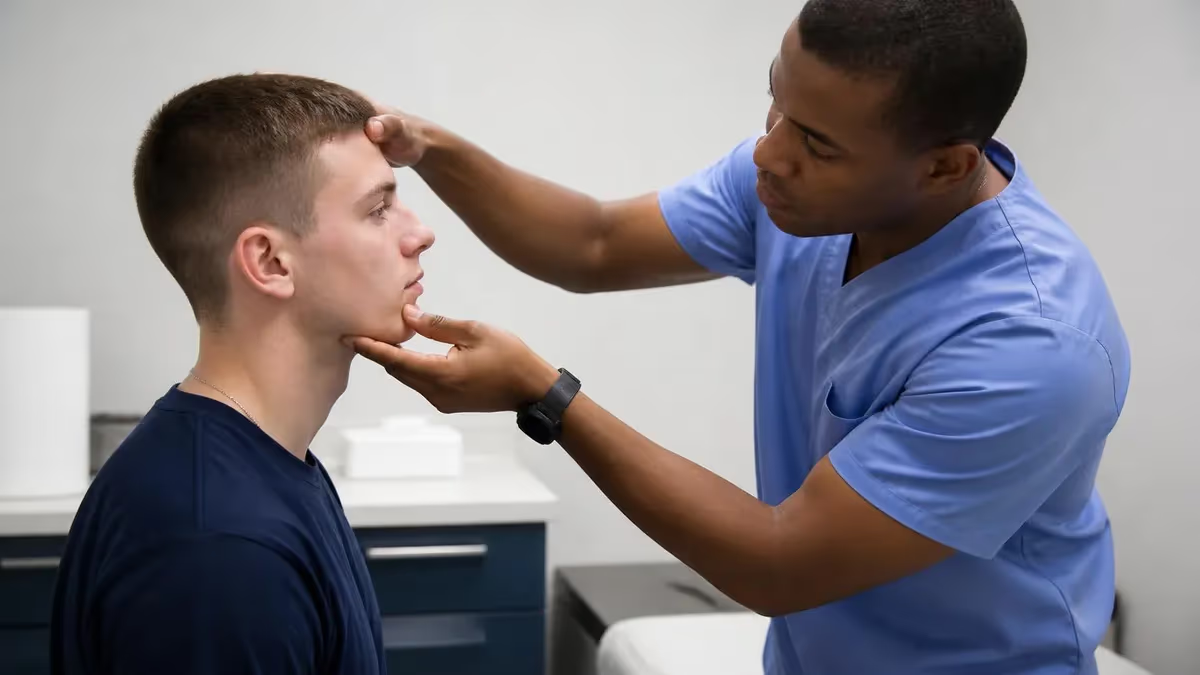
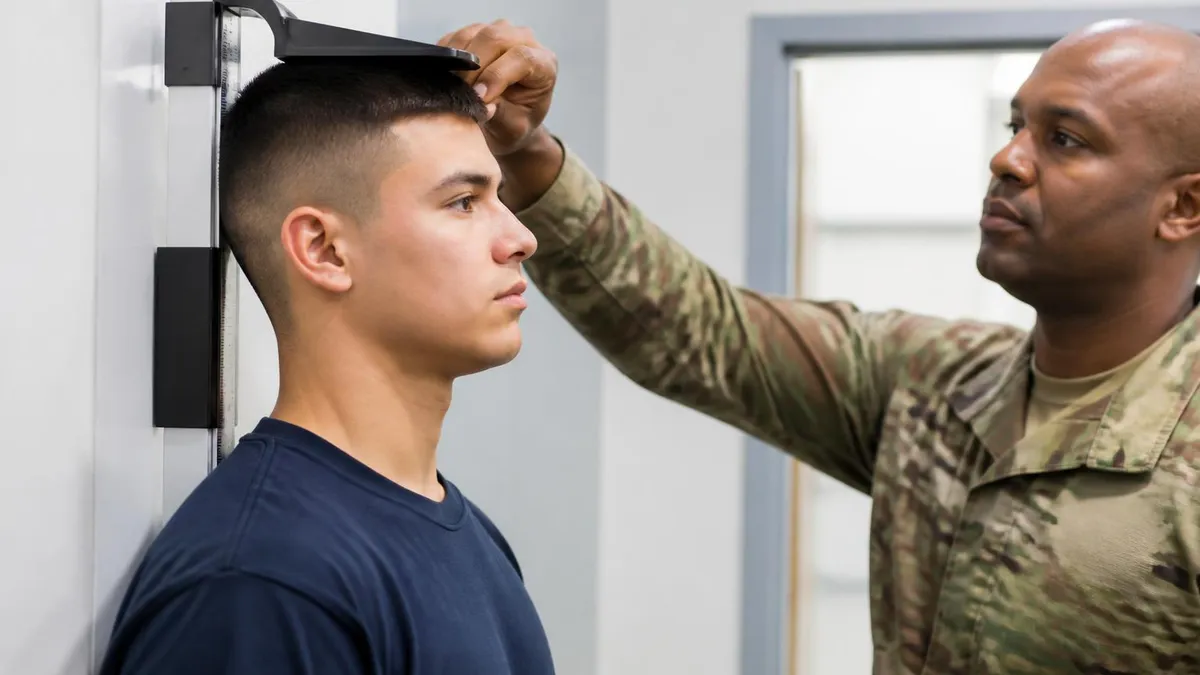
The medical section eats the biggest chunk of your day. You will strip down to underwear and a hospital gown, walk through vitals, vision, hearing, urinalysis, blood draw, body composition, range of motion (the famous duck walk), dental, and a private one-on-one physical with the MEPS doctor. The doctor will ask about your full medical history — surgeries, asthma, ADHD meds, depression, eye conditions, hearing aids, anything. Honesty matters here. Lying about medical history is fraudulent enlistment and a federal offense.
The aptitude piece is the ASVAB. Most recruits take the ASVAB at their high school or recruiter's office before MEPS day; if you did that, MEPS just verifies your scores. If you did not, you will sit the computer-adaptive CAT-ASVAB at MEPS — see our deep dive on the meps asvab for what to expect. Your line scores determine which jobs in your chosen branch you actually qualify for, so this matters even if you have already enlisted in a specific program.
MEPS Day 1 & Day 2 Hour-by-Hour
Night Before (Hotel Check-In)
Day 1, 04:00–05:00 — Wake-Up & Transport
Day 1, 06:00 — Sign-In & Briefing
Day 1, 06:30–09:30 — Medical Stations
Day 1, 09:30–12:00 — ASVAB (If Not Pre-Taken)
Day 1, 12:00–13:00 — Lunch
Day 1, 13:00–16:00 — Fingerprints + Counseling
Day 1 or Day 2 — Contract Signing
Day 2, ~10:00 — Oath of Enlistment
After Oath — Ship or Return Home
The Contract Counseling Session
After medical and ASVAB, you will sit down one-on-one with a branch counselor (Army Guidance Counselor, Navy Classifier, Air Force Counselor, etc.). They open a computer screen showing every job slot currently available to someone with your ASVAB scores, medical profile, and security clearance level. You review the open jobs, pick one, and the counselor locks it in. This is your single chance to negotiate — once you sign the meps contract, your job, ship date, and enlistment term are fixed.
The session can feel rushed because the counselor is managing a queue, but you have the right to take time, ask questions, and request a different job if you do not like what is on the screen. If nothing on the list looks right, you can decline and come back another day. Some recruits do exactly that — leave MEPS without signing, go home, study harder, retake the ASVAB, and come back with better scores that unlock better jobs.
The Oath of Enlistment
Once you sign, you walk into the ceremonial room with the American flag and the seal of your branch. An officer (usually a captain or lieutenant) administers the Oath of Enlistment. You raise your right hand and repeat after them. The moment those words leave your mouth, you are officially a member of the U.S. military. If your recruiter says you will do your meps swearing in, this is the moment they mean. Many recruits invite family for this — most stations allow up to four guests.
What to Bring (and What to Leave Home)
The MEPS commander's briefing on Day 1 always starts with a quick "who forgot what" survey, and there is always at least one recruit who left their Social Security card on the kitchen counter. Do not be that person. Your recruiter should give you a printed checklist a week before your MEPS date.
Wear clean business-casual clothes. No tank tops, no torn jeans, no athletic shorts, no flip-flops, no hats indoors, no offensive logos or political slogans. Treat it like a job interview — collared shirt for men, modest blouse for women. Skip the jewelry. Body piercings should be removed; some stations make you take out earrings at the door. The meps dress code is enforced. There is a complete meps dress code guide if you want the full list.

The Four Pillars of MEPS
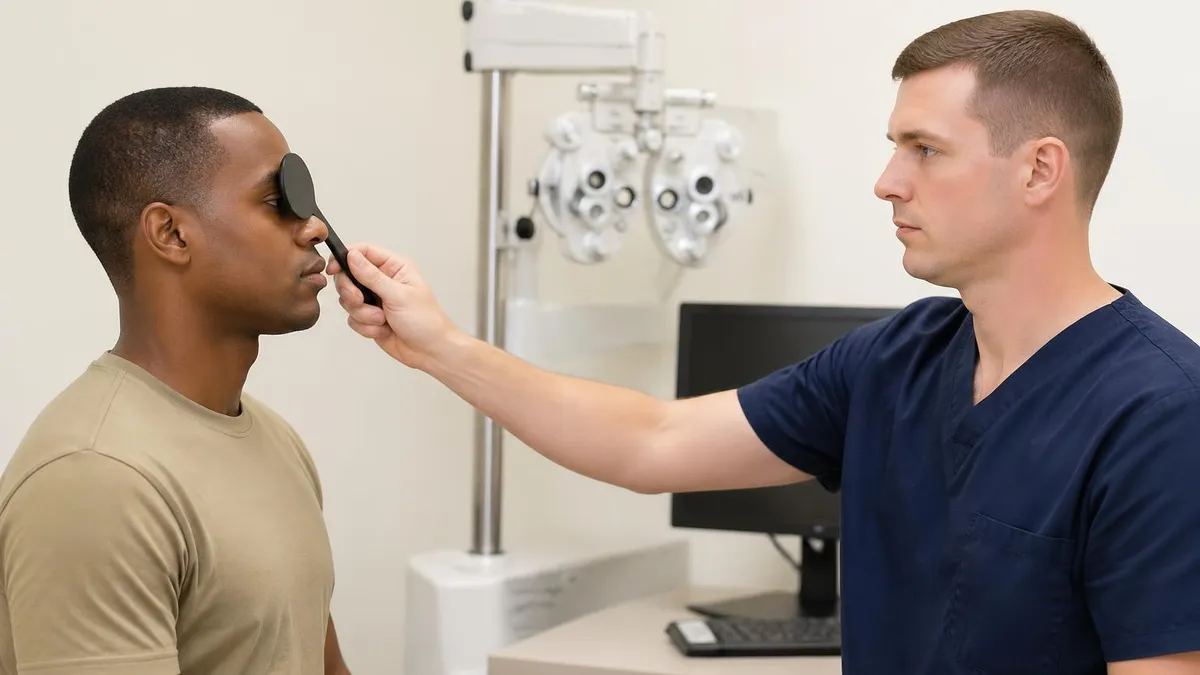
The longest and most stressful part of the day. You will cycle through: vitals (height, weight, BP, pulse), vision (eye chart, color vision via the Ishihara plates, depth perception), hearing (audiogram in a soundproof booth), labs (blood draw, urine sample, instant drug screen), body composition (tape measure for body fat if you're over the screening table), range of motion (the duck walk and several joint movements), dental (quick check for serious issues), and a full physical with the MEPS doctor. The doctor reviews your medical history forms, asks pointed questions, and either marks you qualified, qualified with a waiver, or disqualified.
5 Things You Must Bring to MEPS
A current driver's license or state-issued photo ID. Passports work too. Expired IDs are rejected at the door.
- Accepted: Driver's license, state ID, passport
- Not Accepted: Expired ID, school ID, photocopy
The actual card the SSA mailed you. Photos, photocopies, and tax documents don't count. If you lost it, request a replacement before MEPS day.
- Format: Original paper card only
- Replacement: Free from SSA — order 2 weeks ahead
The certified copy with raised seal from your state or county vital records office. Hospital souvenir certificates are not accepted.
- Source: State/county vital records
- Cost: $15–$40 depending on state
High school diploma or GED certificate, plus college transcripts if you've attended any college. Original or certified copies.
- Minimum: High school diploma or GED
- Bonus: College transcripts boost rank
Bring any prescription meds in their original labeled bottles, plus eyeglasses or contact lenses if you wear them. No colored contacts allowed.
- Meds: Original bottles with labels
- Vision: Glasses preferred over contacts
Common MEPS Disqualifications
The fastest way to fail at MEPS is to have a disqualifying medical condition that you either did not disclose to your recruiter or that the MEPS doctor catches during the physical. Some conditions are automatic disqualifiers, some require a waiver, and some are flat permanent bars. The full list of meps disqualifications runs into the hundreds of items, but the most common ones that trip people up are predictable.
For asthma, any documented diagnosis after age 13 is generally disqualifying without a waiver. For orthopedic history, surgeries on the knee, shoulder, or back — especially ACL reconstruction — require imaging and a waiver review. For mental health, recent use of SSRIs, anxiety medications, ADHD stimulants, or any psychiatric hospitalization in the past 12 months will pause processing.
For vision, uncorrected vision worse than 20/40 needs corrective lenses on file. For color blindness, failing the Ishihara plates will not disqualify you outright but will close certain jobs (aviation, electronics, demolition). Then there are the day-of disqualifiers that have nothing to do with your history.
Drug test: any positive result for marijuana, cocaine, opioids, or amphetamines is an automatic disqualification with a 90-day to permanent bar. The MEPS drug panel is sensitive and checks for recent use, not just same-day. Body weight: every branch publishes specific meps weight requirements tables; if you are over the standard, you will be tape-tested for body fat. Tattoos on the face, neck, or hands are restricted; offensive tattoos anywhere are a disqualifier.
Night-Before MEPS Prep Checklist
- ✓All required documents in a folder (ID, SS card, birth cert, transcripts, medical records)
- ✓Prescription meds in original labeled bottles
- ✓Eyeglasses or non-colored contact lenses if you wear them
- ✓Business-casual clothes laid out (collared shirt, no tank tops, no torn jeans)
- ✓Closed-toe shoes — no flip-flops, no sandals
- ✓All piercings removed (some stations make you take out earrings at the door)
- ✓No caffeine, energy drinks, or alcohol after 8pm
- ✓No cold medicine, sleep aids, or supplements for 72 hours
- ✓Phone charged plus a paperback or quiet card game for downtime
- ✓Set alarm for 04:00 — the hotel wake-up call will not be gentle
- ✓Lights out by 22:00 — get at least 6 hours of real sleep

The Waiver Process
If you are disqualified for a fixable issue, MEPS will issue a "Pending" status and your recruiter will start the waiver paperwork. Waivers are reviewed by your branch's surgeon general or medical command, not by MEPS. The Army waives more conditions than the Marines; the Air Force is somewhere in the middle. The process takes anywhere from two weeks to six months depending on the condition and the branch.
To increase your odds of getting a waiver approved, gather supporting documentation: medical records showing the condition resolved, letters from treating physicians, recent test results proving you no longer need medication, evidence of athletic activity since the diagnosis, and a clean follow-up history. Your recruiter packages this into a waiver request and submits it up the chain.
Night Before and Day Of
Most recruits stay at the contracted MEPS hotel the night before their processing day. The hotel is paid for by USMEPCOM through a per diem contract, so you do not pay anything. Dinner and breakfast are also covered. The hotel rules are strict: no alcohol, no leaving the building, no visitors, lights out by 22:00, and a 04:00 or 05:00 wake-up.
Treat it like a sleepover with curfew — the goal is to get to MEPS rested, sober, and not jittery from caffeine. Our full meps hotel guide covers what to expect. In the morning, eat the breakfast the hotel provides (even if you are not hungry — you will regret skipping it by 09:00). Bring a small bag with your documents, your meds, and a paperback book or quiet card game for the gaps between stations.
Cell phones are allowed in some MEPS waiting rooms and prohibited in others; check the local rules. Do not drink caffeine, energy drinks, or alcohol before your drug test. Even legal supplements can flag a hair test or urine panel. Be cautious about over-the-counter cold medicine in the 72 hours before MEPS. The meps drug test guide explains exactly what gets screened.
Should You Take the ASVAB Before MEPS or At MEPS?
Most recruiters book you for the ASVAB at school or at the recruiting office before your MEPS date. Some recruits sit it at MEPS instead. Each approach has tradeoffs.
- +Shorter MEPS day — frees 3+ hours for other stations
- +Score known in advance — pick jobs realistically
- +Re-test possible if score is too low before contract
- +Less mental fatigue stacked on a physical exam day
- +More confident going into MEPS knowing you qualify
- −Adds a full day to your MEPS visit
- −Score is unknown until you finish — uncertain job choices
- −Mental fatigue stacks with medical exam stress
- −If you fail the AFQT minimum, the whole MEPS day is wasted
- −Limited retake window once enlisted
What Happens After MEPS
Once you take the Oath of Enlistment, one of two things happens. If you signed as "ship direct," you board transportation to basic training within hours of the ceremony — usually a charter bus or a commercial flight. The MEPS travel office hands you your orders, an ID card or temporary CAC, and a meal voucher. You walk out of MEPS in civilian clothes and walk into the reception battalion at your basic training base later that day.
More commonly, you sign into the Delayed Entry Program (DEP) and go home. DEP is the holding pattern between contract signing and shipping. You are technically in the military — you have taken the oath, you are in the inactive reserve — but you are not on active duty yet. DEP can last anywhere from one week to one year. During DEP your recruiter is required to stay in regular contact, and you will attend monthly DEP meetings for early indoctrination.
Your meps to basic training depends on your branch, your job, and how full the next basic training cycle is. Some jobs (cyber, Special Forces prep, nuclear power) have waiting lists of six months or more. You can technically request to break your DEP contract before you ship, but doing so triggers paperwork and may bar you from re-enlisting later.
What MEPS Doesn't Do
MEPS is a screening and processing center, not a training facility. You will not do push-ups, you will not run, you will not wear a uniform, and you will not be yelled at. The staff are professional and reasonably patient — they process thousands of recruits a year and have heard every nervous question.
Branch-Specific MEPS Notes
While every applicant uses the same MEPS facilities and the same medical standards, each branch has small variations. Army applicants make up roughly 40% of MEPS volume; the Army has the most open jobs and the broadest waiver authority. For Army-specific questions, the dedicated meps army walkthrough covers the differences in detail.
If you are enlisting in the National Guard or Reserves, your MEPS day looks identical to active-duty processing, but your contract reflects a part-time service obligation and your ship date is scheduled around your civilian life. The Oath of Enlistment is the same. The medical bar is the same. The drug test is the same. For a full play-by-play of every station, the meps process guide walks through every step.
MEPS Questions and Answers
Related MEPS Guides
What Is MEPS: Military Entrance Processing Explained

What Happens at MEPS: A Step-by-Step Guide to Military Entrance Processing
How Long Does MEPS Take? Complete Timeline & Day Guide

MEPS Medical Exam: What to Expect at Your Physical
Do You Take the ASVAB at MEPS? What to Expect
MEPS Disqualifications: What Can Get You Rejected
MEPS Army: Complete Guide to What Army Recruits Experience
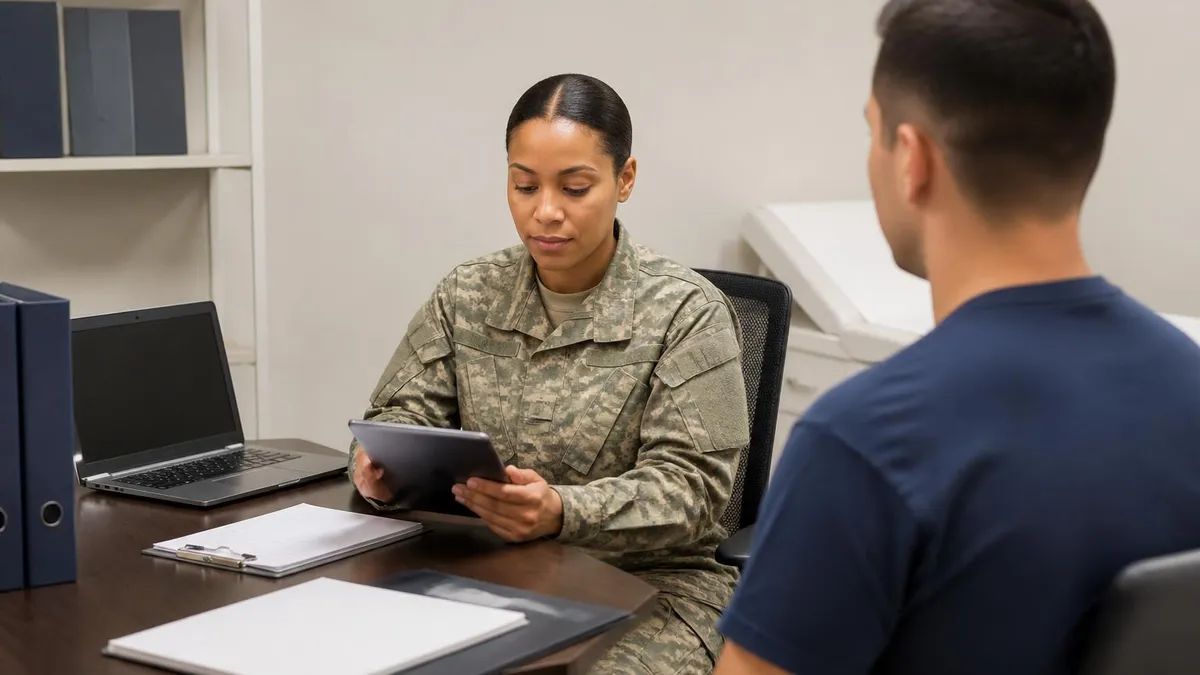
MEPS Hotel: What to Expect the Night Before Military Processing
About the Author
Retired Military Officer & Armed Forces Test Preparation Specialist
United States Army War CollegeColonel Steven Harris (Ret.) served 28 years in the US Army, earning a Master of Arts in Military Science from the Army War College and a Bachelor of Science in Criminal Justice. He has coached thousands of military enlistment and officer candidate program applicants through the ASVAB, AFQT, AFCT, OAR, and officer selection assessment processes across all military branches.
Join the Discussion
Connect with other students preparing for this exam. Share tips, ask questions, and get advice from people who have been there.
View discussion (8 replies)