
What to Wear to MEPS: Dress Code, Rules, and What to Avoid 2026 September
Prepare for the What to Wear to MEPS: Dress Code, certification. Practice questions with answer explanations covering all exam domains.
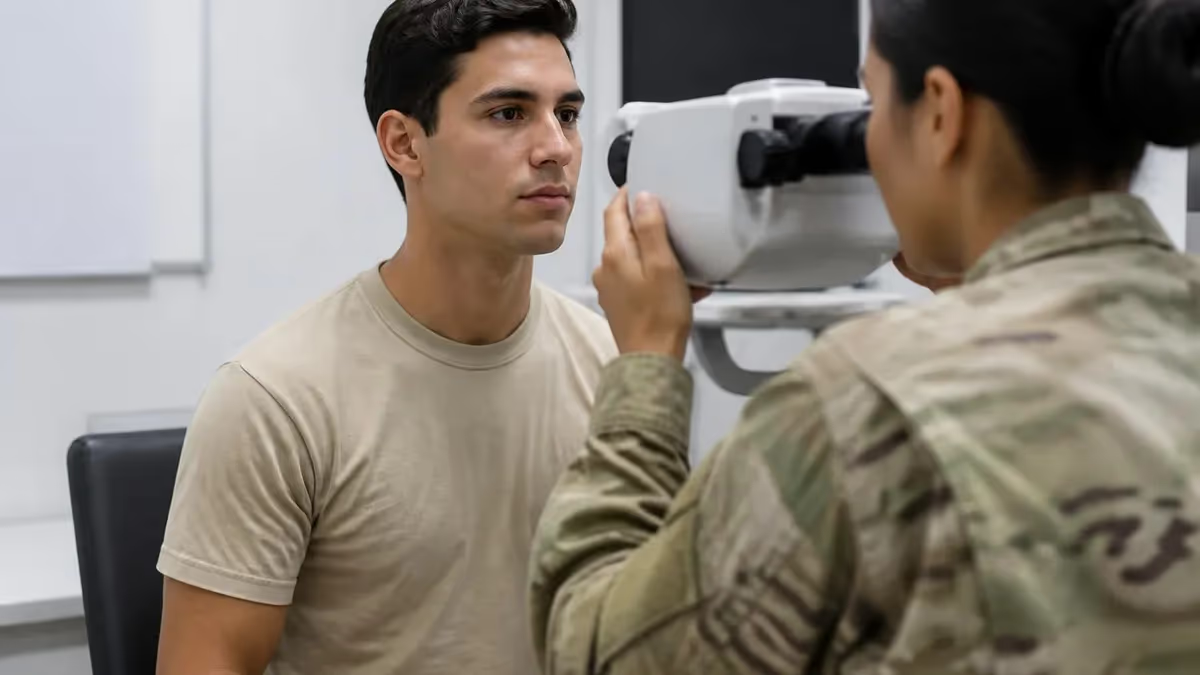
What Should You Wear to MEPS?
First things first: MEPS—the Military Entrance Processing Station—doesn't have a formal dress code the way basic training does. You're a civilian applicant at this point, not yet a service member. But what you wear matters more than you'd think, and showing up wrong can create an awkward first impression with the people processing your enlistment.
The short answer: wear clean, casual civilian clothing. Think comfortable everyday clothes—jeans or slacks, a plain shirt, closed-toe shoes. You're not interviewing for a corporate job, but you're also not showing up to a barbecue. The goal is clean, presentable, and practical.
This guide covers exactly what to wear (and what to skip), why it matters, and how to prepare your clothing for a smooth MEPS day.
MEPS Dress Code: The Basics
There's no official uniform requirement at MEPS military processing stations. The DoD doesn't publish a mandatory dress code for civilian applicants. However, MEPS stations—and individual recruiters—consistently recommend a specific type of attire, and there are items that will get flagged or cause problems.
Here's what works for most applicants:
- Tops: A plain, clean t-shirt, polo shirt, or button-down. Avoid anything with offensive graphics, drug or alcohol references, or political messaging.
- Bottoms: Jeans, slacks, or khakis. Avoid baggy pants, ripped jeans, athletic shorts, or anything with prominent branding or symbols.
- Shoes: Sneakers, loafers, or casual flats. Closed-toe is the standard. Flip-flops and sandals are generally a bad idea.
- Outerwear: A light jacket or hoodie is fine for comfort. Skip anything with gang-affiliated imagery or large logos.
Why What You Wear Actually Matters at MEPS
You're going through a multi-step process at MEPS that includes medical exams, ASVAB testing (if you haven't taken it yet), and administrative processing. What you wear affects all three in practical ways.
For the medical exam, you'll change into a medical gown for portions of the physical. But you'll be removing and putting your clothes back on multiple times throughout the day. Complicated outfits—belts with many metal components, boots with a dozen buckles, multiple layers—slow you down and can be frustrating when you're moving between stations quickly.
Metal on clothing and accessories affects walk-through detectors. You'll go through security screening at MEPS. Excessive metal jewelry, large belt buckles, and steel-toed boots can trigger screening and delay your processing.
Your overall presentation also signals to MEPS staff and your recruiter that you're taking the process seriously. It's not about impressing anyone—it's about showing up prepared and professional.
What Men Should Wear to MEPS
For male applicants, the standard recommendation looks like this:
- Clean jeans or khaki pants (no tears, holes, or sagging)
- A plain t-shirt, polo, or button-down shirt without graphics
- Casual sneakers or loafers—comfortable and easy to remove
- A simple belt if needed (avoid ornate buckles)
- Minimal jewelry—a simple watch is fine, leave the chains at home
Skip the following: baggy clothing, athletic shorts or sweatpants, tank tops, flip-flops, boots that take 5 minutes to unlace, and anything with controversial imagery.
Grooming matters too. Show up with a clean haircut, clean-shaven or trimmed facial hair (if allowed at the branch you're joining), and no strong cologne or fragrance. The medical staff will be working close to you all day.
What Women Should Wear to MEPS
For female applicants, similar principles apply:
- Comfortable jeans, slacks, or khakis—avoid miniskirts, leggings only (without a longer top), or anything overly casual
- A plain blouse, t-shirt, or casual button-down
- Comfortable flats, sneakers, or low-heeled shoes—nothing that makes walking difficult, nothing with complex straps
- Minimal jewelry—studs are fine, large hoop earrings and stacking bracelets are better left at home
- Hair tied back if it's long—you'll be moving through multiple exam stations and bending over for various tests
Skip: revealing clothing, very tight-fitting outfits, heavy makeup (you'll be photographed for your record), strong perfume, and shoes that are hard to take off quickly.
One practical note: if you wear an underwire bra, that's completely fine—but be aware it may set off metal detectors at security. Usually this isn't a problem, but it's worth knowing.
What NOT to Wear to MEPS
MEPS staff have seen it all. These are the items that create friction or get you sent home to change:
Clothing with Prohibited Imagery
Anything with drug references, alcohol branding, gang symbols, racist imagery, or sexually explicit content will be flagged. Some MEPS stations are stricter than others, but this is a federal processing facility—err on the side of plain and simple.
Baggy or Sagging Pants
This isn't just a style preference. Baggy clothing can conceal items during security screening, so it raises flags. It also looks unprepared. Fitted or standard-cut pants are always the right call.
Open-Toe Footwear
Flip-flops and open-toe sandals aren't appropriate for a medical processing environment. You'll be walking on cold clinic floors, possibly going outside, and moving quickly between stations. Wear closed-toe shoes.
Excessive Metal
Large belt buckles, heavy chains, stacked metal bracelets, and multiple piercings create hassle at security and during portions of the medical exam. Keep metal to a minimum for a smoother day.
Revealing Clothing
Spaghetti straps, crop tops, very short shorts, or anything overly revealing isn't appropriate. You'll be in a professional government facility interacting with medical staff, MEPS officers, and your recruiter.
Strong Fragrances
Medical examiners and administrative staff work in close contact with many applicants all day. Heavy cologne or perfume is genuinely unpleasant in this environment. Shower, use deodorant, and skip the fragrance.
What to Bring vs. What to Leave at Home
Beyond clothing, think carefully about what you bring to MEPS. You won't have easy access to your personal belongings during much of the processing day. Bring only what you need.
Bring:
- Your ID and any required documents (your recruiter will give you a specific list)
- Any glasses or contact lenses you use—the vision exam requires your best corrected vision
- Hearing aids if you use them
- A small snack if you tend to get hungry—processing can take 4–8 hours
- Any medications you take daily (with original prescription labels)
Leave at home:
- Valuables, expensive jewelry, or large amounts of cash
- Anything you wouldn't want searched or seen by federal staff
- Personal electronic devices (phones may be restricted in certain areas)
The Night Before MEPS: What to Do
Many applicants stay at a hotel the night before their MEPS appointment—usually provided by your recruiter through the MEPS hotel program. Whether you're staying overnight or going straight from home, the night-before preparation makes a real difference.
Lay out your clothes the night before so you're not scrambling in the morning. Make sure everything is clean and wrinkle-free. You'll likely be waking up early—some applicants need to be at MEPS by 5 or 6 AM—and having your outfit ready removes one variable from an already busy morning.
Get a good night's sleep. Avoid alcohol and drugs—obviously this matters for the medical exam, but it also affects how sharp you feel during testing and interviews. Don't eat a heavy meal right before the medical portion if possible; some tests are easier on an empty or light stomach.
Does Your Branch Affect What to Wear?
Whether you're joining the Army, Navy, Marine Corps, Air Force, Space Force, or Coast Guard, the basic guidance is the same at MEPS. The processing station is a joint military facility—all branches use the same physical, the same administrative process, and the same security standards. Your specific branch's expectations kick in after you enlist, not at MEPS.
Your recruiter may have branch-specific preferences or advice, so ask before your appointment if you're unsure. But the civilian dress code guidance here applies universally.
What Happens If You Wear the Wrong Thing?
In most cases, nothing catastrophic—but it can slow you down. If your clothing has prohibited imagery, staff may ask you to remove the item, turn it inside out, or in some cases, purchase a replacement from a nearby store. This wastes time in an already long day.
If you show up in open-toe shoes and need to visit outdoor areas, you may be directed to buy shoes. If your clothing sets off security concerns, it adds time at screening.
The practical consequence is delay and mild embarrassment. The bigger issue is what it signals to your recruiter and the MEPS staff—that you weren't fully prepared. Given that you're applying to join the military, showing up looking unprepared doesn't start things on the right foot.
Preparing for the Full MEPS Day
Clothing is just one piece of MEPS preparation. Understanding how long meps take helps you plan the entire day—it's typically 4–8 hours, sometimes longer. You'll go through medical exams, paperwork, and possibly the ASVAB.
If you want to understand the full scope of what happens at MEPS, read up on each processing stage. The medical exam, in particular, has specific requirements you should know about ahead of time. Check out our meps test to get familiar with the testing components and what's tested at each station.
Knowing MEPS meaning and the full process—not just what to wear—gives you the best shot at a smooth processing day with no surprises.
Important: The MEPS exam covers multiple domains. Allocate more study time to unfamiliar topics while maintaining review of strong areas.

- ✓Clean jeans, slacks, or khakis (no tears or sagging)
- ✓Plain t-shirt, polo, or button-down (no offensive graphics)
- ✓Closed-toe sneakers or casual shoes
- ✓Minimal jewelry (simple watch okay)
- ✓Hair neat and clean
- ✓No strong cologne or perfume
- ✓ID and required documents
- ✓Glasses/contacts if needed
- ✓Any prescription medications in original packaging
MEPS: Pros and Cons
- +meps — mEPS credential is recognized by employers and industry professionals
- +Higher earning potential compared to non-credentialed peers
- +Expanded career opportunities and professional advancement
- +Structured learning path builds comprehensive knowledge
- +Professional development that stays current with industry standards
- −Preparation requires significant time and study commitment
- −Associated costs for exams, materials, and renewal fees
- −Continuing education needed to maintain credentials
- −Competition for advanced positions can be challenging
- −Requirements and standards may vary by state or region
About the Author

Retired Military Officer & Armed Forces Test Preparation Specialist
United States Army War CollegeColonel Steven Harris (Ret.) served 28 years in the US Army, earning a Master of Arts in Military Science from the Army War College and a Bachelor of Science in Criminal Justice. He has coached thousands of military enlistment and officer candidate program applicants through the ASVAB, AFQT, AFCT, OAR, and officer selection assessment processes across all military branches.
Join the Discussion
Connect with other students preparing for this exam. Share tips, ask questions, and get advice from people who have been there.
View discussion (8 replies)