
How Long Does MEPS Take? Complete Timeline & Day Guide 2026 September
Free How Long Does MEPS Take? Complete practice test with questions and answer explanations. 🟢 Prepare for the 2026 September exam with instant scoring.
How Long Does MEPS Take? The Short Answer
Most recruits spend between 8 and 12 hours at MEPS on their first visit, though the entire MEPS process — from initial processing through job selection and the oath of enlistment — commonly stretches across two days. Day 1 is the longest: you'll check in before dawn, typically between 4:00 and 6:00 AM, and you won't leave until late afternoon or early evening.
Day 2 is shorter, usually 3–5 hours, covering job counseling, contract signing, and the oath ceremony if you're enlisting. If you're visiting MEPS just for the physical exam and aren't enlisting that visit, you may finish in a single long day.
Understanding what MEPS is helps explain why it takes so long. The Military Entrance Processing Station isn't a single appointment — it's a sequential pipeline of medically and administratively intensive steps, each of which must be completed before the next begins. You can't skip ahead to job counseling until the medical staff clear you, and you can't take the oath until a recruiter finalizes your contract. Every step depends on the previous one, and every recruit in the building that day is moving through the same pipeline simultaneously.
The medical examination accounts for the majority of MEPS processing time on Day 1. It's not a quick sports physical — it's a thorough military-standard evaluation covering vision, hearing, blood work, urinalysis, orthopedic testing, and an in-depth review of your medical history and any disclosed conditions.
For most recruits, the medical phase alone runs 4 to 8 hours depending on how many applicants are in the building and whether any follow-up evaluations are required. A recruit who arrives healthy, well-documented, and without any conditions requiring additional review can move through faster. Someone who discloses a medical history issue, has a questionable test result, or is flagged for a consult will wait longer.
Your MEPS experience is shaped significantly by the specific station you attend. MEPS processing capacity varies by location — high-volume stations in major cities like what happens at MEPS locations near large metro areas process hundreds of applicants per week and can have longer wait times, while smaller stations may move faster but have more limited scheduling windows. Plan to be there for the full day regardless — no one leaves MEPS early by rushing, because you're waiting on medical staff, administrative reviewers, and your recruiter, not just finishing your own paperwork.
One common misconception is that MEPS is a single event. For some recruits, MEPS involves multiple visits. Your first visit may be the physical exam and ASVAB testing. A second visit handles the final physical review and shipping to Basic Training. Between those visits, you're in the Delayed Entry Program (DEP), sometimes waiting weeks or months for your ship date. Each MEPS visit follows the same early-morning check-in format and typically runs a full day, so build that full-day expectation into your planning well in advance of your scheduled appointment date.
The Medical Exam: Why It Takes So Long
The MEPS medical exam is the single largest time commitment in the entire process, and understanding what it involves explains why recruits spend most of their first day in a medical evaluation setting. The exam isn't structured like a civilian checkup where you see one doctor for 20 minutes. It's a multi-station evaluation conducted by different medical specialists in sequence, and each station must be cleared before you move to the next.
Vision testing checks both corrected and uncorrected visual acuity, color vision, and depth perception. Standards vary by branch and job specialty — some military occupational specialties have strict vision requirements that can take additional time to evaluate. Hearing tests are conducted in a soundproof booth measuring your response at multiple frequencies. The orthopedic examination is often the most physically demanding portion: you'll perform a series of movements called the duck walk, squats, crab walk, and range-of-motion exercises while a medical officer observes for limitations. Any prior joint injury, surgery, or chronic pain needs to be disclosed here.
Blood work and urinalysis test results don't come back immediately — the lab processes them while you're completing other exam stations, but if a result requires a retest or physician review, it adds waiting time. The medical history questionnaire you complete in advance is cross-referenced with what you disclose verbally to the medical officer. Inconsistencies between your paperwork and what you say during the exam cause delays because the officer must investigate and document the discrepancy.
Mental health screening and moral character review also happen during the medical phase. Recruits with prior legal history — even minor citations or arrests without conviction — may need to wait while a MEPS counselor reviews documentation and determines whether a waiver is required. Drug testing results that flag for further review trigger an entirely separate process. These aren't cases of something going wrong; they're part of standard MEPS due diligence and they take additional time to resolve properly.
The volume of recruits at your MEPS station on that particular day has a major impact on how long each station takes. A day with 30 recruits processes faster than a day with 100. MEPS doesn't give recruits advance notice of the day's volume, so there's no way to pick a quieter appointment slot. Your best strategy is simply to arrive prepared — medical history documentation organized, prescriptions listed, known conditions disclosed in advance — so you don't add time to your own processing by having to retrieve information or clarify paperwork on the spot.
If you haven't already taken the ASVAB, you may take it at MEPS before or during your processing day. The ASVAB at MEPS is a computer-adaptive test that typically takes 1.5 to 3 hours, and it's factored into your Day 1 schedule. Recruits who take the ASVAB at their recruiter's office or a Military Entrance Test site before their MEPS appointment avoid this time commitment on processing day.
Knowing your ASVAB scores in advance also lets you research job options before job counseling begins, making Day 2 more efficient. Talk to your recruiter about whether taking the ASVAB off-site before your MEPS appointment date makes sense for your schedule.

MEPS Practice Test Questions
Prepare for the MEPS - Military Entrance Processing Stations exam with our free practice test modules. Each quiz covers key topics to help you pass on your first try.
MEPS Introduction to MEPS
MEPS Exam Questions covering Introduction to MEPS. Master MEPS Test concepts for certification prep.
MEPS ASVAB
Free MEPS Practice Test featuring ASVAB. Improve your MEPS Exam score with mock test prep.
MEPS Paragraph Comprehension
MEPS Mock Exam on Paragraph Comprehension. MEPS Study Guide questions to pass on your first try.
MEPS Military Entrance Processing Stations...
MEPS Test Prep for Military Entrance Processing Stations (MEPS) Applicant Processing and Standards. Practice MEPS Quiz questions and boost your score.
MEPS Military Entrance Processing Stations...
MEPS Questions and Answers on Military Entrance Processing Stations (MEPS) ASVAB Aptitude Testing. Free MEPS practice for exam readiness.
MEPS Military Entrance Processing Stations...
MEPS Mock Test covering Military Entrance Processing Stations (MEPS) Enlistment and Oath Ceremony. Online MEPS Test practice with instant feedback.
MEPS Military Entrance Processing Stations...
Free MEPS Quiz on Military Entrance Processing Stations (MEPS) Job Counseling and Contracts. MEPS Exam prep questions with detailed explanations.
MEPS Military Entrance Processing Stations...
MEPS Practice Questions for Military Entrance Processing Stations (MEPS) MEPS Medical Examinations. Build confidence for your MEPS certification exam.
MEPS Military Entrance Processing Stations...
MEPS Test Online for Military Entrance Processing Stations (MEPS) Moral and Background Screening. Free practice with instant results and feedback.
MEPS Applicant Pre-Screening Process
MEPS Study Material on Applicant Pre-Screening Process. Prepare effectively with real exam-style questions.
MEPS Applicant Processing and Conduct
Free MEPS Test covering Applicant Processing and Conduct. Practice and track your MEPS exam readiness.
MEPS ASVAB Administration and Purpose
MEPS Exam Questions covering ASVAB Administration and Purpose. Master MEPS Test concepts for certification prep.
MEPS ASVAB Aptitude Testing
Free MEPS Practice Test featuring ASVAB Aptitude Testing. Improve your MEPS Exam score with mock test prep.
MEPS Enlistment Contracts and Oaths
MEPS Mock Exam on Enlistment Contracts and Oaths. MEPS Study Guide questions to pass on your first try.
MEPS Job Selection and Counseling
MEPS Test Prep for Job Selection and Counseling. Practice MEPS Quiz questions and boost your score.
MEPS Job Selection and Enlistment
MEPS Questions and Answers on Job Selection and Enlistment. Free MEPS practice for exam readiness.
MEPS Medical Examination Procedures
MEPS Mock Test covering Medical Examination Procedures. Online MEPS Test practice with instant feedback.
MEPS Medical Examination Process
Free MEPS Quiz on MEPS Medical Examination Process. MEPS Exam prep questions with detailed explanations.
MEPS Moral and Background Standards
MEPS Practice Questions for Moral and Background Standards. Build confidence for your MEPS certification exam.
What Causes MEPS Delays and How to Avoid Them
Several factors extend MEPS processing time beyond the standard 8–12 hours, and most of them are either avoidable or at least manageable with preparation. The most common cause of delay is incomplete or missing documentation. If you don't bring your Social Security card, birth certificate, high school diploma or transcripts, and any medical records related to conditions you disclosed, MEPS staff will need to pause your processing while your recruiter works to obtain or verify the missing documents. In some cases, missing paperwork means returning on a different day entirely — which costs you an additional full day at MEPS.
Undisclosed medical history is another significant delay trigger. MEPS medical officers are trained to detect signs of conditions that weren't disclosed on your pre-screening questionnaire. If a physical finding doesn't match your stated history, the officer must investigate, which can involve calling your civilian physician, requesting medical records, or referring you for a specialist consultation at a separate appointment. You're always better off disclosing known conditions with documentation than hoping they won't be detected — detection without disclosure creates a far longer delay and can disqualify you from service entirely if it appears deliberate.
Disqualifying medical findings that require a waiver also add time. A waiver doesn't automatically happen at MEPS — it's a separate process that begins after your MEPS visit and takes weeks or months to resolve depending on the branch and the specific condition. When a waiver is submitted, it means your ship date is postponed until the waiver decision comes back. MEPS military standards for waivers vary significantly by branch, and the volume of waiver requests at your branch's HQ affects how quickly you'll hear back.
Legal and moral issues require additional review that can extend Day 1 processing or require a return visit. Any arrest, citation, court appearance, or involvement with law enforcement — even incidents that were expunged or dismissed — must be disclosed on your MEPS moral character questionnaire. MEPS staff will verify your disclosure against background check databases.
If there's a discrepancy or if a moral waiver is required, a MEPS counselor will conduct a formal review before you can proceed. Bring all court documentation for any legal history, including dismissal paperwork and completion records for diversion programs, to avoid delays in this phase.
MEPS Day 2: Job Counseling and the Oath of Enlistment
Day 2 at MEPS is typically 3 to 5 hours and is focused on the administrative side of enlisting rather than the medical side. It usually begins in the mid-to-late morning after you've had a night to rest at a MEPS-approved hotel, which your recruiter arranges and the military pays for if you live more than a certain distance from the MEPS station. Not every recruit has a Day 2 — if you're visiting MEPS solely for a physical examination and aren't enlisting during that visit, you may be done after Day 1.
Job counseling is the major time component on Day 2. A MEPS guidance counselor sits down with you to review your ASVAB scores, medical qualification results, and available job openings. This isn't a quick conversation — it can take an hour or more depending on how many jobs you're considering, whether you have specific job preferences, whether the jobs you want are available in your preferred ship date window, and how long contract negotiations take. Recruits who arrive knowing which jobs their ASVAB scores qualify them for and which they're most interested in tend to move through this phase faster.
Once you and the counselor agree on a job, you'll sign your enlistment contract. Review it carefully — this document specifies your branch, job, enlistment term, start date, and any bonuses you've been offered. Corrections to a signed contract are difficult and create additional paperwork delays, so make sure every detail is accurate before you sign. Your recruiter should walk through the contract with you, but it's your responsibility to read and understand what you're committing to.
The oath of enlistment is the final step on Day 2. It's brief — less than a minute — but it's the moment you officially become a member of the US military. Family members are sometimes allowed to attend, depending on the MEPS station's policy on visitors. After the oath, you'll receive your paperwork and your reporting date to Basic Training, marking the official completion of the MEPS process. From that point forward, you're in the Delayed Entry Program waiting for your ship date unless you're shipping immediately.

How to Prepare for a Faster MEPS Experience
You can't control how many recruits are at MEPS on your appointment day, and you can't speed up lab processing times. What you can control is your own readiness — and arriving fully prepared can shave hours off your personal processing time and reduce the chance of a re-visit. Start with your documents. Bring originals (not photocopies) of your Social Security card, birth certificate, high school diploma or GED certificate, and college transcripts if applicable. If you've had any medical procedures, surgeries, or diagnosed conditions, bring supporting documentation from your physician — not just a verbal summary of what happened.
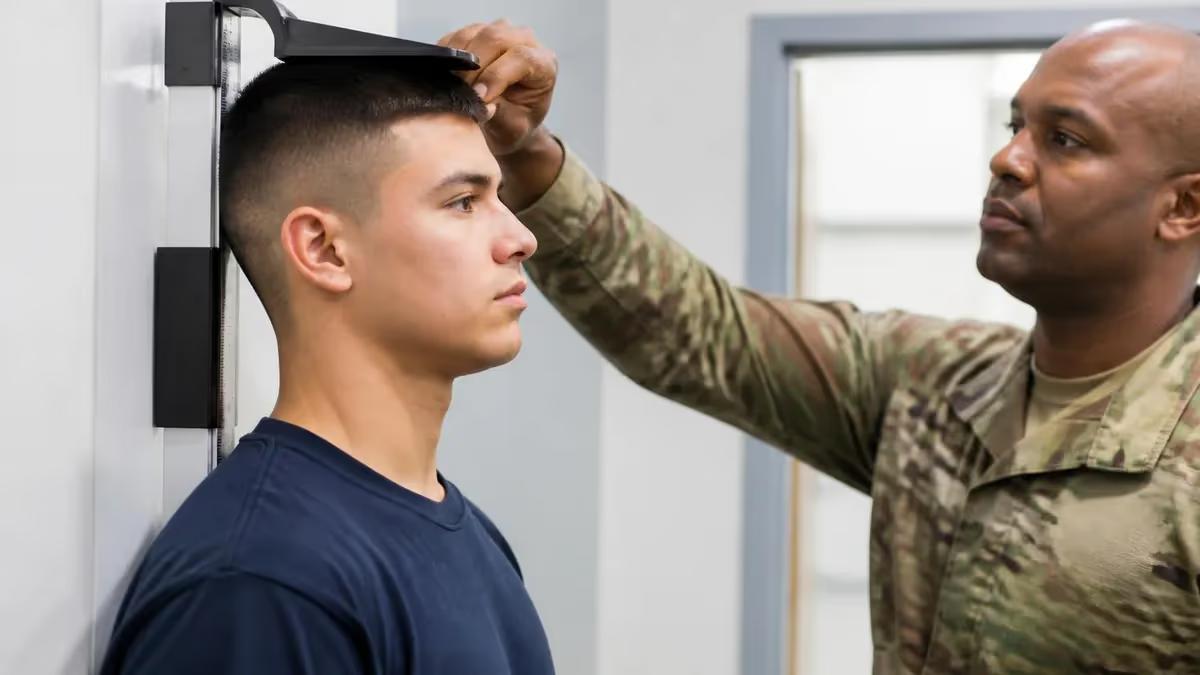
Physical preparation matters more than most recruits realize. The MEPS body composition standards check your height-to-weight ratio on arrival, and failing this standard stops your processing before it begins. Know your branch's standards in advance and get to a qualifying measurement before your appointment. Being even a few pounds over your branch's weight limit means your MEPS visit is over before the medical exam starts — and you'll have to reschedule, extending your total timeline by weeks.
Sleep matters too. You'll be at MEPS for 8–12 hours starting before sunrise. Physical and cognitive fatigue don't affect your test results, but they affect your ability to pay attention during the medical history review, remember details when asked about your health background, and focus during job counseling negotiations.
Go to bed early the night before, eat a normal dinner, and avoid alcohol in the days leading up to your MEPS appointment. The MEPS Army processing standards and those for other branches both recommend avoiding any supplement or medication that could affect drug test results in the week before your visit.
Talk to your recruiter about what to expect from your specific MEPS station before your appointment. Some stations have particular patterns — certain exam stations that tend to back up, specific documentation they scrutinize more carefully, or different procedures for recruits from your branch.
Your recruiter has sent dozens or hundreds of recruits through MEPS and can give you location-specific tips that general guides can't. Make a checklist with your recruiter, confirm your appointment time and transportation plan, and treat your MEPS day the same way you'd treat a critical job interview — arrive overprepared, and you'll be fine. Recruits who show up organized, well-rested, and fully documented consistently report shorter overall processing times and far fewer complications at every MEPS station they attend.
- ASVAB minimum: 31 AFQT for active duty, 50 for most technical MOS roles
- Processing focus: PULHES medical profile, physical fitness baseline, recruiter verification of enlistment documents
- Job selection: Army uses the MEPS guidance counselor to match ASVAB line scores to available MOS openings
- Ship date: Army DEP periods range from a few weeks to 365 days depending on job availability
- Special programs: Army National Guard and Reserve recruits may process at the same MEPS but follow a slightly different administrative path

- ✓Bring original Social Security card (not a photocopy)
- ✓Bring original birth certificate or certified copy
- ✓Bring high school diploma, GED certificate, or official transcripts
- ✓Bring medical records for any disclosed conditions, surgeries, or prescriptions
- ✓Bring documentation for any legal history (court records, dismissal papers)
- ✓Meet your branch's height/weight standards before your appointment
- ✓Sleep at least 7–8 hours the night before
- ✓Avoid alcohol for at least 48 hours before the appointment
- ✓Avoid any supplements or medications that could affect drug testing (consult recruiter)
- ✓Confirm transportation and arrival time with your recruiter the day before
MEPS Pros and Cons
- +MEPS has a publicly available content blueprint — you know exactly what to prepare for
- +Multiple preparation pathways accommodate different schedules and budgets
- +Clear score reporting shows specific strengths and weaknesses
- +Study communities share current insights from recent test-takers
- +Retake policies allow recovery from a difficult first attempt
- −Tested content scope requires substantial preparation time
- −No single resource covers everything optimally
- −Exam-day performance can differ from practice test performance
- −Registration, prep, and retake costs accumulate significantly
- −Content changes between versions can make older materials less reliable
MEPS Questions and Answers



About the Author

Retired Military Officer & Armed Forces Test Preparation Specialist
United States Army War CollegeColonel Steven Harris (Ret.) served 28 years in the US Army, earning a Master of Arts in Military Science from the Army War College and a Bachelor of Science in Criminal Justice. He has coached thousands of military enlistment and officer candidate program applicants through the ASVAB, AFQT, AFCT, OAR, and officer selection assessment processes across all military branches.
Join the Discussion
Connect with other students preparing for this exam. Share tips, ask questions, and get advice from people who have been there.
View discussion (8 replies)