
MEPS Disqualifications: What Can Get You Rejected 2026 September
🔎 Pass the MEPS Disqualifications: What Can Get exam with confidence. Practice questions with detailed explanations and instant feedback on every answer.

MEPS Disqualifications: What Can Keep You Out of the Military
Getting disqualified at MEPS is more common than most recruits expect. Military Entrance Processing Stations (MEPS) run thorough medical exams, background checks, and aptitude testing — and there are specific standards for every branch of the military. If you don't meet them, you get a DQ (disqualification).
Not all disqualifications are permanent. Some are temporary — a condition that resolves, or a situation that can be waived. Others are harder to get around. Understanding what gets you DQ'd and what options exist can help you approach the process realistically, whether you're preparing for your first MEPS appointment or trying to understand why a recruiter expressed concern.
Medical Disqualifications at MEPS
The medical exam is the most common source of MEPS disqualifications. The military uses standards set by DOD (Department of Defense) Instruction 6130.03, which catalogs every condition and its disqualifying threshold by body system.
Vision Problems
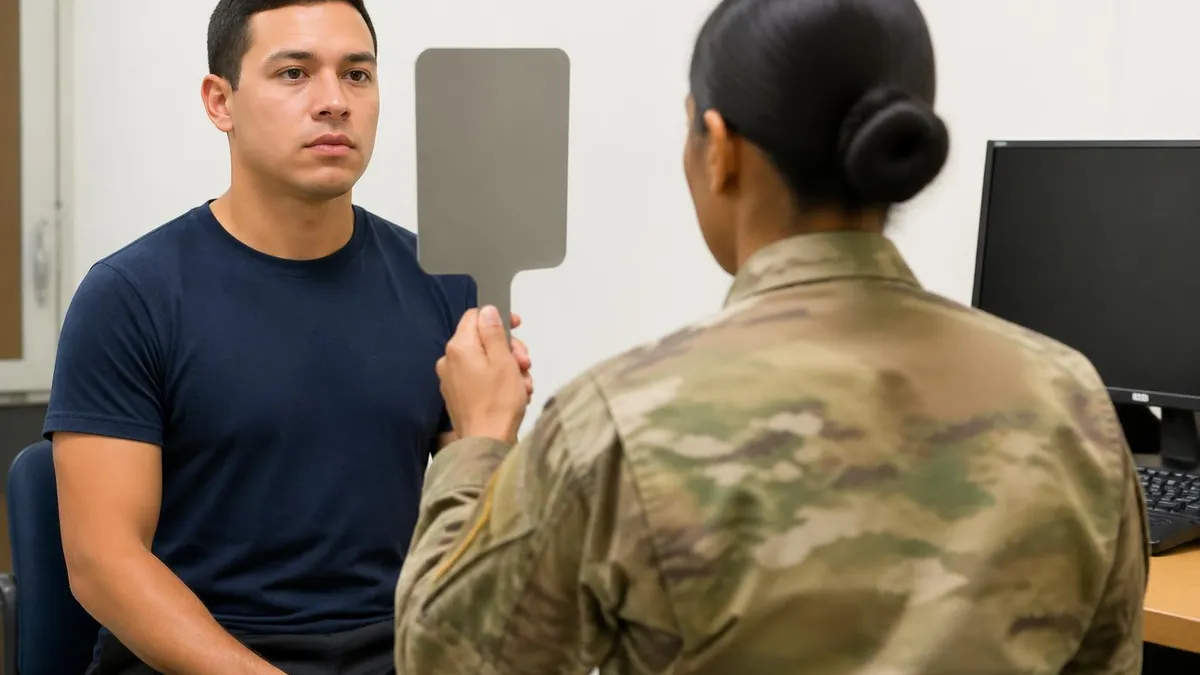
Uncorrected vision must fall within specific ranges for most MOSs (military occupational specialties). However, correctable vision is generally acceptable — if your corrected vision meets the standard, most branches will work with you. Monocular vision, severe color blindness, or conditions like keratoconus can be disqualifying depending on severity and branch.
Mental Health Conditions
Mental health history is one of the most complex disqualification categories. Conditions that can disqualify include:
- Diagnosed mood disorders (bipolar disorder, major depressive disorder if untreated or recent)
- History of inpatient psychiatric treatment in many cases
- Anxiety disorders if currently symptomatic or requiring medication
- History of self-harm or suicide attempts
- ADHD with current medication — ADHD itself may be waiverable, but being on stimulant medication at the time of exam often isn't
The mental health standards are context-dependent. A single episode of depression years ago that resolved without treatment is treated very differently from a current prescription for antidepressants. Time since treatment, current functioning, and severity all factor in.
Physical Conditions and Injuries
Prior surgeries, injuries, and chronic conditions are evaluated for current fitness to serve. Common disqualifying or waiver-requiring conditions include:
- History of ACL reconstruction or other major joint surgeries (often waiverable with documentation of full recovery)
- Asthma diagnosed after age 13 or requiring current medication
- Diabetes requiring insulin
- Obesity — BMI and body fat standards apply; exceeding them is a DQ
- Hearing loss beyond the service-specific threshold
- Certain skin conditions, depending on severity
Drug and Medical History Disclosures
The MEPS medical questionnaire asks about prior drug use, medical history, and medications. The standard advice is: be honest. Concealing medical history — called "fraud in enlistment" — is a serious offense that can result in discharge and even criminal prosecution if discovered after you've enlisted. What seems like a minor omission at MEPS can become a major problem later.
Pro Tip: Focus your MEPS study time on areas where you score lowest. Most exam questions test application of knowledge, not memorization.
Criminal History Disqualifications
Criminal background is reviewed at MEPS, and it matters. Minor offenses don't automatically disqualify you — the military uses a tiered system where the severity, recency, and pattern of criminal history determines eligibility.
Automatic disqualifiers include:
- Felony convictions (many are permanently disqualifying without a waiver)
- Convictions involving sexual offenses
- Domestic violence convictions (covered by the Lautenberg Amendment, which prohibits firearms possession — and military service requires it)
- Drug trafficking convictions
Often waiverable with the right history:
- Minor misdemeanor convictions (especially older, isolated incidents)
- Juvenile offenses in many cases, depending on severity and time elapsed
- DUI/DWI convictions (typically waiverable if non-recent and isolated)
Recruits sometimes assume that sealed juvenile records or dismissed charges won't show up. They often do — particularly dismissed charges that are visible in court records. Disclose everything to your recruiter and let them advise on how to handle disclosure at MEPS. Recruiters deal with this regularly and know what's likely to be an issue.
ASVAB Score (Aptitude) Disqualification
Scoring below the minimum Armed Forces Qualifying Test (AFQT) score disqualifies you from enlisting — it's not a medical DQ, but it's still a DQ. The minimum AFQT score varies by branch:
- Army: 31
- Marines: 32
- Navy: 35
- Air Force: 36
- Coast Guard: 40
- Space Force: Varies by specialty
The AFQT measures verbal and math abilities — arithmetic reasoning, math knowledge, paragraph comprehension, and word knowledge. If your score is close to the minimum, you can retake the ASVAB after a waiting period. Studying the specific content areas beforehand significantly improves scores. Practice with ASVAB aptitude testing questions to prepare for the actual test at MEPS.
Drug Test Failure
MEPS administers urine drug screening. Positive results for marijuana, cocaine, amphetamines, opioids, or other controlled substances result in disqualification. Some branches allow retesting after a waiting period. Chronic drug use patterns are more serious and may result in permanent disqualification.
Marijuana is particularly common — it's legal in many states but is still tested for and will result in DQ at MEPS. Recruits who know they've recently used should discuss timing honestly with their recruiter rather than showing up and testing positive.
Waivers: When Disqualification Isn't Final
A disqualification isn't always the end. Most medical and many non-medical DQs can be waivered — but waivers aren't guaranteed, and they take time. The waiver process involves:
1. Your recruiter submitting a waiver request to the branch headquarters
2. Medical documentation supporting that the condition doesn't affect your ability to serve
3. Review by branch medical review boards
Waiver approval rates vary dramatically by condition, branch, and current recruiting needs. When the military is actively recruiting and needs numbers, waiver approval rates are higher. When accession quotas are met, they're tighter.
If you're heading to MEPS and have a known condition you're concerned about, researching the specific waiver requirements for your branch and condition before your appointment is worthwhile. Your recruiter should know the typical waiver landscape for your situation — ask directly.
Preparing for MEPS
The best preparation for MEPS is honest, complete documentation of your medical history and a clear understanding of the process. Going in blind about what the exam involves doesn't serve you.
The MEPS medical examination practice questions help you understand what the exam covers — what examiners are checking, how the standards work, and what to expect during each stage. The job selection and counseling practice questions cover what happens after medical clearance, when your ASVAB scores determine which MOSs you qualify for.
Going to MEPS prepared — medically, mentally, and with your paperwork complete — is the single biggest factor in a smooth processing day. Most disqualifications that catch recruits off guard are for conditions they knew about and hoped wouldn't come up. They always come up.

MEPS: Pros and Cons
- +meps — mEPS credential is recognized by employers and industry professionals
- +Higher earning potential compared to non-credentialed peers
- +Expanded career opportunities and professional advancement
- +Structured learning path builds comprehensive knowledge
- +Professional development that stays current with industry standards
- −Preparation requires significant time and study commitment
- −Associated costs for exams, materials, and renewal fees
- −Continuing education needed to maintain credentials
- −Competition for advanced positions can be challenging
- −Requirements and standards may vary by state or region




Next Steps If You've Been Disqualified at MEPS
Getting a DQ at MEPS doesn't necessarily mean the end of your military path. Here's what to do:
First, get the specific reason for your disqualification in writing. MEPS should provide documentation. Understanding exactly which standard you didn't meet is essential for figuring out your options.
Second, talk to your recruiter. They've handled disqualifications before and know the waiver process for your branch. If a waiver is plausible for your situation, they'll advise on what documentation to gather and how to proceed.
Third, consider alternative branches. Different branches have somewhat different standards and different waiver approval patterns. A condition that disqualifies you from one branch may be waiverable in another. The Army generally has broader waiver acceptance than the more selective branches like the Air Force and Coast Guard.
Finally, for temporary medical disqualifications — conditions that are expected to resolve — the path is usually to get treatment, document recovery, and reapply. Your recruiter can advise on timing.
The MEPS process can feel abrupt and impersonal — it's designed to process large numbers of applicants efficiently, not to provide individualized counseling. Understanding how it works before you walk in — what they're checking, what standards they're applying — puts you in a better position to navigate it. Practicing with the free MEPS ASVAB questions and job selection and enlistment questions prepares you for the aptitude and counseling portions specifically.
About the Author

Retired Military Officer & Armed Forces Test Preparation Specialist
United States Army War CollegeColonel Steven Harris (Ret.) served 28 years in the US Army, earning a Master of Arts in Military Science from the Army War College and a Bachelor of Science in Criminal Justice. He has coached thousands of military enlistment and officer candidate program applicants through the ASVAB, AFQT, AFCT, OAR, and officer selection assessment processes across all military branches.
Join the Discussion
Connect with other students preparing for this exam. Share tips, ask questions, and get advice from people who have been there.
View discussion (8 replies)