
Do You Take the ASVAB at MEPS? What to Expect 2026 September
Free Do You Take the ASVAB at MEPS? practice test 🎯 with instant feedback and detailed answer explanations. Prepare for your exam.

Do You Take the ASVAB at MEPS?
Short answer: yes, in most cases. When you go through the Military Entrance Processing Station, taking the ASVAB — the Armed Services Vocational Aptitude Battery — is one of the first major steps. It happens on Day 1 of your MEPS visit, usually in the morning, before the medical examination.
But there's a nuance here worth understanding. The ASVAB can actually be taken at two different points in the enlistment process:
The pre-screening ASVAB — Some recruits take a shorter pre-screening version at a Military Entrance Test (MET) site or a recruiter's office before their MEPS visit. This is often used to get a ballpark score and determine if you're a viable candidate. It's not the official score used for enlistment.
The official MEPS ASVAB — This is the full, proctored version that generates your official scores. It's taken at MEPS using a computer (CAT-ASVAB format). These are the scores that matter — they determine your Armed Forces Qualification Test (AFQT) score and your qualification for specific military occupational specialties (MOS, AFSC, rating, etc.).
If you took the ASVAB at a recruiter's office or a MET site before your MEPS appointment, you may or may not need to test again at MEPS. Your recruiter will tell you based on your scores and how recently you tested. Scores are valid for two years.
How the ASVAB Works at MEPS
At MEPS, you'll take the Computer Adaptive Testing ASVAB (CAT-ASVAB). Unlike a paper version, this adapts to your performance — questions get harder as you answer correctly and easier if you're struggling. The adaptive format means you typically finish faster than the paper version, but the test is taken very seriously. No going back to change answers.
The CAT-ASVAB covers 10 subtests:
General Science (GS), Arithmetic Reasoning (AR), Word Knowledge (WK), Paragraph Comprehension (PC), Mathematics Knowledge (MK), Electronics Information (EI), Auto Information (AI), Shop Information (SI), Mechanical Comprehension (MC), and Assembling Objects (AO).
The four subtests that feed directly into your AFQT score — the primary enlistment qualifier — are AR, MK, WK, and PC. Every branch uses AFQT score as the baseline for enlistment eligibility. Minimum AFQT scores vary: Army 31, Navy 35, Marines 32, Air Force 36, Coast Guard 40.
The other subtests form composite scores that determine which jobs you qualify for. A high EI and MK score might qualify you for electronics roles. High mechanical scores open up aviation and motor pool positions. If you have a specific job in mind, ask your recruiter which composite scores matter for that MOS or AFSC and focus your prep accordingly.
What Happens on ASVAB Day at MEPS
You'll arrive at MEPS early — often before 6 AM. After check-in and an initial briefing, you're typically taken directly to the testing room. The testing area is quiet and monitored. You won't have your phone, and you can't bring notes or study materials in.
The CAT-ASVAB takes roughly 1.5 to 3 hours depending on your pace. You work through each subtest in sequence, one at a time. Once you finish a section, you can't go back. Most candidates finish within two hours.
After the test, scores are available almost immediately — within minutes. A MEPS counselor will review your results with you, explain your AFQT score and composite scores, and walk you through which jobs or branches you qualify for based on those numbers.
For those who want a detailed walkthrough of the full MEPS day — not just the ASVAB portion — the meps process covers everything from check-in through the oath ceremony.
Can You Fail the ASVAB at MEPS?
You can't "fail" the ASVAB in the traditional sense — everyone gets a score. But you can score below the minimum threshold required for enlistment. If your AFQT score falls below the branch minimum, you won't be able to enlist until you retest and score higher.
There's a waiting period between retests. You must wait at least one month before taking the ASVAB a second time, and at least six months before a third attempt. After three tests, there's a six-month wait between each additional attempt.
This waiting period is why preparation matters so much. Walking in underprepared and scoring below the minimum doesn't just mean you go home and try again in a week — it means a potentially significant delay in your enlistment timeline.
Understanding the MEPS requirements overall — not just the ASVAB cutoffs — helps you know exactly what bar you need to clear on every front before you show up.
How to Prepare for the ASVAB at MEPS
The best ASVAB prep focuses on the four AFQT subtests first — Arithmetic Reasoning, Mathematics Knowledge, Word Knowledge, and Paragraph Comprehension. Even if your goal is a specific technical job that requires high composite scores, your AFQT score is the gateway. You need to clear that threshold before anything else matters.
Arithmetic Reasoning is essentially applied math — word problems involving percentages, ratios, rates, and basic algebra. It's the subtest most people struggle with if they haven't used math recently. Practice solving multi-step word problems under time pressure.
Mathematics Knowledge covers algebra, geometry, and number theory. These are more straightforward calculations than AR, but they require knowing formulas — area, perimeter, Pythagorean theorem, exponents, scientific notation. Review the basics systematically.
Word Knowledge tests vocabulary — synonyms and context usage. The fastest way to improve here is daily vocabulary practice over several weeks. Apps like Quizlet or simple flashcard sets for "common ASVAB vocabulary" work well. You won't learn 500 words in a week, but 15 minutes a day for a month builds real vocabulary gains.
Paragraph Comprehension tests reading comprehension — drawing inferences, identifying main ideas, understanding context. This is one of the harder subtests to improve quickly because it tests a skill built over years. Practice reading dense informational passages and answering questions about them.
For composite score improvement (if you're targeting a specific job), focus on whatever subtests feed that composite. Electronics composites weight EI and MK heavily. Skilled technical composites favor AR and MK. Mechanical composites weight MC, AI, and SI.
ASVAB Score and Job Selection at MEPS
Once you have your ASVAB scores, you'll work with a MEPS counselor to explore job options. This is one of the most important conversations of your enlistment process — and it goes better if you walk in knowing your priorities.
Be honest about what jobs interest you. The counselor's job is to match your scores to available openings, but the job openings vary by current military needs and what's available in your enlistment window. If your dream job isn't available when you're ready to ship, you'll need to decide whether to hold out for it, take another job, or explore a different option.
Some jobs require additional testing or clearance beyond the ASVAB. Security clearance jobs require a background investigation. Some aviation-related jobs require a separate aptitude test. Technical specialties sometimes require additional assessments. Your recruiter and MEPS counselor will walk you through any additional requirements for jobs you're interested in.
It helps to review the what is MEPS overview to understand the full context of how the ASVAB fits into the processing station's role — it's one part of a multi-step evaluation that includes the medical exam and background review.
ASVAB Scores by Branch — Minimum AFQT Requirements
Here's a quick reference for current AFQT minimums by branch (these are for non-prior service enlistment with a high school diploma):
Army: 31 AFQT minimum. With a GED, the threshold is typically higher and slots are limited.
Navy: 35 AFQT for high school diploma holders.
Marine Corps: 32 AFQT.
Air Force: 36 AFQT — has risen in recent years as the branch has become more selective.
Coast Guard: 40 AFQT, one of the highest minimum requirements.
Space Force: Similar to Air Force requirements, highly technical positions require strong composite scores.
These are minimums — not targets. Scoring near the minimum typically limits your job options to whatever is available at the lowest qualification tier. Higher scores open up more choices. Aim well above the minimum for the best job selection.
The MEPS meaning resource gives you more background on the station's overall function in the military enlistment pipeline, which is helpful context whether you're just starting to research or already scheduled for your MEPS visit.
Day-of ASVAB Tips
A few practical things that make a difference on test day:
Sleep well the night before. The MEPS hotel (most applicants stay the night before) can be noisy and unfamiliar — bring earplugs if you're a light sleeper. You won't perform well on timed math after a rough night's sleep.
Eat breakfast. MEPS provides breakfast, and you should eat it. Testing on an empty stomach, especially for a 2+ hour exam, is a bad idea.
Don't rush. The CAT-ASVAB is adaptive, and questions early in each section carry more weight. Read each question carefully before answering. Unlike some standardized tests, you can't skip and come back — answer thoughtfully the first time.
Don't panic if a section feels hard. The adaptive nature of the test means hard questions mean you're doing well — the test is pushing you. Keep your composure and work through each question methodically.
Bring your social security card, birth certificate, and photo ID as required by your recruiter. Missing documents on MEPS day causes delays that can push everything back.
For more on what to expect during the full day, the how long does MEPS take breakdown gives you a realistic timeline so you're not caught off guard by the pace of the day.

- +Industry-recognized credential boosts your resume
- +Higher earning potential (10-20% salary increase on average)
- +Demonstrates commitment to professional development
- +Opens doors to advanced career opportunities
- −Exam preparation requires significant time investment (4-8 weeks)
- −Certification fees can be $100-$400+
- −May require continuing education to maintain
- −Some employers may not require certification



Ready for the ASVAB at MEPS?
Walking into MEPS prepared for the ASVAB changes the whole experience. You know what to expect, you know which subtests matter most for your goals, and you're not burning mental energy on surprises.
Start your prep well before your MEPS date — ideally 4–8 weeks out. Focus on Arithmetic Reasoning and Mathematics Knowledge if math is rusty, since these are the two AFQT components most people need to work on. Word Knowledge improves with consistent daily practice over time.
The MEPS military overview and the MEPS test breakdown are good starting points if you want to understand the full scope of testing and evaluation that happens at MEPS — not just the ASVAB, but everything else you'll face during your processing day.
Take practice tests under timed, realistic conditions. Review what you miss. Repeat. That's the formula that works — and the candidates who show up prepared consistently report that the actual test felt easier than they expected. That's the goal.
About the Author
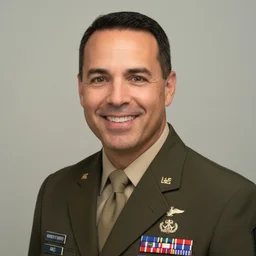
Retired Military Officer & Armed Forces Test Preparation Specialist
United States Army War CollegeColonel Steven Harris (Ret.) served 28 years in the US Army, earning a Master of Arts in Military Science from the Army War College and a Bachelor of Science in Criminal Justice. He has coached thousands of military enlistment and officer candidate program applicants through the ASVAB, AFQT, AFCT, OAR, and officer selection assessment processes across all military branches.
Join the Discussion
Connect with other students preparing for this exam. Share tips, ask questions, and get advice from people who have been there.
View discussion (8 replies)