
HVAC Training Near Me: Complete Guide to Local Programs, Costs, and Career Paths in 2026
⏳ Find HVAC training near me with our complete guide to local programs, costs, certifications, and career paths. Compare schools and start your HVAC
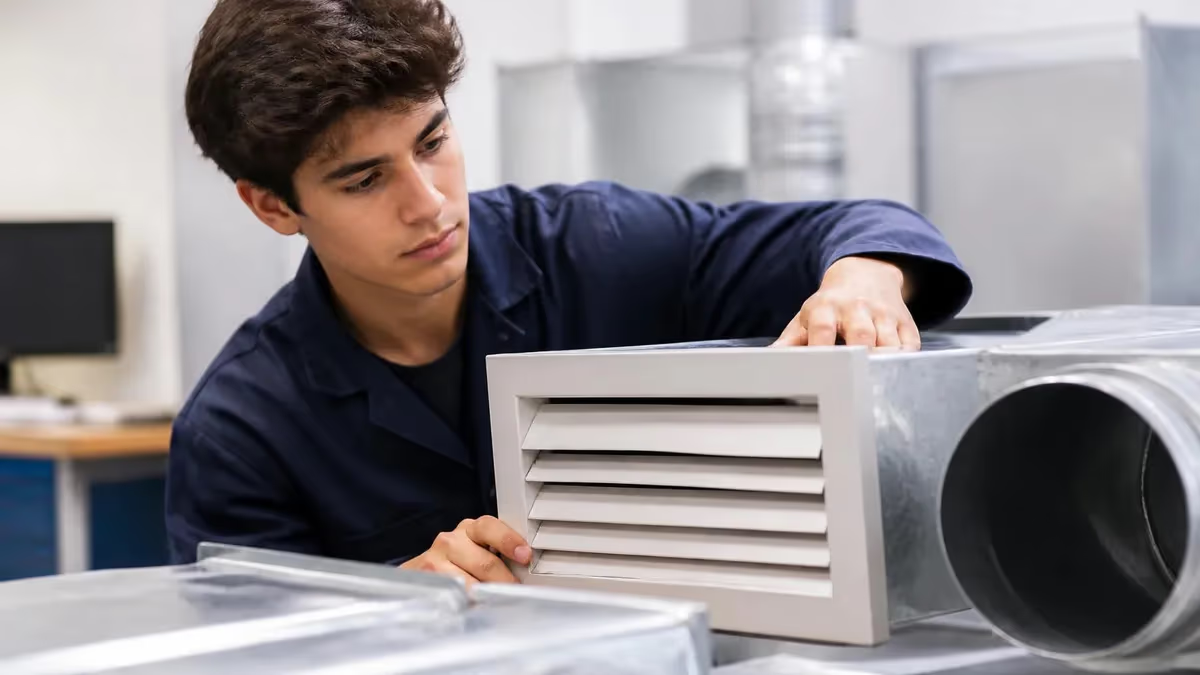
Searching for hvac training near me is the first practical step toward one of the most stable, well-paying skilled trades in America. The heating, ventilation, air conditioning, and refrigeration industry projects 6% job growth through 2032, with the Bureau of Labor Statistics counting roughly 415,800 active technicians nationwide. Local training matters because HVAC codes, climate demands, and licensing rules vary by state, so a program rooted in your region prepares you for the exact systems and inspections you'll face on day one of paid work. Practice with the free HVAC practice test on PracticeTestGeeks (750+ questions with answer explanations).
The phrase hvac training near me typically returns three categories of options: community colleges with two-year associate degrees, private trade schools offering accelerated six to nine month certificates, and union or non-union apprenticeship programs that pay you while you learn. Each pathway leads to the same entry-level technician credentials, but tuition, time-to-completion, and earning trajectories differ sharply. Understanding those differences before enrolling can save you $15,000 or more over the life of your training investment.
Most local programs cover refrigeration cycle theory, electrical fundamentals, sheet metal fabrication, brazing, system installation, troubleshooting, and EPA Section 608 certification. Hands-on labs typically account for 50% to 70% of classroom hours, because employers hire technicians who can read a wiring diagram, recover refrigerant safely, and diagnose a no-cool call without supervision. Programs that skimp on lab time leave graduates underprepared for the real-world expectations of journeyman wages.
Geography heavily influences which programs make sense for you. Texas, Florida, Arizona, and California concentrate the highest HVAC employment because of their cooling-dominated climates, while Northeast and Midwest programs emphasize hydronic heating, boilers, and heat pump retrofits. A school that partners with local contractors gives you a built-in pipeline to internships and post-graduation jobs, so the program nearest your home is often the best strategic choice even when a more famous school sits a few hours away.
Financial aid is widely available for accredited HVAC training. Federal Pell Grants cover tuition at community colleges, while veterans can use GI Bill benefits at approved trade schools. Many programs also accept WIOA workforce development vouchers, employer-sponsored tuition reimbursement, and state-level scholarship dollars tied to high-demand trades. If you're considering whether classroom learning beats earning through apprenticeship, our deep dive on HVAC Trade School walks through accreditation, costs, and program quality signals in detail.
This guide breaks down everything you need to evaluate local HVAC training: program types, accreditation standards, real cost ranges, certification requirements, salary expectations, and the specific questions to ask admissions advisors before signing an enrollment agreement. Whether you're a recent high school graduate, a career changer in your thirties, or a veteran transitioning to civilian work, the right local program turns a six-figure career into a realistic 12 to 24 month goal.
By the end of this article, you'll have a clear framework for comparing programs in your zip code, understanding which credentials matter most, and avoiding the common pitfalls that leave students saddled with debt and no marketable skills. HVAC training is an investment, and the right local choice pays dividends for the next thirty years of your working life.
Free HVAC Study Tools
Interactive HVAC resources on PracticeTestGeeks, free to start:
- HVAC EPA 608 Refrigerant Certification — 35 questions with instant scoring and answer explanations
- HVAC flashcards — review key terms and concepts card by card
- HVAC study guide — topic-by-topic overview of what the exam covers
- HVAC cheat sheet — one-page printable summary for last-minute review
HVAC Training Near Me by the Numbers
Types of Local HVAC Training Programs
6 to 12 month programs costing $1,200 to $6,000. Typically include EPA 608 prep, basic electrical, and refrigeration cycle theory. Best value when local accreditation aligns with regional employer expectations.
Two-year programs covering advanced load calculations, controls, and management coursework. Tuition runs $4,000 to $12,000. Strongest pathway for technicians targeting commercial or supervisory roles within five years.
Accelerated 6 to 9 month certificates priced $10,000 to $20,000. Heavy lab focus, flexible schedules, and job placement assistance. Verify ACCSC or HVAC Excellence accreditation before enrolling.
Four to five year earn-while-you-learn programs through union locals or non-union contractors. Starting pay of $18 to $25 per hour with annual raises. Tuition is typically free with employer sponsorship.
Theory delivered remotely with weekend or evening lab intensives. Useful for working adults but verify state licensing boards accept the online portion before committing to coursework.
Evaluating local HVAC schools starts with accreditation. The two most respected industry-specific bodies are HVAC Excellence and Partnership for Air-Conditioning, Heating, Refrigeration Accreditation (PAHRA). At the institutional level, look for regional accreditation through bodies like the Higher Learning Commission or, for trade schools, the Accrediting Commission of Career Schools and Colleges (ACCSC). Without recognized accreditation, your credits may not transfer, federal aid won't apply, and some state contractor licensing boards will reject your training hours outright.
Tour the labs before you enroll. A serious HVAC program has working split systems, package units, gas furnaces, heat pumps, walk-in coolers, and brazing stations that students actually disassemble and rebuild. If the lab looks like a museum or every unit is bolted to a display board with no service ports, the program is teaching theory without skill. Ask how many students share each training rig — quality programs cap groups at three to four students per system so everyone gets wrench time.
Instructor quality drives outcomes more than facilities. Ask about credentials: instructors should hold their own EPA 608 Universal certification, NATE certification in at least one specialty, and ideally five to ten years of field experience before teaching. Some programs hire instructors straight out of their own graduating classes, which means students learn from people who've never charged a refrigerant circuit during a 100-degree emergency call. That gap shows up the day you start working.
Job placement statistics are the bottom line. Federal Gainful Employment data requires schools to publish completion rates, median earnings, and student debt levels for many programs. Reputable programs report 70% or higher placement within six months of graduation, with median starting wages of $35,000 to $45,000. Be skeptical of marketing claims that aren't backed by audited data, and ask specifically which contractors hired last year's graduates and at what wage.
Class scheduling determines whether you can actually finish. If you work full-time, find programs offering evening cohorts running 6 PM to 10 PM three nights a week, or weekend intensives. Some local schools partner with workforce development boards to offer rapid-deployment cohorts compressing twelve months of content into thirty weeks. Make sure the schedule lets you maintain income while training — dropouts from financial pressure are the leading cause of incomplete HVAC credentials.
Equipment relevance matters because the industry is changing fast. Programs still teaching only R-22 systems are training you for refrigerants being phased out under EPA regulations. Modern programs cover R-410A, R-454B, R-32, and the new A2L mildly flammable refrigerants entering residential systems in 2025 and beyond. For installers, exposure to variable refrigerant flow (VRF), heat pumps, and inverter-driven equipment matters because that's where the manufacturer rebate dollars and tax credits flow. Check our breakdown of HVAC Tax Credit opportunities that drive customer demand for the systems you'll be installing.
Finally, talk to current students and recent graduates before signing any enrollment agreement. Most schools will let you sit in on a class, walk the labs during a normal session, and connect with alumni. The students midway through training give you the most honest picture of homework loads, instructor responsiveness, and whether the program delivers on its marketing promises. Spending two hours on campus before enrolling can prevent a $15,000 mistake.
HVAC Practice Test Questions
Prepare for the HVAC - Heating Ventilation and Air Conditioning exam with our free practice test modules. Each quiz covers key topics to help you pass on your first try.
HVAC Air Conditioning
HVAC Exam Questions covering Air Conditioning. Master HVAC Test concepts for certification prep.
HVAC Code Compliance
Free HVAC Practice Test featuring Code Compliance. Improve your HVAC Exam score with mock test prep.
HVAC Electrical Controls
HVAC Test Prep for Electrical Controls. Practice HVAC Quiz questions and boost your score.
HVAC Energy Efficiency
HVAC Questions and Answers on Energy Efficiency. Free HVAC practice for exam readiness.
HVAC Heating Systems
HVAC Mock Test covering Heating Systems. Online HVAC Test practice with instant feedback.
HVAC Load Calculations
Free HVAC Quiz on HVAC Load Calculations. HVAC Exam prep questions with detailed explanations.
HVAC Tools and Equipment
HVAC Practice Questions for HVAC Tools and Equipment. Build confidence for your HVAC certification exam.
HVAC Refrigeration
HVAC Test Online for Refrigeration. Free practice with instant results and feedback.
HVAC Safety Practices
HVAC Study Material on Safety Practices. Prepare effectively with real exam-style questions.
HVAC System Design
Free HVAC Test covering System Design. Practice and track your HVAC exam readiness.
HVAC Thermodynamics
HVAC Exam Questions covering Thermodynamics. Master HVAC Test concepts for certification prep.
HVAC Training Near Me: Costs, Aid, and Financing Options
Community college HVAC certificate programs typically charge $1,200 to $6,000 for in-district residents, making them the lowest-cost accredited option. Out-of-district tuition can double that figure. Associate of Applied Science degrees run $4,000 to $12,000 total over two years, with the longer timeline offset by deeper coursework in controls, design, and project management that commands higher starting wages.
Private trade schools cost $10,000 to $20,000 for accelerated certificates, but they often include all tools, books, and uniforms in the sticker price. Compare total cost-of-attendance rather than headline tuition. Some private programs report job placement rates that justify the premium, while others charge community college pricing multiplied by four with similar outcomes. Always request audited Gainful Employment data before signing.

Local Trade School vs Apprenticeship: Which Pays Off Faster?
- +Trade school graduates can complete training in 6 to 12 months versus 4 to 5 years for apprenticeship
- +Classroom learning provides structured progression through electrical, refrigeration, and code topics
- +Most accredited programs include EPA 608 certification preparation and testing
- +Hands-on labs let you make mistakes on training equipment without billing consequences
- +Financial aid options include Pell Grants, WIOA vouchers, and GI Bill benefits
- +Schedule flexibility with evening and weekend cohorts accommodates working adults
- +Industry connections through instructor networks accelerate first job placement
- −Tuition costs can range from $1,200 to $20,000 with no guaranteed job placement
- −Classroom hours don't fully replicate the pressure of real customer calls
- −Some employers prefer apprenticeship-trained candidates with proven field hours
- −Online and hybrid programs may not meet state licensing board requirements
- −Lab equipment ages quickly and may not reflect current refrigerants or controls
- −Job placement statistics can be inflated through short-term or unrelated employment counts
Pros and Cons at a Glance
| Pros | Cons |
|---|---|
| Classroom learning provides structured progression through electrical, refrigeration, and code topics | Classroom hours don't fully replicate the pressure of real customer calls |
| Hands-on labs let you make mistakes on training equipment without billing consequences | Some employers prefer apprenticeship-trained candidates with proven field hours |
| Financial aid options include Pell Grants, WIOA vouchers, and GI Bill benefits | Online and hybrid programs may not meet state licensing board requirements |
| Schedule flexibility with evening and weekend cohorts accommodates working adults | Lab equipment ages quickly and may not reflect current refrigerants or controls |
| Industry connections through instructor networks accelerate first job placement | Job placement statistics can be inflated through short-term or unrelated employment counts |
HVAC Training Enrollment Checklist
- ✓Verify the program holds HVAC Excellence, PAHRA, or ACCSC accreditation in writing
- ✓Tour the labs during a normal class session before signing any enrollment paperwork
- ✓Request published Gainful Employment data showing completion rates and median earnings
- ✓Confirm instructors hold current EPA 608 Universal and NATE certifications
- ✓Compare total cost of attendance including tools, books, exams, and uniforms
- ✓Check whether your state licensing board accepts hours from this specific program
- ✓Ask for contact information of at least three recent graduates working in the field
- ✓Confirm EPA Section 608 testing is included in tuition or budget $50 to $150 separately
- ✓Investigate financial aid eligibility including Pell, WIOA, GI Bill, and employer reimbursement
- ✓Read the enrollment agreement refund policy in case you need to withdraw mid-program
Accreditation Is Non-Negotiable
Unaccredited HVAC training is the single biggest waste of money in the trades. Without HVAC Excellence, PAHRA, or ACCSC accreditation, your hours may not count toward state licensing, federal aid won't apply, and reputable contractors will skip your resume. Always verify accreditation status directly through the accrediting body's website, not the school's marketing brochure.
Certifications separate trained graduates from credentialed professionals, and a few specific credentials carry enormous weight when local employers screen applicants. EPA Section 608 Universal certification is federally required for anyone purchasing, handling, or recovering refrigerant. There is no path to legal HVAC work without it. The certification costs $20 to $150 depending on proctor and is structured in four parts: core, Type I (small appliances), Type II (high-pressure systems), and Type III (low-pressure systems). Universal certification covers all three types.
North American Technician Excellence (NATE) certification is the industry's gold-standard knowledge credential. NATE offers Ready-to-Work for entry-level technicians, HVAC Support Technician (HVACS) for one to two year veterans, and specialty exams in air conditioning, heat pumps, gas heating, oil heating, light commercial refrigeration, and air distribution. NATE-certified technicians earn 6% to 10% more on average than uncertified peers, and many manufacturers require NATE for warranty service authorization on their equipment.
State licensing requirements vary dramatically. Texas, Florida, North Carolina, and California all require state-issued HVAC contractor or technician licenses with specific training hours, exam passage, and sometimes proof of experience. Other states like Pennsylvania, New York, and Illinois leave licensing to municipalities, creating a patchwork of city-by-city requirements. Your local training program should explicitly map their curriculum to your state's licensing pathway and walk you through application timing.
Specialty certifications open doors to higher-paying niches. R-410A safety certification through ESCO Institute or HVAC Excellence is increasingly expected even though A2L refrigerants are now entering the market. Building Performance Institute (BPI) certifications matter for technicians working in energy retrofits and weatherization-funded jobs. Green Mechanical Council (GMC) credentials signal expertise in high-efficiency and sustainable installations that command premium pricing in environmentally conscious markets.
For commercial work, additional credentials open six-figure earning ceilings. ASHRAE Building Energy Modeling Professional (BEMP), Certified HVAC Designer (CHD), and Test and Balance certifications through AABC or NEBB qualify technicians for engineering-adjacent roles. These take years of field experience to qualify for but reward investment with senior project manager and consulting positions paying $90,000 to $140,000 annually in major metros.
Manufacturer-specific factory training also adds resume weight. Carrier Factory Authorized Dealer, Trane Comfort Specialist, and Lennox Premier Dealer programs all include technician certification curricula that grant access to advanced diagnostic tools, warranty processing portals, and consumer-financing programs. These designations matter because they tie your skills to specific equipment lines and create stickiness with employers selling those brands.
Finally, don't overlook OSHA 10 or OSHA 30 safety certifications. Construction site access frequently requires OSHA cards, and large commercial projects under federal contracts mandate them. The training is online, takes one to four days, costs $50 to $200, and stays valid indefinitely. It's the cheapest credential on this list with disproportionate hiring weight on commercial and new-construction projects.
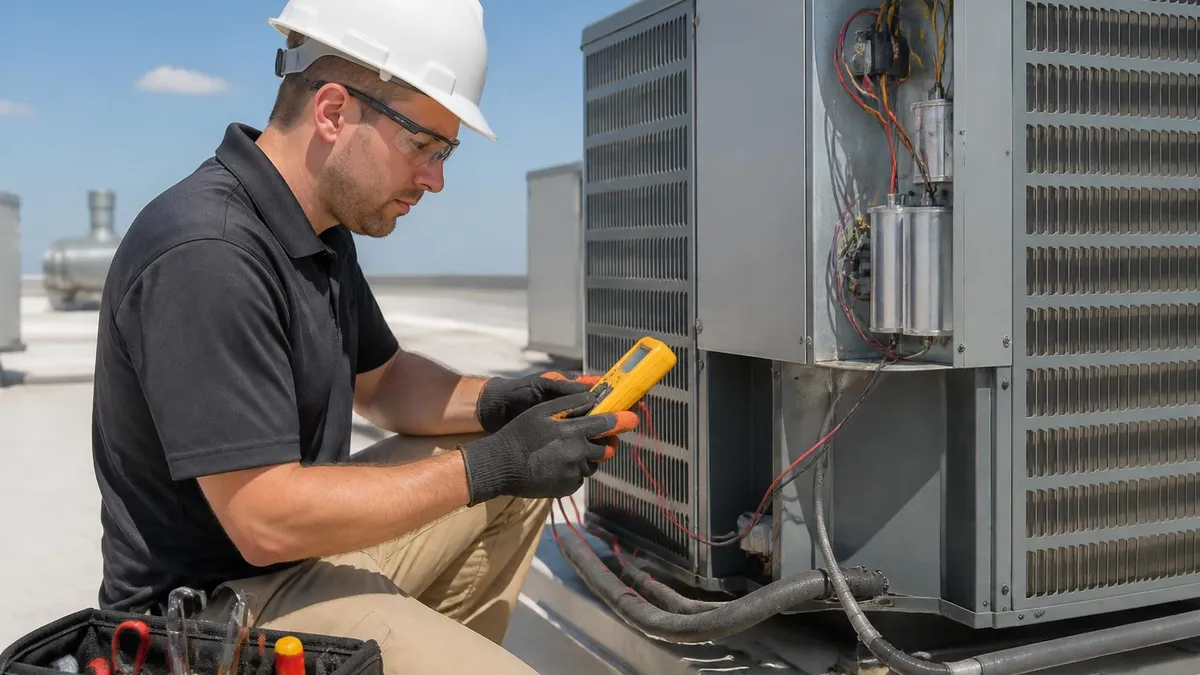
Some online HVAC programs aggressively market low tuition and self-paced learning but offer no hands-on lab component. Many state licensing boards reject these programs outright, leaving graduates with debt and no path to legal work. Always confirm with your state mechanical board that a specific program's hours qualify before enrolling, especially for fully online or correspondence-style training.
Career outcomes for HVAC training graduates are some of the strongest in the skilled trades. The Bureau of Labor Statistics reports a median annual wage of $57,300 for HVAC mechanics and installers as of 2024, with the top 10% earning over $87,000. Entry-level helpers typically start at $35,000 to $42,000, journeymen with three to five years of experience earn $50,000 to $70,000, and master technicians or service managers in major metros routinely exceed $90,000 per year before overtime.
Geography drives compensation more than any other factor. HVAC technicians in San Francisco, San Jose, Seattle, and New York City earn 30% to 50% above the national median because of cost-of-living adjustments and intense demand. Lower-cost cities in Texas, the Southeast, and the Midwest offer compressed wages but proportionally lower expenses and often higher take-home buying power. Rural areas pay less but face severe technician shortages, which means experienced techs name their price.
Overtime is the wild card that turns a $60,000 base into $85,000 in actual paychecks. HVAC work follows weather extremes — summer cooling emergencies and winter heating failures generate massive overtime hours at time-and-a-half or double-time rates. Technicians willing to take call rotations, work weekends, and chase emergencies routinely earn 20% to 40% above base salary. Burnout is real, so plan your work-life balance intentionally before chasing every overtime opportunity.
Career progression typically moves from helper to installer to service technician to lead tech to service manager or business owner. Each step adds $5,000 to $15,000 in annual compensation. Service techs who develop sales skills can transition to comfort advisor or system designer roles, earning commission on top of base pay that pushes total compensation past $100,000 within five to seven years of completing training.
Entrepreneurship is the ceiling-breaker for ambitious technicians. After five to ten years of field experience, many HVAC pros launch their own contracting businesses serving residential or light commercial markets. Successful one-truck operators clear $150,000 to $250,000 in personal income, and multi-truck shops generate seven-figure revenues with the owner earning $300,000-plus. State contractor licensing, business insurance, and consistent marketing are the gating factors, but the path is well-trodden.
Specialization pays disproportionately. Commercial refrigeration techs earn 15% to 25% premiums because the work is technical and emergencies are expensive for clients. Controls technicians working on building automation systems can earn $80,000 to $110,000 in major metros. Heat pump and geothermal specialists are riding tax credit and rebate dollars that customers increasingly demand. If you're considering specializing in a specific region, our deep dive into HVAC Rancho Cucamonga CA shows how local market conditions shape career strategy.
Finally, the long-term career outlook is exceptional. HVAC work is recession-resistant because broken systems must be fixed regardless of economic conditions. Automation and AI have minimal impact on physical service work in attics, crawlspaces, and rooftops. The 37,700 annual openings projected by BLS reflect both growth and an aging workforce, with roughly 30% of current technicians approaching retirement. For anyone willing to put in the training time, HVAC is a 30-year career with consistent demand and rising compensation.
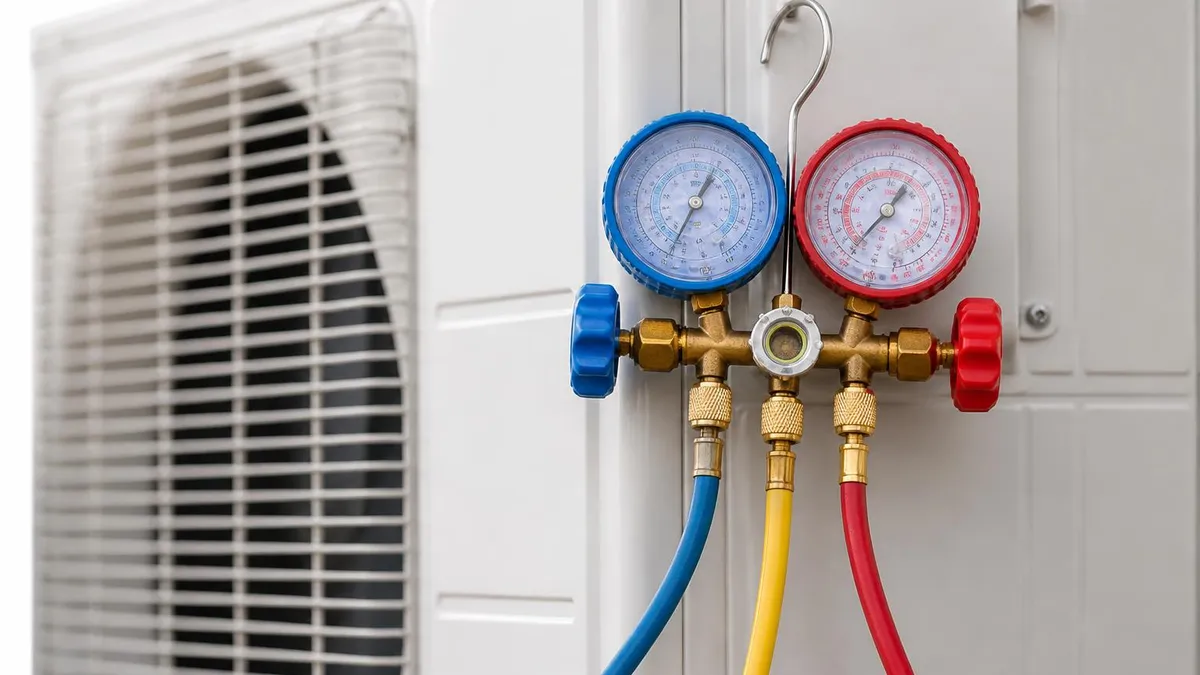
Practical preparation before your first day of HVAC training maximizes how much you actually learn. Buy a basic tool roll before classes begin: nut drivers, a multimeter, a flashlight, locking pliers, side cutters, and a refrigeration gauge set. Most programs supply major tools during lab time, but personal hand tools mean you can practice connections, wiring, and measurements during downtime. Expect to spend $200 to $400 on starter tools, recoverable in the first month of paid work after graduation.
Brush up on basic math, especially fractions, decimals, and basic algebra. HVAC load calculations, refrigerant pressure-temperature relationships, and electrical formulas (Ohm's Law, power calculations, voltage drop) all require comfort with manual arithmetic. Many community colleges offer free pre-program math refreshers — take them. Students who arrive math-ready breeze through the first semester while peers who avoid math fall behind in the technical units that matter most.
Develop physical readiness too. HVAC work involves climbing ladders, crawling through attics in 130-degree summer heat, lifting compressors weighing 75 to 150 pounds, and working in cramped mechanical rooms. If you're starting training out of shape, begin a basic strength and cardiovascular routine eight weeks before classes start. Trainees who arrive physically prepared have fewer back injuries, complete labs faster, and graduate with reputations as reliable workers ready for field demands.
Build a study routine from day one. HVAC training compresses enormous information into short timeframes — refrigeration cycle thermodynamics, electrical theory, gas combustion, controls logic, code interpretation, and safety protocols. Block out two to three hours per night for review, focusing on terminology and flashcard-style memorization of system components, refrigerants, and code section numbers. Students who treat training like a full-time job consistently outperform those who treat it like high school.
Network aggressively from week one. Your instructors, classmates, and lab partners are your future colleagues, references, and business connections. Join the local Air Conditioning Contractors of America (ACCA) chapter, attend Refrigeration Service Engineers Society (RSES) meetings, and volunteer for community installation projects through Habitat for Humanity or local nonprofits. The contractor who hires you at graduation usually knew you existed twelve weeks before you applied because someone recommended you.
Start applying for helper positions before you finish training. Most contractors hire helpers without certification and provide on-the-job exposure to real customer environments. Even ten hours a week as a helper during the back half of your program transforms classroom knowledge into deployable skills. Pay typically starts at $15 to $20 per hour, helping offset tuition while building a verifiable work history that hiring managers value above textbook performance.
Finally, plan your post-graduation path before you walk across the stage. Decide whether you're targeting residential service, new construction installation, commercial refrigeration, controls, or commercial mechanical work — each pathway has distinct first-year employer pools and skill priorities. Schedule your EPA 608, NATE Ready-to-Work, and state license exams within thirty days of completing training. The students who treat graduation as a deadline rather than a milestone consistently earn higher starting wages and progress faster through the career ladder.
Sample HVAC Practice Questions
Try these questions from our free HVAC practice tests. The correct answer and an explanation follow each question.
How often should HVAC compliance training be conducted?
- A. Only during initial orientation
- B. Every five years
- C. At regular intervals as required by regulations
- D. Only when violations occur
Answer: C. At regular intervals as required by regulations
Compliance training must be conducted at regular intervals as specified by applicable regulations to keep practitioners current.
When installing a new HVAC system that requires brazing in a space with existing insulation, what precaution must be taken to prevent fire?
- A. Work quickly so the insulation does not have time to ignite
- B. Use a heat shield or wet cloth to protect surrounding materials and have a fire watch
- C. Spray the insulation with water immediately after brazing
- D. Remove insulation only within 1 inch of the work area
Answer: B. Use a heat shield or wet cloth to protect surrounding materials and have a fire watch
A heat shield or wet cloth protects flammable surrounding materials, and a fire watch ensures any smoldering materials are caught after the torch is extinguished.
Which documentation is essential when working with system design in HVAC?
- A. Only verbal notes
- B. Detailed technical specifications and as-built diagrams
- C. Marketing materials
- D. General descriptions without specifics
Answer: B. Detailed technical specifications and as-built diagrams
Detailed technical specifications and as-built diagrams provide the accurate reference information needed for maintenance and troubleshooting.
HVAC Questions and Answers

HVAC Trade School: How to Choose the Right Program
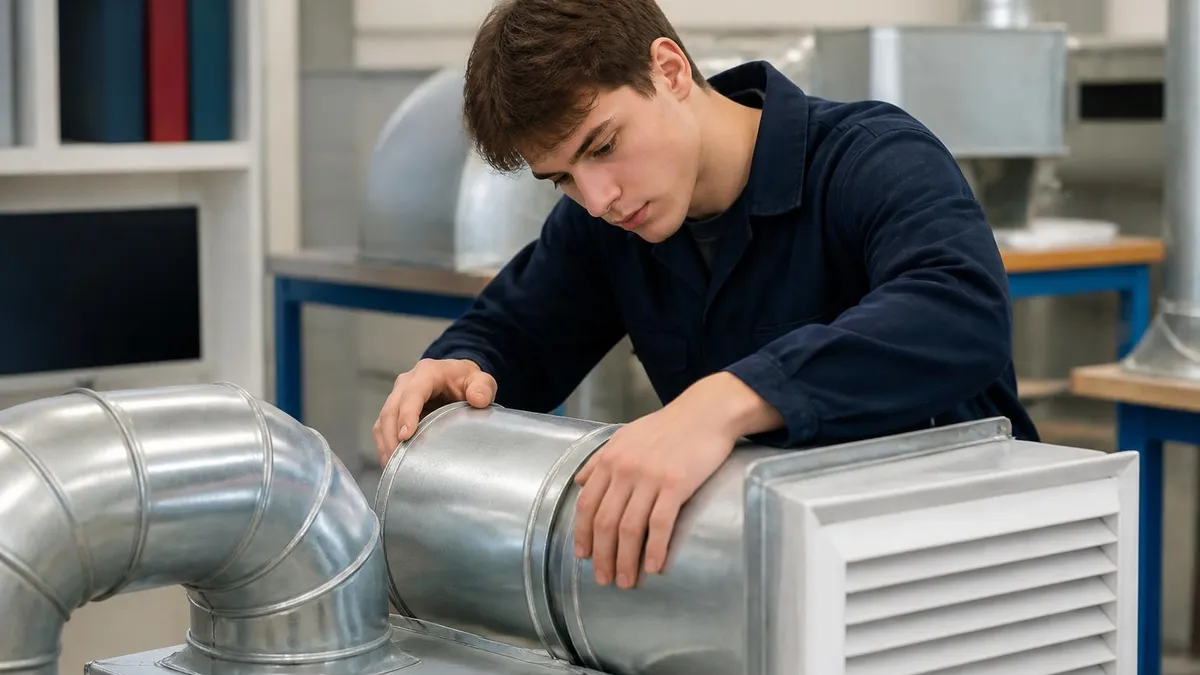
HVAC Duct Installation: Materials, Sizing, Sealing and Best Practice
Tax Credit for Installing New HVAC: 2026-2026 Rules
HVAC UV Light: How It Works, Types and What the Evidence Shows
HVAC Rancho Cucamonga CA: Complete Guide to Repair, Service, and System Care
How this page was made: written with AI tools. We have not yet matched this exam's facts to an official source, so confirm fees, dates and rules with the exam body. Not reviewed by a subject-matter expert. Editorial policy