
How Long Is HVAC School? Complete Training Timeline and Program Guide
💡 How long is HVAC school? Discover program lengths from 6 months to 4 years, costs, apprenticeships, and what to expect at every stage.

If you're considering a career in heating, ventilation, and air conditioning, one of the first questions you'll ask is: how long is HVAC school? The honest answer depends on the path you choose — but most entry-level HVAC technicians complete their formal training in anywhere from six months to two years.
Certificate programs at community colleges and trade schools typically run six to twelve months, while associate degree programs take approximately two years of full-time study. Apprenticeships, which combine paid on-the-job training with classroom instruction, generally span four to five years but allow you to earn while you learn from day one.
Understanding the timeline matters because it directly affects your finances, your family commitments, and how quickly you can start earning a full-time HVAC salary. The Bureau of Labor Statistics reports that HVAC technicians earned a median annual wage of $57,300 in 2023, with the top ten percent earning more than $100,000. Getting into that field faster means earning sooner, but rushing through a shorter program without sufficient hands-on training can leave knowledge gaps that hurt your career long-term. Balancing speed with quality is the central challenge every prospective HVAC student faces.
The structure of HVAC education has evolved considerably over the past decade. Employers increasingly expect new hires to arrive with EPA 608 certification, OSHA 10 safety credentials, and a solid grasp of both mechanical and electrical systems. That means even the shortest certificate programs pack in a tremendous amount of technical content: refrigeration fundamentals, thermodynamics, electrical theory, ductwork design, load calculations, and hands-on lab work with real equipment. Programs that skimp on lab hours may shorten your time in school but extend the period before you're productive on the job.
Geographic location plays a surprisingly large role in shaping your timeline as well. States like California, Texas, and Florida have large HVAC labor markets with numerous school options, flexible scheduling, and strong apprenticeship pipelines. Rural areas may have fewer local program choices, pushing students toward online coursework supplemented by weekend labs — an arrangement that can stretch a six-month curriculum to twelve or even eighteen months. Climate also influences demand: technicians in Sun Belt states often get more residential cooling experience faster than their counterparts in northern states, where the heating side of the trade dominates.
Many students also wonder whether prior experience in related trades — electrical work, plumbing, construction — shortens the learning curve. It often does. Electricians transitioning into HVAC typically find the electrical controls and wiring modules straightforward and can sometimes test out of those units, shaving weeks off a certificate program. Plumbers bring comfort with pipe work and refrigerant line sets. Even general construction experience helps with reading blueprints, working safely at heights, and understanding building systems. Schools generally evaluate prior learning individually, so it pays to have an honest conversation with an admissions advisor before you enroll.
If you're exploring career options beyond installation and service, keep in mind that additional credentials open doors to higher-paying specialties. NATE (North American Technician Excellence) certification, commercial refrigeration endorsements, building automation system training, and even sales roles require education beyond the basic certificate. You can explore how those advanced opportunities connect to your long-term earnings in our guide on how long is hvac school and what comes after. Planning your education with an eye on the specialty you ultimately want will help you choose a program with the right electives and lab emphasis from the start.
This guide walks you through every program type in detail — certificate courses, associate degrees, apprenticeships, and employer-sponsored training — so you can build a realistic timeline for your personal situation. We'll cover costs, typical schedules, what licensing looks like after graduation, and how to evaluate programs before you commit your time and money. Whether you're a recent high school graduate, a career changer in your thirties, or someone looking to add HVAC skills to an existing trades background, the path forward is clear once you understand the landscape.
HVAC School by the Numbers
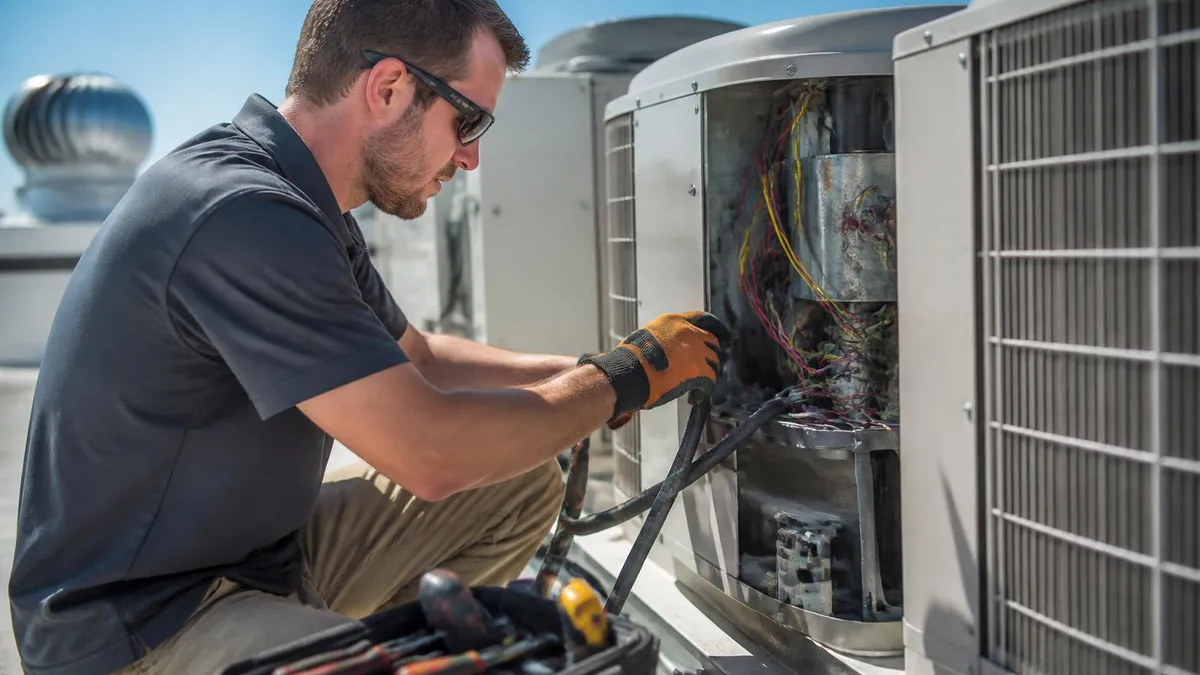
HVAC Training Program Types and Timelines
The fastest route into the field. Offered at trade schools and community colleges, these programs focus on core skills: refrigeration, electrical systems, ductwork, and EPA 608 prep. Full-time students can finish in as little as six months; part-time schedules extend to twelve months or longer.
A two-year associate of applied science degree adds business, communication, and advanced technical coursework to the trade fundamentals. Graduates qualify for supervisory and estimating roles sooner and often command higher starting wages at commercial contractors.
Union and non-union apprenticeships combine 2,000 or more hours of on-the-job training annually with evening or weekend classroom instruction. You earn journeyman wages from day one and graduate fully licensed. IBEW and UA locals run the largest programs.
Large HVAC contractors and equipment manufacturers like Carrier, Trane, and Lennox run proprietary training academies that range from two-week equipment-specific boot camps to multi-year technician development tracks tied to manufacturer certifications.
Several accredited institutions now offer HVAC fundamentals online with regional lab partners for hands-on hours. These suit career changers who need scheduling flexibility, though lab access logistics can add two to four months to the overall timeline.
Once you understand the different program formats, the next logical question is what you'll actually spend your time studying inside an HVAC school. Regardless of whether you choose a six-month certificate or a two-year associate degree, every accredited program covers a core set of technical domains that form the foundation of competent HVAC practice. The first domain is refrigeration theory — understanding how refrigerants absorb and release heat, how the refrigeration cycle works, and how to handle refrigerants safely under the EPA 608 regulations. This knowledge underlies almost every piece of equipment you'll ever service.
Electrical theory and controls form the second major pillar of HVAC education. Modern HVAC systems are deeply integrated with electronic controls, variable-speed drives, programmable thermostats, and building automation platforms. Technicians who can't read a wiring diagram, use a multimeter confidently, or trace a control circuit are severely limited in the field. Most programs devote eight to twelve weeks specifically to electrical fundamentals, ladder logic, and low-voltage control wiring — skills that directly overlap with the content tested on NATE certification exams.
Heating systems make up the third major content area. Gas furnaces, heat pumps, boilers, radiant systems, and oil-fired equipment each have distinct operating principles, safety requirements, and failure modes. Students learn combustion analysis, heat exchanger inspection, gas pressure measurement, and flue venting requirements. In colder-climate states, the heating curriculum often receives as much classroom time as refrigeration, reflecting the regional demand for highly competent heating technicians who can diagnose complex issues during the busiest service season.
Ductwork and airflow round out the mechanical side of HVAC education. Sizing duct systems, understanding static pressure, calculating CFM for each room, and ensuring proper air distribution are skills that separate adequate installations from excellent ones. Poor duct design is one of the leading causes of comfort complaints and energy waste in residential HVAC, so schools that emphasize Manual D load calculations and airflow measurement produce graduates who are immediately more valuable on installation crews.
Beyond these core technical domains, quality HVAC programs also cover customer service skills, business operations basics, and professional ethics. Technicians spend the majority of their workday interacting with homeowners and building managers, and the ability to explain a repair clearly, present options honestly, and write a legible service report is genuinely career-enhancing. Schools that incorporate soft-skills training alongside technical content produce graduates who advance to lead technician and service manager roles faster than those with purely technical education.
Safety training threads through every module. OSHA 10 certification is increasingly a hiring prerequisite at commercial contractors, and programs that incorporate lockout/tagout procedures, confined space awareness, refrigerant handling protocols, and fall protection training give graduates a meaningful advantage. Some employers will only hire candidates who already hold OSHA 10 — a credential that takes just ten hours of instruction to earn but signals a baseline commitment to workplace safety that resonates with risk-conscious employers.
Lab hours are perhaps the most telling indicator of program quality. State licensing boards in many jurisdictions specify minimum lab requirements, but the best programs exceed those minimums significantly. Look for programs that give each student individual hands-on time on equipment — not just demonstration by an instructor — and that maintain modern equipment inventories including at least one commercial refrigeration unit, residential split systems, gas furnaces, heat pump systems, and programmable control systems. Programs that share equipment across large student cohorts may leave graduates with less practical confidence than the credential alone suggests.
HVAC Practice Test Questions
Prepare for the HVAC - Heating Ventilation and Air Conditioning exam with our free practice test modules. Each quiz covers key topics to help you pass on your first try.
HVAC Air Conditioning
HVAC Exam Questions covering Air Conditioning. Master HVAC Test concepts for certification prep.
HVAC Code Compliance
Free HVAC Practice Test featuring Code Compliance. Improve your HVAC Exam score with mock test prep.
HVAC Electrical Controls
HVAC Test Prep for Electrical Controls. Practice HVAC Quiz questions and boost your score.
HVAC Energy Efficiency
HVAC Questions and Answers on Energy Efficiency. Free HVAC practice for exam readiness.
HVAC Heating Systems
HVAC Mock Test covering Heating Systems. Online HVAC Test practice with instant feedback.
HVAC Load Calculations
Free HVAC Quiz on HVAC Load Calculations. HVAC Exam prep questions with detailed explanations.
HVAC Tools and Equipment
HVAC Practice Questions for HVAC Tools and Equipment. Build confidence for your HVAC certification exam.
HVAC Refrigeration
HVAC Test Online for Refrigeration. Free practice with instant results and feedback.
HVAC Safety Practices
HVAC Study Material on Safety Practices. Prepare effectively with real exam-style questions.
HVAC System Design
Free HVAC Test covering System Design. Practice and track your HVAC exam readiness.
HVAC Thermodynamics
HVAC Exam Questions covering Thermodynamics. Master HVAC Test concepts for certification prep.
Apprenticeship vs. Trade School vs. Degree: Which Path Fits You?
Trade school certificate programs are the most popular entry point because they offer a direct, focused path to employment in six to twelve months. Students attend classes full-time — typically thirty to forty hours per week including lab sessions — and graduate with EPA 608 certification and enough hands-on hours to qualify for entry-level technician positions. Tuition ranges from $5,000 to $15,000 depending on the school and state, and financial aid is widely available through Pell Grants and vocational training scholarships. Graduates often start at $18 to $22 per hour in residential service roles.
The main limitation of the certificate route is that employers may place you on a structured probationary period while your skills develop, since twelve months of training simply cannot replicate the depth of a multi-year apprenticeship. Many certificate graduates supplement their formal training with employer-sponsored continuing education or pursue NATE certification within their first two years on the job to accelerate advancement. The certificate path is ideal for individuals who need to enter the workforce quickly, are self-motivated learners, and plan to complement classroom learning with aggressive on-the-job skill development.
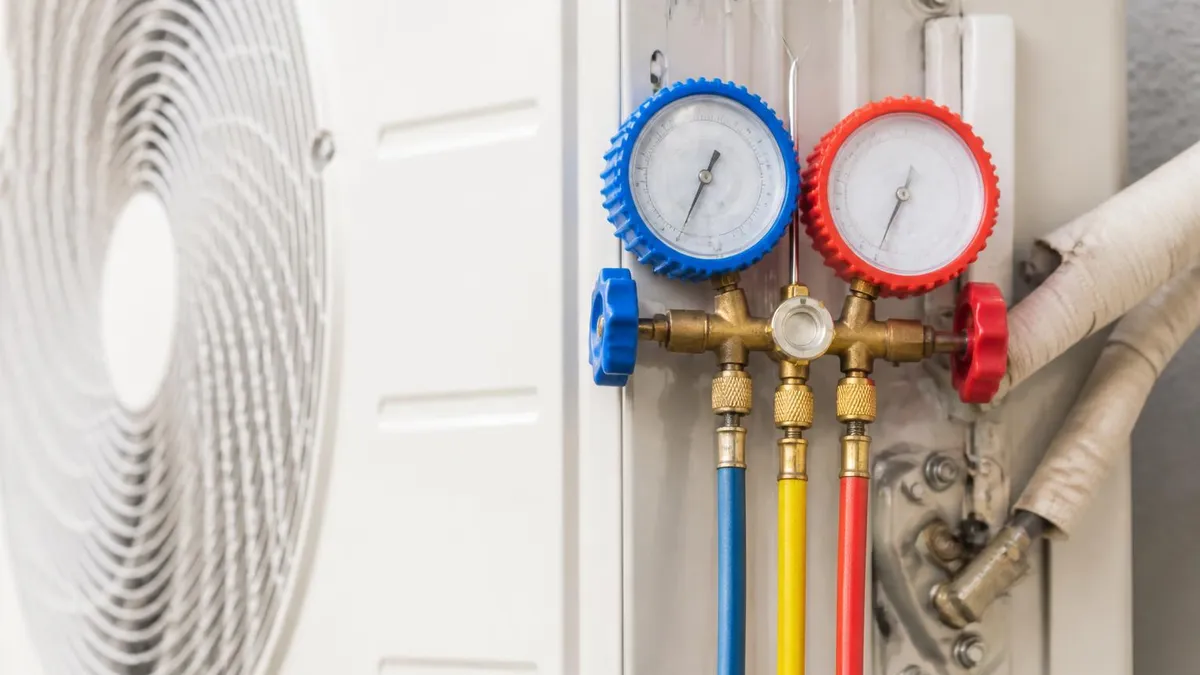
Pros and Cons of Accelerated vs. Longer HVAC Programs
- +Enter the workforce and start earning in as little as six months with a certificate program
- +Lower total tuition cost for certificate programs compared to two-year or four-year options
- +High job placement rates — HVAC technicians are in demand nationally with an 11% growth projection
- +Apprenticeships pay a living wage from day one, eliminating student debt accumulation during training
- +Shorter programs allow earlier access to employer-sponsored continuing education and tuition reimbursement
- +Completing basic training quickly lets you specialize sooner in higher-paying niches like commercial refrigeration
- −Six-month certificate programs compress complex material, which can leave knowledge gaps in electrical and controls
- −Apprenticeship selectivity means not every qualified candidate secures a spot in a union program
- −Shorter programs typically provide fewer lab hours, requiring more employer-side mentorship after hiring
- −Associate degree programs require a two-year commitment that delays full-time income for younger students
- −Online hybrid programs may struggle to provide sufficient hands-on equipment time in rural areas
- −Employer-sponsored training varies widely in quality and may be brand-specific, limiting your versatility
Pros and Cons at a Glance
| Pros | Cons |
|---|---|
| Enter the workforce and start earning in as little as six months with a certificate program | Six-month certificate programs compress complex material, which can leave knowledge gaps in electrical and controls |
| Lower total tuition cost for certificate programs compared to two-year or four-year options | Apprenticeship selectivity means not every qualified candidate secures a spot in a union program |
| Apprenticeships pay a living wage from day one, eliminating student debt accumulation during training | Shorter programs typically provide fewer lab hours, requiring more employer-side mentorship after hiring |
| Shorter programs allow earlier access to employer-sponsored continuing education and tuition reimbursement | Associate degree programs require a two-year commitment that delays full-time income for younger students |
| Completing basic training quickly lets you specialize sooner in higher-paying niches like commercial refrigeration | Online hybrid programs may struggle to provide sufficient hands-on equipment time in rural areas |
Pre-Enrollment Checklist: What to Do Before Starting HVAC School
- ✓Verify the program is accredited by HVAC Excellence or another nationally recognized body before paying tuition
- ✓Confirm the program includes EPA 608 exam prep and covers all refrigerant categories (I, II, III, and Universal)
- ✓Ask specifically how many lab hours the program provides and whether students get individual hands-on equipment time
- ✓Research state licensing requirements in your target state to ensure the program meets minimum hour thresholds
- ✓Compare financial aid options including Pell Grants, workforce development grants, and veteran education benefits
- ✓Visit the school in person and inspect the equipment inventory — look for current-model systems, not outdated units
- ✓Talk to recent graduates or current students about job placement rates and employer relationships
- ✓Confirm whether OSHA 10 training is included in the curriculum or must be completed separately
- ✓Ask about flexible scheduling if you're currently employed — evening and weekend programs exist at many schools
- ✓Determine whether the program has articulation agreements with apprenticeship programs for graduates who want that path
EPA 608 Certification Is Non-Negotiable
No matter which HVAC program type you choose, you must hold EPA 608 certification before legally purchasing or handling refrigerants. This federal requirement applies to all technicians who open refrigerant circuits, and it's tested via a multiple-choice exam covering refrigerant types, recovery procedures, and environmental regulations. Make sure your program provides dedicated preparation for this exam — it's the single credential that every HVAC employer will verify before your first day on the job.
The financial side of HVAC education is one of the most practical concerns prospective students face. Unlike four-year university programs that can cost $80,000 to $200,000 or more, HVAC trade programs are relatively affordable — but the range is still wide enough to require careful comparison. Certificate programs at for-profit trade schools typically cost $10,000 to $20,000, while the same or equivalent instruction at a community college often runs $5,000 to $10,000 for in-state students. Associate degree programs at community colleges generally fall between $8,000 and $20,000 total, depending on whether the student pays in-state or out-of-state tuition rates.
Financial aid is more accessible than many trade school applicants realize. Federal Pell Grants, which do not require repayment, provide up to $7,395 per academic year to eligible students at accredited institutions. Because most HVAC certificate programs are twelve months or less, a single Pell Grant award can cover a significant portion of tuition at a community college program. Students should complete the FAFSA as early as possible — the federal deadline is late June, but many schools allocate aid on a first-come, first-served basis that effectively means earlier applicants receive more.
State-level workforce development grants represent another underutilized funding source. Programs like the Trade Adjustment Assistance (TAA) program, Workforce Innovation and Opportunity Act (WIOA) funds, and state-specific technical education grants can cover tuition, tools, and even living expenses for qualifying students. Eligibility requirements vary by state and program, but workers displaced from manufacturing, construction, or other sectors often qualify automatically. Visiting your state's American Job Center is the fastest way to inventory these options and get application assistance.
Veterans have particularly strong educational benefits available for HVAC training. The GI Bill® covers tuition and fees at approved trade schools and apprenticeship programs, and some veterans qualify for additional housing allowances during their enrollment period. The Post-9/11 GI Bill provides particularly strong support for students attending state schools. Veterans interested in the apprenticeship pathway should also know that the VA pays an apprenticeship allowance on top of the on-the-job wages apprentices earn — making the apprenticeship route especially financially attractive for veterans.
Tools and equipment represent an often-overlooked cost category in HVAC education budgeting. Most programs require students to purchase their own tool kit, which typically includes refrigerant manifold gauges, a digital multimeter, pipe cutters, flare tools, and a vacuum pump. A complete entry-level HVAC tool kit costs between $800 and $2,000 depending on quality. Some schools include basic tools in their tuition, but this varies widely. When comparing program costs, always ask what tools are included and what you'll need to purchase separately before your start date.
The return on investment calculation for HVAC education is compelling when you run the numbers. A $12,000 certificate program that takes twelve months to complete enables entry into a career with a $45,000 to $55,000 starting salary and a median wage of $57,300.
Compare that to a four-year university degree averaging $140,000 in total cost for a career that may or may not yield proportionally higher earnings, and the trade program's ROI becomes obvious. The average HVAC technician recoups their full educational investment within three to six months of beginning full-time employment — a payback period that almost no four-year degree can match.
Scholarships specifically for HVAC and skilled trades students have expanded considerably in recent years as the industry confronts a significant talent shortage. The ACCA Scholarship Fund, ASHRAE scholarships, and manufacturer-sponsored awards from Carrier, Lennox, and Trane provide between $500 and $5,000 per year to qualifying applicants. Many of these scholarships prioritize students already enrolled in accredited programs with demonstrated academic achievement, so maintaining solid grades from your first week in school opens financial doors that purely academic students often do not realize exist in the trades.

HVAC licensing is regulated at the state level, and requirements differ dramatically. Some states require a journeyman license after 8,000 hours of experience and a written exam; others accept a certificate plus EPA 608 for entry-level work. A handful of states — including Colorado and Wyoming — have minimal licensing requirements, while California and Florida have among the most stringent. Research your specific state's requirements at your state contractor licensing board website before selecting a program to ensure your education satisfies the experience and education minimums for licensure in your area.
After completing your HVAC program, the credentialing landscape can feel overwhelming. EPA 608 certification is the mandatory first step — it's federally required before you can legally purchase or handle refrigerants, and virtually every employer will verify it before your first day. The exam covers four sections: Core (environmental impact and safety), Type I (small appliances), Type II (high-pressure systems), and Type III (low-pressure systems). Passing all four sections earns you Universal certification, which is what most employers require. Study materials are widely available, and many certificate programs include dedicated exam prep time in their curriculum.
NATE certification is the most widely recognized voluntary credential in the industry and the one that most strongly signals technical competence to commercial employers. NATE (North American Technician Excellence) offers specialty certifications in air conditioning, heat pumps, gas heating, oil heating, and commercial refrigeration, among others.
Passing a NATE exam requires real-world knowledge that goes beyond what many certificate programs cover in depth — technicians who pursue NATE certification typically spend two to four months of independent study or complete a NATE-endorsed training program before sitting for the exam. Employers often provide salary premiums of $2 to $5 per hour for NATE-certified technicians.
State contractor licenses represent the next tier of credentials for technicians who want to run their own service calls, pull permits, and eventually operate their own business. Requirements typically include a combination of verified work experience (often two to four years as a journeyman), a comprehensive written examination, proof of insurance, and a background check.
Some states issue separate residential and commercial contractor licenses with distinct experience and examination requirements for each. Pursuing licensure early in your career — even before you plan to use it — gives you the optionality to move into supervisory or entrepreneurial roles when the timing is right.
Manufacturer certifications from companies like Carrier, Trane, Lennox, Daikin, and Mitsubishi Electric are increasingly valuable in a market where equipment complexity is rising rapidly. Variable refrigerant flow (VRF) systems, inverter-driven compressors, and proprietary control platforms require manufacturer-specific training to diagnose and service correctly. Manufacturers typically offer these training programs at no cost or low cost to technicians employed by authorized dealers, and completing them positions you as a preferred service resource for equipment that commands higher labor rates. Some manufacturer certifications also carry warranty implications — only certified technicians can perform warranty repairs on certain equipment lines.
Building automation and controls credentials are the frontier of HVAC professional development. Systems that integrate HVAC, lighting, access control, and energy management under a single software platform are now standard in commercial construction, and technicians who understand these systems earn significantly more than those who work exclusively on standalone equipment. Credentials from Siemens, Johnson Controls, Honeywell, and the Building Commissioning Association (BCA) open doors into the facilities management and building operations space — a sector with strong job security and growing demand driven by corporate sustainability mandates and energy efficiency requirements.
Continuing education requirements vary by state license type but generally run between eight and twenty-four hours per license renewal cycle. Most states allow online continuing education to satisfy some or all of these hours, making it feasible to maintain your license while working full-time.
The best technicians treat continuing education as a career investment rather than a compliance obligation — choosing courses that build genuinely new skills rather than simply the easiest path to renewal credit. Staying current with evolving refrigerant regulations (particularly the ongoing HFC phasedown under the AIM Act), heat pump technology advances, and smart thermostat platforms keeps your skill set marketable through the full arc of your career.
For those considering the entrepreneurial path, understanding the business side of HVAC becomes as important as technical mastery. Contractor license in hand, the next steps include establishing an LLC, obtaining commercial general liability insurance (typically $1 million per occurrence minimum), securing workers' compensation coverage, and building relationships with equipment distributors.
Many technicians who successfully make the leap to business ownership credit their early exposure to commercial service as the training ground where they learned job costing, customer relationship management, and the operational realities of running a service business. Planning that transition thoughtfully — rather than reactively — significantly improves the odds of success.
Practical preparation strategies make a measurable difference in how quickly you advance after completing HVAC school. The technicians who progress fastest aren't necessarily the ones who graduated from the longest or most expensive programs — they're the ones who approached their training with intentionality and built the right habits early. Start by identifying the specialty you're most drawn to before you finish your program. Residential service, commercial refrigeration, industrial HVAC, and building controls each have distinct technical demands, and knowing your target lets you ask better questions in class, focus your lab time, and seek out the right mentors.
Networking during your program is as important as the technical content. Your instructors, classmates, and lab supervisors are all potential professional connections — and in the trades, many jobs are filled through referrals rather than job boards. Join your local chapter of ACCA (Air Conditioning Contractors of America) or ASHRAE (American Society of Heating, Refrigerating and Air-Conditioning Engineers) while still in school. Attend trade shows like AHR Expo or regional HVAC contractor association events. These contacts accelerate job placement and often lead to mentorship relationships that are worth more than additional formal coursework.
Tool investment is a real career lever that students often underestimate. Entry-level tool quality directly affects diagnostic accuracy and confidence on the job. Invest in a quality digital manifold gauge set, a reliable clamp meter, and a leak detector from reputable brands like Fieldpiece, Yellow Jacket, or Fluke — even if it means spending more than the program's tool list minimum. Technicians who show up to their first service calls with professional-grade tools send a signal to employers and customers that they take their work seriously, and that impression compounds over time into expanded responsibilities and higher pay.
Practice tests and certification prep should start well before your EPA 608 exam date. Many HVAC students underestimate the technical depth of the Core section, which covers thermodynamics, refrigerant properties, and environmental regulations in detail. Building a study habit early — thirty minutes per day of deliberate review starting two months before your exam — dramatically improves first-attempt pass rates. The same discipline applies to NATE certification preparation later in your career. Technicians who pass NATE on the first attempt consistently report that they studied more than they thought necessary, not less.
Communication skills are an underappreciated component of HVAC career success. The ability to explain a diagnosis clearly, present repair options without pressure, and write a complete and legible service report sets apart technicians who earn promotions and referrals from those who remain perpetually in entry-level roles. Many HVAC schools now include customer service modules in their curriculum, but if yours doesn't, consider supplementing with a public speaking course, a customer service workshop, or even reading sales and communication books aimed at service professionals. This investment pays dividends every single day you spend in a customer's home or building.
Physical fitness and ergonomics matter in HVAC work in ways that schools rarely address directly. Technicians regularly lift equipment weighing forty to eighty pounds, work in attics and crawl spaces with extreme temperatures, spend hours on ladders and rooftops, and kneel on concrete slabs for extended service calls.
Developing core strength, practicing proper lifting technique, and using knee pads and ergonomic tool bags from your first day on the job protects your body for a multi-decade career. Back injuries and repetitive strain injuries are among the most common career-enders in the trades, and they're largely preventable with proactive physical habits established early.
Finally, embrace the ongoing nature of HVAC education even after your certificate or degree is in hand. The refrigerants you learn to handle today will be partially phased out by federal regulation within the next decade. The control systems you master this year will be revised and superseded by the time you reach mid-career.
The technicians who thrive across full thirty-year careers in HVAC are those who treat every service call as a learning opportunity, pursue manufacturer certifications proactively, stay current on code changes, and remain curious about new technologies. The investment you make in HVAC school is a starting point, not a destination — and the technicians who understand that from day one build careers that compound in both skill and income year after year.
Sample HVAC Practice Questions
Try these questions from our free HVAC practice tests. The correct answer and an explanation follow each question.
What type of mastic sealant is recommended for sealing HVAC duct joints in unconditioned spaces?
- A. UL 181-listed water-based duct mastic applied with mesh tape
- B. Standard latex caulk
- C. Duct tape (cloth-backed adhesive tape)
- D. Silicone sealant
Answer: A. UL 181-listed water-based duct mastic applied with mesh tape
UL 181-listed duct mastic reinforced with fiberglass mesh tape provides a durable, airtight seal that remains flexible across temperature cycles in unconditioned spaces.
What is the value of continuing education in thermodynamics for HVAC professionals?
- A. It is only needed for recertification
- B. It keeps professionals current with evolving standards and practices
- C. It is primarily a social activity
- D. It replaces workplace experience
Answer: B. It keeps professionals current with evolving standards and practices
Continuing education ensures professionals stay current with the latest developments, standards, and best practices in their field.
In HVAC design, an 'economizer' cycle saves energy by:
- A. Recovering heat from exhaust air in winter
- B. Using cool outdoor air directly for cooling when conditions permit
- C. Reducing compressor staging during partial loads
- D. Increasing refrigerant subcooling
Answer: B. Using cool outdoor air directly for cooling when conditions permit
An air-side economizer uses 100% outdoor air for cooling when the outdoor temperature and/or enthalpy is below a setpoint, reducing or eliminating mechanical cooling energy.
Which thermodynamic cycle forms the theoretical basis for the vapor-compression refrigeration system used in most HVAC equipment?
- A. Carnot cycle
- B. Rankine cycle
- C. Reversed Rankine (vapor-compression) cycle
- D. Brayton cycle
Answer: C. Reversed Rankine (vapor-compression) cycle
The reversed Rankine cycle, using a working fluid that changes phase, is the thermodynamic model for vapor-compression refrigeration.
HVAC Questions and Answers
HVAC Sales: The Complete Guide to Selling Heating and Cooling Systems, Building Customer Trust, and Closing More Deals

HVAC Air Duct Sealing: The Complete Homeowner and Contractor Guide to Sealing Ductwork for Efficiency, Comfort, and Indoor Air Quality

HVAC Solutions: The Complete Guide to Heating, Cooling, and Indoor Air Quality Systems for Homes and Buildings

Commercial HVAC Repair: Systems, Costs, and Service Strategies
HVAC Apprenticeship Programs: Your Complete Guide to Starting a Hands-On Career in Heating, Ventilation, and Air Conditioning
About the Author

NATE Certified HVAC Technician & Licensing Exam Trainer
Universal Technical InstituteMike Johnson is a NATE-certified HVAC technician and EPA 608 universal-certified refrigerant handler with a Bachelor of Science in HVAC/R Technology. He has 19 years of commercial and residential HVAC installation and service experience and specializes in preparing technicians for NATE certification, EPA 608, A2L refrigerant safety, and state HVAC contractor licensing examinations.