
Tampa FL HVAC: The Complete 2026 Homeowner's Guide to Air Conditioning, Heating, and Indoor Air Quality Services in the Bay Area
✅ Tampa FL HVAC guide covering AC repair, heating, indoor air quality, costs, contractor selection, and seasonal maintenance for Bay Area homeowners.
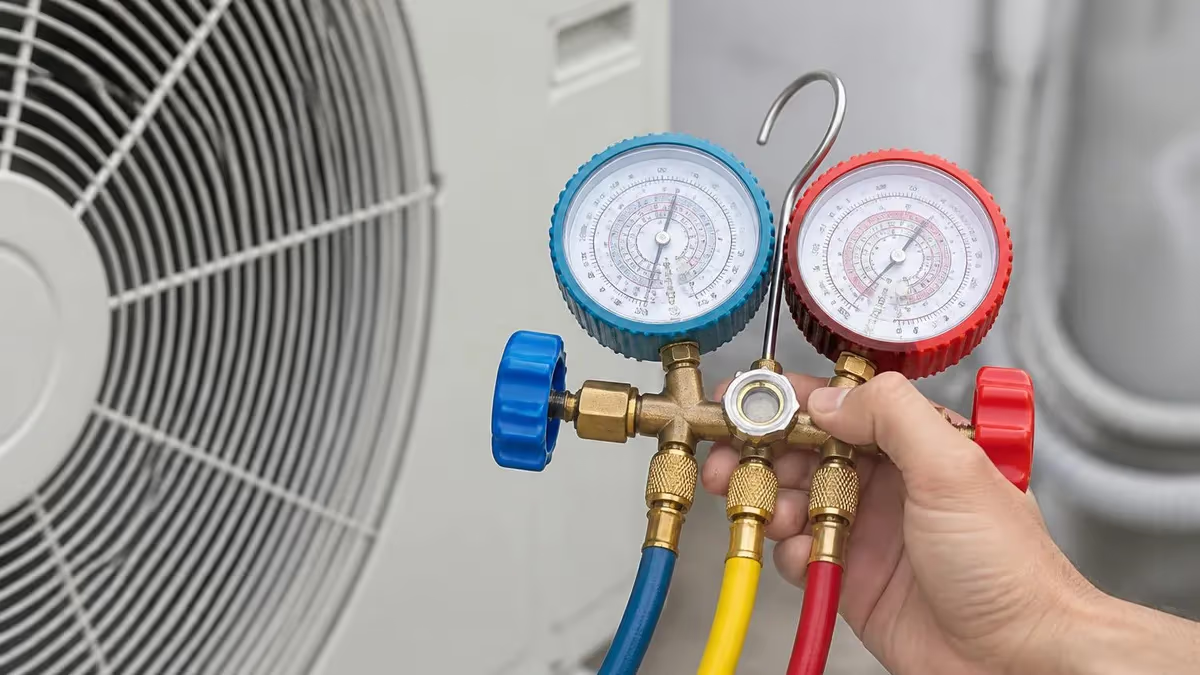
Finding reliable Tampa FL HVAC service is one of the most important decisions a Bay Area homeowner will make, and the stakes are higher here than in almost any other U.S. metro. Hillsborough County sits in a humid subtropical climate where summer dew points routinely exceed 75 degrees, daytime heat indices push past 105, and air conditioners run nearly nine months per year. A failing compressor in July is not a comfort inconvenience — it is a health hazard for children, seniors, and pets within hours of system shutdown.
The Tampa Bay region also presents unique HVAC challenges that contractors in cooler climates rarely encounter. Salt air corrosion from the Gulf of Mexico shortens condenser coil life, hurricane debris damages outdoor units, and the constant humidity creates ideal conditions for mold growth inside ductwork and evaporator coils. Homes built on concrete slabs with attic-mounted air handlers face heat soak temperatures above 140 degrees, which dramatically increases energy bills when ducts leak or insulation has settled.
This complete guide walks you through everything you need to know about HVAC services in Tampa, from selecting the right system size for our climate zone to understanding seasonal maintenance schedules, decoding contractor estimates, and recognizing the warning signs that separate a $200 repair from a $9,000 replacement. We pull from Florida Building Code requirements, ENERGY STAR regional guidelines, and field data collected from licensed Tampa contractors operating across Hillsborough, Pinellas, and Pasco counties.
Whether you live in a 1950s bungalow in Seminole Heights, a waterfront property in South Tampa, a newer build in Wesley Chapel, or a high-rise condo in downtown, the principles in this guide apply. We cover central split systems, heat pumps, mini-splits, packaged rooftop units, and the specialty equipment needed for Florida room additions and detached guest houses. You will learn how to evaluate hvac contractors, what permits Tampa requires, and how to spot the red flags that signal a sales-driven shop versus a service-focused one.
Beyond equipment, we address the indoor air quality concerns that matter most in our climate. Tampa homes deal with persistent humidity issues, pollen surges during oak and grass seasons, mold spore counts that spike after summer storms, and Saharan dust events that drift across the Atlantic each July. The right HVAC configuration — combined with proper filtration, dehumidification, and ventilation — transforms indoor comfort and protects respiratory health year-round.
We also tackle the financial side honestly. New geothermal hvac system installations in Tampa typically range from $6,500 for a basic 2.5-ton replacement to $18,000 for a high-efficiency variable-speed setup with zoning and air purification. Repairs span from $89 service calls to $4,200 compressor swaps. Knowing what fair pricing looks like — and which financing, rebates, and federal tax credits apply — can save thousands over a single ownership cycle.
By the end of this guide you will have a clear framework for hiring, maintaining, repairing, and eventually replacing your Tampa HVAC system with confidence. No upsells, no scare tactics, just the practical knowledge homeowners need to keep their families cool, dry, and breathing clean air through every Florida summer.
Tampa HVAC By the Numbers
HVAC System Types Best Suited for Tampa
The most common Tampa setup features an outdoor condenser paired with an indoor air handler in the garage, closet, or attic. Best for homes with existing ductwork and budgets favoring proven, repairable technology.
Florida's mild winters make heat pumps a strong choice, providing both cooling and efficient heating without natural gas. Modern variable-speed heat pumps handle our humidity exceptionally well and qualify for federal tax credits.
Ideal for additions, garages, Florida rooms, and detached structures common across Tampa neighborhoods. Mini-splits offer zone control, easy installation, and high SEER2 ratings without the cost of running new ductwork.
Frequently used on mobile homes, smaller condos, and commercial buildings in Tampa. All components sit in a single outdoor cabinet, which simplifies service access but exposes everything to the elements and salt air.
Whole-home dehumidifiers paired with right-sized AC units solve Tampa's signature comfort problem: cold but clammy interiors. Brands like Ultra-Aire and Santa Fe integrate with existing ductwork for true humidity control.
Tampa's climate creates HVAC stress that contractors from other regions genuinely underestimate. Our cooling season effectively spans March through November, with shoulder months that still demand humidity control even when temperatures dip into the 60s. This means your system racks up two to three times the runtime hours of a comparable unit in Atlanta or Charlotte, accelerating wear on compressors, blower motors, capacitors, and contactors. A unit rated for 15 years in a moderate climate often delivers only 10 to 12 years here.
Humidity is the silent driver of Tampa HVAC problems. Outdoor dew points sit above 70 degrees for roughly six months per year, and indoor humidity above 60 percent encourages dust mites, mold colonies on cooling coils, musty odors in returns, and warping of hardwood floors and cabinetry. Properly sized equipment removes moisture during the dehumidification cycle, but oversized units short-cycle, cooling the air without pulling enough water out — a problem we see constantly in older Tampa homes where contractors guessed at sizing.
Salt air corrosion is the second major regional factor. Homes within five miles of Tampa Bay or the Gulf experience accelerated breakdown of aluminum fins, copper coils, and steel cabinet panels. Standard residential condensers may show visible corrosion within three years near the water. Coastal-rated units with factory coil coatings, e-coat finishes, or all-aluminum micro-channel coils dramatically extend service life and are worth the $400 to $800 upcharge for anyone in South Tampa, Davis Islands, Apollo Beach, or the beach communities of Pinellas County.
Hurricane season adds another layer of consideration. Tampa Bay sits in a vulnerable position for tropical systems, and every named storm brings the risk of power surges, lightning strikes, flying debris, and storm surge flooding. A surge protector installed at the disconnect protects the compressor and control board from power-restoration spikes that fry electronics. Tie-down straps anchor condensers against hurricane-force winds, and elevated installation pads keep equipment above potential flood levels in evacuation zones.
Allergen and air quality challenges round out the picture. Tampa pollen counts surge dramatically from February through May, Saharan dust drifts across the region each summer, and tropical mold spore counts remain elevated almost year-round. High-MERV pleated filters, media cabinet filtration, and UV light treatments on the evaporator coil all play meaningful roles in reducing the irritants circulating through your home. Pairing strong filtration with proper humidity control is the single most effective combination for sensitive household members.
Tampa's building stock also influences HVAC performance. Concrete block construction with minimal attic insulation, single-pane windows in older homes, and leaky duct systems running through 140-degree attics all conspire to increase load. Before assuming you need a larger system, a quality contractor will perform a Manual J load calculation, inspect duct sealing, and check insulation R-values. Often the right answer is smaller equipment plus a tighter envelope — which costs less and performs dramatically better than oversized brute-force cooling.
Finally, electrical infrastructure matters more than most homeowners realize. Many HVAC solutions require dedicated 240V circuits, properly sized breakers, and modern surge protection. Older Tampa homes built before 1980 sometimes have undersized service panels that cannot safely support a modern variable-speed system without an electrical upgrade. A reputable contractor will check this during the estimate phase, not surprise you mid-installation with a $2,400 panel replacement add-on.
HVAC Practice Test Questions
Prepare for the HVAC - Heating Ventilation and Air Conditioning exam with our free practice test modules. Each quiz covers key topics to help you pass on your first try.
HVAC Air Conditioning
HVAC Exam Questions covering Air Conditioning. Master HVAC Test concepts for certification prep.
HVAC Code Compliance
Free HVAC Practice Test featuring Code Compliance. Improve your HVAC Exam score with mock test prep.
HVAC Electrical Controls
HVAC Test Prep for Electrical Controls. Practice HVAC Quiz questions and boost your score.
HVAC Energy Efficiency
HVAC Questions and Answers on Energy Efficiency. Free HVAC practice for exam readiness.
HVAC Heating Systems
HVAC Mock Test covering Heating Systems. Online HVAC Test practice with instant feedback.
HVAC Load Calculations
Free HVAC Quiz on HVAC Load Calculations. HVAC Exam prep questions with detailed explanations.
HVAC Tools and Equipment
HVAC Practice Questions for HVAC Tools and Equipment. Build confidence for your HVAC certification exam.
HVAC Refrigeration
HVAC Test Online for Refrigeration. Free practice with instant results and feedback.
HVAC Safety Practices
HVAC Study Material on Safety Practices. Prepare effectively with real exam-style questions.
HVAC System Design
Free HVAC Test covering System Design. Practice and track your HVAC exam readiness.
HVAC Thermodynamics
HVAC Exam Questions covering Thermodynamics. Master HVAC Test concepts for certification prep.
Tampa FL HVAC Services Breakdown
Tampa HVAC repair calls typically run between $89 and $189 for the initial diagnostic visit, with most reputable shops applying that fee toward the eventual repair. Common Bay Area service calls include capacitor replacements ($180 to $320), contactor swaps ($150 to $280), refrigerant leak repairs ($400 to $1,500), blower motor replacements ($450 to $900), and condensate drain line clears ($120 to $250). Same-day service is widely available during summer peak season but expect surge pricing on weekends and holidays.
The trickiest Tampa repair decision involves refrigerant. R-22 systems still operate in thousands of older homes, but R-22 now costs $150 to $200 per pound versus $30 to $50 for the newer R-410A. A two-pound leak in an R-22 system can run $400 just for refrigerant, and the EPA phaseout means parts availability continues to shrink. When repair quotes approach 40 percent of replacement cost on a system over 10 years old, replacement nearly always pencils out better.
Annual Maintenance Contracts: Worth It in Tampa?
- +Two scheduled visits per year keep systems running at peak efficiency through long cooling seasons
- +Priority scheduling during heat waves when other customers wait 5-10 days for service
- +10-20 percent discount on parts and labor for any repairs needed during the contract year
- +Early detection of capacitor weakness, refrigerant leaks, and drain blockages before failures occur
- +Waived diagnostic fees and no overtime charges for after-hours emergency calls
- +Documented service history supports manufacturer warranty claims and increases home resale value
- +Annual coil cleaning prevents mold growth and the musty odor common in humid Florida homes
- −Annual cost of $180-$320 may exceed actual repair needs on newer systems under warranty
- −Some contractors use tune-up visits as sales opportunities for unnecessary add-ons
- −Plan benefits typically do not transfer if you switch HVAC companies mid-contract
- −Bargain plans under $99 often skip critical steps like coil cleaning and static pressure testing
- −Multi-year prepaid contracts lose value if the contractor goes out of business or sells to a national chain
- −Some plans exclude after-hours emergency response despite advertising priority service
Pros and Cons at a Glance
| Pros | Cons |
|---|---|
| Two scheduled visits per year keep systems running at peak efficiency through long cooling seasons | Some contractors use tune-up visits as sales opportunities for unnecessary add-ons |
| Early detection of capacitor weakness, refrigerant leaks, and drain blockages before failures occur | Plan benefits typically do not transfer if you switch HVAC companies mid-contract |
| Waived diagnostic fees and no overtime charges for after-hours emergency calls | Multi-year prepaid contracts lose value if the contractor goes out of business or sells to a national chain |
| Documented service history supports manufacturer warranty claims and increases home resale value | Some plans exclude after-hours emergency response despite advertising priority service |
Tampa FL HVAC Homeowner Action Checklist
- ✓Verify your contractor holds an active Florida CAC (Class A or B) license through MyFloridaLicense.com
- ✓Confirm liability insurance and workers compensation certificates before any work begins
- ✓Require a written Manual J load calculation rather than rule-of-thumb sizing by square footage
- ✓Insist on a Hillsborough or Pinellas County permit for any system replacement or major repair
- ✓Replace filters every 30-60 days during peak cooling season — Tampa runs longer than most regions
- ✓Schedule professional coil cleaning every spring before humidity and dew points climb
- ✓Install a float switch on the secondary drain pan to prevent ceiling damage from clogged condensate lines
- ✓Add a hard-wired surge protector at the disconnect to guard against hurricane-related power events
- ✓Trim landscaping at least two feet back from the outdoor condenser for proper airflow clearance
- ✓Photograph and document your system's nameplate data, model numbers, and installation date for warranty records
Bigger Is Not Better in Tampa
An oversized AC cools the air quickly but never runs long enough to dehumidify properly, leaving your home cold and clammy. A properly sized 16 SEER2 unit will outperform an oversized 20 SEER2 unit in Tampa nearly every time. Always require a Manual J calculation — not a square-footage rule of thumb.
The financial side of Tampa HVAC ownership has shifted significantly since 2023 thanks to the Inflation Reduction Act, new SEER2 efficiency standards, and rising equipment costs driven by R-410A phaseouts and new R-454B refrigerant transitions. Understanding what current pricing looks like protects you from both lowball estimates that skip critical steps and inflated quotes that bake in commissions and financing markups.
For a typical Tampa single-family home requiring a 3-ton system replacement, expect installed pricing roughly as follows: builder-grade 14.3 SEER2 single-stage units run $7,200 to $9,400, mid-tier 16 SEER2 two-stage systems land at $9,800 to $12,600, and premium 18 to 20 SEER2 variable-speed inverter systems range from $13,500 to $18,000. Add $1,200 to $2,400 for whole-home dehumidification, $400 to $900 for UV air treatment, and $1,500 to $3,500 for two-zone or three-hvac zone dampers and bypass control.
Permits are mandatory in Hillsborough, Pinellas, and Pasco counties for any system replacement or major modification. Permit fees typically run $150 to $300 and include a mechanical inspection that verifies refrigerant line connections, electrical hookups, condensate drain routing, and equipment placement clearances. Skipping the permit may save money upfront but creates major problems at resale time, voids manufacturer warranties on many brands, and exposes you to code enforcement action.
Federal tax credits remain among the most valuable incentives available. The Inflation Reduction Act 25C credit covers 30 percent of qualifying heat pump installation costs up to $2,000 annually, available through 2032. Eligibility requires CEE highest tier rating, which most ENERGY STAR Most Efficient heat pumps satisfy. Save your AHRI certificate and invoice for tax filing, and confirm eligibility with your tax professional before purchase.
Florida's utility rebate landscape varies by provider. Tampa Electric (TECO) periodically offers heat pump rebates ranging from $150 to $1,000 depending on efficiency tier, while Duke Energy customers in Pinellas and northern Pasco counties access similar programs. Withlacoochee River Electric and other rural cooperatives also publish seasonal rebates. Always check your utility provider's current incentive page before purchase — rebates often require pre-approval rather than post-installation submission.
Financing deserves careful attention. Many Tampa contractors offer 0 percent promotional financing through Synchrony, Wells Fargo, or Service Finance Company, but these promotional rates often hide manufacturer rebate clawbacks or include dealer fees baked into the equipment price. Always request both a cash price and a financed price. If the contractor refuses to separate them, you are likely paying 6 to 12 percent in hidden financing markup. Credit union HELOC financing at 7 to 9 percent often beats dealer financing once hidden markups are exposed.
Insurance considerations matter too. Some Florida homeowner policies cover HVAC damage from named storms but exclude flood damage to ground-level equipment. Review your declarations page before hurricane season and consider an equipment elevation if your condenser sits in a flood-prone area. Service contracts and home warranties through American Home Shield, 2-10, and Choice Home Warranty cover repair labor but often impose age limits, refrigerant caps, and parts depreciation schedules that disappoint homeowners who actually file claims.

Before any tropical system threatens Tampa Bay, turn your thermostat off at the breaker rather than the thermostat itself. This prevents the compressor from cycling during power flickers and surges that fry capacitors and control boards. Inspect tie-down straps annually and confirm your condenser sits at or above your home's base flood elevation.
A year-round maintenance plan tailored to Tampa's climate looks meaningfully different from the standard advice you'll find in national HVAC literature. Our long cooling season, hurricane exposure, salt air, and persistent humidity demand a more aggressive schedule with specific seasonal priorities. Following the plan below will extend your system's life by three to five years on average and reduce energy bills by 8 to 15 percent compared to neglected systems.
February and March are the ideal window for your spring tune-up before humidity climbs and contractors get buried in emergency calls. This visit should include outdoor coil washing, indoor evaporator inspection, subcooling hvac verification, capacitor and contactor testing, blower motor amp draw measurement, drain line flushing with nitrogen or wet-vac, and a thorough thermostat calibration. Ask your technician to leave a written report with measured values — not just a checkmark sheet.
April through October is peak runtime season. Change filters every 30 to 45 days during this window, even if the package says 90 days. Tampa's combination of pollen, dust, pet dander, and humidity loads filters faster than rated. Walk around your outdoor condenser monthly to clear leaves, mulch, and any debris that might restrict airflow. After every heavy rain, check that your condensate drain is flowing freely from the exterior termination point.
June through November overlaps with hurricane season, requiring extra vigilance. Keep your condenser tie-down straps tight, confirm surge protection is functional, and consider a temporary cover during direct storm impact (remove immediately after the storm passes — covers cause condensation and corrosion if left on during runtime). After any named storm, inspect for debris damage, listen for unusual compressor noise on startup, and watch for tripped breakers that signal electrical issues.
November and December are the right time for your fall heat-side tune-up. Even though Tampa winters are mild, heat strips and heat pump reversing valves need annual verification. A failed reversing valve discovered during the first January cold snap means days without heat during peak demand. Test heat strip element resistance, verify defrost cycle operation on heat pumps, and confirm thermostat heat-side staging operates correctly.
January is your slow month — use it for major projects. This is the right time to schedule duct cleaning if needed, add insulation in attic spaces, seal duct leaks with mastic and metallic tape, replace aging thermostats with smart units, and tackle electrical panel upgrades. Contractors are less busy, pricing is more competitive, and project lead times shrink from weeks to days. You can find HVAC parts and supply sources locally for DIY-friendly upgrades like filters, thermostats, and condensate treatment tablets.
Tracking maintenance history in writing matters. Keep a simple log book or photo album on your phone with dates, technician names, measured values, parts replaced, and refrigerant added. This documentation protects your manufacturer warranty (many brands now require proof of annual professional maintenance), supports insurance claims after storm damage, and adds value at resale by demonstrating responsible ownership. Smart homeowners review their log each spring to spot trends — gradual capacitor weakening, increasing refrigerant top-offs, or rising amp draw signal problems before they become emergencies.
Beyond the major equipment decisions and seasonal schedules, day-to-day habits make a substantial difference in how well your Tampa HVAC system performs. The homeowners who get 15-plus years out of their systems share a common set of behaviors that we'll walk through here — small actions that add up to thousands of dollars in saved repairs, lower utility bills, and dramatically improved indoor comfort.
Thermostat strategy comes first. Setting your thermostat to 78 degrees during occupied hours and 80 to 82 during unoccupied periods balances comfort, humidity control, and energy use. Resist the urge to crank to 72 during a heat wave — the system simply cannot reach that setpoint when outdoor temperatures hit 95-plus, and you'll only stress the compressor while your bill climbs. Smart thermostats like Ecobee, Nest, and Honeywell T9 offer humidity-aware programming that's particularly valuable in Tampa.
Ceiling fan use multiplies your AC's effectiveness. A ceiling fan running counter-clockwise (summer mode) creates a wind-chill effect that lets you raise the thermostat 3 to 4 degrees without feeling warmer. Turn fans off when you leave the room — they cool people, not spaces. Combined with proper thermostat settings, ceiling fans typically reduce cooling costs by 10 to 15 percent in Tampa homes during peak season.
Window and door discipline matters more in Florida than almost anywhere. Keep windows closed and blinds drawn during peak sun exposure, especially on west and south-facing walls. A single hour with a sliding glass door cracked during a rainstorm can spike indoor humidity by 15 percentage points, forcing your AC to work for hours to recover. Door sweeps and weatherstripping pay for themselves in a single summer through reduced humidity infiltration.
Vegetation management around your condenser is non-negotiable. Maintain at least two feet of clearance on all sides and three feet above any unit. Trim back hibiscus, palms, crotons, and any flowering plants that drop debris into the coil. After mowing, blow grass clippings away from the unit — clippings stick to wet coil fins and dramatically reduce heat transfer efficiency. A coil so clogged you can't see through the fins drops capacity by 20 percent or more.
Indoor humidity awareness deserves its own habit. Buy a $15 hygrometer from any hardware store and place it in your main living area. Healthy indoor humidity in Tampa runs 45 to 55 percent. Above 60 percent invites mold and dust mites; below 40 percent dries out wood floors and respiratory passages. If you can't maintain the target range with your AC alone, a whole-home dehumidifier is the right next investment — particularly for homes built before 1995 or with vaulted ceilings.
Finally, keep a basic emergency kit for your HVAC system. Stock spare filters, a wet-dry vacuum for clearing the condensate line, fresh batteries for your thermostat, a refrigerator thermometer for verifying system performance, and contact information for two pre-vetted contractors (in case your primary is booked solid during a heat wave). This preparation transforms a midnight breakdown from a panic event into a manageable inconvenience while you wait for morning service availability.
Sample HVAC Practice Questions
Try these questions from our free HVAC practice tests. The correct answer and an explanation follow each question.
Which ASHRAE standard establishes minimum ventilation rates for acceptable indoor air quality in commercial buildings?
- A. ASHRAE 15
- B. ASHRAE 34
- C. ASHRAE 62.1
- D. ASHRAE 90.1
Answer: C. ASHRAE 62.1
ASHRAE Standard 62.1 specifies minimum ventilation rates and other measures to provide acceptable indoor air quality in commercial and institutional buildings.
A split system AC cools well but the homeowner notices water dripping from the indoor unit. What is the most likely cause?
- A. Refrigerant overcharge
- B. Clogged condensate drain
- C. Faulty TXV
- D. Undersized ductwork
Answer: B. Clogged condensate drain
A clogged condensate drain prevents water from leaving the drain pan, causing it to overflow and drip from the air handler.
What is 'radon' and why is it an indoor air quality concern?
- A. A synthetic refrigerant used in old AC systems
- B. A naturally occurring radioactive gas that seeps from soil and rock, accumulating in buildings and increasing lung cancer risk
- C. An industrial chemical released from construction materials
- D. A byproduct of gas combustion in furnaces
Answer: B. A naturally occurring radioactive gas that seeps from soil and rock, accumulating in buildings and increasing lung cancer risk
Radon is a naturally occurring radioactive gas (decay product of uranium/radium) that seeps into buildings through foundation cracks—the second leading cause of lung cancer after smoking.
How does an energy recovery ventilator (ERV) improve indoor air quality while reducing energy consumption?
- A. By filtering outdoor air before it enters
- B. By transferring heat and moisture between outgoing and incoming air streams, conditioning fresh air with minimal energy
- C. By recirculating indoor air more efficiently than traditional systems
- D. By generating its own energy through heat recovery to power UV purification
Answer: B. By transferring heat and moisture between outgoing and incoming air streams, conditioning fresh air with minimal energy
An ERV uses a heat exchange core to transfer both heat and moisture between outgoing stale air and incoming fresh air, pre-conditioning incoming outdoor air while exhausting indoor pollutants.
HVAC Questions and Answers
HVAC Repair Portland: The Complete 2026 Homeowner's Guide to Furnace, AC, and Heat Pump Service in the Rose City
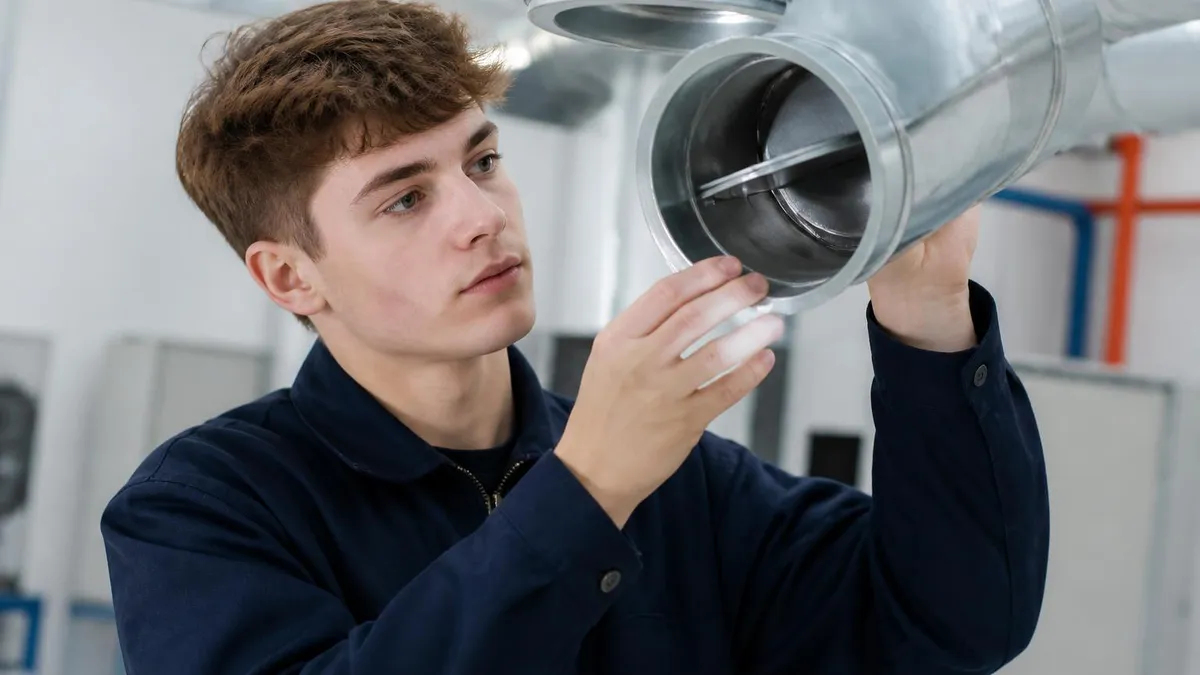
HVAC Tune Up Service: The Complete Guide to Professional HVAC Maintenance and Why It Pays for Itself
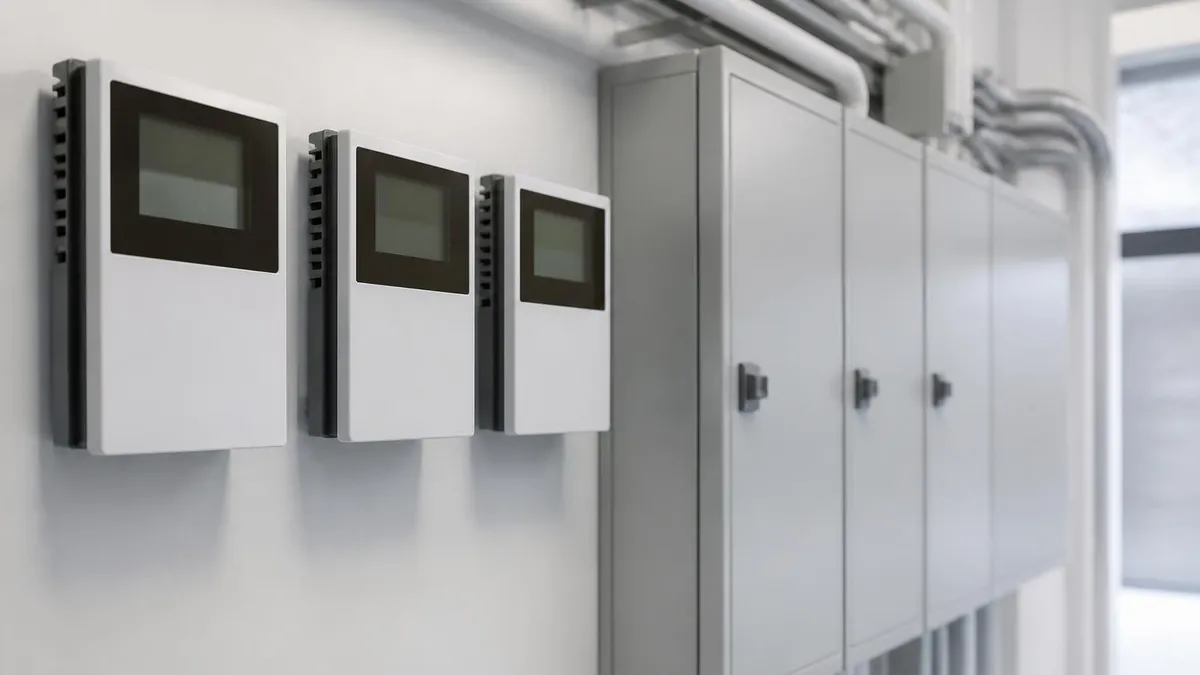
HVAC Solutions: The Complete Guide to Heating, Cooling, and Indoor Air Quality Systems for Homes and Buildings
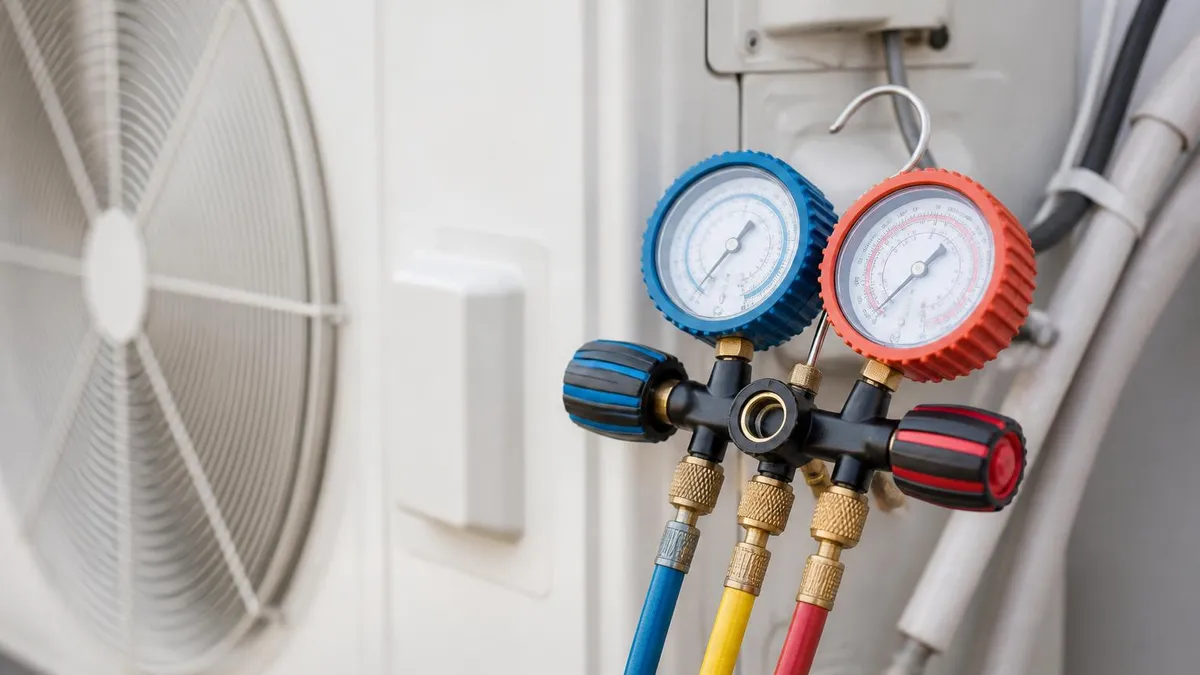
Certified HVAC Contractors: How to Find, Vet, and Hire the Right Professional for Your Home or Business
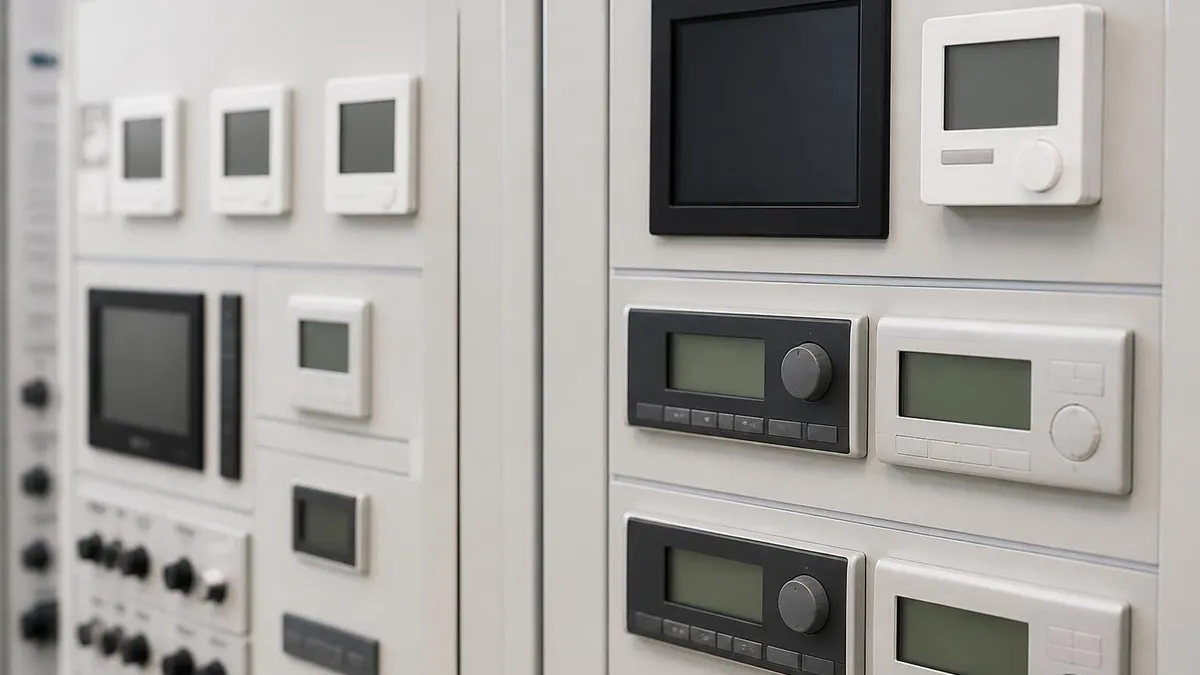
HVAC Parts and Supply: The Complete Guide to Sourcing, Identifying, and Buying Heating and Cooling Components in 2026
About the Author

NATE Certified HVAC Technician & Licensing Exam Trainer
Universal Technical InstituteMike Johnson is a NATE-certified HVAC technician and EPA 608 universal-certified refrigerant handler with a Bachelor of Science in HVAC/R Technology. He has 19 years of commercial and residential HVAC installation and service experience and specializes in preparing technicians for NATE certification, EPA 608, A2L refrigerant safety, and state HVAC contractor licensing examinations.