
HVAC Contractor Near Me: How to Find, Vet, and Hire the Right Pro in 2026
Contractor HVAC guide: 🧠 how to find, vet, and hire a licensed local HVAC contractor near you. Licensing, pricing, red flags, and contract tips.

Searching for a contractor hvac professional near you can feel overwhelming, especially when your furnace dies during a January cold snap or your air conditioner sputters out during a July heat wave. The pressure to hire fast often leads homeowners to skip vetting steps, sign contracts they don't fully understand, and overpay for equipment that doesn't match their home. This guide walks you through the entire process of finding, evaluating, and hiring a local HVAC contractor without making the costly mistakes most people make under stress. Practice with the free HVAC practice test on PracticeTestGeeks (35 questions with answer explanations).
An HVAC contractor is more than a technician with a wrench. They are licensed business owners who handle load calculations, refrigerant handling under EPA Section 608, ductwork design, electrical permits, gas line connections, and warranty registrations. The difference between a great contractor and a mediocre one can mean thousands of dollars over the life of your system, plus the difference between a home that feels comfortable and one that has hot rooms, cold rooms, and mysterious humidity problems that never go away.
The HVAC industry in the United States employs more than 415,000 technicians and generates over $130 billion in annual revenue, yet quality varies wildly from one company to the next. Some contractors invest heavily in NATE certification, ongoing training, and modern diagnostic tools, while others operate as one-truck shops with no insurance, no permits, and no plan to be in business next year when your warranty claim comes up. Knowing which type you're hiring is the single most important decision in this process.
Geography matters more than most people realize. A contractor in Phoenix specializes in heat pumps and high-SEER cooling systems that can survive 115-degree afternoons, while a contractor in Minneapolis focuses on dual-fuel systems and cold-climate heat pumps rated for sub-zero operation. Hiring a generalist who doesn't understand your local climate, building codes, or utility rebate programs is one of the most common reasons homeowners end up with systems that underperform from day one.
Pricing transparency is another area where the industry struggles. A full system replacement in 2026 typically runs between $7,500 and $18,000 depending on equipment, ductwork, and complexity, but quotes for the same job can vary by 40% or more between contractors in the same zip code. Understanding what drives that variation, what's negotiable, and what's a red flag will save you serious money and protect you from upsell tactics designed to inflate the ticket.
This guide is written for homeowners and small business owners who want to make an informed decision rather than just clicking the first sponsored result on Google. We'll cover licensing verification, insurance requirements, the questions that separate professionals from hacks, how to read an HVAC proposal line by line, financing pitfalls, warranty traps, and what to do when something goes wrong after the install. By the end, you'll have a repeatable framework for hiring with confidence.
Before we dive in, a quick note on timing. The best time to find an HVAC contractor is before you need one. Shoulder seasons in spring and fall give you use to negotiate, time to compare bids, and access to the most experienced technicians who are otherwise booked solid during peak demand. If you're reading this in a crisis, skip to the alert box midway through for emergency hiring tips, then circle back to the full process once your home is comfortable again.
Free HVAC Study Tools
Interactive HVAC resources on PracticeTestGeeks, free to start:
- HVAC EPA 608 Refrigerant Certification — 35 questions with instant scoring and answer explanations
- HVAC flashcards — review key terms and concepts card by card
- HVAC study guide — topic-by-topic overview of what the exam covers
- HVAC cheat sheet — one-page printable summary for last-minute review
HVAC Contractor Hiring by the Numbers

How to Find Local HVAC Contractors
Brands like Trane, Carrier, Lennox, and Daikin publish authorized dealer lists. These contractors have completed factory training, carry genuine parts, and can register extended warranties that independent shops cannot.
Your electric or gas utility maintains a list of contractors qualified to install rebate-eligible equipment. Hiring from this list ensures paperwork is filed correctly and rebates of $500 to $3,000 actually land in your mailbox.
The Better Business Bureau and your state contractor licensing board both let you verify legitimacy in under five minutes. Cross-reference any company name against complaints, license status, and bond information before scheduling.
Nextdoor, neighborhood Facebook groups, and HOA forums surface contractors with track records in your specific area. Local reputation is harder to fake than star ratings and tells you who actually shows up on time.
ACCA, PHCC, and SMACNA maintain searchable directories of member contractors. Membership signals investment in continuing education, ethics standards, and adherence to Manual J load calculation best practices.
Licensing and insurance verification is the single most important step in hiring an HVAC contractor, and it's the step most homeowners skip. Every state regulates HVAC work differently. California requires a C-20 specialty license issued by the Contractors State License Board, Texas requires an Air Conditioning and Refrigeration Contractors license through TDLR, and Florida splits the trade into Class A, B, and registered contractor categories with different scope limitations. Hiring an unlicensed contractor exposes you to liability, voids manufacturer warranties, and often disqualifies you from utility rebates and federal tax credits.
Beyond the state license, look for EPA Section 608 certification for any technician handling refrigerant. This is a federal requirement, not optional, and a contractor who shrugs it off is signaling either ignorance or willingness to cut corners on environmental compliance. Type II certification covers most residential split systems, while Universal certification covers all appliance types. Ask to see the actual card or wallet certificate before work begins, and snap a photo for your records in case of future disputes.
General liability insurance should carry at least $1 million per occurrence, with $2 million aggregate being the modern standard for residential contractors. Workers' compensation is equally critical because if an uninsured technician is injured on your property, the medical bills can land on your homeowners policy or directly on you. Ask for a Certificate of Insurance, or COI, naming you as a certificate holder. Reputable contractors produce this within an hour. Sketchy ones go silent.
Surety bonds are required in many states and provide a financial backstop if the contractor abandons the job or fails to honor warranty obligations. Bond amounts vary from $5,000 in low-cost states to $25,000 or more in regions with stricter consumer protection laws. A bonded contractor has skin in the game because making a claim against the bond raises their premiums and threatens their license. This creates real accountability that an uninsured competitor simply cannot match.
City and county permits are another non-negotiable. A full system replacement, ductwork modification, or gas line work almost always requires a permit and a final inspection. Contractors who offer to skip the permit to save you money are creating a problem you'll inherit when you sell the home. Unpermitted HVAC work shows up on inspection reports, kills deals, and forces expensive retrofits to bring systems up to current code. The $150 to $400 permit fee is one of the cheapest forms of insurance you'll ever buy.
NATE certification, which stands for North American Technician Excellence, is the gold standard for individual technician competency. NATE-certified technicians have passed rigorous exams in installation, service, and specialty areas like heat pumps, gas heating, or commercial refrigeration. Companies often advertise that they employ NATE-certified techs, but ask specifically whether the technician assigned to your job carries the credential. Reading an HVAC inspection report from a certified tech is dramatically different from one written by an unqualified helper.
Finally, verify the business itself. A legitimate HVAC contractor has a physical address you can drive to, a phone number that's answered by a human during business hours, a registered DBA or LLC with your secretary of state, and a tax ID they're willing to provide for invoicing. Fly-by-night operators use only mobile numbers, P.O. boxes, and generic Gmail addresses. The five minutes it takes to verify these basics filters out the vast majority of problem contractors before they ever step foot in your home.
HVAC Practice Test Questions
Prepare for the HVAC - Heating Ventilation and Air Conditioning exam with our free practice test modules. Each quiz covers key topics to help you pass on your first try.
HVAC Air Conditioning
HVAC Exam Questions covering Air Conditioning. Master HVAC Test concepts for certification prep.
HVAC Code Compliance
Free HVAC Practice Test featuring Code Compliance. Improve your HVAC Exam score with mock test prep.
HVAC Electrical Controls
HVAC Test Prep for Electrical Controls. Practice HVAC Quiz questions and boost your score.
HVAC Energy Efficiency
HVAC Questions and Answers on Energy Efficiency. Free HVAC practice for exam readiness.
HVAC Heating Systems
HVAC Mock Test covering Heating Systems. Online HVAC Test practice with instant feedback.
HVAC Load Calculations
Free HVAC Quiz on HVAC Load Calculations. HVAC Exam prep questions with detailed explanations.
HVAC Tools and Equipment
HVAC Practice Questions for HVAC Tools and Equipment. Build confidence for your HVAC certification exam.
HVAC Refrigeration
HVAC Test Online for Refrigeration. Free practice with instant results and feedback.
HVAC Safety Practices
HVAC Study Material on Safety Practices. Prepare effectively with real exam-style questions.
HVAC System Design
Free HVAC Test covering System Design. Practice and track your HVAC exam readiness.
HVAC Thermodynamics
HVAC Exam Questions covering Thermodynamics. Master HVAC Test concepts for certification prep.
Questions to Ask Before Hiring an HVAC Contractor
Ask the contractor to perform a Manual J load calculation rather than sizing your new system based on the old one. Oversized equipment short-cycles, fails to dehumidify, and dies young. A real Manual J considers insulation, window orientation, infiltration, occupants, and internal heat gains. If the answer is a quick walkthrough and a guess, you're talking to a salesperson, not a designer.
Also ask which specific brands and model tiers they recommend, and why. A good contractor explains the trade-offs between single-stage, two-stage, and variable-speed equipment, walks you through SEER2 and HSPF2 ratings, and discusses how matched coils and proper refrigerant charge affect real-world performance over a 15-year ownership window rather than just the install day.
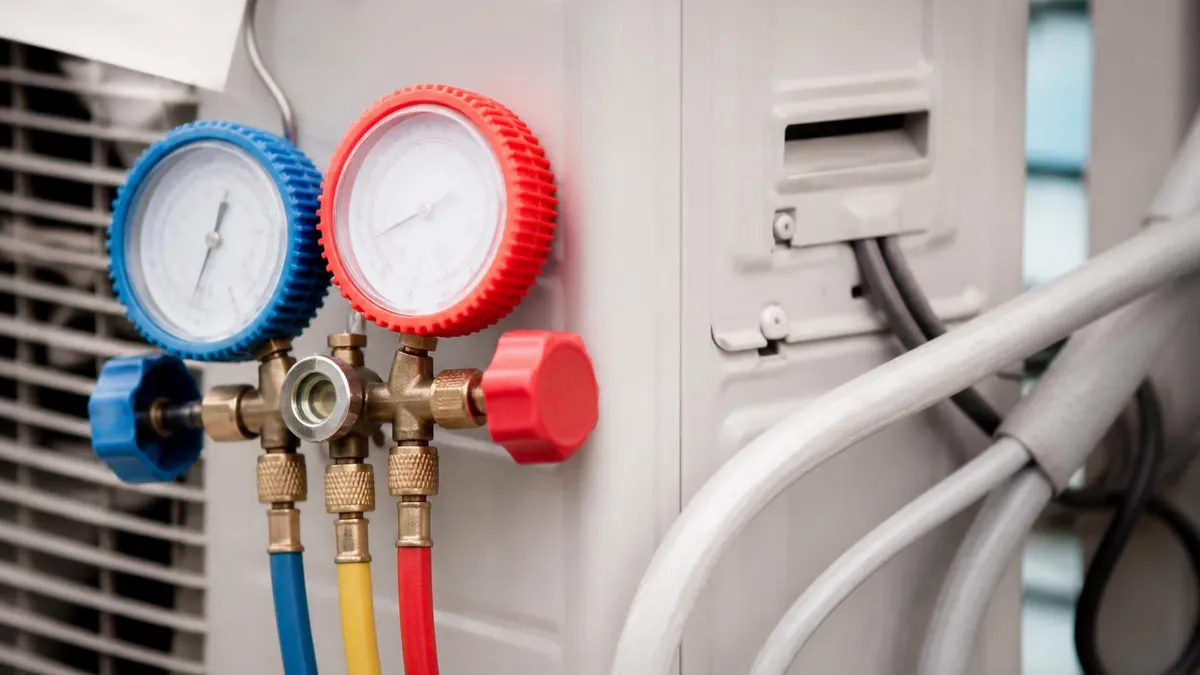
Hiring a Local Independent HVAC Contractor vs. a National Chain
- +Local contractors often have lower overhead and pass savings to homeowners
- +Owner-operators are personally invested in their reputation and online reviews
- +Faster response times for warranty calls because the office is nearby
- +Better knowledge of local building codes, climate, and utility rebate programs
- +More flexibility on scheduling, equipment brands, and custom configurations
- +Direct access to decision-makers when something goes wrong on your project
- −Smaller companies may have limited after-hours emergency coverage
- −Fewer financing options compared to national chains with captive lenders
- −Risk of business closure leaves labor warranties unenforceable
- −Crew depth may be thin during peak season heat waves and cold snaps
- −Less formal quality control processes than franchise operations
- −May not stock every brand, limiting your equipment options
Pros and Cons at a Glance
| Pros | Cons |
|---|---|
| Local contractors often have lower overhead and pass savings to homeowners | Smaller companies may have limited after-hours emergency coverage |
| Owner-operators are personally invested in their reputation and online reviews | Fewer financing options compared to national chains with captive lenders |
| Faster response times for warranty calls because the office is nearby | Risk of business closure leaves labor warranties unenforceable |
| Better knowledge of local building codes, climate, and utility rebate programs | Crew depth may be thin during peak season heat waves and cold snaps |
| More flexibility on scheduling, equipment brands, and custom configurations | Less formal quality control processes than franchise operations |
| Direct access to decision-makers when something goes wrong on your project | May not stock every brand, limiting your equipment options |
HVAC Contractor Pre-Hire Vetting Checklist
- ✓Verify state HVAC contractor license number on your state board website
- ✓Confirm EPA Section 608 certification for any technician handling refrigerant
- ✓Request a Certificate of Insurance showing $1M+ general liability coverage
- ✓Confirm active workers' compensation insurance covering all crew members
- ✓Check Better Business Bureau rating and complaint history for the past 3 years
- ✓Read at least 25 reviews across Google, Yelp, and Angi for patterns
- ✓Require a written Manual J load calculation rather than rule-of-thumb sizing
- ✓Get at least 3 itemized written quotes from different licensed contractors
- ✓Confirm permit will be pulled in the contractor's name, not yours
- ✓Ask for 3 recent customer references and actually call them
- ✓Verify NATE certification for the lead installer assigned to your job
- ✓Read the full warranty document before signing any contract
Always get three written bids, never just one
The HVAC industry has the widest quote spread of any home trade. The middle bid is usually closest to fair market value, the lowest bid often hides corner-cutting, and the highest bid frequently includes commissioned upsells. Three written, itemized quotes from licensed contractors give you negotiating use and surface red flags that no single estimate can reveal.
Understanding HVAC pricing in 2026 starts with knowing what drives the cost. Equipment accounts for roughly 50 to 60 percent of a typical changeout, labor is 25 to 35 percent, and permits, materials, refrigerant, and disposal make up the remainder. A 3-ton 16-SEER2 air conditioner with matched coil costs the contractor roughly $2,800 to $3,600 wholesale, while the same tonnage at 20-SEER2 variable-speed runs $5,500 to $7,500. Knowing wholesale costs helps you spot quotes inflated to 3x markup, which is well above the industry-standard 1.6x to 2.0x.
Itemized proposals are your friend. A professional quote breaks out equipment by model number, labor hours, permit fees, refrigerant charge, line set replacement, electrical work, condensate management, thermostat, and warranty terms. Single-line quotes that just say replace HVAC system $14,500 are designed to hide where margin lives. Ask for the breakdown. Contractors who refuse are either disorganized or hiding something, and neither is a good sign when you're about to spend five figures.
Financing offers deserve special scrutiny. Zero percent promotional financing through manufacturer lenders is genuinely useful when used correctly, but deferred interest plans can backfire if you miss the payoff date by even one day, retroactively charging 25 to 29 percent interest on the original balance. Read the fine print on every promo offer. Better yet, get pre-approved for a home equity line of credit or personal loan as a backup so you're not pressured into a captive lender just to close the deal.
Beware the diagnostic-fee shell game. Some contractors waive the $89 diagnostic if you buy a repair, but charge $400 for a part that costs $40 wholesale. Others charge an honest $129 diagnostic and bill labor transparently at $145 per hour. The transparent model usually costs less overall and earns repeat business. The bait-and-switch model maximizes single-visit revenue and produces the angry online reviews you read before hiring.
Watch for the high-pressure close. Salespeople trained in legacy in-home sales tactics use today-only pricing, manufactured scarcity, and emotional appeals about your family's comfort to push you toward signing on the spot. No legitimate HVAC deal expires at midnight. If you feel pressured, end the meeting, sleep on it, and call back in the morning. The same price will almost always be available, and if it isn't, you've just avoided a contractor who treats customers as marks rather than partners.
Change orders are where budgets blow up. The original quote covers the scope visible during the estimate. Once the old equipment is pulled, contractors may find rusted plenums, undersized return ducts, asbestos insulation, or code violations that require additional work. A reputable contractor walks you through the issue, shows photos, provides written change-order pricing, and waits for your signature before proceeding. Verbal handshake change orders are how $12,000 jobs turn into $19,000 jobs with no recourse.
Finally, understand the true total cost of ownership rather than focusing only on the install price. A $9,000 single-stage 14-SEER2 system may cost $3,500 more annually to operate than a $14,000 variable-speed 18-SEER2 system in a hot climate. Over 15 years, the higher-efficiency system saves $52,500 in operating costs while delivering better comfort and humidity control. Ask your contractor to model annual operating costs so the comparison includes the next 180 utility bills, not just the down payment.

If your heat is out in subfreezing weather or your AC is dead during a heat advisory, skip multi-bid shopping and call three established contractors for emergency service. Authorize diagnosis only, not repairs over $500, until you're stable. Then take 48 hours to evaluate replacement quotes properly. Never sign a same-day replacement contract while standing in a cold or sweltering home.
Warranties separate the contractors who plan to be around in ten years from the ones who don't. Manufacturer parts warranties on Carrier, Trane, Lennox, Rheem, Goodman, and Daikin equipment typically run 10 years on the compressor and 10 years on parts when the system is registered within the manufacturer's window, which is usually 60 to 90 days from install. Unregistered systems often default to a 5-year base warranty, cutting your coverage in half. Confirm in writing that registration is the contractor's responsibility and demand the registration confirmation email after the job.
Labor warranties are entirely separate and entirely up to the contractor. Industry norms range from a 1-year labor warranty on the low end to a 10-year labor warranty bundled with a paid maintenance plan on the high end. A 2-year labor warranty is the modern minimum for a quality installer. Anything less suggests the contractor doesn't trust their own workmanship. Get the labor warranty terms attached to your contract, not just promised verbally during the sales meeting.
Maintenance plans are a useful tool when priced fairly. Expect $180 to $300 per year for two annual visits, including a spring AC tune-up and a fall heating inspection. These visits keep manufacturer warranties valid, catch small problems before they become emergencies, and document the system's condition in case of future disputes. Skip plans that bundle dozens of upsells, lock you into 5-year terms, or charge $500-plus annually for what should be straightforward preventive maintenance.
Extended warranties from third-party providers are usually a bad deal. The math rarely works in your favor, claims processes are deliberately frustrating, and many policies have exclusions that make the coverage nearly useless. If you want extra protection, ask whether the manufacturer offers a paid extension to 12 or 15 years through your installing dealer. Those extensions are honored at any authorized dealer nationwide, which matters if your original installer goes out of business.
Document everything from day one. Take photos of the model and serial number plates on the indoor and outdoor units, save the registration confirmation email, file the permit and final inspection paperwork with your home records, and keep a digital folder of every service invoice. When you sell the home, this documentation increases buyer confidence and supports your asking price. When you file a warranty claim, it eliminates the back-and-forth that delays repairs by weeks. Reviewing common HVAC tape and sealing practices in your install photos also helps you spot shortcuts later.
Federal and state tax credits add another layer of value worth confirming with your contractor. The Energy Efficient Home Improvement Credit under Section 25C of the Internal Revenue Code offers up to $2,000 for qualifying heat pumps and up to $600 for high-efficiency furnaces and central AC, subject to annual limits. State and utility rebates can stack on top, often pushing total incentives to $5,000 or more on a heat pump install. Your contractor should know the current programs cold and provide the AHRI certificates and manufacturer documentation you need at tax time.
Finally, post-install service quality is where reputations are made or lost. A great contractor follows up 30 days after install, returns warranty calls within 24 hours during normal weather and same day during extreme weather, and stands behind their workmanship without finger-pointing at the manufacturer. Ask references specifically about warranty service experiences, not just the initial install. The contractor who shows up cheerfully for a no-charge warranty visit two years later is the one worth recommending to your neighbors.
Practical hiring advice starts with timing. Schedule your contractor search during the shoulder seasons of April-May and September-October when demand is lowest. Contractors offer better pricing, send their most experienced technicians, and have the bandwidth to do the job right rather than rushing to the next emergency call. If you're planning a system replacement for an aging unit, don't wait for failure during a heat wave. Replace proactively and capture 10 to 20 percent savings on the same equipment.
Walk through the home with each estimator and pay attention to who actually measures things. Did they pull out a tape measure for square footage? Did they look in the attic at insulation depth and duct condition? Did they check the electrical panel capacity? Did they ask about hot or cold rooms? An estimator who skips the inspection and quotes from the curb is selling boxes, not solutions. The estimator who spends 60 to 90 minutes investigating your home is doing the engineering work that produces a system that actually performs.
Pay attention to communication patterns from first contact. Did the company answer the phone on the second ring? Did they confirm the appointment with a text or email the day before? Did the technician arrive in a marked truck wearing a company uniform? Did they wear shoe covers indoors? These small signals reveal a culture of professionalism that almost always extends into the install crew, the warranty department, and every future interaction you'll have with the business.
Negotiate from a position of preparation. Walk into your final meeting with all three written quotes, a clear understanding of equipment tiers, knowledge of current rebates and tax credits, and a target price based on your research. Don't bluff about competitor pricing. Instead, share the actual quotes and ask the contractor to match scope, equipment, and labor warranty. The honest contractor will explain why their quote differs and what extra value they provide. The dishonest one will collapse on price without explaining what's now missing from the job.
Read every line of the contract before signing. Confirm equipment model numbers match the proposal, scope of work is fully described, payment schedule is reasonable, change order process is defined in writing, start and completion dates are listed, cleanup expectations are explicit, and three-day cancellation rights are disclosed as required under FTC rules. A contractor who pushes back on a careful read of the contract is one to walk away from.
Manage payment schedules carefully. A reasonable schedule is 10 to 30 percent deposit at signing, balance due upon completion and your inspection of the work. Avoid contractors who demand 50 percent or more upfront, especially for in-stock equipment that doesn't require special order. Never pay 100 percent in advance. Final payment is your only use to ensure the job is completed properly, the permit is closed out, and the warranty paperwork is filed correctly.
After the install, do a thorough walkthrough with the lead technician before final payment. Verify the new equipment matches what you ordered, request a demonstration of the thermostat and any smart features, confirm the permit is posted or scheduled for final inspection, collect all warranty paperwork in writing, and snap photos of the completed work. A 30-minute walkthrough at completion prevents 95 percent of post-install disputes and sets the stage for a long, productive relationship with a contractor you can trust with the most important system in your home.
Sample HVAC Practice Questions
Try these questions from our free HVAC practice tests. The correct answer and an explanation follow each question.
When measuring voltage on an energized 208V/3-phase disconnect, a technician finds 208V L1-L2, 208V L2-L3, but 0V L1-L3. The most likely cause is:
- A. Open fuse on L3
- B. Open fuse on L2
- C. Shorted capacitor on L3
- D. Loose neutral connection
Answer: A. Open fuse on L3
An open L3 fuse would cause L1-L3 to read 0V while L1-L2 and L2-L3 still show voltage through the remaining phases.
A technician measures 350 CFM at a supply register designed for 400 CFM. After checking the duct system, they find a collapsed section of flex duct. What is the most likely effect on system static pressure?
- A. Static pressure decreases upstream of the restriction
- B. Static pressure increases upstream of the restriction
- C. Static pressure remains unchanged throughout the system
- D. Static pressure drops to zero at the register
Answer: B. Static pressure increases upstream of the restriction
A restriction (collapsed flex duct) increases resistance, causing static pressure to build up upstream of the blockage while reducing airflow downstream.
A technician finds that a chilled water system has fouled heat exchangers. What is the energy impact?
- A. Increased chiller lift (higher condenser temperature or lower evaporator temperature), reducing chiller efficiency
- B. Reduced chilled water flow rate with no efficiency penalty
- C. Higher evaporator pressure improving compressor efficiency
- D. Lower condenser entering water temperature reducing compressor work
Answer: A. Increased chiller lift (higher condenser temperature or lower evaporator temperature), reducing chiller efficiency
Fouling adds thermal resistance, forcing the chiller to operate at a higher lift (greater temperature difference between condenser and evaporator), which directly reduces COP.
A technician is checking a heat pump in cooling mode and finds high suction pressure and high discharge pressure with warm air from the supply. What does this MOST likely indicate?
- A. Low refrigerant charge
- B. Refrigerant overcharge or a dirty outdoor condenser coil
- C. Failed reversing valve stuck in heating position
- D. Blocked indoor air filter
Answer: B. Refrigerant overcharge or a dirty outdoor condenser coil
High pressures on both sides in cooling mode typically indicate an overcharge of refrigerant or a dirty condenser coil restricting heat rejection.
HVAC Questions and Answers

How this page was made: written with AI tools and published by Nathan Beja, founder of Practice Test Geeks, who is responsible for its content. We have not yet matched this exam's facts to an official source, so confirm fees, dates and rules with the exam body. Not reviewed by a subject-matter expert. Editorial policy