
Residential HVAC Contractors Near Me: How to Find, Vet, and Hire the Right Pro
✅ Find residential HVAC contractors near me with confidence. Compare licensing, pricing, reviews, warranties, and red flags before you sign any contract.
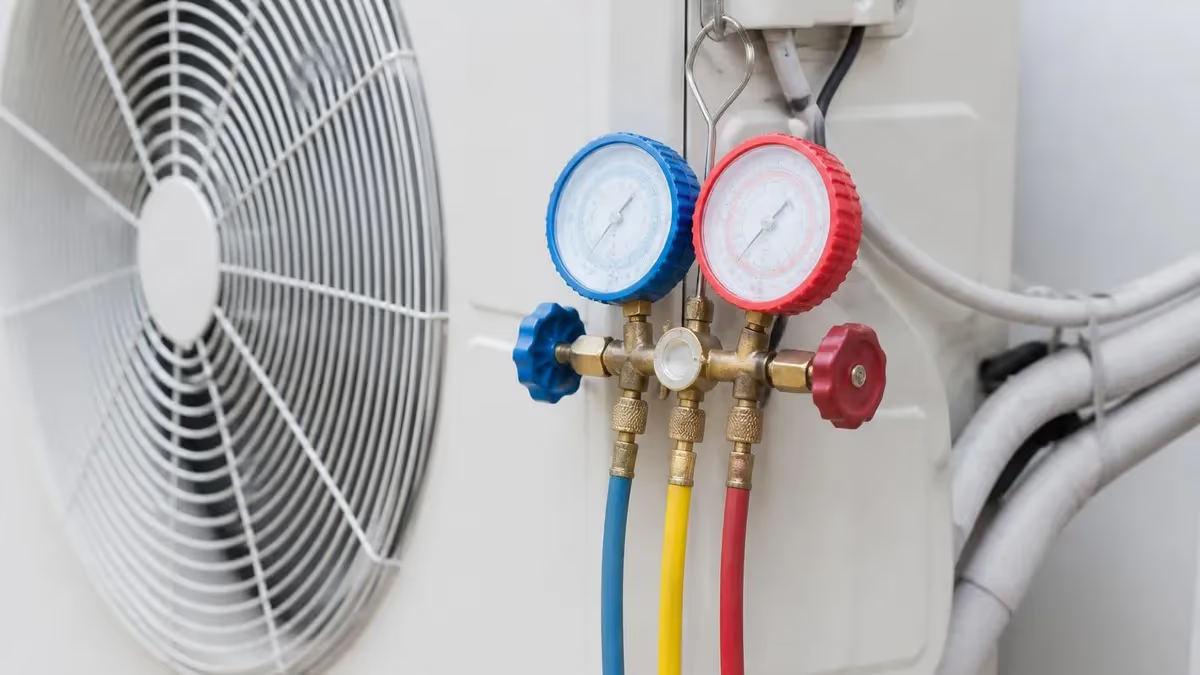
Searching for residential hvac contractors near me usually starts the moment something goes wrong — the air handler is silent on a 95-degree afternoon, a furnace blows cold on a January morning, or a 14-year-old condenser finally rattles to a stop. The contractor you choose during those stressful first hours determines whether you spend $400 on a clean repair or $4,000 on a panicked replacement. Knowing how to vet a local company before that emergency hits is the single best investment a homeowner can make in comfort, safety, and long-term operating cost.
Residential HVAC work is a regulated trade in most U.S. states, but enforcement varies wildly. A contractor in Texas needs an active TDLR license and a Class A or B endorsement, while a contractor in Pennsylvania may only need a basic home-improvement registration. That patchwork means homeowners can't rely on a yellow-page listing or a slick website alone — verification has to happen at the state license board, the manufacturer's dealer locator, and through real customer references with documented job histories.
Beyond licensing, the quality gap between a top-quartile local contractor and an average one is enormous. The good ones perform a Manual J load calculation before quoting a replacement system, pull permits, test static pressure, measure refrigerant charge by subcooling or superheat, and commission the equipment with written readings. The mediocre ones eyeball the old unit, install the same tonnage, skip the permit, and leave within four hours. Both will charge you roughly the same — but only one will deliver the rated SEER2 efficiency on the yellow EnergyGuide sticker.
Geography matters more than most homeowners realize. A contractor familiar with Phoenix heat pumps designs differently than one working in Minneapolis where dual-fuel systems dominate, and coastal Florida techs deal with salt-air corrosion that Denver crews never see. The phrase "near me" is meaningful: a company based 45 minutes away may technically service your ZIP code, but their response time, parts inventory, and familiarity with local code amendments will lag a truly local crew every time.
Pricing transparency is the next filter. A trustworthy residential contractor will give you an itemized written estimate that separates equipment cost, labor, line-set, electrical, permit, and disposal fees — not a single round number scribbled on a business card. Flat-rate pricing books are common and legitimate, but you should still see line items and brand-and-model numbers on every proposal so you can compare apples to apples across three bids.
Reviews tell only half the story. Google ratings above 4.7 are common in this trade because contractors aggressively solicit reviews after every job, so you have to read the one-star and three-star reviews to see the real failure modes: missed appointments, refrigerant leaks within the first year, warranty disputes, or surprise change-orders mid-install. Patterns of complaints across multiple platforms — Google, BBB, Yelp, Nextdoor — are far more diagnostic than the headline star rating.
This guide walks through every step of finding, vetting, and hiring a residential HVAC contractor in 2026: how to verify licenses in seconds, what questions separate pros from parts-changers, the documents you should never sign without, realistic price ranges by system type, and the warranty traps that void coverage years later. By the end you'll know exactly what "qualified local contractor" actually means and how to recognize one in the first five minutes of a phone call.
Related reading: residential hvac contractors near me covers the next step in more detail.
What Changed for HVAC Contractor Certifications in 2026
- EPA removed the January 1, 2026 installation deadline for certain residential and light-commercial systems using A2L (low-GWP) refrigerants, allowing contractors more flexibility in scheduling A2L refrigerant conversions (source: EPA Ozone Layer Protection)
- EPA Section 608 certification continues as the mandatory federal requirement for handling refrigerants, with no expiration—contractors certified before 2026 remain credential-valid indefinitely (source: EPA Section 608 Certification)
- NATE (North American Technician Excellence) now offers Low-GWP Refrigerant specialty certification in 2026 for contractors seeking advanced A2L system proficiency (source: Trade Schools.net HVAC Certification)
- State and local HVAC licensing requirements remain jurisdiction-specific in 2026 with no uniform federal contractor license—homeowners must verify licenses directly with their state licensing board (source: Trade Schools.net HVAC Certification)
Last verified: 2026-10-14 against EPA, NATE, and state licensing authorities.
What You Need to Know About Contractor Certifications
- EPA Section 608 Certification: Federal requirement for all refrigerant-handling contractors. Lifetime credential—does not expire after passing. Passing score: 70% (18 of 25 questions per section, 4 sections). (EPA Section 608)
- NATE Certification: Voluntary industry credential, valid 2–5 years depending on level. Ready-to-Work entry certification costs $60 and is valid 5 years. (NATE/Trade Schools.net)
- State Licensing: Required in most U.S. states; requirements vary by state, county, and contractor role. Always verify against your state's Department of Labor or licensing board. (Trade Schools.net State Licensing)
- A2L Refrigerant Expertise: As of 2026, contractors handling low-GWP A2L refrigerants should have EPA 608 plus manufacturer training or NATE Low-GWP specialty—not mandatory federally but increasingly required by equipment makers. (EPA ODS Regulation)
Residential HVAC Contractors by the Numbers

Where to Find Qualified Local HVAC Contractors
Carrier Factory Authorized, Trane Comfort Specialist, Lennox Premier, and Daikin Comfort Pro programs require dealers to pass technical exams, carry insurance, and maintain customer satisfaction scores. Search by ZIP code on the brand's official site.
Most states publish a searchable contractor license database. Use it to confirm an active mechanical or HVAC license, expiration date, bond status, and any disciplinary actions before you ever call the company.
The Air Conditioning Contractors of America and Building Performance Institute maintain directories of contractors trained in Manual J, Manual D, and whole-home performance testing — well above the baseline industry standard.
Power and gas utilities publish lists of pre-qualified contractors authorized to install rebate-eligible high-efficiency equipment. These contractors are audited for installation quality and proper commissioning.
Nextdoor, neighborhood Facebook groups, and HOA boards surface contractors with proven track records in homes built like yours. Ask specifically about install dates, problems within year one, and how warranty claims were handled.
Verifying credentials should take ten minutes and save you years of headaches. Start with the state license board — every state that licenses HVAC contractors lets you search by company name or license number, and the record will show whether the license is active, suspended, or expired. A contractor whose license lapsed three months ago isn't necessarily a scammer, but it's a signal worth asking about. Disciplinary actions, formal complaints, and bond claims are usually listed on the same page.
Insurance is the second non-negotiable. Ask for a current Certificate of Insurance (COI) showing general liability of at least $1 million per occurrence and workers' compensation that covers every technician who will set foot on your property. If a worker is hurt on an uninsured contractor's job, your homeowner policy can be tapped — and the insurer may pursue subrogation against you personally. A real contractor emails a COI within minutes of request; a sketchy one stalls or sends an expired document.
Manufacturer certifications matter more than generic trade associations. NATE (North American Technician Excellence) certifies individual technicians in specific competencies — air conditioning service, heat pump installation, gas furnaces, commercial refrigeration. EPA Section 608 universal certification is federally required for any tech who handles refrigerant, so any company employing uncertified handlers is operating illegally. Ask which specific techs will work your job and request to see their certification cards.
BBB accreditation is a weaker signal than most consumers think because accreditation is essentially a paid membership, but the complaint history on a BBB profile is genuinely useful. Look at how the company responds to complaints, not just the count — a contractor with 12 complaints and 12 documented resolutions is more trustworthy than one with 2 complaints and no responses. If you're looking at typical pricing benchmarks, our breakdown of HVAC installation cost shows what reasonable bids should include before you compare contractors.
Bonding is often overlooked. A surety bond protects you if the contractor fails to complete the job, abandons the work, or violates license terms. Bond amounts vary by state — California requires $15,000, Arizona requires $9,000 to $32,500 depending on classification — and you can verify bond status on the same license-board page. Cash-only operators and unbonded contractors should be eliminated immediately regardless of price.
Workforce structure is the last credential filter. Ask whether the technicians are W-2 employees or 1099 subcontractors. Both models are legal, but subcontractor crews rotate constantly and have less accountability to the company you're hiring. Employee crews tend to install equipment to a consistent standard because the company controls training, tools, and quality audits. For a $10,000 install, this difference shows up in callbacks, warranty claims, and long-term system reliability.
Finally, verify the physical address. A real local contractor has a shop, a parts inventory, and trucks that return there nightly. Drop the company address into Google Street View — if it's a UPS Store mailbox, a residential garage, or a vacant lot, treat that as a serious red flag. Real businesses invest in physical infrastructure; storefront-less operators tend to disappear when warranty claims arrive.
HVAC Practice Test Questions
Prepare for the HVAC - Heating Ventilation and Air Conditioning exam with our free practice test modules. Each quiz covers key topics to help you pass on your first try.
HVAC Air Conditioning
HVAC Exam Questions covering Air Conditioning. Master HVAC Test concepts for certification prep.
HVAC Code Compliance
Free HVAC Practice Test featuring Code Compliance. Improve your HVAC Exam score with mock test prep.
HVAC Electrical Controls
HVAC Test Prep for Electrical Controls. Practice HVAC Quiz questions and boost your score.
HVAC Energy Efficiency
HVAC Questions and Answers on Energy Efficiency. Free HVAC practice for exam readiness.
HVAC Heating Systems
HVAC Mock Test covering Heating Systems. Online HVAC Test practice with instant feedback.
HVAC Load Calculations
Free HVAC Quiz on HVAC Load Calculations. HVAC Exam prep questions with detailed explanations.
HVAC Tools and Equipment
HVAC Practice Questions for HVAC Tools and Equipment. Build confidence for your HVAC certification exam.
HVAC Refrigeration
HVAC Test Online for Refrigeration. Free practice with instant results and feedback.
HVAC Safety Practices
HVAC Study Material on Safety Practices. Prepare effectively with real exam-style questions.
HVAC System Design
Free HVAC Test covering System Design. Practice and track your HVAC exam readiness.
HVAC Thermodynamics
HVAC Exam Questions covering Thermodynamics. Master HVAC Test concepts for certification prep.
Comparing Residential HVAC Contractor Service Types
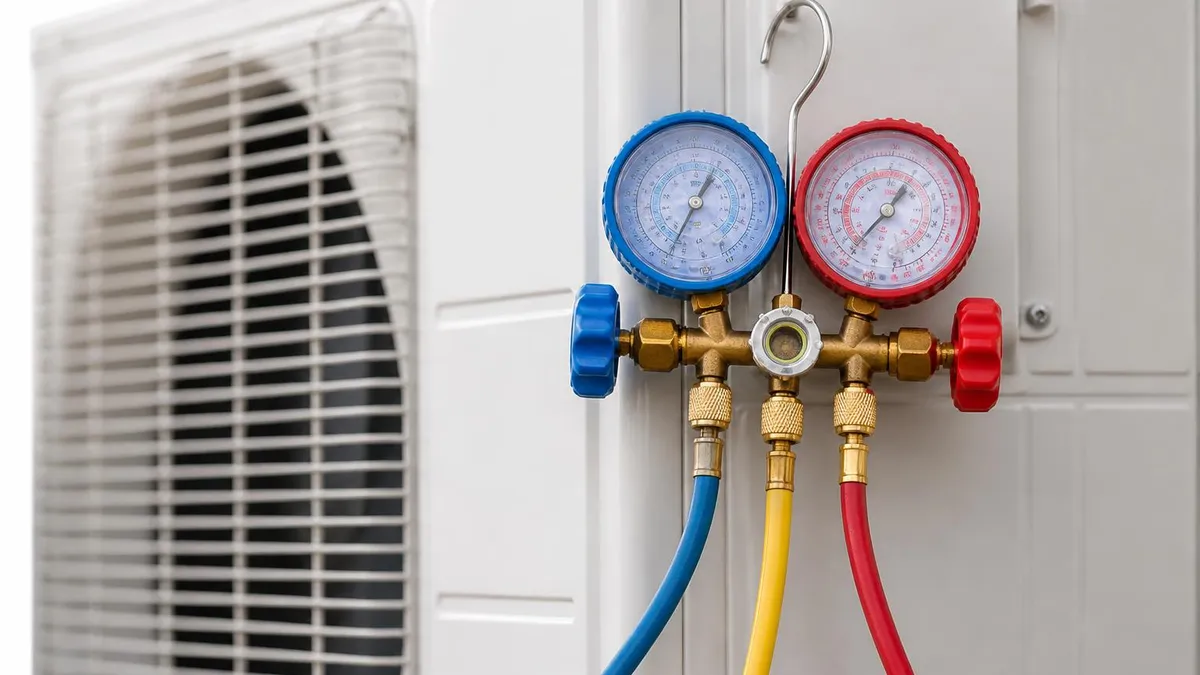
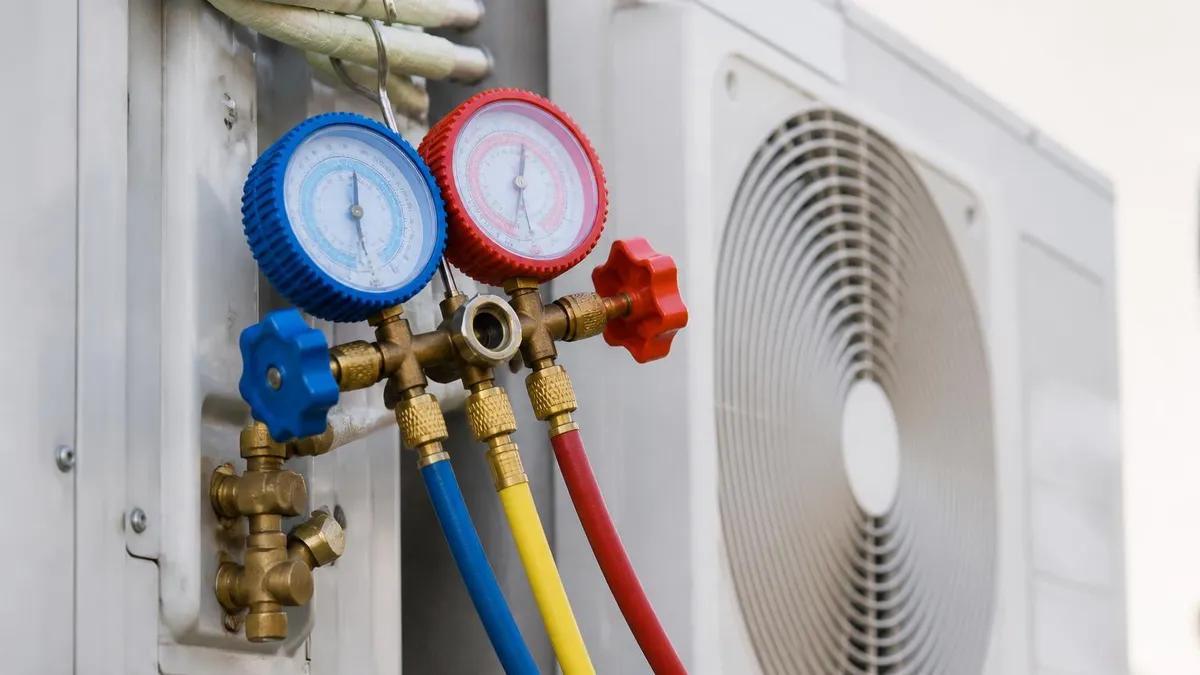
Repair-focused contractors specialize in diagnostics, refrigerant work, and component-level replacements like capacitors, contactors, blower motors, and ignitors. A good repair tech arrives with a digital manifold, a clamp meter, a combustion analyzer for gas equipment, and a leak detector — not just a screwdriver and a guess. Diagnostic fees typically run $79 to $149, and reputable companies apply that fee to the repair if you proceed.
The best service contractors offer transparent flat-rate pricing books so you see the repair cost before authorizing the work. They photograph the failed component, explain the failure mode, and discuss whether the repair is economically sensible given the system's age. The 5,000-rule — repair cost multiplied by system age in years should not exceed $5,000 — is a useful sanity check, though efficiency gains from a newer system can shift the math.
Hiring a Large Franchise vs. a Local Independent HVAC Contractor
- +Local independents typically have lower overhead and more flexible pricing
- +Owner-operators often handle complex jobs personally and stake their reputation on each install
- +Faster decision-making on warranty exceptions and goodwill repairs
- +Deeper familiarity with neighborhood-specific issues like older ductwork or zoning quirks
- +More likely to source from local parts houses with same-day availability
- +Personal accountability — you usually know the owner by name within two visits
- −Smaller crews mean slower response during peak summer or winter demand surges
- −Limited after-hours emergency coverage on weekends and holidays
- −Less standardized training across technicians compared to franchise quality programs
- −Smaller bench means a single sick employee can delay your install by a week
- −Fewer financing options — typically one lender rather than three or four
- −Some local shops lack the manufacturer authorizations needed for extended warranties
Pre-Hire Vetting Checklist for Residential HVAC Contractors
- ✓Verify active state license number on the official license-board website
- ✓Request and review a current Certificate of Insurance showing GL and workers' comp
- ✓Confirm EPA Section 608 certification for any technician handling refrigerant
- ✓Check the physical business address using Street View to confirm a real shop
- ✓Read both five-star and one-star reviews across Google, BBB, and Nextdoor
- ✓Ask for three references from installs completed in the last six months
- ✓Confirm the contractor pulls the mechanical permit — not the homeowner
- ✓Get a written, itemized estimate listing every model number and labor line
- ✓Verify manufacturer authorization status if extended warranties are offered
- ✓Confirm written workmanship warranty of at least one to two years on labor
If a contractor offers to skip the permit, walk away.
Permitted installs are inspected by a third-party municipal inspector who verifies refrigerant line sizing, electrical work, condensate drainage, and code compliance. Unpermitted work voids most manufacturer warranties, can derail your homeowners insurance after a fire or water claim, and shows up as a defect during future home sales. A contractor who suggests skipping the permit to "save you money" is admitting their install can't pass inspection.
Pricing for residential HVAC work in 2026 spans a wider range than most homeowners expect. A straightforward 3-ton 14.3 SEER2 split-system replacement in a Sunbelt city runs $6,500 to $9,500 installed, while the same project in California with Title 24 compliance and HERS testing can hit $14,000. Heat pump conversions, dual-fuel systems, variable-speed equipment, and duct modifications can push residential bids past $20,000. Anything dramatically below the local market range is a warning sign, not a deal.
Three written bids is the homeowner standard, and they should be on the same system tier — don't compare a base-model 14.3 SEER2 single-stage to a premium variable-speed 18 SEER2. Ask each contractor to bid the same equipment class so labor and design differences are visible. The middle bid is often the right answer, but only after you've evaluated proposal quality, warranty terms, and the contractor's load-calculation methodology, not just the bottom-line number.
Financing is increasingly common — 0% promotional rates for 12, 18, or 24 months are widely available through Wells Fargo, Synchrony, and GreenSky lender networks. Read the deferred-interest clauses carefully: if you miss the payoff window by a single day, accrued interest from day one is added back to your balance. Cash discounts of 3-5% are sometimes available because the contractor avoids credit-card processing fees, so ask explicitly whether a cash price differs from financed pricing.
Warranty structure is the single most misunderstood part of an HVAC purchase. Manufacturer parts warranties typically run 10 years on the compressor and 5-10 years on remaining parts — but only if the equipment is registered online within 60 to 90 days of installation. Many contractors say they'll register it for you and never do, dropping your coverage to the unregistered default of 5 years. Verify registration yourself through the manufacturer's website using your serial number.
Labor warranties are entirely separate from parts warranties and come from the contractor, not the manufacturer. The industry standard is one to two years of free labor on warranty-covered repairs. Premium contractors and Carrier Factory Authorized Dealers may offer 10-year labor warranties bundled into the install price. A 10-year parts and labor warranty changes the math significantly — a $1,800 compressor swap in year seven is fully covered rather than partially.
Extended labor warranties from third parties (JB Warranties, EquipmentWatch) are sold separately and cost $300 to $800 per system. They're worthwhile only if the contractor offers no native long-term labor coverage and the underwriter is financially stable. Read the deductibles, service-call fees, and excluded components — many third-party plans exclude refrigerant, drain lines, capacitors, contactors, and other parts that fail most often, leaving you with a warranty that pays nothing in real-world scenarios.
Finally, contract language matters. Look for a written change-order policy requiring your signature before any additional charges, a clearly stated start and substantial-completion date, and a defined cure period for warranty defects. If the proposal references arbitration, read the venue and arbitrator-selection clause — some contracts force disputes into out-of-state forums that effectively shield the contractor from accountability.

R-410A is being phased out in favor of R-454B and R-32 starting in 2025-2026. Some contractors are aggressively pushing leftover R-410A inventory at premium prices without disclosing the EPA transition. Ask explicitly which refrigerant the proposed system uses, confirm the model number against the manufacturer's current catalog, and verify that parts will be available for at least 15 years before signing.
Recognizing red flags early prevents the most expensive HVAC mistakes homeowners make. The single biggest one is hiring a contractor based on a door-to-door sales call or an unsolicited maintenance "inspection" that suddenly discovers thousands of dollars in defects. Reputable contractors don't cold-knock, don't pressure-close on the spot, and don't offer "today-only" discounts that vanish if you take 24 hours to think. Anyone using those tactics is a sales operation first and an HVAC company second.
Another warning sign is a contractor who refuses to put anything in writing or insists on a verbal agreement plus a deposit before a written contract is delivered. Deposits over 25-33% before equipment delivery are unusual and unnecessary — manufacturers typically extend trade credit to authorized dealers, so demanding 50% upfront often signals cash-flow problems. Healthy contractors finance their inventory through normal trade credit and don't need your money to start the job.
Be skeptical of contractors who can't explain why they're recommending a specific tonnage or efficiency level. The right answer references a Manual J load calculation, your home's insulation envelope, and your climate zone — not "the old one was a 4-ton so we'll put in a 4-ton." Oversizing is endemic in residential HVAC and creates short-cycling, poor dehumidification, and premature compressor failure. A contractor who can't articulate sizing methodology is a parts-changer, not a system designer.
Watch the diagnostic process during repair calls. A real diagnostic involves measuring voltage, capacitor microfarads, refrigerant subcooling, static pressure, and temperature splits — with each reading documented. A tech who declares "bad compressor" without measurements, or recommends full replacement after a 90-second visual inspection, is selling, not diagnosing. Request a second opinion before authorizing any repair quoted above $1,500, and most reputable contractors won't take offense at the request. If you're weighing a career in this trade yourself, our guide to HVAC jobs covers training paths and salary expectations.
Online reputation manipulation is a real and growing problem. Look at review velocity and timing — a company with 200 five-star reviews all posted in the last six months and none before is almost certainly buying reviews. Compare the named reviewers against actual local profiles; cross-reference complaints on the BBB and the state contractor board. Honest companies accumulate reviews steadily over years, not in concentrated bursts.
Communication style during the sales process predicts communication style during warranty claims. If estimators don't return calls promptly, show up late without notice, or talk over your questions during the bid visit, expect the same behavior hvac emergency repair mc lean compressor fails in year four. Pre-sale responsiveness is when contractors are on their best behavior; service quality typically degrades 20-30% once they have your money.
Finally, trust your instincts during the in-home estimate. The technician should walk the entire system — outdoor unit, indoor coil or air handler, ductwork, returns, attic insulation, electrical panel — not just the equipment being replaced. They should ask about hot spots, humidity complaints, allergies, and how long you plan to stay in the home. Those questions drive system design decisions. A 15-minute proposal handed to you without diagnostic questions is a generic sales pitch, not an engineered solution.
Once you've narrowed your list to two or three finalists, the final stretch is about extracting commitments in writing and confirming the install team can execute on what the salesperson promised. Ask which crew leader will run your job, how long the crew has been with the company, and whether the lead installer is NATE-certified. A great salesperson can't compensate for a weak install crew, and the install quality determines the next 15 years of system performance more than the brand on the nameplate.
Schedule the install for a day you can be home to verify the work. You don't need to hover over the technicians, but you should be present at startup so the lead installer walks you through the new thermostat, shows you where the disconnect and gas shutoff are, and explains the maintenance schedule. Photograph the equipment nameplates with serial numbers immediately — these will be required for warranty registration, manufacturer recalls, and any future service calls.
Register your equipment yourself within seven days even if the contractor says they'll do it. Carrier, Trane, Lennox, Goodman, Rheem, and York all maintain online registration portals; you'll need the serial number, install date, contractor name, and your homeowner contact information. Print and file the confirmation email — manufacturers occasionally lose records, and proof of timely registration is your evidence in any warranty dispute years down the road.
Request the final commissioning report and inspection sign-off before paying the last installment. The commissioning sheet should show measured static pressure, supply and return temperatures, refrigerant subcooling or superheat readings, electrical draw, and any combustion analyzer readings for gas equipment. The permit inspection card or final approval document confirms the work passed municipal review. Without both documents, you have no proof the install was performed correctly.
Within 30 days of install, run the system through a full operating cycle and watch for anomalies. Cold spots, excessive noise, water around the indoor unit, unusual smells, or thermostat behavior issues should be reported in writing — email, not phone — within the contractor's stated callback window. Documented early reports preserve your warranty rights and force the contractor to address issues while the install crew still remembers your job. Verbal complaints fade; emailed ones become evidence.
Build a long-term relationship with one trusted contractor rather than shopping for the lowest service-call price every time. Loyal customers get priority scheduling during heat waves, goodwill repairs outside warranty, and honest recommendations because the contractor expects to be your provider for the next decade. Bouncing between contractors based on Groupon-style coupon offers is how homeowners end up with five different techs blaming each other for the same recurring leak.
Finally, save every invoice, every commissioning report, every warranty registration confirmation, and every email in a single labeled folder — paper or digital. HVAC documentation becomes critical at three moments: when a major component fails in year six or seven, when you sell the home and the buyer's inspector asks for service history, and when an insurance claim involves the system. Five minutes of filing today saves hours of frustration later, and well-documented systems sell faster and at higher prices than mystery installations.
HVAC Questions and Answers



How this page was made: written with AI tools and published by Nathan Beja, founder of Practice Test Geeks, who is responsible for its content. We have not yet matched this exam's facts to an official source, so confirm fees, dates and rules with the exam body. Not reviewed by a subject-matter expert. Editorial policy