
HVAC Jobs: Types, Salaries, and How to Get Hired 2026 October
❓ Explore HVAC jobs, salary ranges, job types, and how to get hired. Learn what employers look for, which certifications matter, and how to advance in HVAC.

HVAC Jobs: Types, Salaries, and How to Get Hired
HVAC jobs — heating, ventilation, and air conditioning — are among the most stable and in-demand skilled trades in the country. Every building needs climate control, and that equipment requires trained technicians to install, maintain, and repair it. Unlike many industries that fluctuate with economic cycles, HVAC work is largely recession-resistant: people don't stop needing heat in winter or air conditioning in summer regardless of market conditions.
The Bureau of Labor Statistics projects HVAC technician employment to grow 9% through 2032, faster than the average for all occupations. That growth is driven by a combination of aging equipment reaching end-of-life, increased adoption of energy-efficient systems, and a significant wave of retirements among experienced technicians. There's a well-documented shortage of qualified HVAC workers in most US markets — meaning job seekers with the right credentials and training find strong use in salary negotiations and job selection.
HVAC is not a single job but a collection of related roles with different specializations, work environments, and pay scales. Understanding the full landscape — what types of jobs exist, what they pay, what certifications are required, and what advancement looks like — helps you make better decisions about entering or advancing in the field.
Whether you're starting from scratch or transitioning from another trade, the path into HVAC is more accessible than most people assume. The role of an HVAC technician is the foundation most careers in this field are built on, but it's only one piece of a broader job market.
- Median annual wage: $57,300 (BLS 2023); top 10% earn $90,000+
- Job growth: 9% projected through 2032 (faster than average)
- Entry requirement: EPA 608 certification required to handle refrigerants
- Training path: 6-month certificate or 2-year associate degree, then apprenticeship
- Top-paying specializations: Commercial HVAC, industrial refrigeration, controls/BAS
- Self-employment rate: ~15% of HVAC technicians are self-employed
- Union vs non-union: Union trades (UA, IBEW) typically pay 20-30% more + benefits
HVAC Career Path: From Entry Level to Master Technician
Get Your Training
Earn EPA 608 Certification
Complete an Apprenticeship
Get Your Journeyman License
Specialize or Move into Management
Types of HVAC Jobs and What They Pay
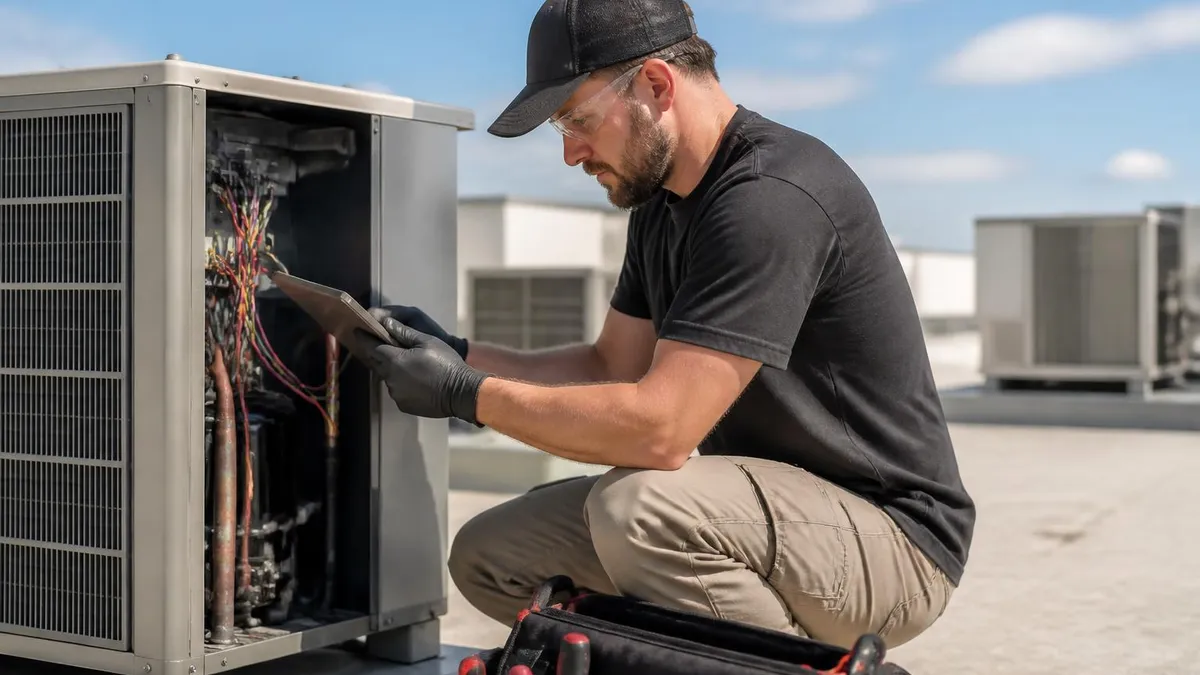
HVAC job types split broadly into residential and commercial work. Residential technicians service single-family homes and small multi-family buildings — they're often generalists who handle installation, maintenance, and repair across the full range of equipment. Commercial technicians work in office buildings, retail spaces, hospitals, schools, and industrial facilities. Commercial work typically involves larger, more complex equipment, higher stakes when systems fail, and correspondingly higher pay.
Installation technicians focus on new equipment installation — putting in systems in new construction or replacing aging equipment in existing buildings. This work tends to be physically demanding, often requiring work in tight crawl spaces, attics, and mechanical rooms. Service technicians handle maintenance calls and repairs on existing systems. Service work requires strong diagnostic skills and is typically less physical but more intellectually demanding than installation. Many technicians do both, but some employers specialize their workforce.
Refrigeration technicians work specifically with commercial refrigeration equipment — walk-in coolers, freezers, display cases, industrial chillers. This specialization often pays more than general HVAC work and is particularly in demand in food service and cold chain logistics. Building Automation System (BAS) or controls technicians specialize in the computerized control systems that manage HVAC operation in large commercial buildings. This is among the highest-paid HVAC specializations and increasingly important as buildings modernize. Understanding HVAC meaning in context — what the acronym covers and what related systems are included — helps when evaluating different job types and specializations.
Salary varies significantly by region, specialization, and experience. Entry-level residential technicians in lower cost-of-living markets might start at $18-22/hour. Experienced commercial technicians in high-cost markets like New York, San Francisco, or Chicago can earn $45-60+/hour, with union technicians often at the top of that range. Overtime is common, especially in extreme weather seasons, and can significantly boost annual earnings. HVAC school programs often publish placement data showing typical starting wages in your local market — worth checking before committing to a program.
Sheet metal workers represent another HVAC-adjacent job category that's often overlooked. Sheet metal technicians fabricate and install the ductwork that HVAC systems depend on. They work alongside HVAC technicians on most commercial construction projects and earn comparable wages — often $50,000-$75,000 annually with union membership.
The Sheet Metal, Air, Rail and Transportation Workers (SMART) union represents both HVAC service technicians and sheet metal workers in many locals, with apprenticeship programs that train workers for both roles. Crossover skills between sheet metal and HVAC make technicians more versatile and more valuable to commercial contractors who need both skill sets on the same job site.
Preventive maintenance contracts represent a growing segment of HVAC work that offers stable, recurring income for both employers and self-employed technicians. Rather than responding only to breakdowns, PM technicians visit commercial accounts on scheduled intervals — monthly, quarterly, or seasonally — to inspect, clean, and tune equipment. These contracts are highly profitable for HVAC companies because they're predictable and retain customers long-term.
Technicians who specialize in PM work often have more predictable schedules than those doing reactive service calls and develop deep expertise in specific equipment they service repeatedly. This model also provides a foundation for technicians starting their own businesses, since PM contracts generate consistent cash flow from the outset.
HVAC Job Types at a Glance
Services homes and small apartment buildings. Handles installation, maintenance, and repairs. Generalist role. Median pay: $48,000-$62,000/year. Good work-life balance; less physical than commercial.
Works on large building systems — office, retail, hospitals. More complex equipment, higher accountability. Median pay: $58,000-$80,000/year. Often union; strong benefits packages.
Specializes in commercial refrigeration equipment. High demand from food service and cold storage. Median pay: $55,000-$78,000/year. Distinct skill set; often requires additional training.
Programs and maintains building automation systems. Combines HVAC knowledge with IT skills. Median pay: $65,000-$95,000/year. Fastest-growing specialization in commercial HVAC.
Reviews blueprints, calculates material and labor costs, prepares bids. Requires field experience plus analytical skills. Median pay: $60,000-$85,000/year. Office-based; advancement path from senior tech.
Oversees a team of service technicians. Handles scheduling, customer escalations, quality control. Median pay: $70,000-$90,000/year. Requires strong leadership and communication skills.
What Employers Look For
What employers expect from entry-level candidates:
- EPA 608 certification (Universal preferred)
- Completion of accredited HVAC training program or active apprenticeship enrollment
- Valid driver's license (most field jobs require driving to job sites)
- Basic electrical knowledge and ability to read wiring diagrams
- Physical fitness — the work involves heavy lifting, ladder use, and work in confined spaces
- Willingness to work irregular hours (emergency calls happen nights and weekends)
Entry-level roles often have titles like HVAC Helper, Apprentice Technician, or Install Assistant. These are training roles — employers understand you're still learning and value attitude and aptitude over experience.
How to Find HVAC Jobs and Stand Out
The most effective way to find an HVAC job, especially at entry level, is through your training program. Accredited programs have employer relationships and placement assistance because contractors actively recruit from them. Your instructors also know which local companies have good training cultures, treat apprentices well, and promote from within — that information is often more valuable than any job board listing.
Trade-specific job boards are more targeted than general ones. The Mechanical Contractors Association of America (MCAA), the Air Conditioning Contractors of America (ACCA), and union apprenticeship programs all post positions. For union jobs, contact your local UA (plumbers and pipefitters) or SMART (sheet metal workers) apprenticeship office directly — union apprenticeship applications have specific windows and processes that differ from standard hiring.
HVAC companies vary dramatically in work culture, advancement opportunities, and pay structure. Small residential contractors often offer more variety and faster responsibility but less structured benefits. Large commercial contractors have more bureaucratic structures but better union membership rates, health insurance, and retirement benefits. Ask about truck allowances or company vehicles, tools provided vs required, overtime policies, and on-call rotation during interviews. The HVAC apprenticeship system is the most common path into the commercial sector and provides structured wage progression that rewards staying with a program through completion.
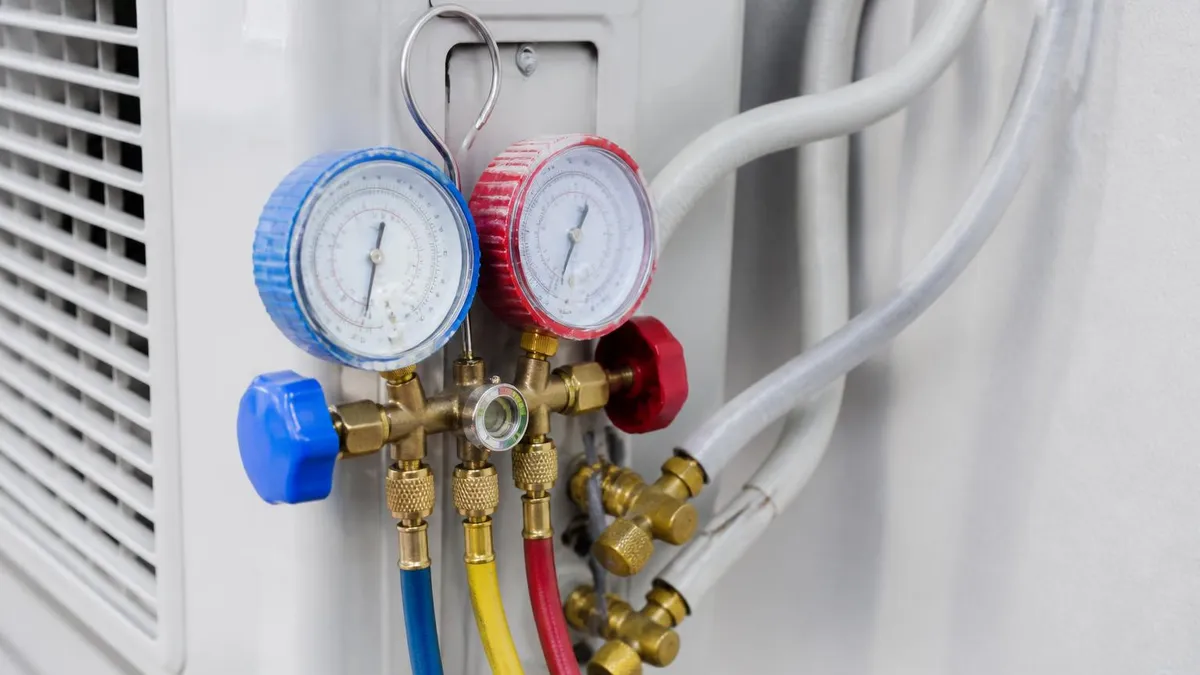
Certifications make a significant difference in getting hired and in salary. Beyond EPA 608, NATE certification is the most widely recognized third-party credential in the US. NATE exams cover specific areas: Core + one specialty (Air Conditioning, Air Distribution, Gas Heating, Heat Pumps, etc.). Manufacturers like Carrier, Trane, and Lennox also offer product-specific training and certifications.
These demonstrate that you can work with their equipment and are worth completing if your target employer specializes in a particular brand. The hands-on knowledge gained through structured HVAC classes specifically prepares candidates for these certification exams and makes the test material significantly easier to apply in field conditions.
HVAC Job Application Checklist
- ✓Obtain EPA 608 Universal certification before applying
- ✓Complete an accredited HVAC certificate or degree program
- ✓Get a valid driver's license and maintain a clean driving record
- ✓Build a resume that lists specific equipment types you've worked on
- ✓Collect references from instructors, supervisors, or apprenticeship coordinators
- ✓Research the employer's specialization (residential vs commercial vs refrigeration)
- ✓Prepare for a skills assessment — many employers test basic electrical and refrigeration knowledge
- ✓Ask about apprenticeship enrollment if you're applying to a union contractor
- ✓Follow up after submitting an application — contracting is relationship-driven
- ✓Join trade associations (ACCA, RSES) to network with hiring managers
HVAC Career: Pros and Cons
- +Strong job security — HVAC work can't be offshored or automated easily
- +Good earning potential without a four-year degree — journeymen earn $55,000-$80,000+
- +High demand in most US markets with documented technician shortage
- +Variety of work environments and specializations to keep work interesting
- +Clear advancement path from helper to journeyman to master/contractor
- +Self-employment is common — many experienced technicians start their own businesses
- −Physically demanding — heavy lifting, ladder work, tight spaces, extreme temperatures
- −On-call and emergency work is common, especially in residential service roles
- −Startup costs for tools can be significant for independently employed technicians
- −Seasonal demand swings can create slow periods in mild climates
- −Training takes 1-5 years before reaching journeyman wages depending on path
- −Licensing requirements vary by state and require ongoing renewal and continuing education

HVAC Job Market by Region and Sector
HVAC job availability and wages vary significantly by geography. Sun Belt states — Texas, Florida, Arizona, the Carolinas — have some of the highest demand due to population growth, year-round cooling loads, and substantial commercial construction activity. The Northeast and Midwest have strong union presence, higher baseline wages, and significant commercial and industrial HVAC work, but also more seasonal demand variation. The Pacific Coast, particularly California, has some of the highest wages but also stringent licensing requirements and high cost of living that offset the pay advantage.
The construction sector drives installation work — when commercial construction slows, installation jobs slow too. Service and maintenance work is more stable because existing equipment always needs service regardless of new construction activity. Many technicians diversify across both installation and service to smooth income across economic cycles. Companies focused on service contracts rather than pure installation tend to offer more stable year-round employment.
Government and institutional employers — military bases, hospitals, universities, public school systems — offer particularly stable HVAC employment with strong benefits but often lower pay than top-end commercial contractors. Federal government HVAC positions go through USAJobs.gov and often require security clearance processes that can take months. Municipal and county government positions are posted on local government websites and often require civil service exam scores. These roles trade peak earning potential for stability, pension benefits, and predictable schedules that many technicians find appealing after years of commercial service work.
Energy efficiency upgrades are creating a significant new category of HVAC work. The Inflation Reduction Act of 2022 allocated billions in incentives for heat pump installations, high-efficiency HVAC systems, and building electrification. That funding is flowing through utilities, state energy offices, and residential programs — driving demand for technicians who can install and service cold-climate heat pumps, VRF systems, and mini-splits. Technicians who add these skills now position themselves well for a decade of increased work driven by efficiency mandates in commercial buildings and growing consumer demand for electric alternatives to gas heating.
Data centers represent one of the fastest-growing commercial HVAC sectors. The explosion in cloud computing, AI infrastructure, and streaming services requires massive cooling capacity — and that cooling is specialized, critical, and highly compensated work. Data center HVAC technicians earn premium wages because system failures are measured in millions of dollars per hour of downtime. Getting into data center work requires familiarity with precision cooling equipment, redundant systems, and strict change management procedures. Some large data center operators run their own training programs for experienced HVAC technicians who want to transition into this sector.
HVAC Jobs: By the Numbers
Advancement and Long-Term Earnings in HVAC
The most common advancement path for HVAC technicians is toward specialization, management, or self-employment. Specialization in controls, commercial refrigeration, or large chiller systems can push earnings to $80,000-$100,000+ in major markets without moving into management. These specializations require additional training and often manufacturer certification programs that take weeks to complete — but the pay differential compounds over a career.
Management paths — service manager, project manager, estimator — offer salaries in the $70,000-$95,000 range with the tradeoff of moving from field work to office and customer interaction roles. Project managers on large commercial construction jobs earn significantly more, particularly those working for mechanical contractors on data centers, hospitals, or industrial facilities. These roles typically require 10+ years of field experience and often a bachelor's degree in construction management or engineering, though some contractors promote internally from experienced technicians without formal degrees.
Self-employment is a real option for experienced HVAC technicians and a common destination after 10-15 years in the field. Starting an HVAC business requires a contractor's license (state-specific), liability insurance, worker's compensation if you hire employees, and working capital for tools, a vehicle, and initial marketing. Many self-employed technicians start by taking overflow work from former employers while building their own customer base.
Well-run HVAC businesses in high-demand markets generate owner earnings of $100,000-$200,000+, though the business management demands are substantial. Ongoing knowledge of regulatory requirements — including refrigerant handling rules covered in EPA certifications and practical safety knowledge — remains critical throughout a technician's career.
Starting Your HVAC Career: Practical Next Steps
If you're new to HVAC and deciding how to enter the field, the two main paths are trade school and apprenticeship. Trade school programs (6-24 months) give you foundational knowledge and EPA certification faster but don't include the on-the-job training that apprenticeships provide. Apprenticeship programs (3-5 years) are paid from day one and include structured field training, but they're competitive to get into and take longer to complete. Many successful technicians do both: complete a trade school program to build baseline knowledge, then apply to apprenticeship programs with an advantage over candidates without formal training.
Community colleges often offer the most cost-effective training — HVAC certificate programs at community colleges typically cost $3,000-$8,000 total, compared to $10,000-$20,000+ at for-profit trade schools. HVAC manufacturers like Carrier, Lennox, and Trane operate their own training academies for technicians who want manufacturer-specific certification. These are typically short programs (1-5 days) rather than full training programs and are most useful for technicians with existing field experience who want to specialize in a particular product line.
Getting hands-on practice before your first job matters. Volunteer to help a neighbor with HVAC maintenance, work with a local contractor on weekends, or shadow a practicing technician during your training program. The technical skills tested in EPA 608 exams and NATE certifications map directly to what employers ask about in interviews — practicing with HVAC safety practices questions helps reinforce the regulatory knowledge that employers assume certified candidates already have.
Building a professional network early accelerates every aspect of the HVAC job search. Local ACCA chapters host contractor meetings, trade shows like AHR Expo bring together thousands of industry professionals, and state licensing board events are attended by both employers and regulators. Even informal connections — knowing a journeyman who can vouch for you with their employer — can fast-track an application past the screening stage. The HVAC industry is relationship-driven at every level, from apprenticeship placement to senior management hiring.
The combination of skilled trades shortage, strong wage growth, and increasing demand from building electrification and data center expansion makes HVAC one of the most durable career paths available without a four-year degree. Entry is accessible, advancement is clearly defined, and the work is genuinely necessary — every building in every US market needs qualified technicians to keep building systems running safely and efficiently.
HVAC Questions and Answers
About the Author

NATE Certified HVAC Technician & Licensing Exam Trainer
Universal Technical InstituteMike Johnson is a NATE-certified HVAC technician and EPA 608 universal-certified refrigerant handler with a Bachelor of Science in HVAC/R Technology. He has 19 years of commercial and residential HVAC installation and service experience and specializes in preparing technicians for NATE certification, EPA 608, A2L refrigerant safety, and state HVAC contractor licensing examinations.