
HVAC Technician: How to Start Your Career, Get Certified, and Succeed
❓ Free HVAC Technician: How to Start Your practice test with instant feedback and detailed answer explanations. Prepare for your exam.

An HVAC technician installs, repairs, and maintains heating, ventilation, and air conditioning systems. It's one of the fastest-growing skilled trades in the country — and for good reason. Buildings don't function without climate control. Whether it's a homeowner's furnace failing in January or a data center's cooling system overheating in July, someone's got to fix it. That someone is you, if you choose this path.
The demand for qualified HVAC technicians keeps rising. Older systems need replacing. New construction requires installation. Energy efficiency regulations push building owners toward upgrades. All of that translates into steady, well-paying work. Understanding what hvac actually stands for — heating, ventilation, and air conditioning — is just the starting point. The real question is whether this career fits your personality, your goals, and your timeline.
This guide covers everything from training programs and certification exams to salary expectations and daily routines. You'll learn what separates an average HVAC technician from one who builds a six-figure career. We won't sugarcoat it either — there are downsides, physical demands, and seasonal swings you should understand before committing. But if you like hands-on problem solving, hate sitting at a desk, and want a career that can't be outsourced, HVAC work checks every box. Let's break it down step by step.
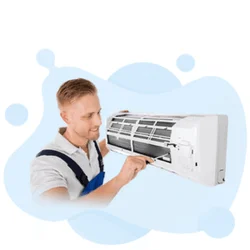
A day in the life of an HVAC technician looks nothing like a typical office job. You might start the morning diagnosing a faulty compressor at a residential home, spend the afternoon running ductwork in new commercial construction, and end the day troubleshooting a rooftop unit at a strip mall. No two days are the same. That variety is exactly what draws a lot of people to the trade — and it's what keeps them engaged for decades.
The technical side is real. You'll work with electrical circuits, refrigerant handling, gas piping, sheet metal fabrication, and computerized building controls. Modern HVAC systems run on sophisticated thermostats, variable-speed motors, and smart sensors. A technician who can read wiring diagrams, interpret pressure gauges, and navigate diagnostic software has a massive advantage over someone who only knows the basics.
Physically, expect to be on your feet all day. Crawl spaces, attics, rooftops, and tight mechanical rooms are your office. You'll lift equipment weighing 50+ pounds regularly. Summer heat and winter cold are part of the deal — you're often working in the exact conditions your customers want fixed.
It's demanding work, but most HVAC technicians say they prefer it to sitting behind a screen for eight hours straight. You'll also spend time completing paperwork, logging refrigerant usage for EPA records, and communicating with customers about repair options and costs. The job blends physical labor with customer service and technical documentation — it's not just turning wrenches.
Breaking into HVAC doesn't require a four-year degree. Most HVAC technicians enter the field through trade schools, community colleges, or apprenticeship programs. Trade school programs typically run 6 to 12 months and cover fundamentals — refrigeration cycles, electrical theory, system design, and hands-on equipment work. Community colleges offer two-year associate degrees that go deeper into commercial systems and building automation.
Apprenticeships are the other major path. These last 3 to 5 years and combine paid on-the-job training with classroom instruction. You earn while you learn. Unions like the UA (United Association) and SMWIA (Sheet Metal Workers) run structured apprenticeship programs in most major metros. The advantage? You graduate with thousands of hours of real-world experience and zero student debt. The trade-off is lower pay during the apprenticeship period — typically $15–$20/hr to start.
Military veterans often transition into HVAC work because their mechanical and electrical training transfers directly. Several programs — including Helmets to Hardhats and the HVAC Excellence military initiative — offer accelerated pathways for vets. Regardless of your entry point, the goal is the same: get enough training to pass your EPA 608 certification, land your first technician role, and start building field experience as quickly as possible.
HVAC Technician Certifications Explained
The EPA Section 608 certification is mandatory for any HVAC technician who handles refrigerants. It comes in four levels: Type I (small appliances), Type II (high-pressure systems), Type III (low-pressure systems), and Universal (all types). Most employers want Universal certification. The exam covers proper refrigerant handling, recovery procedures, and environmental regulations. Pass rates are high with basic study — aim for Universal from the start.
HVAC technician salaries vary widely based on location, specialization, and experience — but the floor is solid. Entry-level positions typically start at $35,000–$42,000 annually. After 3–5 years of experience and a few certifications under your belt, expect $50,000–$65,000. Senior technicians, supervisors, and those running their own shops regularly clear $75,000–$100,000+. The ceiling is higher than most people assume for a trade that doesn't require a bachelor's degree.
Geography matters too. HVAC technicians in the Northeast, West Coast, and major metro areas earn the highest wages. Alaska, Massachusetts, Connecticut, and Hawaii consistently rank at the top. States with extreme temperatures — where HVAC systems run year-round — tend to pay more because of sustained demand. Conversely, areas with mild climates and lower cost of living pay less but often offer a better quality of life.
Overtime and on-call pay bump those numbers further. When a furnace dies at 2 AM in December, the technician who answers the call earns premium rates. Many experienced HVAC technicians earn $10,000–$20,000 per year in overtime alone. Some companies offer performance bonuses tied to customer satisfaction scores or maintenance contract sales. The total compensation picture is usually stronger than the base salary suggests. Always ask about bonus structures during interviews.
The career path for an HVAC technician isn't a straight line — it branches in several profitable directions. Some technicians stay on tools their entire career, becoming master-level service experts who command top pay for complex diagnostics. Others move into project management, estimating, or sales engineering. A few open their own HVAC contracting businesses. Each path has different income ceilings and lifestyle trade-offs.
Starting your own HVAC business is the most common entrepreneurial exit. After 5–10 years in the field, many technicians get their contractor's license and start bidding residential or commercial jobs directly. The upside is obvious — business owners capture profit margins on labor, equipment, and maintenance contracts. The risk is real too. You'll need working capital, insurance, bonding, and the ability to manage employees, marketing, and cash flow simultaneously.
Teaching is an underrated option. Community colleges and trade schools constantly need instructors with field experience. The pay is lower than a senior technician role — typically $45,000–$60,000 — but the schedule, benefits, and physical demands are dramatically easier. If your body is wearing down from decades of physical work, teaching lets you stay in the industry without crawling through another attic. Some technicians also move into building inspection or code enforcement roles with municipal governments.
Pros and Cons of Being an HVAC Technician
- +Strong job security — buildings always need heating and cooling systems
- +No college degree required — trade school or apprenticeship gets you started
- +Earning potential exceeds $75K with experience and certifications
- +Variety in daily work — different locations, systems, and challenges
- +Clear advancement paths into management, sales, or business ownership
- +Recession-resistant demand — HVAC repairs can't be deferred indefinitely
- −Physically demanding — heavy lifting, cramped spaces, extreme temperatures
- −On-call and emergency work disrupts personal time and weekends
- −Seasonal workload swings — summers and winters are hectic, spring is slower
- −Exposure to hazardous materials including refrigerants and electrical systems
- −Licensing requirements vary by state, complicating relocations
- −Injury risk from falls, burns, and electrical shock higher than office jobs
Pros and Cons at a Glance
| Pros | Cons |
|---|---|
| Strong job security — buildings always need heating and cooling systems | Physically demanding — heavy lifting, cramped spaces, extreme temperatures |
| No college degree required — trade school or apprenticeship gets you started | On-call and emergency work disrupts personal time and weekends |
| Variety in daily work — different locations, systems, and challenges | Seasonal workload swings — summers and winters are hectic, spring is slower |
| Clear advancement paths into management, sales, or business ownership | Exposure to hazardous materials including refrigerants and electrical systems |
| Recession-resistant demand — HVAC repairs can't be deferred indefinitely | Licensing requirements vary by state, complicating relocations |
Getting your first HVAC technician job is easier than most trades because demand outstrips supply in nearly every market. Start by earning your EPA 608 Universal certification — it takes a few weeks of study and costs under $200. Apply to residential HVAC companies, property management firms, and mechanical contractors. Entry-level titles include HVAC helper, install assistant, and service apprentice. Don't be picky about your first role; every system you touch teaches you something.
Your resume matters less than your willingness to learn and show up reliably. HVAC managers consistently rank reliability as the top trait they look for in new hires. Show up on time, stay until the job's done, and ask questions. That gets you farther than any certification. Within 6–12 months, you'll be running basic service calls solo. Within 2–3 years, you should be handling complex diagnostics independently.
Networking accelerates everything. Join your local HVAC chapter, attend trade shows, and connect with supply house reps. Many of the best job opportunities — especially with top-paying contractors — get filled through referrals before they're ever posted online. Building relationships early in your career pays dividends for decades.
The HVAC technician community is tighter than you might expect, and reputation travels fast. Online forums and social media groups — particularly on Reddit and Facebook — are also valuable resources for technical questions, career advice, and job leads. Don't underestimate the power of being known as someone who's skilled and easy to work with.
HVAC Technician Career Launch Checklist
- ✓Research trade schools and community college HVAC programs in your area
- ✓Compare tuition costs, program length, and hands-on training hours
- ✓Apply for financial aid, scholarships, or employer-sponsored apprenticeships
- ✓Study for and pass the EPA Section 608 Universal certification exam
- ✓Build basic hand tool and multimeter proficiency before your first day
- ✓Apply to residential and commercial HVAC companies as a helper or apprentice
- ✓Pursue NATE certification within your first 2 years for a pay boost
- ✓Learn to read wiring diagrams, P&ID drawings, and equipment manuals
- ✓Track your field hours — most states require logged hours for journeyman licensing
- ✓Set a 5-year goal: senior technician, supervisor, or business ownership
Tools are a real expense for any HVAC technician, and you should budget for them from day one. A basic starter kit — multimeter, manifold gauge set, hand tools, safety glasses, and a good flashlight — runs $500–$1,000. As you advance, you'll add a refrigerant recovery machine, vacuum pump, combustion analyzer, and possibly a thermal imaging camera. A fully equipped truck can represent $5,000–$15,000 in personal tool investment over the first few years.
Many employers provide major equipment, but hand tools are almost always the technician's responsibility. Tool allowances of $500–$1,500/year are common at larger companies. Some technicians finance their tools through truck tool programs (Snap-on, Mac Tools), though the interest rates can be steep. Buy quality where it matters — a reliable multimeter and manifold gauges are worth the investment — and go budget on items you'll replace frequently.
Don't forget about your vehicle. Most service technicians drive company-provided vans, but some residential contractors expect you to have your own truck. Fuel reimbursement and vehicle allowances vary. If you're driving your own vehicle, factor in wear, insurance, and fuel costs when evaluating a job offer. That $25/hr position with a company van might net you more than $28/hr in your own truck after expenses. Do the math before you accept any offer — the numbers don't always favor the higher hourly rate once you account for hidden costs.
Safety is non-negotiable for HVAC technicians. You're working with high-voltage electricity, pressurized refrigerants, combustible gases, and heavy equipment — often in confined or elevated spaces. OSHA training should be part of your foundation. Falls from ladders and rooftops are the most common serious injuries. Electrical shock, refrigerant burns, and carbon monoxide exposure round out the major hazards every technician needs to respect.
Smart technicians develop safety habits early and never deviate from them. Lock-out/tag-out every electrical panel before touching it. Verify gas leaks with instruments, not your nose. Wear fall protection on rooftops — every time, not just when someone's watching. Carry a personal CO detector on furnace calls. These aren't corporate bureaucracy — they're the practices that keep you alive and working for 30+ years instead of collecting disability at 40.
Mental health deserves mention too. On-call schedules, seasonal overtime surges, and physically demanding work take a toll that's easy to dismiss but hard to sustain. The best HVAC companies are starting to recognize this — offering employee assistance programs, mandatory rest between on-call shifts, and mental health benefits. If your employer doesn't prioritize technician wellness, that's a red flag worth weighing against whatever they're paying you. Set boundaries early. The best technicians maintain long careers because they protect their bodies and their mental health with the same discipline they bring to every service call.
Heat pump installations are surging thanks to federal tax credits under the Inflation Reduction Act and state-level electrification mandates. HVAC technicians with heat pump expertise — installation, commissioning, and cold-climate troubleshooting — are in exceptional demand. If you're entering the field now, prioritize heat pump training. It's the fastest-growing segment of the residential HVAC market and shows no signs of slowing through 2030.
The future for HVAC technicians looks strong by every measure. Building construction continues. Older systems need replacement on a 15–20 year cycle. Energy efficiency regulations force upgrades. And the skilled labor shortage means employers are competing for qualified technicians with signing bonuses, tuition reimbursement, and accelerated raise schedules. If you're entering the field in 2026, you're stepping into a seller's market.
Technology is changing the job, but it's not eliminating it. Smart thermostats, IoT-connected equipment, and AI-driven diagnostics are becoming standard. That means HVAC technicians need to be comfortable with software, apps, and network connectivity in addition to mechanical skills. The technicians who embrace technology and adapt quickly will earn the most and face the least competition.
Green building standards and net-zero initiatives are creating entirely new specializations. Geothermal systems, VRF (variable refrigerant flow) installations, and energy auditing all require HVAC technician expertise combined with sustainability knowledge. These roles typically pay 15–25% more than traditional service work. If you're planning a long career in the trades, positioning yourself at the intersection of HVAC and green technology is one of the smartest moves you can make right now. Utility companies and government agencies also hire HVAC technicians for energy audit and rebate programs — another growing niche worth exploring as regulations tighten nationwide.
HVAC Practice Test Questions
Prepare for the HVAC - Heating Ventilation and Air Conditioning exam with our free practice test modules. Each quiz covers key topics to help you pass on your first try.
HVAC Air Conditioning
HVAC Exam Questions covering Air Conditioning. Master HVAC Test concepts for certification prep.
HVAC Code Compliance
Free HVAC Practice Test featuring Code Compliance. Improve your HVAC Exam score with mock test prep.
HVAC Electrical Controls
HVAC Test Prep for Electrical Controls. Practice HVAC Quiz questions and boost your score.
HVAC Energy Efficiency
HVAC Questions and Answers on Energy Efficiency. Free HVAC practice for exam readiness.
HVAC Heating Systems
HVAC Mock Test covering Heating Systems. Online HVAC Test practice with instant feedback.
HVAC Load Calculations
Free HVAC Quiz on HVAC Load Calculations. HVAC Exam prep questions with detailed explanations.
HVAC Tools and Equipment
HVAC Practice Questions for HVAC Tools and Equipment. Build confidence for your HVAC certification exam.
HVAC Refrigeration
HVAC Test Online for Refrigeration. Free practice with instant results and feedback.
HVAC Safety Practices
HVAC Study Material on Safety Practices. Prepare effectively with real exam-style questions.
HVAC System Design
Free HVAC Test covering System Design. Practice and track your HVAC exam readiness.
HVAC Thermodynamics
HVAC Exam Questions covering Thermodynamics. Master HVAC Test concepts for certification prep.
Preparing for HVAC certification exams takes discipline, but the process isn't complicated. Start with a quality study guide that covers the EPA 608 exam — the mandatory certification every HVAC technician needs. Focus on refrigerant types, recovery procedures, pressure-temperature relationships, and environmental regulations. Most people pass with 2–4 weeks of focused study. Practice tests are the best way to identify weak spots before exam day.
Beyond EPA 608, the NATE exams require deeper knowledge. These scenario-based tests ask you to diagnose problems, select appropriate repairs, and demonstrate understanding of system interactions. Hands-on field experience is the best preparation, but targeted practice questions help you translate what you know into correct answers under test conditions. Don't just memorize — understand why each answer is right.
Your certification journey doesn't end with the first few exams. Manufacturer certifications from Carrier, Trane, Lennox, and others demonstrate brand-specific expertise that employers value. Continuing education credits keep your licenses current. And specialty certifications in areas like controls, refrigeration, or commercial systems open doors to the highest-paying positions in the HVAC technician career path. Treat learning as a permanent part of the job, and the career rewards follow. The HVAC technician field evolves constantly — new refrigerants, equipment designs, and efficiency standards mean there's always something new to master. That's what keeps the work interesting decade after decade.
Sample HVAC Practice Questions
Try these questions from our free HVAC practice tests. The correct answer and an explanation follow each question.
What action should a certified technician take upon discovering that a previous technician improperly vented refrigerant?
- A. Nothing—it is not their responsibility
- B. Report the violation to the EPA using Form 1800
- C. Report the violation to the EPA, which can be done anonymously
- D. Report to the state contractor licensing board only
Answer: C. Report the violation to the EPA, which can be done anonymously
Technicians can report refrigerant venting violations to the EPA, and reports may be made anonymously. The Clean Air Act allows for rewards to people who provide information leading to penalties.
An HVAC technician measures 10°F of superheat at the evaporator outlet. This reading indicates:
- A. The evaporator is flooded with liquid
- B. There is a refrigerant overcharge
- C. The refrigerant is fully vaporized with 10°F above saturation
- D. The compressor is short-cycling
Answer: C. The refrigerant is fully vaporized with 10°F above saturation
10°F superheat means the vapor exiting the evaporator is 10°F warmer than the saturation temperature at that pressure.
An HVAC technician is asked to service a split system in a confined crawlspace. Which atmospheric hazard should be tested for BEFORE entering?
- A. Carbon dioxide levels only
- B. Oxygen deficiency, flammable gases, and toxic gases
- C. Temperature and humidity only
- D. Only refrigerant concentration
Answer: B. Oxygen deficiency, flammable gases, and toxic gases
Confined space entry requires testing for oxygen deficiency, flammable/explosive gases, and toxic gases before any worker enters.
What does OSHA require when an HVAC technician must work on a rooftop unit within 6 feet of an unguarded roof edge?
- A. A warning line system alone is sufficient
- B. Fall protection such as guardrails, safety nets, or personal fall arrest systems
- C. A spotter on the ground watching the technician
- D. Written acknowledgment of the risk before starting work
Answer: B. Fall protection such as guardrails, safety nets, or personal fall arrest systems
OSHA 29 CFR 1926.502 requires fall protection (guardrails, safety nets, or personal fall arrest) when within 6 feet of an unprotected edge.
HVAC Questions and Answers
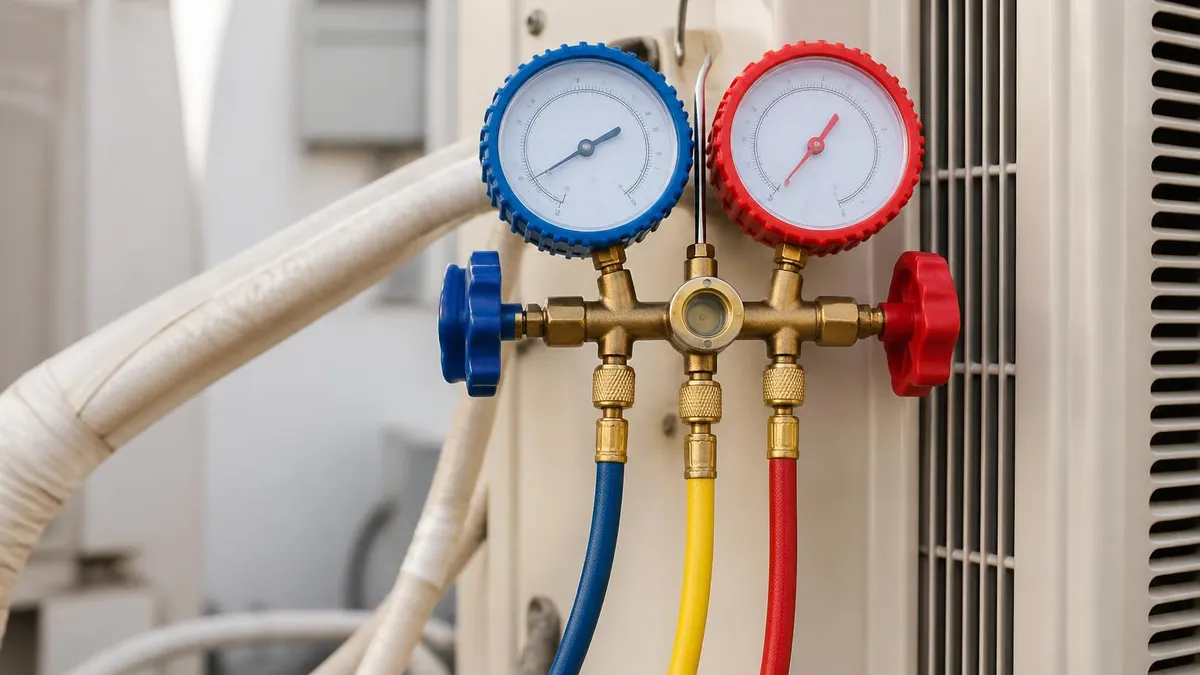
HVAC Meaning: What Heating, Ventilation & Air Conditioning Really Covers
HVAC
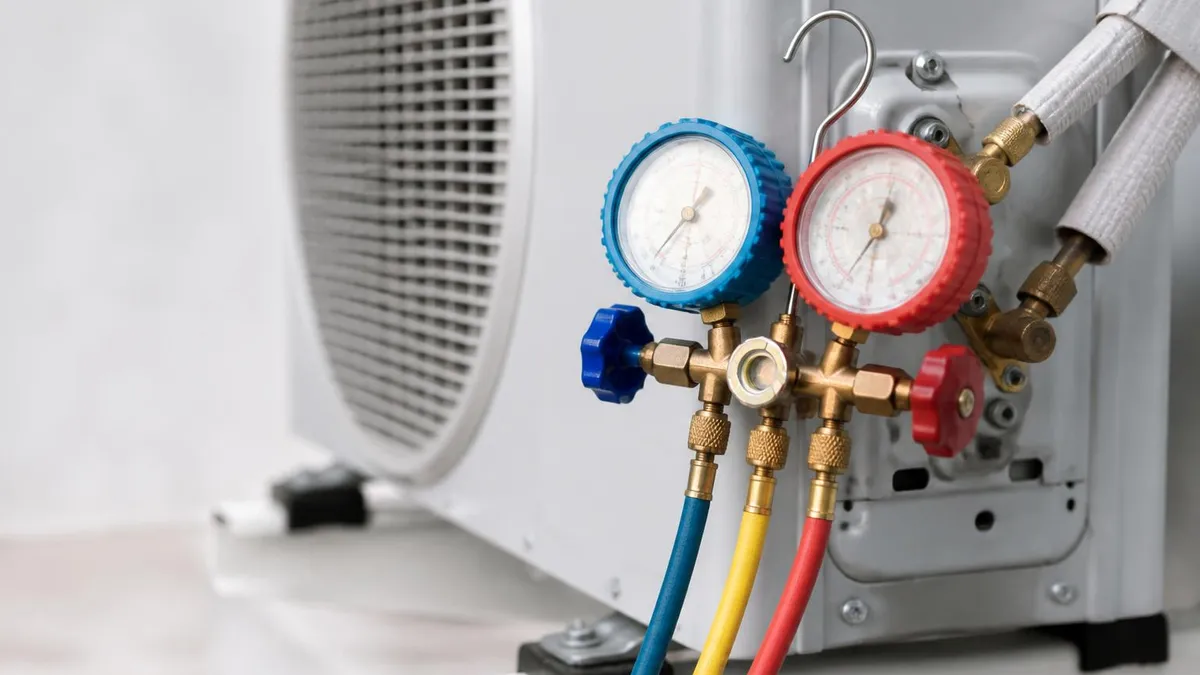
HVAC Sales: The Complete Guide to Selling Heating and Cooling Systems, Building Customer Trust, and Closing More Deals
HVAC Solutions: The Complete Guide to Heating, Cooling, and Indoor Air Quality Systems for Homes and Buildings
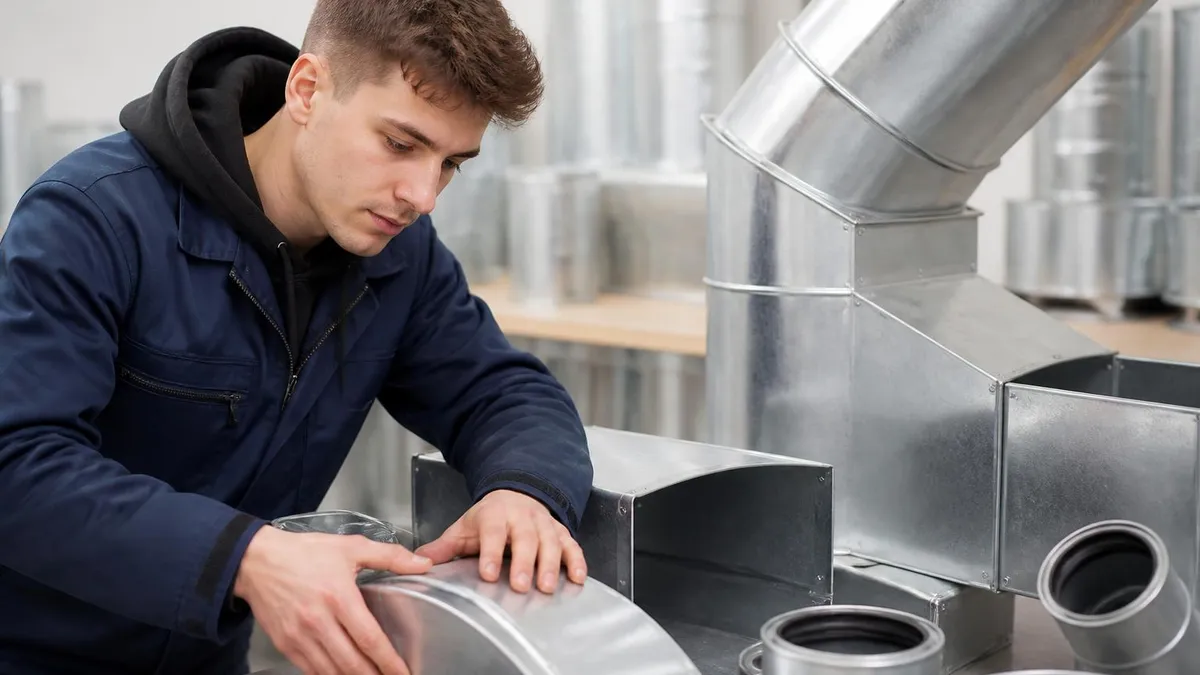
HVAC School Online: The Complete Guide to Virtual HVAC Training, Certification, and Career Pathways in 2026
About the Author

NATE Certified HVAC Technician & Licensing Exam Trainer
Universal Technical InstituteMike Johnson is a NATE-certified HVAC technician and EPA 608 universal-certified refrigerant handler with a Bachelor of Science in HVAC/R Technology. He has 19 years of commercial and residential HVAC installation and service experience and specializes in preparing technicians for NATE certification, EPA 608, A2L refrigerant safety, and state HVAC contractor licensing examinations.