
Fire and Ice HVAC and Other HVAC Company Names: A Complete Guide to Naming, Branding, and What to Look For
Fire and Ice HVAC and other clever HVAC company names — 🆕 how naming works, branding trends, and how to evaluate contractors by their brand.

Fire and ice HVAC is one of the most recognizable naming patterns in the heating and cooling industry, and it shows up on trucks, yard signs, and websites in nearly every state across the country. The combination works because it instantly communicates the two services every homeowner cares about — heating in winter and cooling in summer — without requiring a single line of explanation.
Companies that use this name often rank well in local search results because the phrase is easy to remember, easy to spell, and easy to say over the phone when someone is in the middle of a no-heat emergency.
But fire and ice is only the beginning of the conversation about HVAC company names. The industry has hundreds of common naming patterns, from family surnames like Smith Heating & Cooling to weather-themed brands like Arctic Air and Sunrise Climate Control. Each pattern signals something different about the company — its size, its history, its target customer, and sometimes even its pricing tier. Understanding how these names are constructed helps homeowners spot established operators and helps new contractors choose a name that will actually grow with their business.
There is real money behind this decision. A well-chosen name can shave thousands off marketing costs over the first five years of operation because it earns word-of-mouth referrals and ranks faster in Google Maps. A poorly chosen name — one that is hard to pronounce, conflicts with an existing trademark, or limits geographic expansion — can force a costly rebrand right when a company is starting to build momentum. Industry studies suggest that roughly one in five HVAC startups rebrands within their first decade, and naming is the most common reason cited.
This guide walks through the most popular HVAC naming conventions in use today, the legal and trademark considerations every owner needs to understand, and the branding signals consumers should look for when comparing contractors. It also covers how naming intersects with digital marketing, technician recruiting, and acquisition value if you ever plan to sell the business. Whether you are launching a new company or simply trying to figure out which contractor to call, the right name carries more weight than most people realize.
The fire and ice pattern remains popular because it is metaphorical without being abstract — customers immediately understand that the company handles both temperature extremes. Other elemental names like Polar Bear Air, Comfort Zone, and Climate Masters work for the same reason. They sit in a sweet spot between memorable imagery and clear service description, and they translate well into logos, social media handles, and vehicle wraps. The visual identity practically designs itself once the name is chosen.
On the other end of the spectrum, generic descriptive names like ABC Heating & Air or Quality HVAC Services tend to underperform because they blur together in directory listings. Customers cannot remember which company gave them a good experience three years ago, and they cannot easily recommend a name they barely registered in the first place. The best names balance descriptive clarity with a distinctive hook, whether that hook is a metaphor, a family name with local heritage, or a brand promise like Same Day Comfort.
By the end of this guide, you should be able to look at any HVAC company name and decode what it is trying to communicate, whether the branding is delivering on that promise, and what alternatives exist if you are choosing a name for a new venture. Naming is not just a creative exercise — it is one of the most consequential business decisions an HVAC owner ever makes.
HVAC Company Names by the Numbers

Popular HVAC Naming Patterns
Names like Fire and Ice, Polar Bear, Sunrise, Arctic Air, and Comfort Zone use temperature or weather imagery to telegraph both heating and cooling services in a single memorable phrase.
Smith Heating & Cooling, Johnson HVAC, and similar patterns trade on local reputation and multigenerational trust. These names dominate small-town markets where personal relationships drive referrals.
Lakeside Heating, Mountain Mechanical, Valley Air — these names tie the brand to a specific region, signaling local commitment but potentially limiting expansion into adjacent markets later.
Same Day Comfort, On Time Air, and One Hour Heating bake a customer benefit directly into the name. These work best when the company can consistently deliver on the implied promise.
ABC HVAC, J&M Mechanical, and similar shortcuts often start as founder initials but lose meaning over time. They tend to underperform in search and word-of-mouth referrals.
Fire and Ice HVAC works as a brand because it solves the single hardest problem in service business naming: communicating dual capability without sounding clinical. A name like Acme Heating & Air Conditioning Services tells you exactly what the company does, but it sits flat in memory and offers no emotional hook.
Fire and Ice does the same job in three syllables and adds a layer of imagery that customers can visualize. That visualization is what makes the name stick during the months between service calls, which is when most homeowners are forming opinions about who they will call next time.
The phrase also performs unusually well in digital marketing channels. Search engines reward names that generate distinctive click-through rates, and Fire and Ice variations consistently outperform generic descriptors in both organic and paid placements. Social media handles built around the name are easier to secure because the phrase is short, and graphic designers love it because the flame-and-snowflake visual concept practically draws itself. You can read more about how branding interacts with service delivery in our guide to HVAC jobs, which covers how technicians often choose employers partly based on company image.
From a customer perception standpoint, Fire and Ice names tend to score well in trust surveys because the metaphor implies mastery of opposites. The unspoken claim is that the company can handle anything thermal — extreme heat, extreme cold, and everything in between. This positions the brand above single-service competitors who only advertise air conditioning or only emphasize heating. In markets with severe seasonal swings like the Midwest and Northeast, that dual-mastery framing is particularly valuable because customers genuinely need both capabilities from one provider.
The pattern is not without drawbacks. Because so many companies use Fire and Ice naming, geographic distinction becomes critical. Fire and Ice HVAC of Denver, Fire and Ice Heating and Cooling of Tampa, and Fire and Ice Mechanical Services of Phoenix all coexist without confusion because their local seo for hvacs do not overlap, but trademark enforcement across state lines remains an ongoing legal headache. Several court cases over the past decade have addressed whether one Fire and Ice operator can prevent another from expanding into a new state, and the answers have varied based on registration timing and actual market presence.
For homeowners evaluating contractors, the name itself is only a starting signal. The branding promise needs to be verified through reviews, licensing checks, and a quick conversation about response times and warranty terms. A well-named company with poor execution will still disappoint customers, while a generically named company with excellent service can build a loyal following through pure word of mouth. Treat the name as a hypothesis about the business, then test that hypothesis with concrete evidence before signing a service agreement or installation contract.
New contractors considering a Fire and Ice variant should run a thorough trademark search before printing a single business card. The United States Patent and Trademark Office database contains hundreds of active and abandoned filings using the phrase, and state-level corporate registrations add thousands more. A name that seems available at first glance often turns out to be locked up by a competitor three counties away, and the cost of discovering that conflict after launch can run well into five figures when you factor in signage replacement, vehicle rewraps, and SEO rebuilding.
The most successful Fire and Ice operators have evolved beyond the bare metaphor by adding distinctive modifiers — Fire and Ice Mechanical of the Rockies, Fire and Ice Family Heating and Air, Fire and Ice Premier Services. These modifiers preserve the memorable core while creating defensible distinction in directory listings and search results. They also leave room for the brand to grow into adjacent services like indoor air quality, plumbing, or electrical work without requiring a complete name change down the road.
HVAC Practice Test Questions
Prepare for the HVAC - Heating Ventilation and Air Conditioning exam with our free practice test modules. Each quiz covers key topics to help you pass on your first try.
HVAC Air Conditioning
HVAC Exam Questions covering Air Conditioning. Master HVAC Test concepts for certification prep.
HVAC Code Compliance
Free HVAC Practice Test featuring Code Compliance. Improve your HVAC Exam score with mock test prep.
HVAC Electrical Controls
HVAC Test Prep for Electrical Controls. Practice HVAC Quiz questions and boost your score.
HVAC Energy Efficiency
HVAC Questions and Answers on Energy Efficiency. Free HVAC practice for exam readiness.
HVAC Heating Systems
HVAC Mock Test covering Heating Systems. Online HVAC Test practice with instant feedback.
HVAC Load Calculations
Free HVAC Quiz on HVAC Load Calculations. HVAC Exam prep questions with detailed explanations.
HVAC Tools and Equipment
HVAC Practice Questions for HVAC Tools and Equipment. Build confidence for your HVAC certification exam.
HVAC Refrigeration
HVAC Test Online for Refrigeration. Free practice with instant results and feedback.
HVAC Safety Practices
HVAC Study Material on Safety Practices. Prepare effectively with real exam-style questions.
HVAC System Design
Free HVAC Test covering System Design. Practice and track your HVAC exam readiness.
HVAC Thermodynamics
HVAC Exam Questions covering Thermodynamics. Master HVAC Test concepts for certification prep.
Categories of HVAC Company Names
Metaphor brands like Fire and Ice, Polar Bear, Sunshine HVAC, and Climate Kings rely on imagery to communicate service scope. They are easy to remember, translate well to logos and trucks, and tend to perform strongly in word-of-mouth referrals because customers can describe them in a single phrase. These names also age well — the imagery does not become outdated the way trendy buzzwords do.
The downside is crowding. So many operators have adopted similar metaphors that geographic and visual differentiation becomes essential. A Fire and Ice in Cleveland needs a distinctly different logo and tagline from a Fire and Ice in Phoenix, even though they will never directly compete. Trademark enforcement is messy in this category, and acquiring digital real estate like a clean dot-com domain often requires either a creative modifier or a five-figure purchase from a domain broker.
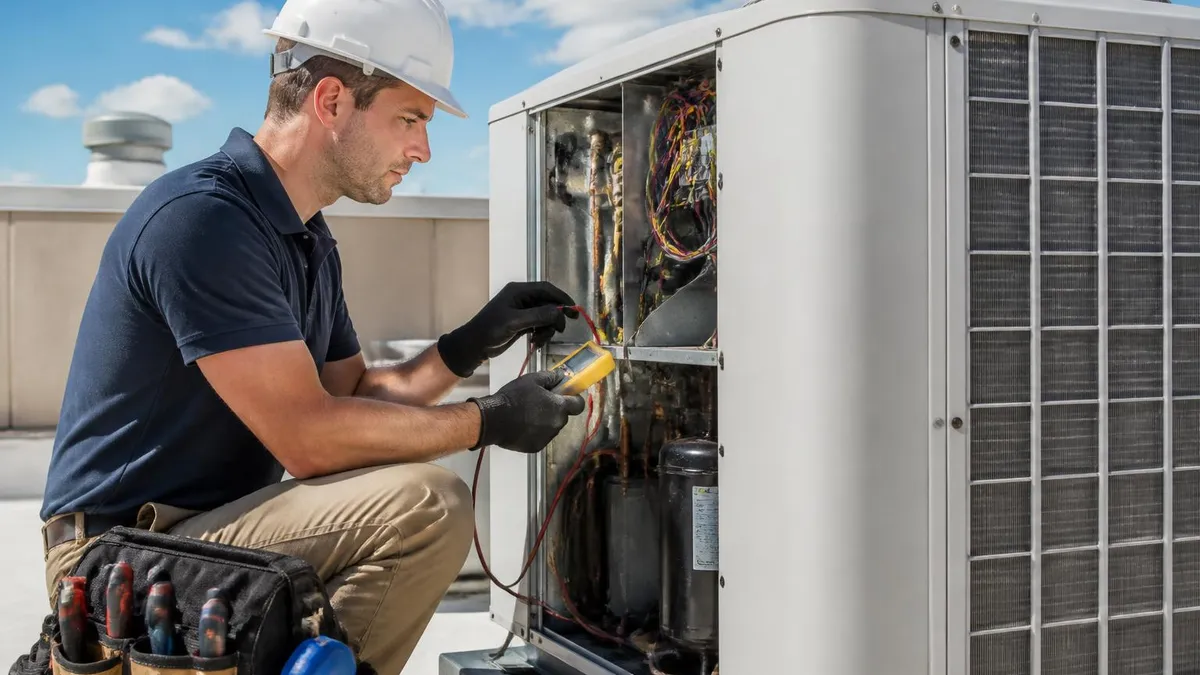
Fire and Ice HVAC vs Generic Names: Trade-offs
- +Instantly memorable to homeowners who hear it once
- +Communicates both heating and cooling without explanation
- +Translates beautifully into logos, wraps, and signage
- +Generates higher click-through rates in search results
- +Easier for satisfied customers to recall during referrals
- +Distinctive enough to support a strong social media presence
- +Visual concept works across print, digital, and broadcast media
- −Hundreds of similar names create trademark complexity
- −Premium domains and social handles often unavailable
- −Risk of confusion with unaffiliated companies in nearby markets
- −May feel gimmicky to commercial or industrial clients
- −Difficult to defend legally across state lines
- −Can date a brand if elemental themes fall out of fashion
- −Adds expense if competitors force a rebrand later
Pros and Cons at a Glance
| Pros | Cons |
|---|---|
| Instantly memorable to homeowners who hear it once | Hundreds of similar names create trademark complexity |
| Communicates both heating and cooling without explanation | Premium domains and social handles often unavailable |
| Translates beautifully into logos, wraps, and signage | Risk of confusion with unaffiliated companies in nearby markets |
| Generates higher click-through rates in search results | May feel gimmicky to commercial or industrial clients |
| Easier for satisfied customers to recall during referrals | Difficult to defend legally across state lines |
| Distinctive enough to support a strong social media presence | Can date a brand if elemental themes fall out of fashion |
Naming Checklist for New HVAC Companies
- ✓Run a USPTO trademark search for federal conflicts before committing
- ✓Check secretary of state corporate registrations in every state you might enter
- ✓Verify dot-com domain availability and price out alternatives
- ✓Secure matching social media handles on Google, Facebook, and Instagram
- ✓Test pronunciation by reading the name aloud to ten strangers
- ✓Confirm the name does not contain words restricted by state contractor licensing boards
- ✓Search Google Maps for similar names within a 100-mile radius
- ✓Reserve the business name with your state and obtain an EIN
- ✓Design a logo concept early to confirm visual translation works
- ✓Buy common misspelling domains to protect against typo-squatting
The Three-Second Test
When evaluating an HVAC company name, say it out loud and time how long it takes a stranger to repeat it back correctly. Names that pass the three-second test generate dramatically higher word-of-mouth referrals and inbound calls. Fire and Ice clears this bar effortlessly, which explains why hundreds of operators have built successful businesses around the phrase despite the trademark headaches.
Legal and trademark considerations are the most overlooked dimension of HVAC company naming, and they are also where new owners make the most expensive mistakes. The United States Patent and Trademark Office maintains a federal registry that protects nationally recognized marks, but most HVAC operators register only at the state level through their secretary of state. This creates layered conflicts where a company can be perfectly legal in one state while infringing on a registered mark in another. The Fire and Ice name in particular has produced numerous disputes because the phrase is so widely used.
State contractor licensing boards add another layer of regulation that affects naming decisions. Several states prohibit terms like Engineering, Master, or Certified in company names unless the operator holds specific credentials. Other states require the licensed individual's name to appear in advertising and signage, which can constrain branding flexibility. Before finalizing any name, every operator should review the specific naming rules in their state's mechanical contractor licensing statute and confirm that the chosen brand complies with both letter and spirit of those rules.
Domain name acquisition is the next legal flashpoint. The Uniform Domain-Name Dispute-Resolution Policy gives trademark holders a path to recover domains that infringe on their marks, but this works in both directions. A new operator who registers fireandicehvac dot com without first checking trademark status can find themselves on the receiving end of a domain transfer demand from an established competitor. Conversely, operators who hold registered trademarks can sometimes recover variants from typo-squatters and bad-faith registrants for relatively modest legal fees.
Insurance and bonding requirements also intersect with naming in ways that surprise new owners. Commercial general liability policies cover the specific business entity named on the policy, and dba structures need to be properly disclosed to maintain coverage. An HVAC company operating as Fire and Ice Mechanical LLC but advertising as Fire and Ice Comfort Pros without filing the assumed name correctly could find its insurance carrier denying claims on technical grounds. The cost of proper dba registration is trivial compared to the exposure created by skipping it.
Trademark infringement litigation is rare in residential HVAC but not unheard of, particularly when one operator achieves regional dominance and begins enforcing against smaller competitors. Settlements typically involve either rebranding by the smaller party or a licensing arrangement that allows continued use in a limited geographic area. Either outcome is expensive, and the resulting business disruption — including changes to vehicle wraps, uniforms, signage, online listings, and customer-facing collateral — often costs more than the underlying legal fees. Prevention through diligent search is dramatically cheaper than remediation after the fact.
Acquisitions and roll-ups have made naming due diligence more important than ever. Private equity-backed consolidators have been actively buying independent HVAC companies since the late 2010s, and the value of a target business depends partly on the cleanliness of its trademark position. Companies with registered marks, secure domains, and consistent dba filings command higher multiples than those with disorganized brand portfolios. Owners who hope to sell eventually should treat naming hygiene as a long-term investment in enterprise value, not just a startup checklist item.
Finally, succession planning intersects with naming decisions in subtle ways. Family surname companies face the question of what happens when the family no longer owns the business, while metaphor brands transfer more cleanly to new ownership. Some founders deliberately choose neutral brand names precisely to help eventual sale, while others embrace the limitations of a family name because they want the business to remain in family hands forever. Neither approach is wrong, but both should be intentional rather than accidental.
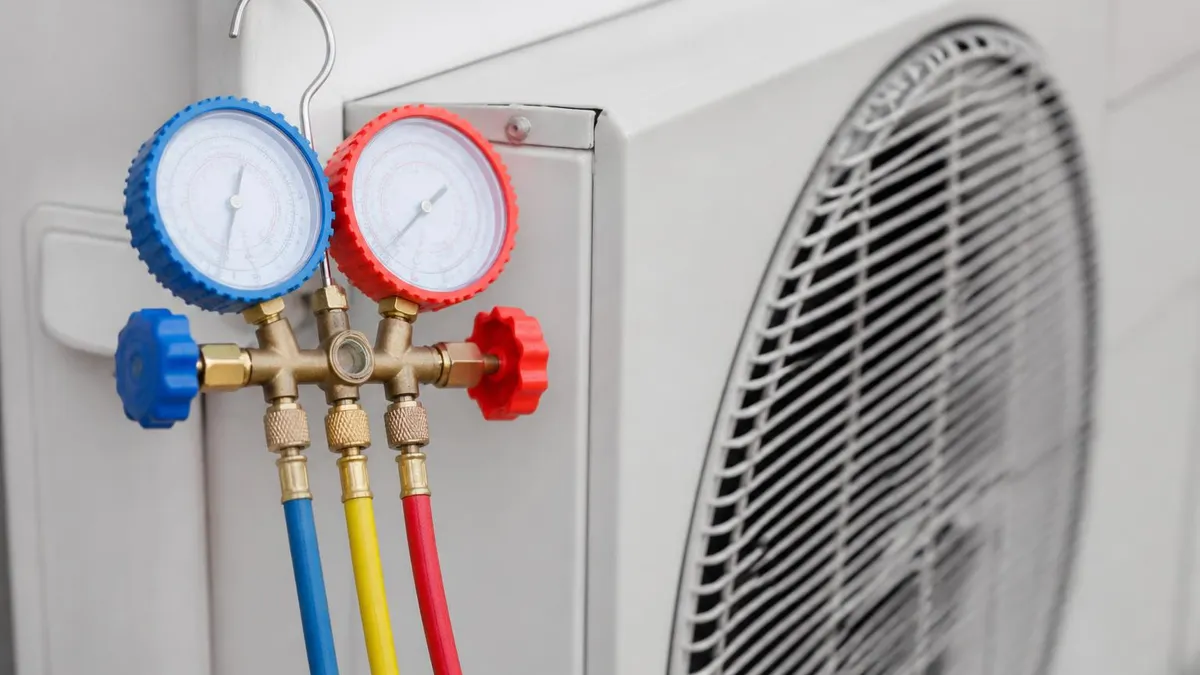
Do not skip the trademark search to save time. The USPTO database is free to query and reviewing it takes about 30 minutes. Skipping this step has forced more than one Fire and Ice operator into a costly rebrand within two years of launch, often after they had already invested thousands in signage, wraps, and uniforms. Verify before you commit.
Branding that drives growth goes far beyond the name itself, but the name sets the ceiling for how effective downstream marketing can be. A strong HVAC brand integrates the name into a coherent visual identity, a consistent voice across customer touchpoints, and operational practices that reinforce the promise embedded in the brand. Fire and Ice operators who treat the name as just a label tend to plateau quickly, while those who build it into a full brand system continue gaining market share long after the initial novelty fades.
Visual identity is the most obvious investment area. The flame-and-snowflake imagery practically demands a strong color palette of red and blue, often with gold or silver accents to signal premium service. Truck wraps, technician uniforms, business cards, and the website should all use the same color treatment and typography. Inconsistent visual presentation is one of the fastest ways to weaken an otherwise strong name, and customers notice the difference even when they cannot articulate exactly what feels off about a sloppy brand presentation. Quality work like proper HVAC duct installation deserves to be backed by equally professional branding.
Voice and tone matter just as much as visual identity. Fire and Ice brands generally perform best with a confident, slightly playful tone that mirrors the metaphor itself. Stuffy corporate language clashes with the imagery, while overly casual messaging undermines the implied mastery. Finding the right balance takes deliberate effort — most operators benefit from working with a copywriter who can codify the voice into a brand style guide that every employee can reference. This guide becomes especially important when multiple technicians and customer service representatives interact with customers across phone, text, email, and social media.
Digital presence integration is where modern HVAC branding either accelerates or stalls. The website, Google Business Profile, Yelp listing, Facebook page, and Nextdoor presence all need to reinforce the same brand identity. Inconsistent business names across these platforms — Fire and Ice HVAC on the website but Fire & Ice Heating and Cooling on Google — actively damage local search rankings because algorithms interpret the variation as a signal of weak entity confidence. Standardizing the exact spelling and formatting across every digital touchpoint should be a launch-week priority, not a future cleanup project.
Customer experience design completes the branding picture. The way technicians introduce themselves, the appearance of service vehicles, the language used in invoices and follow-up communications, and the handling of warranty claims all carry brand meaning. Fire and Ice operators who train technicians to mention the brand name during initial conversations, who use branded shoe covers and floor mats during service calls, and who send branded thank-you notes after major installations build measurably stronger customer loyalty than competitors who treat branding as something that only happens in marketing channels.
Measurement closes the branding loop. Tracking brand awareness through periodic customer surveys, monitoring branded search volume in Google Analytics, and benchmarking review velocity against competitors all provide data on whether the brand is gaining or losing momentum. Operators who invest in measurement spot problems early — a sudden drop in branded search after a competitor launches a similar name, for example — and can take corrective action before the damage compounds. Without measurement, branding decisions become guesswork, and guesswork is expensive in a competitive local services market.
The strongest HVAC brands eventually develop signature elements that competitors cannot easily replicate. A distinctive on-hold message, a memorable jingle, a unique guarantee structure, a charity partnership tied to the brand name — any of these can become a durable competitive advantage. Fire and Ice operators who reach this level of brand maturity often dominate their local markets for decades, even when newer competitors enter with lower prices or flashier digital marketing. The compounding power of a well-built brand is difficult to overstate, and it all starts with choosing the right name and committing to build everything else around it.
Practical tips for choosing and evaluating HVAC company names begin with a simple exercise: write down ten names you remember from billboards, trucks, or radio ads in your area, then ask yourself why those particular names stuck. The reasons usually fall into one of three buckets — strong metaphor, distinctive sound, or repeated exposure through high-frequency advertising. Names that combine all three become local institutions, while names that rely only on advertising volume tend to fade quickly when the advertising budget shrinks.
For consumers comparing contractors, the name offers useful but limited information. A Fire and Ice operator with three Google reviews and no website is still a startup or a struggling business regardless of how clever the name sounds, while a generically named Smith Heating with 800 five-star reviews and a 30-year history is almost certainly a safer choice. Use the name as a starting filter, then verify operational quality through licensing checks, insurance verification, online reviews, and at least one phone conversation about a specific problem you are facing in your home.
For new operators, the practical naming process should take at least four weeks. Week one focuses on brainstorming and concept development, including stakeholder input from family members or business partners. Week two narrows the list to three or four finalists and runs trademark searches on each. Week three tests the finalists with potential customers through informal conversations or paid surveys, while also verifying domain and social media availability. Week four finalizes the choice, registers the entity, and begins logo and visual identity development. Rushing this process is the single most common source of expensive naming mistakes.
Budget for naming should typically run between two and five percent of first-year marketing spend, including legal fees for trademark filing, design fees for logo development, and acquisition costs for domains and social handles. Operators who try to skip this investment by using free logo generators and generic dot-net domains almost always pay more later through rebranding costs or lost search visibility. Treat the naming process as foundational infrastructure rather than a discretionary expense, and the return on investment compounds through every subsequent marketing decision.
Naming for multi-service expansion deserves special attention. Many HVAC operators eventually add plumbing, electrical, or indoor air quality services, and a name that explicitly mentions heating and cooling can become a liability when that expansion happens. Fire and Ice HVAC works fine for pure HVAC operators, but Fire and Ice Home Services or Fire and Ice Mechanical leaves more room to grow. Thinking five and ten years ahead during the naming process prevents the awkward situation of needing to rebrand right when business momentum is strongest.
Acquisitions and partnerships add another layer of complexity. When two HVAC companies merge, the surviving brand should be chosen based on equity value rather than founder ego. Sometimes the better-known name wins, sometimes the cleaner trademark position wins, and sometimes both companies adopt a new unified brand to signal a fresh start. Whatever the choice, the transition needs to be managed carefully with consistent customer communication, gradual signage changes, and protection of inbound search traffic through proper website redirects and Google Business Profile updates.
Finally, remember that a name is not destiny. Plenty of HVAC companies with mediocre names have built outstanding businesses through operational excellence, and plenty of cleverly named companies have failed despite their branding advantages. The name opens doors, but the work performed inside customers' homes determines whether those doors stay open. Fire and Ice or Smith Heating or any other choice — the brand is only as strong as the service experience that backs it up, and consistent service quality eventually overshadows even the most carefully crafted name. Discover more about the field in our HVAC installation cost guide.
HVAC Questions and Answers



About the Author

NATE Certified HVAC Technician & Licensing Exam Trainer
Universal Technical InstituteMike Johnson is a NATE-certified HVAC technician and EPA 608 universal-certified refrigerant handler with a Bachelor of Science in HVAC/R Technology. He has 19 years of commercial and residential HVAC installation and service experience and specializes in preparing technicians for NATE certification, EPA 608, A2L refrigerant safety, and state HVAC contractor licensing examinations.