
Is It 5-Star HVAC Repair in the Beaverton Area? How to Find Top-Rated Local Service That Actually Delivers
Is it 5-star HVAC repair Beaverton area? Learn how to vet local HVAC pros, 💯 spot real 5-star service, compare quotes, and hire trusted technicians fast.

Is it 5-star HVAC repair Beaverton area homeowners can actually rely on, or just another inflated online rating? When your furnace dies on a 28-degree January morning or your air conditioner quits during a Pacific Northwest heat dome, that question stops being academic and becomes urgent. The Beaverton metro hosts dozens of HVAC contractors, but only a fraction consistently deliver the kind of service that earns genuine five-star reviews from real, verified customers across Google, Yelp, Angi, and the Better Business Bureau.
The difference between a great local HVAC company and a mediocre one shows up in the details: how quickly they answer the phone after hours, whether the technician shows up in a clearly marked truck, if they perform a proper static-pressure reading before quoting a repair, and how transparent the invoice looks when the job ends. A truly five-star contractor will explain the diagnosis in plain language, photograph the failed component, and present a written estimate before pulling a single tool from the van.
This guide walks you through exactly how to evaluate HVAC repair providers in Beaverton, Aloha, Bethany, Cedar Hills, Garden Home, and the surrounding Washington County neighborhoods. You will learn which licensing credentials matter in Oregon, how to read between the lines of a five-star review, what fair pricing looks like for common repairs in 2026, and the red flags that separate honest technicians from upsell-driven sales operations.
We will also cover the seasonal patterns that affect repair demand in the Tualatin Valley, the brands most commonly installed in homes built between 1985 and 2015 across Beaverton, and how to use manufacturer warranties most homeowners never realize they still have. By the end, you will know whether a contractor advertising five-star service truly earns the rating or simply paid for placement.
Beaverton sits in a unique climate zone where homes need both heating and cooling capacity, but the heating load dominates roughly nine months of the year. That climate reality shapes which technicians develop genuine expertise. A contractor who installs mostly heat pumps in coastal Lincoln City may not understand the dual-fuel hybrid systems common in Beaverton's mid-century neighborhoods, and vice versa.
Verified five-star HVAC repair in the Beaverton area also depends heavily on response time. The top three to five companies in the metro typically guarantee same-day diagnostic visits during heating and cooling emergencies, carry a stocked inventory of universal control boards and capacitors on every truck, and employ NATE-certified technicians who can perform combustion analysis on gas furnaces. Anything less is not really five-star, no matter how many reviews the company has accumulated.
Throughout this article we will compare review platforms, decode contractor jargon, and give you the specific questions to ask before scheduling service. If you want to test your own HVAC knowledge along the way, our practice quizzes cover air conditioning, heating systems, ductwork, and code compliance so you can speak the same language as the technician on your doorstep.
Beaverton HVAC Repair by the Numbers
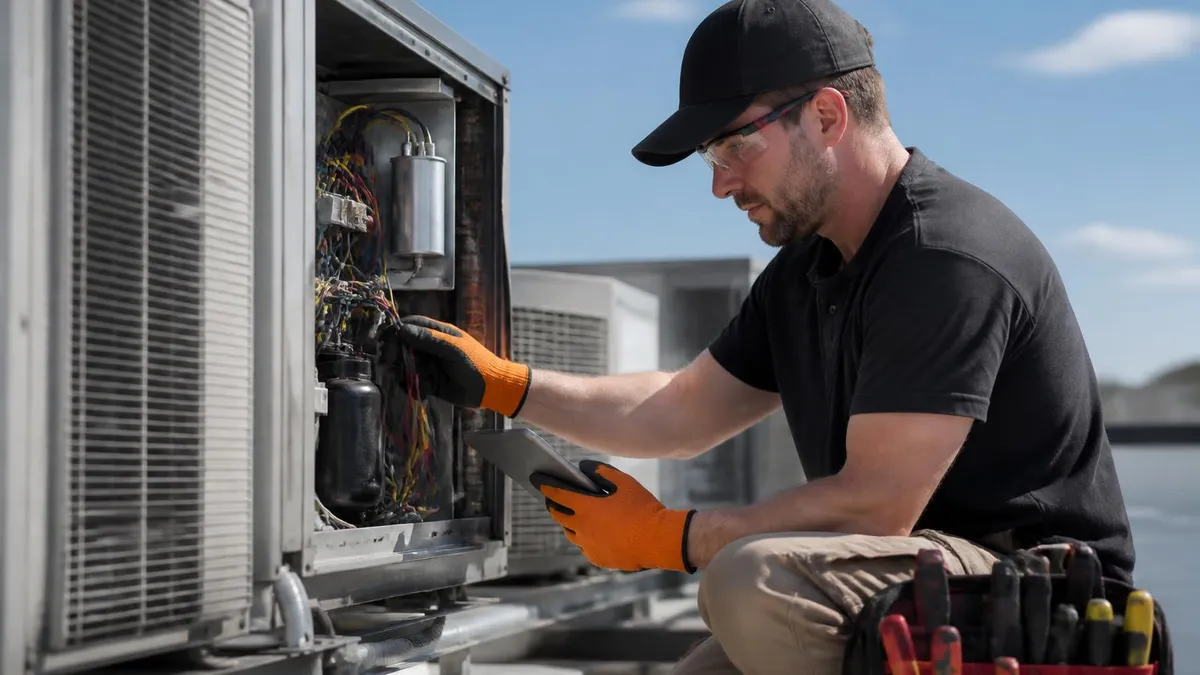
How to Verify Whether It Is Truly 5-Star HVAC Repair in the Beaverton Area
A genuine five-star contractor scores at least 4.6 across Google, Yelp, BBB, and Angi simultaneously. One platform alone can be gamed. Cross-reference at minimum three independent sources before scheduling a diagnostic visit at your home.
Every legitimate HVAC contractor in Beaverton must hold an active Oregon Construction Contractors Board license. Search the CCB database for license status, bond amount, complaint history, and the date the bond was last renewed before signing anything.
North American Technician Excellence certification proves the technician passed rigorous testing in heat pumps, gas furnaces, and air conditioning. Five-star companies prominently display NATE badges and will name the certified tech assigned to your service call.
Only reviews from the last six months reflect current service quality. Crews change, ownership changes, and quality can shift fast. Sort by newest, look for detailed narratives over generic praise, and watch for owner responses to negative feedback.
A truly five-star Beaverton HVAC contractor will gladly share three recent customer references in your specific neighborhood. If the company hesitates or provides only out-of-area names, treat that reluctance as a significant warning sign during vetting.
Real five-star HVAC repair service in the Beaverton area starts the moment you place the call. The dispatcher should answer within three rings, gather your address and equipment details without rushing, confirm an arrival window of two hours or less for emergencies, and immediately text you the technician's name, photo, and live truck-tracking link. That communication standard separates the genuine top performers from the contractors who simply paid for ad placement on the first page of Google.
When the technician arrives, watch for specific behaviors. The truck should be clearly branded and clean. The tech should wear identification, shoe covers, and a uniform with the company logo embroidered on it. Before opening any access panel, they should ask detailed questions about the symptoms, when the issue started, whether the system has been serviced recently, and whether anyone in the household has respiratory concerns that might affect refrigerant or combustion work.
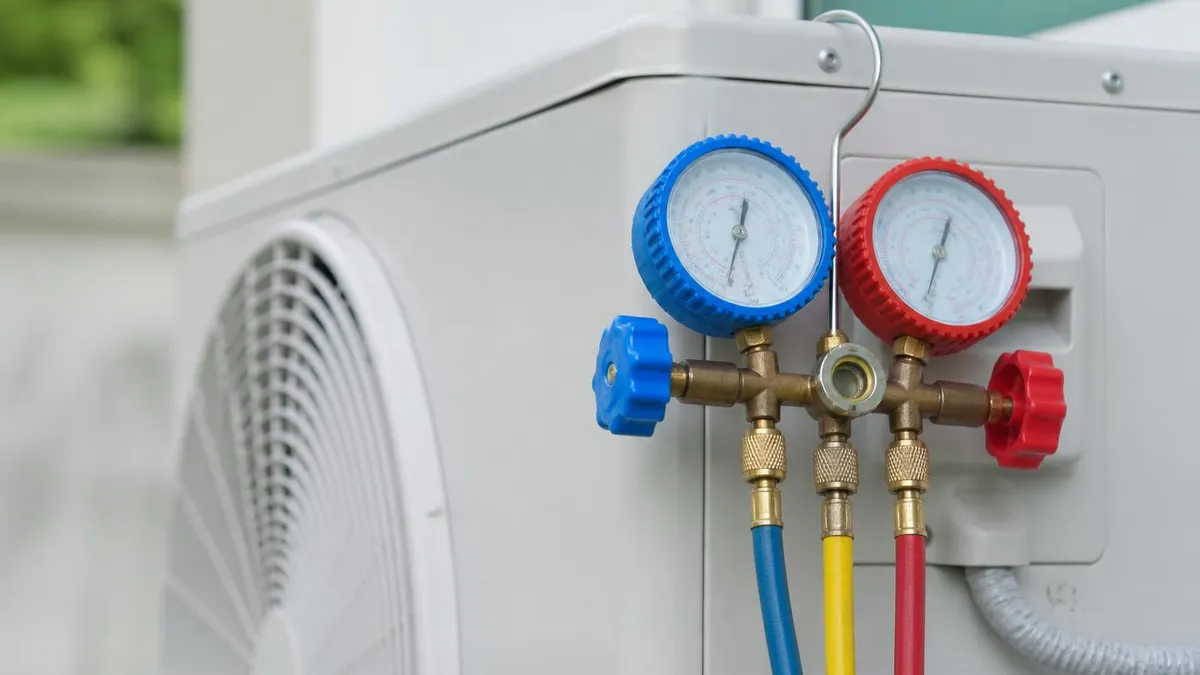
The diagnostic process itself reveals a contractor's true caliber. A five-star technician will perform a full system inspection rather than guessing at the obvious complaint. They will check supply and return static pressure, measure superheat and subcooling on hvac maintenance tipss, perform combustion analysis on gas equipment, verify proper refrigerant charge using actual subcool numbers, and document everything with photos before presenting any repair recommendation.
Pricing transparency is the next major differentiator. The best Beaverton HVAC repair shops use flat-hvac flat rate pricing from a published menu, not hourly billing that creates incentive to drag jobs out. You should receive a written quote on a tablet showing the exact part number, labor charge, warranty terms, and total cost before the technician picks up a single tool. If the price changes mid-job, the tech must stop and get your approval in writing.
Workmanship standards matter as much as price. A five-star repair includes proper torque on all gas connections verified with a manometer, a leak test on any refrigerant joint that was opened, a fresh combustion analysis after furnace work, and a final system performance verification before the technician leaves. They should hand you a printed report showing pre-service and post-service measurements so you can see the improvement in concrete numbers.
Cleanup and follow-up complete the picture. The technician removes all old parts unless you specifically ask to keep them, vacuums the work area, takes the packaging materials with them, and emails you a digital copy of the invoice within one hour. Roughly 48 hours later, a customer service representative should call to confirm the system is performing properly and to ask whether you would be willing to leave a review describing your experience.
Finally, look at warranty terms. Five-star Beaverton contractors back parts they install with at least one year of labor coverage on top of the manufacturer's parts warranty. Many extend that to two years on major components like compressors, heat exchangers, and ECM motors. Anything less than a written labor warranty is not truly premium service, regardless of how many stars appear next to the company name online.
HVAC Practice Test Questions
Prepare for the HVAC - Heating Ventilation and Air Conditioning exam with our free practice test modules. Each quiz covers key topics to help you pass on your first try.
HVAC Air Conditioning
HVAC Exam Questions covering Air Conditioning. Master HVAC Test concepts for certification prep.
HVAC Code Compliance
Free HVAC Practice Test featuring Code Compliance. Improve your HVAC Exam score with mock test prep.
HVAC Electrical Controls
HVAC Test Prep for Electrical Controls. Practice HVAC Quiz questions and boost your score.
HVAC Energy Efficiency
HVAC Questions and Answers on Energy Efficiency. Free HVAC practice for exam readiness.
HVAC Heating Systems
HVAC Mock Test covering Heating Systems. Online HVAC Test practice with instant feedback.
HVAC Load Calculations
Free HVAC Quiz on HVAC Load Calculations. HVAC Exam prep questions with detailed explanations.
HVAC Tools and Equipment
HVAC Practice Questions for HVAC Tools and Equipment. Build confidence for your HVAC certification exam.
HVAC Refrigeration
HVAC Test Online for Refrigeration. Free practice with instant results and feedback.
HVAC Safety Practices
HVAC Study Material on Safety Practices. Prepare effectively with real exam-style questions.
HVAC System Design
Free HVAC Test covering System Design. Practice and track your HVAC exam readiness.
HVAC Thermodynamics
HVAC Exam Questions covering Thermodynamics. Master HVAC Test concepts for certification prep.
Comparing Review Platforms for Local HVAC Service Search
Google Reviews carry the most weight for Beaverton HVAC searches because they show directly in Maps results and local pack listings. Look for contractors with at least 200 reviews and a 4.7 rating or higher. High review volume combined with consistency across years signals a stable operation rather than a flash-in-the-pan promotion.
Pay close attention to how the business owner responds to one and two-star reviews. A professional, solution-oriented reply demonstrates accountability. Defensive or accusatory responses are a major red flag that customer service will probably feel similar when something goes wrong with your repair, warranty claim, or callback request.
Hiring a Local 5-Star HVAC Repair Company vs a National Chain
- +Local owners answer the phone personally during emergencies
- +Technicians know Beaverton's specific home age and ductwork quirks
- +Faster parts sourcing from regional supply houses in Tigard
- +Stronger accountability through neighborhood reputation
- +Flexible scheduling outside rigid corporate booking software
- +Long-tenured techs who have serviced your equipment before
- +Better warranty advocacy with regional manufacturer reps
- −Smaller after-hours dispatch staff than national chains
- −Fewer financing options for major replacement projects
- −Limited service area if you move to outlying Washington County
- −Vacation closures during peak summer or winter weeks
- −Slightly higher labor rates than discount franchise operations
- −Less standardized service paperwork from job to job
Beaverton 5-Star HVAC Repair Hiring Checklist
- ✓Confirm active Oregon CCB license and bond amount before scheduling
- ✓Verify the technician assigned holds current NATE certification
- ✓Check Google, Yelp, BBB, and Angi for consistent 4.6+ ratings
- ✓Read at least ten reviews dated within the last six months
- ✓Request a written flat-rate quote before any work begins
- ✓Ask whether parts come with a labor warranty of at least one year
- ✓Confirm the dispatcher will text you the technician's name and photo
- ✓Verify the company carries general liability and workers compensation
- ✓Get three recent customer references in your specific neighborhood
- ✓Ask how the company handles after-hours and weekend emergencies
- ✓Confirm pricing for the diagnostic visit before the truck rolls out
- ✓Request a printed report with pre-service and post-service measurements
A real five-star contractor earns the rating one job at a time
The Beaverton HVAC companies with the strongest reputations did not buy reviews — they built five-star service into every interaction. If a company chases the rating with discounts, gift cards, or pressure to leave feedback, the experience usually feels transactional. Look instead for contractors whose customers volunteer detailed, unprompted stories about how the team went above expectations during a stressful breakdown.
Fair pricing for HVAC repair in the Beaverton area follows predictable ranges in 2026, and knowing those numbers protects you from inflated quotes. A standard diagnostic visit during business hours runs $89 to $149, with most established companies waiving the fee if you authorize the repair. After-hours and weekend diagnostics typically add $75 to $150 to that base rate, reflecting the on-call premium technicians earn for hvac equipment rental in Washington County neighborhoods.
Capacitor replacement, the single most common AC repair in the Tualatin Valley, should land between $185 and $325 installed, including the new capacitor, labor, and a brief system performance test. Anything above $400 for a basic dual-run capacitor swap likely includes hidden upcharges or commission-driven pricing. Always ask for the part number and microfarad rating so you can verify the price against published wholesale costs at a regional supply house.
Contactor replacement runs $215 to $385 depending on amperage and accessibility, while a fan motor replacement on a typical Beaverton AC condenser falls between $485 and $750 with a quality OEM part. ECM blower motor replacements inside the air handler are pricier, generally $695 to $1,150 because of the proprietary modules and labor time required to access and program the new motor through the furnace control board.
Gas furnace repairs follow a similar pattern. Igniter replacements average $225 to $395, flame sensors $155 to $245, draft inducer assemblies $585 to $895, and gas valves $485 to $725. Heat exchanger replacements rarely make financial sense outside of warranty coverage because labor alone often exceeds $1,800 and the affected furnace is usually old enough to justify full replacement. A five-star contractor will tell you that honestly rather than pushing the repair.
Refrigerant work has gotten more expensive as R-410A phases out under the 2025 AIM Act transition rules. Adding a single pound of R-410A now ranges from $115 to $195 installed, while leak repair plus recharge on a typical Beaverton split system runs $585 to $1,250. Any contractor offering to top off a leaking system without performing a proper leak search is violating both EPA regulations and common professional ethics in the trade.
Heat pump repairs in Beaverton vary widely because of the diversity of equipment installed across the metro. Reversing valve replacement averages $785 to $1,295, defrost board replacement $385 to $585, and TXV replacement on the indoor coil $625 to $985. Whenever you are quoted any heat pump repair above $1,500, ask the technician to provide an estimate for a full system replacement so you can compare repair cost against long-term value.
Whole-system replacement quotes in Beaverton for 2026 typically range from $8,500 for a basic 14 SEER2 single-stage AC and 80 percent gas furnace combination to $24,000 or more for a high-efficiency variable-speed heat pump system with new ductwork modifications. If you want to dig deeper into hvac duct sizing calculator, our HVAC Duct Calculator guide walks through the math behind a properly sized system that delivers the comfort a five-star installer should provide.
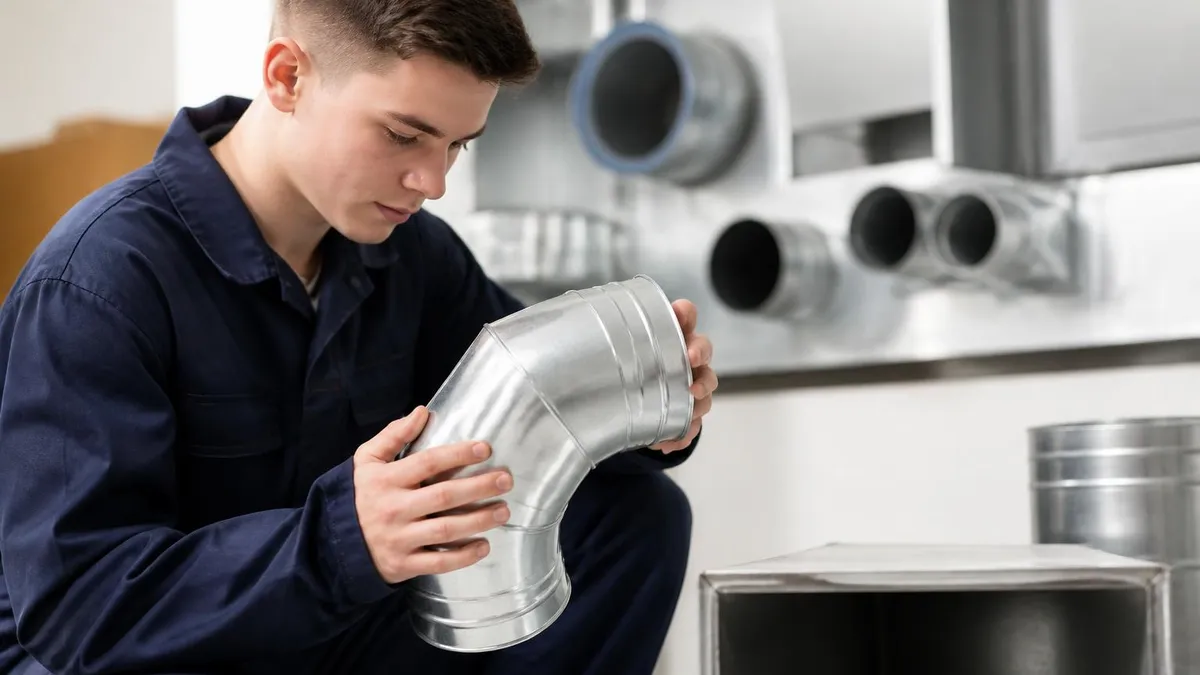
If a Beaverton HVAC technician offers to simply add refrigerant to your AC without locating and repairing the leak first, decline immediately and request another company. Federal EPA Section 608 rules require leak repair on systems above 50 pounds, and good practice on smaller residential systems makes top-offs without leak detection a sign of unprofessional service. You will pay for the same refrigerant repeatedly until the underlying leak is fixed.
Avoiding scams and aggressive upsells hvacr meaning contractors requires a basic understanding of the most common pressure tactics used in the trade. The biggest one is the cracked heat exchanger claim during a routine maintenance call. While heat exchangers do fail, the failure rate on a 12-year-old Beaverton furnace is far lower than some contractors imply. Always demand a borescope photo or video showing the alleged crack, and get a second opinion from an independent contractor before authorizing replacement.
Another common scheme is the bait-and-switch tune-up. A company advertises a $69 seasonal tune-up, then the technician arrives and immediately finds $1,500 worth of urgent repairs. While some homes really do need significant work, a five-star contractor approaches tune-ups as preventive maintenance, not a sales opportunity. If every visit ends with a major recommendation, the contractor's incentive structure is pushing technicians to upsell rather than serve.
Refrigerant pressure misrepresentation is especially common with older homeowners. The technician claims the system is dangerously low on refrigerant and quotes hundreds of dollars to recharge it. In reality, the actual subcool reading might be perfectly normal, or the system might be slightly low due to a small leak that should be fixed rather than masked. Demand to see the actual gauge readings and ask the technician to explain superheat and subcool values in plain language.
dirty sock syndrome hvac and indoor air quality scares form another upsell category. Some contractors push expensive UV lights, electronic air cleaners, and hvac duct cleaning cost packages costing $2,500 or more by frightening homeowners about mold, allergens, and biological contamination. While indoor air quality matters, especially for households with asthma or allergies, the upgrades should match documented problems rather than vague fears stirred up by sales-trained technicians.
Permit avoidance is a major red flag that often hides deeper problems. Beaverton and Washington County require permits for furnace replacement, gas line work, and major ductwork modifications. A contractor who suggests skipping the permit to save money is exposing you to insurance, resale, and safety liability. Five-star contractors pull permits as a matter of routine and provide you with copies for your records. For a deeper look at finding properly licensed pros, our guide to certified HVAC contractors covers the vetting process in detail.
Financing pressure can also push homeowners into bad decisions. While same-day financing has legitimate uses, a technician who insists you must sign tonight to lock in pricing is using urgency as a manipulation tool. Equipment pricing rarely changes overnight, and any reputable Beaverton contractor will hold a quote for at least 30 days so you can shop competitively and make an informed financial decision.
Finally, watch for unmarked or rental trucks, technicians without uniforms, and quotes scribbled on the back of a business card. Professional hvac fan operations in the Beaverton area invest in branded vehicles, embroidered uniforms, digital quoting software, and printed marketing materials. Skipping these basic professional standards is almost always a sign the company is operating on the margins of the industry rather than building a long-term reputation in the community.
Practical preparation makes finding genuine five-star HVAC repair in the Beaverton area much easier when an emergency hits. Start by saving the contact information for two or three vetted contractors in your phone before you ever need them. Waiting until your heat is out on a Sunday night during a Pacific Northwest cold snap is the worst possible time to begin researching, comparing reviews, and verifying licenses across multiple platforms.
Keep a small folder of HVAC documentation at home. Include the original installation invoice, equipment model and serial numbers, manufacturer warranty registration confirmation, photos of the data plates on the outdoor condenser and indoor air handler, and a record of every service visit. This information lets any new technician get up to speed quickly and helps you verify warranty coverage on parts that may still be eligible for free replacement.
Smart thermostats now record runtime data, fault codes, and humidity trends that help technicians diagnose issues remotely before they even arrive. If you have an Ecobee, Nest, Honeywell T-series, or similar connected thermostat, log into the app and screenshot the recent activity before calling for service. Sharing this data with a five-star contractor can shorten the diagnostic call and reduce your total repair cost noticeably.
Seasonal timing also affects pricing and availability. Calling for maintenance in March or October, before peak demand hits, typically means lower prices, faster scheduling, and more attentive service than an emergency call during the hottest week of August. Schedule annual maintenance during shoulder seasons whenever possible, and use those visits to build a working relationship with a contractor you trust.
If you are new to the Beaverton area, ask neighbors who have lived in the same home for at least five years which HVAC contractor they use and why. Long-term homeowners have usually cycled through one or two bad experiences before settling on a reliable provider. Their hard-won lessons can save you the same trial-and-error process and point you toward genuine five-star service rather than slick advertising.
Document every interaction with HVAC contractors carefully. Take photos of the technician's truck, identification, and any equipment they work on. Save text messages with dispatch, written quotes, and final invoices in a single email folder. If a dispute ever arises, this documentation makes Oregon CCB complaint resolution, manufacturer warranty claims, and small claims court actions far easier to pursue successfully.
Finally, leave honest, detailed reviews after your service experience, whether positive or negative. The Beaverton HVAC market improves when homeowners share specific information about response times, technician professionalism, pricing fairness, and workmanship quality. Your feedback helps neighbors find truly five-star repair providers while holding underperforming contractors accountable for the service they actually deliver in the community.
HVAC Questions and Answers

HVAC Duct Supplies: The Complete Buyer's Guide to Ductwork Components, Sizing, and Installation Materials
HVAC Duct Calculator: The Complete Guide to Sizing Ductwork for Airflow, Static Pressure, and System Efficiency
Certified HVAC Contractors: How to Find, Vet, and Hire the Right Professional for Your Home or Business

HVAC Repair Philadelphia: The Complete Homeowner's Guide to Finding, Hiring, and Working With Local Heating and Cooling Pros
Best HVAC Repair in Bandon, OR: Local Services Near Me Guide
About the Author

NATE Certified HVAC Technician & Licensing Exam Trainer
Universal Technical InstituteMike Johnson is a NATE-certified HVAC technician and EPA 608 universal-certified refrigerant handler with a Bachelor of Science in HVAC/R Technology. He has 19 years of commercial and residential HVAC installation and service experience and specializes in preparing technicians for NATE certification, EPA 608, A2L refrigerant safety, and state HVAC contractor licensing examinations.