
HVAC Manager Jobs: The Complete 2026 Career Guide to Salary, Responsibilities, Qualifications, and How to Land a Management Role in the Heating and Cooling Industry
💡 HVAC manager jobs guide: salary ranges, daily duties, qualifications, certifications, and step-by-step path to land a management role in 2026.
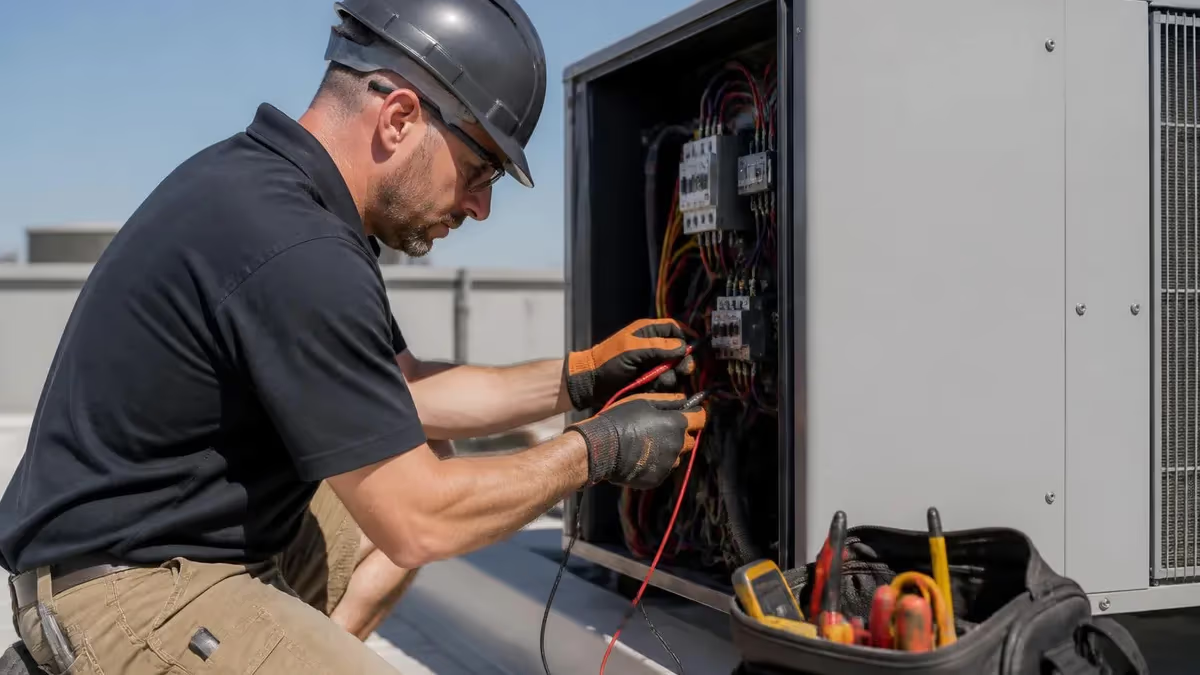
HVAC manager jobs sit at the intersection of technical mastery and business leadership, offering experienced technicians a clear path from the field van to the front office. As the U.S. heating and cooling industry tops $130 billion in annual revenue and labor shortages push contractors to compete for skilled leadership, demand for capable service managers, operations managers, and branch managers has never been stronger. If you have ten years of wrench time and a knack for organizing chaos, this role can lift your earnings well past $100,000. Practice with the free HVAC practice test on PracticeTestGeeks (750+ questions with answer explanations).
The title "HVAC manager" covers a wider range of positions than most job seekers realize. Some manage a crew of five residential service technicians, scheduling calls and reviewing tickets. Others run multi-million-dollar commercial divisions with project managers, estimators, and apprentices reporting to them. Compensation, daily duties, and required credentials swing dramatically across these roles, so understanding the landscape is the first step to targeting the right job for your background.
This guide walks through every angle of an HVAC management career in 2026. We cover salary benchmarks by region and company size, the technical and soft-skill qualifications hiring managers prioritize, the certifications that move resumes to the top of the pile, and the realistic timeline for advancing from lead technician to general manager. You will also find sample interview questions, a 90-day onboarding playbook, and the red flags that signal a toxic shop you should avoid.
Most candidates underestimate how much of the job is people-related. A strong HVAC manager spends roughly 60 percent of the day on personnel issues — coaching underperformers, mediating disputes between dispatch and the field, handling customer escalations, and recruiting in a tight labor market. The remaining 40 percent splits between financial review, vendor negotiation, fleet logistics, and strategic planning. Pure technical work rarely exceeds 10 percent once you cross into management.
Before applying, candidates should also weigh the trade-offs honestly. Salaries climb, but so do hours during peak season. On-call responsibilities never fully disappear, especially in smaller shops. Liability sits squarely on the manager when a callback turns into a lawsuit or a refrigerant violation triggers an EPA fine. If you thrive on solving problems other people created, the role rewards you generously. If you prefer the autonomy of a service truck, a senior tech path may suit you better.
The good news: employers are increasingly willing to train high-potential candidates on the business side, especially in private equity-backed home services platforms aggressively rolling up regional contractors. A technician with strong leadership instincts, NATE certification, and basic financial literacy can often skip a step and move directly into a service manager role with a competitive base plus performance bonus. The path is real, the pay is real, and the openings are real — you just need a clear map.
By the end of this guide, you will know exactly which HVAC management title fits your experience, what to ask in interviews, how to negotiate compensation that includes bonus structure and equity in larger platforms, and where to find roles that are not posted on the usual job boards. Let's get into it.
Free HVAC Study Tools
Interactive HVAC resources on PracticeTestGeeks, free to start:
- HVAC EPA 608 Refrigerant Certification — 35 questions with instant scoring and answer explanations
- HVAC flashcards — review key terms and concepts card by card
- HVAC study guide — topic-by-topic overview of what the exam covers
- HVAC cheat sheet — one-page printable summary for last-minute review
HVAC Manager Jobs by the Numbers
Common HVAC Management Role Types
Oversees a team of residential or light commercial technicians, manages dispatch flow, reviews completed tickets, handles customer escalations, and owns service department revenue and gross margin targets.
Runs the back office across service, install, and maintenance divisions. Owns scheduling systems, fleet management, parts inventory, KPI dashboards, and cross-department coordination between sales, dispatch, and field crews.
Full P&L responsibility for one location of a multi-site contractor. Hires, fires, sets pricing, manages local marketing budget, and reports financials up to a regional or general manager weekly.
Leads ground-up and retrofit commercial HVAC installations from bid through closeout. Manages subcontractors, submittals, change orders, and schedule on projects ranging from $50K to several million dollars.
Top operational role at single-location or small multi-site contractors. Reports to owner or regional VP, owns full P&L, growth targets, hiring plan, and strategic direction including acquisitions and new service offerings.
Compensation for HVAC manager jobs varies more than almost any other trades leadership role because the title means different things at different companies. A service manager at a five-truck residential shop in rural Indiana might earn $72,000 with a modest bonus, while the same title at a 60-technician operation in Dallas or Phoenix can pay $135,000 with a 25 percent annual incentive tied to gross margin and customer retention. Knowing the typical ranges by company size and geography is essential before you accept any offer or counter.
The median base salary for an HVAC service manager in 2026 sits at approximately $94,000 nationally, according to combined data from Bureau of Labor Statistics, Indeed, and industry compensation surveys. Operations managers run slightly higher at $102,000 median, branch managers at $118,000, and general managers at $145,000 plus equity in private equity-backed platforms. Commercial project managers on large jobs can clear $160,000 once project completion bonuses settle, especially in tight markets like Seattle, Boston, and the San Francisco Bay Area.
Bonus structure matters more than base in most growth-stage contractors. A common formula pays 10 to 20 percent of base tied to quarterly gross margin, customer satisfaction scores, and technician retention. Some platforms add stock options or phantom equity that vest over four years and can pay out six figures when the company sells. Always ask about historical bonus payouts during interviews — a 30 percent target that has paid only 40 percent of target for three straight years is functionally a much lower number.
Benefits packages are typically stronger than what field technicians receive. Expect a company vehicle or vehicle allowance of $600 to $900 monthly, fuel card, cell phone reimbursement, full medical and dental coverage with the employer paying 80 to 100 percent of the premium for the employee, a 401(k) with a 4 to 6 percent match, and 15 to 25 days of paid time off. Larger platforms add health savings account contributions, life insurance, short and long-term disability, and tuition reimbursement for business or trade certifications.
Geographic differences are substantial. The same role pays roughly 35 percent more in coastal metros than in the rural Midwest, but cost of living often eats most of that gap. A more useful benchmark is the multiple of senior technician wages — managers typically earn 1.4 to 1.8 times what their top wrench earns.
If your shop's lead tech makes $85,000, expect a manager offer between $119,000 and $153,000. Anything significantly below that signals the role lacks real authority or the company is undercapitalized. For broader compensation context across the trade, our guide to hvac contractors covers how shop economics drive what managers can earn.
Negotiation use is highest before you sign and lowest after. Get the offer in writing, then counter with specific asks: a $10,000 base increase, an extra week of vacation, a guaranteed first-year bonus minimum, or a signing bonus that vests after 12 months. Most employers expect candidates to counter at least once and have budget headroom built into the initial offer. Candidates who counter respectfully and with data may receive some form of improvement.
Finally, do not ignore the soft compensation. Title progression, training budgets, conference attendance like AHR Expo or Service World Expo, and exposure to senior leadership all compound your earning power over a career. A $5,000 lower base at a shop that sends you to executive coaching and pays for an MBA is often worth more than a higher offer at a stagnant operation where you will plateau in 18 months.
HVAC Practice Test Questions
Prepare for the HVAC - Heating Ventilation and Air Conditioning exam with our free practice test modules. Each quiz covers key topics to help you pass on your first try.
HVAC Air Conditioning
HVAC Exam Questions covering Air Conditioning. Master HVAC Test concepts for certification prep.
HVAC Code Compliance
Free HVAC Practice Test featuring Code Compliance. Improve your HVAC Exam score with mock test prep.
HVAC Electrical Controls
HVAC Test Prep for Electrical Controls. Practice HVAC Quiz questions and boost your score.
HVAC Energy Efficiency
HVAC Questions and Answers on Energy Efficiency. Free HVAC practice for exam readiness.
HVAC Heating Systems
HVAC Mock Test covering Heating Systems. Online HVAC Test practice with instant feedback.
HVAC Load Calculations
Free HVAC Quiz on HVAC Load Calculations. HVAC Exam prep questions with detailed explanations.
HVAC Tools and Equipment
HVAC Practice Questions for HVAC Tools and Equipment. Build confidence for your HVAC certification exam.
HVAC Refrigeration
HVAC Test Online for Refrigeration. Free practice with instant results and feedback.
HVAC Safety Practices
HVAC Study Material on Safety Practices. Prepare effectively with real exam-style questions.
HVAC System Design
Free HVAC Test covering System Design. Practice and track your HVAC exam readiness.
HVAC Thermodynamics
HVAC Exam Questions covering Thermodynamics. Master HVAC Test concepts for certification prep.
Qualifications That Win HVAC Manager Jobs
Hiring managers want proof you can still smell a refrigerant leak before you ever pick up a manifold gauge. Most postings require EPA Section 608 Universal certification, NATE certification in at least two specialty areas, and ideally a state HVAC contractor license. For commercial-leaning roles, add hydronics experience, controls and building automation exposure, and familiarity with variable refrigerant flow systems from Mitsubishi, Daikin, or LG.
Beyond licenses, document specific service volume. Resumes that quantify experience — "led diagnostics on 1,800 residential service calls over four years" — outperform vague claims. If you have commercial chiller, boiler, or rooftop unit experience, list tonnage ranges and brands. Manufacturer training certificates from Trane, Carrier, Lennox, Mitsubishi, and Daikin all signal you can support warranty work and resolve escalations the team cannot solve alone.

Is an HVAC Manager Job Right for You?
- +Significantly higher earning ceiling than field technician roles, often $40,000 to $60,000 more annually
- +Predictable Monday-Friday daytime schedule for most positions, with reduced after-hours calls
- +Air-conditioned office time during the brutal summer peak season most techs work through
- +Direct influence over hiring, culture, training programs, and the technicians you work alongside
- +Strong long-term career runway into operations, regional, and executive leadership roles
- +Equity, profit sharing, and exit-event payouts at private equity-backed platforms can be life-changing
- −Personnel issues, customer complaints, and crisis calls follow you home in ways field work does not
- −Loss of the autonomy and quiet focus that comes with running your own service truck all day
- −Steep learning curve on finance, HR law, payroll, and software systems most techs never touched
- −Liability exposure for crew accidents, refrigerant violations, and code compliance failures sits on you
- −Bonus pay can swing dramatically with seasonality, weather, and broader economic conditions
- −Less hands-on technical work, which some career techs miss more than they expected they would
Pros and Cons at a Glance
| Pros | Cons |
|---|---|
| Predictable Monday-Friday daytime schedule for most positions, with reduced after-hours calls | Personnel issues, customer complaints, and crisis calls follow you home in ways field work does not |
| Air-conditioned office time during the brutal summer peak season most techs work through | Loss of the autonomy and quiet focus that comes with running your own service truck all day |
| Direct influence over hiring, culture, training programs, and the technicians you work alongside | Steep learning curve on finance, HR law, payroll, and software systems most techs never touched |
| Strong long-term career runway into operations, regional, and executive leadership roles | Liability exposure for crew accidents, refrigerant violations, and code compliance failures sits on you |
| Equity, profit sharing, and exit-event payouts at private equity-backed platforms can be life-changing | Bonus pay can swing dramatically with seasonality, weather, and broader economic conditions |
Application and Interview Preparation Checklist for HVAC Manager Jobs
- ✓Update resume with quantified accomplishments, including revenue, retention, and training metrics
- ✓Verify all licenses, certifications, and continuing education are current and listed clearly
- ✓Build a portfolio of three to five case studies showing problems you solved and outcomes you delivered
- ✓Research the target company's revenue, ownership structure, and recent acquisitions or growth news
- ✓Prepare salary research with documented ranges from BLS, Indeed, and Glassdoor for the local market
- ✓Practice STAR-format answers for ten common leadership behavior interview questions
- ✓Prepare five thoughtful questions about KPIs, culture, technology stack, and growth strategy
- ✓Set up LinkedIn profile with manager-focused headline and recommendations from former coworkers
- ✓Reach out to two or three current employees on LinkedIn for honest perspective before final interview
- ✓Bring printed resume copies, references list, and any certification cards to in-person interviews
The 60-30-10 Rule of HVAC Management
Successful HVAC managers spend roughly 60 percent of their time on people — coaching, hiring, conflict resolution, customer escalations. Another 30 percent goes to operations, finance, and vendor management. Only 10 percent should be hands-on technical work. If you find yourself running calls every week, you are either understaffed or struggling to delegate, and both will burn you out within 18 months.
A typical day in an HVAC manager job rarely matches what the job description promised. Most managers arrive between 6:30 and 7:00 a.m. to greet technicians as they pick up their first calls, troubleshoot equipment shortages or vehicle issues, and review the previous day's tickets for missed opportunities or quality concerns. The morning huddle sets the tone for the entire crew and is the single most important fifteen minutes of the day.
From roughly 8:00 to 10:00 a.m., the manager processes overnight emergency calls, reviews dispatch board health, and handles customer service escalations that the dispatcher cannot resolve. This is also prime time for vendor calls — placing parts orders, negotiating with hvac equipment distributors, or coordinating warranty claims with manufacturers. Strong managers protect this window from meetings whenever possible because front-loaded decisions cascade into the rest of the day.
Mid-morning through lunch usually involves financial review, payroll approval, and one-on-ones with direct reports. Most service managers conduct weekly 30-minute coaching sessions with each technician, walking through completed jobs, customer feedback, and personal development goals. These meetings drive retention more than any other single activity — technicians who feel seen and supported stay, and turnover in HVAC currently averages 28 percent annually, costing shops $15,000 to $25,000 per lost tech.
Afternoons typically shift toward sales, recruiting, and special projects. Managers ride along with newer technicians on tougher calls, conduct in-home consultations on larger system replacements, interview candidates, and review marketing performance with the owner or marketing partner. Operations managers spend more afternoon time on KPI dashboards, software configuration, and process documentation — the unglamorous work that scales a business from 10 trucks to 30.
Friday afternoons and Saturday mornings are when the best managers do their deepest thinking. Weekly financial review, gross margin analysis by technician and by job type, customer acquisition cost trending, and quarterly strategic planning all live in the quieter hours. Owners notice managers who pull these reports without being asked and bring proactive recommendations to the table. That habit is the single biggest predictor of promotion to operations manager, branch manager, or general manager within three years.
Seasonal cycles dramatically reshape the rhythm. From mid-May through late August, the residential AC season runs at full sprint, with managers fielding emergency calls, approving overtime, and ironing out scheduling conflicts daily. Heating season from October through February follows the same pattern. Spring and fall are recovery and planning windows — the time to roll out new initiatives, train on new equipment lines, and recruit ahead of demand. Managers who treat the shoulder seasons as vacation lose the year before it starts.
Underneath all of this sits the constant background of reporting and compliance. EPA Section 608 documentation, OSHA safety records, vehicle inspection logs, technician certification renewals, and insurance audits all land on the manager's desk. Mishandled compliance can trigger fines that wipe out an entire year's bonus, so successful managers build standard operating procedures and delegate the routine tasks to office staff or junior leads while reserving final review for themselves.
If the company refuses to share basic financials, bonus history, or technician turnover numbers, walk away. If the owner describes the current team as "lazy" or "a mess you'll need to clean up," you are being set up as the scapegoat for problems leadership created. And if the offer is contingent on a non-compete that extends beyond 12 months or 50 miles, get a lawyer to review before signing.
Career progression in HVAC management follows a more predictable arc than most candidates assume. The typical journey starts as an apprentice for two to four years, advances to journeyman or service technician for three to five years, then to lead technician or senior tech for two to three years before the first formal management role appears. Total time from first apprentice ticket to service manager averages around ten years, though high performers consistently compress that timeline to seven or eight.
From service manager, the next step usually splits into one of two paths. The operational path moves to operations manager, then branch manager, then general manager, and eventually to multi-location regional or VP roles at larger platforms. The technical or sales path moves toward commercial estimator, project manager, or director of installation. Both paths can reach $200,000-plus total compensation within fifteen years of starting as an apprentice, depending on company size and ownership structure. For technicians considering business ownership instead, our breakdown of HVAC Solutions covers the systems-thinking side of running a contracting business.
Education during the climb matters more than most field techs believe. A bachelor's degree is not required, but coursework in accounting, business administration, or construction management opens doors to corporate platform roles that increasingly value formal credentials. Community college programs in business management cost under $5,000 total, can be completed at night while working full-time, and visibly differentiate you from peers who stopped learning after their HVAC certificate. Many employers reimburse 50 to 100 percent of tuition.
Networking inside the industry accelerates progression dramatically. Active participation in ACCA (Air Conditioning Contractors of America), PHCC (Plumbing-Heating-hvac services baton rouge Association), local chapters, and major conferences like AHR Expo or Service World Expo creates relationships that surface roles before they are ever posted. Roughly 60 percent of management hires in established contractors come through referrals, never reaching public job boards. Building those relationships in your thirties pays compounding dividends through your forties and fifties.
Private equity acquisitions have transformed the career landscape over the past five years. Platforms like Wrench Group, Apex Service Partners, Service Champions, and dozens of smaller roll-ups now own thousands of formerly independent HVAC contractors. They offer faster promotion paths, formal leadership training, equity participation, and exit liquidity that family-owned shops cannot match. They also bring more bureaucracy, tighter KPI expectations, and less autonomy. Choosing between PE-backed and independent depends heavily on personal temperament.
Mentorship from senior managers and owners is the single most consistent predictor of long-term success. Find one or two mentors — ideally one inside your current company and one outside — and meet with them quarterly. Bring specific questions, follow through on their suggestions, and report results back in the next meeting. Within three years, this single discipline will reshape your decision-making, expand your professional network, and put you on a trajectory most peers will never see.
Finally, do not neglect your own well-being. HVAC management burnout is real, and the industry loses talented leaders every year to stress, marital strain, and health issues that traced back to ignoring boundaries. Build in protected time for family, fitness, and rest. The shops that pressure you to sacrifice all three are the shops you should leave. The best long-term operators treat their managers like senior partners worth retaining for decades, not interchangeable assets to burn through.
Once you accept an HVAC manager role, the first ninety days set the trajectory for the rest of your tenure. The temptation is to charge in and start changing things immediately. Resist it. The best new managers spend the first thirty days listening — riding along with technicians, sitting in dispatch, joining sales calls, and meeting every employee one-on-one. You will hear the same three or four problems repeated, and those repeated themes are where real change should start.
By day sixty, you should have a clear written assessment of the team, the systems, and the financial picture, shared with the owner or your direct boss. This document does not have to be polished, but it does have to be honest. Identify the two or three highest-impact improvements you intend to make in the next six months, the resources you need, and the metrics by which success will be measured. Pinning down expectations early prevents the moving-goalpost dynamic that derails many new managers.
Days sixty through ninety are when you start implementing. Pick one process change, one personnel decision, and one financial discipline to tackle first. Trying to change five things simultaneously produces no real change at all. A focused 90-day playbook might look like: roll out a daily morning huddle, replace the underperforming dispatcher, and start a weekly gross margin review with the owner. Each of those changes builds credibility you can spend on bigger initiatives later.
Soft skills compound faster than hard skills in management. Active listening, written communication, and managing your own emotional reactions under pressure all separate average managers from great ones. Read one business book per quarter — classics like "The Five Dysfunctions of a Team," "Multipliers," "Extreme Ownership," and "The Coaching Habit" have shaped more successful trades managers than any technical manual. Twenty minutes of reading per night accumulates into hundreds of hours of leadership development per year.
Technology fluency is non-negotiable in 2026. If your shop runs Service Titan, FieldEdge, Housecall Pro, or similar dispatch software, master every report and configuration option within ninety days. Learn the basics of spreadsheet pivot tables, simple SQL queries if your data lives in a database, and the AI assistant features now built into most major platforms. Managers who treat technology as someone else's job get bypassed by peers who treat it as a competitive advantage. For ongoing parts management efficiency, our HVAC Parts and Supply guide breaks down sourcing workflows worth standardizing.
Build a personal scorecard you review every Friday afternoon. Track five or six metrics that matter most for your role — gross margin, customer satisfaction, technician retention, average ticket, callback rate, and total revenue per truck are the usual suspects. Knowing these numbers cold lets you walk into any meeting with the owner ready to discuss specifics. Managers who can recite their numbers from memory carry far more credibility than those who promise to "pull the report and follow up."
Finally, protect your own development. Negotiate professional development funds into your compensation package, attend at least one major industry conference per year, and join a peer group of HVAC managers from non-competing markets. Vistage, EO, and trade-specific peer groups like Nexstar Network or Service Roundtable bring real cross-pollination that lonely shop work cannot replicate. The first year as a manager is the steepest learning curve of your career — invest accordingly and the rest of the career compounds for decades.
Sample HVAC Practice Questions
Try these questions from our free HVAC practice tests. The correct answer and an explanation follow each question.
What is 'setback' or 'setup' control in HVAC energy management?
- A. Temporarily relaxing temperature setpoints during unoccupied periods to reduce heating or cooling energy
- B. Increasing airflow during peak hours to improve comfort
- C. Raising supply fan speed during unoccupied hours for air circulation
- D. Cycling the chiller off during periods of low demand
Answer: A. Temporarily relaxing temperature setpoints during unoccupied periods to reduce heating or cooling energy
Setback (heating) and setup (cooling) raise or lower thermostat setpoints when a building is unoccupied, reducing HVAC runtime and energy consumption significantly.
When a heat pump switches from cooling to heating mode, which component reverses refrigerant flow direction?
- A. Thermostatic expansion valve
- B. Reversing valve (4-way valve)
- C. Accumulator
- D. Filter drier
Answer: B. Reversing valve (4-way valve)
The reversing valve (four-way valve) redirects refrigerant flow to switch the roles of the indoor and outdoor coils between heating and cooling modes.
What is the role of an aquastat in a hydronic heating system?
- A. It measures flow rate through each zone circuit
- B. It controls boiler water temperature by cycling the burner on and off
- C. It balances water pressure between supply and return headers
- D. It monitors dissolved oxygen levels in boiler water
Answer: B. It controls boiler water temperature by cycling the burner on and off
The aquastat is a temperature controller that energizes and de-energizes the burner to maintain boiler water within a set temperature range.
What role does collaboration play in troubleshooting for HVAC professionals?
- A. It slows down work unnecessarily
- B. It enhances outcomes through diverse perspectives and shared expertise
- C. It is only needed in emergencies
- D. It reduces individual accountability
Answer: B. It enhances outcomes through diverse perspectives and shared expertise
Collaboration leverages diverse perspectives and combined expertise to achieve better outcomes than any individual could alone.
HVAC Questions and Answers
HVAC Repair Portland: The Complete 2026 Homeowner's Guide to Furnace, AC, and Heat Pump Service in the Rose City

HVAC Tune Up Service: The Complete Guide to Professional HVAC Maintenance and Why It Pays for Itself
HVAC Solutions: The Complete Guide to Heating, Cooling, and Indoor Air Quality Systems for Homes and Buildings
Certified HVAC Contractors: How to Find, Vet, and Hire the Right Professional for Your Home or Business

HVAC Parts and Supply: The Complete Guide to Sourcing, Identifying, and Buying Heating and Cooling Components in 2026
How this page was made: written with AI tools and published by Nathan Beja, founder of Practice Test Geeks, who is responsible for its content. We have not yet matched this exam's facts to an official source, so confirm fees, dates and rules with the exam body. Not reviewed by a subject-matter expert. Editorial policy