
Energy Efficient HVAC Systems: The Complete Guide to Savings, Comfort, and Smart Upgrades
Energy efficient HVAC systems cut bills 20-40%. Compare SEER2, heat pumps, variable speed, rebates, and installation tips in this complete guide. 🗨️
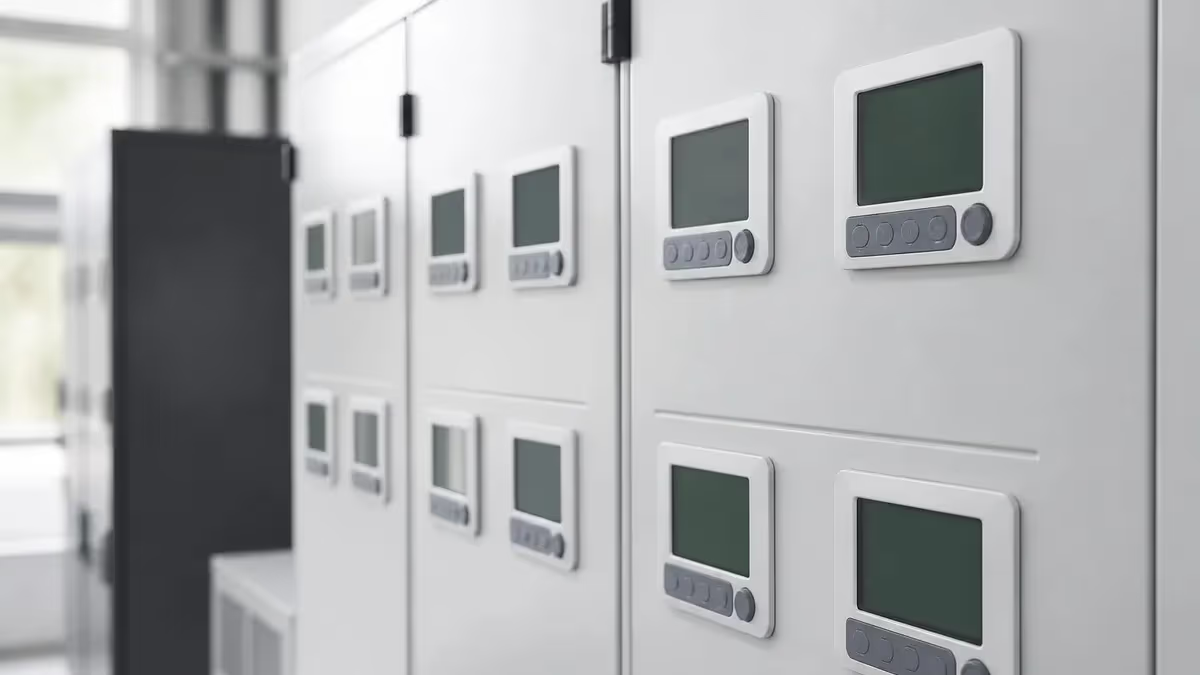
Energy efficient HVAC systems have moved from a nice-to-have luxury to the single most impactful upgrade most American homeowners can make for their utility bills and indoor comfort. Heating and cooling account for roughly 43 percent of the average household's energy consumption, which means even modest gains in equipment efficiency translate to noticeable savings on every monthly statement. As efficiency standards tighten and electric heat pump technology matures, the conversation has shifted from whether to upgrade to which configuration delivers the strongest long-term return.
The federal SEER2 minimum standards that took effect in 2023 raised the floor for new air conditioning installations, and the Inflation Reduction Act continues to fund generous tax credits and rebates for high-efficiency systems through 2032. That combination of regulatory pressure and consumer incentive has created the most favorable upgrade environment American homeowners have ever seen. Whether you are replacing a failing 15-year-old furnace or planning a new construction build, the financial math now favors stepping above the minimum.
This guide walks through the entire decision tree: how to read efficiency ratings, when a heat pump beats a traditional split system, why variable-speed compressors outperform single-stage units in real-world conditions, and which rebates apply to your situation. We will also cover the unglamorous but critical details that make or break efficiency in practice, such as duct sealing, refrigerant charge, and load calculations performed by a qualified contractor. If you want a refresher on airflow fundamentals before diving into equipment selection, our CFM HVAC basics guide is a good starting point.
Efficiency is not a single number stamped on a yellow EnergyGuide label. It is the combined performance of equipment, ductwork, controls, and installation quality working together across thousands of operating hours each year. A 20 SEER2 condenser installed on leaky ducts in an undersized return system will underperform a properly installed 16 SEER2 unit every time. Understanding this systems-thinking approach is the difference between a satisfied homeowner who saves money and a frustrated one who paid premium prices for marginal results.
Throughout this guide we focus on practical, US-specific guidance: climate zone considerations, the difference between Northern and Southern heat pump performance, what to expect from a competent load calculation, and how to interpret quotes from competing contractors. We also flag the marketing claims that sound impressive but rarely translate into measurable savings, so you can spend your renovation dollars where they actually count.
By the time you finish reading, you should be able to walk into a contractor meeting, ask the right questions, recognize a thorough proposal versus a thin one, and confidently choose between a high-efficiency gas furnace paired with an AC, a cold-climate heat pump, or a hybrid dual-fuel configuration. The technology has matured enough that nearly every home in America has at least one strong efficiency path forward.
Let's start with the numbers that matter, then work through the equipment options, installation considerations, and incentive programs that determine whether your upgrade pays for itself in five years or fifteen.
Energy Efficient HVAC Systems by the Numbers

Understanding HVAC Efficiency Ratings
Seasonal Energy Efficiency Ratio 2 measures cooling output divided by electricity used over a season. Higher is better. Modern minimums range from 13.4 to 14.3 depending on region, with premium units hitting 20-26 SEER2.
Heating Seasonal Performance Factor 2 rates heat pump efficiency in heating mode. Standard units start at 7.5 HSPF2, while cold-climate models reach 10+ HSPF2 and maintain capacity below zero degrees Fahrenheit.
Annual Fuel Utilization Efficiency expresses how much fuel becomes usable heat. An 80 AFUE furnace wastes 20 percent of the gas it burns, while 95-98 AFUE condensing models recover nearly all combustion heat from flue gases.
Energy Efficiency Ratio 2 measures performance at a steady 95 degrees Fahrenheit outdoor temperature. EER2 matters most in hot, dry climates like Phoenix or Las Vegas where peak afternoon cooling defines monthly bills.
COP shows the ratio of heat moved to electricity consumed at a specific outdoor temperature. A COP of 3.0 means three units of heat delivered per unit of electricity used, which beats every fossil fuel furnace ever built.
The equipment market for energy efficient HVAC systems has expanded dramatically in the past five years, with manufacturers offering everything from ultra-high-efficiency single-stage units to fully modulating inverter-driven heat pumps. Choosing the right category starts with your climate, your existing fuel source, and the condition of your ductwork. Skipping this assessment leads to oversized, short-cycling systems that waste energy regardless of their nameplate rating, so resist the temptation to simply replace what you have with the same configuration.
Central split systems remain the workhorse of American residential HVAC. A high-efficiency split system pairs a variable-speed condenser outside with a matching evaporator coil and ECM blower indoors. Modern variable-speed compressors can run as low as 25 percent capacity, which dramatically improves humidity removal and reduces the temperature swings that define older single-stage equipment. Expect 18-22 SEER2 from a premium residential split system, with installed prices running $9,000 to $15,000 depending on tonnage and regional labor rates.
Heat pumps deserve special attention because they have become the dominant new-installation category in most of the country. A modern cold-climate heat pump delivers full rated capacity down to 5 degrees Fahrenheit and continues providing useful heat below minus 15 in extreme conditions. This represents a genuine engineering leap from the heat pumps of 20 years ago, which struggled below 40 degrees and required heavy reliance on inefficient electric resistance backup. Today's units use enhanced vapor injection compressors and refrigerants like R-454B optimized for low-temperature performance.
Ductless mini-split systems offer the highest efficiency available in the residential market, often exceeding 30 SEER2 in single-zone configurations. They eliminate duct losses entirely, which typically account for 20-30 percent of HVAC energy waste in conventional homes with attic or crawlspace ductwork. Mini-splits work especially well for additions, finished basements, accessory dwelling units, and homes that never had central air. Multi-zone systems allow independent temperature control for each room, which captures additional savings by conditioning only occupied spaces.
Geothermal heat pumps represent the efficiency ceiling for residential systems, with COPs ranging from 4.0 to 5.5 because they exchange heat with constant-temperature ground rather than swinging outdoor air. The catch is installation cost, often $20,000 to $40,000 for the ground loop alone, though the 30 percent federal tax credit through 2032 substantially softens that number. Geothermal makes the most sense on new construction or properties with suitable yard space where the loop can be installed during other excavation work.
Don't overlook high-efficiency gas furnaces if natural gas is cheap in your area and winters are severe. A 97 AFUE modulating condensing furnace paired with a 16-18 SEER2 air conditioner remains a strong financial choice in much of the upper Midwest and Northeast where gas prices stay below electric heat pump operating costs.
The decision between heat pump and dual-fuel is increasingly close, but local utility rates and your specific climate zone tip the balance. If you need help finding the right installer for any of these systems, our guide on choosing certified HVAC contractors walks through the vetting process step by step.
Whatever category you choose, prioritize variable-speed or modulating equipment over single-stage. The premium is typically $1,500 to $3,000 but the efficiency gains, comfort improvements, and humidity control benefits compound over the 15-20 year service life of the system. Single-stage equipment cycles on and off in full-blast bursts that punish your compressor, your bills, and your sleep quality on humid summer nights.
HVAC Practice Test Questions
Prepare for the HVAC - Heating Ventilation and Air Conditioning exam with our free practice test modules. Each quiz covers key topics to help you pass on your first try.
HVAC Air Conditioning
HVAC Exam Questions covering Air Conditioning. Master HVAC Test concepts for certification prep.
HVAC Code Compliance
Free HVAC Practice Test featuring Code Compliance. Improve your HVAC Exam score with mock test prep.
HVAC Electrical Controls
HVAC Test Prep for Electrical Controls. Practice HVAC Quiz questions and boost your score.
HVAC Energy Efficiency
HVAC Questions and Answers on Energy Efficiency. Free HVAC practice for exam readiness.
HVAC Heating Systems
HVAC Mock Test covering Heating Systems. Online HVAC Test practice with instant feedback.
HVAC Load Calculations
Free HVAC Quiz on HVAC Load Calculations. HVAC Exam prep questions with detailed explanations.
HVAC Tools and Equipment
HVAC Practice Questions for HVAC Tools and Equipment. Build confidence for your HVAC certification exam.
HVAC Refrigeration
HVAC Test Online for Refrigeration. Free practice with instant results and feedback.
HVAC Safety Practices
HVAC Study Material on Safety Practices. Prepare effectively with real exam-style questions.
HVAC System Design
Free HVAC Test covering System Design. Practice and track your HVAC exam readiness.
HVAC Thermodynamics
HVAC Exam Questions covering Thermodynamics. Master HVAC Test concepts for certification prep.
High-Efficiency System Types Compared
Modern air-source heat pumps are the headline story in residential HVAC, delivering three to four units of heat for every unit of electricity consumed. Cold-climate variants maintain capacity to 5 degrees Fahrenheit and can heat a properly insulated home even in International Falls or Buffalo without auxiliary resistance heat doing the heavy lifting. The federal 25C tax credit returns up to $2,000 for qualifying installations, plus state and utility rebates that often add another $1,000 to $4,000.
The downside is upfront cost. A quality cold-climate heat pump installation runs $12,000 to $20,000 versus $8,000 to $12,000 for a furnace-AC combination. Performance also degrades in extreme cold, so homes below zero degrees regularly need either backup resistance heat or a dual-fuel configuration with a small gas furnace. Operating costs depend heavily on local electric rates compared to gas, propane, or oil prices, so do the math on your specific utility before committing.
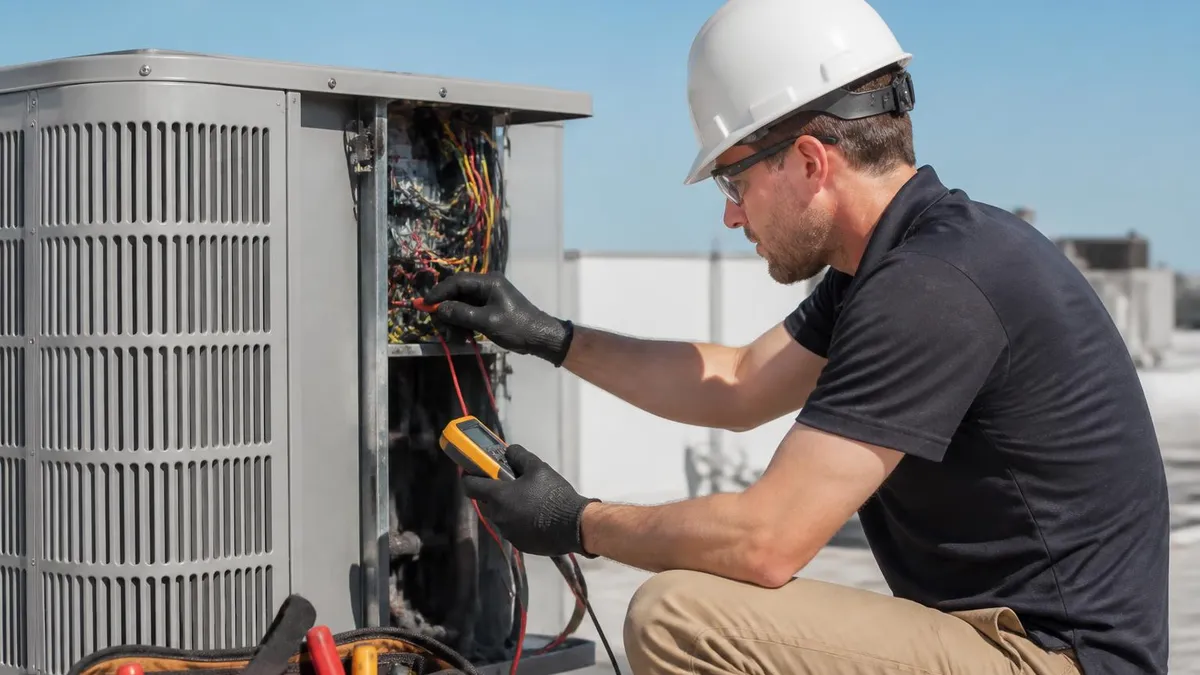
Are Energy Efficient HVAC Systems Worth the Premium?
- +Monthly utility bill reductions of 20-40 percent compared to systems older than 12 years
- +Federal tax credits up to $2,000 plus state and utility rebates often totaling $3,000+
- +Variable-speed equipment delivers superior humidity control and even temperatures
- +Quieter operation, often under 60 decibels outdoors, versus 75+ for legacy units
- +Lower refrigerant charges and modern refrigerants reduce environmental impact
- +Smart thermostats and zoning integrate seamlessly with high-efficiency equipment
- +Improved indoor air quality through better filtration and continuous low-speed circulation
- −Upfront equipment costs run 30-60 percent higher than minimum-efficiency systems
- −Installation requires more skilled technicians, narrowing your contractor options
- −Variable-speed and inverter equipment has more electronics that can fail expensively
- −Repair costs for proprietary parts can exceed older system maintenance by 2-3x
- −Payback periods stretch 5-10 years in regions with low energy prices
- −Existing ductwork often needs upgrades to handle high-efficiency airflow correctly
Pros and Cons at a Glance
| Pros | Cons |
|---|---|
| Variable-speed equipment delivers superior humidity control and even temperatures | Installation requires more skilled technicians, narrowing your contractor options |
| Lower refrigerant charges and modern refrigerants reduce environmental impact | Variable-speed and inverter equipment has more electronics that can fail expensively |
| Smart thermostats and zoning integrate seamlessly with high-efficiency equipment | Existing ductwork often needs upgrades to handle high-efficiency airflow correctly |
Energy Efficient HVAC Systems Upgrade Readiness Checklist
- ✓Pull last 24 months of utility bills to establish a baseline of current heating and cooling costs
- ✓Schedule a professional Manual J load calculation rather than accepting any rule-of-thumb sizing
- ✓Inspect and test duct system for leakage; aim to seal to less than 6 percent of fan flow
- ✓Verify attic, wall, and rim joist insulation meet current IECC code for your climate zone
- ✓Replace single-pane windows or add storm windows before sizing new equipment downward
- ✓Confirm electrical panel capacity for heat pump installation, typically requiring 200 amp service
- ✓Research utility rebates, state programs, and federal 25C tax credit eligibility for chosen equipment
- ✓Get three written proposals listing model numbers, AHRI certificates, and installed efficiency ratings
- ✓Check contractor NATE certification, manufacturer training, and verified online reviews independently
- ✓Plan installation timing around seasonal contractor demand to negotiate better pricing and scheduling
Installation quality outweighs nameplate efficiency every time
Industry studies consistently show that 70-90 percent of new HVAC systems are installed with errors that reduce real-world efficiency by 10-30 percent. A 16 SEER2 system installed correctly will outperform a 20 SEER2 system installed with leaky ducts, wrong refrigerant charge, or mismatched coil and condenser. Choose your contractor before you choose your equipment, and demand a Manual J load calculation in writing.
The financial case for energy efficient HVAC systems has never been stronger thanks to a multi-layered stack of federal incentives, state rebates, and utility programs that frequently overlap and can be combined. The Inflation Reduction Act extended and expanded the 25C Energy Efficient Home Improvement Credit through 2032, offering 30 percent of installation costs back as a non-refundable tax credit up to $2,000 annually for heat pumps and $600 for high-efficiency central AC or furnaces. These numbers reset every year, meaning you can claim them again for additional improvements in subsequent tax filings.
State and utility programs layer on top of the federal credit and often pay homeowners cash within weeks of installation rather than waiting for tax season. California's TECH Clean California, Massachusetts Mass Save, New York's NYS Clean Heat, and dozens of similar programs deliver $1,000 to $8,000 in direct rebates for qualifying heat pumps. Income-qualified households can access even larger High-Efficiency Electric Home Rebate Act funds, with full installation costs covered for many low-income families starting in 2024-2025 as states launch their programs.
Beyond rebates, the operational savings tell the longer-term story. A typical 2,400 square foot home replacing a 12-year-old 10 SEER air conditioner and 80 AFUE furnace with a modern 18 SEER2 heat pump can expect annual energy savings between $700 and $1,800 depending on climate and utility rates. Multiply that by the 15-year design life of modern equipment and the lifetime savings range from $10,000 to $27,000, often two to three times the upgrade premium over minimum-efficiency replacement equipment.
Financing options have also improved. The HEAR program, on-bill financing through many utilities, and PACE loans tied to property rather than personal credit allow homeowners to spread costs over 10-20 years at rates often lower than home equity lines. Some programs structure payments so they remain below the monthly energy savings, meaning the upgrade is cash-flow positive from day one. Always run the numbers including any financing costs to confirm the math works for your specific situation.
Property value also benefits, though less dramatically than some marketing materials claim. Appraisers in most markets credit roughly 50-70 percent of a new HVAC system's installed cost toward the home's appraised value during the first five years after installation. Realtors increasingly note efficiency upgrades in MLS listings and find that homes with documented high-efficiency systems sell modestly faster, particularly to buyers concerned about future energy costs and climate resilience. Get and keep all paperwork from your installation.
Don't underestimate non-financial returns either. Variable-speed equipment runs quieter, controls humidity better, filters air more thoroughly, and maintains more even temperatures throughout the home. These quality-of-life improvements are real, even if they do not appear on the utility bill. Many homeowners report sleeping better, having fewer allergy symptoms, and enjoying more livable basements and second floors after upgrading. These benefits compound the financial case rather than competing with it.
Finally, consider future-proofing. Refrigerant regulations are tightening rapidly under the AIM Act, with R-410A being phased out for new equipment starting in 2025. Buying high-efficiency equipment now means receiving R-454B or R-32 systems that will remain serviceable and supportable for decades. Older R-410A equipment will become increasingly expensive to repair as refrigerant supplies decrease, which strengthens the case for upgrading rather than patching marginal systems.
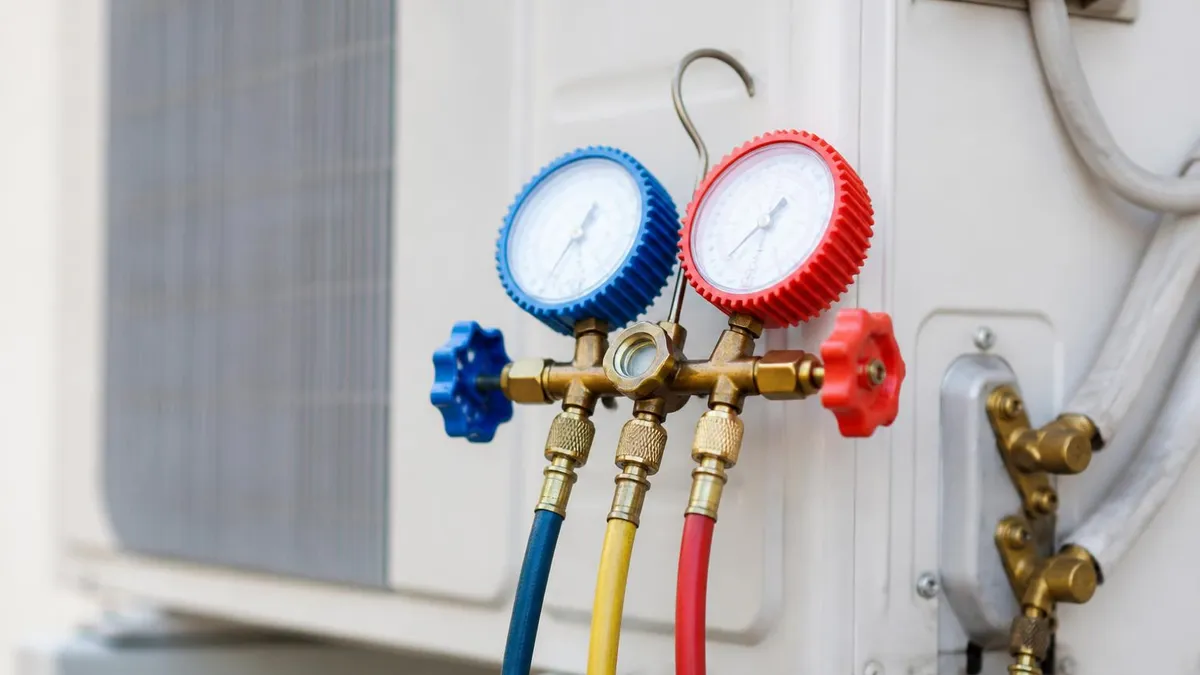
The single most common installation error is sizing the new system to match the old one rather than to the home's actual current heat load. Improvements to insulation, windows, and air sealing over the past 20 years mean most homes need 20-30 percent less capacity than they did when original equipment was installed. An oversized variable-speed system can still short cycle, waste energy, and fail to control humidity. Insist on Manual J calculations.
Installation quality is where energy efficient HVAC systems either deliver on their promise or fail spectacularly. The single most important decision you make is not which brand or efficiency tier you select, but which contractor you hire. A premium 20 SEER2 system installed by a hurried crew that skips the load calculation, ignores duct leakage, and overcharges refrigerant will perform like a mid-tier unit while you pay premium prices for the privilege. Take contractor selection more seriously than equipment selection.
Start with NATE certification, which independently verifies technician competency across multiple specialty areas including installation, service, and senior efficiency analyst. Manufacturer-specific training matters too, especially for variable-speed and inverter-driven equipment where the diagnostic approach differs significantly from legacy single-stage systems. Ask each prospective contractor which manufacturer training their lead installers hold and how recently they completed it. Reputable companies will produce this paperwork without hesitation. For a detailed walkthrough of the installation process from quote to commissioning, check out our complete guide to HVAC installations.
A proper installation begins with Manual J load calculation, continues with Manual D duct design, and concludes with Manual S equipment selection. These three ACCA protocols are the industry standard, and every quality contractor uses them. If a contractor proposes equipment without performing these calculations, walk away. They are not protecting your investment; they are minimizing their time on your project. The calculations should produce a written report showing room-by-room loads, total tonnage, and the rationale for the selected equipment.
Refrigerant charge is another make-or-break detail. Air conditioning and heat pump equipment must be charged to within 3-5 percent of manufacturer specifications using either subcooling or superheat methodology depending on the system type. Studies have shown that approximately 50 percent of residential systems run with incorrect charge, reducing efficiency by 10-20 percent. Ask contractors how they verify charge at commissioning and request the readings in writing. They should include suction pressure, liquid line pressure, and corresponding superheat or subcooling values.
Duct system integrity matters as much as the equipment itself. Leakage testing using a duct blaster should be standard practice for any high-efficiency installation, and the results should be reported in CFM at 25 Pascal as a percentage of total fan flow. Energy Star certified homes require less than 4 percent total leakage; aim for similar performance in retrofits whenever practical. Many contractors offer duct sealing as a separate service that should be completed before new equipment is installed and commissioned.
Maintenance schedules dramatically affect long-term efficiency. Plan on twice-yearly professional service: a cooling-season tune-up in spring and a heating-season tune-up in fall. Each visit should include filter inspection, coil cleaning, refrigerant charge verification, electrical connection tightening, condensate drain clearing, and combustion analysis for fuel-burning equipment. Skipping maintenance to save $200 annually typically costs $500-$1,500 in lost efficiency and shortened equipment life over the system's design lifespan.
Smart thermostat integration completes a high-efficiency system. Models from Ecobee, Nest, Honeywell, and Mysa support variable-speed equipment communication protocols and learn occupancy patterns to optimize comfort and savings. Choose a thermostat compatible with your specific equipment, as some communicating systems use proprietary protocols that limit third-party thermostat options. Properly programmed setbacks of 7-10 degrees during sleep and work hours can capture an additional 10 percent in annual savings on top of the equipment efficiency gains.
Before you sign a contract for any energy efficient HVAC system upgrade, slow down for one more round of practical due diligence. Most regret in this market comes not from choosing the wrong equipment category but from rushing the contractor selection and skipping the verification steps that separate good installations from mediocre ones. The premium you are paying for efficiency only materializes when commissioning is done correctly, so build a process that demands evidence rather than promises.
Request itemized written proposals from at least three contractors, not just verbal estimates or single-page summaries. A complete proposal lists the AHRI certificate number for the matched indoor-outdoor combination, the SEER2 and HSPF2 ratings of that specific match, the model numbers of every major component, the scope of duct modifications, the warranty terms, and a line-item breakdown of equipment, labor, materials, and permit fees. Vague proposals signal contractors who plan to substitute cheaper components or skip steps once the job starts.
Verify rebate eligibility before signing rather than after. Most utility programs require pre-approval, specific equipment models from a qualified products list, and licensed contractors registered with the program. Buying first and applying later disqualifies many homeowners from thousands of dollars in rebates they could have captured with 30 minutes of phone calls. Your contractor should handle this paperwork as part of standard service; if they do not, find one who does or budget your own time to manage it.
Plan installation timing strategically. Spring and fall shoulder seasons typically offer better pricing and faster scheduling than peak summer and winter when emergency replacements dominate contractor calendars. If your existing system still works, scheduling proactive replacement during the off-season can save 10-20 percent on labor and prevent the rushed decision-making that follows a hot July afternoon breakdown. Manufacturer rebates also tend to peak during shoulder seasons as dealers move inventory.
Confirm permitting and inspection requirements with your local building department before work begins. Most jurisdictions require permits for HVAC replacements, and skipping the inspection step voids manufacturer warranties, complicates future home sales, and exposes you to insurance claim denials if a related issue occurs. Reputable contractors pull permits as standard practice and welcome the third-party inspection as protection for their workmanship. Be skeptical of any contractor who suggests skipping permits to save money or time.
Document everything during commissioning. Take photos of model and serial number plates, save the AHRI certificate, request copies of the load calculation and duct test report, and keep the refrigerant charge documentation. This paperwork supports future warranty claims, future home sale disclosures, and any future rebate or tax credit audits. Create a simple folder labeled HVAC and keep all of this material together with your invoice and warranty registration confirmations from the manufacturer.
Finally, schedule your first maintenance visit before the installer leaves on commissioning day. Six months goes by quickly, and the technician who installed your system is the one who knows it best for that first follow-up service. Establishing the maintenance relationship immediately also locks in the labor warranty most quality contractors offer for the first year. Treat the new system like the major asset it is, and it will return your investment many times over across its operating life.
Sample HVAC Practice Questions
Try these questions from our free HVAC practice tests. The correct answer and an explanation follow each question.
What is 'setback' or 'setup' control in HVAC energy management?
- A. Temporarily relaxing temperature setpoints during unoccupied periods to reduce heating or cooling energy
- B. Increasing airflow during peak hours to improve comfort
- C. Raising supply fan speed during unoccupied hours for air circulation
- D. Cycling the chiller off during periods of low demand
Answer: A. Temporarily relaxing temperature setpoints during unoccupied periods to reduce heating or cooling energy
Setback (heating) and setup (cooling) raise or lower thermostat setpoints when a building is unoccupied, reducing HVAC runtime and energy consumption significantly.
Which OSHA standard specifically governs lockout/tagout procedures for HVAC equipment with stored energy?
- A. 29 CFR 1910.147 — Control of Hazardous Energy
- B. 29 CFR 1910.303 — Electrical Standards
- C. 29 CFR 1910.134 — Respiratory Protection
- D. 29 CFR 1926.502 — Fall Protection
Answer: A. 29 CFR 1910.147 — Control of Hazardous Energy
OSHA 29 CFR 1910.147 (Control of Hazardous Energy) governs lockout/tagout procedures to prevent unexpected energization of equipment during maintenance.
Which type of ventilation system is most energy-efficient for a school gymnasium that is occupied only during daytime hours?
- A. Constant volume system with fixed outdoor air
- B. Dedicated outdoor air system (DOAS) with energy recovery
- C. 100% outdoor air system without heat recovery
- D. Recirculating system with HEPA filtration
Answer: B. Dedicated outdoor air system (DOAS) with energy recovery
A DOAS with energy recovery ventilates precisely to code minimums while recovering energy from exhaust air, making it highly efficient for spaces with variable and intermittent occupancy.
What is the standard gauge thickness for residential HVAC supply ductwork in low-pressure systems?
- A. 26 gauge
- B. 22 gauge
- C. 18 gauge
- D. 30 gauge
Answer: A. 26 gauge
26 gauge galvanized steel is the standard minimum thickness for residential low-pressure supply ductwork per SMACNA guidelines.
HVAC Questions and Answers
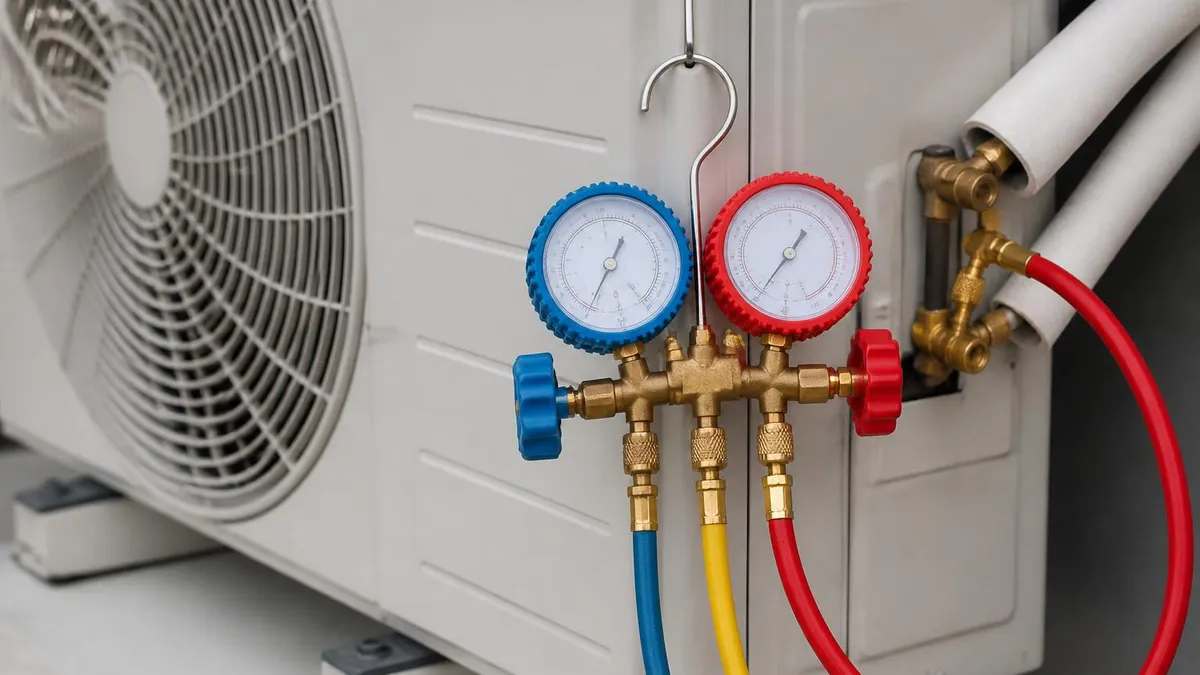
HVAC Technician Jobs Near Me: How to Find, Land, and Grow in Local HVAC Careers
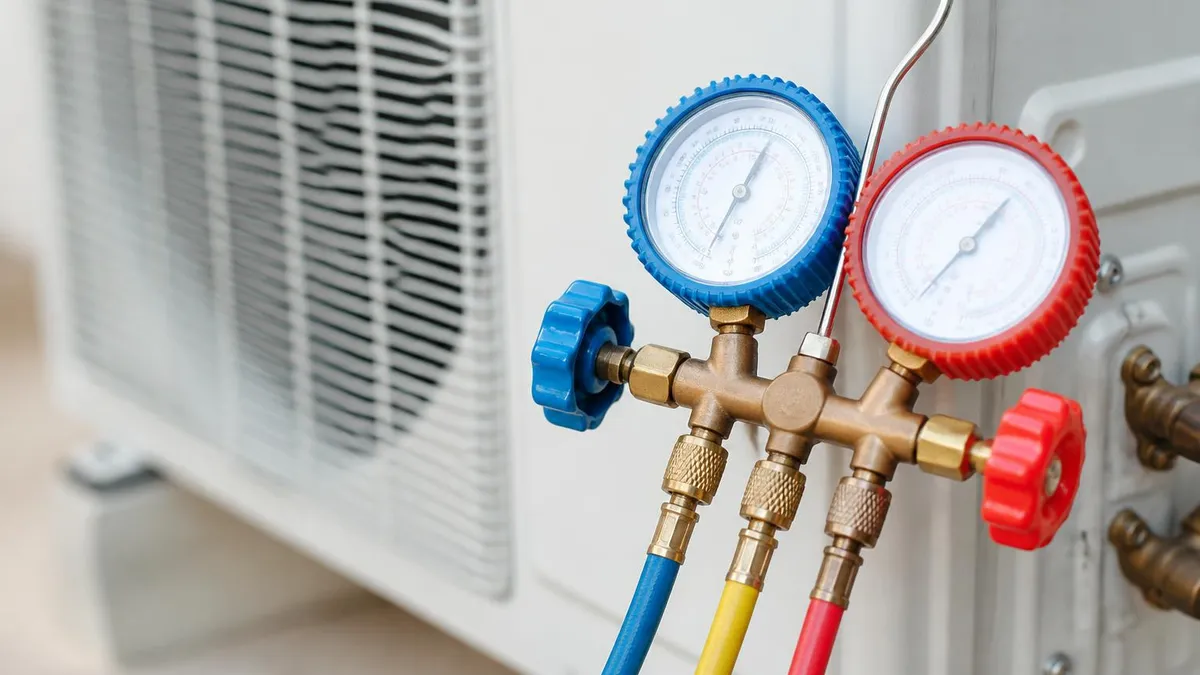
CFM HVAC Basics: How Airflow, Sizing, and System Performance Work Together
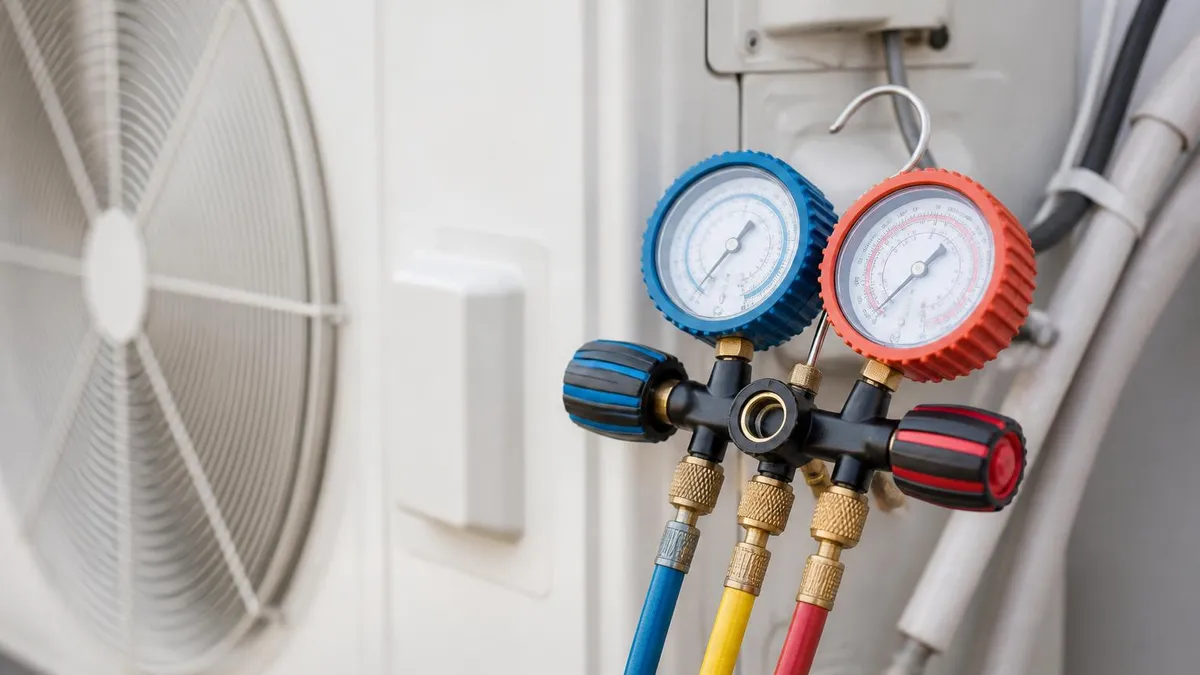
Certified HVAC Contractors: How to Find, Vet, and Hire the Right Professional for Your Home or Business
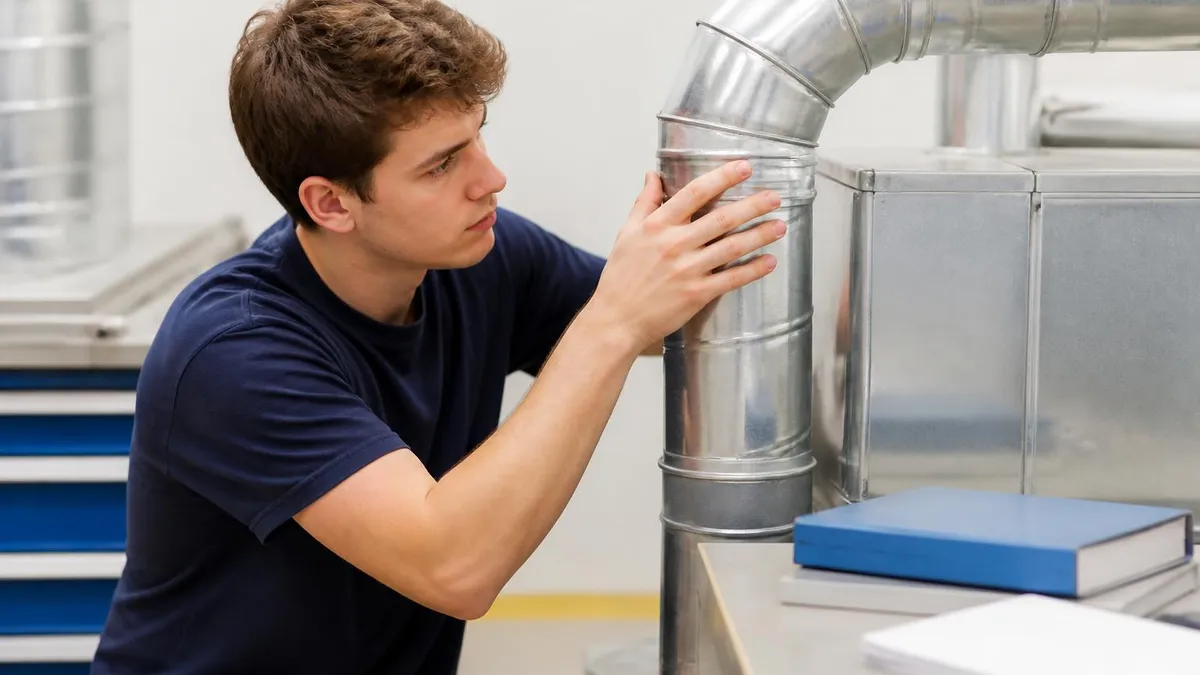
Best HVAC Repair in Bandon, OR: Local Services Near Me Guide
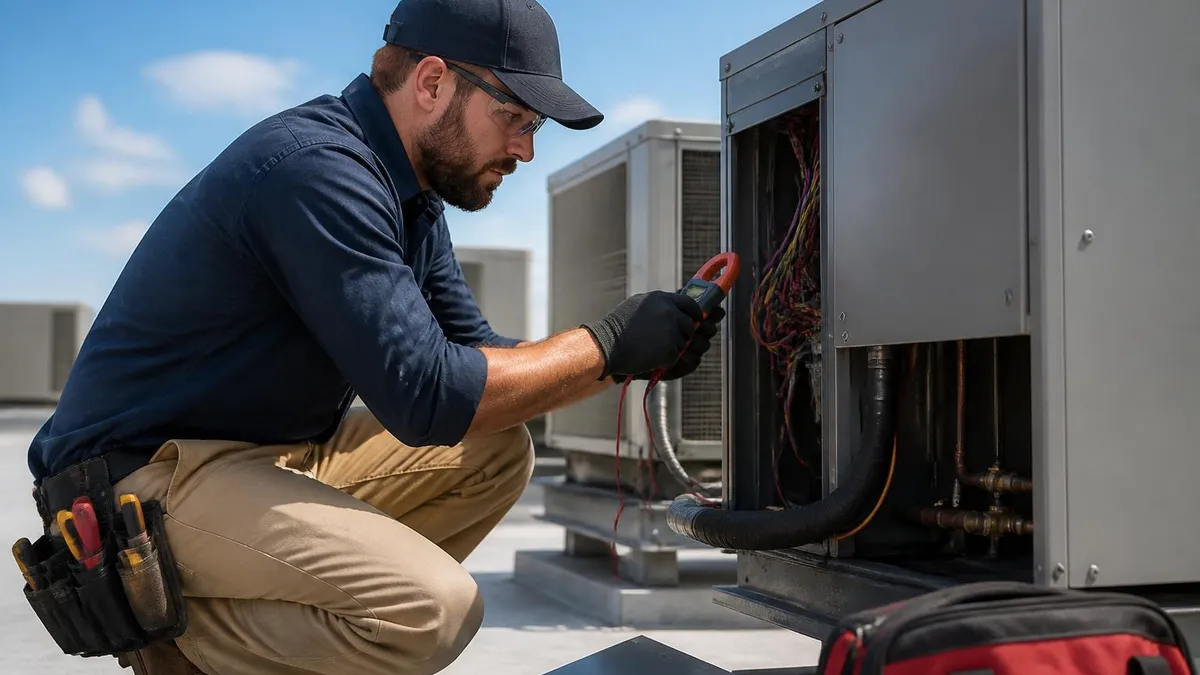
HVAC Installations: The Complete Guide to Planning, Pricing, and Getting It Right the First Time
About the Author

NATE Certified HVAC Technician & Licensing Exam Trainer
Universal Technical InstituteMike Johnson is a NATE-certified HVAC technician and EPA 608 universal-certified refrigerant handler with a Bachelor of Science in HVAC/R Technology. He has 19 years of commercial and residential HVAC installation and service experience and specializes in preparing technicians for NATE certification, EPA 608, A2L refrigerant safety, and state HVAC contractor licensing examinations.