
Online Forklift Training: Complete Guide to OSHA-Compliant Certification, Course Costs, and Employer Requirements for 2026 September
Online forklift training: OSHA-compliant courses, costs, certification steps, and employer evaluation requirements. Complete 2026 September guide for operators. 💡

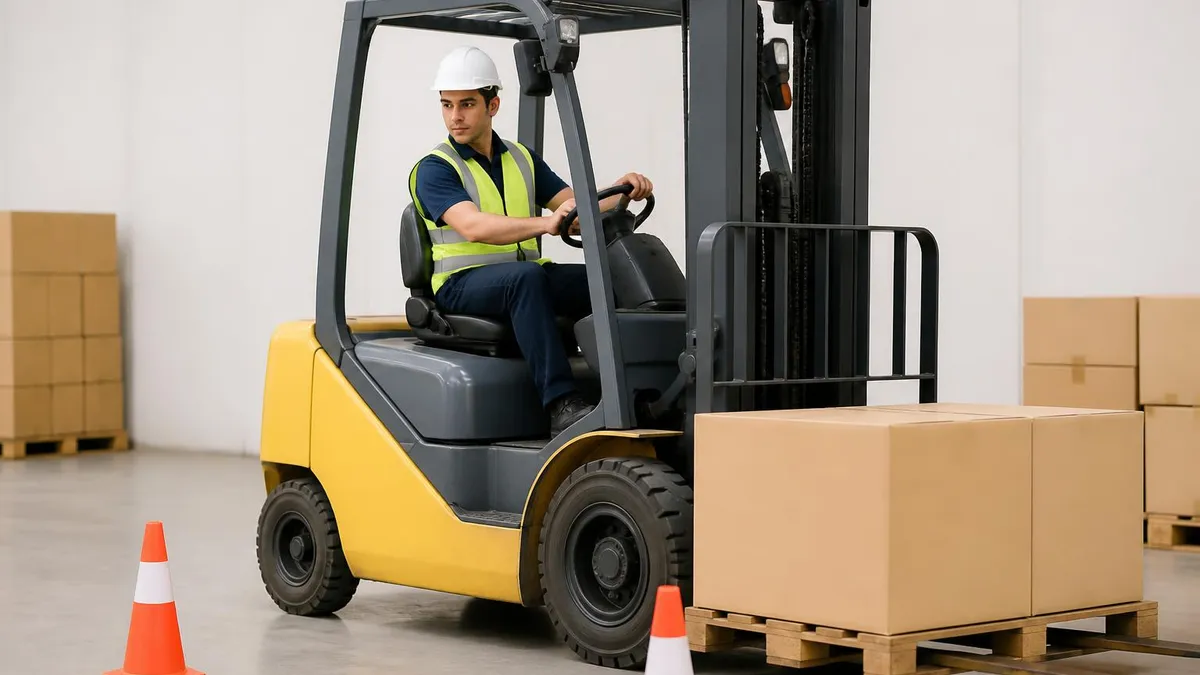
Online forklift training has transformed how warehouses, distribution centers, and construction sites prepare new operators for OSHA-compliant certification. Whether you operate a stand up forklift in a tight aisle or move pallets with an electric forklift, the classroom portion of your training can now be completed from any laptop or phone in roughly four to six hours. Combined with hands-on evaluation by a qualified employer, this hybrid approach satisfies 29 CFR 1910.178(l) and produces a certified forklift operator faster than traditional in-person seminars.
The demand for trained operators continues to climb in 2026 as e-commerce volumes push warehouses to operate 24/7. Companies that previously waited weeks for trainer availability now enroll new hires the same day, reducing time-to-productivity from two weeks to under 72 hours. Online forklift training also standardizes the curriculum, ensuring every operator receives identical instruction on stability triangles, load handling, pre-operational inspections, and pedestrian safety regardless of which facility they work at.
OSHA does not certify training providers, which means quality varies wildly between platforms. A reputable online course covers all seven topics required by 1910.178(l)(3), provides a printable certificate, and pairs theory with practical skills documentation that an employer must complete on-site. Cheap $20 courses that skip pre-shift inspections or omit narrow-aisle truck classifications leave employers exposed to citations averaging $16,131 per violation, so vetting your provider matters as much as completing the modules.
This guide walks you through every component of online forklift training: course content, costs, completion timelines, employer responsibilities, recertification rules, and how the digital classroom integrates with mandatory hands-on evaluation. We'll compare top providers, explain what makes a course truly OSHA-compliant, and show why employers cannot legally accept an online certificate alone as proof of operator competency. By the end you'll know exactly what to enroll in and what to expect from your employer's evaluator.
Forklift training is required for every powered industrial truck classification an operator will use, including Class I electric riders, Class II narrow-aisle reach trucks, Class III pallet jacks, Class IV cushion-tire internal combustion trucks, Class V pneumatic-tire trucks, Class VI tractors, and Class VII rough terrain forklifts. Operators must be at least 18 years old in general industry workplaces. Recertification is required every three years or sooner if an operator is observed driving unsafely, has an accident, or is reassigned to a different truck type.
For employers managing a fleet, online forklift training pairs naturally with forklift safety training programs that cover topics beyond the operator certification minimum, such as load engineering, racking inspection, and dock safety. Together these create a defensible safety culture that protects workers, reduces insurance premiums, and signals to regulators that the company takes 29 CFR 1910.178 seriously.
Cost-wise, expect to pay $50 to $99 per operator for a complete online course bundle including evaluation forms, lift truck classifications, written tests, and printable certificates. Group rates drop the per-seat cost to as low as $25 when you enroll ten or more employees simultaneously. Compared to in-person seminars at $150 to $300 per operator, online training delivers significant savings without sacrificing OSHA compliance — provided the practical evaluation is conducted properly on the actual equipment.
Online Forklift Training by the Numbers

What Online Forklift Training Covers
Detailed coverage of all seven OSHA forklift classes, including stand up forklift reach trucks, electric pallet jacks, internal combustion cushion-tire models, and rough terrain lifts used outdoors.
Step-by-step walk-around inspection covering forks, mast, hydraulics, tires, horn, lights, seatbelt, data plate, and load backrest extension before every shift to catch defects early.
The stability triangle, center of gravity shifts under load, capacity plates, attachments, traveling with loads tilted back, and safe stacking heights on uneven warehouse floors.
Pedestrian zones, blind corners, ramp grades, dock plates, narrow aisles, hazardous atmospheres, battery charging rooms, and propane refueling procedures specific to your facility.
Multiple-choice exam covering all training topics with an 80-85% passing threshold, instant scoring, retake options, and a printable certificate of completion upon passing.
Online forklift training works by combining self-paced video modules, interactive simulations, knowledge checks, and a final written exam into one accessible portal. After enrollment, the learner receives login credentials and can complete the curriculum across multiple sessions on any device. Most platforms bookmark progress automatically so an operator can pause during a shift change and resume that evening without losing module completion data or having to repeat finished sections.
The typical curriculum runs four to six hours of seat time, though learners can move faster or slower depending on prior experience. New operators often spend longer on stability and load-handling modules because the physics of forklift balance is counterintuitive — a load that feels stable at ground level can tip the truck during a turn at speed. Veteran operators returning for recertification usually finish in two to three hours since the material reinforces habits they already practice on the floor.
After the modules, learners take a written test of 25 to 50 multiple-choice questions covering every topic. Passing scores range from 80% on entry-level courses to 85% on accredited programs. Most platforms allow up to three attempts; failed attempts trigger a remedial module review before the next try. Once the operator passes, the system generates a wallet card and a full-size certificate, both printable as PDFs and emailed to the operator and their employer simultaneously for record-keeping.
Critically, the online portion only satisfies the formal instruction requirement of 29 CFR 1910.178(l)(2)(ii)(A). OSHA also mandates practical training and an in-person evaluation on the specific truck type and at the actual workplace where the operator will work. This is non-negotiable: an operator who completes online modules but never demonstrates hands-on competency is not certified, and the employer remains liable for any accident or citation that follows.
The hands-on portion is conducted by a qualified evaluator — someone with the knowledge, training, and experience to assess operator skills. The evaluator watches the operator perform pre-shift inspection, mount and dismount, travel forward and reverse, handle a typical load, navigate aisles and ramps, stack and unstack, and park properly. The evaluator then signs an evaluation form confirming competency, which the employer keeps in the operator's training file alongside the online certificate.
Employers who skip the evaluation step or accept an online certificate as standalone proof of certification face inevitable OSHA enforcement. Inspectors routinely ask for both the written certificate and the practical evaluation record during workplace investigations. Missing either document is treated as untrained operation, which carries the same penalty as having no training at all. For this reason, reputable online platforms ship evaluation forms with their certificates and include detailed evaluator instructions in their employer packets.
Comparing online to traditional classroom training, the digital format wins on cost, scheduling flexibility, and content consistency, while in-person seminars retain an edge for hands-on demonstrations and Q&A with instructors. For most general-industry employers running standard counterbalanced or electric forklift fleets, the hybrid online-plus-evaluation model has become the gold standard because it minimizes downtime and produces well-documented training records auditors love to see during compliance reviews. Refer to forklift operator duties for the responsibilities a newly certified operator assumes day one.

Forklift certification Practice Test Questions
Prepare for the Forklift certification Certification exam with our free practice test modules. Each quiz covers key topics to help you pass on your first try.
Forklift certification Certification Forkl...
Forklift certification Exam Questions covering Certification Forklift certification Maintenance and Repairs. Master Forklift certification Test concepts for certification prep.
Forklift certification Certification Forkl...
Free Forklift certification Practice Test featuring Certification Forklift certification Maintenance and Repairs Questions and Answers. Improve your Forklift certification Exam score with mock test prep.
Forklift certification Certification Forkl...
Forklift certification Mock Exam on Certification Forklift certification Operator Training and Certification Requirements. Forklift certification Study Guide questions to pass on your first try.
Forklift certification Certification Forkl...
Forklift certification Test Prep for Certification Forklift certification Operator Training and Certification Requirements Questions and Answers. Practice Forklift certification Quiz questions and boost your score.
Forklift certification Load Handling and S...
Forklift certification Questions and Answers on Load Handling and Stability. Free Forklift certification practice for exam readiness.
Forklift certification OSHA Regulations an...
Forklift certification Mock Test covering OSHA Regulations and Compliance. Online Forklift certification Test practice with instant feedback.
Forklift certification Pre-Operation Inspe...
Free Forklift certification Quiz on Pre-Operation Inspections. Forklift certification Exam prep questions with detailed explanations.
Forklift certification Refueling and Recha...
Forklift certification Practice Questions for Refueling and Recharging Procedures. Build confidence for your Forklift certification certification exam.
Forklift certification Safe Driving and Ma...
Forklift certification Test Online for Safe Driving and Maneuvering. Free practice with instant results and feedback.
Forklift certification Workplace Hazard Id...
Forklift certification Study Material on Workplace Hazard Identification. Prepare effectively with real exam-style questions.
Forklift certification Forklift Instructions
Free Forklift certification Test covering Forklift Instructions. Practice and track your Forklift certification exam readiness.
Forklift certification Forklift MCQ
Forklift certification Exam Questions covering Forklift MCQ. Master Forklift certification Test concepts for certification prep.
Forklift certification Forklift Employer R...
Free Forklift certification Practice Test featuring Forklift Employer Responsibilities. Improve your Forklift certification Exam score with mock test prep.
Forklift certification Forklift Penalties ...
Forklift certification Mock Exam on Forklift Penalties for Non-Compliance. Forklift certification Study Guide questions to pass on your first try.
Forklift Operator Training Pathways
A brand-new operator with zero experience should expect roughly six hours of online instruction plus a full day of practical training on the floor. The online portion covers theory: OSHA regulations, forklift physics, hazard identification, and a 50-question written exam. After passing, the new hire reports to the workplace for guided practice driving an empty truck, then handling progressively heavier loads under direct supervision until the evaluator signs off.
First-time certification typically takes three to five business days from enrollment to a signed evaluation form. Employers should not assign solo lifting tasks until the certificate and evaluation are both in the file. Many companies extend the supervised practice phase to two weeks for confidence and safety, even though OSHA only requires demonstrated competency. The investment pays back through fewer accidents, reduced product damage, and lower workers' compensation costs over the operator's tenure.
Online Forklift Training vs Traditional Classroom
- +Self-paced learning lets operators study around shift schedules and family obligations
- +Lower cost per operator, especially with group enrollment discounts
- +Standardized curriculum eliminates instructor-to-instructor quality variation
- +Instant printable certificates the moment the operator passes the written test
- +Automatic bookmarking and progress tracking across multiple devices and sessions
- +Easy fleet-wide deployment for multi-location employers with central record keeping
- +Refresher modules can be retaken anytime to reinforce specific topics
- −Hands-on evaluation still required on-site, so it isn't truly 100% online
- −Quality varies widely between providers — cheap courses may skip required topics
- −Less interactive than live classrooms with real-time instructor Q&A
- −Self-discipline required; some learners rush through modules to finish faster
- −Limited troubleshooting for technical issues outside business hours on cheaper platforms
- −Internet access required, which can be a barrier in older industrial facilities

Online Forklift Training Enrollment Checklist
- ✓Confirm the provider's curriculum covers all seven OSHA 1910.178 truck classifications
- ✓Verify the course includes a printable certificate and a separate practical evaluation form
- ✓Check that the written exam requires at least 80% to pass, with documented retake policy
- ✓Ensure the platform issues both an individual operator certificate and an employer record copy
- ✓Identify a qualified evaluator at your workplace before enrolling new operators
- ✓Allocate the equipment and floor space needed for the practical demonstration phase
- ✓Schedule the hands-on evaluation within 30 days of online completion to keep momentum
- ✓Create a central spreadsheet tracking each operator's expiration date three years out
- ✓Print a wallet card for every certified operator to carry during shifts
- ✓File the completed evaluation form alongside the online certificate in the operator's training folder
OSHA requires both knowledge AND skill demonstration
An online certificate alone is not legal certification under 29 CFR 1910.178(l)(2). The operator must also perform hands-on tasks observed and documented by a qualified evaluator at the workplace. OSHA inspectors routinely ask for both records during accident investigations, and missing the evaluation form is treated identically to having no training at all — full $16,131 penalty per untrained operator.
Employers carry the heavier burden in the online forklift training equation. While the operator completes coursework on their own time, the employer must designate a qualified trainer, conduct the practical evaluation, document everything, and refresh certifications every three years. OSHA holds the employer accountable for operator competency, not the online training provider, which is why purchasing the cheapest course possible often backfires when an inspector arrives and finds gaps in the practical evaluation paperwork that no online vendor can fix retroactively.
A qualified trainer or evaluator is defined as someone with the knowledge, training, and experience to teach forklift operation and evaluate operator competency. This does not require a third-party certification — a senior operator with years of hands-on experience and demonstrable command of OSHA standards can serve as the evaluator. Many small businesses designate their warehouse supervisor or lead operator. Larger employers often appoint a full-time safety coordinator who manages all training records across multiple shifts and facilities.
Documentation requirements are strict. For each operator, the employer must retain the name of the trainee, the date of training, the date of evaluation, the identity of the trainer or evaluator, and proof that the operator was evaluated on the specific truck type and workplace conditions. Most online platforms generate this documentation automatically when the operator passes the written exam, but the practical evaluation form is the employer's responsibility to fill out and file. Lost or incomplete forms invalidate the certification entirely.
Refresher training is triggered by specific events outside the three-year recertification cycle. If an operator is observed driving unsafely, has an accident, has a near-miss, receives an unfavorable performance evaluation, or is assigned to operate a different type of truck, the employer must provide refresher training and a new evaluation before the operator resumes work. Workplace changes such as new aisle layouts, new product weights, or new pedestrian traffic patterns can also trigger refresher requirements.
Employers leasing trucks should pair training records with their forklift repair service documentation so that maintenance logs and operator records are cross-referenced during audits. An inspector who sees a brake repair logged on the same day an operator reported a near-miss will look for evidence the operator received refresher training afterward. Connecting these records demonstrates a mature safety program and dramatically reduces citation severity if an incident does occur.
Multi-location employers benefit from a learning management system (LMS) that centralizes online enrollment, certificate storage, and evaluation form completion across every facility. Many online providers now offer LMS dashboards as part of group enrollment packages. The dashboard flags upcoming expirations, tracks completion rates by location, and exports OSHA-ready reports for compliance audits. This level of organization signals to regulators that the company treats forklift safety as a managed program rather than a checkbox exercise.
Finally, employers must remember that certification is workplace-specific. An operator certified at one facility cannot transfer that certification to a new employer or new workplace without a fresh practical evaluation on the new equipment and in the new environment. The online course content carries over, but the evaluation must be repeated. Documenting this transfer correctly prevents the legal gray area many companies stumble into when hiring experienced operators who assume their previous credentials apply universally.
Some online providers advertise certification at $19.95 with no evaluation form, no employer documentation, and curriculum gaps that omit required OSHA topics. These courses are not OSHA-compliant despite their marketing claims. Always verify the provider supplies a separate practical evaluation form and covers all seven truck classifications before enrolling any operator.
Renewal and recertification keep certified forklift operators current with changing equipment, evolving workplace hazards, and updated OSHA interpretations. The three-year clock starts the day the practical evaluation is signed, not the day the online course was completed. Employers should track the evaluation date carefully because the certificate expiration follows it. Missing the renewal window by even one day means the operator must stop driving until they complete refresher training and a new practical evaluation, costing the business productive hours.
Recertification curriculum is typically shorter than initial training, condensing the most critical topics into a two-to-four-hour refresher module. The written exam remains, though questions often focus on incident analysis, recent workplace changes, and updated OSHA guidance. Providers update their courses annually to reflect new equipment classifications, attachment safety rules, and emerging concerns such as lithium-ion battery handling that didn't exist when the original 1910.178 standard was published.
An accident or near-miss requires immediate refresher training before the involved operator returns to duty. The refresher should specifically address the cause of the incident — for example, a load tip-over triggers focused review of stability and capacity plate interpretation. Generic refresher courses that ignore the specific failure mode miss the point and fail the OSHA reasonable-care standard. Document the incident, the targeted refresher topics, and the new evaluation in the operator's file to demonstrate corrective action.
Employers introducing new equipment must train all affected operators on that specific truck type even if they are mid-cycle on their existing certification. For instance, replacing a sit-down counterbalanced truck with a stand up forklift reach truck triggers immediate training on the new model: differences in controls, visibility, turning radius, and capacity ratings. The online course covers most of this content, but the practical evaluation must occur on the actual new equipment before solo operation begins.
Renewal pricing typically runs 30-40% below initial certification because the curriculum is shorter and the practical evaluation is faster. Expect to pay $35-$49 per operator for a complete renewal package. Group rates apply just as they do for new certification, and many providers offer auto-renewal subscriptions that automatically enroll operators in refresher modules 60 days before expiration. This eliminates the spreadsheet-tracking burden for safety managers overseeing dozens or hundreds of operators across multiple sites.
For deeper guidance on the renewal process — including the legal grace period, the documentation required, and how to handle operators whose certificates expired before they realized — see our complete forklift license renewal resource. It covers state-specific variations, employer notification requirements, and the corrective action plans inspectors expect when they find an expired credential during a workplace visit.
Long-term, the most resilient training programs treat the three-year cycle as a floor, not a ceiling. Quarterly safety stand-downs, monthly toolbox talks, and annual refresher quizzes keep skills sharp between formal recertifications. Operators who continuously engage with safety content make fewer mistakes, identify hazards faster, and contribute to the kind of workplace culture that drives accident rates toward zero. Online training platforms increasingly offer micro-learning modules — five-to-ten-minute focused videos — that fit into existing safety meetings without disrupting production schedules.
Practical preparation tips can make the difference between a smooth online forklift training experience and a frustrating one. Before you enroll, dedicate a quiet block of time — at least two uninterrupted hours per session — to actually absorb the material rather than clicking through screens. Many learners try to complete training during shift breaks or while multitasking, which leads to failed quizzes and forced module re-reviews that double the total time investment. Treat the online course like a college class, not a YouTube playlist running in the background.
Take notes as you progress through each module, especially on numerical thresholds like load capacity ratings, gradient maximums for traveling with loads, and battery charging clearances. These specifics appear in the written exam and in the practical evaluation when the evaluator asks why you tilted the mast back before traveling or why you parked with forks lowered. Memorizing the why behind each rule, not just the rule itself, will impress evaluators and reinforce safe habits that protect you long after the certificate is issued.
Practice with free online forklift training quizzes before you take the official exam. Repeated exposure to question formats builds confidence and surfaces knowledge gaps you didn't know existed. Most operators who fail the written test on first attempt simply hadn't seen the question style before, not because they didn't understand the material. Spending an extra 30 minutes on practice questions before sitting the official exam raises first-attempt pass rates from roughly 70% to over 90% according to provider data.
When the practical evaluation arrives, ask the evaluator beforehand what specific tasks they will assess. Standard evaluations cover walk-around inspection, mounting and dismounting, low-speed travel, load handling, stacking, ramp navigation, and parking. Knowing the sequence in advance lets you mentally rehearse each task and approach the evaluation confidently. Evaluators appreciate operators who treat the assessment seriously — slow, deliberate movements with clear narration of each step almost always result in a clean evaluation form.
Pay close attention to your forklift tires during the pre-shift inspection portion of the evaluation. Tire condition is one of the most common pre-shift findings, and evaluators want to see operators who recognize wear patterns, cuts, chunks missing from cushion tires, and proper inflation on pneumatic tires. Calling out a tire issue during the walk-around — even on a perfect truck — demonstrates the inspection rigor evaluators look for and signals you take pre-operational checks seriously rather than treating them as paperwork.
After certification, keep your wallet card on you during every shift. OSHA does not strictly require carrying the physical card, but most employers and many union contracts mandate it. The card also speeds up incident response — if a supervisor or visiting safety inspector wants to verify your credentials, producing the card immediately avoids workflow disruptions. Treat the wallet card like a driver's license: laminate it, store it in your wallet, and request a replacement immediately if it's lost or damaged.
Finally, view recertification not as a hassle but as an opportunity to reinforce safety habits that protect your career and your coworkers. Three years between credentials is enough time for bad habits to creep in, for equipment standards to evolve, and for new hazards to emerge in your workplace. The refresher modules cost a small fraction of what a single accident costs in medical bills, lost productivity, equipment damage, and emotional impact. Embrace the renewal cycle as professional development that compounds over a decades-long career.
Forklift Questions and Answers
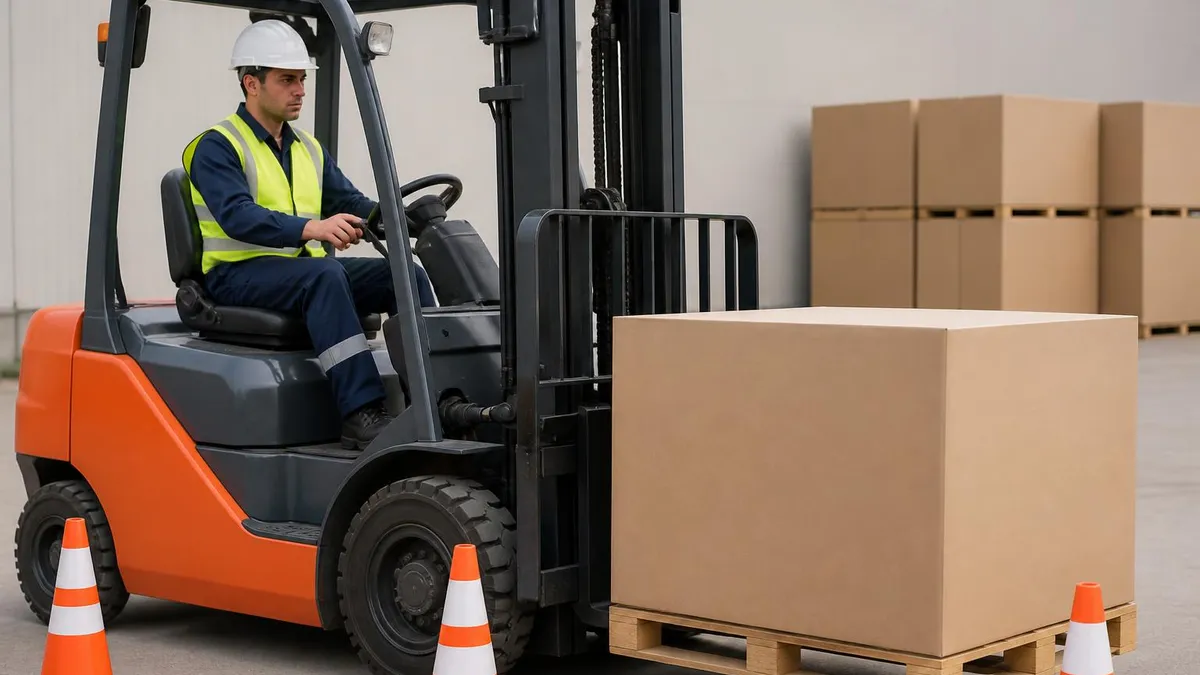
Forklift Tires: Complete Guide to Types, Sizing, Wear Patterns, and Replacement Costs
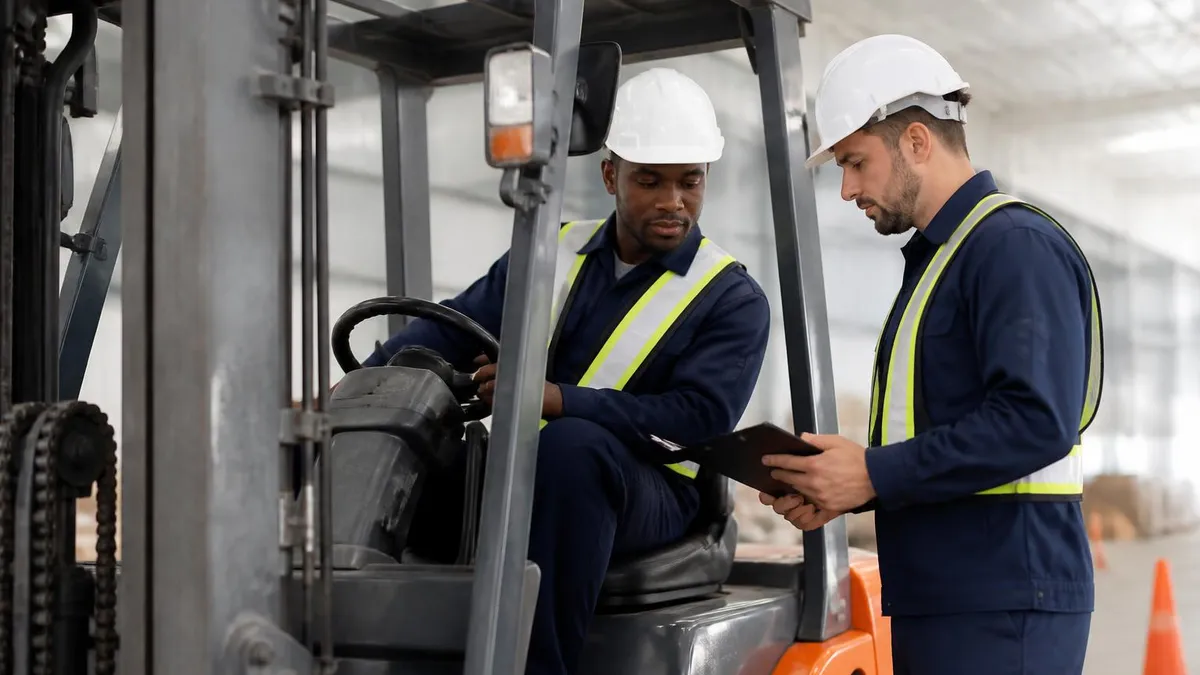
Forklift Operator Duties: Complete Guide to Daily Responsibilities, Safety Tasks, and Career Path for 2026
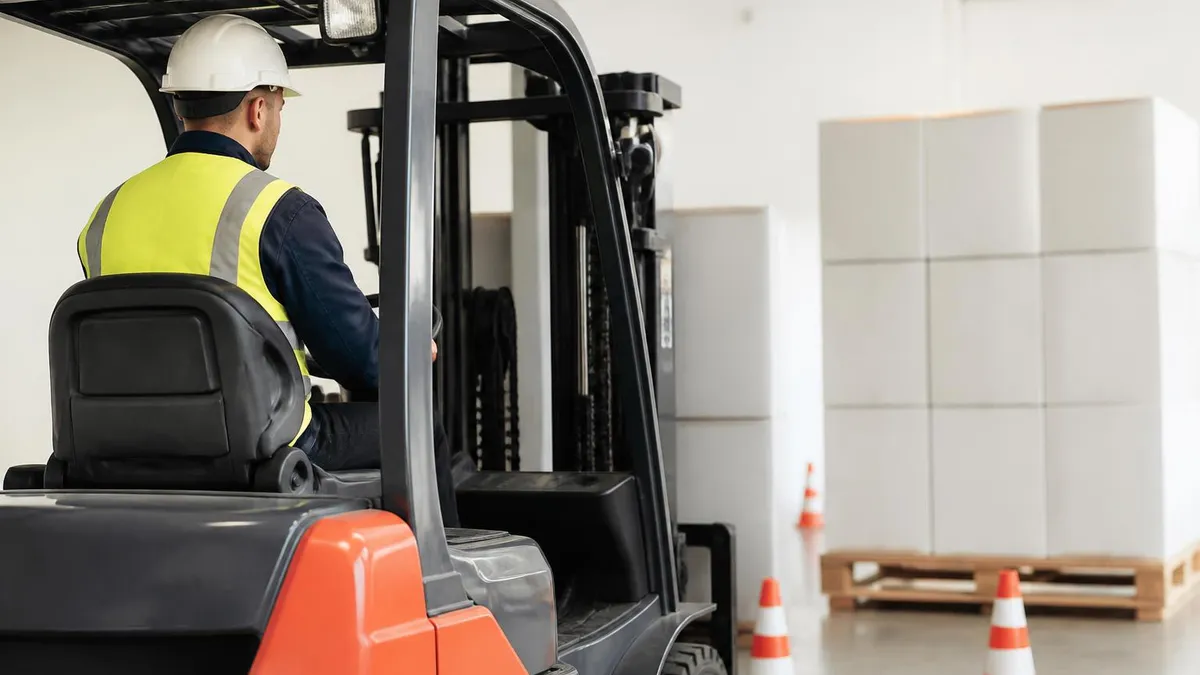
Forklift License Renewal: Complete Guide to Forklift License Expiry, OSHA Recertification, and Operator Requirements for 2026
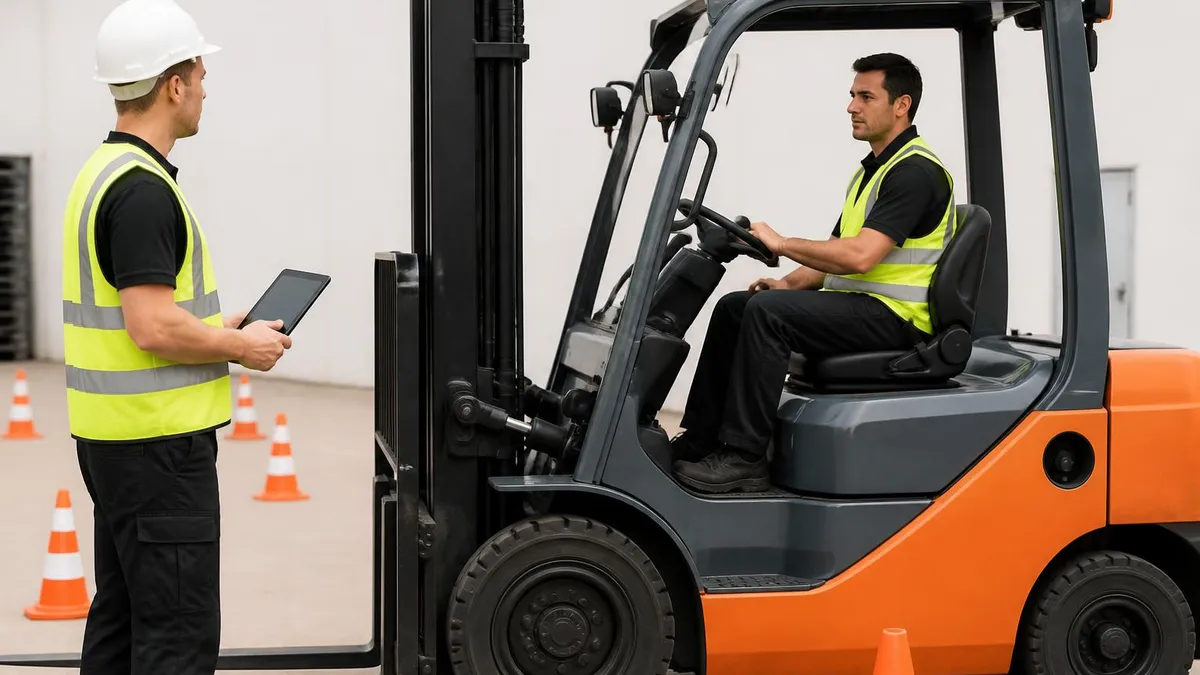
Forklift Safety Training: Complete OSHA Compliance Guide for Operators and Employers
Forklift Repair Service: Complete Guide to Costs, Common Repairs, and Choosing the Right Technician
About the Author

Certified Crane Operator & Skilled Trades Exam Specialist
Ferris State UniversityRobert Martinez is a Journeyman Ironworker, NCCCO-certified crane operator, and forklift trainer with a Bachelor of Science in Construction Technology from Ferris State University. He has 21 years of ironworking, rigging, and heavy equipment operation experience across high-rise and industrial construction sites. Robert prepares candidates for crane operator, rigger, forklift, and skilled trades certification examinations.