
CPR Test Answers: Complete 2026 September Study Guide and Certification Prep Hub
📚 Get verified CPR test answers, ACLS algorithm breakdowns, infant CPR steps, and AED basics. Free practice questions and a complete 2026 September certification prep hub.
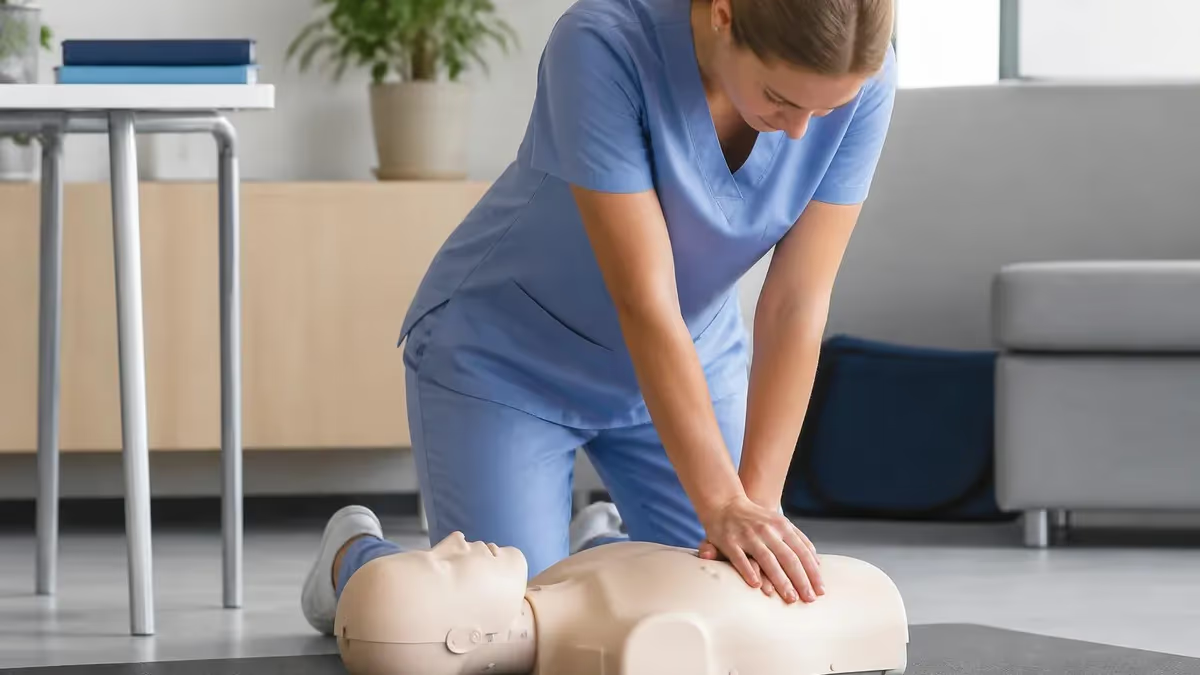
Searching for reliable cpr test answers usually means one thing: you have a certification exam coming up and you want to walk in confident. Whether you are renewing a Basic Life Support card, sitting an American Heart Association written test, or studying the acls algorithm for a hospital role, the questions follow predictable patterns. This guide collects the most commonly tested concepts, explains the reasoning behind each correct response, and points you toward free practice questions so the answers actually stick rather than evaporating the moment you close the book.
The reason CPR exams feel intimidating is that they blend memorized numbers with judgment calls. You need to recall that adult compressions go 100 to 120 per minute at a depth of at least two inches, but you also need to decide what to do when a patient has a pulse yet is not breathing normally. Knowing the raw facts gets you maybe half the marks. The other half comes from understanding why each step matters, which is exactly what we focus on throughout this study hub for every skill level.
Most certification bodies test the same core domains: scene safety, recognition of cardiac arrest, high-quality compressions, rescue breathing, AED operation, and relief of choking. Pediatric variations layer on top of that foundation. If you can explain the difference between adult, child, and infant cpr compression techniques, identify when to use an AED on a small child, and recite the compression-to-ventilation ratios for one versus two rescuers, you have covered roughly eighty percent of any standard written exam in the United States.
This page is built as a Tier 1 prep hub, meaning it works whether you are a complete beginner or a healthcare provider refreshing advanced skills. We deliberately repeat the highest-yield facts in multiple formats — tables, checklists, and quizzes — because spaced repetition across different contexts is how adults retain emergency protocols. You will also find an honest discussion of what study guides get wrong, so you do not memorize outdated numbers from a 2010 manual that a modern proctor will mark incorrect on the day.
Before diving in, set realistic expectations. A typical BLS written exam contains 25 multiple-choice questions and requires roughly 84 percent to pass, while advanced courses can run longer and demand mastery of treatment sequences. Reviewing cpr test answers the night before rarely works; the providers who pass comfortably study in short sessions over a week or two, testing themselves repeatedly. The practice tiles scattered through this article let you do exactly that, free of charge and aligned to current guidelines.
Finally, remember that the written test is only one half of certification. Skills checks — performed on a manikin in front of an instructor — verify that you can actually deliver compressions and operate an AED under light pressure. The knowledge you build answering written questions directly supports that hands-on evaluation, because a rescuer who understands why depth and recoil matter will instinctively perform them better than one who simply guessed correctly on paper during the exam.
CPR Certification by the Numbers
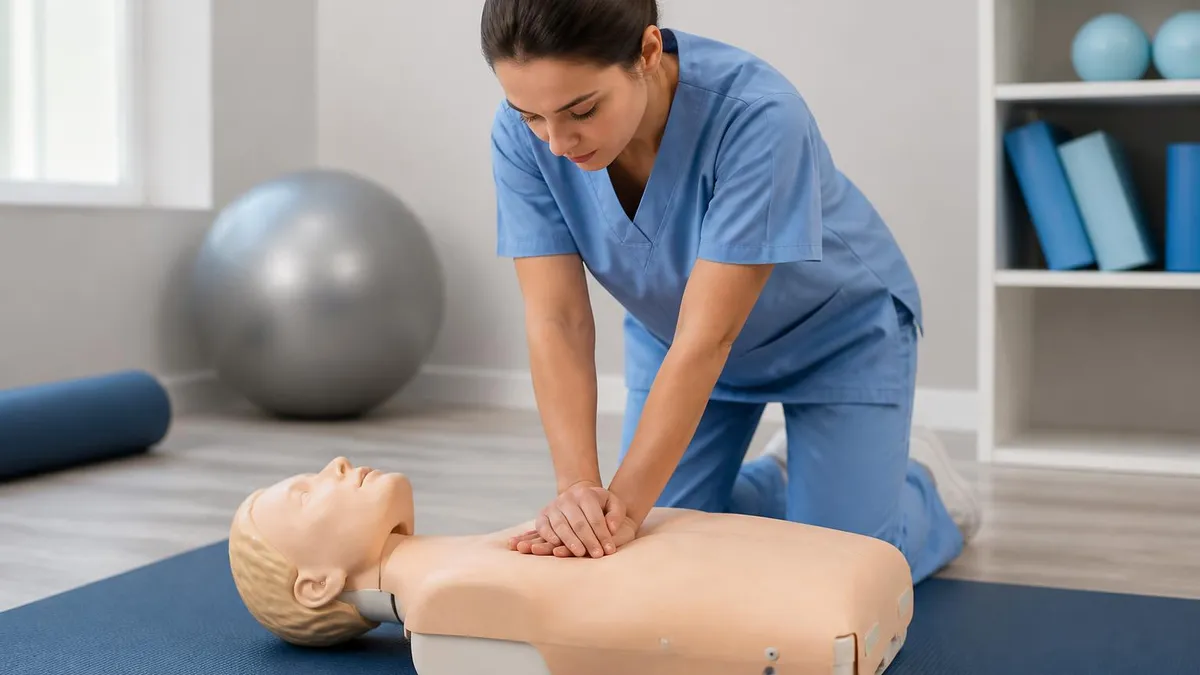
How CPR Certification Exams Are Structured
Usually 25 multiple-choice questions covering recognition, compressions, ventilation, AED use, and choking. Passing typically requires about 84 percent, so you can miss only a handful of questions before failing the section.
An instructor watches you perform compressions, deliver breaths, and operate an AED trainer on a manikin. Correct depth, rate, and full chest recoil are graded as pass or fail competencies on the spot.
Questions place you at a scene and ask the next correct action. These test judgment, not just recall, such as checking scene safety before approaching or confirming unresponsiveness before calling for help.
Many exams include adult, child, and infant cpr questions side by side. You must distinguish compression depth, hand placement, and rescue-breath timing across all three age groups without confusing them.
The most frequently tested cpr test answers revolve around a small set of numbers that almost every exam repeats. Adult compressions should be delivered at a rate of 100 to 120 per minute, to a depth of at least two inches but no more than 2.4 inches, allowing full chest recoil between each push. The single-rescuer compression-to-ventilation ratio is 30:2 for adults, and you minimize interruptions by switching compressors roughly every two minutes. Memorize these and you have already secured the questions that appear on virtually every test.
Recognition questions come next. Before touching a collapsed person you confirm the scene is safe, tap and shout to check responsiveness, and then activate emergency services while sending someone for an AED. You check for breathing and a pulse simultaneously for no more than ten seconds. Agonal gasping is not normal breathing and still requires CPR — this distinction is a classic exam trap. If there is a pulse but no breathing, you provide rescue breaths only, roughly one breath every six seconds for an adult patient.
Pediatric answers introduce the variations test writers love. For a child, single-rescuer CPR still uses 30:2, but with two rescuers the ratio shifts to 15:2. Infant cpr uses two fingers or the two-thumb encircling technique, with compressions about 1.5 inches deep, again at 100 to 120 per minute. Rescue breaths for infants and children come every two to three seconds when a pulse is present. Mixing up the 15:2 two-rescuer pediatric ratio with the adult 30:2 is one of the most common reasons candidates lose points.
AED questions form another reliable block. You turn the device on first and follow its voice prompts, attach pads to bare dry skin, ensure no one touches the patient during analysis, and deliver a shock only when advised. For children under eight or under 55 pounds, you use pediatric pads or a pediatric setting if available; if not, adult pads are acceptable rather than withholding defibrillation. Resume compressions immediately after a shock without pausing to recheck the pulse — another detail exams probe repeatedly each cycle.
Choking and airway questions round out the standard domains. For a responsive adult or child with severe obstruction you deliver abdominal thrusts; for an infant you alternate five back blows with five chest thrusts. If the victim becomes unresponsive, you lower them to the ground and begin CPR, checking the mouth for the dislodged object only when you open the airway to give breaths. Reviewing layered cpr test answers across these domains builds the pattern recognition that makes the real exam feel familiar.
Finally, expect a few questions on the overall chain of survival and team dynamics. The links — early recognition and activation, early CPR, rapid defibrillation, advanced care, and post-arrest care — show up as ordering questions. In team scenarios, closed-loop communication and clear role assignment are graded as correct behaviors. Understanding that the whole sequence exists to keep oxygenated blood moving to the brain ties every individual fact together and helps you reason through any unfamiliar wording a test writer throws at you.
ACLS Algorithm, PALS Certification and Life Support
The acls algorithm builds on basic CPR by adding rhythm interpretation, drug administration, and advanced airway management. Providers must recognize shockable rhythms like ventricular fibrillation and pulseless ventricular tachycardia versus non-shockable rhythms such as asystole and pulseless electrical activity. The algorithm cycles two minutes of high-quality CPR with rhythm checks, defibrillation when indicated, and epinephrine given every three to five minutes throughout the resuscitation effort.
Exam questions on the ACLS algorithm often ask you to sequence interventions correctly or identify the right drug and dose for a given rhythm. The key insight is that excellent CPR and timely defibrillation remain the foundation; medications support but never replace good compressions. Candidates who keep the basic chain of survival in mind reason through advanced scenarios far more reliably than those memorizing isolated dosages without the underlying logic.
Are Free Online CPR Test Answers Reliable for Exam Prep?
- +Free practice questions reinforce current guideline numbers through repetition
- +Self-testing reveals weak domains long before the real exam
- +Scenario questions build the judgment that pure memorization misses
- +Immediate feedback corrects misconceptions while they are still fresh
- +Aligned quizzes mirror the format proctors actually use
- +Studying in short bursts fits busy healthcare and student schedules
- −Some web answer keys still cite outdated pre-2015 compression numbers
- −A written quiz cannot grade hands-on skills like depth and recoil
- −Brain-dump sites may violate certification body honor codes
- −Generic answers ignore role-specific scope differences
- −Over-reliance on answer keys discourages true understanding
- −Unverified sources occasionally confuse adult and pediatric ratios
High-Yield CPR Test Answers Study Checklist
- ✓Memorize adult compression rate: 100 to 120 per minute.
- ✓Know adult compression depth: at least 2 inches, not over 2.4.
- ✓Recite single-rescuer adult ratio of 30:2 from memory.
- ✓Distinguish 15:2 two-rescuer ratio for child and infant CPR.
- ✓Identify agonal gasping as not normal breathing.
- ✓List the AED steps: power on, attach pads, clear, shock.
- ✓Explain pediatric pad use for children under 55 pounds.
- ✓Differentiate abdominal thrusts from infant back blows.
- ✓Order the five links of the chain of survival.
- ✓Know rescue breath timing: one every 6 seconds for adults.
- ✓Recall infant compression depth of about 1.5 inches.
- ✓State the typical 84 percent passing score requirement.
Full chest recoil is graded, not optional
Exam writers and skills evaluators both penalize leaning on the chest between compressions. Allowing the chest to fully recoil lets the heart refill with blood, so incomplete recoil quietly halves the effectiveness of otherwise perfect compressions. Practice lifting your weight slightly without losing hand contact, and expect at least one written question testing whether you know recoil matters as much as depth.
AED, recovery position, and choking content generates a disproportionate share of exam questions, so it deserves dedicated study. Start with the device itself: many candidates cannot answer the simple question, what does aed stand for. It means automated external defibrillator — a portable unit that analyzes heart rhythm and delivers a shock to restart an effective beat. Knowing the full name signals you understand the device is automated, meaning it makes the shock decision for you and you simply follow its clear voice and visual prompts.
Operating an AED follows a fixed order that exams test relentlessly. Power the unit on first, expose and dry the chest, then place pads in the upper-right and lower-left positions exactly as the diagrams show. Ensure nobody touches the patient while the device analyzes the rhythm, announce "clear" before any shock, and resume compressions immediately afterward without pausing to recheck a pulse. For very small children you use pediatric pads or a key, but never delay defibrillation if only adult pads are available on scene.
The recovery position appears whenever a victim is breathing normally but unresponsive, such as after a seizure or in suspected poisoning without arrest. Questions about position recovery ask why you roll the person onto their side: the answer is airway protection. Lying supine lets the tongue fall back or vomit pool in the throat, while the side-lying recovery position keeps the airway open and lets fluids drain. You still monitor breathing continuously and are ready to start CPR if it stops.
Choking management splits clearly by age, and exams exploit that split. For a conscious choking adult or child with a severe blockage, you deliver firm abdominal thrusts until the object clears or the person collapses. Infants under one year never receive abdominal thrusts; instead you alternate five back blows with five chest thrusts, supporting the head and neck throughout. If any choking victim becomes unresponsive, you carefully lower them and begin CPR, checking for the object only when opening the airway to ventilate.
A surprising source of confusion in search results is the brand cpr cell phone repair, sometimes written as cpr phone repair. Those storefronts share the CPR acronym but have nothing to do with cardiopulmonary resuscitation, and no exam will ever ask about device repair. We mention it only so you are not thrown off when search engines mix the two — for certification purposes, CPR always means the lifesaving technique, never gadget servicing, and your study time should ignore the retail results entirely while preparing.
Tying these topics together, the underlying principle is always airway and circulation. Whether you are clearing an obstruction, placing someone in recovery, or shocking a lethal rhythm, every action serves to keep oxygenated blood reaching the brain. When a scenario question stumps you, ask which choice best protects the airway or restores circulation soonest, and the correct answer usually becomes obvious even if you cannot recall the exact protocol wording from your manual that day.
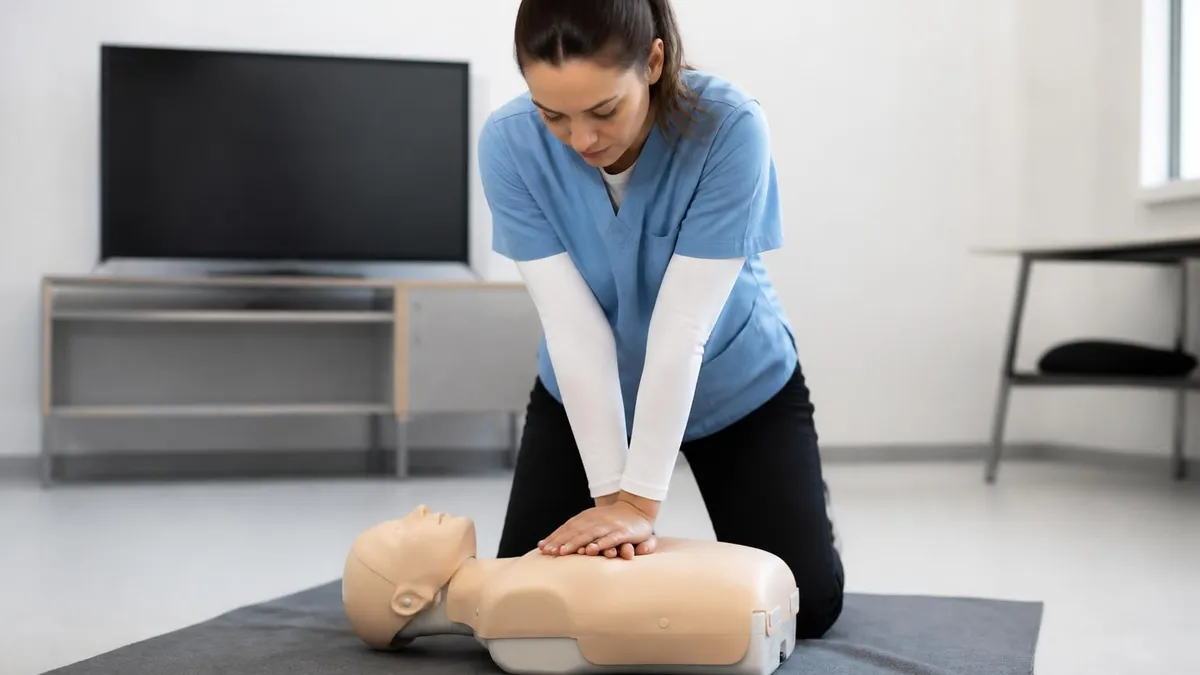
Compression depth and rate guidance has changed over the years, and old study guides still circulate online citing 1.5-inch adult depth or a 15:2 single-rescuer ratio. Using pre-2015 numbers will cause you to fail current exams. Always confirm your study material reflects the most recent guidelines from a recognized body before trusting any answer key.
Beyond the core skills, written exams sprinkle in questions about organizations, scope, and process that trip up otherwise well-prepared candidates. You may see references to the national cpr foundation and other training providers, and questions about which body issues a particular card. The practical lesson is to confirm your employer or state accepts the certifying organization before enrolling, because not every online certificate satisfies every workplace requirement, especially in regulated healthcare settings where compliance audits are routine.
Renewal logistics are also fair game. Most BLS and CPR cards stay valid for two years, after which you must complete a renewal course and pass the written and skills components again. Exam questions sometimes ask how often you should refresh skills; the safe answer is every two years at minimum, though many providers benefit from informal practice in between. Letting a card lapse usually means retaking the full course rather than the shorter renewal version, costing more time and money than planning ahead.
Scope-of-practice questions distinguish what a lay rescuer may do from what a trained healthcare provider may do. A bystander performing hands-only CPR is never expected to interpret a rhythm or administer medication, while a provider studying the acls algorithm is. Reading each question carefully to identify which role it assumes prevents you from selecting an advanced intervention when the scenario describes a layperson, a mistake that costs easy points on mixed-audience exams more often than candidates expect.
Documentation and reporting appear occasionally, particularly in workplace-focused courses. You may be asked who you hand the patient off to, what information emergency responders need, or how Good Samaritan laws protect a rescuer acting in good faith. While these are not lifesaving skills, they reflect the reality that CPR happens inside a larger system of care, and exam writers want to confirm you understand your responsibilities before and after the resuscitation itself in a real workplace.
Team dynamics deserve a final mention because high-quality CPR is rarely a solo act in clinical settings. Effective resuscitation depends on a clear team leader, defined roles, closed-loop communication, and rotating compressors before fatigue degrades performance. Exams reward answers that emphasize switching compressors about every two minutes and confirming instructions out loud. Understanding these behaviors not only earns marks but genuinely improves outcomes when you eventually work a real code with colleagues under pressure.
Pulling the threads together, the smartest preparation strategy is to map every fact back to a reason. When you understand that you switch compressors to prevent fatigue, that you confirm scene safety to avoid becoming a second victim, and that you allow full recoil to refill the heart, the dozens of discrete facts collapse into a handful of principles. That conceptual scaffolding is what separates candidates who barely pass from those who score in the nineties and retain the knowledge long after the certificate prints.
With the content mastered, your final preparation should focus on test-taking strategy and stamina. Schedule your study across at least a week rather than cramming, because spaced repetition dramatically improves recall of emergency sequences. Take a full practice quiz under timed conditions to simulate exam pressure, then review every question you missed and write down the underlying principle in your own words. Re-testing on those same weak areas a day later cements the correction far better than passively rereading the explanation once and moving on.
On test day, read each question completely before scanning the choices, since CPR questions often hinge on a single qualifier like "unresponsive," "two-rescuer," or "infant." Identify the age group and number of rescuers first, because those two details determine the correct ratio and technique. If a question feels ambiguous, default to the action that most directly protects the airway or restores circulation soonest, as that reasoning aligns with how protocols are designed and usually points to the intended answer the writer wants.
Watch for the classic distractor patterns. Test writers love to offer a technically real action performed at the wrong time, such as checking a pulse after a shock when you should resume compressions immediately. They also pair outdated numbers with current ones to see whether you truly know the present guidelines. When two answers look similar, the more current, recoil-and-rate-focused choice is almost always correct, because modern CPR education prioritizes minimizing interruptions above almost everything else.
Manage your time so the written portion never rushes your skills check. Most candidates finish a 25-question exam in well under the allotted time, so resist second-guessing answers you knew instantly. Change a response only if you can articulate a concrete reason it was wrong, not on a vague feeling. Statistically, confident first instincts on factual recall questions are correct more often than anxious last-minute revisions, especially on the numbers you drilled repeatedly during practice sessions beforehand.
For the hands-on evaluation, rehearse out loud. Say "scene is safe," "check responsiveness," "call 911 and get the AED," and count compressions aloud during practice so the verbal script becomes automatic. Evaluators grade communication and sequence as much as physical technique, and narrating your actions both keeps you on track and demonstrates competence. Practicing on a firm surface with a real or improvised manikin builds the muscle memory for adequate depth that no amount of reading alone can ever replace.
Finally, treat certification as the beginning, not the end. The numbers you memorize fade within months if never revisited, so plan brief refreshers between renewal cycles — a quick practice quiz every few months keeps the chain of survival sharp. Real cardiac emergencies are chaotic and stressful, and the rescuers who act decisively are invariably those who over-prepared on paper first. Use the free quizzes below as both an exam tool now and a maintenance habit long after your card arrives in the mail.
CPR Questions and Answers
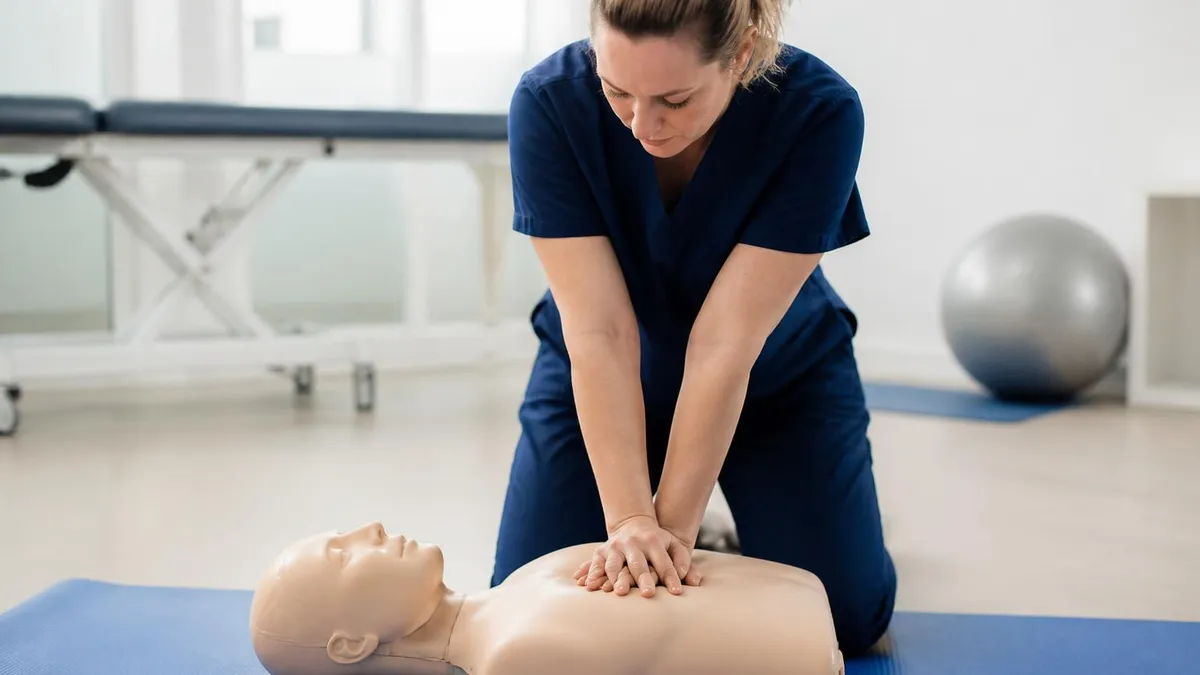
CPR Full Form: What CPR Stands For and Why It Matters

CPR Courses: Complete Guide to ACLS Algorithm, PALS Certification, and Life Support Training in 2026
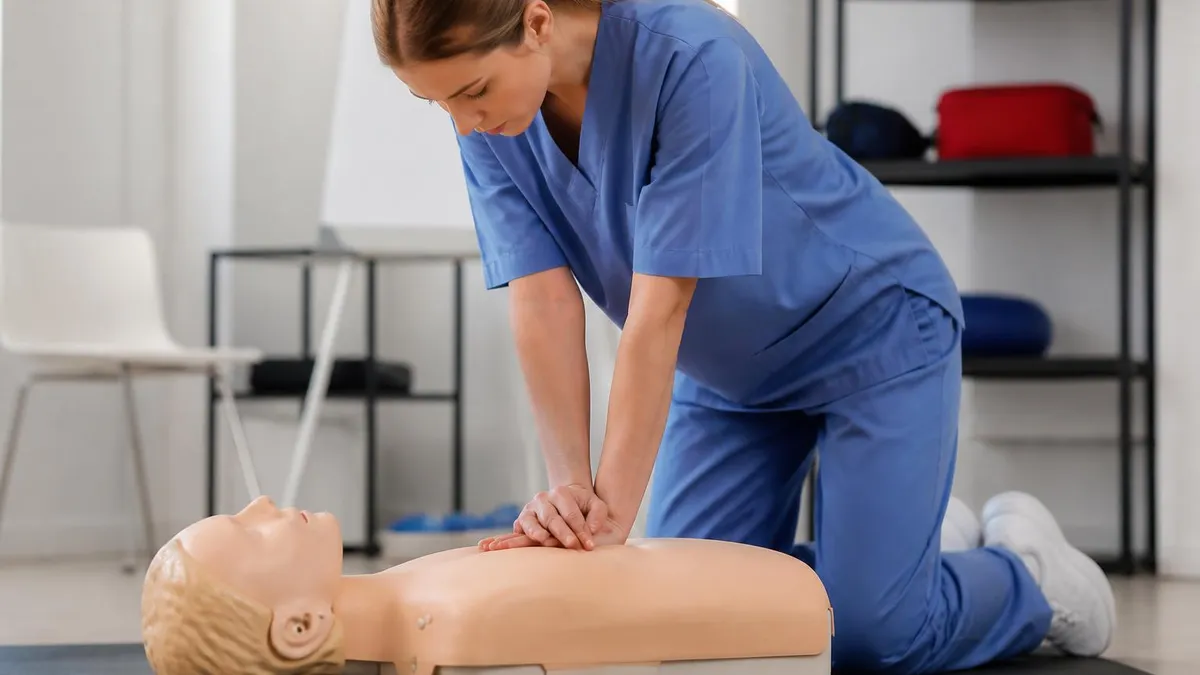
Types of CPR Training: From Basic Life Support to ACLS Algorithm Mastery in 2026
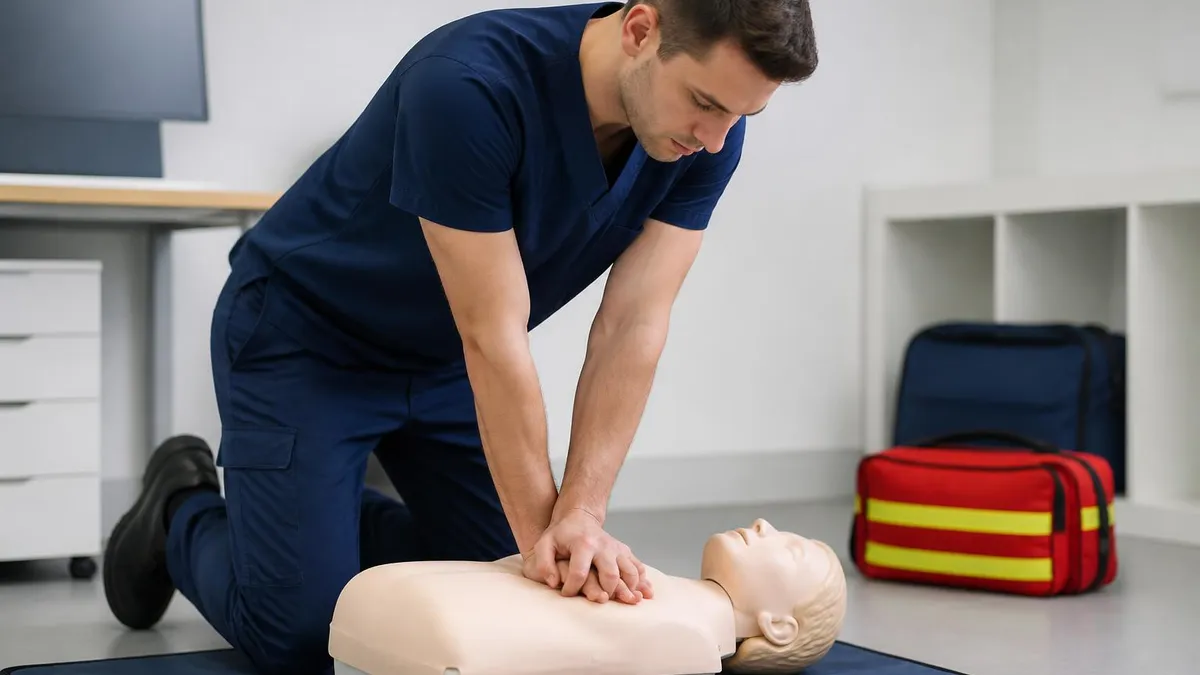
Adult CPR: Complete Step-by-Step Guide to Hands-Only and Standard CPR in 2026
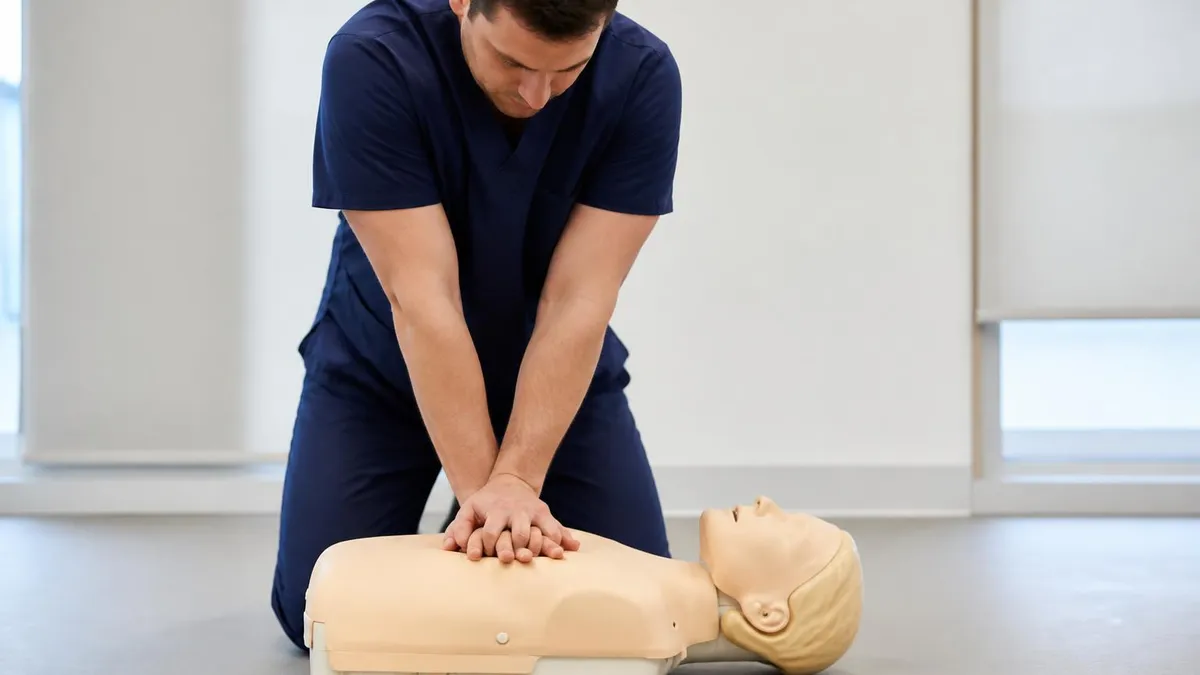
BLS vs CPR: Is BLS the Same as CPR? Complete 2026 Guide
About the Author

Registered Nurse & Healthcare Educator
Johns Hopkins University School of NursingDr. Sarah Mitchell is a board-certified registered nurse with over 15 years of clinical and academic experience. She completed her PhD in Nursing Science at Johns Hopkins University and has taught NCLEX preparation and clinical skills courses for nursing students across the United States. Her research focuses on evidence-based exam preparation strategies for healthcare certification candidates.
Join the Discussion
Connect with other students preparing for this exam. Share tips, ask questions, and get advice from people who have been there.
View discussion (5 replies)