
CPR Study Guide: Complete 2026 October Guide to Certification, Skills, and Exam Preparation
The ultimate CPR study guide for 2026 October. Master the ACLS algorithm, infant CPR, AED use, recovery position, and pass your certification exam on the 💡
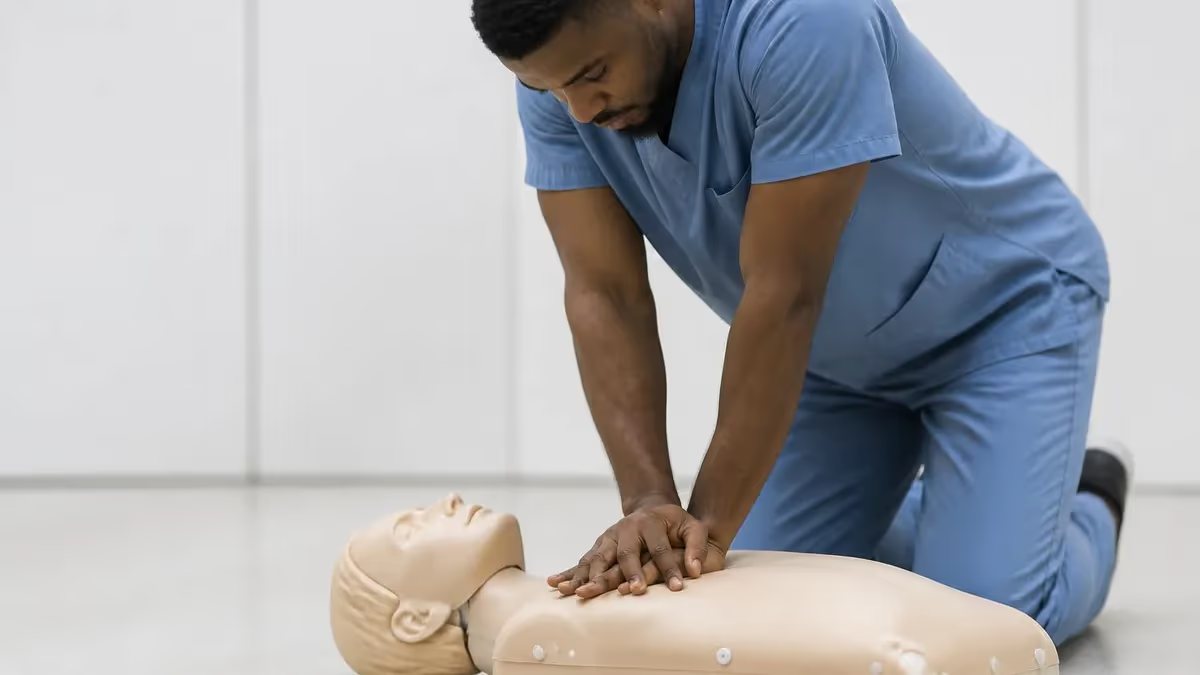
Welcome to the most comprehensive cpr study guide available for 2026 candidates preparing for certification through the American Heart Association, American Red Cross, or the National CPR Foundation. Whether you are a nursing student tackling the acls algorithm for the first time, a daycare worker who needs infant cpr skills, or a corporate safety officer renewing your credentials, this guide walks you through every concept tested on modern CPR exams. We have structured the material to mirror how providers actually respond during real cardiac arrest events.
Cardiac arrest claims more than 350,000 lives outside of hospitals each year in the United States, and survival rates jump from roughly 10% to over 40% when bystanders deliver immediate, high-quality chest compressions. That single statistic explains why employers in healthcare, education, fitness, and childcare insist on current CPR certification. The skills you are about to study are not abstract test material — they are the difference between a coworker, child, or stranger walking out of the hospital or never going home.
This guide blends evidence-based clinical content with practical exam strategy. You will learn the latest 2025 compression depth and rate targets, the universal cardiac chain of survival, how to operate an automated external defibrillator, and how to adapt every skill for adults, children, and infants. We also cover the rescue breathing ratios, respiratory rate ranges, and recovery position techniques that appear most often on written exams and during practical skills checks with your instructor.
Pass rates for first-time CPR candidates hover around 85%, but that number drops sharply for people who only watch the video and skip practice. The candidates who pass on their first attempt typically log eight to twelve hours of focused review across two to three weeks, complete three or more practice quizzes, and run through the skills on a manikin at least twice. This guide is built to support exactly that workflow, with embedded practice quizzes and checklist-driven review sections.
We have organized the chapters around the order in which a real responder makes decisions: scene safety, recognition, activation of emergency response, compressions, airway, breathing, defibrillation, and post-arrest care. By studying in that sequence, the material becomes muscle memory rather than memorized trivia. When the alarm goes off in a real emergency, you will not be flipping through notes — you will be acting on instinct shaped by deliberate practice.
Before you dive in, take a moment to grab a notebook, set aside a quiet block of time, and bookmark the embedded practice quizzes. Each quiz is calibrated to the exact question style used on AHA, ARC, and NCPRF written exams. By the time you finish working through this guide, you will be able to deliver CPR with confidence, explain the science behind every step, and walk into your certification class ready to demonstrate skills competently the very first time.
CPR Certification by the Numbers

4-Week CPR Study Schedule
- ▸Read chapters on cardiac arrest recognition
- ▸Memorize the 6 links in the chain of survival
- ▸Review normal respiratory rate ranges by age
- ▸Complete the Basic CPR practice quiz
- ▸Practice compression depth and rate on a manikin
- ▸Learn AED pad placement for adults and children
- ▸Study the abdominal thrust sequence
- ▸Take the Adult CPR & AED quiz
- ▸Master 30:2 and 15:2 ratios
- ▸Practice infant cpr back blows and chest thrusts
- ▸Review pulse check locations by age
- ▸Run two-rescuer scenarios with a partner
- ▸Walk through the acls algorithm flowchart
- ▸Practice placing a patient in the recovery position
- ▸Take 2 full-length practice exams
- ▸Schedule your in-person skills check
The American Heart Association's chain of survival defines six interconnected links that, when performed in rapid sequence, give a cardiac arrest victim the best possible chance of meaningful recovery. Those links are recognition and activation of emergency response, immediate high-quality CPR, rapid defibrillation, advanced life support, post-arrest care, and recovery. Every CPR exam asks at least one question about this chain because it organizes the entire curriculum. Understanding the chain is more useful than memorizing it — each link sets up the next.
Recognition begins with scene safety. Before you ever touch a victim, scan for traffic, electrical hazards, fire, water, or unstable surfaces. A rescuer who becomes a second patient helps nobody. Once the scene is safe, tap the victim firmly on the shoulders and shout, "Are you okay?" If there is no response and either no breathing or only abnormal gasping (agonal respirations), you have confirmed unresponsiveness and need to activate emergency response immediately by calling 911 or directing a bystander to call and retrieve an AED.
Agonal breathing is one of the most common reasons bystanders fail to act. These slow, gasping, irregular breaths can look like the person is still breathing normally, but they are actually a sign of brainstem activity in the absence of effective circulation. Treat any breathing that is not normal as no breathing at all. The cost of starting compressions on someone who turns out not to need them is minimal; the cost of withholding compressions from someone in arrest is fatal within minutes.
Once you have determined the person needs help, the next decision is whether to perform Hands-Only CPR or full CPR with rescue breaths. For untrained bystanders or witnesses to adult collapse, Hands-Only CPR — continuous chest compressions at 100-120 per minute — is the recommended approach. For certified providers, trained lay responders, and any pediatric arrest, the standard 30:2 compression-to-ventilation ratio remains the gold standard because children and infants are far more likely to arrest from respiratory causes than cardiac ones.
Pulse checks are limited to healthcare providers and must take no longer than ten seconds. For adults and children, palpate the carotid artery in the groove between the windpipe and the neck muscle. For infants, use the brachial artery on the inside of the upper arm. If you cannot definitively feel a pulse within ten seconds, begin compressions. Hesitation costs brain cells — roughly 10% of survival probability is lost for every minute that effective CPR is delayed.
Activation of emergency response also includes deploying the AED as quickly as possible. In settings with multiple bystanders, assign clear roles: one person calls 911, one retrieves the AED, and one starts compressions. Clear, direct delegation ("You in the red shirt — call 911 now") dramatically increases the likelihood that each task gets done. Bystander confusion and the diffusion of responsibility are the two most common reasons that potentially survivable arrests result in death.
Finally, the recovery link in the chain of survival is newer and reflects the growing recognition that survival from cardiac arrest is not just about getting a pulse back. Survivors and their families need rehabilitation, psychological support, and ongoing cardiac care. Modern CPR curricula reflect this by teaching post-arrest hand-off communication, the importance of targeted temperature management in hospitals, and the role of community education in preventing the next event.
CPR Practice Test Questions
Prepare for the CPR Cardiopulmonary Resuscitation Practice exam with our free practice test modules. Each quiz covers key topics to help you pass on your first try.
CPR Basic CPR
CPR Exam Questions covering Basic CPR. Master CPR Test concepts for certification prep.
CPR and First Aid
Free CPR Practice Test featuring and First Aid. Improve your CPR Exam score with mock test prep.
CPR (Cardiopulmonary Resuscitation) Adult ...
CPR Mock Exam on (Cardiopulmonary Resuscitation) Adult CPR and AED Usage. CPR Study Guide questions to pass on your first try.
CPR (Cardiopulmonary Resuscitation) Airway...
CPR Test Prep for (Cardiopulmonary Resuscitation) Airway Obstruction and Choking. Practice CPR Quiz questions and boost your score.
CPR (Cardiopulmonary Resuscitation) Cardio...
CPR Questions and Answers on (Cardiopulmonary Resuscitation) Cardiopulmonary Emergency Recognition. Free CPR practice for exam readiness.
CPR (Cardiopulmonary Resuscitation) Child ...
CPR Mock Test covering (Cardiopulmonary Resuscitation) Child and Infant CPR. Online CPR Test practice with instant feedback.
CPR (Cardiopulmonary Resuscitation) High-P...
Free CPR Quiz on (Cardiopulmonary Resuscitation) High-Performance Team Dynamics. CPR Exam prep questions with detailed explanations.
CPR (Cardiopulmonary Resuscitation) Legal ...
CPR Practice Questions for (Cardiopulmonary Resuscitation) Legal and Ethical Considerations. Build confidence for your CPR certification exam.
CPR for Specific Populations
CPR Test Online for for Specific Populations. Free practice with instant results and feedback.
CPR Airway & Breathing Management
CPR Exam Questions covering Airway & Breathing Management. Master CPR Test concepts for certification prep.
CPR Assessment & Recognition of Cardiac Ar...
Free CPR Practice Test featuring Assessment & Recognition of Cardiac Arrest. Improve your CPR Exam score with mock test prep.
CPR Chest Compressions & Defibrillation
CPR Mock Exam on Chest Compressions & Defibrillation. CPR Study Guide questions to pass on your first try.
CPR Post-Resuscitation Care & Recovery
CPR Test Prep for Post-Resuscitation Care & Recovery. Practice CPR Quiz questions and boost your score.
Compressions, Airway and Life Support Fundamentals
High-quality chest compressions are the single most important intervention in cardiac arrest. For adults, push at least two inches deep but no more than 2.4 inches, at a rate of 100 to 120 compressions per minute. Allow complete chest recoil between compressions so the heart can refill with blood. Place the heel of one hand on the lower half of the sternum and the second hand on top, with fingers interlocked and arms straight.
Minimize interruptions to no more than ten seconds for pulse checks, AED analysis, or rescuer switches. Switch compressors every two minutes (or roughly five cycles of 30:2) to prevent fatigue, because compression quality drops measurably after about ninety seconds of continuous effort. Counting out loud — "one and two and three" — helps maintain the correct pace and synchronizes two-rescuer teamwork during longer resuscitation attempts.

In-Person Versus Online CPR Certification
- +Online courses from providers like the National CPR Foundation cost less than $25 and allow self-paced study
- +Digital certificates print or download instantly after passing the written exam
- +Excellent option for renewal candidates who already have hands-on muscle memory
- +Schedule flexibility benefits shift workers, parents, and rural learners
- +Built-in practice quizzes let you retake material until concepts are solid
- +Most employers in non-clinical fields (education, fitness, childcare) accept online certification
- +Mobile-friendly platforms let you review the acls algorithm anywhere
- −Many hospitals and EMS agencies require AHA in-person skills verification
- −No instructor feedback on compression depth, rate, or hand placement
- −Manikin practice is critical for first-time learners and cannot be simulated digitally
- −Some online providers are not recognized by state nursing or daycare licensing boards
- −Two-rescuer scenarios and team dynamics are hard to practice alone
- −Skills checks for BLS, ACLS, and PALS certification still require in-person evaluation
- −Self-paced learners may rush through complex topics like infant cpr without mastery
Pros and Cons at a Glance
| Pros | Cons |
|---|---|
| Digital certificates print or download instantly after passing the written exam | Many hospitals and EMS agencies require AHA in-person skills verification |
| Excellent option for renewal candidates who already have hands-on muscle memory | No instructor feedback on compression depth, rate, or hand placement |
| Schedule flexibility benefits shift workers, parents, and rural learners | Manikin practice is critical for first-time learners and cannot be simulated digitally |
| Built-in practice quizzes let you retake material until concepts are solid | Some online providers are not recognized by state nursing or daycare licensing boards |
| Most employers in non-clinical fields (education, fitness, childcare) accept online certification | Two-rescuer scenarios and team dynamics are hard to practice alone |
| Mobile-friendly platforms let you review the acls algorithm anywhere | Skills checks for BLS, ACLS, and PALS certification still require in-person evaluation |
AED Operation and Defibrillation Checklist
- ✓Power on the AED as soon as it arrives and follow the voice prompts
- ✓Expose the victim's chest completely — remove clothing, dry the skin, shave excessive hair if a razor is included
- ✓Apply adult pads for victims 8 years and older; use pediatric pads or pediatric mode for ages 1-8
- ✓Place one pad on the upper right chest below the collarbone and the second on the lower left ribs
- ✓For infants under 1, use anterior-posterior placement (chest and back) if pediatric pads are available
- ✓Ensure no one is touching the patient during rhythm analysis — call "clear" loudly
- ✓Deliver the shock by pressing the flashing button if advised, then immediately resume compressions
- ✓Do not remove pads between shocks; the AED reanalyzes every two minutes automatically
- ✓Remove medication patches and wipe residue before applying pads to that location
- ✓Move the victim away from puddles or metal surfaces to prevent rescuer injury
- ✓Continue CPR cycles until advanced help arrives or the victim shows signs of life
- ✓Record the time of arrest, first shock, and any return of spontaneous circulation for the EMS team

100-120 compressions per minute is the universal CPR rate
The same compression rate of 100-120 per minute applies to adults, children, and infants. What changes is depth (about 2 inches for adults, roughly one-third the chest diameter for kids) and hand position. Songs at 100-120 BPM — like "Stayin' Alive" or "Crazy in Love" — work as mental metronomes during a real emergency.
Pediatric CPR differs from adult CPR in three important ways: cause, compression depth, and compression-to-ventilation ratio. Cardiac arrest in children and infants is overwhelmingly respiratory in origin — drowning, choking, asthma exacerbation, or sudden infant death syndrome — rather than the sudden cardiac event that typically strikes adults. Because hypoxia is the primary driver, ventilations matter even more than they do in adult arrest, and the curriculum reflects this with a strong emphasis on rescue breathing technique and airway management for younger victims.
For infant cpr (anyone under one year of age), use two fingers placed just below the nipple line for a single rescuer, or the two-thumb encircling-hands technique for two rescuers. Compression depth should be approximately 1.5 inches, or about one-third the diameter of the infant's chest. The rate remains 100-120 per minute. If you are alone and the arrest is witnessed (sudden collapse with no signs of respiratory cause), call 911 first. If the cause is likely respiratory or you found the infant down, perform two minutes of CPR before pausing to call for help.
For children ages 1 to puberty, use one or two hands depending on the child's size. Compress about two inches deep — again roughly one-third of the chest diameter — at 100-120 per minute. The single-rescuer compression-to-ventilation ratio remains 30:2, but a two-rescuer team switches to 15:2 to deliver more frequent breaths since pediatric arrests are typically hypoxic. This 15:2 ratio is a frequent exam question and is worth committing to memory in both directions: single-rescuer ratio and two-rescuer ratio.
Choking response varies by age as well. For a conscious choking adult or child older than one, deliver abdominal thrusts (the Heimlich maneuver) until the object is expelled or the victim becomes unresponsive. For pregnant or obese victims, switch to chest thrusts. For infants under one year, alternate five back blows between the shoulder blades with five chest thrusts using two fingers on the sternum, never abdominal thrusts, because of the risk of damaging unprotected abdominal organs.
The recovery position — sometimes called the lateral recumbent position — is used for victims who are unresponsive but breathing normally and have no suspected spinal injury. Roll the victim onto their side, extend the lower arm above the head, place the upper hand under the cheek to maintain airway alignment, and bend the upper knee for stability. This position prevents aspiration of vomit and helps maintain a patent airway while you wait for advanced help to arrive. Reassess breathing every two minutes.
Special populations introduce additional considerations. Pregnant patients in the third trimester should have manual left uterine displacement during CPR to relieve aortocaval compression. Drowning victims benefit from immediate rescue breaths before the standard compression sequence because the primary problem is hypoxia. Opioid overdose victims should receive naloxone alongside standard CPR if available. Hypothermic patients require prolonged resuscitation — the saying "not dead until warm and dead" reflects the protective effects of cold on the brain during arrest.
Across every age and special population, the underlying principle is the same: rapid recognition, immediate high-quality compressions, early defibrillation when appropriate, and effective ventilation. Mastering the variations between adult, child, and infant care is what separates competent providers from those who memorize a single algorithm and freeze when reality differs from the script. The exam will test your ability to adapt, not just recite, so practice scenarios in all three age groups.
Use pediatric AED pads or pediatric mode for children ages 1 through 8 (or under approximately 55 pounds). If pediatric pads are unavailable, use adult pads — never withhold defibrillation because the correct pads are missing. For infants under 1 year, a manual defibrillator is preferred, but an AED with pediatric attenuator is acceptable. Position pads so they do not touch each other.
Exam day strategy starts the week before the test, not the morning of. Sleep seven to nine hours the night before, eat a balanced meal two hours prior, and avoid heavy caffeine that can increase test anxiety. Bring two forms of identification, your registration confirmation, and a printed copy of any prerequisites your training center requires. If you are testing through the National CPR Foundation or another online provider, ensure your webcam, microphone, and internet connection are tested at least 24 hours in advance to avoid technical disqualification.
The written portion typically contains 25 to 50 multiple-choice questions drawn from compression rates and depths, AED operation, choking response, ratios for one- and two-rescuer CPR across all age groups, and scene safety. Most exams use a passing threshold of 80% or 84% depending on the provider. Read each question twice, eliminate clearly wrong answers first, and trust your first instinct unless you spot a specific reason to change. Statistical analysis of test-taker behavior consistently shows that changed answers are wrong more often than they are right.
Skills checks evaluate compression depth, rate, recoil, hand placement, ventilation technique, AED operation, and scenario management. Instructors use feedback manikins that record real-time data on your compressions, so the days of squeaking through with shallow, slow compressions are over. Practice on a manikin or a firm cushion before exam day to build the muscle memory and stamina required to deliver two minutes of continuous, high-quality compressions without your performance degrading.
Many candidates worry about the two-rescuer scenarios. The key is communication: announce your role ("I'll start compressions, you ready the AED"), call out your switches ("swap on next cycle"), and verbalize every assessment ("no breathing, no pulse, starting CPR"). Examiners are not just checking your psychomotor skills — they are evaluating whether you can function on a real team. Speaking through every step is a free way to earn points and prove competence even when your hand technique is imperfect.
If you do not pass on your first attempt, do not panic. Most providers allow at least one retake within 30 days for a reduced fee or no additional cost. Use the time to identify which domain you struggled with most. The most common failure points are insufficient compression depth, slow compression rate, incorrect ratios for pediatric two-rescuer CPR, and AED pad placement on children. Targeted review of those four areas resolves the vast majority of retakes within an hour or two of additional practice.
Once certified, your card is valid for two years. Set a calendar reminder for 90 days before expiration so you can schedule renewal without a gap in credentials. Lapsed certifications can create employment problems in healthcare, education, and childcare settings. If your card is lost, most providers — including AHA eCards and the National CPR Foundation — offer online lookup tools that let you verify or replace your credential within minutes. Keep digital copies stored in cloud storage and email so you always have access.
Beyond certification, commit to maintaining your skills. Studies consistently show that CPR skill decay begins around three months after training and is significant by six months without practice. Brief refresher sessions — even five minutes on a manikin every quarter — preserve psychomotor skill far better than waiting two years for a full recertification. Many hospitals now require quarterly mock codes for exactly this reason. Treat CPR as a perishable skill, because in the moment that matters most, you will perform exactly the way you practiced.
With the core curriculum behind you, the final stretch of preparation should focus on integration and retrieval practice. Cognitive science research consistently shows that retrieval — actively recalling information from memory — is the single most effective study technique for long-term retention. That means closing the study guide, putting away your notes, and walking through a full cardiac arrest scenario aloud, from scene safety to handoff. If you stumble, look it up, then try again from the beginning. This process feels harder than rereading, but it builds far more durable knowledge.
Practice quizzes are an essential second pillar. Take at least two full-length practice exams in the final week before testing, under realistic conditions — quiet room, no notes, timed. Track which questions you miss and categorize them by topic: compressions, airway, AED, pediatrics, or special populations. Concentrate your final review on the categories with the most errors, not on what you already know well. Spending another hour on chain of survival when you keep missing infant ratios is comfort studying, not effective preparation.
Build a personal cheat sheet of the numbers you must know cold. These include 100-120 compressions per minute for all ages, 2 inches depth for adults, 1/3 chest depth for children and infants, 30:2 single-rescuer ratio for all ages, 15:2 two-rescuer ratio for children and infants, 10 breaths per minute with an advanced airway, one breath every 2-3 seconds for rescue breathing only, and pulse-check limits of 10 seconds maximum. Memorize these like multiplication tables — they appear in some form on virtually every CPR exam.
The night before the exam, do a light review only. Cramming new material into the final 12 hours typically reduces test performance because it interferes with sleep consolidation of what you already learned. Instead, glance over your cheat sheet, mentally rehearse a single end-to-end scenario, and then put the material away. Lay out your clothes, ID, and registration confirmation so the morning is logistically smooth and stress-free.
During the practical skills test, communicate everything you do. Examiners cannot read your mind, and verbalizing scene safety, your assessment of responsiveness, breathing, and pulse checks, your decision to call 911, and your delegation of AED retrieval all earn evaluation points. Even if your compressions are slightly off depth or rate, strong scenario management often makes the difference between a pass and a fail. Treat the examiner as a partner you are briefing, not a judge watching silently.
After certification, integrate CPR knowledge into your daily environment. Locate the AEDs at your workplace, gym, child's school, and frequent destinations. Knowing exactly where the nearest defibrillator is can save 90 seconds of frantic searching during an actual emergency — and that 90 seconds is roughly 9% of survival probability. Share what you have learned with family members and encourage them to take a Hands-Only CPR course. Community-wide CPR readiness is the single biggest determinant of out-of-hospital cardiac arrest survival rates.
Finally, recognize that this study guide is a starting point, not an endpoint. Continue learning beyond your initial certification by reading post-arrest case reports, watching real bystander CPR videos with constructive critique, and considering advanced credentials like ACLS or PALS certification if your career trajectory makes sense. Every certified provider is a node in the national chain of survival, and the strength of that chain depends entirely on how seriously each link takes its training and ongoing practice.
CPR Questions and Answers
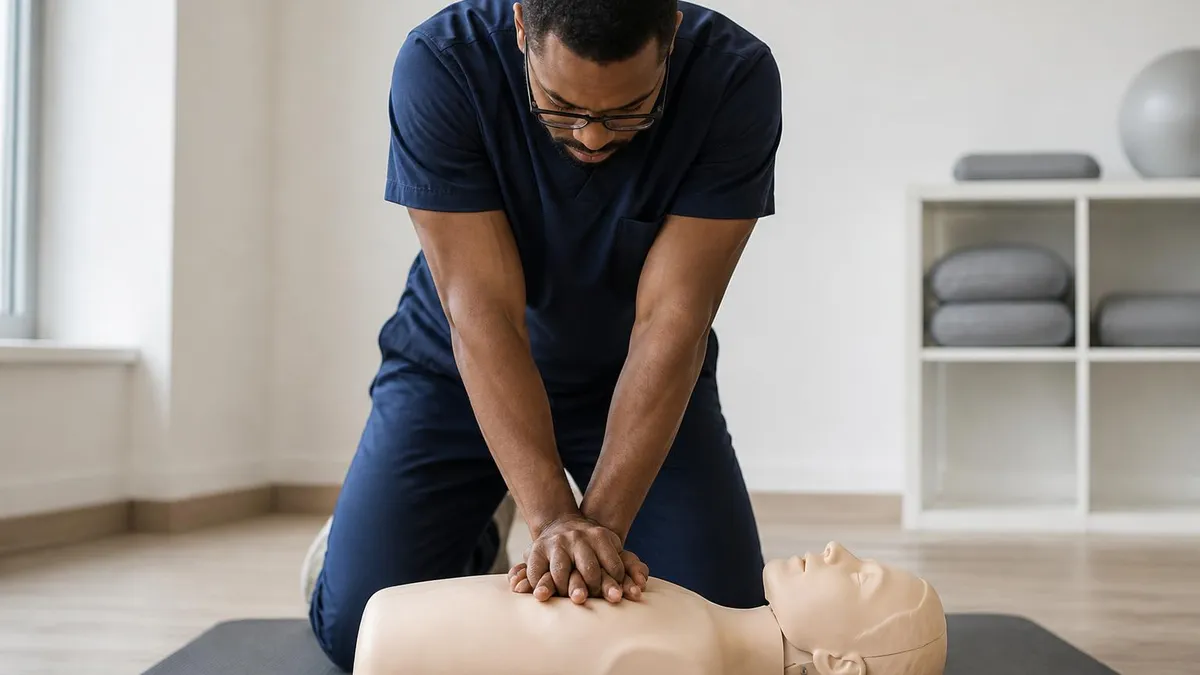
CPR Card Lookup: How to Verify, Replace, and Access Your CPR Certification in 2026
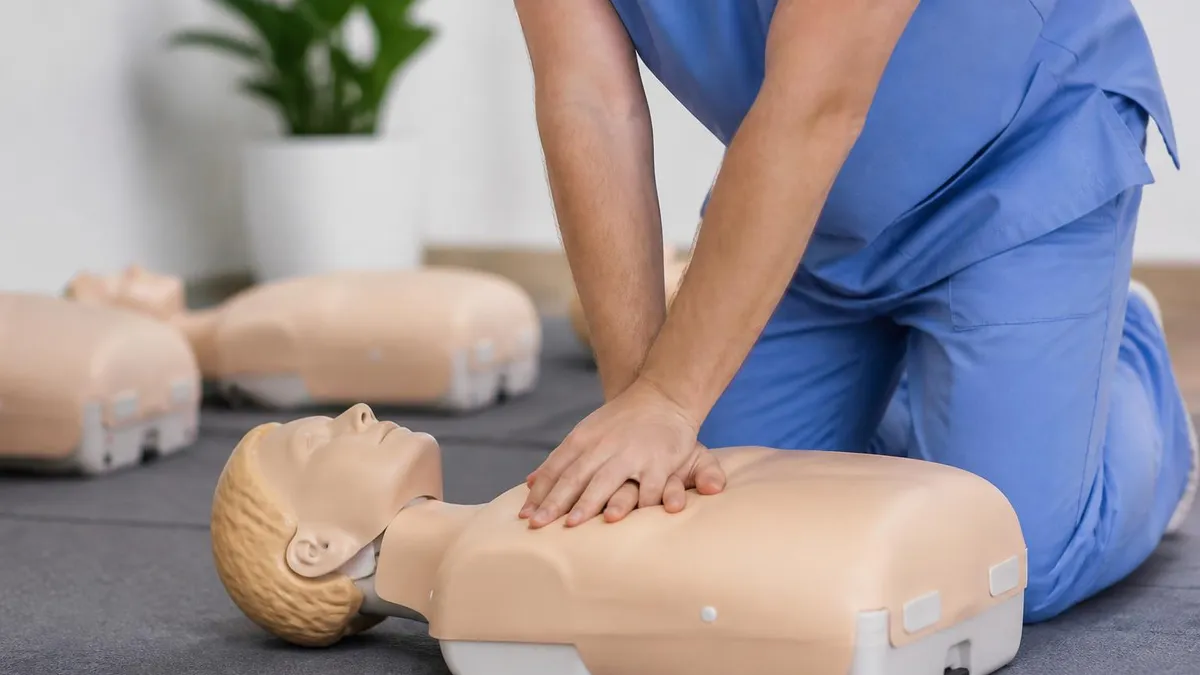
AHA CPR: What It Is, Which Course You Need, and How to Get Certified
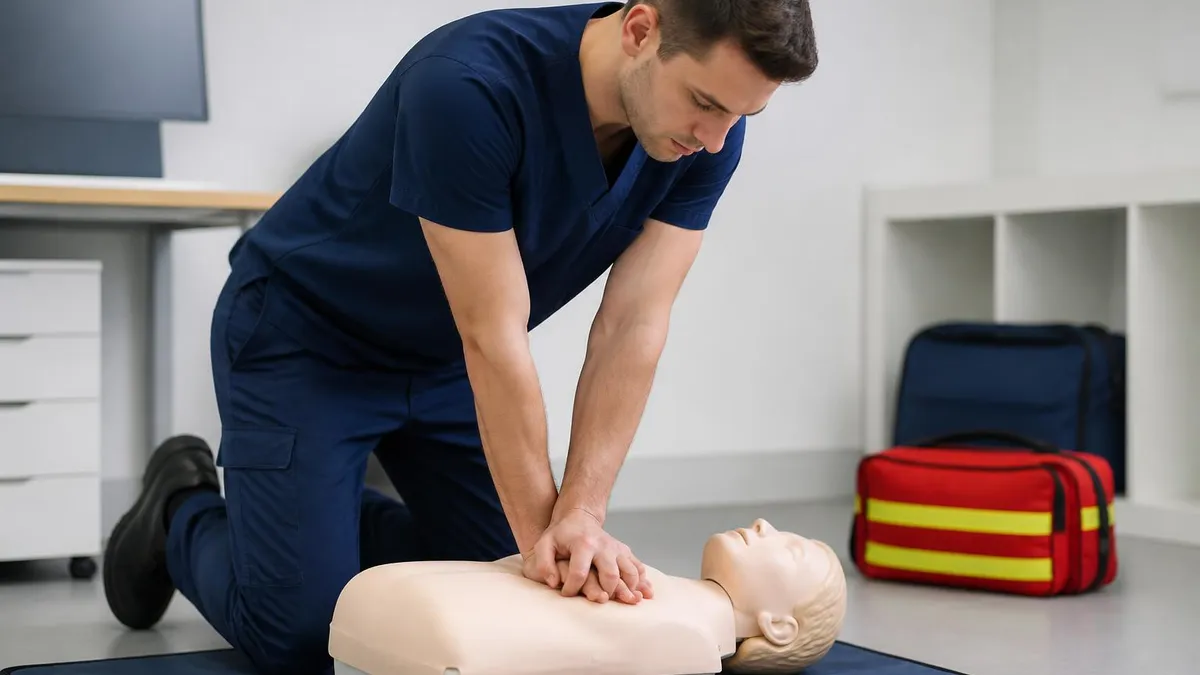
Adult CPR: Complete Step-by-Step Guide to Hands-Only and Standard CPR in 2026
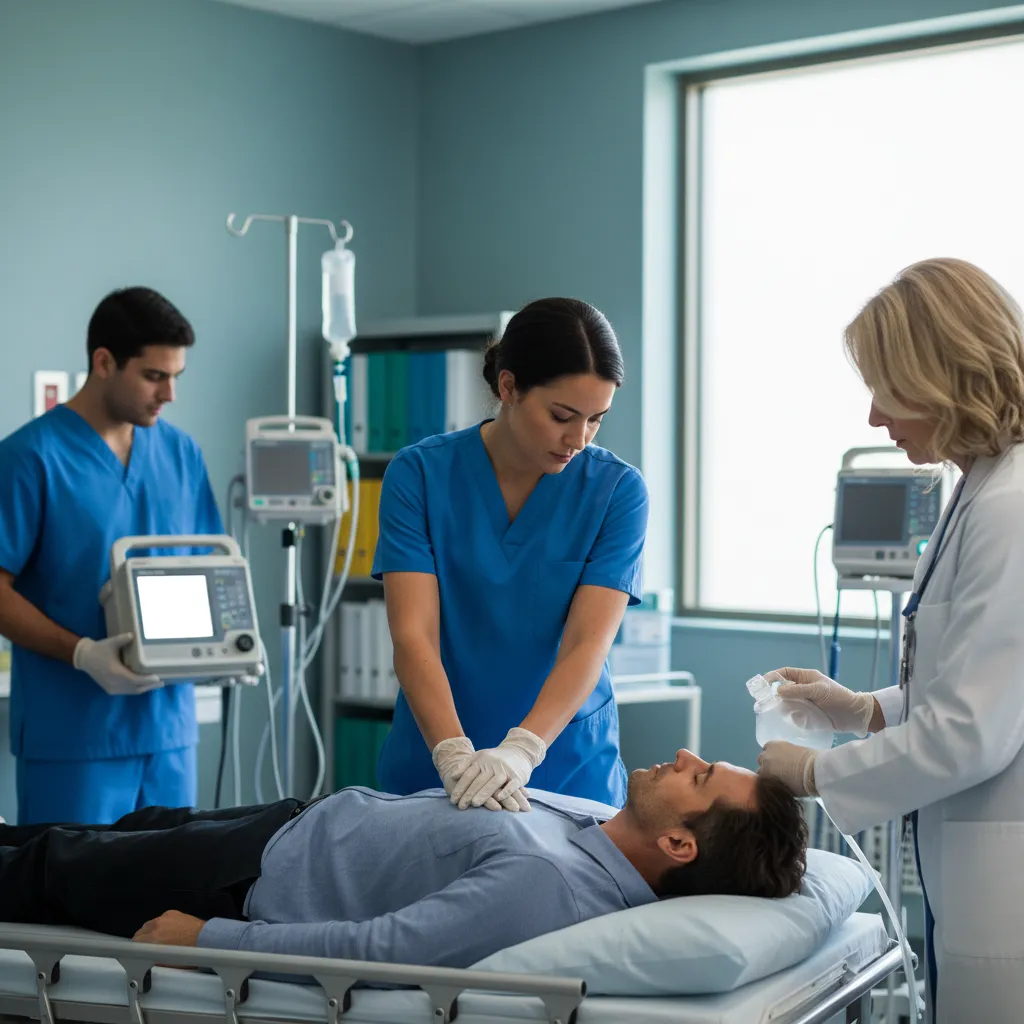
CPR - Cardiopulmonary Resuscitation: Complete Study Guide 2026
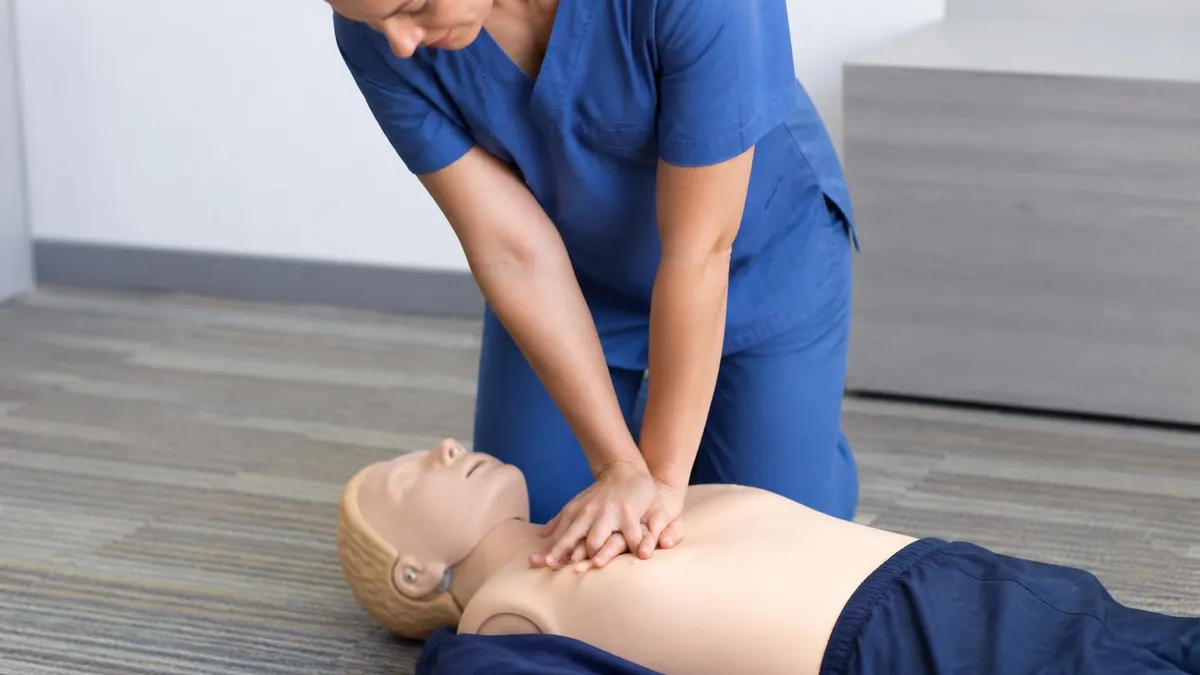
Inappropriate CPR Songs: What Not to Play, Why It Matters, and Better Beat-Per-Minute Alternatives
About the Author

Registered Nurse & Healthcare Educator
Johns Hopkins University School of NursingDr. Sarah Mitchell is a board-certified registered nurse with over 15 years of clinical and academic experience. She completed her PhD in Nursing Science at Johns Hopkins University and has taught NCLEX preparation and clinical skills courses for nursing students across the United States. Her research focuses on evidence-based exam preparation strategies for healthcare certification candidates.
Join the Discussion
Connect with other students preparing for this exam. Share tips, ask questions, and get advice from people who have been there.
View discussion (5 replies)