
CNA Registry Louisiana: Certification, Training Programs & Jobs in 2026
Free CNA Registry Louisiana practice test with instant 💯 feedback and detailed answer explanations. Prepare for your exam.
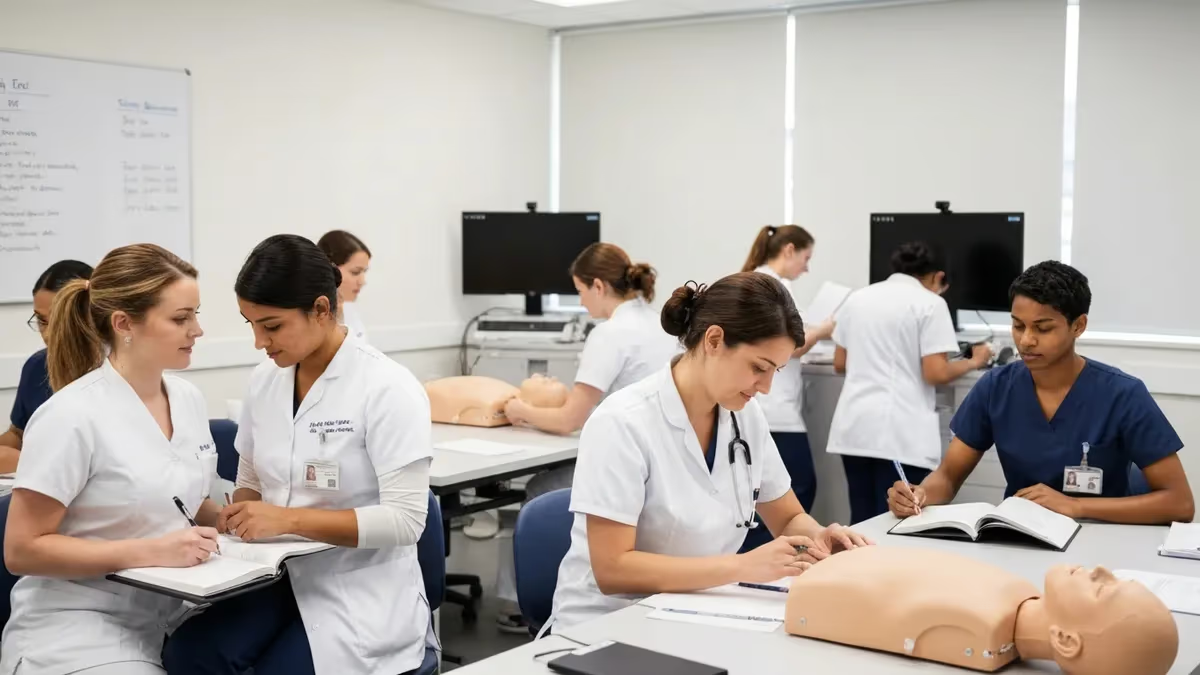
Louisiana's demand for certified nursing assistants keeps climbing. Hospitals, nursing homes, and home health agencies across the state are posting openings faster than programs can fill them. If you're looking into the CNA registry Louisiana system, you're starting in the right place -- the registry is your proof of active certification, and employers check it before extending any offer.
The state of Louisiana CNA registry is maintained by the Louisiana Department of Health. Every working CNA in the state appears on it. Your name, certification number, expiration date, and any findings or disciplinary actions -- all searchable by employers and the public. Keeping your listing current isn't optional. It's the difference between getting hired and getting passed over.
Louisiana runs a straightforward path to the bedside. Complete an approved training program, pass the state competency exam (written and clinical skills), and your name goes on the registry. The whole process takes 4 to 12 weeks depending on the program you choose. Some programs run nights and weekends for people who can't quit their day job. Others are full-time intensive tracks that get you certified in under a month.
The job market here is strong -- especially in metro areas like Baton Rouge, New Orleans, Lafayette, and Shreveport. Facilities are competing for qualified CNAs, which means better starting pay and sign-on bonuses in many cases. If you want CNA jobs Lafayette LA or anywhere else in the state, certification through the registry is step one.
This page covers everything you need: registry lookup, certification requirements, approved training programs by city, and where the jobs are. Whether you're brand new to healthcare or transferring your certification from another state, you'll find what you need below.
CNA: upcoming dates and official changes
- Aug 1, 2026: Connecticut (Prometric) implements new exam pricing: $48 for written only, $48 for oral only, $125 for bundled written and clinical skills, effective August 1, 2026.[4]
- Jul 1, 2026: Idaho (Prometric) raises CNA exam fees to $34 each for written and oral exams, plus test site fees, effective July 1, 2026.[5]
- Passing score (written or oral): Set per state; no national percentage published.[1]
- Retake policy: Minimum 3 attempts required; aides must be told which areas they failed before each retake.[1]
- Validity: 2 years from issuance in most states.[2]
- Renewal: State-specific; typically 2-year cycles with continuing education requirements (12–24 hours per year) and paid-work requirements.[3]
All verified CNA facts and sources
Numbers in brackets link to the official sources listed under Sources & last verified. Dates that have passed are removed automatically.

The state of Louisiana CNA registry lives on the Louisiana Department of Health's website. You can search by name, certification number, or Social Security number (last four digits). Employers use this tool every single day -- it's how they verify you're legit before scheduling your first shift. If your name doesn't show up, you don't work. Period.
Getting your CNA certification Louisiana requires completing an approved Nurse Aide Training Program (NATP) with at least 80 hours of instruction. That breaks down to 40 hours of classroom theory and 40 hours of supervised clinical practice. Some programs pack in more hours -- 120 or even 160 -- which can make you more competitive when applying. After training, you sit for the state competency exam administered by Prometric.
The exam has two parts. A written (or oral) knowledge test with 60 multiple-choice questions, and a clinical skills evaluation where you demonstrate five randomly selected nursing tasks in front of an evaluator. You need to pass both parts to land on the registry. Fail one? You can retake it without redoing the other, as long as you complete both within two years of finishing your program.
If you're comparing CNA classes in Baton Rouge to programs elsewhere in the state, costs range from free (through workforce development grants or Medicaid-funded facilities) up to $1,500 at private vocational schools. Community colleges sit somewhere in the middle -- typically $400 to $800 including books and scrubs.
Finding CNA jobs Lafayette LA has gotten easier over the past two years. Lafayette's healthcare corridor -- anchored by Our Lady of Lourdes Regional Medical Center, Lafayette General, and Ochsner Lafayette General -- posts CNA openings almost continuously. Staffing shortages mean facilities offer shift differentials, tuition reimbursement, and sign-on bonuses that didn't exist five years ago.
CNA classes in Baton Rouge are among the most accessible in the state. Baton Rouge Community College runs a popular program with both day and evening tracks. Southern University offers one too. Private options like the Red Cross and various vocational schools fill in the gaps. Most programs accept rolling enrollment, so you're not stuck waiting for a semester to start -- some begin new cohorts every few weeks.
Staffing agencies are another route worth considering. If you're exploring CNA agencies in Lafayette LA, companies like Maxim Healthcare, Aya Healthcare, and local firms like StaffDNA place CNAs in short-term contracts across the region. Travel CNA gigs pay more per hour -- often $18 to $22 -- but require flexibility on location and shift times.
Don't overlook home health. Louisiana's aging population drives huge demand for in-home CNAs, especially in rural parishes where nursing facilities are scarce. Home health agencies in Lafayette, Lake Charles, and Alexandria are consistently hiring, and the work offers more autonomy than facility-based roles.
Louisiana CNA Training Options by Region
Baton Rouge Community College (BRCC) runs one of the most popular CNA programs in the state. Day classes finish in 6 weeks; evening classes take 8-10 weeks. Cost is around $500 including clinical supplies. Southern University and several private schools offer alternatives. The Red Cross also runs periodic CNA training in the area with financial aid for qualifying students.
CNA jobs in Lafayette LA aren't limited to hospitals. Long-term care facilities, rehabilitation centers, and hospice agencies all hire CNAs in the Lafayette metro area. The pay scale varies -- hospitals tend to start at $13 to $15 per hour, while skilled nursing facilities often offer $12 to $14 but with more predictable schedules and less physical intensity on average.
CNA schools in Baton Rouge produce hundreds of new CNAs each year, feeding the Capital Region's healthcare system. Between BRCC, Southern University, and at least four private training centers, Baton Rouge has more training capacity than most Louisiana cities. That's good news if you're shopping for programs -- competition keeps prices reasonable and quality high.
Clinicals are where you'll spend roughly half your training time. Louisiana requires a minimum of 40 clinical hours in a licensed healthcare facility. You'll practice vital signs, patient transfers, bed-making, feeding assistance, and basic hygiene care. These aren't simulations. Real patients, real beds, real documentation. Your clinical instructor evaluates you throughout, and poor performance can mean repeating the rotation.
One thing to know: Louisiana doesn't accept online-only CNA training. The clinical hours must be in person at an approved site. Some hybrid programs let you do the classroom theory portion online, but the hands-on skills portion is always face-to-face. Don't fall for any program claiming 100% online CNA certification -- it won't be recognized by the state registry.
Working as a CNA Louisiana means understanding the state's specific scope of practice. Louisiana CNAs can take vital signs, assist with activities of daily living, document patient observations, and report changes to nursing staff. What you can't do: administer medications (even over-the-counter ones), perform wound care beyond basic cleaning, or make clinical decisions about patient treatment. Those boundaries exist to protect both you and your patients.
CNA jobs in Baton Rouge span the full spectrum of healthcare settings. The Baton Rouge General Medical Center, Our Lady of the Lake Regional Medical Center, and Lane Regional Medical Center all hire CNAs year-round. Home health is booming in Baton Rouge too -- agencies like Amedisys (headquartered right there in the city) and LHC Group recruit constantly.
Night shift and weekend differentials add real money in Baton Rouge. A base rate of $13.50/hour jumps to $15 or $16 with a night differential. Weekend-only CNAs at some facilities earn even more. If your schedule allows it, those off-peak shifts are worth considering -- less traffic in the building, more hands-on patient time, and better hourly pay.
Reciprocity matters if you're moving to Louisiana from another state. Louisiana's Nurse Aide Competency Exam is administered by Prometric, which means your certification from another state can often transfer through reciprocity -- but only if your prior state's exam and training met comparable federal standards. You'll need to apply for reciprocity through the Louisiana Department of Health and provide verification from your previous state. The process takes 2 to 4 weeks on average.
Pros and Cons of Being a CNA in Louisiana
- +Strong job market with openings across all major cities and rural parishes
- +Low training cost -- many programs under $800, some completely free through employer sponsorship
- +Quick entry into healthcare -- certification in as few as 4 weeks
- +Stepping stone to LPN or RN programs with tuition reimbursement from many employers
- +Flexible scheduling with day, evening, night, and weekend shift options
- +Growing demand for home health CNAs in rural areas with higher per-visit pay
- −Lower average pay than neighboring states like Texas ($31,200 avg) and Florida ($30,800 avg)
- −Physically demanding work including lifting, transferring, and extended standing
- −Emotional toll of working with elderly and terminally ill patients daily
- −Limited advancement without additional schooling -- CNA is an entry-level credential
- −Mandatory overtime during staffing shortages at many facilities
- −Two-year renewal requirement means tracking continuing education and employment hours
Pros and Cons at a Glance
| Pros | Cons |
|---|---|
| Strong job market with openings across all major cities and rural parishes | Physically demanding work including lifting, transferring, and extended standing |
| Stepping stone to LPN or RN programs with tuition reimbursement from many employers | Emotional toll of working with elderly and terminally ill patients daily |
| Flexible scheduling with day, evening, night, and weekend shift options | Limited advancement without additional schooling -- CNA is an entry-level credential |
| Growing demand for home health CNAs in rural areas with higher per-visit pay | Mandatory overtime during staffing shortages at many facilities |
CNA agencies in Lafayette LA serve as a flexible alternative to direct-hire positions. Staffing firms like Maxim Healthcare Services, Supplemental Health Care, and regional agencies place CNAs in facilities that need immediate coverage. The upside? Higher hourly rates, often $16 to $20 for agency CNAs versus $12 to $14 for direct hires. The downside is inconsistent scheduling and no employer-sponsored benefits at most agencies.
CNA schools in New Orleans have expanded to meet the city's post-pandemic healthcare demands. Delgado Community College remains the largest program, but smaller schools like Unitech Training Academy and Medical Training College offer accelerated tracks. Some finish in just 3 weeks for full-time students. The New Orleans metro area -- including Metairie, Kenner, and the West Bank -- has enough training options that you shouldn't need to commute more than 20 minutes to find a program.
Clinical placements in New Orleans give students exposure to Level I trauma centers and specialty hospitals that smaller cities can't match. If you're interested in eventually moving into emergency or ICU nursing, starting your CNA career in a New Orleans hospital gives you valuable experience that rural facilities simply can't provide.
One practical tip: apply to multiple programs simultaneously. Wait lists exist at the most popular schools, especially BRCC and Delgado. Having backup options means you won't lose months waiting for a spot. Private schools cost more but rarely have wait lists -- that trade-off is worth considering if time is your biggest constraint.
Louisiana CNA Certification Checklist
- ✓Verify you're at least 16 years old (18 for some employers)
- ✓Pass a criminal background check through the Louisiana State Police
- ✓Complete a state-approved NATP with 80+ training hours
- ✓Log at least 40 hours of supervised clinical practice
- ✓Register for the Prometric competency exam ($115 fee)
- ✓Pass the written knowledge test (60 questions, 70% to pass)
- ✓Pass the clinical skills evaluation (5 randomly selected skills)
- ✓Submit your application to the Louisiana Department of Health
- ✓Receive your CNA registry number within 5-10 business days
- ✓Set a calendar reminder for your 2-year renewal date
CNA programs in New Orleans vary widely in cost and format. Community college programs at Delgado run about $600 total. Private vocational schools charge $1,000 to $1,500 but often include scrubs, stethoscope, and exam fees in that price. Some nursing homes and hospitals in the metro area offer completely free CNA training -- the catch is you commit to working at that facility for 12 to 18 months after certification. Not a bad deal if you'd be working there anyway.
CNA jobs Shreveport concentrate around two major health systems: Willis-Knighton and Ochsner LSU Health Shreveport. Between them, they operate over a dozen facilities in the Shreveport-Bossier metro area. Starting pay in Shreveport runs slightly lower than Baton Rouge or New Orleans -- expect $11.50 to $13.50 per hour for entry-level positions -- but the cost of living is significantly lower too. Your dollar stretches further up north.
Shreveport also has a unique advantage: less competition for CNA positions. Fewer training programs in North Louisiana means fewer new graduates competing for the same openings. If you're certified and willing to work nights or weekends, you can often start within days of applying -- some facilities do same-day hiring for CNAs with active registry status.
Rural parishes across Louisiana face the most severe CNA shortages. Parishes like Tensas, East Carroll, and Catahoula have limited healthcare facilities, and those facilities struggle to recruit. If you're willing to work in a rural area, you'll find employers offering housing assistance, gas stipends, and retention bonuses that urban facilities don't match. It's worth looking beyond the metro areas.
Running a Louisiana CNA registry lookup is simple. Visit the Louisiana Department of Health's Health Standards Section website, navigate to the Nurse Aide Registry page, and enter the person's name or certification number. Results show certification status, issue date, expiration date, and any adverse findings. Employers are required to check this before hiring -- it's not optional, it's state law.
If you're searching for CNA classes Baton Rouge offers, start with BRCC's Allied Health division. Their program fills fast -- sometimes within the first week of registration opening. Evening and weekend cohorts exist but have longer wait lists because working adults prefer those schedules. Southern University runs a competitive program too, with slightly lower tuition for Louisiana residents. Both institutions have clinical partnerships with local hospitals, meaning your clinical hours happen at real facilities where you might later get hired.
Transferring your CNA certification into Louisiana from another state requires a reciprocity application. You'll need your current state's verification letter, proof of a clean record on their registry, a Louisiana criminal background check, and the completed application form. Processing takes 2 to 4 weeks. During that time, you can't work as a CNA in Louisiana -- there's no provisional status while your application is pending.
For people whose certifications have lapsed, Louisiana offers a reinstatement pathway that doesn't require repeating the full training program. You'll need to retake the Prometric competency exam (both written and skills), pay the exam fee, and submit a new background check. If you've been out of practice for more than five years, some employers may ask you to complete a refresher course before hiring, even though the state doesn't require it.
Louisiana requires a criminal background check through the Louisiana State Police for all CNA candidates. Certain convictions -- including abuse, neglect, or theft involving a vulnerable adult -- permanently disqualify you from registry placement. Minor offenses don't automatically prevent certification, but you may need to provide additional documentation and go through an individual review process.
CNA programs Baton Rouge graduates are among the best-prepared in the state, largely because the Capital Region's clinical sites include trauma centers, rehabilitation hospitals, and large skilled nursing facilities. That variety of clinical exposure gives Baton Rouge-trained CNAs a competitive edge when applying to specialized settings. Employers notice when your clinical log shows experience at facilities like Our Lady of the Lake or Baton Rouge General.
Holding a Louisiana CNA license opens doors beyond traditional bedside care. Certified nursing assistants in Louisiana work in hospitals, nursing homes, assisted living facilities, home health agencies, hospice programs, schools, and correctional facilities. Each setting has different demands, different pay scales, and different schedules. Exploring your options early -- even before you finish training -- helps you target the right clinical placements and job applications.
The licensing process itself is managed by the Louisiana Department of Health, not the Board of Nursing. That's a common source of confusion. The Board of Nursing handles LPNs and RNs. For CNAs, everything goes through Health Standards Section. Bookmark their website and check it periodically for any changes to renewal requirements or exam procedures -- they update policies without much fanfare.
Continuing education isn't formally required for CNA renewal in Louisiana, but many employers mandate it. Expect 8 to 12 hours of annual in-service training covering infection control, patient rights, fall prevention, and abuse recognition. These sessions are provided free by your employer and count toward your employment hours for renewal purposes. Smart CNAs also seek out additional training in areas like phlebotomy or EKG monitoring, which can lead to pay bumps and expanded responsibilities.
CNA Practice Test Questions
Prepare for the CNA - Certified Nursing Assistant exam with our free practice test modules. Each quiz covers key topics to help you pass on your first try.
CNA Activities of Daily Living
CNA Exam Questions covering Activities of Daily Living. Master CNA Test concepts for certification prep.
CNA Aging Process
Free CNA Practice Test featuring Aging Process. Improve your CNA Exam score with mock test prep.
CNA Anatomy and Physiology Basics
CNA Mock Exam on Anatomy and Physiology Basics. CNA Study Guide questions to pass on your first try.
CNA Assisting with Daily Living
CNA Test Prep for Assisting with Daily Living. Practice CNA Quiz questions and boost your score.
CNA Assisting with Range of Motion Exercises
CNA Questions and Answers on Assisting with Range of Motion Exercises. Free CNA practice for exam readiness.
CNA Basic Human Anatomy and Age-Related Ch...
CNA Mock Test covering Basic Human Anatomy and Age-Related Changes. Online CNA Test practice with instant feedback.
CNA Basic Nursing Skills
Free CNA Quiz on Basic Nursing Skills. CNA Exam prep questions with detailed explanations.
CNA Basic Nursing Skills 10
CNA Practice Questions for Basic Nursing Skills 10. Build confidence for your CNA certification exam.
CNA Basic Nursing Skills 11
CNA Test Online for Basic Nursing Skills 11. Free practice with instant results and feedback.
CNA Basic Nursing Skills 1
CNA Study Material on Basic Nursing Skills 1. Prepare effectively with real exam-style questions.
CNA Basic Nursing Skills 12
Free CNA Test covering Basic Nursing Skills 12. Practice and track your CNA exam readiness.
CNA Basic Nursing Skills 13
CNA Exam Questions covering Basic Nursing Skills 13. Master CNA Test concepts for certification prep.
CNA Basic Nursing Skills 14
Free CNA Practice Test featuring Basic Nursing Skills 14. Improve your CNA Exam score with mock test prep.
CNA Basic Nursing Skills 15
CNA Mock Exam on Basic Nursing Skills 15. CNA Study Guide questions to pass on your first try.
CNA Basic Nursing Skills 16
CNA Test Prep for Basic Nursing Skills 16. Practice CNA Quiz questions and boost your score.
CNA Basic Nursing Skills 17
CNA Questions and Answers on Basic Nursing Skills 17. Free CNA practice for exam readiness.
CNA Basic Nursing Skills 18
CNA Mock Test covering Basic Nursing Skills 18. Online CNA Test practice with instant feedback.
CNA Basic Nursing Skills 19
Free CNA Quiz on Basic Nursing Skills 19. CNA Exam prep questions with detailed explanations.
CNA Basic Nursing Skills 20
CNA Practice Questions for Basic Nursing Skills 20. Build confidence for your CNA certification exam.
CNA Basic Nursing Skills 21
CNA Test Online for Basic Nursing Skills 21. Free practice with instant results and feedback.
CNA Basic Nursing Skills 2
CNA Study Material on Basic Nursing Skills 2. Prepare effectively with real exam-style questions.
CNA Basic Nursing Skills 3
Free CNA Test covering Basic Nursing Skills 3. Practice and track your CNA exam readiness.
CNA Basic Nursing Skills 4
CNA Exam Questions covering Basic Nursing Skills 4. Master CNA Test concepts for certification prep.
CNA Basic Nursing Skills 5
Free CNA Practice Test featuring Basic Nursing Skills 5. Improve your CNA Exam score with mock test prep.
CNA Basic Nursing Skills 6
CNA Mock Exam on Basic Nursing Skills 6. CNA Study Guide questions to pass on your first try.
CNA Basic Nursing Skills 7
CNA Test Prep for Basic Nursing Skills 7. Practice CNA Quiz questions and boost your score.
CNA Basic Nursing Skills 8
CNA Questions and Answers on Basic Nursing Skills 8. Free CNA practice for exam readiness.
CNA Basic Nursing Skills 9
CNA Mock Test covering Basic Nursing Skills 9. Online CNA Test practice with instant feedback.
CNA Basic Restorative Services
Free CNA Quiz on Basic Restorative Services. CNA Exam prep questions with detailed explanations.
CNA Basic Restorative Services 1
CNA Practice Questions for Basic Restorative Services 1. Build confidence for your CNA certification exam.
CNA Bathing and Dressing
CNA Test Online for Bathing and Dressing. Free practice with instant results and feedback.
CNA Body Mechanics
CNA Study Material on Body Mechanics. Prepare effectively with real exam-style questions.
CNA Career Advancement and Opportunities
Free CNA Test covering Career Advancement and Opportunities. Practice and track your CNA exam readiness.
CNA Career Opportunities and Benefits
CNA Exam Questions covering Career Opportunities and Benefits. Master CNA Test concepts for certification prep.
CNA Care for Residents with Cognitive Impa...
Free CNA Practice Test featuring Care for Residents with Cognitive Impairment. Improve your CNA Exam score with mock test prep.
CNA Care of Cognitively Impaired Residents
CNA Mock Exam on Care of Cognitively Impaired Residents. CNA Study Guide questions to pass on your first try.
CNA Care of Cognitively Impaired Residents 1
CNA Test Prep for Care of Cognitively Impaired Residents 1. Practice CNA Quiz questions and boost your score.
CNA Care Of Cognitively Impaired Residents 4
CNA Questions and Answers on Care Of Cognitively Impaired Residents 4. Free CNA practice for exam readiness.
CNA Common Medical Terms and Abbreviations
CNA Mock Test covering Common Medical Terms and Abbreviations. Online CNA Test practice with instant feedback.
CNA Communication and Interpersonal Skills
Free CNA Quiz on Communication and Interpersonal Skills. CNA Exam prep questions with detailed explanations.
CNA Communication and Interpersonal Skills 1
CNA Practice Questions for Communication and Interpersonal Skills 1. Build confidence for your CNA certification exam.
CNA Communication And Interpersonal Skills 4
CNA Test Online for Communication And Interpersonal Skills 4. Free practice with instant results and feedback.
CNA Eligibility and Qualifications
CNA Study Material on Eligibility and Qualifications. Prepare effectively with real exam-style questions.
CNA Emergency Procedure
Free CNA Test covering Emergency Procedure. Practice and track your CNA exam readiness.
CNA Ethics and Professionalism
CNA Exam Questions covering Ethics and Professionalism. Master CNA Test concepts for certification prep.
CNA Exam Structure and Content
Free CNA Practice Test featuring Exam Structure and Content. Improve your CNA Exam score with mock test prep.
CNA Feeding and Hydration
CNA Mock Exam on Feeding and Hydration. CNA Study Guide questions to pass on your first try.
CNA Infection Control
CNA Test Prep for Infection Control. Practice CNA Quiz questions and boost your score.
CNA Infection Control and Safety
CNA Questions and Answers on Infection Control and Safety. Free CNA practice for exam readiness.
CNA Isolation Precautions
CNA Mock Test covering Isolation Precautions. Online CNA Test practice with instant feedback.
CNA Legal & Ethical Behaviours
Free CNA Quiz on Legal & Ethical Behaviours. CNA Exam prep questions with detailed explanations.
CNA Legal & Ethical Behaviours 1
CNA Practice Questions for Legal & Ethical Behaviours 1. Build confidence for your CNA certification exam.
CNA Legal & Ethical Behaviours 4
CNA Test Online for Legal & Ethical Behaviours 4. Free practice with instant results and feedback.
CNA Mental Health and Social Services Needs
CNA Study Material on Mental Health and Social Services Needs. Prepare effectively with real exam-style questions.
CNA Mental Health and Social Services Needs 1
Free CNA Test covering Mental Health and Social Services Needs 1. Practice and track your CNA exam readiness.
CNA Mental Health And Social Services Needs 4
CNA Exam Questions covering Mental Health And Social Services Needs 4. Master CNA Test concepts for certification prep.
CNA Nutrition and Hydration Management
Free CNA Practice Test featuring Nutrition and Hydration Management. Improve your CNA Exam score with mock test prep.
CNA Patient Care Procedure
CNA Mock Exam on Patient Care Procedure. CNA Study Guide questions to pass on your first try.
CNA Personal Care Skills
CNA Test Prep for Personal Care Skills. Practice CNA Quiz questions and boost your score.
CNA Personal Care Skills 1
CNA Questions and Answers on Personal Care Skills 1. Free CNA practice for exam readiness.
CNA Personal Care Skills 4
CNA Mock Test covering Personal Care Skills 4. Online CNA Test practice with instant feedback.
CNA Personal Care Skills 5
Free CNA Quiz on Personal Care Skills 5. CNA Exam prep questions with detailed explanations.
CNA Personal Hygiene and Grooming
CNA Practice Questions for Personal Hygiene and Grooming. Build confidence for your CNA certification exam.
CNA Practice Test - Basic Nursing Skills #2
CNA Test Online for Practice Test - Basic Nursing Skills #2. Free practice with instant results and feedback.
CNA Practice Test - Basic Nursing Skills #2 1
CNA Study Material on Practice Test - Basic Nursing Skills #2 1. Prepare effectively with real exam-style questions.
CNA Preventing Patient Falls and Injuries
Free CNA Test covering Preventing Patient Falls and Injuries. Practice and track your CNA exam readiness.
CNA Promoting Resident Independence and Ch...
CNA Exam Questions covering Promoting Resident Independence and Choice. Master CNA Test concepts for certification prep.
CNA Proper Hand Hygiene and PPE Usage
Free CNA Practice Test featuring Proper Hand Hygiene and PPE Usage. Improve your CNA Exam score with mock test prep.
CNA Resident Rights and Communication
CNA Mock Exam on Resident Rights and Communication. CNA Study Guide questions to pass on your first try.
CNA Resident’s Rights
CNA Test Prep for Resident’s Rights. Practice CNA Quiz questions and boost your score.
CNA Resident's Rights 1
CNA Questions and Answers on Resident's Rights 1. Free CNA practice for exam readiness.
CNA Resident's Rights 4
CNA Mock Test covering Resident's Rights 4. Online CNA Test practice with instant feedback.
CNA Roles and Responsibilities
Free CNA Quiz on Roles and Responsibilities. CNA Exam prep questions with detailed explanations.
CNA Safety and Emergency Procedures
CNA Practice Questions for Safety and Emergency Procedures. Build confidence for your CNA certification exam.
CNA Safety and Emergency Procedures 1
CNA Test Online for Safety and Emergency Procedures 1. Free practice with instant results and feedback.
CNA Safety And Emergency Procedures 4
CNA Study Material on Safety And Emergency Procedures 4. Prepare effectively with real exam-style questions.
CNA Safety and Infection Control
Free CNA Test covering Safety and Infection Control. Practice and track your CNA exam readiness.
CNA Scope of Practice
CNA Exam Questions covering Scope of Practice. Master CNA Test concepts for certification prep.
CNA Skills and Competencies
Free CNA Practice Test featuring Skills and Competencies. Improve your CNA Exam score with mock test prep.
CNA Supporting Rehabilitation Activities
CNA Mock Exam on Supporting Rehabilitation Activities. CNA Study Guide questions to pass on your first try.
CNA The Nurse Aide's Role and Responsibili...
CNA Test Prep for The Nurse Aide's Role and Responsibilities. Practice CNA Quiz questions and boost your score.
CNA Time Management and Prioritization
CNA Questions and Answers on Time Management and Prioritization. Free CNA practice for exam readiness.
CNA Toileting and Elimination
CNA Mock Test covering Toileting and Elimination. Online CNA Test practice with instant feedback.
CNA Using Adaptive Devices
CNA Practice Questions for Using Adaptive Devices. Build confidence for your CNA certification exam.
CNA programs in Louisiana are regulated by the Louisiana Department of Health, which maintains a list of all approved Nurse Aide Training Programs on its website. As of 2026, there are over 90 approved programs statewide -- a number that's grown significantly since 2020 as the state responded to workforce shortages. Not every program is created equal, though. Look for programs with high first-time pass rates on the state exam, strong clinical partnerships, and job placement assistance.
When it comes to CNA salary Louisiana, the numbers tell a clear story. The Bureau of Labor Statistics reports a median annual wage of $29,400 for CNAs in Louisiana -- that's roughly $14.13 per hour. The bottom 10% earn around $22,000, while the top 10% push past $36,000. Hospital CNAs earn more than those in nursing homes. Metro areas pay more than rural parishes. Night shifts pay more than days. Stack those variables, and your actual take-home can vary by $8,000 or more from the median.
Benefits matter as much as hourly pay. Most full-time CNA positions in Louisiana include health insurance, paid time off, and retirement contributions. Hospital systems typically offer the strongest benefits packages. Some facilities add tuition reimbursement -- that's huge if you're planning to advance to LPN or RN. Calculate total compensation, not just the hourly rate, when comparing offers.
The career ladder from CNA is real. Many Louisiana LPN and RN programs give preference to applicants with CNA experience. Some programs -- like BRCC's practical nursing track -- require it. Working as a CNA while studying is grueling but common. You'll enter nursing school with clinical instincts that textbook-only students lack, and that translates to better patient outcomes from day one of your nursing career.
Sample CNA Practice Questions
Try these questions from our free CNA practice tests. The correct answer and an explanation follow each question.
Which of the following is a core competency area covered in federally mandated CNA training programs?
- A. Pharmacology and drug administration
- B. Infection control and prevention
- C. Surgical wound closure
- D. Anesthesia monitoring
Answer: B. Infection control and prevention
Federal regulations require CNA training to include infection control as one of the core competency areas.
A resident on a bowel training program should be offered toileting assistance at which time?
- A. Only when the resident specifically requests it
- B. At the same scheduled times each day, especially after meals
- C. Randomly throughout the shift to prevent accidents
- D. Only at bedtime to establish a nighttime routine
Answer: B. At the same scheduled times each day, especially after meals
Bowel training programs rely on consistent, scheduled toileting — particularly after meals when the gastrocolic reflex is active.
During a restorative feeding program, a resident with dysphagia begins coughing repeatedly. The CNA should FIRST:
- A. Offer more liquid to help clear the throat
- B. Continue feeding since some coughing is expected
- C. Stop feeding and notify the nurse
- D. Tilt the resident's head back to open the airway
Answer: C. Stop feeding and notify the nurse
Repeated coughing during eating may signal aspiration; the CNA must stop the feeding session and immediately notify the nurse.
What is the primary goal of a restorative nursing program for a resident with contractures?
- A. Eliminate all contractures within 30 days
- B. Maintain current range of motion and prevent further deformity
- C. Return the resident to full pre-illness function
- D. Reduce the need for pain medication
Answer: B. Maintain current range of motion and prevent further deformity
Restorative goals focus on maintaining existing function and preventing further decline, not necessarily reversing established contractures.
CNA Questions and Answers
Sources & last verified
- Centers for Medicare & Medicaid Services — passing score, retake policy (official source). “The State shall establish the passing standard for the written or oral examination and for the skills demonstration.” Verified Oct 14, 2026.
- archive.regulations.delaware.gov — validity (official source). “CNA certification shall be effective for 2 years following the date of issue and shall expire 2 years following such date” Verified Oct 14, 2026.
- cdph.ca.gov — renewal (official source). “Certificates are renewed every two years, and the required training is 48 hours of in-service training or continuing education” Verified Oct 14, 2026.
- prometric.com — other (official source). “Effective August 1, 2026, the following exam pricing will be implemented” Verified Oct 14, 2026.
- prometric.com — other (official source). “Effective July 1, 2026, the following exam pricing will be implemented: $34 written, $34 oral, plus test site fees” Verified Oct 14, 2026.
How we verify: editorial & fact-checking policy. Report an error: contact us.

Restorative CNA: Duties, Training, Salary & How to Get Started

CNA Hospital Jobs Near Me: How to Find, Apply & Get Hired in 2026

Goodwill CNA Program: Free Classes, Costs, and How to Enroll

Hospice CNA: Duties, Salary, Per Diem Work & How to Get Started

4-Week CNA Program: Online Options, State Programs & How to Enroll
How this page was made: written with AI tools. Exam facts are checked against the official sources listed below. Not reviewed by a subject-matter expert. Editorial policy
Sources & references
Exam facts on this page (fees, format, dates, passing scores) are checked against these official sources; the date is our last check. Editorial policy
- floridasnursing.gov — Eligibility, exam format · verified Oct 2026
- law.cornell.edu — Eligibility · verified Oct 2026
- law.cornell.edu — Test delivery · verified Oct 2026
- prometric.com — Exam information · verified Oct 2026