
CNA Center: Top Training Programs & Testing Centers Guide 2026 October
Find the right CNA center for training or testing. ✏️ Compare Red Cross, colleges, Prometric, Headmaster, costs, and how to find one near you.

What a CNA Center Actually Means
The term "CNA center" gets used loosely — sometimes it means a training facility, sometimes a testing site, and occasionally a state-run registry office. Each one plays a different role in your path to certification.
A training center is where you complete the classroom hours and supervised clinicals required by your state. A testing center is where you sit the written (or oral) and skills portions of the certification exam. The two are usually not the same place. Many candidates assume their training school will also administer the state exam — and end up scrambling at the last minute to find an approved test site.
Knowing the difference upfront saves time, money, and a lot of confusion. This guide walks you through every type of CNA center you'll encounter, what they cost, how long they take, and — most importantly — how to find a legitimate one near you. If you're still figuring out your path, our how to become a CNA overview pairs well with this page.
One more thing worth flagging early: not every "CNA center" you find online is actually approved by your state. Lead-generation sites, third-party schools, and even some well-known national brands sometimes operate in markets where they aren't on the official approved-program list. Enrollment in an unapproved center means your hours don't count — and that's the single most expensive mistake a new candidate can make. We'll come back to verification several times throughout this guide because it really is that important.
CNA Centers at a Glance
Key Facts at a Glance
| Item | Value | Details |
|---|---|---|
| Required training hours (varies by state) | 75-180 | |
| Typical training center cost | $300-$1,500 | |
| Standard program length | 4-12 weeks |
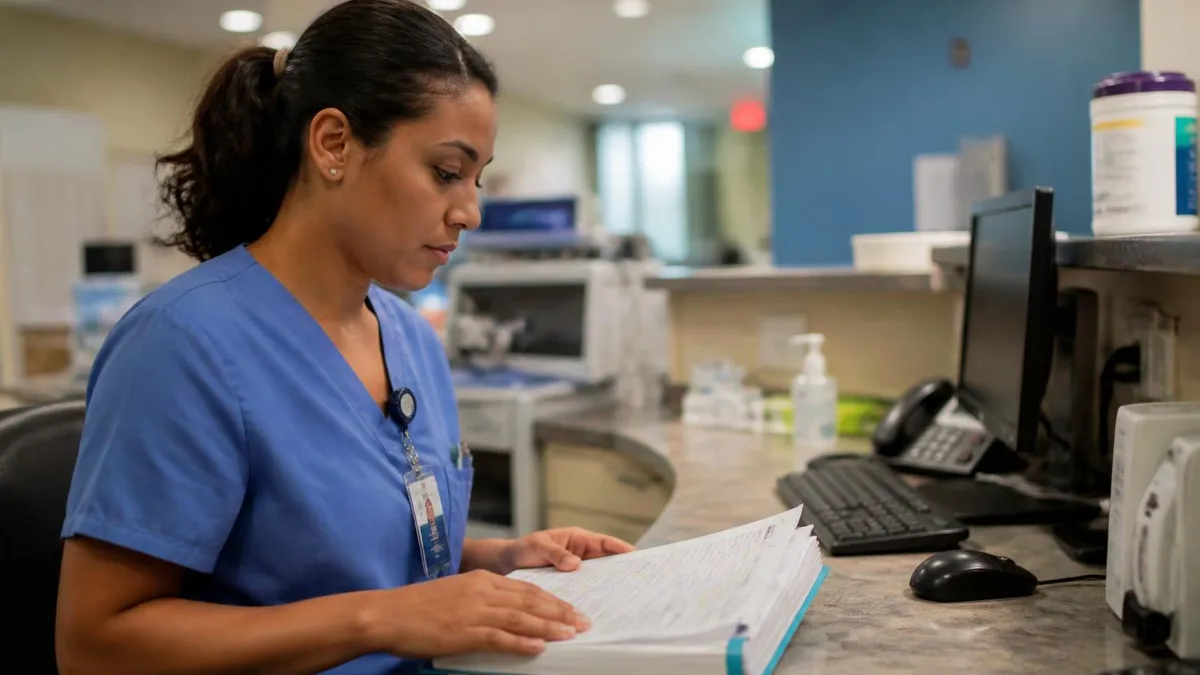
Types of CNA Training Centers
Training centers fall into four broad categories. Each has different price points, scheduling flexibility, and reputational weight with employers.
American Red Cross
The Red Cross runs nurse aide training in select states — Indiana, Maryland, Massachusetts, Michigan, Ohio, and a handful of others. Programs typically run 4 to 8 weeks, and the curriculum is nationally standardized. Employers recognize the brand instantly, which gives Red Cross grads a small edge in hiring. Tuition sits in the $1,200–$1,500 range, though scholarships and employer-paid pathways exist.
Community colleges
The most common path. Community college CNA programs charge in-state residents anywhere from $400 to $1,200. They tend to run on semester or 8–10 week intensive schedules and feed directly into LPN/RN bridge programs. The downside: fewer evening and weekend slots, longer waitlists in urban districts.
Hospital and long-term care systems
Hospitals and nursing-home chains often run free or paid training in exchange for a 12–24 month work commitment. HCA, Genesis Healthcare, Brookdale, and many regional health systems use this model. You earn while you learn, but you're locked into that employer once certified.
Private vocational centers
Private CNA schools cluster in larger cities. Schedules are flexible (night classes, weekend tracks, accelerated formats), but tuition runs higher — $800 to $1,500 — and accreditation varies. Always confirm the center appears on your state nurse aide registry's approved-program list before paying. Our CNA program cost breakdown shows price ranges by state.
There's also a fifth, smaller category worth mentioning: faith-based and nonprofit centers. Organizations like Goodwill, the Urban League, and local YMCAs occasionally run CNA training as part of workforce-development missions. These are usually free or heavily subsidized for low-income applicants, and they almost always partner with a state-approved curriculum. Availability is patchy — you might find a program in your city or not — but if one exists locally, it's worth applying.
CNA Testing Centers: Where You Take the Exam
Once training is done, the state exam is administered through one of a few national test vendors — or, in some states, directly by the state itself. Knowing which vendor your state uses determines where, when, and how you'll test.
Prometric
Prometric handles CNA testing in roughly 25 states, including New York, Michigan, Ohio, Maryland, and Washington. Their model uses both a written (or oral) section and a skills demonstration component. Test sites are usually inside Prometric-owned centers or partner facilities like community colleges. Scheduling is online and slots open about 30–60 days out. Our Prometric CNA practice test with answers mirrors the question style.
Headmaster (D&S Diversified Technologies)
Headmaster (formerly D&S, also called HDMaster or Pearson Headmaster in some states) runs CNA testing in roughly 20 states including California, Texas (alongside Pearson), Pennsylvania, Indiana, and Kansas. They use a paper-based written test plus an in-person skills evaluation, usually conducted at your training facility on a designated testing day.
PSI
PSI Services administers CNA testing in a smaller group of states — Arizona, Nevada, Oregon, and a few others. Their test centers are shared with other professional exams (real estate, insurance, IT), so the testing environment feels more formal. Skills evaluations may be at a separate clinical site.
State-managed testing
Florida, Georgia, and a handful of other states run their CNA exam directly through the state Department of Health. Testing happens at state-approved sites — often community colleges or vocational schools — and rules differ noticeably from vendor-administered exams. Check your state requirements page for specifics.
Vendor matters because rules differ. Some states (mostly Headmaster ones) let you test on the same day as your final classroom assessment, while Prometric and PSI require separate scheduling. Credentia's NNAAP tests CNAs in about 17 states and territories, Pennsylvania and North Carolina among them; Pearson VUE no longer administers CNA exams. When you finish training, your school should hand you a printed packet listing the exact vendor and registration steps for your state. If they don't, ask before you walk out the door.
Testing Vendor Breakdown
Largest CNA testing vendor — ~25 states.
- ▸Online scheduling 30-60 days ahead
- ▸Combined written + skills format
- ▸Test fee: $115-$135
- ▸Results in 2-3 weeks
- ▸Retake within 12 months of training completion
Paper-based testing across ~20 states.
- ▸Tests scheduled by training site
- ▸70-question written + 5 skills demo
- ▸Test fee: $90-$120
- ▸Skills usually evaluated at training facility
- ▸Results in 7-10 days
Used in fewer states, shared test centers.
- ▸Computer-based written component
- ▸Skills demonstrated at clinical sites
- ▸Test fee: $100-$130
- ▸Photo ID + appointment slip required
- ▸Same-day pass/fail notification
Direct state-run programs (FL, NC, etc.).
- ▸Test sites vary by state
- ▸Format and fees set by state board
- ▸Registration through state agency
- ▸Often tied to specific training providers
- ▸Results timeline varies
How to Find a CNA Center Near You
The most reliable way to locate a legitimate CNA center is through your state nurse aide registry. Every state maintains one, usually under the Department of Public Health or Department of Health & Human Services. The registry website lists:
- State-approved training programs with addresses and contact info
- Authorized testing sites and the vendor they use
- Current fee schedules for the written and skills components
- Reciprocity rules if you're moving from another state
Skip the generic Google search if you can. "CNA classes near me" surfaces lead-gen sites that resell your contact info to multiple schools — useful for a quick scan, but each listing still needs verification against the state registry. Our CNA classes near me page covers the search strategy in more detail, and CNA training near me focuses on training-only options.
One practical tip: check Department of Labor career-center listings in your county. Many counties subsidize CNA training for unemployed residents through Workforce Innovation and Opportunity Act (WIOA) funding. That can drop your out-of-pocket cost to near zero. Free CNA training walks through the eligibility checks.
Another underused resource: state nursing-home associations. Each state has one — usually called something like the "[State] Health Care Association" — and most maintain a list of member facilities offering CNA training. These tend to be employer-sponsored programs, so you might be agreeing to a work commitment as a condition of enrollment, but the cost is typically $0 and you start earning paychecks within weeks.
What to Expect: Training Day vs. Testing Day
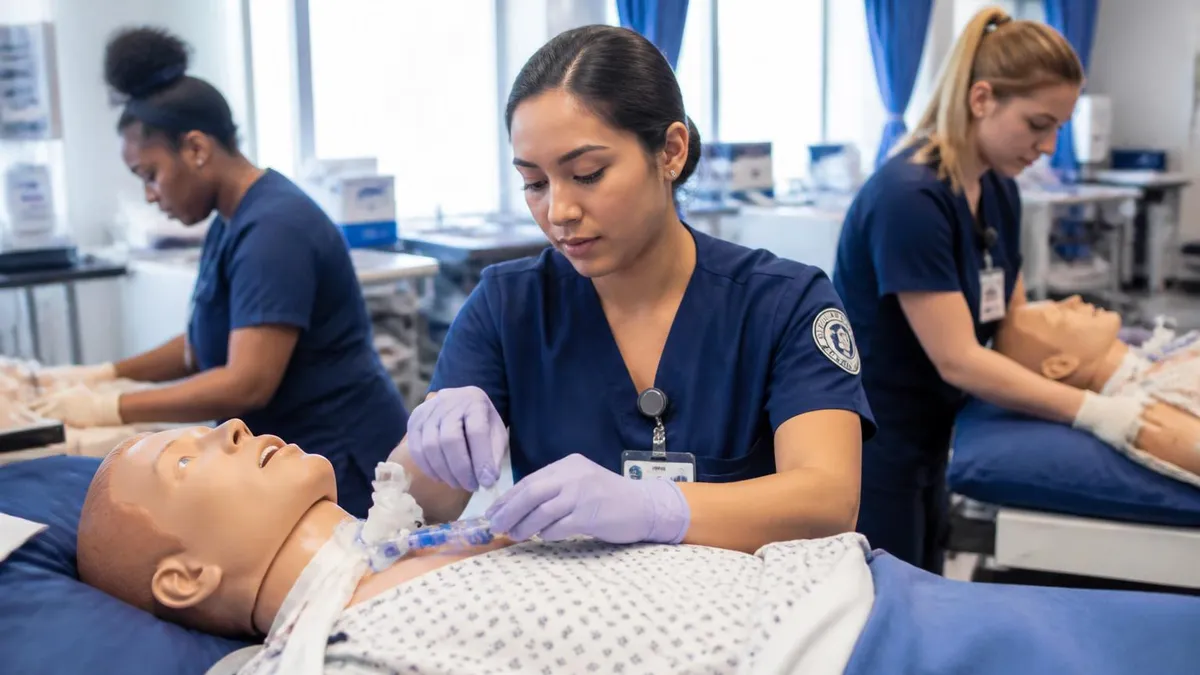
A training-center day mixes classroom and clinical work. Mornings usually focus on lecture — anatomy basics, infection control, communication, residents' rights, basic nursing skills. Afternoons shift to lab practice where you work on mannequins or with classmates on bed-making, vital signs, transfers, and personal care.
Once classroom hours are complete, you move to the clinical phase at a nursing home or hospital partner site. Expect 16-100 hours of supervised patient care, depending on your state's requirement. Bring scrubs, closed-toe shoes, a watch with a second hand, and a notebook. Phones stay in lockers.
Cost Comparison: Training and Testing Side by Side
Total out-of-pocket cost for becoming a CNA usually breaks into three buckets: tuition, books and supplies, and exam fees. The lowest combined total comes from hospital-sponsored or WIOA-funded programs (often $0). The highest comes from private vocational centers in major metros, where the all-in can hit $2,500.
For most candidates, a community-college path lands between $700 and $1,400 total. The Red Cross sits slightly higher because of brand and standardized curriculum. Accelerated 4-week formats — see 4-week CNA program and 4-week online CNA program for the structure — usually cost the same as traditional programs but condense the schedule.
One often-missed expense is the retake fee. About 1 in 4 candidates fails one section of the exam on first attempt. Most states let you retake just the failed section (written or skills) for $40-$70 — but you're typically capped at three attempts within 12 months of finishing training.
Hidden costs sneak in everywhere: scrubs and shoes ($60-$120), a TB test or two-step PPD ($25-$100), a background check ($25-$75), CPR/BLS certification if not already current ($60-$90), and immunization records review or updates. Plan on adding $200-$400 to whatever tuition figure the center quotes. Books are sometimes included, sometimes another $80-$150. Ask for an itemized cost sheet before signing anything.
Schedule Flexibility Across CNA Centers
If you're balancing work, kids, or another job, the schedule a center offers will matter as much as the curriculum. Three formats dominate:
Daytime intensive (4-8 weeks). Monday through Friday, 8 AM to 3 PM. Best for full-time students or anyone temporarily out of work. Community colleges and Red Cross both run this format.
Evening track (10-16 weeks). Three or four nights per week, usually 5-9 PM. Designed for working adults. Tuition is the same, but you trade speed for flexibility. Clinicals still require weekend or daytime availability.
Hybrid online + in-person clinical (6-12 weeks). Classroom theory runs through a learning management system at your own pace. You still complete the supervised clinical hours in person at a partner facility. CNA classes online covers the hybrid model thoroughly, and how long is CNA training compares total time commitments.
Before Enrolling — Verify Each Item
- ✓Center appears on your state nurse aide registry's approved-program list
- ✓Total training hours meet or exceed your state's minimum (75-180 depending on state)
- ✓Clinical site is named in writing and within reasonable driving distance
- ✓Total cost is transparent — tuition, books, scrubs, background check, exam fee all itemized
- ✓Pass rate on state exam is disclosed (legitimate centers will share this)
- ✓Schedule format works around your existing obligations
- ✓Refund policy is in writing if you withdraw before clinicals
- ✓Instructors are RNs with at least 2 years long-term care experience (required in most states)
Accelerated CNA Program Centers
Accelerated CNA centers compress the standard 8-12 week curriculum into 3-4 weeks. They aren't a separate certification track — graduates take the same state exam — but the daily workload is intense: 7-8 hours of classroom and lab, five days a week, plus weekend clinicals.
These work for candidates with a free schedule and the ability to absorb information quickly. They don't work for parents juggling childcare or anyone with a part-time job that can't be paused. Failure rates are slightly higher in accelerated programs simply because retention suffers when you compress that much material.
Costs are usually identical to traditional programs, sometimes 10-15% higher. The Red Cross runs an accelerated 4-week version in select cities. Many community colleges offer a "summer intensive" track that follows the same model. Goodwill CNA program is a known accelerated nonprofit pathway in several metro areas.
If you decide on an accelerated route, plan the surrounding logistics in advance: arrange childcare, pause your other commitments, line up reliable transport to the clinical site, and pre-buy your scrubs, shoes, watch, and supplies. Once the four-week sprint starts, you won't have spare hours to run errands or solve unexpected problems. Set up a quiet, distraction-free study space at home and aim for 90 minutes of evening review on top of class hours — terminology and skills checklists are what most candidates flunk on the state exam.
CNA Center Choice Pros and Cons
- +State-approved centers guarantee your training hours count toward certification
- +Reputable centers often have job-placement pipelines into local nursing facilities
- +Larger centers run multiple cohorts per year — less waiting between application and start
- +Community-college credits can transfer toward an LPN or RN bridge later
- +Some centers bundle the state exam fee into tuition, reducing surprises
- −Cost varies wildly between center types — a private school can charge 3x a community college for the same outcome
- −Accelerated programs leave little time for review before the state exam
- −Clinical site assignment may be far from your home, adding hidden transport cost
- −Some centers oversell their pass rate — verify against the state registry data when possible
- −Switching centers mid-program usually means losing completed hours
After You Pass: The State Registry
Passing the exam at your testing center isn't quite the finish line. Your name still has to be entered on the state nurse aide registry before you're legally allowed to work as a CNA. The testing vendor (Prometric, Headmaster, PSI, or the state agency) handles the upload, usually within 5-10 business days.
Once you're on the registry, your CNA certification is active. Employers check that registry before hiring — so do background-check services. Keep your contact info current with the registry, especially if you move, because renewal notices go to the address on file. Our CNA registry page covers state-by-cna registry, and certification guide walks the full process from training through renewal.
Renewal cycles run 1-2 years depending on the state. Most require proof of paid CNA work (typically 8-24 hours within the renewal window) plus cna reg. Letting certification lapse means re-taking the state exam — a costly mistake if you stepped away from healthcare temporarily.
Reciprocity matters if you ever move. Most states accept out-of-state CNAs through a "transfer" process: you submit proof of your current registry standing, sometimes pay a small fee, and your name gets added to the new state's registry without re-testing. Exceptions exist — a few states require a competency exam if your original training hours fall below their minimum — but the system is generally portable. Check both your current and destination state registries before relocating.
Choosing the Right CNA Center for You
The right center isn't always the cheapest or the closest. It's the one whose schedule, cost, and reputation match your situation. A working parent in a metro area might do best with a hybrid online + clinical evening program at a community college. A full-time student fresh out of high school often does well in a Red Cross or college daytime intensive. Someone out of work and motivated can win with a hospital-sponsored free program in exchange for a 1-year commitment.
Spend a week before enrolling. Call three centers. Ask each for: state program ID, written cost breakdown, clinical site location, pass-rate data, and start dates. Compare on paper, not by sales pitch. Then visit if possible — a 20-minute walk-through reveals more than any glossy brochure. Once you're enrolled, pair classroom prep with daily review using our CNA practice test to lock in the patterns the state exam loves to repeat.
Talking to recent graduates helps more than reading reviews. Most centers will connect you with one or two if you ask. Find out: how long it took them from enrollment to first paycheck, whether the clinical site felt safe and well-supervised, how prepared they felt walking into the state exam, and whether they'd choose the same center again. Those four questions will tell you more about a CNA center than any brochure, ranking site, or Yelp page ever could.
Finally, don't let the choice of center stall you. Healthcare staffing shortages mean even an average CNA program leads to a job offer within weeks of certification in most regions. Pick a state-approved center that fits your schedule and budget, commit to the work, and use the testing-day prep window to drill skills until they're automatic. The center is just the starting line.
Sample CNA Practice Questions
Try these questions from our free CNA practice tests. The correct answer and an explanation follow each question.
Which of the following is a core competency area covered in federally mandated CNA training programs?
- A. Pharmacology and drug administration
- B. Infection control and prevention
- C. Surgical wound closure
- D. Anesthesia monitoring
Answer: B. Infection control and prevention
Federal regulations require CNA training to include infection control as one of the core competency areas.
A resident on a bowel training program should be offered toileting assistance at which time?
- A. Only when the resident specifically requests it
- B. At the same scheduled times each day, especially after meals
- C. Randomly throughout the shift to prevent accidents
- D. Only at bedtime to establish a nighttime routine
Answer: B. At the same scheduled times each day, especially after meals
Bowel training programs rely on consistent, scheduled toileting — particularly after meals when the gastrocolic reflex is active.
When transferring a resident from bed to a wheelchair, which principle should guide the CNA's technique?
- A. Use upper body strength to lift the resident quickly
- B. Twist the torso to swing the resident into the wheelchair
- C. Use proper body mechanics: wide base, bent knees, straight back, and pivot
- D. Ask the resident to stand on their own without assistance
Answer: C. Use proper body mechanics: wide base, bent knees, straight back, and pivot
Safe body mechanics—including a wide base of support, keeping the back straight, bending at the knees, keeping the load close to the body, and pivoting rather than twisting—protect both the CNA and the resident from injury during transfers.
When collecting a stool specimen for occult blood testing, the CNA should avoid which of the following?
- A. Using a wooden tongue depressor to transfer the sample
- B. Placing the sample in the designated specimen container
- C. Collecting the sample after the resident ate red meat recently
- D. Labeling the container with the resident's name
Answer: C. Collecting the sample after the resident ate red meat recently
Red meat consumption before fecal occult blood testing can cause a false-positive result, so dietary restrictions must be followed.
CNA Questions and Answers
About the Author

Registered Nurse & Healthcare Educator
Johns Hopkins University School of NursingDr. Sarah Mitchell is a board-certified registered nurse with over 15 years of clinical and academic experience. She completed her PhD in Nursing Science at Johns Hopkins University and has taught NCLEX preparation and clinical skills courses for nursing students across the United States. Her research focuses on evidence-based exam preparation strategies for healthcare certification candidates.
Join the Discussion
Connect with other students preparing for this exam. Share tips, ask questions, and get advice from people who have been there.
View discussion (8 replies)