
CNA Classes in Florida 2026 September: Best Schools, Free Programs & State Exam Guide
CNA classes in Florida: 75-hour DOH-approved programs from $300-$3,500. Compare top schools in Miami, Tampa, Orlando, Jacksonville plus free training ✏️

CNA Classes in Florida 2026: The Complete Guide to Training, Costs, and the State Exam
Florida runs the second-largest CNA training pipeline in the country. The state has more than 320 Department of Health approved programs spread across community colleges, technical centers, Red Cross chapters, Goodwill training sites, hospital academies, and private CNA schools. You can complete classroom theory and clinical rotations in as little as four weeks at an accelerated program, or stretch the course over four to six months part-time while you keep your day job. Tuition ranges from completely free at employer-sponsored programs to about $3,500 at private schools, with public community colleges sitting at the affordable middle.
The Florida Department of Health Council on Aging and Long-Term Care, working through the Florida Board of Nursing, approves every CNA training program in the state. The state minimum is 75 hours including a clinical rotation in a licensed nursing facility. That is one of the lowest minimum hour requirements in the country. California demands 150 hours. Oregon requires 155. So Florida is one of the fastest legal pathways to start working bedside in healthcare.
The credential opens 95,000-plus CNA jobs across Florida. Skilled nursing facilities (SNFs) hire constantly. Hospitals like AdventHealth, Baptist Health South Florida, BayCare, Tampa General, and HCA East Florida run monthly hiring events. Home health agencies cover the entire state. And travel CNA contracts during snowbird season (November through April) pay $25 to $45 per hour. The catch is that none of those doors open without a current Florida CNA certificate, which means starting with an approved class.
This guide walks you through the exact requirements, the best programs in every major city (Miami, Tampa, Orlando, Jacksonville, Fort Lauderdale, Tallahassee, Gainesville, St. Petersburg, West Palm Beach), the free training options that pay your tuition in exchange for an employment commitment, and the Prometric state exam you must pass to add your name to the Florida nurse aide registry. By the end, you will know which program format fits your schedule and budget — and which to skip.
For broader career context, the CNA career hub covers pay, certification ladders, and exam prep nationwide. Once you finish a Florida program, the CNA jobs in Florida breakdown shows you exactly where to apply and what to earn.
What you actually need to start working as a CNA in Florida
Florida requires a 75-hour state-approved training program (theory plus clinical hours in a licensed long-term care facility), the Prometric Florida Nurse Aide Exam (60 written questions plus 5 skills demonstrations, $130 to $155 fee), and an AHCA Level 2 background screen ($79.50 with FBI fingerprinting). Most students finish in 4 to 12 weeks. Tuition runs $300 at workforce-funded programs, $400 to $1,500 at public colleges and tech centers, and $1,500 to $3,500 at private CNA schools. Free training is widely available through SNF earn-while-you-learn programs that require a 3 to 12 month employment commitment after certification.
Florida CNA Training by the Numbers
Key Facts at a Glance
| Item | Value | Details |
|---|---|---|
| Minimum Training Hours | 75 hrs | |
| Typical Program Length | 4-12 weeks | |
| State Exam Pass Mark | Not published |
How to Choose Your Florida CNA Program
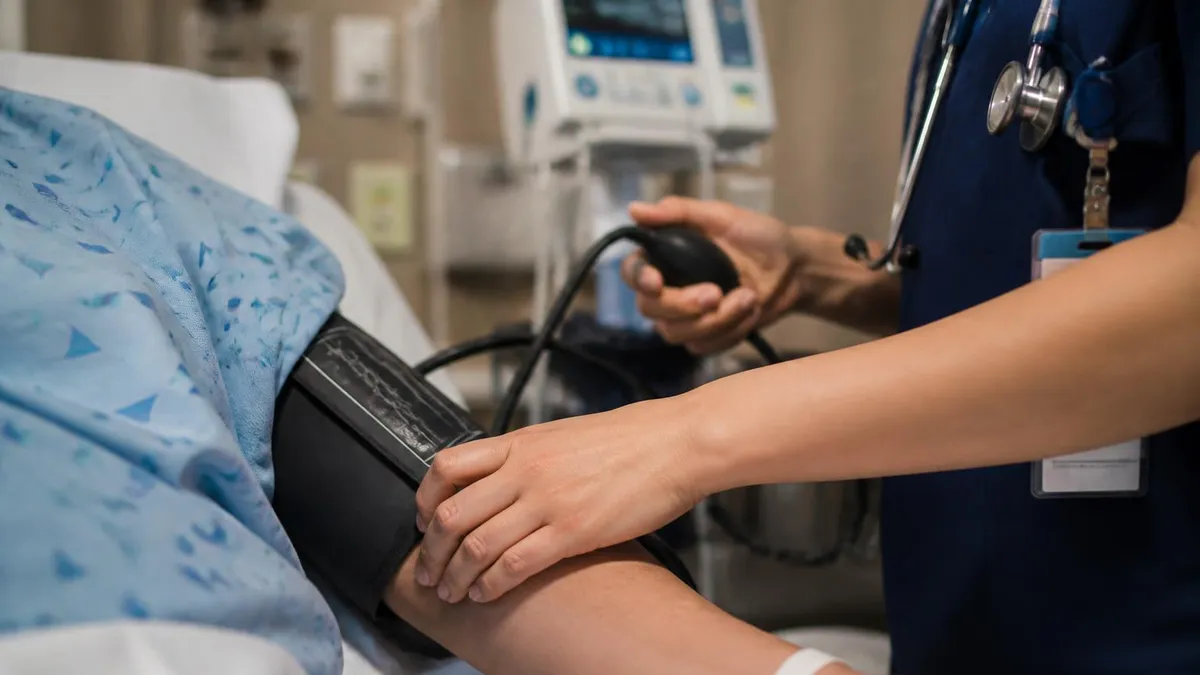
Miami, Tampa, Orlando, Jacksonville have the largest concentration of state-approved CNA programs. Miami-Dade College, Hillsborough Community College, Valencia College, and Florida State College at Jacksonville (FSCJ) anchor each region with low-cost tuition (under $1,200) and high state-exam pass rates (85% to 95%). Fort Lauderdale (Broward College, Sheridan Tech), Tallahassee (TCC), Gainesville (Santa Fe College), St. Petersburg (SPC), and West Palm Beach (PB State College) round out the metro list.
Florida CNA Training Requirements: What the State Demands
The Florida Department of Health regulates all CNA training programs through the Board of Nursing and Council on Aging and Long-Term Care. The legal authority comes from Florida Statute 464.203 and Florida Administrative Code rule 64B9-15. Every approved program must deliver a minimum 75 hours of training, including theory and a supervised clinical rotation in a licensed long-term care facility. The training must be led by a registered nurse with at least two years of clinical experience, and the clinical site must be a Medicaid-certified nursing home or hospital long-term care unit.
Eligibility to Enroll
To start a Florida CNA program you must be at least 16 years old (some schools require 17 or 18), hold a high school diploma or GED (a few accept current high school students concurrently), pass a basic reading and math entrance assessment at most public programs (TABE D 9 reading level commonly), and complete a Level 2 background screen if the clinical site requires it.
You also need a recent two-step TB skin test, current Tdap, MMR, varicella, hepatitis B, flu, and COVID immunizations, plus a drug screen at most clinical sites. Plan to spend $150 to $250 on the health screening package before your first clinical day.
The Challenge Exam Pathway (Exempt Routes)
Florida also allows certain candidates to skip the 75-hour training and sit directly for the Prometric exam. The challenge exam pathway applies to military medics with a DD-214 showing medical training, current or former nursing students who completed at least one semester of clinical nursing courses with documentation, and out-of-state CNAs whose original program met federal minimum hours (we cover this reciprocity route below). You still pay the same exam fee, you still complete the AHCA Level 2 screen, but you save the 75 hours of class time.
What Approved Programs Actually Teach
The 75-hour Florida curriculum covers six core topic areas: communication and interpersonal skills, infection control and safety, basic nursing skills (vital signs, ADLs, mobility, transfers, intake/output), personal care and hygiene (bathing, dressing, perineal care), restorative care and rehabilitation, and residents' rights and care of the cognitively impaired (Alzheimer's and dementia). Clinical hours focus on direct resident care, charting and documentation, and the 22 skills the Prometric examiner may test on exam day. The CNA classes guide breaks down every topic area in more detail and links to free practice questions for each one.
Top 5 Florida Cities for CNA Classes
- Top Schools: Miami Dade College, Lindsey Hopkins Tech, Atlantic Technical College
- Tuition Range: $400-$1,500
- Program Length: 5-16 weeks
- Standout: Bilingual Spanish-language tracks widely available
- Top Schools: Hillsborough Community College, Erwin Tech, Brewster Tech
- Tuition Range: $450-$1,300
- Program Length: 5-14 weeks
- Standout: BayCare and Tampa General hire 60% of graduates directly
- Top Schools: Valencia College, Orange Tech College Mid Florida, Mid Florida Tech
- Tuition Range: $500-$1,200
- Program Length: 6-12 weeks
- Standout: AdventHealth and Orlando Health partner programs
- Top Schools: FSCJ, North Florida Adult Vocational Center
- Tuition Range: $400-$1,100
- Program Length: 5-12 weeks
- Standout: Mayo Clinic and UF Health Jacksonville hiring partners
- Top Schools: Broward College, Sheridan Technical College
- Tuition Range: $500-$1,400
- Program Length: 5-14 weeks
- Standout: Memorial Healthcare System pipeline, high SNF density
Florida CNA Class Tuition by Program Type
Top Florida CNA Schools by City: Where to Actually Enroll
Picking the right school matters because the state-exam pass rate, clinical site quality, and post-graduation hiring pipeline vary significantly. Below is the city-by-city short list of the best Department of Health approved CNA programs in Florida. Every school listed below has DOH approval, posted pass rates of 80% or higher on the Prometric state exam, and an active hiring relationship with at least one major healthcare employer in its city.
Miami and South Florida
Miami Dade College runs CNA classes at four campuses (Medical, North, Kendall, Wolfson) with tuition around $1,200 for the 165-hour program (exceeds the state minimum). Lindsey Hopkins Technical College in Liberty City delivers a 165-hour course for under $1,500 with strong placement at Jackson Health System. Atlantic Technical College in Coconut Creek serves Broward and northern Miami-Dade students with a 6-week accelerated track. Robert Morgan Educational Center in Cutler Bay offers a Spanish-language CNA program, one of the few state-approved bilingual options.
Tampa Bay Region
Hillsborough Community College (HCC) offers CNA classes at Brandon and Plant City campuses for roughly $850 to $1,300. Erwin Technical College in Tampa runs a popular 6-week evening format that attracts working adults. Brewster Technical College in Ybor City serves bilingual students and offers WIOA-funded seats. St. Petersburg College (SPC) at the Health Education Center is the top pick for Pinellas County residents — state exam pass rates run above 90%.
Orlando, Lakeland, Ocala
Valencia College's Health Sciences division runs the largest CNA pipeline in Central Florida. Orange Technical College Mid Florida and Mid Florida Tech in Orlando offer accelerated 6 to 8 week options. In Lakeland, Traviss Technical College serves Polk County students. Ocala's College of Central Florida runs a strong program with rural hospital placements at AdventHealth Ocala. Polk State College's CNA track in Winter Haven is also DOH-approved.
Jacksonville, Gainesville, Tallahassee
Florida State College at Jacksonville (FSCJ) is the dominant CNA training pipeline for Northeast Florida with tuition under $1,100. North Florida Adult Vocational Center in Madison serves rural Suwannee River counties. Santa Fe College in Gainesville feeds graduates directly into UF Health and area SNFs. In the panhandle, Tallahassee Community College (TCC) is the top pick, with strong placement at Tallahassee Memorial Healthcare and Capital Regional Medical Center.
West Palm Beach and Treasure Coast
Palm Beach State College (PB State) at the Lake Worth and Boca Raton campuses runs a 165-hour CNA program for around $1,100. Indian River State College serves Stuart, Fort Pierce, and Vero Beach. South Tech Academy in Boynton Beach offers an accelerated 8-week format with strong placement at Bethesda Hospital and Boca Raton Regional. For students in St. Lucie County, the South Florida State College Hardee campus is the closest option.
If you also want to compare Florida programs to the West Coast pathway, the CNA programs in California guide covers California's longer 150-hour requirement and CDPH approval process. To see what tuition looks like nationwide, the cost of CNA classes guide breaks down state-by-state averages.
Community College vs Tech Center: Which Path Is Better in Florida?
- +Community college credit may transfer toward LPN or RN programs at the same college
- +Community colleges typically have more financial aid options (Pell Grant, FFAA aid)
- +Stronger academic-support services: tutoring centers, library, advising
- +More clinical site variety because community colleges partner with multiple SNFs and hospitals
- +State-exam pass rates at FL community colleges average 85-95%
- −Tech centers (DOE districts) deliver faster accelerated formats (4-8 weeks vs 12-16)
- −Tech centers often have lower tuition for state residents ($400-$900 vs $900-$1,400)
- −Tech centers offer more evening/weekend formats for working adults
- −Tech centers post higher local hiring rates with specific SNFs and hospitals
- −Community college class schedules can be rigid; tech centers run rolling enrollment
Free CNA Classes in Florida: Three Real Pathways
Free CNA training in Florida is genuinely available, but it almost always comes with an employment commitment or qualifying income requirement. Be skeptical of any "free CNA class" ad that does not explain the catch. The three legitimate pathways below cover roughly 80% of free training in the state. The free CNA classes guide covers the national picture and lists employer programs in other states too.
SNF Earn-While-You-Learn Programs
This is the biggest source of free CNA training in Florida. Skilled nursing facility chains like Brookdale Senior Living, Genesis HealthCare, Consulate Health Care, Life Care Centers, Five Star Senior Living, ProMedica, and Avante run in-house CNA academies that hire candidates as nursing assistants in training (NAT), pay an hourly wage during the 75-hour course, and convert you to a permanent CNA position after you pass the Prometric state exam.
The catch is a typical 3 to 12 month employment commitment with a tuition repayment clause if you leave early. The trade-off is usually fair: you save $1,000 to $3,000 in tuition and start earning $14 to $16 per hour during training.
WIOA Grants via CareerSource Florida
The Workforce Innovation and Opportunity Act (WIOA) is federal workforce funding administered locally by CareerSource Florida. Each county runs its own CareerSource office (CareerSource Tampa Bay, Central Florida, South Florida, Northeast Florida, Capital Region, etc.). Qualifying candidates — low-income, unemployed, dislocated workers, veterans, or workers in declining industries — can apply for an Individual Training Account (ITA) that covers full CNA tuition at any state-approved program plus support for transportation, childcare, scrubs, and exam fees. Apply at your local CareerSource office before enrolling because the grant must be approved in advance.
Medicaid-Funded Training and Hospital Partner Programs
Florida Medicaid will reimburse approved CNA training if you commit to working at a Medicaid-certified long-term care facility for 12 months after certification. Some hospital systems also run free training pipelines: HCA East Florida, Memorial Healthcare, and BayCare have run paid CNA cohorts during workforce shortages. These programs come and go based on demand — check each system's career portal under "in-house training" or call HR directly.
From Application to Florida CNA License: 90-Day Timeline
Days 1-7: Research and Apply
Days 7-14: Enrollment Paperwork
Days 14-21: Health Screening + Background
Weeks 3-10: Theory and Lab
Weeks 6-12: Clinical Rotation
Week 12-13: State Exam Registration
Week 13+: Pass Exam and Get on Registry
The Prometric Florida Nurse Aide Exam: What You Will Face
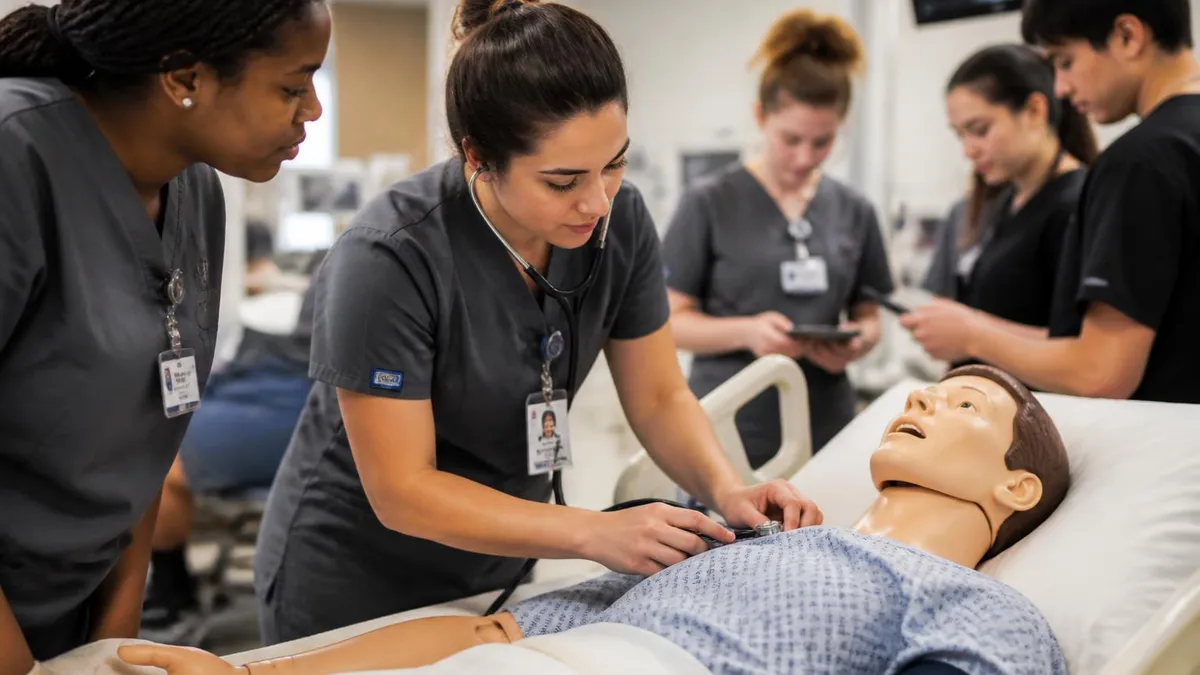
Florida contracts with Prometric to deliver the state nurse aide competency exam. You can only sit for the exam after completing an approved 75-hour program (or qualifying for a challenge exam exception). Your training program registers you with Prometric or gives you the registration form. You schedule your exam at a Prometric testing center — Miami, Tampa, Orlando, Jacksonville, Fort Lauderdale, Tallahassee, Gainesville, and Pensacola all have multiple locations. The total exam fee runs $130 to $155 depending on testing site and packaging.
The Written Section (60 Questions, 90 Minutes)
The written portion is 60 multiple-choice questions delivered by computer (oral exam available as accommodation if you request it). Topics mirror the curriculum: physical care skills, infection control, communication, mental health and social service, residents' rights, role of the nurse aide, basic nursing skills, restorative skills, and care of the cognitively impaired. Prometric does not publicly publish the exact minimum passing score for the Florida written exam; treat any specific percentage you see quoted elsewhere as an estimate, not an official cutoff. Most candidates finish in 45 to 60 minutes. Read the question fully before choosing — Florida questions often test which option to do FIRST or NEXT, not just what is correct.
The Skills Demonstration (5 Random Skills)
The practical portion is the most stressful part for most candidates. A Prometric clinical examiner randomly assigns 5 skills from a pool of 22 published skills, including hand hygiene (always required as a baseline skill), measuring blood pressure, taking radial pulse, counting respirations, transferring with a gait belt, ambulating with a gait belt, performing range-of-motion exercises, perineal care, bed-making, denture care, feeding a resident, measuring intake/output, and positioning a resident.
You must perform ALL 5 skills successfully — missing one critical step on any skill fails the entire practical section. Hand washing is the most commonly failed step. Wear scrubs and closed-toe sneakers and bring two forms of ID.
Retake Policy
If you fail either section you can retake just the failed portion. Florida allows up to 3 attempts within 2 years of completing your approved program. If you fail all 3 attempts, you must retake the full 75-hour program from a state-approved school before re-applying. The pass rates among Florida candidates run roughly 85-90% on the written and 75-80% on the skills demonstration on first attempt. Practice the 22 skills until each one feels automatic — that is the single best predictor of passing the practical exam on the first try.
Florida CNA Enrollment Checklist
- ✓Confirm the program is on the Florida Board of Nursing approved list (search at floridasnursing.gov)
- ✓Verify you are 16+ (some schools require 17 or 18) and have a high school diploma, GED, or current high school enrollment
- ✓Complete a two-step TB skin test (first reading day 0, second reading day 7-10)
- ✓Gather immunization records: MMR, Tdap, varicella, hepatitis B series, flu, COVID
- ✓Schedule a drug screen at a Quest Diagnostics or LabCorp location (or as program directs)
- ✓Complete AHCA Level 2 background screen with Live Scan fingerprinting ($79.50)
- ✓Buy scrubs, white closed-toe sneakers, stethoscope, watch with second hand, and notebook
- ✓Set up FAFSA if applying to community colleges, or apply for WIOA grant at CareerSource
- ✓Register for state exam through Prometric once your program issues the registration form
- ✓Set up Florida Board of Nursing online account at floridasnursing.gov to track registry status
Out-of-State CNAs: How to Endorse Your License Into Florida
If you already hold an active CNA certificate in another state, you can transfer it to Florida through endorsement (sometimes called reciprocity). Florida is one of the easier states for reciprocity because the Department of Health accepts any program that meets federal minimum hours (75 hours). Most state CNA programs meet that threshold, except a handful of states with shorter old-style programs that no longer qualify.
Endorsement Process
Submit the Florida CNA Endorsement Application (one page) to the Florida Department of Health, pay the $20 endorsement fee, provide verification of your active certificate from your home-state registry, and complete an AHCA Level 2 background screen. If your home program met federal minimum hours, no retest is required. You are added to the Florida nurse aide registry within 30 days for most states. Coming from California (where the CDPH verification system is slow) typically takes 60-plus days. From Texas, Georgia, Tennessee, or Alabama expect 25 to 35 days.
When You Need to Retest
You will need to retake the Florida Prometric exam if your home-state program was less than 75 hours, or if your certificate has been inactive for more than 24 months. A handful of states (including Oklahoma and parts of Louisiana) historically ran 60-hour programs that do not qualify for Florida endorsement.
If your training falls short, you have two options: complete the gap hours at a Florida-approved bridge program (typically 1 to 2 weeks of additional theory), or sit for the full Prometric exam as a challenge candidate without re-enrolling in training. Most students choose the challenge exam route because it is faster and cheaper.
Maintaining Your Florida Certificate
Once on the Florida nurse aide registry, you must show 12 hours of nursing-related work (paid or volunteer) in the previous 24 months to keep your certificate active. The state renews CNA certificates every two years through the registry portal. Lapse more than 24 months and you must retake the Prometric exam. The CNA license guide covers state-by-state reciprocity rules in more depth, and the how to get a CNA license walkthrough breaks down each step. For Florida-specific licensing details, the CNA in Florida page covers exam scheduling, registry portal links, and renewal cycles.
Bilingual and Spanish-Language CNA Programs in Florida
Florida has one of the largest bilingual CNA training markets in the country, driven by Miami-Dade's heavily Spanish-speaking population. Several state-approved schools deliver CNA classes entirely in Spanish, including the written portion of theory and clinical instructions. Robert Morgan Educational Center in Cutler Bay, Lindsey Hopkins Technical College in Miami, and Atlantic Technical College in Coconut Creek all offer Spanish-track CNA programs.
Tuition is the same as English-language programs. Students complete the Prometric exam in English — there is no Spanish-language version of the Florida state exam — so even Spanish-track students must work toward English fluency on medical terminology. Many programs include a 4 to 8 hour medical English module to prepare candidates for exam day.
Haitian Creole-speaking students in South Florida have fewer dedicated tracks but can attend any English-language program. Some Miami-area schools provide Creole-speaking clinical instructors. Asian-language tracks (Vietnamese, Tagalog) are rare in Florida.
What to Bring on Your First Day of CNA Class
Florida CNA programs are practical from day one. Expect to spend the first week in lab practicing hand hygiene, vital signs, and bed-making. Show up prepared: two sets of scrubs (most schools require a specific color — confirm with admissions), white closed-toe non-slip sneakers, watch with a second hand (for counting pulse and respirations), pocket-size notebook and pen for taking notes during clinical, stethoscope (Littmann Classic III is the standard, but a $25 budget stethoscope works fine), blood-pressure cuff if your program requires personal equipment, current photo ID, immunization records, and TB test results.
Some programs add a CPR certification requirement (American Heart Association BLS for Healthcare Providers) — check the admissions packet.
What Happens If You Fail the Florida CNA Exam
Failing one or both portions of the Prometric exam is more common than students expect — about 15% to 20% of Florida candidates fail one section on first attempt, usually the practical. The good news: Florida allows three retake attempts within 24 months of finishing your training program. You only retake the section you failed.
Schedule retakes through Prometric, pay the retake fee ($75 to $90 per portion), and continue applying for jobs as a nurse aide trainee in the meantime — most SNFs let you work the floor under another CNA's supervision while you re-test. If you fail all three attempts, you must re-enroll in a full 75-hour DOH-approved program before applying again. Plan extra hours of skill rehearsal — the practical exam fails far more often than the written, and it is almost always because of a missed critical step in hand washing or PPE.
CNA Questions and Answers
Related CNA Career Guides

CNA Jobs in Florida 2026: Salary, Top Employers & Hiring Guide

CNA in Florida: Requirements, Training, Exam, and Salary Guide
CNA Programs in California: The Complete 2026 Enrollment Guide

Cost of CNA Classes: What You'll Actually Pay in 2026
Free CNA Classes: How to Find Training Near You and Online
How to Get a CNA License — Step-by-Step Guide (2026)
About the Author

Registered Nurse & Healthcare Educator
Johns Hopkins University School of NursingDr. Sarah Mitchell is a board-certified registered nurse with over 15 years of clinical and academic experience. She completed her PhD in Nursing Science at Johns Hopkins University and has taught NCLEX preparation and clinical skills courses for nursing students across the United States. Her research focuses on evidence-based exam preparation strategies for healthcare certification candidates.
Join the Discussion
Connect with other students preparing for this exam. Share tips, ask questions, and get advice from people who have been there.
View discussion (8 replies)