
How to Get a CNA License — Step-by-Step Guide (2026)
How to get your CNA license step by step. Training requirements, exam process, costs, and timeline to become a Certified Nursing Assistant in 2026.

5 Steps to Get Your CNA License
Step 1: Meet Basic Requirements
Most states require you to be at least 16-18 years old, pass a background check, and have basic reading/writing skills. A high school diploma is NOT required in most states. Practice with the free CNA practice test on PracticeTestGeeks (2,350+ questions with answer explanations).
Step 2: Complete a State-Approved CNA Training Program
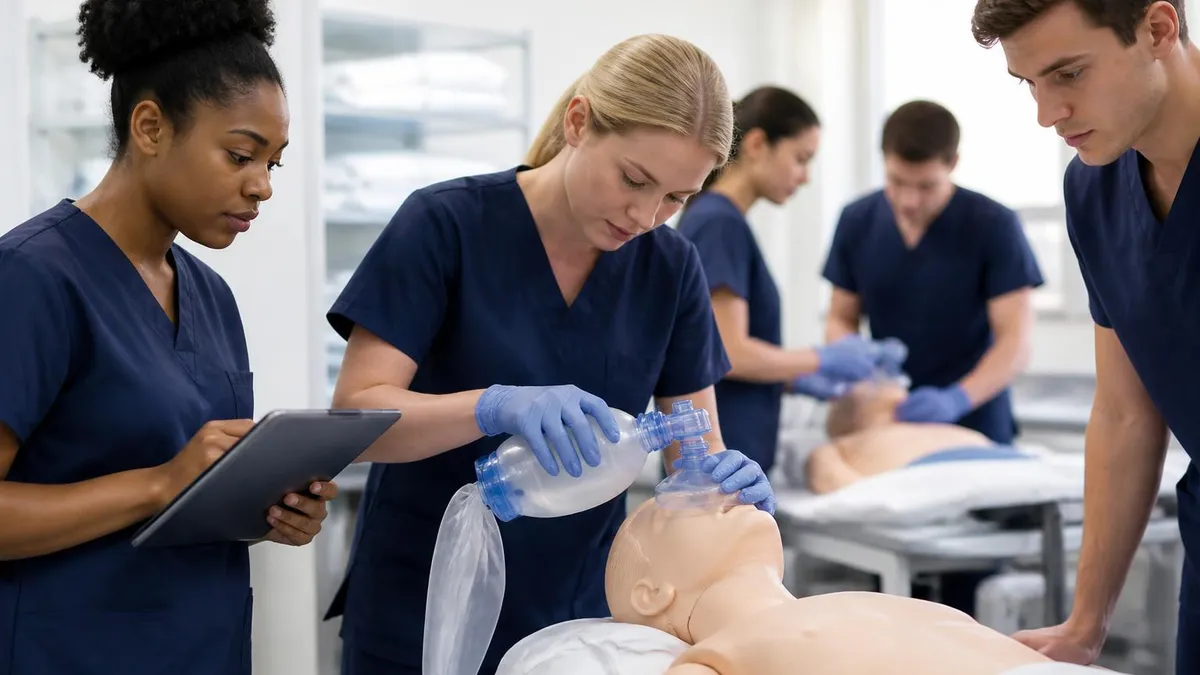
Enroll in a training program that meets your state's minimum hour requirement (75-180 hours). Programs include classroom instruction + clinical practice in a real healthcare facility. Options include community colleges, vocational schools, Red Cross, and employer-sponsored programs.
Step 3: Pass the CNA Competency Exam
After completing training, take the two-part competency exam:
- Written exam: 55-80 multiple-choice questions (70 on the NNAAP), 90 minutes to 2 hours
- Skills exam: Perform 3-5 randomly selected clinical skills
Step 4: Apply to Your State Nurse Aide Registry
Once you pass both exam components, submit your application to your state's Nurse Aide Registry. Include your exam results, training completion certificate, and background check.
Step 5: Receive Your CNA Certification
Processing takes 2-6 weeks. Your name will be added to the state registry, and you can begin working as a CNA.
Learn more in our guide on bank of missouri. Learn more in our guide on registered nurse salary by state. Learn more in our guide on first national bank of pennsylvania. Learn more in our guide on cruise terminal cape liberty new jersey.
You can continue preparing with the cna practice test pdf, which includes answer explanations for every question.
You can continue preparing with the free cna credential practice exams, which includes answer explanations for every question.
Free CNA Study Tools
Interactive CNA resources on PracticeTestGeeks, free to start:
- CNA practice test — 2,350+ questions with instant scoring and answer explanations
- CNA flashcards — review key terms and concepts card by card
- CNA study guide — topic-by-topic overview of what the exam covers
- CNA cheat sheet — one-page printable summary for last-minute review
- Under federal rules, a nurse aide candidate must have at least three opportunities to take the competency evaluation.[1]
- The federal nurse aide competency evaluation lets an aide choose between a written and an oral examination, and also requires a skills demonstration.[1]
- A federally compliant nurse aide training program must consist of no less than 75 clock hours of training, including at least 16 hours of supervised practical training.[2]
All verified CNA facts and sources
Numbers in brackets link to the official sources listed under Sources & last verified. Dates that have passed are removed automatically.

Fastest Path: Employer-sponsored CNA programs (offered by many nursing homes) are FREE and can be completed in as little as 2-4 weeks. You start working immediately after certification — earning while other students are still in school.
CNA License Requirements
- Age: 16-18+ (varies by state; parental consent may be required for minors)
- Education: No high school diploma required in most states
- Training: Complete state-approved program (75-180 hours)
- Background check: Clean criminal record required
- Health requirements: TB test, immunizations, physical exam
- Exam: Pass written + skills competency test

Cost & Timeline Breakdown
Cost
- Training: $0 (employer-sponsored) to $1,500 (private school)
- Exam fee: $50-$120
- Background check: $30-$75
- Application fee: $20-$50
- Total: $0-$2,000 (many free options available)
Timeline
- Accelerated (full-time): 2-4 weeks training + 1-2 weeks exam + 2-4 weeks processing = 6-10 weeks total
- Standard (part-time): 8-16 weeks training + 1-2 weeks exam + 2-6 weeks processing = 12-24 weeks total
- ✓Verify you meet your state's age requirement
- ✓Research training programs (check free options first)
- ✓Enroll in a state-approved CNA program
- ✓Complete classroom instruction + clinical hours
- ✓Schedule your competency exam
- ✓Pass the written exam (60-100 questions, 80%+)
- ✓Pass the skills exam (3-5 clinical skills)
- ✓Submit application to state Nurse Aide Registry
- ✓Complete background check
- ✓Receive your CNA certification (2-6 weeks)

CNA: Pros and Cons
- +cna — growing demand for CNA professionals in the job market
- +Diverse career opportunities across multiple industries
- +Competitive compensation packages including benefits
- +Clear advancement path from entry-level to senior positions
- +Transferable skills applicable to related fields
- −Entry-level positions may offer lower starting compensation
- −Field can be competitive — relevant certifications help stand out
- −Work-life balance varies by employer and specialty
- −Keeping skills current requires ongoing professional development
- −Some positions require specific licenses or background checks
Pros and Cons at a Glance
| Pros | Cons |
|---|---|
| cna — growing demand for CNA professionals in the job market | Entry-level positions may offer lower starting compensation |
| Diverse career opportunities across multiple industries | Field can be competitive — relevant certifications help stand out |
| Competitive compensation packages including benefits | Work-life balance varies by employer and specialty |
| Clear advancement path from entry-level to senior positions | Keeping skills current requires ongoing professional development |
| Transferable skills applicable to related fields | Some positions require specific licenses or background checks |
Sample CNA Practice Questions
Try these questions from our free CNA practice tests. The correct answer and an explanation follow each question.
What hand hygiene steps must be performed before and after catheter care?
- A. Quick hand rinse with water only
- B. Thorough handwashing with soap and water or alcohol-based hand rub, then gloves on before contact
- C. Wipe hands with a dry towel before donning gloves
- D. No special hand hygiene is needed if gloves are worn
Answer: B. Thorough handwashing with soap and water or alcohol-based hand rub, then gloves on before contact
Standard hand hygiene (soap and water or alcohol-based rub) must be performed before donning gloves and after removing them following catheter care. Gloves do not replace hand hygiene.
A CNA has just removed gloves after assisting a resident with toileting. What is the correct next step?
- A. Apply hand sanitizer over the outside of the gloves before removing them
- B. Perform hand hygiene immediately after glove removal
- C. Put on a new pair of gloves before touching any other surface
- D. Wipe hands with a clean paper towel without additional hand hygiene
Answer: B. Perform hand hygiene immediately after glove removal
Gloves can have small, invisible tears and hands can become contaminated during removal. Performing hand hygiene immediately after glove removal is a fundamental infection control standard that prevents the spread of microorganisms.
When measuring and recording a resident's blood pressure, the CNA gets a reading of 168/96 mmHg on the first attempt. The BEST next step is to:
- A. Record the reading and tell the resident their blood pressure is normal
- B. Wait two to three minutes, retake the reading, and report both results to the nurse
- C. Immediately administer the resident's antihypertensive medication
- D. Pump the cuff up again right away and retake the reading without waiting
Answer: B. Wait two to three minutes, retake the reading, and report both results to the nurse
Allowing two to three minutes for venous refilling and retaking the measurement confirms accuracy before reporting an elevated reading to the nurse.
Which specialist is responsible for assisting residents to do everyday activities?
- A. Occupational therapist
- B. Physical therapist
- C. Physiotherapist
- D. Activities coordinator
Answer: A. Occupational therapist
An occupational therapist helps patients who are disabled or who have been injured develop or regain the skills needed for daily activities. They may teach a resident who has had a stroke to get dressed or use special devices to assist with eating.
Take the full CNA practice test
You can continue preparing with the prometric cna practice exam free, which includes answer explanations for every question.
Sources & last verified
- Centers for Medicare & Medicaid Services (42 CFR 483, federal nurse aide rules); each state runs its own nurse aide regi — retake policy, delivery (official source). “That he or she has at least three opportunities to take the evaluation.” Verified Nov 4, 2026 · source checked Nov 1, 2026.
- Centers for Medicare & Medicaid Services (42 CFR 483, federal nurse aide rules); each state runs its own nurse aide regi — eligibility (official source). “Consist of no less than 75 clock hours of training” Verified Nov 4, 2026 · source checked Nov 1, 2026.
How we verify: editorial & fact-checking policy. Report an error: contact us.



How this page was made: written with AI tools and published by Nathan Beja, founder of Practice Test Geeks, who is responsible for its content. Exam facts are checked against the official sources listed below. Not reviewed by a subject-matter expert. Editorial policy
Sources & references
Exam facts on this page (fees, format, dates, passing scores) are checked against these official sources; the date is our last check. Editorial policy
- ncnar.ncdhhs.gov — Fees, retake fee, exam information · verified Nov 2026
- ecfr.gov — Score validity, test delivery, retake policy, eligibility · verified Nov 2026
- floridasnursing.gov — Eligibility, retake policy · verified Nov 2026
- hdmaster.com — Fees, exam format, passing score, time limit, retake policy, score release, exam information · verified Nov 2026
- prometric.com — Retake policy, fees, retake fee, exam format, time limit, test delivery · verified Nov 2026
- kb-ncna.credentia.com — Time limit, exam format, retake policy, score release · verified Nov 2026