
CNA in New Jersey 2026 September: Training, Certification, Salary & Requirements
Get ready for your how much do cnas make in new jersey certification exam. Practice questions with step-by-step answer explanations and instant scoring. 📚
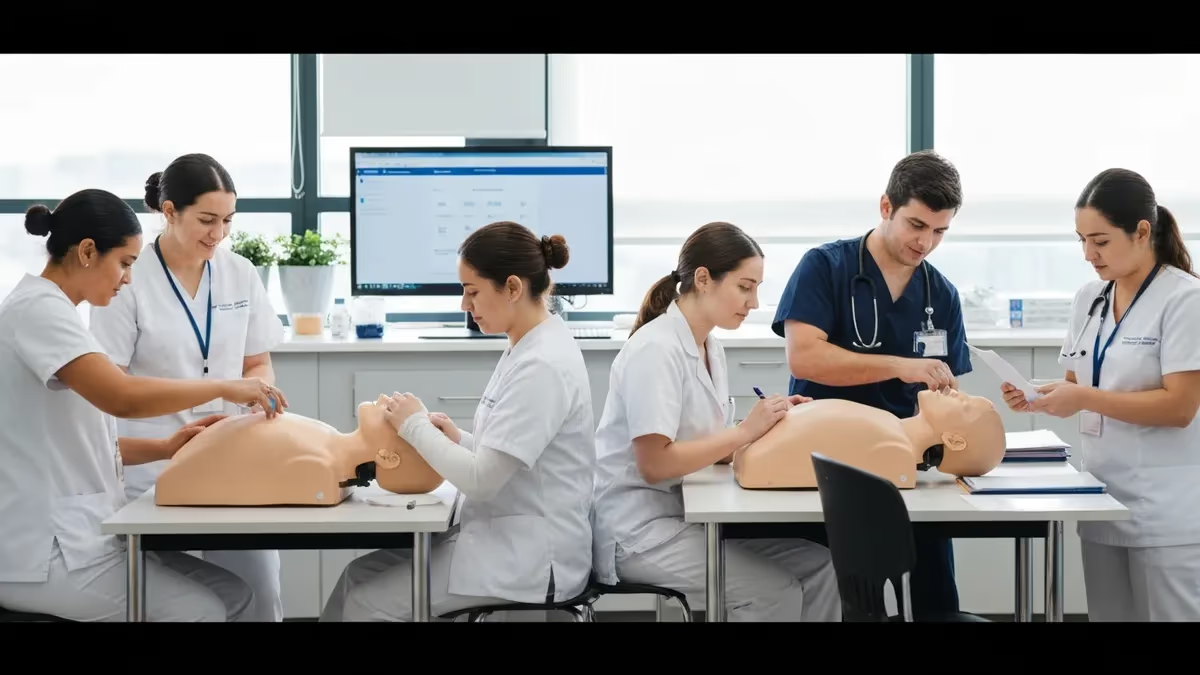

New Jersey Detailed Breakdown
North Jersey — covering Essex, Hudson, Bergen, Passaic, and Union counties — is the most competitive CNA job market in the state, and for good reason: proximity to New York City. Facilities in Newark, Jersey City, Paterson, and Elizabeth offer the highest NJ-based wages, and many CNAs commute across the Hudson River to NYC hospitals for even higher pay. Major training programs include Essex County Vocational-Technical Schools and Hudson County Schools of Technology, both offering NJ DOH–approved CNA courses at low cost to county residents. Top employers in this corridor include RWJBarnabas Health (Newark Beth Israel Medical Center), Hackensack Meridian Health, and Clara Maass Medical Center. Free CNA classes are available through NJ WorkFirst and Workforce Development programs for income-eligible applicants in Essex and Hudson counties.

New Jersey Essential Checklist
- ✓Be at least 16 years old (18 required for most NJ employer positions)
- ✓Provide valid government-issued photo ID
- ✓Complete CHRI fingerprint background check (NJ State Police + FBI)
- ✓Obtain negative TB test within past 12 months
- ✓Pass a physical examination by a licensed physician
- ✓Obtain current CPR/BLS certification (American Heart Association or Red Cross)
- ✓Complete required immunizations (Hep B, MMR, Varicella, seasonal flu)
- ✓Enroll in and complete a NJ DOH–approved 90-hour CNA training program
- ✓Complete both classroom/lab hours and supervised clinical hours
- ✓Program submits completion to Prometric for exam authorization
- ✓Register with Prometric and schedule both written and skills exam
- ✓Pass written knowledge exam (70 questions, 70% minimum to pass)
- ✓Pass clinical skills evaluation (5 randomly selected skills)
- ✓Pay Prometric exam fee
- ✓Wait for NJ DOH Nurse Aide Registry listing (2–4 weeks after passing)
- ✓Complete 12 hours of in-service training per year for certification renewal
New Jersey Advantages and Disadvantages
- +Proximity to NYC offers the highest CNA wages on the East Coast via commute
- +NJ/NY reciprocity is straightforward — no re-testing required for NY endorsement
- +Major health systems (RWJBarnabas, Hackensack Meridian) offer union wages and pension
- +90-hour training requirement is achievable in 4–6 weeks full-time
- +Dense healthcare market — every county has multiple hospitals and SNFs
- +Strong NJ WorkFirst program provides free CNA training for income-eligible residents
- +Shore region retirement communities create year-round demand, especially Ocean County
- +NJ DOH registry lookup is online and instant for employment verification
- −High cost of living — NJ ranks among the most expensive states for housing
- −NYC commute adds daily transit costs ($10–$20/day via PATH or NJ Transit)
- −NYC income tax applies to NJ residents working in New York
- −CHRI background check can take 2–6 weeks, delaying employment start
- −NJ Board of Nursing is separate from NJ DOH registry — CNAs are not BON-licensed
- −Urban SNFs in Newark and Camden can have challenging work environments
- −NJ property taxes are the highest in the nation, affecting overall cost of living
- −Traffic congestion on major corridors (I-95, Route 1) can extend commute times
Pros and Cons at a Glance
| Pros | Cons |
|---|---|
| Proximity to NYC offers the highest CNA wages on the East Coast via commute | High cost of living — NJ ranks among the most expensive states for housing |
| NJ/NY reciprocity is straightforward — no re-testing required for NY endorsement | NYC income tax applies to NJ residents working in New York |
| Major health systems (RWJBarnabas, Hackensack Meridian) offer union wages and pension | NJ Board of Nursing is separate from NJ DOH registry — CNAs are not BON-licensed |
| Dense healthcare market — every county has multiple hospitals and SNFs | Urban SNFs in Newark and Camden can have challenging work environments |
| Strong NJ WorkFirst program provides free CNA training for income-eligible residents | NJ property taxes are the highest in the nation, affecting overall cost of living |

Why New Jersey Is a Strategic State for CNA Certification
New Jersey's greatest asset for certified nursing assistants is geographic: no other state puts CNAs within a 30-minute commute of the New York City hospital market. NYC's 1199SEIU union represents over 400,000 healthcare workers and negotiates CNA wages at major hospital systems that far exceed what NJ facilities offer. For a CNA career focused on maximum earning potential, NJ certification is effectively a dual-market credential — you can work locally or tap into the nation's highest-paying urban healthcare labor market.
The NJ DOH Nurse Aide Registry is distinct from the NJ Board of Nursing, which a source of confusion for many new CNAs. CNAs in New Jersey are not licensed by the Board of Nursing (which handles RN and LPN licensure) — they are registered with the NJ Department of Health. Your registry status is verified by employers through the NJ DOH online lookup tool, and it is this registry listing — not a Board of Nursing license — that authorizes CNA practice in NJ facilities.
The CHRI fingerprint check is a New Jersey-specific requirement that distinguishes the state from others. New Jersey law requires all employees of licensed long-term care facilities to complete a Criminal History Record Information check processed through the NJ State Police and the FBI. The check must be completed before you can work with patients, even if you are still waiting for your Prometric exam results. Employers typically initiate the CHRI check on your behalf upon hire or conditional offer. For working as a CNA in NJ, understanding this fingerprinting requirement and initiating it early can save 2–4 weeks of delay in your employment start date.
For those considering the CNA to RN pathway, New Jersey has an exceptionally strong network of community college nursing programs that grant priority or bonus points to applicants with active CNA certification and clinical work experience. Rutgers University, Rowan College at Burlington County, and Middlesex County College all offer RN programs with articulation agreements for working CNAs.
For a fuller set of questions on this topic, see our free cna credential practice exams resource.
New Jersey Essential Checklist
- ✓NJ DOH Nurse Aide Registry number confirms active certification
- ✓Prometric exam pass required — 70% written, all 5 skills components
- ✓CHRI background check cleared before patient contact
- ✓Active employment: minimum hours required to maintain registry status
- ✓12 hours in-service training per year (24 hours per 2-year renewal cycle)
- ✓CPR/BLS certification current throughout employment
Related CNA Resources
About the Author

Registered Nurse & Healthcare Educator
Johns Hopkins University School of NursingDr. Sarah Mitchell is a board-certified registered nurse with over 15 years of clinical and academic experience. She completed her PhD in Nursing Science at Johns Hopkins University and has taught NCLEX preparation and clinical skills courses for nursing students across the United States. Her research focuses on evidence-based exam preparation strategies for healthcare certification candidates.
Join the Discussion
Connect with other students preparing for this exam. Share tips, ask questions, and get advice from people who have been there.
View discussion (8 replies)