
CNA to RN: How to Transition From Nursing Assistant to Registered Nurse 2026
🏆 Get ready for your CNA to RN: How to Transition From certification. Practice questions with step-by-step answer explanations and instant scoring.
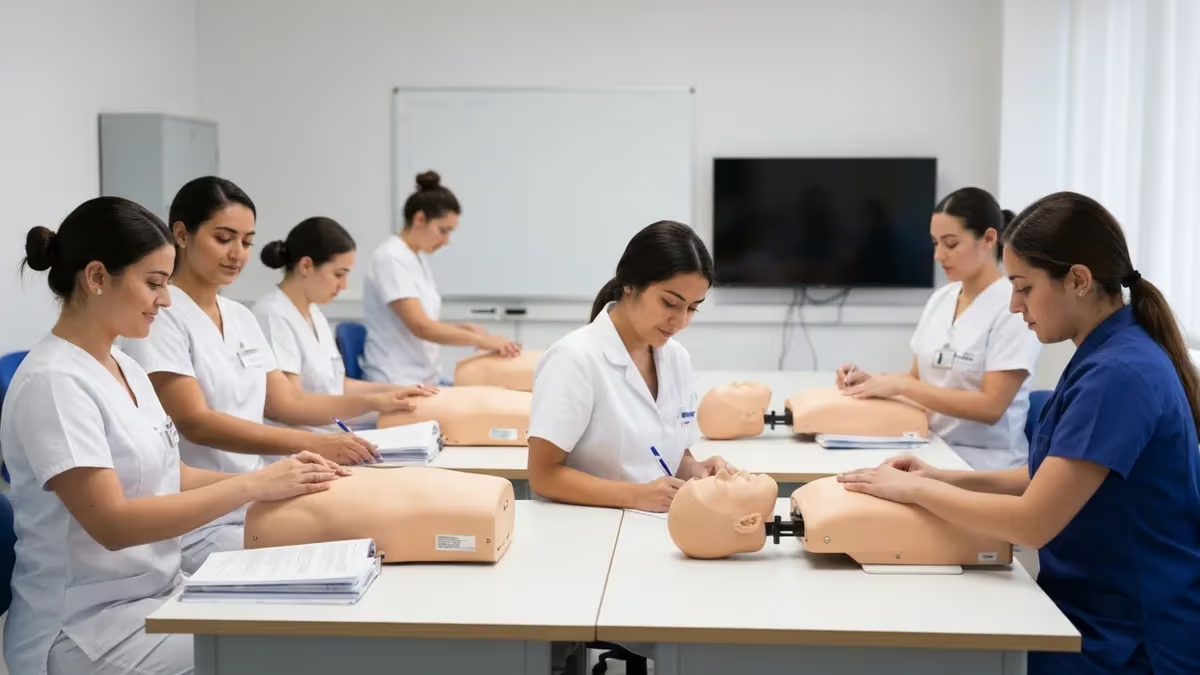
Making the jump from CNA to RN is one of the smartest career moves in healthcare right now. You already know what patient care looks like up close — the bed changes, the vital signs, the late-night calls. That hands-on experience gives you a real edge when you enter nursing school. And the payoff? RNs earn roughly three times what CNAs make, with far more room to specialize. Practice with the free CNA practice test on PracticeTestGeeks (3,000+ questions with answer explanations).
If you've been searching for cna jobs near me, you've probably noticed the demand is massive. Hospitals, clinics, and long-term care facilities are hiring everywhere. But the demand for registered nurses is even bigger. That gap — between where you are and where you could be — is exactly what this guide covers. We'll walk through the education paths, the costs, the timeline, and what you'll actually need to get accepted into a program.
Before you start filling out applications, it helps to understand what cna classes near me can teach you versus what nursing school requires. Some CNA training overlaps with RN prerequisites. Others don't. You might qualify for bridge programs that cut your timeline in half. Whether you're working full-time or studying nights, there's a realistic path from CNA to RN that fits your situation.
CNA: upcoming dates and official changes
- Aug 1, 2026: Connecticut (Prometric) implements new exam pricing: $48 for written only, $48 for oral only, $125 for bundled written and clinical skills, effective August 1, 2026.[4]
- Jul 1, 2026: Idaho (Prometric) raises CNA exam fees to $34 each for written and oral exams, plus test site fees, effective July 1, 2026.[5]
- Passing score (written or oral): Set per state; no national percentage published.[1]
- Retake policy: Minimum 3 attempts required; aides must be told which areas they failed before each retake.[1]
- Validity: 2 years from issuance in most states.[2]
- Renewal: State-specific; typically 2-year cycles with continuing education requirements (12–24 hours per year) and paid-work requirements.[3]
All verified CNA facts and sources
Numbers in brackets link to the official sources listed under Sources & last verified. Dates that have passed are removed automatically.
Free CNA Study Tools
Interactive CNA resources on PracticeTestGeeks, free to start:
- CNA practice test — 3,000+ questions with instant scoring and answer explanations
- CNA flashcards — review key terms and concepts card by card
- CNA study guide — topic-by-topic overview of what the exam covers
- CNA cheat sheet — one-page printable summary for last-minute review

Finding affordable cna classes near me is usually the first step people take. Community colleges, vocational schools, and even some hospitals offer CNA certification programs that run four to twelve weeks. Costs range from free (through Medicaid-funded programs or employer sponsorship) to around $2,000 at private schools. The trick is picking a program that's state-approved so your certification actually transfers.
Once you're certified, cna jobs open up fast. Most new CNAs find work within weeks. Nursing homes hire the most, but hospitals and home health agencies also recruit heavily. Some employers even offer tuition reimbursement — meaning they'll help pay for your RN education while you work. It's worth asking during every interview, because that benefit alone can save you $10,000 or more.
Your CNA experience also counts in ways you might not expect. Nursing school admissions committees like seeing applicants who've already worked in clinical settings. You won't be the student who faints during their first blood draw. That practical knowledge — understanding call lights, patient transfers, infection control — it's a legitimate advantage over applicants who've only studied from textbooks. Some schools even weight CNA experience in their admissions scoring rubrics, giving you extra points during competitive selection rounds.
Several cna jobs offer enough flexibility that you can attend school simultaneously. Travel CNA positions, for example, often pay higher rates and come with housing stipends — money you can funnel directly toward tuition. But you'll need a solid plan. The most common routes from CNA to RN include ADN programs (Associate Degree in Nursing), BSN programs (Bachelor of Science in Nursing), and LPN-to-RN bridge programs if you've already taken that middle step.
ADN programs take about two years and are offered at most community colleges. They're the fastest path to sitting for the NCLEX-RN exam. BSN programs take four years but open doors to higher-paying positions and leadership roles. Some cna programs feed directly into ADN tracks through articulation agreements — ask your local community college about these.
The cna salary difference between ADN and BSN nurses isn't huge at the entry level, but it compounds over a career. Over twenty years, BSN nurses consistently out-earn their ADN counterparts by $200,000 or more — largely because they qualify for leadership, education, and specialty roles that require a bachelor's degree.
Bridge programs deserve special attention. CNA-to-ADN and LPN-to-BSN programs give you credit for prior clinical experience. You'll skip some foundational courses and start further along in the curriculum. These programs typically shave six months to a year off your timeline. They're competitive, though. Expect to need a strong GPA, clean background check, and current CNA certification in good standing. Check with your state board of nursing for a list of approved bridge programs — availability varies significantly by region, with more options in states facing critical nursing shortages.
CNA to RN Education Paths Compared
The Associate Degree in Nursing is the fastest traditional route. Offered at community colleges, it costs $6,000–$20,000 total. You'll study pharmacology, med-surg nursing, pediatrics, and mental health. After graduating, you sit for the NCLEX-RN. Many hospitals hire ADN nurses immediately, though some prefer BSN candidates for specialty units.
Let's talk money. The wages for a cna vary widely by state and setting. In Mississippi, you might earn $13 an hour. In California, $22 or more. Nursing homes generally pay less than hospitals, and night shifts usually come with a differential of $1–$3 extra per hour. Home health sits somewhere in the middle. It's decent work, but you're not building wealth on CNA wages alone.
That's exactly why the RN transition matters so much. Registered nurses earn a median of $86,070 per year nationally. In high-demand states like California, Massachusetts, and Oregon, that number climbs past $100,000. Even in lower-cost states, RNs make enough to buy homes, save for retirement, and support families comfortably. The jump from $38,000 to $86,000 isn't gradual — it happens the moment you pass the NCLEX and land your first RN position. Specialty units like ICU, labor and delivery, and emergency departments pay even more, with many RNs clearing six figures within their first five years.
While you're still working as a CNA, look into cna classes that count as nursing prerequisites. Anatomy and physiology, microbiology, and intro to psychology are required by nearly every RN program. Knocking these out at a community college — often for under $500 per course — means you'll be ready to apply when the next cohort opens. Some students complete all prerequisites in two semesters while working full-time. Evening and weekend class sections are available at most community colleges, specifically designed for working adults balancing jobs and education.
Your cna training already covers fundamentals like hand hygiene, patient positioning, and vital sign measurement. But nursing school goes deeper — way deeper. You'll learn to interpret lab values, administer IV medications, insert catheters, and assess patient conditions that require immediate intervention. The clinical rotations alone run 400-800 hours depending on your program.
Becoming a cert cna first is strategic for another reason: you understand the healthcare hierarchy. You've worked alongside nurses, seen how they delegate, watched how they handle emergencies. That exposure makes classroom concepts click faster. When your professor explains prioritization using the ABCs (airway, breathing, circulation), you'll remember the patient who actually couldn't breathe — and the nurse who knew exactly what to do.
Many cna programs now include modules on transitioning to higher roles. Some four-week accelerated programs even partner with local nursing schools for guaranteed interview slots. If you haven't started your CNA certification yet, choose a program that explicitly supports career advancement. Ask about articulation agreements, employer partnerships, and alumni success rates in nursing school admissions. The right CNA program sets you up for a smoother transition — the wrong one just delays your progress.
Pros and Cons of Transitioning from CNA to RN
- +Salary jumps from ~$38K to ~$86K annually
- +Greater autonomy in clinical decision-making
- +More career specialization options (ICU, ER, OR, NICU)
- +CNA experience gives you a clinical advantage in nursing school
- +Many employers offer tuition reimbursement for CNA-to-RN students
- +Job security — RN demand is projected to grow through 2034
- −Nursing school requires 2-4 years of full-time study
- −Tuition costs range from $6,000 to $120,000+
- −Balancing work as a CNA while attending school is exhausting
- −NCLEX-RN success is not guaranteed — check the official NCSBN page for current pass-rate figures
- −Clinical rotations may conflict with your current work schedule
- −Higher responsibility means higher stress and liability
Pros and Cons at a Glance
| Pros | Cons |
|---|---|
| Greater autonomy in clinical decision-making | Balancing work as a CNA while attending school is exhausting |
| More career specialization options (ICU, ER, OR, NICU) | Clinical rotations may conflict with your current work schedule |
| CNA experience gives you a clinical advantage in nursing school | Higher responsibility means higher stress and liability |
So what is a cna exactly, and how does the role compare to what you'll do as an RN? A Certified Nursing Assistant provides basic patient care — bathing, feeding, repositioning, recording vital signs, and reporting changes to the nursing staff. You're the eyes and ears on the floor. But you don't diagnose, prescribe, or make treatment decisions. That's the RN's job.
Registered nurses assess patients, develop care plans, administer medications (including IV drugs), coordinate with physicians, and educate patients about their conditions. The scope is dramatically wider. You'll also document everything in electronic health records, participate in interdisciplinary rounds, and sometimes supervise CNAs — the very role you're transitioning from.
Taking a cna practice test before your certification exam is non-negotiable. State CNA exams include both a written knowledge test and a clinical skills evaluation. You'll demonstrate procedures like handwashing, blood pressure measurement, and patient transfers in front of an evaluator. Practice tests help you identify weak spots before exam day. Most are available free online, and this site has dozens organized by topic. Start with anatomy and physiology — it's the foundation of every CNA exam and nursing school prerequisite.
CNA to RN Transition Checklist
- ✓Obtain your CNA certification (state-approved program + exam)
- ✓Work as a CNA for at least 6-12 months to build clinical experience
- ✓Complete nursing prerequisites: anatomy, physiology, microbiology, English
- ✓Research ADN vs BSN programs in your area — compare cost, length, and NCLEX pass rates
- ✓Apply to nursing programs (most have spring and fall cohorts)
- ✓Apply for financial aid: FAFSA, scholarships, and employer tuition reimbursement
- ✓Maintain your CNA license while in school — many students work part-time as CNAs
- ✓Complete all clinical rotations (400-800 hours depending on program)
- ✓Graduate and apply to sit for the NCLEX-RN exam
- ✓Pass the NCLEX-RN and apply for your state RN license
The pay rate for a cna shouldn't discourage you — it should motivate you. Think of it as temporary. Every shift you work builds the clinical hours that nursing schools want to see. And if your employer offers tuition reimbursement, you're literally getting paid to prepare for a career that doubles your income. Some hospitals require a two-year work commitment after you finish your degree, but that's a fair trade for $10,000-$20,000 in free education.
Look for free cna classes near me if you haven't gotten certified yet. Red Cross chapters, community health centers, and some nursing homes offer no-cost CNA training in exchange for a work commitment. Medicaid waiver programs in several states also cover the full cost of CNA certification. Don't pay $2,000 when free options exist — that money is better saved for nursing school textbooks.
The cna salary varies by specialty too. Restorative CNAs, who help patients regain mobility and independence after illness or surgery, often earn $2-$4 more per hour than standard CNAs. Hospice CNAs and hospital CNAs also tend to earn more than those in nursing homes. Choosing a higher-paying CNA specialty while you study can make a real financial difference over two to four years of school. Every extra dollar per hour adds up to thousands over a multi-year nursing program.
Travel cna jobs are booming. Staffing agencies place CNAs in short-term contracts (typically 8-13 weeks) at facilities across the country. Pay rates run $18–$30 per hour plus housing stipends, meal allowances, and travel reimbursement. It's a great way to earn more money, explore different healthcare settings, and figure out what kind of nursing unit you eventually want to work on as an RN. Many travel CNAs save enough in one year to cover their entire first year of nursing school tuition.
If you're still searching for cna courses near me, start with your state's nursing board website. Every state maintains a list of approved CNA training programs. Community colleges are the most affordable option — many charge under $1,000 for the entire program. Vocational schools cost more but sometimes offer faster timelines. Online hybrid programs let you complete didactic coursework from home and only come in for clinical skills practice.
Don't overlook hospital-based CNA programs either. Some health systems — particularly those in rural areas facing staffing shortages — train CNAs for free and guarantee employment upon completion. You'll get your certification, a job, and often access to tuition benefits for further education. It's the closest thing to a free ride into healthcare, and surprisingly few people know these programs exist. Rural facilities in particular are desperate for staff and willing to invest heavily in training new CNAs who commit to staying.
Most states require CNAs to renew their certification every two years. You'll need proof of employment (typically 8 hours of paid work) and completion of continuing education hours. If your certification lapses, you may have to retake the entire CNA exam — costing time and money. Keep your certification current even while enrolled in nursing school. It protects your ability to work part-time and strengthens your RN license application.
Landing a cna job right now is easier than it's been in years. The Bureau of Labor Statistics projects 73,000 new CNA positions annually through 2032. Nursing homes account for the largest share, but hospitals, outpatient clinics, and home health agencies are all competing for qualified CNAs. Job boards like Indeed and state workforce portals list hundreds of openings daily in most metro areas.
If cost is a barrier, search for free cna training near me through your state's workforce development office. Many states fund healthcare training through federal grants — especially for underserved communities, veterans, and displaced workers. These programs typically last 4-8 weeks, include clinical hours, and even provide scrubs and textbooks at no cost. Completing one of these programs is the fastest way to enter healthcare with zero upfront investment.
Online options have expanded too. Some states now accept hybrid CNA training where you complete classroom hours through virtual learning and only attend in-person sessions for skills labs and clinical rotations. This format works well for parents, second-career changers, and anyone who can't attend a traditional program during business hours. Just verify that your state board recognizes the program before enrolling. Accreditation matters — unrecognized programs won't qualify you for the state certification exam, and you'll have wasted both time and money.
CNA Practice Test Questions
Prepare for the CNA - Certified Nursing Assistant exam with our free practice test modules. Each quiz covers key topics to help you pass on your first try.
CNA Activities of Daily Living
CNA Exam Questions covering Activities of Daily Living. Master CNA Test concepts for certification prep.
CNA Aging Process
Free CNA Practice Test featuring Aging Process. Improve your CNA Exam score with mock test prep.
CNA Anatomy and Physiology Basics
CNA Mock Exam on Anatomy and Physiology Basics. CNA Study Guide questions to pass on your first try.
CNA Assisting with Daily Living
CNA Test Prep for Assisting with Daily Living. Practice CNA Quiz questions and boost your score.
CNA Assisting with Range of Motion Exercises
CNA Questions and Answers on Assisting with Range of Motion Exercises. Free CNA practice for exam readiness.
CNA Basic Human Anatomy and Age-Related Ch...
CNA Mock Test covering Basic Human Anatomy and Age-Related Changes. Online CNA Test practice with instant feedback.
CNA Basic Nursing Skills
Free CNA Quiz on Basic Nursing Skills. CNA Exam prep questions with detailed explanations.
CNA Basic Nursing Skills 10
CNA Practice Questions for Basic Nursing Skills 10. Build confidence for your CNA certification exam.
CNA Basic Nursing Skills 11
CNA Test Online for Basic Nursing Skills 11. Free practice with instant results and feedback.
CNA Basic Nursing Skills 1
CNA Study Material on Basic Nursing Skills 1. Prepare effectively with real exam-style questions.
CNA Basic Nursing Skills 12
Free CNA Test covering Basic Nursing Skills 12. Practice and track your CNA exam readiness.
CNA Basic Nursing Skills 13
CNA Exam Questions covering Basic Nursing Skills 13. Master CNA Test concepts for certification prep.
CNA Basic Nursing Skills 14
Free CNA Practice Test featuring Basic Nursing Skills 14. Improve your CNA Exam score with mock test prep.
CNA Basic Nursing Skills 15
CNA Mock Exam on Basic Nursing Skills 15. CNA Study Guide questions to pass on your first try.
CNA Basic Nursing Skills 16
CNA Test Prep for Basic Nursing Skills 16. Practice CNA Quiz questions and boost your score.
CNA Basic Nursing Skills 17
CNA Questions and Answers on Basic Nursing Skills 17. Free CNA practice for exam readiness.
CNA Basic Nursing Skills 18
CNA Mock Test covering Basic Nursing Skills 18. Online CNA Test practice with instant feedback.
CNA Basic Nursing Skills 19
Free CNA Quiz on Basic Nursing Skills 19. CNA Exam prep questions with detailed explanations.
CNA Basic Nursing Skills 20
CNA Practice Questions for Basic Nursing Skills 20. Build confidence for your CNA certification exam.
CNA Basic Nursing Skills 21
CNA Test Online for Basic Nursing Skills 21. Free practice with instant results and feedback.
CNA Basic Nursing Skills 2
CNA Study Material on Basic Nursing Skills 2. Prepare effectively with real exam-style questions.
CNA Basic Nursing Skills 3
Free CNA Test covering Basic Nursing Skills 3. Practice and track your CNA exam readiness.
CNA Basic Nursing Skills 4
CNA Exam Questions covering Basic Nursing Skills 4. Master CNA Test concepts for certification prep.
CNA Basic Nursing Skills 5
Free CNA Practice Test featuring Basic Nursing Skills 5. Improve your CNA Exam score with mock test prep.
CNA Basic Nursing Skills 6
CNA Mock Exam on Basic Nursing Skills 6. CNA Study Guide questions to pass on your first try.
CNA Basic Nursing Skills 7
CNA Test Prep for Basic Nursing Skills 7. Practice CNA Quiz questions and boost your score.
CNA Basic Nursing Skills 8
CNA Questions and Answers on Basic Nursing Skills 8. Free CNA practice for exam readiness.
CNA Basic Nursing Skills 9
CNA Mock Test covering Basic Nursing Skills 9. Online CNA Test practice with instant feedback.
CNA Basic Restorative Services
Free CNA Quiz on Basic Restorative Services. CNA Exam prep questions with detailed explanations.
CNA Basic Restorative Services 1
CNA Practice Questions for Basic Restorative Services 1. Build confidence for your CNA certification exam.
CNA Bathing and Dressing
CNA Test Online for Bathing and Dressing. Free practice with instant results and feedback.
CNA Body Mechanics
CNA Study Material on Body Mechanics. Prepare effectively with real exam-style questions.
CNA Career Advancement and Opportunities
Free CNA Test covering Career Advancement and Opportunities. Practice and track your CNA exam readiness.
CNA Career Opportunities and Benefits
CNA Exam Questions covering Career Opportunities and Benefits. Master CNA Test concepts for certification prep.
CNA Care for Residents with Cognitive Impa...
Free CNA Practice Test featuring Care for Residents with Cognitive Impairment. Improve your CNA Exam score with mock test prep.
CNA Care of Cognitively Impaired Residents
CNA Mock Exam on Care of Cognitively Impaired Residents. CNA Study Guide questions to pass on your first try.
CNA Care of Cognitively Impaired Residents 1
CNA Test Prep for Care of Cognitively Impaired Residents 1. Practice CNA Quiz questions and boost your score.
CNA Care Of Cognitively Impaired Residents 4
CNA Questions and Answers on Care Of Cognitively Impaired Residents 4. Free CNA practice for exam readiness.
CNA Common Medical Terms and Abbreviations
CNA Mock Test covering Common Medical Terms and Abbreviations. Online CNA Test practice with instant feedback.
CNA Communication and Interpersonal Skills
Free CNA Quiz on Communication and Interpersonal Skills. CNA Exam prep questions with detailed explanations.
CNA Communication and Interpersonal Skills 1
CNA Practice Questions for Communication and Interpersonal Skills 1. Build confidence for your CNA certification exam.
CNA Communication And Interpersonal Skills 4
CNA Test Online for Communication And Interpersonal Skills 4. Free practice with instant results and feedback.
CNA Eligibility and Qualifications
CNA Study Material on Eligibility and Qualifications. Prepare effectively with real exam-style questions.
CNA Emergency Procedure
Free CNA Test covering Emergency Procedure. Practice and track your CNA exam readiness.
CNA Ethics and Professionalism
CNA Exam Questions covering Ethics and Professionalism. Master CNA Test concepts for certification prep.
CNA Exam Structure and Content
Free CNA Practice Test featuring Exam Structure and Content. Improve your CNA Exam score with mock test prep.
CNA Feeding and Hydration
CNA Mock Exam on Feeding and Hydration. CNA Study Guide questions to pass on your first try.
CNA Infection Control
CNA Test Prep for Infection Control. Practice CNA Quiz questions and boost your score.
CNA Infection Control and Safety
CNA Questions and Answers on Infection Control and Safety. Free CNA practice for exam readiness.
CNA Isolation Precautions
CNA Mock Test covering Isolation Precautions. Online CNA Test practice with instant feedback.
CNA Legal & Ethical Behaviours
Free CNA Quiz on Legal & Ethical Behaviours. CNA Exam prep questions with detailed explanations.
CNA Legal & Ethical Behaviours 1
CNA Practice Questions for Legal & Ethical Behaviours 1. Build confidence for your CNA certification exam.
CNA Legal & Ethical Behaviours 4
CNA Test Online for Legal & Ethical Behaviours 4. Free practice with instant results and feedback.
CNA Mental Health and Social Services Needs
CNA Study Material on Mental Health and Social Services Needs. Prepare effectively with real exam-style questions.
CNA Mental Health and Social Services Needs 1
Free CNA Test covering Mental Health and Social Services Needs 1. Practice and track your CNA exam readiness.
CNA Mental Health And Social Services Needs 4
CNA Exam Questions covering Mental Health And Social Services Needs 4. Master CNA Test concepts for certification prep.
CNA Nutrition and Hydration Management
Free CNA Practice Test featuring Nutrition and Hydration Management. Improve your CNA Exam score with mock test prep.
CNA Patient Care Procedure
CNA Mock Exam on Patient Care Procedure. CNA Study Guide questions to pass on your first try.
CNA Personal Care Skills
CNA Test Prep for Personal Care Skills. Practice CNA Quiz questions and boost your score.
CNA Personal Care Skills 1
CNA Questions and Answers on Personal Care Skills 1. Free CNA practice for exam readiness.
CNA Personal Care Skills 4
CNA Mock Test covering Personal Care Skills 4. Online CNA Test practice with instant feedback.
CNA Personal Care Skills 5
Free CNA Quiz on Personal Care Skills 5. CNA Exam prep questions with detailed explanations.
CNA Personal Hygiene and Grooming
CNA Practice Questions for Personal Hygiene and Grooming. Build confidence for your CNA certification exam.
CNA Practice Test - Basic Nursing Skills #2
CNA Test Online for Practice Test - Basic Nursing Skills #2. Free practice with instant results and feedback.
CNA Practice Test - Basic Nursing Skills #2 1
CNA Study Material on Practice Test - Basic Nursing Skills #2 1. Prepare effectively with real exam-style questions.
CNA Preventing Patient Falls and Injuries
Free CNA Test covering Preventing Patient Falls and Injuries. Practice and track your CNA exam readiness.
CNA Promoting Resident Independence and Ch...
CNA Exam Questions covering Promoting Resident Independence and Choice. Master CNA Test concepts for certification prep.
CNA Proper Hand Hygiene and PPE Usage
Free CNA Practice Test featuring Proper Hand Hygiene and PPE Usage. Improve your CNA Exam score with mock test prep.
CNA Resident Rights and Communication
CNA Mock Exam on Resident Rights and Communication. CNA Study Guide questions to pass on your first try.
CNA Resident’s Rights
CNA Test Prep for Resident’s Rights. Practice CNA Quiz questions and boost your score.
CNA Resident's Rights 1
CNA Questions and Answers on Resident's Rights 1. Free CNA practice for exam readiness.
CNA Resident's Rights 4
CNA Mock Test covering Resident's Rights 4. Online CNA Test practice with instant feedback.
CNA Roles and Responsibilities
Free CNA Quiz on Roles and Responsibilities. CNA Exam prep questions with detailed explanations.
CNA Safety and Emergency Procedures
CNA Practice Questions for Safety and Emergency Procedures. Build confidence for your CNA certification exam.
CNA Safety and Emergency Procedures 1
CNA Test Online for Safety and Emergency Procedures 1. Free practice with instant results and feedback.
CNA Safety And Emergency Procedures 4
CNA Study Material on Safety And Emergency Procedures 4. Prepare effectively with real exam-style questions.
CNA Safety and Infection Control
Free CNA Test covering Safety and Infection Control. Practice and track your CNA exam readiness.
CNA Scope of Practice
CNA Exam Questions covering Scope of Practice. Master CNA Test concepts for certification prep.
CNA Skills and Competencies
Free CNA Practice Test featuring Skills and Competencies. Improve your CNA Exam score with mock test prep.
CNA Supporting Rehabilitation Activities
CNA Mock Exam on Supporting Rehabilitation Activities. CNA Study Guide questions to pass on your first try.
CNA The Nurse Aide's Role and Responsibili...
CNA Test Prep for The Nurse Aide's Role and Responsibilities. Practice CNA Quiz questions and boost your score.
CNA Time Management and Prioritization
CNA Questions and Answers on Time Management and Prioritization. Free CNA practice for exam readiness.
CNA Toileting and Elimination
CNA Mock Test covering Toileting and Elimination. Online CNA Test practice with instant feedback.
CNA Using Adaptive Devices
CNA Practice Questions for Using Adaptive Devices. Build confidence for your CNA certification exam.
Working as a cna on the job teaches you things textbooks can't. You learn how to read patients — not their charts, but their faces. You notice when someone's breathing changes before the monitor catches it. You understand that a confused patient pulling at their IV isn't being difficult; they're scared. These instincts, built shift after shift, make you a better nurse from day one.
For those considering cna classes online, know that most programs offer the didactic portion remotely. You'll study anatomy basics, infection control, communication skills, and legal/ethical responsibilities through video lectures and online quizzes. The clinical portion — usually 40-80 hours — must be completed in person at an approved facility. Some programs schedule clinicals on weekends, which is helpful if you're working during the week.
The path from CNA to RN isn't always linear. Some people take a year off between certification and nursing school. Others go straight through. Some detour through LPN programs first. There's no single right way. What matters is that you keep moving forward. Every prerequisite you complete, every shift you work, every patient you care for — it all counts toward the career you're building. The nursing profession rewards persistence, and your CNA background proves you already have it. You've done the hard part — now finish what you started and earn the title you deserve.
Sample CNA Practice Questions
Try these questions from our free CNA practice tests. The correct answer and an explanation follow each question.
The nurse aide is going to help the client walk from the bed to a chair. What should the nurse aide put on the client’s feet?
- A. Nothing
- B. Cloth-soled slippers
- C. Rubber-soled slippers or shoes
- D. Socks or stockings only
Answer: C. Rubber-soled slippers or shoes
When helping a client walk, it is crucial to ensure their footwear provides good traction and stability to prevent falls. Rubber-soled slippers or shoes offer the best grip on various floor surfaces, reducing the risk of slipping. Cloth-soled slippers or socks alone do not provide adequate friction and can be dangerous.
A resident tells a nurse aide, 'My daughter took all the money from my wallet last week and won't give it back.' The nurse aide should:
- A. Tell the resident this is a family matter and the facility cannot get involved
- B. Advise the resident to talk to their daughter directly and resolve it privately
- C. Report the disclosure to the charge nurse immediately, as this may be financial exploitation
- D. Ask other staff whether they have noticed money missing from the resident before reporting
Answer: C. Report the disclosure to the charge nurse immediately, as this may be financial exploitation
Taking a resident's money or property without permission is financial exploitation — a form of abuse. The nurse aide must report this disclosure immediately to the charge nurse. Family relationship does not exempt someone from abuse reporting requirements.
The occupant suffers injuries from a fall because a nurse's assistant forgot to lift the side rails of a bed. This is known as
- A. Abuse
- B. Neglect
- C. Incidental
- D. Accidental
Answer: B. Neglect
Neglect occurs when a caregiver fails to provide the necessary care, supervision, or services to maintain a resident's physical and mental health and safety. Forgetting to raise side rails, as ordered, is a failure to follow a safety protocol, directly leading to harm and thus constituting neglect. This is a breach of the caregiver's duty to ensure the resident's well-being.
A nursing assistant is helping a resident to walk. If the resident becomes faint and begins to fall, the assistant should
- A. Hold the resident up and continue walking
- B. Ease the resident to the floor and call for help
- C. Carry the resident back to bed and then go for help
- D. Hold the resident up and call for help
Answer: B. Ease the resident to the floor and call for help
If a resident begins to fall, the safest action is to ease them gently to the floor, controlling the fall as much as possible, to minimize injury to both the resident and the aide. Attempting to hold them up completely can result in injury to both parties due to the sudden shift in weight. Once safely on the floor, the aide should call for help and assess the resident for injuries before attempting to move them.
Take the full CNA practice test
Many readers pair this guide with the prometric cna to check their readiness before exam day.
Many readers pair this guide with the cna written exam practice test free to check their readiness before exam day.
Many readers pair this guide with the free cna practice test pdf to check their readiness before exam day.
CNA Questions and Answers
Sources & last verified
- Centers for Medicare & Medicaid Services — passing score, retake policy (official source). “The State shall establish the passing standard for the written or oral examination and for the skills demonstration.” Verified Oct 14, 2026.
- archive.regulations.delaware.gov — validity (official source). “CNA certification shall be effective for 2 years following the date of issue and shall expire 2 years following such date” Verified Oct 14, 2026.
- cdph.ca.gov — renewal (official source). “Certificates are renewed every two years, and the required training is 48 hours of in-service training or continuing education” Verified Oct 14, 2026.
- prometric.com — other (official source). “Effective August 1, 2026, the following exam pricing will be implemented” Verified Oct 14, 2026.
- prometric.com — other (official source). “Effective July 1, 2026, the following exam pricing will be implemented: $34 written, $34 oral, plus test site fees” Verified Oct 14, 2026.
How we verify: editorial & fact-checking policy. Report an error: contact us.

Restorative CNA: Duties, Training, Salary & How to Get Started

CNA Hospital Jobs Near Me: How to Find, Apply & Get Hired in 2026

Goodwill CNA Program: Free Classes, Costs, and How to Enroll

Hospice CNA: Duties, Salary, Per Diem Work & How to Get Started
4-Week CNA Program: Online Options, State Programs & How to Enroll
Sources & references
Prepared by the Practice Test Geeks editorial team using AI-assisted drafting; exam facts are checked against the official sources below. Editorial policy
- floridasnursing.gov — Eligibility, exam format · verified Oct 2026
- law.cornell.edu — Eligibility · verified Oct 2026
- law.cornell.edu — Test delivery · verified Oct 2026
- prometric.com — Exam information · verified Oct 2026