
Working as a CNA: Daily Duties, Challenges, and Rewards 2026
📝 Prepare for the Working as a CNA: Daily Duties, certification. Practice questions with answer explanations covering all exam domains.

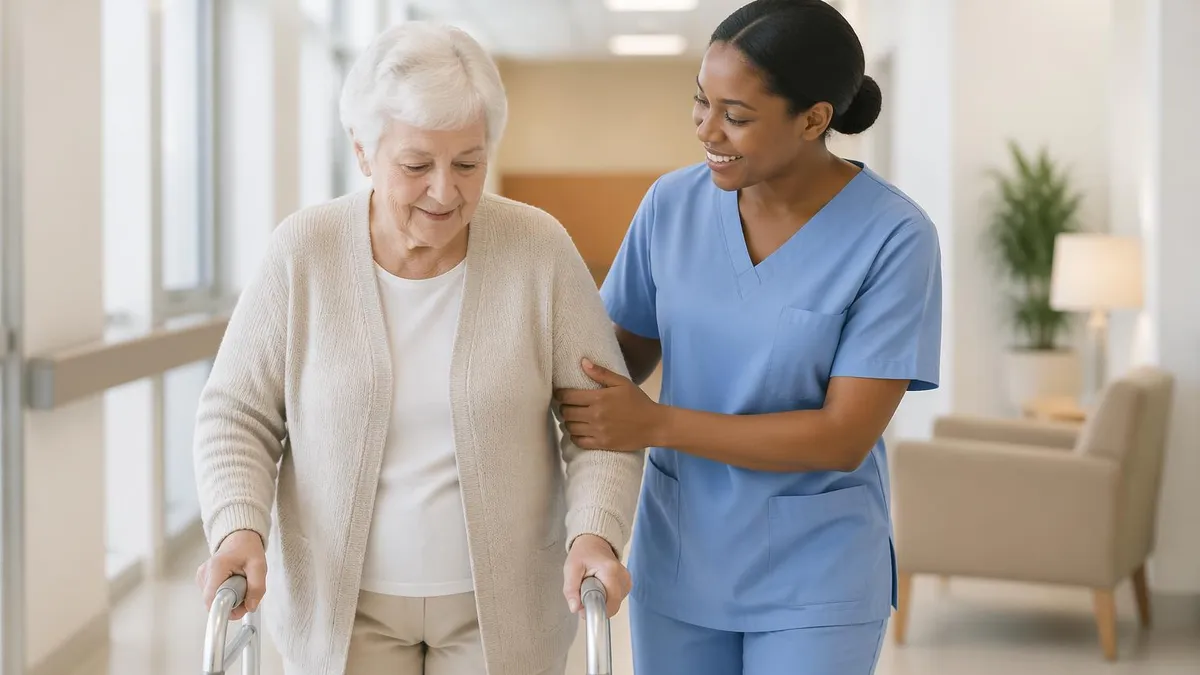
Working as a CNA puts you at the center of patient care — feeding, bathing, repositioning, charting vitals, and answering call lights before anyone else on the floor even notices. It's physical. It's emotional. And it starts before most people's alarm clocks go off. You'll spend 8 to 12 hours on your feet, and by the end of a shift, you'll know exactly how heavy a human body really is.
So what do you do as a CNA on a typical day? You check vital signs — blood pressure, pulse, temperature, oxygen levels — every two to four hours. You help residents eat breakfast, lunch, and dinner. You turn bedridden patients every couple of hours to prevent pressure ulcers. You record fluid intake and output. You change linens, empty bedpans, and respond to call lights within minutes, sometimes seconds. The documentation alone can eat thirty minutes of your shift if you're in a facility that still uses paper charting.
None of this is glamorous work. But here's what nobody tells you on career websites: the residents learn your name. They wait for your shift. A 92-year-old veteran who hasn't spoken all week will crack a joke just for you. That's the part training programs can't teach. If you want to become CNA certified, you should know that the real job looks nothing like the textbook version — it's harder, messier, and more meaningful than any bullet-point list can capture.
This guide breaks down the schedule, the money, the burnout, and the career paths that open up once you've got a CNA badge clipped to your scrubs. No sugarcoating. No filler. Just what the job actually looks like from the inside.
CNA: upcoming dates and official changes
- Aug 1, 2026: Connecticut (Prometric) implements new exam pricing: $48 for written only, $48 for oral only, $125 for bundled written and clinical skills, effective August 1, 2026.[5]
- Jul 1, 2026: Idaho (Prometric) raises CNA exam fees to $34 each for written and oral exams, plus test site fees, effective July 1, 2026.[6]
- Passing score (written or oral): Set per state; no national percentage published.[1]
- Retake policy: Minimum 3 attempts required; aides must be told which areas they failed before each retake.[1]
- Validity: 2 years from issuance in most states.[2]
- Renewal: State-specific; typically 2-year cycles with continuing education requirements (12–24 hours per year) and paid-work requirements.[3]
- Delivery (in-person): In-person written or oral exam plus in-person skills demonstration at approved test centers.[1]
- Eligibility (training): Minimum 75 clock hours approved training (federal requirement); at least 16 hours supervised practical training.[1]
- Score release: Days to weeks; varies by state and vendor (no national standard).[4]
Numbers in brackets link to the official sources listed under Sources & last verified. Dates that have passed are removed automatically.
CNA Exam at a Glance
| Item | Detail | Source · Verified |
|---|---|---|
| Passing score (written or oral) | Set per state; no national percentage published[1] | Centers for Medicare & Medicaid Services · Oct 14, 2026 |
| Retake policy | Minimum 3 attempts required; aides must be told which areas they failed before each retake[1] | Centers for Medicare & Medicaid Services · Oct 14, 2026 |
| Validity | 2 years from issuance in most states[2] | archive.regulations.delaware.gov · Oct 14, 2026 |
| Renewal | State-specific; typically 2-year cycles with continuing education requirements (12–24 hours per year) and paid-work requirements[3] | cdph.ca.gov · Oct 14, 2026 |
| Delivery (in-person) | In-person written or oral exam plus in-person skills demonstration at approved test centers[1] | Centers for Medicare & Medicaid Services · Oct 14, 2026 |
| Eligibility (training) | Minimum 75 clock hours approved training (federal requirement); at least 16 hours supervised practical training[1] | Centers for Medicare & Medicaid Services · Oct 14, 2026 |
| Score release | Days to weeks; varies by state and vendor (no national standard)[4] | floridasnursing.gov · Oct 14, 2026 |

Let's get specific about what do you do as a CNA beyond the basics everyone already knows. Morning shift starts with report — the outgoing CNA tells you which residents fell overnight, who refused medication, who's been agitated. Then you hit the floor. First round is wake-ups: turning on lights, helping residents sit up, getting them dressed. Some facilities expect you to have eight residents up, dressed, and in the dining room by 7:30 AM. That's less than ten minutes per person if you started at 6:00.
Chronic conditions dominate your caseload. Diabetes, congestive heart failure, COPD, dementia — these aren't exceptions, they're the norm. And how will chronic disease trends impact the CNA's professional role going forward? The answer is straightforward: as the population ages and chronic disease rates climb, CNAs are taking on monitoring tasks that used to belong exclusively to LPNs. Blood glucose checks, wound measurements, early detection of skin breakdown — you're doing more clinical observation than ever before, and facilities are starting to pay for that expanded scope in some states.
Afternoon shift flips the script. You're assisting with physical therapy exercises, walking residents in the hallways, and managing toileting schedules. Evening shift means dinner assistance, bedtime routines, and more repositioning. Night shift — 11 PM to 7 AM — is quieter but not easy. You're doing rounds every two hours, changing briefs, and watching for falls when confused residents try to get out of bed at 3 AM. Each shift has its own rhythm, and most CNAs develop a strong preference within the first month.
Is being a CNA worth it? That depends on what you're comparing it to. If you're looking at pure salary numbers — $16 to $19 an hour in most states — it won't impress anyone scrolling through tech job listings. But if you're comparing it to other entry-level healthcare positions that require zero college degree and less than three months of training? The CNA certification punches above its weight. You get clinical experience, patient contact hours, and a foot in the door at hospitals, nursing homes, and home health agencies.
The real value shows up later. Nursing schools want applicants with hands-on patient care experience, and CNA work delivers that by the truckload. You'll have stories for every interview question — "Tell me about a difficult patient" becomes easy when you've managed a combative dementia resident at 2 AM with no backup. That experience is career currency, and it doesn't expire. Many RNs, PAs, and even physicians started as CNAs, and they'll tell you the same thing: nothing else teaches you what patients actually need the way bedside care does.
To become CNA certified, you need a state-approved training program — usually 75 to 180 hours depending on your state — plus a passing score on the competency exam. Most programs cost between $500 and $2,000, though community colleges, Red Cross chapters, and some nursing homes offer free or employer-sponsored training. The barrier to entry is genuinely low, which is both a strength and a weakness of the profession.
CNA Work Settings Compared
Long-term care facilities employ the most CNAs in the country. You'll work with the same residents for months or years, building real relationships. Typical ratio: 8 to 12 residents per CNA on day shift, 15 to 20 on nights. The pace is steady but relentless — routine care, meal assistance, toileting, and repositioning on a two-hour cycle. Pay tends to be lower than hospitals but schedules are more predictable. Many facilities offer tuition reimbursement for nursing school.
The CNA career outlook through 2034 shows steady demand — not explosive growth, but consistent need. The Bureau of Labor Statistics projects about 73,000 openings annually, mostly from turnover rather than new positions. Here's the thing: turnover in this field runs above 50% in some facilities, which means there are always jobs available. For your CNA career specifically, that turnover creates opportunity if you stick around. Facilities reward retention with raises, preferred scheduling, and first pick on overtime shifts.
What matters more than national projections is local demand. States with large elderly populations — Florida, Arizona, Pennsylvania, Ohio — can't fill CNA positions fast enough. Travel CNA assignments have emerged as a niche, paying $22 to $30 per hour plus housing stipends for 8-to-13-week contracts in high-need facilities. It's not the same money as travel nursing, but for a certification you can earn in eight weeks, the return on investment is hard to beat.
Advancement paths beyond the CNA role include medication aide (additional 40-hour course), restorative aide (specialized rehab focus), and charge aide (supervisory role). Each step adds $1 to $3 per hour. The bigger leap — LPN or RN — requires going back to school, but your CNA experience makes you a stronger applicant and a more competent student from day one. Some employers will pay for your nursing degree if you commit to working for them after graduation.
What can you do with a CNA certification beyond bedside care? More than most people realize. CNA credentials qualify you for positions in hospice, rehabilitation centers, psychiatric facilities, schools, correctional facilities, and even cruise ships. The benefits of CNA certification extend past the obvious: you gain CPR certification, infection control training, HIPAA compliance knowledge, and documented patient care hours that transfer across state lines with reciprocity agreements.
Insurance benefits vary dramatically by employer. Hospital CNAs typically get full medical, dental, and vision coverage after 60 to 90 days. Nursing home benefits packages are hit-or-miss — some offer competitive plans, others barely cover catastrophic events. Home health agencies rarely provide benefits at all unless you're working full-time hours. This gap is one of the biggest complaints in the field, and it's worth factoring into your job search from the start.
Retirement planning as a CNA requires extra attention because employer-sponsored 401(k) matches are rare in long-term care. Some state-run facilities offer pension plans, and union facilities in states like California, New York, and Illinois negotiate better retirement packages. If you're working non-union, you'll need to build your own safety net — which is tough on $35,000 a year. Being honest about the financial limitations doesn't mean the career isn't worth pursuing. It means going in with clear expectations.
Pros and Cons of Working as a CNA
- +Fast entry — certified in 4 to 12 weeks with no college degree required
- +Jobs available everywhere, including rural areas with limited employment options
- +Direct patient care experience that nursing schools value highly on applications
- +Multiple work settings — hospitals, nursing homes, home health, hospice
- +Shift flexibility with options for days, evenings, nights, and weekends
- +Meaningful daily impact on residents who depend on your care
- −Pay averages $16-$19/hour — below living wage in many metro areas
- −Physically demanding with high rates of back injuries and musculoskeletal strain
- −Emotional toll from patient deaths, especially in long-term and hospice care
- −Understaffing means unsafe patient ratios during many shifts
- −Limited benefits at non-hospital employers, particularly retirement plans
- −High burnout rate — over 50% of CNAs leave the profession within 2 years
What can you do as a CNA to build a sustainable career instead of burning out in two years like half the workforce? Start with facility selection. Not all CNA jobs are created equal — a facility with a 1:8 patient ratio and a functioning call light system is a completely different experience from one running 1:15 with broken equipment. Ask about ratios during your interview. Ask about overtime mandation. Ask when the last state inspection happened and what the deficiencies were. These questions matter more than the hourly rate.
Is it worth being a CNA long-term? For some people, absolutely. The ones who last are usually doing one of three things: using the job as a stepping stone to nursing school (two to four years), specializing in a niche like hospice or pediatrics that matches their temperament, or working in a union facility that provides livable wages and reasonable staffing. The ones who burn out fastest are typically stuck in short-staffed nursing homes with mandatory overtime and no advancement path. Same job title, wildly different experiences.
Self-care isn't optional in this field — it's survival equipment. Invest in good shoes. Real ones. Not the $30 sneakers from the discount rack. Your feet carry you 4 to 6 miles per shift, and cheap footwear leads to plantar fasciitis, shin splints, and knee problems that become chronic. Compression socks help. A back brace for heavy lifts isn't weakness — it's smart. Stretching before your shift sounds excessive until you pull a muscle turning a 250-pound resident. The physical demands don't decrease with experience. You just get better at body mechanics.
CNA Daily Shift Survival Checklist
- ✓Arrive 10 minutes early to receive shift report from outgoing CNA
- ✓Check assignment sheet for resident updates, falls, and behavioral changes
- ✓Stock your supply cart — gloves, wipes, linens, gowns, briefs, and water pitchers
- ✓Complete first vital signs round within 30 minutes of shift start
- ✓Assist with morning care — toileting, bathing, dressing, oral hygiene
- ✓Document intake, output, and ADL completion in the charting system
- ✓Reposition bedbound residents every 2 hours and check skin integrity
- ✓Answer call lights within 3 minutes — prioritize fall-risk residents
- ✓Assist with meals — set up trays, feed dependent residents, record intake percentages
- ✓Complete end-of-shift documentation and give thorough report to incoming CNA
Why do you want to be a CNA? If you're asking yourself that question before starting training, good. The honest answers tend to predict who survives the first year. People who say "I want to help people" without any specifics usually quit within six months.
The ones who stick around have sharper reasons: "My grandmother had a CNA who changed her life, and I want to do that for someone else." Or: "I need clinical hours for nursing school, and I want to earn while I learn." Or sometimes just: "I'm good at physical work, I don't want a desk job, and I like old people." All valid.
Being a CNA teaches you things about yourself that no other job can. You learn how you handle stress — real stress, not deadline stress. You find out whether you can stay calm when a resident is screaming, whether you can clean up bodily fluids without gagging, whether you can watch someone die and still show up for your next shift. These aren't hypothetical questions after your first month on the floor. Some people discover they're built for this work. Others discover they're not. Both are important answers.
The training program itself is intense but manageable. You'll cover anatomy basics, infection control, patient rights, vital signs measurement, body mechanics for safe lifting, range-of-motion exercises, and emergency procedures. Clinical rotations put you in a real facility with real residents under instructor supervision. Most students say the clinical portion is when everything clicks — classroom theory becomes muscle memory. The state competency exam tests both written knowledge and hands-on skills, and many candidates pass on their first attempt with solid preparation.
Many readers pair this guide with the cna exam practice test to check their readiness before exam day.
Many readers pair this guide with the free cna practice test pdf to check their readiness before exam day.
Many readers pair this guide with the prometric cna practice test free to check their readiness before exam day.
Life as a CNA varies depending on which shift you pull, which facility you work in, and honestly — which state you live in. California CNAs earn $19 to $22 per hour with mandated staffing ratios. Mississippi CNAs earn $12 to $14 with no ratio requirements. Same certification, same job duties, vastly different working conditions. The benefits for CNA professionals also swing wildly by location — unionized facilities in the Northeast and West Coast offer health insurance, paid time off, tuition reimbursement, and pension contributions that simply don't exist in most Southern and rural facilities.
Scheduling flexibility is one genuine perk of CNA work that other entry-level healthcare jobs can't match. Most facilities run three shifts — 6 AM to 2 PM, 2 PM to 10 PM, and 10 PM to 6 AM — and many offer self-scheduling or rotating schedules that let you build your week around school, childcare, or a second job. Weekend-only positions (Baylor shifts) pay premium rates for working just two 16-hour weekend days. PRN or per diem positions let you pick up shifts without a set schedule, though you'll sacrifice benefits.
The social dimension of CNA work doesn't get enough attention. You're part of a team — other CNAs, LPNs, RNs, dietary staff, housekeeping, maintenance. The best facilities have tight-knit crews where everyone helps everyone. The worst facilities have toxic cultures where experienced CNAs haze new hires and nurses treat aides like servants. Culture varies floor to floor, not just facility to facility. Ask to shadow a shift before accepting any job offer. You'll learn more in four hours of observation than in any interview.
Some states allow facilities to mandate overtime when staffing falls below minimum levels. Know your state's laws before accepting a position. Mandatory overtime is a leading cause of CNA burnout and injury — if a facility relies on it regularly, that's a red flag about their staffing practices and management.
Why become a CNA in the first place? The answer depends on where you are in life. For 18-year-olds fresh out of high school, it's one of the fastest paths into a real career with real responsibilities — no four-year degree, no massive student loan debt, just a few weeks of training and you're earning a paycheck while gaining healthcare experience that compounds over time. For career changers in their 30s and 40s, it's a reset button — a way to leave retail, food service, or office work and enter a field where your daily effort has tangible human impact.
Why would you want to be a CNA when the pay is low and the work is grueling? Because the alternatives for people without college degrees are often worse. Warehouse work pays similarly but offers zero career advancement and no transferable credentials. Fast food management burns you out just as fast with none of the professional respect. CNA work, for all its problems, sits inside the healthcare ecosystem — and that ecosystem has clearly defined ladders upward. LPN. RN. BSN. NP. Each rung is reachable from where you stand right now.
The emotional rewards are hard to quantify but impossible to ignore. You'll hold someone's hand during their last moments on earth. You'll help a stroke patient take their first steps in months. A confused resident will suddenly recognize you and say your name with a smile that makes the entire shift worth it. These moments don't pay the rent, and you shouldn't pretend they do — but they keep people in the profession year after year when the paycheck alone wouldn't.
CNA Practice Test Questions
Prepare for the CNA - Certified Nursing Assistant exam with our free practice test modules. Each quiz covers key topics to help you pass on your first try.
CNA Activities of Daily Living
CNA Exam Questions covering Activities of Daily Living. Master CNA Test concepts for certification prep.
CNA Aging Process
Free CNA Practice Test featuring Aging Process. Improve your CNA Exam score with mock test prep.
CNA Anatomy and Physiology Basics
CNA Mock Exam on Anatomy and Physiology Basics. CNA Study Guide questions to pass on your first try.
CNA Assisting with Daily Living
CNA Test Prep for Assisting with Daily Living. Practice CNA Quiz questions and boost your score.
CNA Assisting with Range of Motion Exercises
CNA Questions and Answers on Assisting with Range of Motion Exercises. Free CNA practice for exam readiness.
CNA Basic Human Anatomy and Age-Related Ch...
CNA Mock Test covering Basic Human Anatomy and Age-Related Changes. Online CNA Test practice with instant feedback.
CNA Basic Nursing Skills
Free CNA Quiz on Basic Nursing Skills. CNA Exam prep questions with detailed explanations.
CNA Basic Nursing Skills 10
CNA Practice Questions for Basic Nursing Skills 10. Build confidence for your CNA certification exam.
CNA Basic Nursing Skills 11
CNA Test Online for Basic Nursing Skills 11. Free practice with instant results and feedback.
CNA Basic Nursing Skills 1
CNA Study Material on Basic Nursing Skills 1. Prepare effectively with real exam-style questions.
CNA Basic Nursing Skills 12
Free CNA Test covering Basic Nursing Skills 12. Practice and track your CNA exam readiness.
CNA Basic Nursing Skills 13
CNA Exam Questions covering Basic Nursing Skills 13. Master CNA Test concepts for certification prep.
CNA Basic Nursing Skills 14
Free CNA Practice Test featuring Basic Nursing Skills 14. Improve your CNA Exam score with mock test prep.
CNA Basic Nursing Skills 15
CNA Mock Exam on Basic Nursing Skills 15. CNA Study Guide questions to pass on your first try.
CNA Basic Nursing Skills 16
CNA Test Prep for Basic Nursing Skills 16. Practice CNA Quiz questions and boost your score.
CNA Basic Nursing Skills 17
CNA Questions and Answers on Basic Nursing Skills 17. Free CNA practice for exam readiness.
CNA Basic Nursing Skills 18
CNA Mock Test covering Basic Nursing Skills 18. Online CNA Test practice with instant feedback.
CNA Basic Nursing Skills 19
Free CNA Quiz on Basic Nursing Skills 19. CNA Exam prep questions with detailed explanations.
CNA Basic Nursing Skills 20
CNA Practice Questions for Basic Nursing Skills 20. Build confidence for your CNA certification exam.
CNA Basic Nursing Skills 21
CNA Test Online for Basic Nursing Skills 21. Free practice with instant results and feedback.
CNA Basic Nursing Skills 2
CNA Study Material on Basic Nursing Skills 2. Prepare effectively with real exam-style questions.
CNA Basic Nursing Skills 3
Free CNA Test covering Basic Nursing Skills 3. Practice and track your CNA exam readiness.
CNA Basic Nursing Skills 4
CNA Exam Questions covering Basic Nursing Skills 4. Master CNA Test concepts for certification prep.
CNA Basic Nursing Skills 5
Free CNA Practice Test featuring Basic Nursing Skills 5. Improve your CNA Exam score with mock test prep.
CNA Basic Nursing Skills 6
CNA Mock Exam on Basic Nursing Skills 6. CNA Study Guide questions to pass on your first try.
CNA Basic Nursing Skills 7
CNA Test Prep for Basic Nursing Skills 7. Practice CNA Quiz questions and boost your score.
CNA Basic Nursing Skills 8
CNA Questions and Answers on Basic Nursing Skills 8. Free CNA practice for exam readiness.
CNA Basic Nursing Skills 9
CNA Mock Test covering Basic Nursing Skills 9. Online CNA Test practice with instant feedback.
CNA Basic Restorative Services
Free CNA Quiz on Basic Restorative Services. CNA Exam prep questions with detailed explanations.
CNA Basic Restorative Services 1
CNA Practice Questions for Basic Restorative Services 1. Build confidence for your CNA certification exam.
CNA Bathing and Dressing
CNA Test Online for Bathing and Dressing. Free practice with instant results and feedback.
CNA Body Mechanics
CNA Study Material on Body Mechanics. Prepare effectively with real exam-style questions.
CNA Career Advancement and Opportunities
Free CNA Test covering Career Advancement and Opportunities. Practice and track your CNA exam readiness.
CNA Career Opportunities and Benefits
CNA Exam Questions covering Career Opportunities and Benefits. Master CNA Test concepts for certification prep.
CNA Care for Residents with Cognitive Impa...
Free CNA Practice Test featuring Care for Residents with Cognitive Impairment. Improve your CNA Exam score with mock test prep.
CNA Care of Cognitively Impaired Residents
CNA Mock Exam on Care of Cognitively Impaired Residents. CNA Study Guide questions to pass on your first try.
CNA Care of Cognitively Impaired Residents 1
CNA Test Prep for Care of Cognitively Impaired Residents 1. Practice CNA Quiz questions and boost your score.
CNA Care Of Cognitively Impaired Residents 4
CNA Questions and Answers on Care Of Cognitively Impaired Residents 4. Free CNA practice for exam readiness.
CNA Common Medical Terms and Abbreviations
CNA Mock Test covering Common Medical Terms and Abbreviations. Online CNA Test practice with instant feedback.
CNA Communication and Interpersonal Skills
Free CNA Quiz on Communication and Interpersonal Skills. CNA Exam prep questions with detailed explanations.
CNA Communication and Interpersonal Skills 1
CNA Practice Questions for Communication and Interpersonal Skills 1. Build confidence for your CNA certification exam.
CNA Communication And Interpersonal Skills 4
CNA Test Online for Communication And Interpersonal Skills 4. Free practice with instant results and feedback.
CNA Eligibility and Qualifications
CNA Study Material on Eligibility and Qualifications. Prepare effectively with real exam-style questions.
CNA Emergency Procedure
Free CNA Test covering Emergency Procedure. Practice and track your CNA exam readiness.
CNA Ethics and Professionalism
CNA Exam Questions covering Ethics and Professionalism. Master CNA Test concepts for certification prep.
CNA Exam Structure and Content
Free CNA Practice Test featuring Exam Structure and Content. Improve your CNA Exam score with mock test prep.
CNA Feeding and Hydration
CNA Mock Exam on Feeding and Hydration. CNA Study Guide questions to pass on your first try.
CNA Infection Control
CNA Test Prep for Infection Control. Practice CNA Quiz questions and boost your score.
CNA Infection Control and Safety
CNA Questions and Answers on Infection Control and Safety. Free CNA practice for exam readiness.
CNA Isolation Precautions
CNA Mock Test covering Isolation Precautions. Online CNA Test practice with instant feedback.
CNA Legal & Ethical Behaviours
Free CNA Quiz on Legal & Ethical Behaviours. CNA Exam prep questions with detailed explanations.
CNA Legal & Ethical Behaviours 1
CNA Practice Questions for Legal & Ethical Behaviours 1. Build confidence for your CNA certification exam.
CNA Legal & Ethical Behaviours 4
CNA Test Online for Legal & Ethical Behaviours 4. Free practice with instant results and feedback.
CNA Mental Health and Social Services Needs
CNA Study Material on Mental Health and Social Services Needs. Prepare effectively with real exam-style questions.
CNA Mental Health and Social Services Needs 1
Free CNA Test covering Mental Health and Social Services Needs 1. Practice and track your CNA exam readiness.
CNA Mental Health And Social Services Needs 4
CNA Exam Questions covering Mental Health And Social Services Needs 4. Master CNA Test concepts for certification prep.
CNA Nutrition and Hydration Management
Free CNA Practice Test featuring Nutrition and Hydration Management. Improve your CNA Exam score with mock test prep.
CNA Patient Care Procedure
CNA Mock Exam on Patient Care Procedure. CNA Study Guide questions to pass on your first try.
CNA Personal Care Skills
CNA Test Prep for Personal Care Skills. Practice CNA Quiz questions and boost your score.
CNA Personal Care Skills 1
CNA Questions and Answers on Personal Care Skills 1. Free CNA practice for exam readiness.
CNA Personal Care Skills 4
CNA Mock Test covering Personal Care Skills 4. Online CNA Test practice with instant feedback.
CNA Personal Care Skills 5
Free CNA Quiz on Personal Care Skills 5. CNA Exam prep questions with detailed explanations.
CNA Personal Hygiene and Grooming
CNA Practice Questions for Personal Hygiene and Grooming. Build confidence for your CNA certification exam.
CNA Practice Test - Basic Nursing Skills #2
CNA Test Online for Practice Test - Basic Nursing Skills #2. Free practice with instant results and feedback.
CNA Practice Test - Basic Nursing Skills #2 1
CNA Study Material on Practice Test - Basic Nursing Skills #2 1. Prepare effectively with real exam-style questions.
CNA Preventing Patient Falls and Injuries
Free CNA Test covering Preventing Patient Falls and Injuries. Practice and track your CNA exam readiness.
CNA Promoting Resident Independence and Ch...
CNA Exam Questions covering Promoting Resident Independence and Choice. Master CNA Test concepts for certification prep.
CNA Proper Hand Hygiene and PPE Usage
Free CNA Practice Test featuring Proper Hand Hygiene and PPE Usage. Improve your CNA Exam score with mock test prep.
CNA Resident Rights and Communication
CNA Mock Exam on Resident Rights and Communication. CNA Study Guide questions to pass on your first try.
CNA Resident’s Rights
CNA Test Prep for Resident’s Rights. Practice CNA Quiz questions and boost your score.
CNA Resident's Rights 1
CNA Questions and Answers on Resident's Rights 1. Free CNA practice for exam readiness.
CNA Resident's Rights 4
CNA Mock Test covering Resident's Rights 4. Online CNA Test practice with instant feedback.
CNA Roles and Responsibilities
Free CNA Quiz on Roles and Responsibilities. CNA Exam prep questions with detailed explanations.
CNA Safety and Emergency Procedures
CNA Practice Questions for Safety and Emergency Procedures. Build confidence for your CNA certification exam.
CNA Safety and Emergency Procedures 1
CNA Test Online for Safety and Emergency Procedures 1. Free practice with instant results and feedback.
CNA Safety And Emergency Procedures 4
CNA Study Material on Safety And Emergency Procedures 4. Prepare effectively with real exam-style questions.
CNA Safety and Infection Control
Free CNA Test covering Safety and Infection Control. Practice and track your CNA exam readiness.
CNA Scope of Practice
CNA Exam Questions covering Scope of Practice. Master CNA Test concepts for certification prep.
CNA Skills and Competencies
Free CNA Practice Test featuring Skills and Competencies. Improve your CNA Exam score with mock test prep.
CNA Supporting Rehabilitation Activities
CNA Mock Exam on Supporting Rehabilitation Activities. CNA Study Guide questions to pass on your first try.
CNA The Nurse Aide's Role and Responsibili...
CNA Test Prep for The Nurse Aide's Role and Responsibilities. Practice CNA Quiz questions and boost your score.
CNA Time Management and Prioritization
CNA Questions and Answers on Time Management and Prioritization. Free CNA practice for exam readiness.
CNA Toileting and Elimination
CNA Mock Test covering Toileting and Elimination. Online CNA Test practice with instant feedback.
CNA Using Adaptive Devices
CNA Practice Questions for Using Adaptive Devices. Build confidence for your CNA certification exam.
When interviewers ask why do you want to be a CNA, your answers should be specific and honest. Generic responses like "I want to help people" don't land well — every candidate says that. Instead, talk about a specific experience that pulled you toward patient care. Maybe you cared for a sick family member and discovered you were good at it. Maybe you volunteered at a nursing home and connected with a resident who changed your perspective. Specificity is what separates memorable candidates from forgettable ones, and hiring managers conduct dozens of these interviews per month.
Now for the uncomfortable truth nobody wants to publish on a career website. Some people genuinely think "I hate being a CNA" — and that doesn't make them bad people or weak. The burnout is real.
Working short-staffed with fifteen residents who all need help at the same time, getting screamed at by a dementia patient who doesn't know where they are, lifting and turning until your back seizes up — none of that is a character flaw to struggle with. The question isn't whether the job is hard. It is. The question is whether the hard parts are tolerable for you specifically.
If you're struggling, here's what experienced CNAs recommend before quitting entirely: change your setting. A CNA who's miserable in a nursing home might thrive in home health. Someone drowning on day shift might prefer the quieter pace of nights. Try a hospital floor instead of long-term care. Try pediatrics instead of geriatrics. The CNA certification travels across settings — don't assume the whole career is broken because one specific job didn't fit. Sometimes the problem is the facility, not the profession.
CNA Questions and Answers
Sources & last verified
- Centers for Medicare & Medicaid Services — passing score, retake policy, delivery, eligibility (official source). “The State shall establish the passing standard for the written or oral examination and for the skills demonstration.” Verified Oct 14, 2026.
- archive.regulations.delaware.gov — validity (official source). “CNA certification shall be effective for 2 years following the date of issue and shall expire 2 years following such date” Verified Oct 14, 2026.
- cdph.ca.gov — renewal (official source). “Certificates are renewed every two years, and the required training is 48 hours of in-service training or continuing education” Verified Oct 14, 2026.
- floridasnursing.gov — score release (official source). “After you pass both components and your application is fully processed, the Board adds you to the Registry and mails your certificate. The process can…” Verified Oct 14, 2026.
- prometric.com — other (official source). “Effective August 1, 2026, the following exam pricing will be implemented” Verified Oct 14, 2026.
- prometric.com — other (official source). “Effective July 1, 2026, the following exam pricing will be implemented: $34 written, $34 oral, plus test site fees” Verified Oct 14, 2026.
How we verify: editorial & fact-checking policy. Report an error: contact us.

Restorative CNA: Duties, Training, Salary & How to Get Started
CNA Hospital Jobs Near Me: How to Find, Apply & Get Hired in 2026

Goodwill CNA Program: Free Classes, Costs, and How to Enroll

Hospice CNA: Duties, Salary, Per Diem Work & How to Get Started

4-Week CNA Program: Online Options, State Programs & How to Enroll
How this page was made: written with AI tools. Exam facts are checked against the official sources listed below. Not reviewed by a subject-matter expert. Editorial policy
Sources & references
Exam facts on this page (fees, format, dates, passing scores) are checked against these official sources; the date is our last check. Editorial policy
- floridasnursing.gov — Eligibility, exam format · verified Oct 2026
- law.cornell.edu — Eligibility · verified Oct 2026
- law.cornell.edu — Test delivery · verified Oct 2026
- prometric.com — Exam information · verified Oct 2026