
Free CNA Classes Near Me: Online & Local Options for 2026
Free CNA Classes Near Me: Online & practice test with instant feedback and detailed answer explanations. Prepare for your exam. ❓
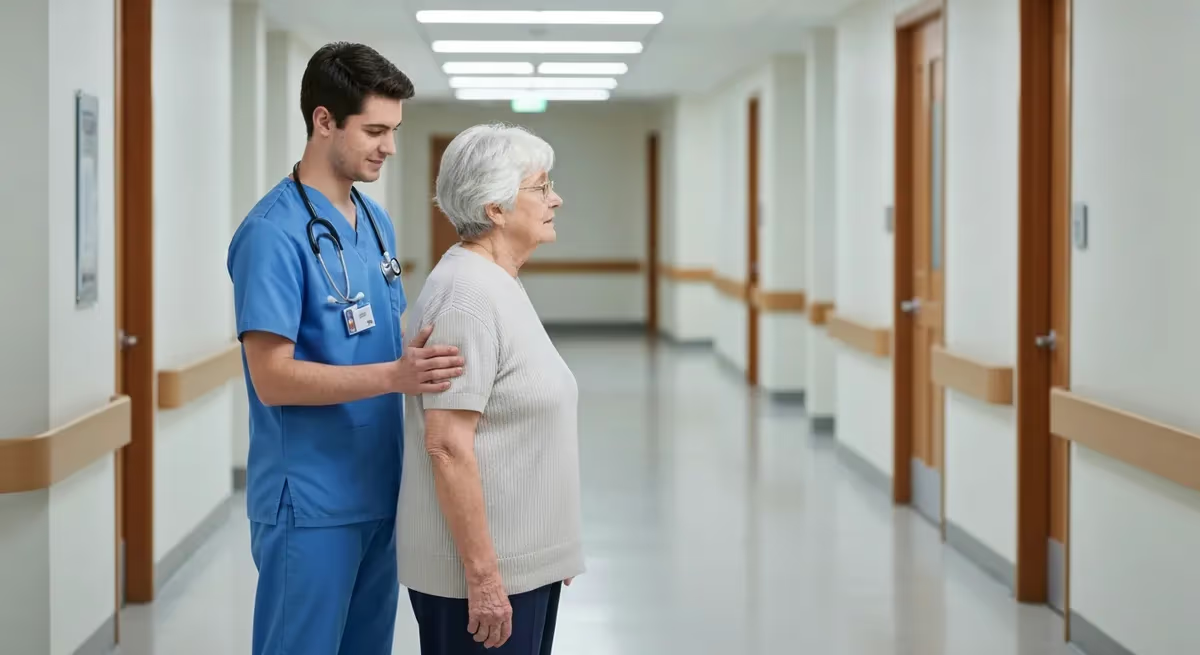
Getting your CNA certification doesn't have to cost you a dime. Free classes are available across the country — and you don't have to look far. Whether you're hoping to find free cna classes near me at a local nursing home or you'd rather take cna classes online free from your living room, there are real, legitimate programs that cover tuition entirely. Nursing homes, hospitals, community colleges, and workforce development programs all sponsor students in exchange for a work commitment after certification.
The demand for CNAs is at an all-time high, which is exactly why employers are willing to foot the bill. If you've been putting off your certification because of the cost, 2026 is the year to move forward. Many programs pay not just for training but for the state exam fee too — removing every financial barrier between you and your new career. Some even cover books, uniforms, and required immunizations so you truly walk in with nothing out of pocket.
This guide covers every type of free CNA program: employer-sponsored, state-funded, Medicaid-backed, and online. You'll learn who qualifies, what's expected in return, and exactly how to apply. Whether you're brand new to healthcare or transitioning from another field, there's a path here that fits your situation. Let's get started.
CNA: upcoming dates and official changes
- Aug 1, 2026: Connecticut (Prometric) implements new exam pricing: $48 for written only, $48 for oral only, $125 for bundled written and clinical skills, effective August 1, 2026.[3]
- Jul 1, 2026: Idaho (Prometric) raises CNA exam fees to $34 each for written and oral exams, plus test site fees, effective July 1, 2026.[4]
- Delivery (in-person): In-person written or oral exam plus in-person skills demonstration at approved test centers.[1]
- Passing score (written or oral): Set per state; no national percentage published.[1]
- Retake policy: Minimum 3 attempts required; aides must be told which areas they failed before each retake.[1]
- Validity: 2 years from issuance in most states.[2]
All verified CNA facts and sources
Numbers in brackets link to the official sources listed under Sources & last verified. Dates that have passed are removed automatically.

Once you start researching, you'll find that cna classes online free options have exploded in recent years. Platforms like Coursera, edX, and even some state workforce boards now offer the didactic (classroom) portion of CNA training at no cost. You still need to complete clinical hours in person, but pairing free online coursework with a local clinical partner can dramatically reduce what you pay — and for many students, bring the total cost to zero.
If you prefer hands-on learning from day one, look into cna classes online free programs offered by community colleges with Workforce Innovation and Opportunity Act (WIOA) funding. These programs are federally backed and completely free for qualifying students — including those switching careers or re-entering the workforce. Income guidelines are more flexible than most people assume, so don't count yourself out before checking eligibility.
The key is knowing where to look and what questions to ask. Always confirm that any program you enroll in is state-approved, because only accredited programs count toward your state certification exam. Don't let a scam program waste your time with coursework that won't qualify you to sit for the test. If a program isn't on your state's approved provider list, keep looking.
Searching for free cna courses near me is one of the best first steps you can take. Your state's Department of Labor website often lists approved training providers alongside funding options — and many of those providers offer fully sponsored seats. Some hospitals run their own internal CNA pipelines, training employees from scratch with the expectation they'll move into patient care roles after passing the exam. It's a win for both sides: you get free training, they get a trained hire.
If you want free classes online for cna training that counts toward licensure, check whether your state allows hybrid programs. Several states now let students complete theory online and clinicals locally, which opens up access for rural learners who'd otherwise have to commute hours to a training site. This flexibility has made free online CNA training far more accessible than it was even three years ago. Many hybrid programs also let you move at your own pace through the online portion, which suits people with irregular work schedules.
Programs like cna classes near me for free through Goodwill Industries are another excellent avenue. Goodwill's healthcare workforce initiatives operate in multiple states, offering CNA training to adults facing employment barriers. They often include job placement assistance and follow-up support after graduation. Check with your local Goodwill office to see what's available in your area — program availability varies by region.
Types of Free CNA Programs
Nursing homes and long-term care facilities are the most common sponsors of free CNA training. They cover tuition and exam fees in exchange for a 12–18 month work commitment. Most programs run 4–8 weeks and happen on-site, so you're already building relationships with future coworkers. Ask at any skilled nursing facility near you — many have rolling intakes and will consider applicants with no healthcare experience.
Once you've identified a program, understanding what free cna classes online actually cover helps you set expectations. The classroom portion — anatomy, infection control, patient rights, vital signs — can often be completed digitally. However, most states require a minimum number of supervised clinical hours that must be done in person at an approved facility. You can't skip that hands-on component, even if the rest of the program is virtual. Some states require as few as 16 clinical hours; others require 75 or more.
For those juggling work or family responsibilities, classes for cna for free that operate on evenings or weekends do exist. Many employer-sponsored programs accommodate non-traditional schedules because they want to attract working adults who are already motivated and reliable. It's worth asking explicitly about schedule flexibility when you call to inquire — don't assume the program can't fit your life until you ask directly.
The beauty of free programs is that they remove the single biggest obstacle most aspiring CNAs face: upfront cost. You won't need to take out loans or drain savings. And since many programs pay for your state exam too, your financial investment is literally zero — just your time and effort. For anyone serious about starting a healthcare career without financial risk, free CNA programs are the smartest entry point available.
If you're exploring cna online classes free, the most important step is verifying state approval. Every state maintains a registry of approved CNA training programs, and only those programs qualify you to sit for the Nurse Aide Competency Evaluation. Before committing to any online course — free or paid — look up your state's nurse aide registry and confirm the program appears on the approved list. This single step protects you from wasting weeks on a program that won't count.
Beyond approval, check whether the online program includes a clinical placement service. Some free online cna courses handle everything: they pair you with a nearby clinical site, coordinate your hours, and even prep you for the skills portion of the exam. Others simply provide video lectures and leave clinical logistics to you. Knowing upfront which type you're enrolling in saves headaches later — especially if you're in a rural area where clinical partners aren't easy to find on your own.
It's also worth asking about pass rates. Legitimate free programs track their students' exam outcomes and are usually happy to share that data. A program with a strong first-attempt pass rate is worth your time. One that can't answer the question — or hedges excessively — may not be giving you the preparation you need. Don't be shy about asking. It's your time and your career on the line, and any quality program will respect that question.
Free CNA Classes: Pros and Cons
- +Zero tuition cost — removes the biggest financial barrier
- +Many programs cover the state exam fee too
- +Employer-sponsored programs often lead to immediate job placement
- +Flexible schedules available through many online and evening programs
- +WIOA programs may cover books, uniforms, and supplies
- +Nonprofit programs often include wraparound support services
- −Employer-sponsored programs require a 12–18 month work commitment
- −Not all online courses are state-approved — research required
- −Clinical hours must still be completed in person regardless of format
- −Income or eligibility requirements may limit access to some programs
- −Some free programs have limited seat availability with long waitlists
- −Program quality varies — pass rates differ widely between providers
Pros and Cons at a Glance
| Pros | Cons |
|---|---|
| Zero tuition cost — removes the biggest financial barrier | Not all online courses are state-approved — research required |
| Many programs cover the state exam fee too | Clinical hours must still be completed in person regardless of format |
| Employer-sponsored programs often lead to immediate job placement | Income or eligibility requirements may limit access to some programs |
| Flexible schedules available through many online and evening programs | Some free programs have limited seat availability with long waitlists |
| WIOA programs may cover books, uniforms, and supplies | Program quality varies — pass rates differ widely between providers |
Finding free online cna classes is one thing — actually completing the program is another. The attrition rate in free CNA programs can be high, not because the content is too hard, but because students underestimate the time commitment. You're looking at 75–175 hours of total training depending on your state, and clinical hours are non-negotiable. Build a realistic schedule before you enroll, not after. Talk to people who've gone through a similar program to understand the week-by-week workload.
If you're serious about cna free classes, treat the application process like a job application. Show up prepared, dress appropriately, and bring any required documents (ID, immunization records, background check consent). Sponsored programs have limited seats and they'll choose candidates who demonstrate reliability and genuine interest in patient care. A strong attitude counts as much as your paperwork in a sponsored program context.
One underrated tip: contact the director of nursing at your local long-term care facilities directly. Many facilities run informal or rolling CNA sponsorship programs that aren't listed publicly. A phone call or brief in-person visit can get you information you'd never find by Googling. Building that direct relationship also puts you top of mind when the next cohort opens up.
How to Apply for Free CNA Classes
- ✓Confirm the program is on your state's approved CNA training provider list
- ✓Check whether the program covers the state exam fee, not just tuition
- ✓Gather required documents: ID, Social Security card, immunization records
- ✓Complete a background check — most programs require this upfront
- ✓Confirm clinical placement is included or coordinate your own site
- ✓Ask about the post-certification employment requirement if employer-sponsored
- ✓Request the program's first-attempt exam pass rate
- ✓Confirm class schedule fits your work and family obligations
- ✓Apply to multiple programs simultaneously to improve your chances
- ✓Follow up within a week if you haven't heard back after applying
Many students don't realize that nursing homes that offer free cna classes near me are practically everywhere — they just don't advertise it loudly. Walk-in inquiries at local skilled nursing facilities are often the fastest way to get enrolled. The director of staff development (DSD) is your key contact; they manage the training program and can tell you when the next cohort starts. Even if they're not currently running a program, they may know which nearby facility is and can point you in the right direction.
If you're in a major metro area, you have even more options. Cities like Chicago, Houston, and Los Angeles have strong workforce development ecosystems with multiple free cna online classes and in-person programs running simultaneously. Urban areas also tend to have more Medicaid-funded nonprofit programs. The competition for seats can be higher, but so is the availability. Applying to several programs at once is the smartest strategy in a competitive urban market.
Rural areas aren't left out either. State nursing home associations often run regional training programs specifically to address CNA shortages in underserved areas. Your state health department or Long-Term Care Ombudsman office can point you toward these resources if Google searches aren't turning up results. Some rural programs even offer stipends to offset transportation costs during clinical training.
For anyone wondering about 2 week cna classes online free — they do exist, but with a caveat. Two-week programs typically cover only the didactic portion of training. Clinical hours (usually 16–40 hours depending on your state) are scheduled separately. So while you can complete the theoretical coursework in two weeks, your total time to certification will be longer. Don't let the headline mislead you about the full timeline. Budget at least four to six weeks for the complete process from start to exam day.
A free cna class through a hospital system can be especially valuable if you want acute care experience. Hospitals that run their own CNA pipelines often prioritize graduates for floor positions, giving you a direct path to working in a fast-paced environment alongside RNs and physicians. This experience looks great on a resume if you plan to advance toward LPN or RN roles later. Hospital-trained CNAs also tend to earn slightly more than those who start in long-term care settings.
Whatever route you choose, remember that your certification is portable. Once you're listed on your state's nurse aide registry, you can transfer to other states through the reciprocity process. That means the investment you make in training — even when it's free — opens doors across the country. Your CNA credential isn't just a local ticket; it's a nationally recognized entry point into healthcare.
Not every website offering 'free CNA certification online' is legitimate. Some sites charge hidden fees at checkout or provide certificates that aren't recognized by state nurse aide registries. Always verify programs directly through your state's Department of Health or Nurse Aide Registry website before enrolling. If a program can't give you a state approval number, walk away.
When researching free cna courses online, don't overlook your current employer. If you already work in healthcare — even in a non-clinical role like dietary or housekeeping at a nursing home — your employer may offer tuition assistance or a fully free CNA program for existing staff. These internal programs are often the least competitive because they're reserved for people who already work there. They're also the smoothest transition, since you'll already know the facility culture before you start your clinical rotation.
Students in cities with strong healthcare sectors should also check with local hospital foundations and scholarship programs. Many hospitals run community benefit programs that fund CNA training for neighborhood residents as part of their nonprofit obligations. A quick call to the hospital's community relations or HR department can uncover opportunities that aren't listed anywhere online. These programs are often underutilized simply because few people know to ask about them.
If you're in Illinois, you may already know that free cna classes in chicago are available through the City Colleges of Chicago and various workforce nonprofits. Chicago's dense healthcare network and strong union presence mean sponsored CNA training seats are regularly available. Similar options exist in virtually every major metro — always search your city name plus 'free CNA training' for local-specific results. Your local library's job resource center is another surprisingly effective starting point.
CNA Practice Test Questions
Prepare for the CNA - Certified Nursing Assistant exam with our free practice test modules. Each quiz covers key topics to help you pass on your first try.
CNA Activities of Daily Living
CNA Exam Questions covering Activities of Daily Living. Master CNA Test concepts for certification prep.
CNA Aging Process
Free CNA Practice Test featuring Aging Process. Improve your CNA Exam score with mock test prep.
CNA Anatomy and Physiology Basics
CNA Mock Exam on Anatomy and Physiology Basics. CNA Study Guide questions to pass on your first try.
CNA Assisting with Daily Living
CNA Test Prep for Assisting with Daily Living. Practice CNA Quiz questions and boost your score.
CNA Assisting with Range of Motion Exercises
CNA Questions and Answers on Assisting with Range of Motion Exercises. Free CNA practice for exam readiness.
CNA Basic Human Anatomy and Age-Related Ch...
CNA Mock Test covering Basic Human Anatomy and Age-Related Changes. Online CNA Test practice with instant feedback.
CNA Basic Nursing Skills
Free CNA Quiz on Basic Nursing Skills. CNA Exam prep questions with detailed explanations.
CNA Basic Nursing Skills 10
CNA Practice Questions for Basic Nursing Skills 10. Build confidence for your CNA certification exam.
CNA Basic Nursing Skills 11
CNA Test Online for Basic Nursing Skills 11. Free practice with instant results and feedback.
CNA Basic Nursing Skills 1
CNA Study Material on Basic Nursing Skills 1. Prepare effectively with real exam-style questions.
CNA Basic Nursing Skills 12
Free CNA Test covering Basic Nursing Skills 12. Practice and track your CNA exam readiness.
CNA Basic Nursing Skills 13
CNA Exam Questions covering Basic Nursing Skills 13. Master CNA Test concepts for certification prep.
CNA Basic Nursing Skills 14
Free CNA Practice Test featuring Basic Nursing Skills 14. Improve your CNA Exam score with mock test prep.
CNA Basic Nursing Skills 15
CNA Mock Exam on Basic Nursing Skills 15. CNA Study Guide questions to pass on your first try.
CNA Basic Nursing Skills 16
CNA Test Prep for Basic Nursing Skills 16. Practice CNA Quiz questions and boost your score.
CNA Basic Nursing Skills 17
CNA Questions and Answers on Basic Nursing Skills 17. Free CNA practice for exam readiness.
CNA Basic Nursing Skills 18
CNA Mock Test covering Basic Nursing Skills 18. Online CNA Test practice with instant feedback.
CNA Basic Nursing Skills 19
Free CNA Quiz on Basic Nursing Skills 19. CNA Exam prep questions with detailed explanations.
CNA Basic Nursing Skills 20
CNA Practice Questions for Basic Nursing Skills 20. Build confidence for your CNA certification exam.
CNA Basic Nursing Skills 21
CNA Test Online for Basic Nursing Skills 21. Free practice with instant results and feedback.
CNA Basic Nursing Skills 2
CNA Study Material on Basic Nursing Skills 2. Prepare effectively with real exam-style questions.
CNA Basic Nursing Skills 3
Free CNA Test covering Basic Nursing Skills 3. Practice and track your CNA exam readiness.
CNA Basic Nursing Skills 4
CNA Exam Questions covering Basic Nursing Skills 4. Master CNA Test concepts for certification prep.
CNA Basic Nursing Skills 5
Free CNA Practice Test featuring Basic Nursing Skills 5. Improve your CNA Exam score with mock test prep.
CNA Basic Nursing Skills 6
CNA Mock Exam on Basic Nursing Skills 6. CNA Study Guide questions to pass on your first try.
CNA Basic Nursing Skills 7
CNA Test Prep for Basic Nursing Skills 7. Practice CNA Quiz questions and boost your score.
CNA Basic Nursing Skills 8
CNA Questions and Answers on Basic Nursing Skills 8. Free CNA practice for exam readiness.
CNA Basic Nursing Skills 9
CNA Mock Test covering Basic Nursing Skills 9. Online CNA Test practice with instant feedback.
CNA Basic Restorative Services
Free CNA Quiz on Basic Restorative Services. CNA Exam prep questions with detailed explanations.
CNA Basic Restorative Services 1
CNA Practice Questions for Basic Restorative Services 1. Build confidence for your CNA certification exam.
CNA Bathing and Dressing
CNA Test Online for Bathing and Dressing. Free practice with instant results and feedback.
CNA Body Mechanics
CNA Study Material on Body Mechanics. Prepare effectively with real exam-style questions.
CNA Career Advancement and Opportunities
Free CNA Test covering Career Advancement and Opportunities. Practice and track your CNA exam readiness.
CNA Career Opportunities and Benefits
CNA Exam Questions covering Career Opportunities and Benefits. Master CNA Test concepts for certification prep.
CNA Care for Residents with Cognitive Impa...
Free CNA Practice Test featuring Care for Residents with Cognitive Impairment. Improve your CNA Exam score with mock test prep.
CNA Care of Cognitively Impaired Residents
CNA Mock Exam on Care of Cognitively Impaired Residents. CNA Study Guide questions to pass on your first try.
CNA Care of Cognitively Impaired Residents 1
CNA Test Prep for Care of Cognitively Impaired Residents 1. Practice CNA Quiz questions and boost your score.
CNA Care Of Cognitively Impaired Residents 4
CNA Questions and Answers on Care Of Cognitively Impaired Residents 4. Free CNA practice for exam readiness.
CNA Common Medical Terms and Abbreviations
CNA Mock Test covering Common Medical Terms and Abbreviations. Online CNA Test practice with instant feedback.
CNA Communication and Interpersonal Skills
Free CNA Quiz on Communication and Interpersonal Skills. CNA Exam prep questions with detailed explanations.
CNA Communication and Interpersonal Skills 1
CNA Practice Questions for Communication and Interpersonal Skills 1. Build confidence for your CNA certification exam.
CNA Communication And Interpersonal Skills 4
CNA Test Online for Communication And Interpersonal Skills 4. Free practice with instant results and feedback.
CNA Eligibility and Qualifications
CNA Study Material on Eligibility and Qualifications. Prepare effectively with real exam-style questions.
CNA Emergency Procedure
Free CNA Test covering Emergency Procedure. Practice and track your CNA exam readiness.
CNA Ethics and Professionalism
CNA Exam Questions covering Ethics and Professionalism. Master CNA Test concepts for certification prep.
CNA Exam Structure and Content
Free CNA Practice Test featuring Exam Structure and Content. Improve your CNA Exam score with mock test prep.
CNA Feeding and Hydration
CNA Mock Exam on Feeding and Hydration. CNA Study Guide questions to pass on your first try.
CNA Infection Control
CNA Test Prep for Infection Control. Practice CNA Quiz questions and boost your score.
CNA Infection Control and Safety
CNA Questions and Answers on Infection Control and Safety. Free CNA practice for exam readiness.
CNA Isolation Precautions
CNA Mock Test covering Isolation Precautions. Online CNA Test practice with instant feedback.
CNA Legal & Ethical Behaviours
Free CNA Quiz on Legal & Ethical Behaviours. CNA Exam prep questions with detailed explanations.
CNA Legal & Ethical Behaviours 1
CNA Practice Questions for Legal & Ethical Behaviours 1. Build confidence for your CNA certification exam.
CNA Legal & Ethical Behaviours 4
CNA Test Online for Legal & Ethical Behaviours 4. Free practice with instant results and feedback.
CNA Mental Health and Social Services Needs
CNA Study Material on Mental Health and Social Services Needs. Prepare effectively with real exam-style questions.
CNA Mental Health and Social Services Needs 1
Free CNA Test covering Mental Health and Social Services Needs 1. Practice and track your CNA exam readiness.
CNA Mental Health And Social Services Needs 4
CNA Exam Questions covering Mental Health And Social Services Needs 4. Master CNA Test concepts for certification prep.
CNA Nutrition and Hydration Management
Free CNA Practice Test featuring Nutrition and Hydration Management. Improve your CNA Exam score with mock test prep.
CNA Patient Care Procedure
CNA Mock Exam on Patient Care Procedure. CNA Study Guide questions to pass on your first try.
CNA Personal Care Skills
CNA Test Prep for Personal Care Skills. Practice CNA Quiz questions and boost your score.
CNA Personal Care Skills 1
CNA Questions and Answers on Personal Care Skills 1. Free CNA practice for exam readiness.
CNA Personal Care Skills 4
CNA Mock Test covering Personal Care Skills 4. Online CNA Test practice with instant feedback.
CNA Personal Care Skills 5
Free CNA Quiz on Personal Care Skills 5. CNA Exam prep questions with detailed explanations.
CNA Personal Hygiene and Grooming
CNA Practice Questions for Personal Hygiene and Grooming. Build confidence for your CNA certification exam.
CNA Practice Test - Basic Nursing Skills #2
CNA Test Online for Practice Test - Basic Nursing Skills #2. Free practice with instant results and feedback.
CNA Practice Test - Basic Nursing Skills #2 1
CNA Study Material on Practice Test - Basic Nursing Skills #2 1. Prepare effectively with real exam-style questions.
CNA Preventing Patient Falls and Injuries
Free CNA Test covering Preventing Patient Falls and Injuries. Practice and track your CNA exam readiness.
CNA Promoting Resident Independence and Ch...
CNA Exam Questions covering Promoting Resident Independence and Choice. Master CNA Test concepts for certification prep.
CNA Proper Hand Hygiene and PPE Usage
Free CNA Practice Test featuring Proper Hand Hygiene and PPE Usage. Improve your CNA Exam score with mock test prep.
CNA Resident Rights and Communication
CNA Mock Exam on Resident Rights and Communication. CNA Study Guide questions to pass on your first try.
CNA Resident’s Rights
CNA Test Prep for Resident’s Rights. Practice CNA Quiz questions and boost your score.
CNA Resident's Rights 1
CNA Questions and Answers on Resident's Rights 1. Free CNA practice for exam readiness.
CNA Resident's Rights 4
CNA Mock Test covering Resident's Rights 4. Online CNA Test practice with instant feedback.
CNA Roles and Responsibilities
Free CNA Quiz on Roles and Responsibilities. CNA Exam prep questions with detailed explanations.
CNA Safety and Emergency Procedures
CNA Practice Questions for Safety and Emergency Procedures. Build confidence for your CNA certification exam.
CNA Safety and Emergency Procedures 1
CNA Test Online for Safety and Emergency Procedures 1. Free practice with instant results and feedback.
CNA Safety And Emergency Procedures 4
CNA Study Material on Safety And Emergency Procedures 4. Prepare effectively with real exam-style questions.
CNA Safety and Infection Control
Free CNA Test covering Safety and Infection Control. Practice and track your CNA exam readiness.
CNA Scope of Practice
CNA Exam Questions covering Scope of Practice. Master CNA Test concepts for certification prep.
CNA Skills and Competencies
Free CNA Practice Test featuring Skills and Competencies. Improve your CNA Exam score with mock test prep.
CNA Supporting Rehabilitation Activities
CNA Mock Exam on Supporting Rehabilitation Activities. CNA Study Guide questions to pass on your first try.
CNA The Nurse Aide's Role and Responsibili...
CNA Test Prep for The Nurse Aide's Role and Responsibilities. Practice CNA Quiz questions and boost your score.
CNA Time Management and Prioritization
CNA Questions and Answers on Time Management and Prioritization. Free CNA practice for exam readiness.
CNA Toileting and Elimination
CNA Mock Test covering Toileting and Elimination. Online CNA Test practice with instant feedback.
CNA Using Adaptive Devices
CNA Practice Questions for Using Adaptive Devices. Build confidence for your CNA certification exam.
As you get closer to enrolling, make sure you understand what a cna class free program covers versus what you'll need to supply yourself. Most sponsored programs include tuition and the exam fee. Some include uniforms, textbooks, and background check costs. Others cover only tuition and leave the rest to you. Knowing this ahead of time prevents surprise expenses that could strain your budget even in a 'free' program — so always ask for an itemized breakdown before signing any paperwork. A legitimate program will be transparent about every cost.
Once you're certified, keeping your license active requires completing your state's continuing education requirements — typically 12–24 hours every two years. Many employers cover this cost too. It's one more reason employer-sponsored programs are so attractive: they don't just pay for your initial training, they invest in your ongoing development. Some even offer pathways to LPN sponsorship after a few years on the job, making the CNA credential a genuine launching pad rather than a final destination.
Looking for online cna classes free that go beyond the basics? Some nonprofit organizations offer advanced training modules — like dementia care or wound care — at no cost for working CNAs. Completing these extras makes you a more competitive candidate for higher-paying positions and can accelerate your path to advancement. Free doesn't have to mean basic. The best programs treat their graduates as long-term investments, not just short-term staffing solutions, and that commitment shows in outcomes.
Sample CNA Practice Questions
Try these questions from our free CNA practice tests. The correct answer and an explanation follow each question.
A resident expresses a significant fear of falling after a recent near-miss event and is now refusing to participate in their prescribed physical therapy. Which action by the CNA is most appropriate?
- A. Insist that the resident must attend therapy because the doctor ordered it.
- B. Tell the resident their fear is irrational and they will be fine.
- C. Ask the nurse or physical therapist to discuss alternative, less intimidating exercises with the resident.
- D. Document the refusal and take no further action.
Answer: C. Ask the nurse or physical therapist to discuss alternative, less intimidating exercises with the resident.
Fear of falling is a legitimate concern that can impede recovery and increase fall risk. The CNA should report this to the nurse or therapist. They can then work with the resident to find alternative exercises, perhaps starting with chair-based exercises, to build confidence and strength without causing distress, which is a key part of patient-centered care.
The doctor has told a resident that his cancer is growing and there are no more treatment options. When the resident tells the nurse aide that there is a mistake, the nurse aide should
- A. Understand that denial is a normal reaction.
- B. Remind the resident the doctor would not lie.
- C. Suggest the resident get another doctor and more tests.
- D. Ask gently if the resident is afraid of dying soon.
Answer: A. Understand that denial is a normal reaction.
When a resident receives a terminal diagnosis, denial is a common and normal stage of grief, as described by Kübler-Ross. The nurse aide's role is to offer empathetic support and understanding, acknowledging the resident's feelings without challenging them. Suggesting other doctors or questioning the diagnosis is outside the CNA's scope and can be unhelpful or misleading.
While caring for a resident with dementia who has a history of wandering, the CNA notices the resident is dressed in outdoor clothing and pacing near the exit. Which of the following actions is the best immediate safety intervention?
- A. Lock the resident in their room to prevent elopement.
- B. Gently approach the resident and redirect them to a supervised activity or common area.
- C. Alert security immediately without approaching the resident.
- D. Tell the resident firmly that they are not allowed to leave.
Answer: B. Gently approach the resident and redirect them to a supervised activity or common area.
Redirecting a resident with dementia is a key de-escalation and safety technique. A calm, gentle approach that shifts their focus to a different, safe activity can prevent an elopement attempt without causing distress or agitation.
When performing passive range-of-motion exercises, the CNA should stop immediately if the patient:
- A. Closes their eyes during the exercise
- B. Reports pain or resistance is felt in the joint
- C. Breathes faster during the movement
- D. Asks to rest between repetitions
Answer: B. Reports pain or resistance is felt in the joint
Pain or resistance during ROM exercises indicates possible injury risk, and the CNA must stop and report to the nurse.
Take the full CNA practice test
If you want more targeted practice, the cna practice test 100 questions page covers the same material with additional questions and explanations.
If you want more targeted practice, the point of care for cna page covers the same material with additional questions and explanations.
If you want more targeted practice, the cna program near me page covers the same material with additional questions and explanations.
CNA Questions and Answers
Sources & last verified
- Centers for Medicare & Medicaid Services — delivery, passing score, retake policy (official source). “The applicant may choose to take either a written or an oral examination” Verified Oct 14, 2026.
- archive.regulations.delaware.gov — validity (official source). “CNA certification shall be effective for 2 years following the date of issue and shall expire 2 years following such date” Verified Oct 14, 2026.
- prometric.com — other (official source). “Effective August 1, 2026, the following exam pricing will be implemented” Verified Oct 14, 2026.
- prometric.com — other (official source). “Effective July 1, 2026, the following exam pricing will be implemented: $34 written, $34 oral, plus test site fees” Verified Oct 14, 2026.
How we verify: editorial & fact-checking policy. Report an error: contact us.
Restorative CNA: Duties, Training, Salary & How to Get Started
CNA Hospital Jobs Near Me: How to Find, Apply & Get Hired in 2026

Goodwill CNA Program: Free Classes, Costs, and How to Enroll
Hospice CNA: Duties, Salary, Per Diem Work & How to Get Started
4-Week CNA Program: Online Options, State Programs & How to Enroll
How this page was made: written with AI tools. Exam facts are checked against the official sources listed below. Not reviewed by a subject-matter expert. Editorial policy
Sources & references
Exam facts on this page (fees, format, dates, passing scores) are checked against these official sources; the date is our last check. Editorial policy
- floridasnursing.gov — Eligibility, exam format · verified Oct 2026
- law.cornell.edu — Eligibility · verified Oct 2026
- law.cornell.edu — Test delivery · verified Oct 2026
- prometric.com — Exam information · verified Oct 2026