
Texas Bar Exam: Requirements, Format, Pass Rate & Study Guide 2026 September
✍🏼 Pass your Texas Bar exam on the first attempt. Practice questions with detailed answer explanations, hints, and instant scoring.

What Is the Texas Bar Exam?
The Texas bar exam is the licensure examination required for admission to the State Bar of Texas. Passing it authorizes you to practice law in Texas — the second-largest legal market in the United States. Texas administers the exam twice a year, in February and July, through the Texas Board of Law Examiners (BLE), which oversees all aspects of bar admission, including character and fitness review, filing deadlines, and score reporting.
Texas adopted the Uniform Bar Exam (UBE) in July 2021, replacing its own separate Texas-specific exam. The UBE is a standardized test developed by the National Conference of Bar Examiners (NCBE) and used by the majority of U.S. jurisdictions. Switching to the UBE made Texas scores portable — a licensed attorney who passed the bar in another UBE state with a score of 270 or higher can seek admission in Texas without retaking the exam, and vice versa. This portability significantly changed the calculus for attorneys considering multi-state practice.
Texas sets its passing score at 270 out of a possible 400. That's among the higher passing scores nationally — many states accept 266, and some accept lower. The high threshold reflects Texas's reputation as a demanding legal market with a rigorous bar admissions standard. You don't need to pass each component of the UBE separately, though — it's a combined scaled score, so a strong MBE performance can offset a weaker essay score as long as the total clears 270.
The exam runs across two consecutive days. Day 1 is entirely written work: the Multistate Performance Test (MPT) in the morning and the Multistate Essay Examination (MEE) in the afternoon. Day 2 is the Multistate Bar Examination (MBE), 200 multiple-choice questions split into two three-hour sessions. Both days are intense, and most test-takers find the physical and mental endurance demands of Day 2's six hours of multiple-choice work to be the most challenging aspect of the experience.
You don't have to be a Texas resident to take the Texas bar exam. The BLE requires that applicants have graduated from a law school accredited by the American Bar Association (ABA). Foreign-educated attorneys generally cannot sit for the Texas bar through the standard application — Texas doesn't have a foreign-educated attorney pathway like California's. If you earned a foreign law degree, you'd typically need to complete an LLM at an ABA-accredited U.S. law school to qualify.
The Texas BLE filing fee for first-time applicants is approximately $592, though fees can vary depending on application timing and additional requirements. Filing deadlines are strict — late applications are not accepted and late fees don't extend the deadline window. The BLE publishes specific filing deadlines for each exam administration on its website, typically opening applications about six months before the exam date. Check the BLE website for current deadlines rather than relying on prior-year dates, as they shift year to year.
The character and fitness review is a mandatory part of Texas bar admission that runs parallel to your exam preparation. The BLE investigates your background — criminal history, academic disciplinary record, employment history, and financial responsibility. The character review doesn't automatically disqualify applicants with negative history, but it does require full disclosure. Undisclosed issues are treated more seriously than disclosed ones. If you have anything in your background that could raise questions, consult with a bar admission attorney before filing to understand how to present your application effectively.
Texas Bar Exam Requirements
To sit for the Texas bar exam, you must have a JD degree from an ABA-accredited law school. Texas doesn't accept degrees from non-ABA schools, state-accredited schools in California, or online-only law school programs. Your law school graduation must be verified directly through the NCBE's Law School Certification program — you can't self-certify. The BLE also requires that you complete law school before you can file a bar application, with one narrow exception for senior-year law students filing during their final semester.
The Multistate Professional Responsibility Examination (MPRE) is a separate requirement from the bar exam itself. Texas requires a scaled score of 85 on the MPRE — a two-hour, 60-question multiple-choice exam focused on the ABA Model Rules of Professional Conduct. You can take the MPRE before, after, or simultaneously with your bar exam preparation. Many law students take it during their second year of law school after completing a Professional Responsibility course, when the material is fresh. MPRE scores are valid indefinitely in Texas, so there's no rush to retake if you passed years ago.
Character and fitness clearance is not optional — every applicant undergoes a background investigation by the BLE. The investigation covers the seven years before your application date for most issues, though serious criminal matters and professional disciplinary history are reviewed without a time limit.
The BLE uses the National Conference of Bar Examiners' character questionnaire, which is a lengthy document asking detailed questions about your criminal history, civil litigation involvement, academic and employment disciplinary history, substance use, and mental health treatment history. Omitting relevant information is treated as a separate violation, so thorough and honest disclosure is the correct approach regardless of the underlying issue's severity.
Texas reciprocal admission rules allow licensed attorneys from other UBE jurisdictions to seek Texas admission by motion — without retaking the full exam — if they hold a qualifying UBE score of 270 or higher from their home jurisdiction. The score must be from a standard administration and must still be on record.
Additionally, Texas Rule 13 allows attorneys licensed in other states for at least five years to apply for admission on motion without any UBE score requirement, subject to character review and other conditions. Both pathways save experienced out-of-state attorneys from sitting through a full bar exam, which is a meaningful practical benefit of Texas's UBE adoption.
The application process itself requires careful attention to detail. The BLE application asks for extensive personal history, and supporting documentation requirements — certified transcripts, character reference letters, employer verification — can take weeks to gather. Submit your application as early as possible, not at the deadline. Last-minute applications that are incomplete cannot be amended after the filing deadline. Pay particular attention to the sworn statement requirements — bar applicants sign under oath, and inaccuracies in sworn statements can become grounds for character and fitness denial independent of whatever the underlying issue was.
Texas law school graduates who pass the bar but don't yet have their MPRE score on file can still be licensed once they achieve the required score of 85. Texas doesn't require you to have the MPRE completed before the bar exam — it just has to be on file before you're sworn in. This gives you flexibility if you're focused entirely on bar prep and haven't taken the MPRE yet. That said, most bar prep advisors recommend completing the MPRE well before your bar exam date to eliminate one item from your post-bar checklist.
After passing the bar exam and receiving character and fitness clearance, you'll be sworn in at a Texas Supreme Court ceremony or a district court ceremony coordinated by your local bar association. The oath of admission is a formal ceremony, not an administrative formality — you typically need to arrange your swearing-in within a specified time after your character clearance is approved. Many new lawyers arrange to be sworn in by a judge they clerked for or a practicing attorney who mentored them, making the ceremony a meaningful professional milestone rather than a routine administrative step.

How to Study for the Texas Bar Exam
Most law school graduates spend 8 to 10 weeks in full-time bar prep after graduation. That's the standard timeline built around commercial bar prep courses like Barbri, Themis, and Kaplan — all of which schedule their programs to begin shortly after law school graduation and run through the July exam. If you're working while studying, adjust your timeline accordingly. Part-time bar study over 14 to 16 weeks is a viable path, but it requires exceptional self-discipline to maintain daily consistency over a longer period.
The MBE is the highest-stakes component of the Texas bar exam because it accounts for 50% of your total UBE score. Strong MBE performance can carry a decent-but-not-outstanding essay performance over the 270 threshold. Effective MBE prep is built around drilling questions in timed blocks, reviewing explanations for both correct and incorrect answer choices, and tracking your accuracy by subject across sessions.
You need to understand why wrong answers are wrong — not just what the right answer is. NCBE's official practice questions (OPE sets) are the most accurate representation of real exam questions and should be prioritized over third-party question banks.
MEE essays test 13 to 14 subjects across six questions — you don't know which subjects will appear in advance. Texas-specific subjects like Texas procedure are not separately tested since the MEE is a national component. Your MEE prep should prioritize issue-spotting over depth: bar exam essays reward identifying and addressing all relevant legal issues, even briefly, over writing an exhaustive analysis of one issue while missing others.
Practice with past MEE questions published by the NCBE and grade yourself against the model answers provided. The gap between what you wrote and what the model answer covers shows you exactly where your issue-spotting is weak.
MPT preparation is often neglected, which is a mistake because it's 20% of your UBE score and the one section where you can improve dramatically through practice alone. The MPT gives you a closed-universe file of facts and a library of authorities. You don't need to know any law going in — you just need to identify and apply the law provided.
The skills being tested are organization, issue prioritization, and professional writing format. Practice three to five full MPT tasks under timed conditions and compare your responses to NCBE's model answers. The structure of your response matters as much as its content.
Your study schedule should treat the first two weeks as foundation-building: reviewing core outlines for MBE subjects rather than doing heavy question practice. Weeks three through seven should shift to intensive question drilling — aim for 50 to 100 MBE questions per day with review. Intersperse essay practice throughout, targeting two to three MEE essays per day from week four forward.
MPT practice can be concentrated into week six and the final week before the exam. The final week should emphasize review and consolidation, not learning new material. A simulation of the actual exam experience — two full days of timed practice — is valuable if you can build it into your schedule before exam week.
- ✓Review the official TX Bar exam content outline
- ✓Take a diagnostic practice test to identify weak areas
- ✓Create a study schedule (4-8 weeks recommended)
- ✓Focus on your weakest domains first
- ✓Complete at least 3 full-length practice exams
- ✓Review all incorrect answers with detailed explanations
- ✓Take a final practice test 1 week before exam day
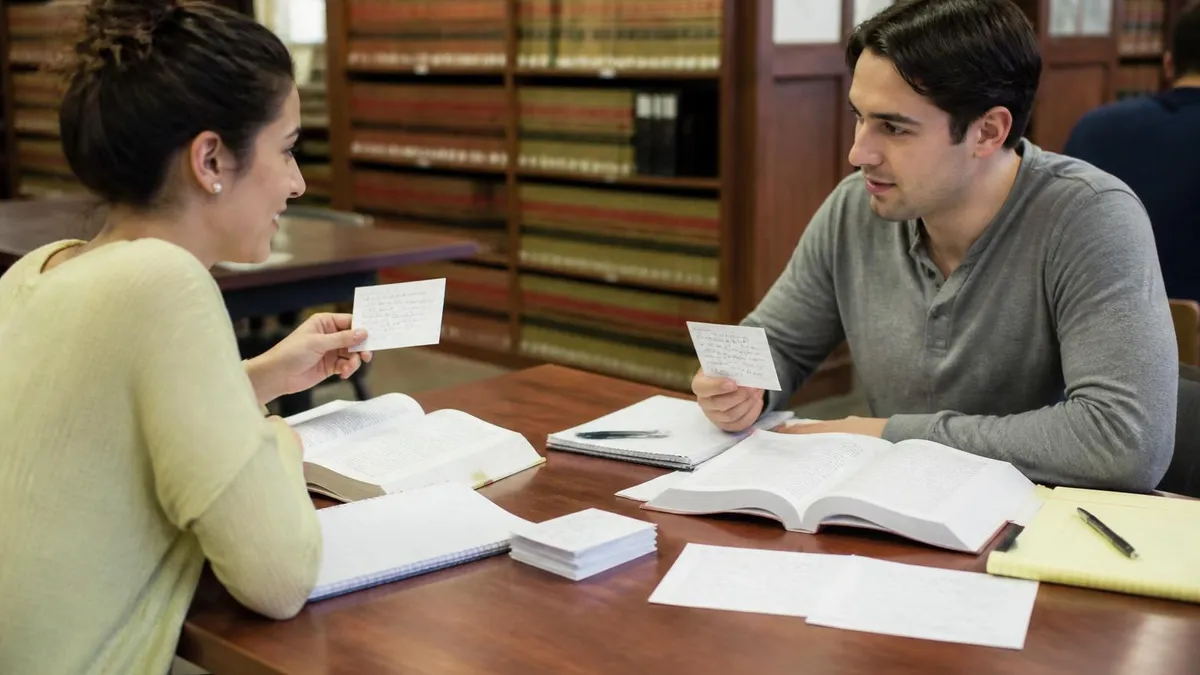
One of the biggest mental health challenges of bar study is the isolation and pressure of the process. Studying for the bar is a full-time job that most people do alone, without the class structure and social accountability of law school. Building in regular breaks, maintaining physical activity, and protecting sleep are not luxuries — they're performance requirements.
Sleep deprivation impairs the memory consolidation that makes all your study meaningful. Test-takers who sacrifice sleep to log more study hours in the final week before the exam consistently underperform relative to their preparation level compared to those who wind down and rest before the exam.
Consider joining a study group with two or three other bar takers for MEE essay practice. Reviewing each other's essay responses — even briefly — forces you to articulate legal reasoning out loud and reveals blind spots in your analysis that solo review misses. Study groups can also provide accountability for maintaining daily study routines during the long middle stretch of bar prep when motivation typically dips. Keep the group small and focused on active practice rather than passive review sessions, which can feel productive while delivering minimal actual learning benefit.
Component-by-Component Tips
The MBE tests seven subjects — Civil Procedure, Constitutional Law, Contracts, Criminal Law and Procedure, Evidence, Real Property, and Torts. Each subject appears in roughly equal proportion across the 200 questions. Your weakest subject deserves the most drilling time, but don't ignore strong subjects entirely — bar takers who focus only on weak areas often see their previously-strong subjects deteriorate by exam day from lack of practice.
Time management on the MBE is critical. You have three hours for each 100-question session — that's 1.8 minutes per question. Don't spend more than two minutes on any single question; mark it and move on. You can return to marked questions if time allows. The MBE has no penalty for guessing, so never leave a question blank. When guessing, eliminate clearly wrong choices first — even eliminating one of four options raises your guessing odds from 25% to 33%, which is meaningful across 200 questions.

Texas Bar Exam Results and Score Transfer
Texas bar exam results are typically released 8 to 10 weeks after the exam date. The BLE posts results online, and examinees are notified by email when scores are available. There's no partial pass in Texas — you either clear 270 combined or you don't. If you don't pass, your score report shows your scaled scores for each component, which is important diagnostic information for planning a retake. A combined score of 265 requires a very different remediation plan than a combined score of 240.
Texas doesn't limit the number of times you can retake the bar exam, but there are filing requirements for each attempt. You must reapply for each exam administration, though the character and fitness review from a prior Texas application may carry forward if nothing new has occurred. Retakers typically benefit from identifying which component hurt their score most and investing disproportionate prep time there. MBE score improvement is the most achievable target for most retakers because it's highly responsive to structured question drilling.
UBE score portability is one of the most significant practical benefits of Texas's switch to the UBE. If you passed the Texas bar with a score of 270 and later want to practice in New York, California (which doesn't use the UBE), or another UBE jurisdiction, you can use your Texas UBE score for admission by motion in most UBE states that accept score transfers — as long as your score meets that state's threshold and your score is still within the state's accepted age window.
Most UBE states accept transferred scores from within five years of the original test date.
Incoming score transfers work the same way. If you passed the bar in a UBE state with a score of 270 or higher within the last five years, you can seek Texas admission without retaking the bar exam. You'd still need to satisfy the MPRE requirement (85+), pass the Texas character and fitness review, and pay the applicable admission fees. The BLE handles UBE score transfer applications through a separate application pathway from the standard bar applicant process. Processing times can run several months, so plan your transfer timeline carefully if you need Texas admission by a specific date.
After receiving a passing score, new Texas attorneys aren't automatically licensed — the character and fitness process must be complete, all required documentation must be on file, and the oath of admission must be administered. Some new bar passers experience delays in final licensure because of outstanding character and fitness items. If you've been waiting longer than expected after a passing score, contact the BLE directly to ask about the status of your file. The process moves faster when applicants follow up proactively rather than waiting indefinitely for administrative action.
Texas bar exam statistics are published annually by the BLE and provide useful benchmarking data. First-time takers from Texas law schools pass at higher rates than the overall Texas pass rate — typically 60 to 70% for graduates from the larger Texas law schools.
Repeat takers have historically passed at rates of 25 to 35%. These statistics help calibrate realistic expectations: if you're a first-time taker from an ABA law school who has completed a full commercial bar prep course, you're statistically well-positioned to pass, though no level of preparation eliminates all risk. Treat the statistics as context, not as a guarantee in either direction.
Consider your score goal carefully. Passing at 270 means you're licensed and can practice — the State Bar of Texas doesn't track your bar exam score once you're admitted. No client, employer, or judicial panel will ever ask whether you scored 271 or 310. The goal of bar preparation is to pass, not to achieve a particular score above the passing threshold. Channeling competitive instincts toward passing efficiently — rather than over-preparing to achieve a maximally high score — is a psychologically healthier and often more effective approach, particularly for applicants who tend toward perfectionism.
Commercial Bar Prep Course vs. Self-Study
- +Commercial courses (Barbri, Themis, Kaplan) provide structured daily schedules that prevent procrastination
- +Professionally written outlines cover all MBE and MEE subjects without requiring you to build your own materials
- +Essay grading services give personalized feedback on your writing that self-study can't replicate
- +Course communities reduce isolation and provide peer accountability during the 10-week grind
- −Full-service commercial courses cost $2,500–$4,000, which is a significant investment on top of law school debt
- −Course schedules are designed for average students — strong students may cover material too slowly
- −Self-directed learners with strong study habits often match or exceed course outcomes using official NCBE materials
- −Supplementing official NCBE materials with a second-tier third-party source can dilute focus without adding value
Texas Bar Exam Questions and Answers
Related Bar Exam Resources

Texas Bar Exam Pass Rate: 2026–2026 Data & What It Means
Texas Bar Exam Dates 2026: When Is the Texas Bar Exam?

Texas February 2025 Bar Exam Results: Complete Guide to Scores, Release Dates, and What Comes Next
Bar Exam Texas: Complete Prep Guide for 2026
Texas Bar Exam Practice Test PDF (Free Printable 2026)
About the Author

Educational Psychologist & Academic Test Preparation Expert
Columbia University Teachers CollegeDr. Lisa Patel holds a Doctorate in Education from Columbia University Teachers College and has spent 17 years researching standardized test design and academic assessment. She has developed preparation programs for SAT, ACT, GRE, LSAT, UCAT, and numerous professional licensing exams, helping students of all backgrounds achieve their target scores.
Join the Discussion
Connect with other students preparing for this exam. Share tips, ask questions, and get advice from people who have been there.
View discussion (8 replies)