
CNA Classes Near Me 2026: Find Local Training Programs
Get ready for your CNA Classes Near Me 2026: 📚 Find Local certification. Practice questions with step-by-step answer explanations and instant scoring.

CNA: upcoming dates and official changes
- Aug 1, 2026: Connecticut (Prometric) implements new exam pricing: $48 for written only, $48 for oral only, $125 for bundled written and clinical skills, effective August 1, 2026.[4]
- Jul 1, 2026: Idaho (Prometric) raises CNA exam fees to $34 each for written and oral exams, plus test site fees, effective July 1, 2026.[5]
- Passing score (written or oral): Set per state; no national percentage published.[1]
- Retake policy: Minimum 3 attempts required; aides must be told which areas they failed before each retake.[1]
- Validity: 2 years from issuance in most states.[2]
- Renewal: State-specific; typically 2-year cycles with continuing education requirements (12–24 hours per year) and paid-work requirements.[3]
All verified CNA facts and sources
Numbers in brackets link to the official sources listed under Sources & last verified. Dates that have passed are removed automatically.
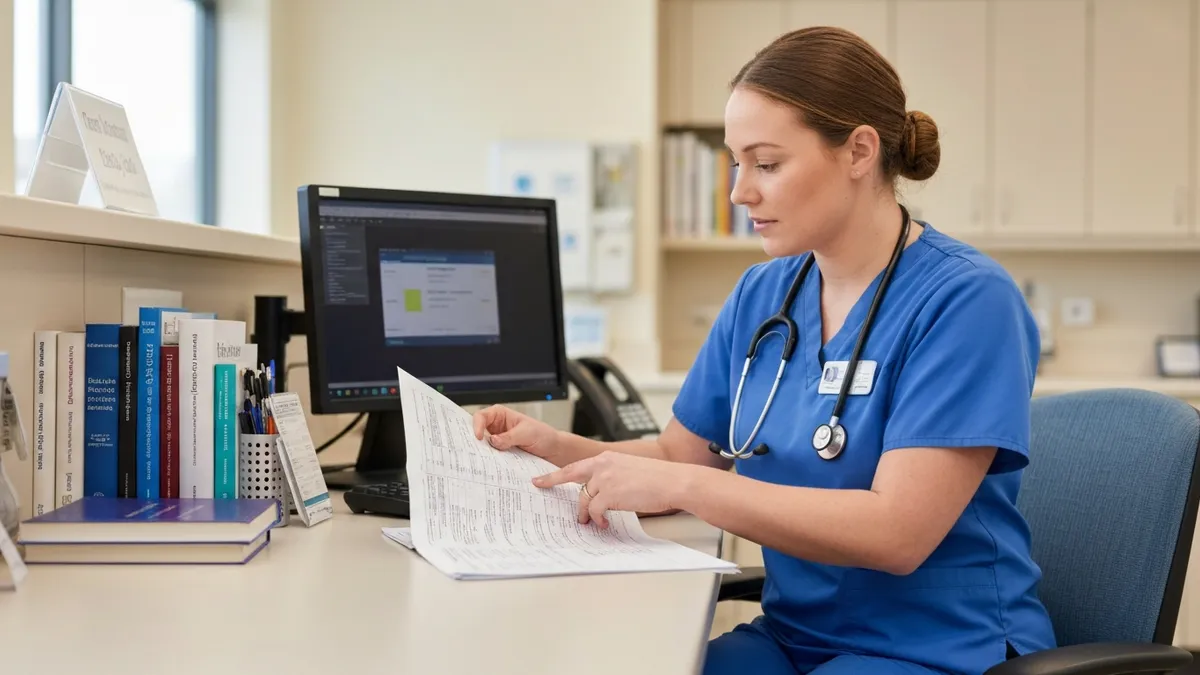
Where to Find CNA Classes Near You
CNA training programs are offered through several types of institutions, each with different schedules, costs, and formats. Knowing where to look and what each type offers saves you time and helps you find a program that fits your life. Practice with the free CNA practice test on PracticeTestGeeks (3,000+ questions with answer explanations).
Community Colleges
Community colleges are the most common place to take CNA classes. Nearly every community college in the United States offers a state-approved CNA program, often at a lower cost than private vocational schools. These programs typically run 6 to 12 weeks and include both classroom instruction and hands-on clinical training at a partnered healthcare facility.
To find community college CNA programs near you, visit your state's community college system website or search the college's healthcare division directly. Many colleges offer daytime, evening, and weekend sessions so working adults can attend.
Vocational and Career Schools
Private vocational schools and career colleges offer accelerated CNA programs that can be completed in as few as 4 to 6 weeks. These schools focus exclusively on career-ready skills and often have flexible scheduling options including weekend and evening courses. Tuition tends to be higher than community colleges, but the faster completion timeline appeals to students who want to enter the workforce quickly.
Hospitals and Health Systems
Many hospitals and large health systems run their own CNA training programs, particularly when they are actively hiring. These programs are sometimes offered free of charge or at a reduced cost in exchange for a commitment to work at the facility for a set period after graduation, typically 6 to 12 months. This is one of the best ways to find free or low-cost training while securing employment at the same time.
Contact the human resources or workforce development departments at hospitals near you to ask whether they offer sponsored CNA training.
Nursing Homes and Long-Term Care Facilities
Skilled nursing facilities and long-term care centers frequently sponsor CNA training for candidates they intend to hire. Under the federal Omnibus Budget Reconciliation Act (OBRA), nursing homes that participate in Medicare and Medicaid are permitted to provide training and competency evaluation directly. These employer-sponsored programs are often free for participants and lead directly to employment after passing the state exam.
Red Cross CNA Programs
The American Red Cross offers state-approved CNA training in many states. Red Cross programs are well-regarded for their structured curriculum and consistent clinical training standards. Costs vary by location, but Red Cross programs are generally competitive with community college pricing. Visit redcross.org to search for programs in your area.
Online Search Tools
Several state nursing boards publish searchable directories of all state-approved CNA programs. Search for your state's nurse aide registry or nursing board website and look for a find-a-program tool. The National Council of State Boards of Nursing (NCSBN) also maintains resources to help you locate approved programs by state.
Free CNA Study Tools
Interactive CNA resources on PracticeTestGeeks, free to start:
- CNA practice test — 3,000+ questions with instant scoring and answer explanations
- CNA flashcards — review key terms and concepts card by card
- CNA study guide — topic-by-topic overview of what the exam covers
- CNA cheat sheet — one-page printable summary for last-minute review
CNA Program Costs: What to Expect
CNA training costs vary widely depending on where you live, the type of school, and whether the program is employer-sponsored. Understanding the full cost picture including hidden fees helps you budget accurately and avoid surprises.
Additional Costs to Budget For
Beyond tuition, CNA students should plan for several additional expenses. Textbooks typically cost $50 to $150. A uniform or scrubs set runs $30 to $80. Many programs require a background check, which costs $30 to $75 depending on your state. CPR certification is required before the state exam and costs $30 to $60 if not included in your program. Finally, the state competency exam itself has a registration fee, typically $60 to $120, though some programs include this in tuition.
Financial aid, including federal Pell Grants, is available for CNA programs at accredited community colleges. Workforce development programs funded by the Workforce Innovation and Opportunity Act (WIOA) also pay for CNA training for qualifying individuals. Contact your local American Job Center at workforce.gov to ask about WIOA funding in your area.
Free CNA Training Options
Free CNA training is more widely available than most people realize. If you are willing to commit to working at a specific facility after training, you may be able to complete your entire program at no cost.

CNA Checklist
- ✓Apply directly to nursing homes and assisted living facilities -- many sponsor candidates in exchange for a 6-12 month work commitment
- ✓Contact hospital HR departments about workforce development or grow-your-own CNA programs
- ✓Ask about Medicaid waiver training programs at your state's department of health or social services
- ✓Apply for WIOA workforce funding at your local American Job Center (workforce.gov)
- ✓Check with your state's unemployment office -- some states fund CNA training for job-seekers
- ✓Search for union-affiliated healthcare training programs if your area has a healthcare workers union (SEIU, 1199SEIU, AFSCME)
- ✓Look into VA-sponsored programs if you are a veteran or military spouse
How Long Do CNA Classes Take?
The length of a CNA program depends on the school, the schedule format, and your state's minimum hour requirements. Federal law (OBRA 87) mandates at least 75 hours of training, with at least 16 hours of supervised clinical practice, before a candidate can take the state competency exam. However, most states require significantly more.
State Hour Requirements Vary
While the federal minimum is 75 hours, many states require 100 to 175 hours of training. California requires 160 hours, Washington requires 85 hours, and Florida requires 120 hours. Always check your specific state's requirements before enrolling to make sure the program meets your state's standards.
Programs that only meet the 75-hour federal minimum may not qualify you to sit for the exam in higher-requirement states. A state-approved program in your state will always meet or exceed your state's minimum.
What to Look for in a CNA Program
Not all CNA programs are equal. Choosing the wrong program can cost you time and money, or leave you unable to sit for your state exam. Evaluate every program against these criteria before enrolling.

Online vs In-Person CNA Classes
With the growth of online education, many CNA programs now offer a hybrid model where theory coursework is completed online and clinical training is completed in person. Fully online CNA certification is not possible because every state requires hands-on clinical hours at an approved healthcare facility. Understanding what online CNA classes actually means helps you avoid misleading marketing.
CNA Pros and Cons
- +Study theory on your own schedule with no commute for classroom sessions
- +Lower tuition than full in-person programs at many schools
- +Access to programs from schools outside your immediate area
- +Self-paced modules allow faster completion for motivated learners
- +Good option if you have childcare or work schedule conflicts
- −You still must complete clinical hours in person at a local facility
- −You must arrange your own clinical placement in some hybrid programs
- −Less peer interaction and real-time instructor feedback during theory phase
- −Requires stronger self-discipline and time management
- −Some employers prefer graduates of fully in-person programs
Pros and Cons at a Glance
| Pros | Cons |
|---|---|
| Study theory on your own schedule with no commute for classroom sessions | You still must complete clinical hours in person at a local facility |
| Lower tuition than full in-person programs at many schools | You must arrange your own clinical placement in some hybrid programs |
| Access to programs from schools outside your immediate area | Less peer interaction and real-time instructor feedback during theory phase |
| Self-paced modules allow faster completion for motivated learners | Requires stronger self-discipline and time management |
| Good option if you have childcare or work schedule conflicts | Some employers prefer graduates of fully in-person programs |
What to Verify Before Enrolling in an Online Program
Before paying for an online CNA program, confirm three things: (1) the program is state-approved in your state, not just the state where the school is based; (2) the school arranges clinical placement for you, or clearly explains how you find it; and (3) the clinical hours completed through the program will be accepted by your state's testing agency. Some online programs are only approved in one state and cannot legally prepare you for the exam in another.
State Approval Requirements for CNA Programs
Every state in the United States has its own nurse aide training and competency evaluation program (NATCEP) requirements. State approval is not optional -- only graduates of approved programs can sit for the state competency exam and be listed on the state nurse aide registry.
How to Verify State Approval
The most reliable way to verify that a program is state-approved is to search your state's official nurse aide registry or nursing board website. Most states maintain a searchable directory of approved programs. Do not rely solely on a school's claims -- check the official list yourself.
What State Approval Means for You
A state-approved program guarantees that the curriculum meets your state's minimum training standards, that the clinical training site is an approved healthcare facility, and that you will be eligible to register for the state competency exam upon completion. Programs that lack state approval may leave you unable to test or get licensed in your state.
Reciprocity Between States
If you earned your CNA certification in one state and move to another, you generally do not need to repeat the training program. Most states allow reciprocity for active, unencumbered CNA certifications through the nurse aide registry verification process. However, some states require an endorsement application or additional testing. Always contact your new state's nurse aide registry before assuming reciprocity applies.
After Completing CNA Classes: What Comes Next
Completing your CNA training program is not the final step. You must pass the state competency exam and be placed on your state's nurse aide registry before you can legally work as a CNA.
The State Competency Exam
The CNA state exam has two parts: a written (or oral) knowledge test and a hands-on clinical skills evaluation. The written portion typically consists of 60 to 70 multiple-choice questions covering topics such as infection control, safety and emergency procedures, patients' rights, and basic nursing skills. The clinical skills test requires you to demonstrate 3 to 5 randomly selected nursing skills in front of an evaluator.
Most states use Prometric, Pearson VUE, or D&S Diversified Technologies as their testing vendor. Your training program should provide information on how to register for the exam in your state. Exam fees are typically $60 to $120 and are paid directly to the testing vendor.
Becoming Listed on the State Registry
Once you pass both portions of the exam, your name is automatically added to your state's nurse aide registry. Employers are required by law to verify that any CNA they hire appears on the registry. Your certification is typically valid for 2 years, after which you must renew by showing proof of employment as a CNA for at least 8 hours during the renewal period.
Career Advancement from CNA
Many healthcare professionals begin as CNAs and advance to higher-level roles. Common career pathways include licensed practical nurse (LPN), registered nurse (RN), medication technician, home health aide supervisor, and patient care technician. Several bridge programs allow CNAs with experience to enter LPN or RN programs with credit for their prior training and work experience.
For state-specific salary, certification, and training details, see our complete CNA timeline guide and state-specific guides including CNA in Massachusetts, CNA in Oregon, and CNA in Utah.
Sample CNA Practice Questions
Try these questions from our free CNA practice tests. The correct answer and an explanation follow each question.
While caring for a resident with dementia who has a history of wandering, the CNA notices the resident is dressed in outdoor clothing and pacing near the exit. Which of the following actions is the best immediate safety intervention?
- A. Lock the resident in their room to prevent elopement.
- B. Gently approach the resident and redirect them to a supervised activity or common area.
- C. Alert security immediately without approaching the resident.
- D. Tell the resident firmly that they are not allowed to leave.
Answer: B. Gently approach the resident and redirect them to a supervised activity or common area.
Redirecting a resident with dementia is a key de-escalation and safety technique. A calm, gentle approach that shifts their focus to a different, safe activity can prevent an elopement attempt without causing distress or agitation.
A resident expresses a significant fear of falling after a recent near-miss event and is now refusing to participate in their prescribed physical therapy. Which action by the CNA is most appropriate?
- A. Insist that the resident must attend therapy because the doctor ordered it.
- B. Tell the resident their fear is irrational and they will be fine.
- C. Ask the nurse or physical therapist to discuss alternative, less intimidating exercises with the resident.
- D. Document the refusal and take no further action.
Answer: C. Ask the nurse or physical therapist to discuss alternative, less intimidating exercises with the resident.
Fear of falling is a legitimate concern that can impede recovery and increase fall risk. The CNA should report this to the nurse or therapist. They can then work with the resident to find alternative exercises, perhaps starting with chair-based exercises, to build confidence and strength without causing distress, which is a key part of patient-centered care.
Your home health client is diabetic. When you go to his home, you find him weak and lethargic, but able to follow commands. He is unable to tell you when he last ate or took his insulin. You should do what first?
- A. Call the ambulance.
- B. Do nothing, he's just tired.
- C. Check his blood sugar level.
- D. Notify the Case Manager.
Answer: C. Check his blood sugar level.
For a diabetic client exhibiting weakness and lethargy, the immediate priority is to determine if they are experiencing hypoglycemia (low blood sugar) or hyperglycemia (high blood sugar). Checking the blood sugar level provides crucial information to guide the next steps, which could involve administering sugar or insulin as per protocol, or calling for emergency medical assistance.
When nursing assistants find equipment in need of repair, they should
- A. fill out an Incident Report.
- B. wait for the safety inspection.
- C. report it to the appropriate personnel.
- D. continue to use the item until it is replaced.
Answer: C. report it to the appropriate personnel.
If a nursing assistant finds equipment in need of repair, their immediate responsibility is to report it to the appropriate personnel, such as the nurse, supervisor, or maintenance department. Using faulty equipment can pose a significant safety risk to both patients and staff. Reporting ensures the item can be repaired or replaced promptly, maintaining a safe environment.
CNA Classes Questions and Answers
Sources & last verified
- Centers for Medicare & Medicaid Services — passing score, retake policy (official source). “The State shall establish the passing standard for the written or oral examination and for the skills demonstration.” Verified Oct 14, 2026.
- archive.regulations.delaware.gov — validity (official source). “CNA certification shall be effective for 2 years following the date of issue and shall expire 2 years following such date” Verified Oct 14, 2026.
- cdph.ca.gov — renewal (official source). “Certificates are renewed every two years, and the required training is 48 hours of in-service training or continuing education” Verified Oct 14, 2026.
- prometric.com — other (official source). “Effective August 1, 2026, the following exam pricing will be implemented” Verified Oct 14, 2026.
- prometric.com — other (official source). “Effective July 1, 2026, the following exam pricing will be implemented: $34 written, $34 oral, plus test site fees” Verified Oct 14, 2026.
How we verify: editorial & fact-checking policy. Report an error: contact us.
Related CNA Guides
How Long Does It Take to Become a CNA? Complete Timeline 2026

CNA Training in Massachusetts: Schools, Programs, Pay & Registry Guide
CNA Training in Oregon: Programs, Licensing, and Jobs

CNA in Utah: Certification, Registry, Training & Jobs Guide

CNA in Missouri 2026: Training, Certification, Salary, and Requirements
How this page was made: written with AI tools. Exam facts are checked against the official sources listed below. Not reviewed by a subject-matter expert. Editorial policy
Sources & references
Exam facts on this page (fees, format, dates, passing scores) are checked against these official sources; the date is our last check. Editorial policy
- floridasnursing.gov — Eligibility, exam format · verified Oct 2026
- law.cornell.edu — Eligibility · verified Oct 2026
- law.cornell.edu — Test delivery · verified Oct 2026
- prometric.com — Exam information · verified Oct 2026