
Certified Nurse Assistant: Salary, Training, Jobs & How to Get Started
📗 Prepare for the Certified Nurse Assistant: Salary, certification. Practice questions with answer explanations covering all exam domains.
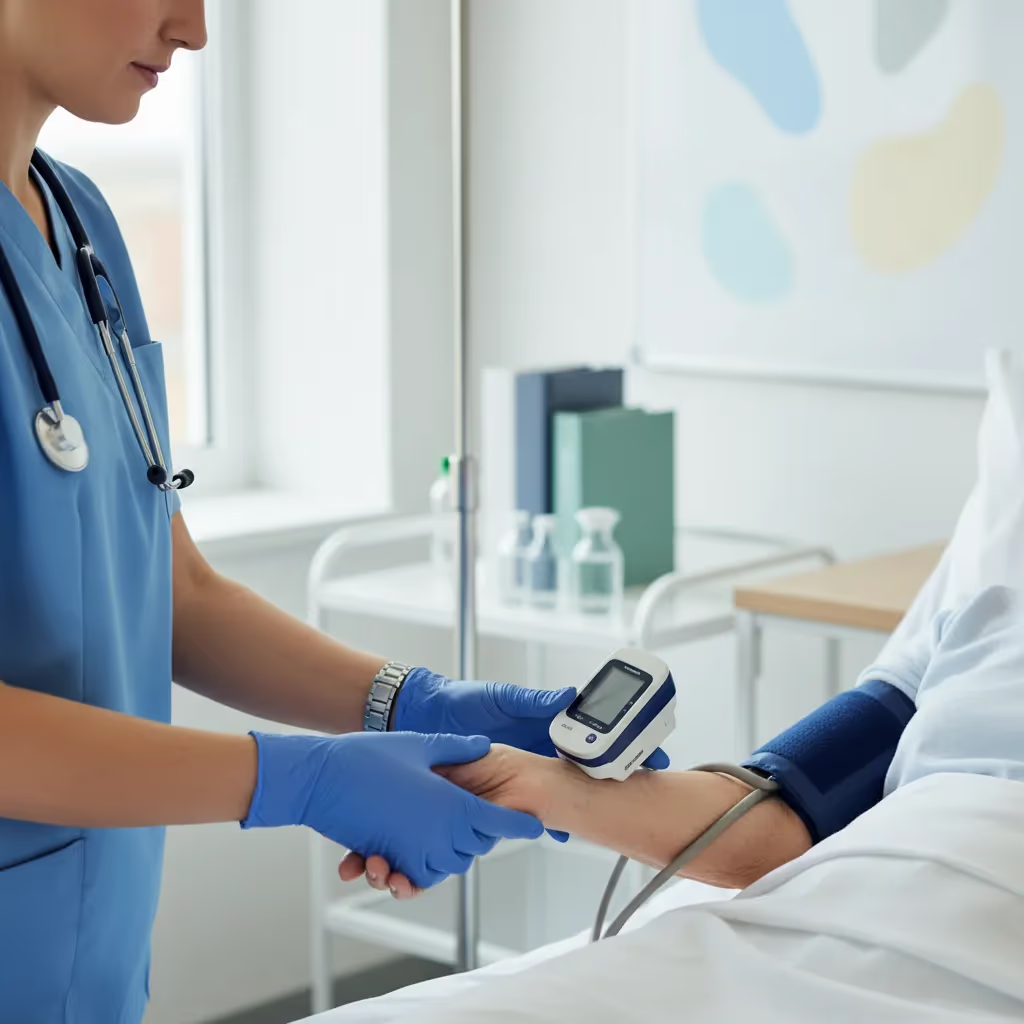
A certified nurse assistant works directly with patients every single day — helping them eat, bathe, move around, and stay comfortable when they can't do it alone. It's one of the fastest entry points into healthcare, and the demand isn't slowing down. If you've been looking into a certified nurse assistant cna training program, you're already on the right track.
The certified nurses assistant salary sits around $35,000 to $40,000 per year nationally, though that number swings depending on your state, facility type, and shift differential. Night shifts and weekend rotations usually pay more. Hospitals tend to offer higher hourly rates than nursing homes — sometimes $3 to $5 more per hour. That gap adds up fast over a full year.
Finding a certified nurse assistant job doesn't take long after you pass your state competency exam. Most graduates land positions within two to four weeks. Nursing homes, assisted living centers, hospitals, and home health agencies all hire CNAs year-round. The Bureau of Labor Statistics projects 4% job growth through 2032 — steady, reliable, and recession-resistant. You won't struggle to find work.
This page breaks down everything: pay by state, training requirements, job duties, career advancement paths from CNA to LPN and eventually RN, and how to verify your license. Whether you're starting fresh or comparing programs, the information here will save you hours of searching.

Let's talk money — because that's what most people want to know first. The certified nurse assistant salary varies dramatically by location. In California, CNAs average $41,000 to $45,000 per year. In Mississippi or Arkansas, you might see $27,000 to $30,000. Cost of living explains some of that difference. Not all of it.
Your certified nurse assistant job setting matters too. Hospital CNAs earn roughly 15% more than those in long-term care facilities. Home health aides — technically a different title but overlapping duties — often earn less. Specialty units like ICU or surgical recovery sometimes come with skill-based pay bumps. Worth asking about during interviews.
Overtime availability changes the equation entirely. Many facilities offer time-and-a-half after 40 hours, and staffing shortages mean extra shifts are almost always available. Some CNAs pull in $45,000 to $50,000 by picking up just one extra shift per week. That's real money — especially for a role that doesn't require a four-year degree.
Looking for open positions? Certified nurse assistant jobs are posted constantly on Indeed, ZipRecruiter, and directly on hospital career pages. Filter by "CNA" or "nurse aide" to see the most results. Don't skip smaller facilities — they often pay competitively and offer better schedules.
Every state handles CNA certification a little differently. The federal minimum is 75 hours of training and a competency evaluation, but most states require more — some as high as 180 hours. California, for example, mandates 150 hours of state-approved training before you can sit for the certification exam.
If you're already certified in another state, California certified nurse assistant license verification is available through the California Department of Public Health's Aide and Technician Certification Section. You'll need your original certification number, full legal name, and possibly a background check. The online lookup tool works, but it's slow — plan for that.
The certified nurse assistant cna training curriculum covers patient care fundamentals: vital signs, infection control, body mechanics, nutrition, and communication skills. Clinical hours — actual hands-on practice in a healthcare facility — make up at least 16 of those required hours federally. Most programs include significantly more clinical time than the minimum.
State competency exams typically have two parts. A written or oral knowledge test with 60 to 100 multiple-choice questions, and a clinical skills demonstration where you perform 3 to 5 randomly selected procedures in front of an evaluator. Pass both parts and you're certified. Fail one? Most states let you retake it up to three times within a year.
CNA Study Tips
What's the best study strategy for CNA?
Focus on weak areas first. Use practice tests to identify gaps, then study those topics intensively.
How far in advance should I start studying?
Most successful candidates begin 4-8 weeks before the exam. Create a structured study schedule.
Should I retake practice tests?
Yes! Take each practice test 2-3 times. Focus on understanding why answers are correct, not memorizing.
What should I do on exam day?
Arrive 30 min early, bring required ID, read questions carefully, flag difficult ones, and review before submitting.
CNA Certification by State
Federal minimum: 75 hours (classroom + clinical). California requires 150 hours. New York mandates 130 hours. Florida requires 120 hours. Texas requires 100 hours. Each state's nursing board sets its own threshold — always verify with your state before enrolling in any program.
The job market for certified nurse assistant jobs is consistently strong — and it's not just nursing homes anymore. Hospitals, urgent care clinics, rehabilitation centers, and home health agencies all hire CNAs. Specialty areas like dialysis, hospice, and memory care units offer focused roles with additional training opportunities.
So how much does a certified nurse assistant make a year when you factor in location and experience? Entry-level CNAs typically start between $28,000 and $32,000. After three to five years, expect $34,000 to $40,000. Experienced CNAs in high-demand metro areas or specialized units can push past $45,000. Travel CNA positions — yes, those exist — pay even more, often $1,200 to $1,800 per week with housing stipends.
The biggest factor in your paycheck isn't experience. It's geography. A CNA in San Francisco earns nearly double what a CNA in rural Alabama makes. But that San Francisco CNA also pays triple for rent. Run the real math before relocating for a higher hourly rate.
Agency and per diem work gives you scheduling flexibility that staff positions don't. You pick your shifts. The trade-off? No benefits, no PTO, and no guaranteed hours. For some people that's freedom. For others it's instability. Know what you need before committing to one path.
Choosing the right certified nurse assistant programs makes a real difference in your career trajectory. Community colleges, vocational schools, and some hospitals offer state-approved CNA training. Red Cross chapters in many states run programs too — often at lower cost than private institutions.
Cost varies wildly. Community college programs range from $500 to $2,000. Private vocational schools charge $1,500 to $5,000. Some employers — particularly large hospital systems and nursing home chains — offer free CNA training in exchange for a work commitment of 6 to 12 months after certification. That's the best deal if you can find it.
When evaluating certified nurse assistant schools, check three things first. State approval status — unapproved programs won't qualify you for the certification exam. Pass rates — programs should report their students' first-attempt pass rate, and anything below 70% is a red flag. Clinical site quality — you want hands-on practice in a real healthcare facility, not just a simulation lab.
Online CNA programs exist, but here's the catch: you can complete classroom theory online, but clinical hours must happen in person. There's no getting around that requirement. Any program claiming fully online certification is either misleading you or operating outside state regulations. Don't waste your money.
Pros and Cons of Being a CNA
- +Fast entry into healthcare — certified in as little as 4 weeks
- +Strong job security with consistent demand across all 50 states
- +Stepping stone to LPN, RN, or other advanced nursing careers
- +Meaningful daily impact on patients' comfort and wellbeing
- +Flexible scheduling — day, night, weekend, and per diem options
- +Low educational cost compared to most healthcare careers
- −Physically demanding — lifting, bending, and standing for 8-12 hour shifts
- −Emotional toll from patient suffering, decline, and end-of-life care
- −Lower pay than LPNs and RNs despite similar patient contact hours
- −High burnout rates due to understaffing in many facilities
- −Limited advancement without additional education and credentials
- −Exposure to infectious diseases and workplace injuries
People sometimes confuse the certified nurse practitioner vs physician assistant distinction with the CNA role. They're completely different levels of practice. A CNA provides basic bedside care under supervision. Nurse practitioners and physician assistants are advanced practice providers who diagnose conditions, prescribe medications, and manage treatment plans independently. The education gap is massive — CNAs need weeks of training while NPs and PAs require graduate degrees.
That said, the CNA role is often where the journey begins. Plenty of NPs and PAs started as nurse aides. Working bedside gives you clinical instincts that textbooks can't replicate. You learn how patients actually behave when they're scared, in pain, or confused. That knowledge stays with you through every level of advancement.
If you're searching for certified nurse assistant training near me, start with your state's nursing board website. They maintain lists of approved training programs by zip code. Community colleges update their CNA program offerings seasonally, so check back if nothing's available right now. Goodwill, Job Corps, and some workforce development boards offer free or subsidized programs for eligible applicants.
Distance matters less than you'd think. Most CNA programs run 4 to 12 weeks. Even if the nearest approved program is 30 miles away, that's a short commitment for a credential that lasts your entire career. Some students commute an hour each way during the clinical portion. Temporary inconvenience for permanent career access.
CNA Certification Checklist
- ✓Verify you meet age requirements (usually 16-18 depending on state)
- ✓Pass a criminal background check and drug screening
- ✓Complete a state-approved CNA training program (75-180 hours)
- ✓Accumulate the required clinical practice hours at an approved site
- ✓Submit your exam application with all required documentation
- ✓Pass the written knowledge exam (60-100 questions, 90 minutes)
- ✓Pass the clinical skills demonstration (3-5 procedures evaluated)
- ✓Apply for your CNA certification through your state nursing board
- ✓Register on your state's nurse aide registry once certified
- ✓Set a calendar reminder for renewal before your 2-year expiration
Certified nurses assistant week — typically observed in June — recognizes the essential work CNAs do every day. Many facilities organize appreciation events, small bonuses, or public recognition during this period. It's a nice gesture, but the real recognition comes from patient relationships and professional respect earned through consistent, quality care.
Daily certified nurse assistant responsibilities cover a broader scope than most people realize. You're taking vital signs — blood pressure, pulse, temperature, respiration rate — multiple times per shift. You're assisting with bathing, dressing, grooming, and toileting. You're helping patients transfer between beds, wheelchairs, and shower chairs using proper body mechanics to avoid injury.
Documentation is a bigger part of the job than newcomers expect. Every intake, output, and observation gets recorded. Changes in a patient's skin condition, appetite, mood, or mobility — you're the first person to notice these things because you spend the most time at bedside. Your notes alert the nursing team to potential problems before they become emergencies.
Feeding assistance, range-of-motion exercises, repositioning immobile patients every two hours to prevent pressure ulcers, collecting specimens, maintaining clean and safe environments — the task list is long. It's physical work that requires patience, attention to detail, and genuine compassion for people in their most vulnerable moments. Not everyone is built for it. Those who are tend to find it deeply rewarding.
How much does a certified nurse assistant make when you look at the full compensation picture? Base salary tells only part of the story. Benefits like health insurance, retirement contributions, paid time off, and tuition assistance add $8,000 to $15,000 in value annually. Some facilities offer shift differentials of $1 to $3 extra per hour for evenings, nights, or weekends.
Your california certified nurse assistant license — once earned — stays valid as long as you meet renewal requirements. California's renewal cycle is every two years. You need 48 hours of in-service training and proof of employment during the certification period. If you've been out of work for more than 24 months, you may need to retake the competency exam. That rule catches people off guard.
Reciprocity between states isn't automatic. Moving from California to Texas, for example, requires applying to the Texas DADS (Department of Aging and Disability Services) for endorsement. Some states accept your existing certification with minimal paperwork. Others require additional training hours or a new exam. Research your target state's requirements before you move — not after.
Certification lookup is straightforward in most states. California's online registry lets employers and individuals verify active certifications by name or certificate number. This is the same system used for california certified nurse assistant license verification. Other states maintain similar registries through their health departments or nursing boards. Bookmark your state's registry — you'll need it for job applications.
If your CNA certification expires and you haven't worked in a nursing role for over 24 consecutive months, most states require you to complete a full training program and retake the competency exam from scratch. Set renewal reminders at 90 days, 60 days, and 30 days before expiration. Late renewal in some states — including California and New York — means starting over entirely.
Certified nurses assistant jobs are everywhere — but not all positions are equal. Hospital-based CNA roles typically offer better pay, more structured training, and clearer advancement paths than nursing home positions. The trade-off is a faster pace, higher patient acuity, and stricter scheduling requirements. If you thrive under pressure, hospitals are the move.
Searching for cna certified nurse assistant jobs online? Use multiple platforms. Indeed and ZipRecruiter have the highest volume. LinkedIn works well for hospital system postings. State workforce development boards list positions that don't always appear on commercial job sites. And don't underestimate walking into facilities directly — many nursing homes hire on the spot for CNAs with active certifications.
Travel CNA positions have exploded in popularity since 2020. Staffing agencies like IntelyCare, ShiftKey, and CareRev connect certified nurse assistants with short-term assignments at facilities experiencing staffing shortages. Pay rates run 30% to 60% higher than permanent positions. Housing stipends of $500 to $1,000 per month are common. The downside is instability — assignments end, and you need to be comfortable adapting to new environments regularly.
Per diem work offers a middle ground between staff and travel positions. You pick up individual shifts at facilities in your area, usually through an app or staffing agency. No commitment beyond the shifts you choose. Pay is higher than staff rates — typically $18 to $28 per hour depending on location — but you don't get benefits. It's popular among CNAs who are simultaneously pursuing LPN or RN programs and need scheduling flexibility.
CNA Practice Test Questions
Prepare for the CNA - Certified Nursing Assistant exam with our free practice test modules. Each quiz covers key topics to help you pass on your first try.
CNA Activities of Daily Living
CNA Exam Questions covering Activities of Daily Living. Master CNA Test concepts for certification prep.
CNA Aging Process
Free CNA Practice Test featuring Aging Process. Improve your CNA Exam score with mock test prep.
CNA Anatomy and Physiology Basics
CNA Mock Exam on Anatomy and Physiology Basics. CNA Study Guide questions to pass on your first try.
CNA Assisting with Daily Living
CNA Test Prep for Assisting with Daily Living. Practice CNA Quiz questions and boost your score.
CNA Assisting with Range of Motion Exercises
CNA Questions and Answers on Assisting with Range of Motion Exercises. Free CNA practice for exam readiness.
CNA Basic Human Anatomy and Age-Related Ch...
CNA Mock Test covering Basic Human Anatomy and Age-Related Changes. Online CNA Test practice with instant feedback.
CNA Basic Nursing Skills
Free CNA Quiz on Basic Nursing Skills. CNA Exam prep questions with detailed explanations.
CNA Basic Nursing Skills 10
CNA Practice Questions for Basic Nursing Skills 10. Build confidence for your CNA certification exam.
CNA Basic Nursing Skills 11
CNA Test Online for Basic Nursing Skills 11. Free practice with instant results and feedback.
CNA Basic Nursing Skills 1
CNA Study Material on Basic Nursing Skills 1. Prepare effectively with real exam-style questions.
CNA Basic Nursing Skills 12
Free CNA Test covering Basic Nursing Skills 12. Practice and track your CNA exam readiness.
CNA Basic Nursing Skills 13
CNA Exam Questions covering Basic Nursing Skills 13. Master CNA Test concepts for certification prep.
CNA Basic Nursing Skills 14
Free CNA Practice Test featuring Basic Nursing Skills 14. Improve your CNA Exam score with mock test prep.
CNA Basic Nursing Skills 15
CNA Mock Exam on Basic Nursing Skills 15. CNA Study Guide questions to pass on your first try.
CNA Basic Nursing Skills 16
CNA Test Prep for Basic Nursing Skills 16. Practice CNA Quiz questions and boost your score.
CNA Basic Nursing Skills 17
CNA Questions and Answers on Basic Nursing Skills 17. Free CNA practice for exam readiness.
CNA Basic Nursing Skills 18
CNA Mock Test covering Basic Nursing Skills 18. Online CNA Test practice with instant feedback.
CNA Basic Nursing Skills 19
Free CNA Quiz on Basic Nursing Skills 19. CNA Exam prep questions with detailed explanations.
CNA Basic Nursing Skills 20
CNA Practice Questions for Basic Nursing Skills 20. Build confidence for your CNA certification exam.
CNA Basic Nursing Skills 21
CNA Test Online for Basic Nursing Skills 21. Free practice with instant results and feedback.
CNA Basic Nursing Skills 2
CNA Study Material on Basic Nursing Skills 2. Prepare effectively with real exam-style questions.
CNA Basic Nursing Skills 3
Free CNA Test covering Basic Nursing Skills 3. Practice and track your CNA exam readiness.
CNA Basic Nursing Skills 4
CNA Exam Questions covering Basic Nursing Skills 4. Master CNA Test concepts for certification prep.
CNA Basic Nursing Skills 5
Free CNA Practice Test featuring Basic Nursing Skills 5. Improve your CNA Exam score with mock test prep.
CNA Basic Nursing Skills 6
CNA Mock Exam on Basic Nursing Skills 6. CNA Study Guide questions to pass on your first try.
CNA Basic Nursing Skills 7
CNA Test Prep for Basic Nursing Skills 7. Practice CNA Quiz questions and boost your score.
CNA Basic Nursing Skills 8
CNA Questions and Answers on Basic Nursing Skills 8. Free CNA practice for exam readiness.
CNA Basic Nursing Skills 9
CNA Mock Test covering Basic Nursing Skills 9. Online CNA Test practice with instant feedback.
CNA Basic Restorative Services
Free CNA Quiz on Basic Restorative Services. CNA Exam prep questions with detailed explanations.
CNA Basic Restorative Services 1
CNA Practice Questions for Basic Restorative Services 1. Build confidence for your CNA certification exam.
CNA Bathing and Dressing
CNA Test Online for Bathing and Dressing. Free practice with instant results and feedback.
CNA Body Mechanics
CNA Study Material on Body Mechanics. Prepare effectively with real exam-style questions.
CNA Career Advancement and Opportunities
Free CNA Test covering Career Advancement and Opportunities. Practice and track your CNA exam readiness.
CNA Career Opportunities and Benefits
CNA Exam Questions covering Career Opportunities and Benefits. Master CNA Test concepts for certification prep.
CNA Care for Residents with Cognitive Impa...
Free CNA Practice Test featuring Care for Residents with Cognitive Impairment. Improve your CNA Exam score with mock test prep.
CNA Care of Cognitively Impaired Residents
CNA Mock Exam on Care of Cognitively Impaired Residents. CNA Study Guide questions to pass on your first try.
CNA Care of Cognitively Impaired Residents 1
CNA Test Prep for Care of Cognitively Impaired Residents 1. Practice CNA Quiz questions and boost your score.
CNA Care Of Cognitively Impaired Residents 4
CNA Questions and Answers on Care Of Cognitively Impaired Residents 4. Free CNA practice for exam readiness.
CNA Common Medical Terms and Abbreviations
CNA Mock Test covering Common Medical Terms and Abbreviations. Online CNA Test practice with instant feedback.
CNA Communication and Interpersonal Skills
Free CNA Quiz on Communication and Interpersonal Skills. CNA Exam prep questions with detailed explanations.
CNA Communication and Interpersonal Skills 1
CNA Practice Questions for Communication and Interpersonal Skills 1. Build confidence for your CNA certification exam.
CNA Communication And Interpersonal Skills 4
CNA Test Online for Communication And Interpersonal Skills 4. Free practice with instant results and feedback.
CNA Eligibility and Qualifications
CNA Study Material on Eligibility and Qualifications. Prepare effectively with real exam-style questions.
CNA Emergency Procedure
Free CNA Test covering Emergency Procedure. Practice and track your CNA exam readiness.
CNA Ethics and Professionalism
CNA Exam Questions covering Ethics and Professionalism. Master CNA Test concepts for certification prep.
CNA Exam Structure and Content
Free CNA Practice Test featuring Exam Structure and Content. Improve your CNA Exam score with mock test prep.
CNA Feeding and Hydration
CNA Mock Exam on Feeding and Hydration. CNA Study Guide questions to pass on your first try.
CNA Infection Control
CNA Test Prep for Infection Control. Practice CNA Quiz questions and boost your score.
CNA Infection Control and Safety
CNA Questions and Answers on Infection Control and Safety. Free CNA practice for exam readiness.
CNA Isolation Precautions
CNA Mock Test covering Isolation Precautions. Online CNA Test practice with instant feedback.
CNA Legal & Ethical Behaviours
Free CNA Quiz on Legal & Ethical Behaviours. CNA Exam prep questions with detailed explanations.
CNA Legal & Ethical Behaviours 1
CNA Practice Questions for Legal & Ethical Behaviours 1. Build confidence for your CNA certification exam.
CNA Legal & Ethical Behaviours 4
CNA Test Online for Legal & Ethical Behaviours 4. Free practice with instant results and feedback.
CNA Mental Health and Social Services Needs
CNA Study Material on Mental Health and Social Services Needs. Prepare effectively with real exam-style questions.
CNA Mental Health and Social Services Needs 1
Free CNA Test covering Mental Health and Social Services Needs 1. Practice and track your CNA exam readiness.
CNA Mental Health And Social Services Needs 4
CNA Exam Questions covering Mental Health And Social Services Needs 4. Master CNA Test concepts for certification prep.
CNA Nutrition and Hydration Management
Free CNA Practice Test featuring Nutrition and Hydration Management. Improve your CNA Exam score with mock test prep.
CNA Patient Care Procedure
CNA Mock Exam on Patient Care Procedure. CNA Study Guide questions to pass on your first try.
CNA Personal Care Skills
CNA Test Prep for Personal Care Skills. Practice CNA Quiz questions and boost your score.
CNA Personal Care Skills 1
CNA Questions and Answers on Personal Care Skills 1. Free CNA practice for exam readiness.
CNA Personal Care Skills 4
CNA Mock Test covering Personal Care Skills 4. Online CNA Test practice with instant feedback.
CNA Personal Care Skills 5
Free CNA Quiz on Personal Care Skills 5. CNA Exam prep questions with detailed explanations.
CNA Personal Hygiene and Grooming
CNA Practice Questions for Personal Hygiene and Grooming. Build confidence for your CNA certification exam.
CNA Practice Test - Basic Nursing Skills #2
CNA Test Online for Practice Test - Basic Nursing Skills #2. Free practice with instant results and feedback.
CNA Practice Test - Basic Nursing Skills #2 1
CNA Study Material on Practice Test - Basic Nursing Skills #2 1. Prepare effectively with real exam-style questions.
CNA Preventing Patient Falls and Injuries
Free CNA Test covering Preventing Patient Falls and Injuries. Practice and track your CNA exam readiness.
CNA Promoting Resident Independence and Ch...
CNA Exam Questions covering Promoting Resident Independence and Choice. Master CNA Test concepts for certification prep.
CNA Proper Hand Hygiene and PPE Usage
Free CNA Practice Test featuring Proper Hand Hygiene and PPE Usage. Improve your CNA Exam score with mock test prep.
CNA Resident Rights and Communication
CNA Mock Exam on Resident Rights and Communication. CNA Study Guide questions to pass on your first try.
CNA Resident’s Rights
CNA Test Prep for Resident’s Rights. Practice CNA Quiz questions and boost your score.
CNA Resident's Rights 1
CNA Questions and Answers on Resident's Rights 1. Free CNA practice for exam readiness.
CNA Resident's Rights 4
CNA Mock Test covering Resident's Rights 4. Online CNA Test practice with instant feedback.
CNA Roles and Responsibilities
Free CNA Quiz on Roles and Responsibilities. CNA Exam prep questions with detailed explanations.
CNA Safety and Emergency Procedures
CNA Practice Questions for Safety and Emergency Procedures. Build confidence for your CNA certification exam.
CNA Safety and Emergency Procedures 1
CNA Test Online for Safety and Emergency Procedures 1. Free practice with instant results and feedback.
CNA Safety And Emergency Procedures 4
CNA Study Material on Safety And Emergency Procedures 4. Prepare effectively with real exam-style questions.
CNA Safety and Infection Control
Free CNA Test covering Safety and Infection Control. Practice and track your CNA exam readiness.
CNA Scope of Practice
CNA Exam Questions covering Scope of Practice. Master CNA Test concepts for certification prep.
CNA Skills and Competencies
Free CNA Practice Test featuring Skills and Competencies. Improve your CNA Exam score with mock test prep.
CNA Supporting Rehabilitation Activities
CNA Mock Exam on Supporting Rehabilitation Activities. CNA Study Guide questions to pass on your first try.
CNA The Nurse Aide's Role and Responsibili...
CNA Test Prep for The Nurse Aide's Role and Responsibilities. Practice CNA Quiz questions and boost your score.
CNA Time Management and Prioritization
CNA Questions and Answers on Time Management and Prioritization. Free CNA practice for exam readiness.
CNA Toileting and Elimination
CNA Mock Test covering Toileting and Elimination. Online CNA Test practice with instant feedback.
CNA Using Adaptive Devices
CNA Practice Questions for Using Adaptive Devices. Build confidence for your CNA certification exam.
Understanding certified nurse assistant job duties before starting training helps you decide if this career fits your personality and physical capabilities. The core responsibility is direct patient care — everything from taking vital signs to helping someone use the bathroom with dignity. You're the healthcare worker patients see most often during their stay.
What is a certified nurse assistant in practical terms? You're the bridge between patients and the nursing team. Doctors and RNs rely on your observations. When you notice a patient's skin color changing, their appetite dropping, or their confusion increasing — your report triggers the clinical response. CNAs who communicate well become indispensable to their units.
Infection control is a constant responsibility. Hand hygiene between every patient contact. Proper use of personal protective equipment — gloves, gowns, masks. Following isolation protocols for patients with communicable diseases. During flu season and respiratory illness outbreaks, these skills become critical. You're protecting yourself and every other patient on the floor.
Emotional labor doesn't show up on the job description, but it's half the work. Patients dealing with chronic illness, cognitive decline, or end-of-life transitions need someone who listens. Families need updates and reassurance. You won't learn this from a textbook — it develops through experience, mentorship, and genuine empathy. The CNAs who last in this field are the ones who manage their own emotional health as carefully as they manage their patients' physical health.
CNA Questions and Answers
About the Author

Registered Nurse & Healthcare Educator
Johns Hopkins University School of NursingDr. Sarah Mitchell is a board-certified registered nurse with over 15 years of clinical and academic experience. She completed her PhD in Nursing Science at Johns Hopkins University and has taught NCLEX preparation and clinical skills courses for nursing students across the United States. Her research focuses on evidence-based exam preparation strategies for healthcare certification candidates.
Join the Discussion
Connect with other students preparing for this exam. Share tips, ask questions, and get advice from people who have been there.
View discussion (8 replies)