
How Long Is CNA Training? Program Length, Hours & What to Expect 2026
Free How Long Is CNA Training? Program practice test with questions and answer explanations. Prepare for the 2026 exam with instant scoring. 🧠

One of the first questions people ask when considering a healthcare career is how long is CNA training — and the honest answer depends on several factors. Most Certified Nursing Assistant programs run between four and twelve weeks, though some accelerated options squeeze everything into as few as two weeks. The format you choose, whether it's full-time or part-time, community college or private school, shapes the timeline more than anything else.
Understanding how long is a cna training program helps you plan around work, family, and finances. Full-time programs typically meet five days a week for six to eight hours daily, wrapping up in four to eight weeks. Part-time evening or weekend programs take longer — often eight to sixteen weeks — but they let you keep your day job while you train. Either way, you'll cover the same core curriculum and clinical hours required by your state.
How long cna course takes also varies by state requirements. Federal law mandates at least 75 hours of training, but most states require significantly more. California requires 160 hours. Florida requires 120. New York sets the bar at 135 hours plus additional clinical time. Before enrolling, check your state's specific requirements so you pick a program that meets or exceeds the minimum — otherwise you won't be eligible to sit for the certification exam.
This page breaks down everything you need to know about CNA program timelines, what the training covers, how clinical hours work, and how to choose the right program length for your situation. Let's get into the details.

So how long cna course programs actually last when you factor in everything? The classroom portion typically accounts for 60 to 70 percent of your total training hours. You'll spend this time learning anatomy basics, infection control, patient rights, vital signs measurement, and communication skills. The remaining 30 to 40 percent goes to supervised clinical practice in a real healthcare facility — usually a nursing home or long-term care center.
When people ask how long is CNA training, they sometimes forget about the certification exam that comes after. Once you finish your program, you'll need to pass your state's competency evaluation — a written or oral test plus a skills demonstration. Most students take the exam within two to four weeks of completing their program. So if your training takes six weeks, budget eight to ten weeks total from enrollment to certification. That's the real timeline for how long is a cna program from start to working.
Some programs include exam prep in their curriculum, which can save you time and boost your pass rate. Others expect you to study independently. Ask about exam preparation before you enroll — it's a detail that can make a real difference in how quickly you go from student to certified, working CNA.
Let's talk about how long are cna classes in different program formats. Full-time day programs are the fastest route — you'll be in class and clinicals five days a week, and most programs finish in four to eight weeks. These intensive schedules work great if you can dedicate your days entirely to training. You'll absorb information quickly because there's less time between lessons for details to fade.
How long is a cna program in a part-time format? Expect eight to sixteen weeks, sometimes longer. Evening and weekend programs meet two to four times per week, and clinical rotations get scheduled around your availability. The trade-off is obvious: slower pace, but more flexibility. If you're working full-time or managing family responsibilities, part-time is often the only realistic option. The material is identical — you just spread it over more calendar days.
How long cna training takes also depends on whether you're enrolled at a community college, a vocational school, or a healthcare facility that runs its own program. Community colleges often wrap CNA training into a semester-long course (about 16 weeks), but the actual contact hours match what a private school covers in six weeks. The pacing is just different. Hospitals and nursing homes that offer in-house training sometimes run the shortest programs — and some even pay you while you train.
CNA Program Formats Compared
Full-time programs run Monday through Friday, typically 6-8 hours daily. Most finish in 4-8 weeks. You'll complete classroom instruction and clinical hours on a compressed schedule. Best for students who can dedicate full days to training and want the fastest path to certification.
How long is a cna course when you factor in prerequisites? Some programs require a background check, drug screening, CPR certification, and a physical exam before you can start. These steps can add one to three weeks to your total timeline. The background check alone sometimes takes ten business days, and if your CPR certification has expired, you'll need to complete a renewal course first — usually a four-hour session.
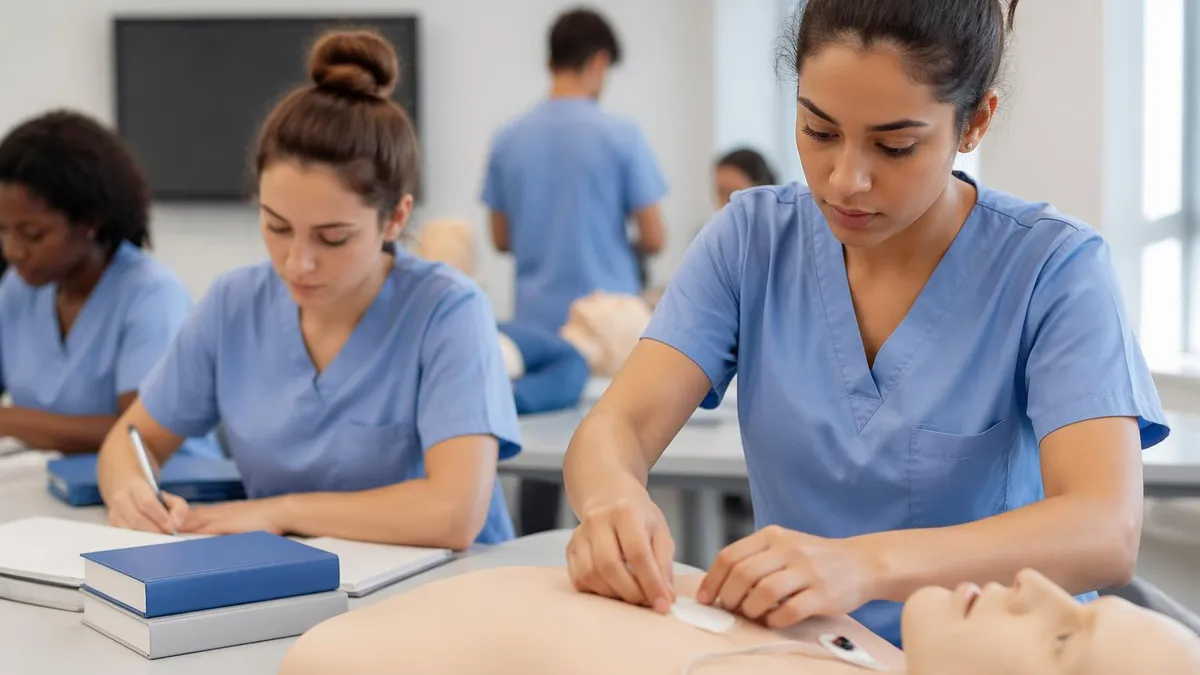
How long are cna classes in terms of daily schedule? A typical full-time day looks like this: two to three hours of lecture in the morning, a short break, then two to three hours of skills lab practice in the afternoon. Skills lab is where you learn hands-on procedures like taking blood pressure, transferring patients, making occupied beds, and performing range-of-motion exercises. These skills get tested during your certification exam, so the practice time matters enormously.
Clinical rotations add another layer to the schedule. You'll spend time in a real healthcare facility working with actual patients under the supervision of a licensed nurse. Most states require at least 16 clinical hours, but many programs include 40 hours or more. Clinicals usually start in the second half of your program, after you've mastered basic skills in the lab. They're often the most intense — and most rewarding — part of training.
How long is cna school when you account for the clinical hours specifically? Federal rules require at least 16 hours of supervised clinical training, but that's just the floor. States like California mandate 100 clinical hours, while others ask for 24 to 40. How long does cna training take in states with high clinical requirements? Expect programs to run two to four weeks longer than the bare minimum. Those extra clinical hours are valuable though — students with more clinical time consistently perform better on the certification exam and feel more confident on their first day of work.
Your clinical site matters too. Nursing homes and long-term care facilities are the most common training locations. Some programs partner with hospitals or rehabilitation centers instead, which exposes you to a wider variety of patients and procedures. Ask your program where clinical rotations happen before enrolling — a good clinical site with supportive staff can make or break your training experience. How long is the cna program at facilities that offer their own training? Often just four to six weeks, with clinicals built right into your workday.
One thing most programs don't advertise: you'll probably spend several hours outside of class studying on your own. Plan for five to ten hours of independent study per week, especially before exams and your skills check-off tests. That self-study time doesn't add official hours to the program length, but it's a real part of the commitment you should factor into your schedule.
Fast-Track vs. Standard CNA Programs
- +Accelerated programs get you certified and working in as little as 2-4 weeks
- +Shorter programs mean less time without a paycheck during training
- +Intensive schedules help you retain information through immersion
- +You can start earning CNA wages sooner — often within a month
- +Less total tuition cost since shorter programs charge less overall
- +Strong momentum — you stay focused and motivated without long breaks
- −Compressed schedules leave less time to absorb difficult material
- −Miss one day and you fall significantly behind in fast-track programs
- −Less flexibility for students juggling work or family obligations
- −Limited clinical hours in the shortest programs may leave gaps in preparation
- −Higher daily study load can lead to burnout before certification
- −Some employers prefer candidates from longer, more thorough programs
Pros and Cons at a Glance
| Pros | Cons |
|---|---|
| Shorter programs mean less time without a paycheck during training | Compressed schedules leave less time to absorb difficult material |
| Intensive schedules help you retain information through immersion | Miss one day and you fall significantly behind in fast-track programs |
| You can start earning CNA wages sooner — often within a month | Less flexibility for students juggling work or family obligations |
| Less total tuition cost since shorter programs charge less overall | Limited clinical hours in the shortest programs may leave gaps in preparation |
| Strong momentum — you stay focused and motivated without long breaks | Higher daily study load can lead to burnout before certification |
How long is the cna program at a community college versus a private training school? Community colleges typically offer CNA courses as part of their continuing education or workforce development division. These programs usually follow the academic calendar — fall, spring, or summer sessions — so they might run 8 to 16 weeks. You get the benefit of an established institution, access to financial aid, and often lower tuition. The downside is less scheduling flexibility.
Private CNA training schools offer more start dates throughout the year and often run shorter programs — four to eight weeks is common. How long is cna classes at these schools? It depends on how many hours per day they schedule. A school that meets eight hours daily, five days a week can pack 160 training hours into just four weeks. That same 160 hours at a community college might stretch across an entire semester because classes meet less frequently.
Some hospitals and nursing homes offer employer-sponsored CNA training. These programs are often free — the facility covers your tuition in exchange for a commitment to work there for a set period, usually six months to a year. They're typically among the shortest programs available because the facility wants to get you on the floor quickly. If you're debating how long cna program options take, employer-sponsored training is often the fastest and cheapest route into the field.
CNA Program Enrollment Checklist
- ✓Verify your state's minimum training hour requirement before choosing a program
- ✓Check that the program is approved by your state's nursing board or health department
- ✓Complete a background check — most programs require this before clinical rotations
- ✓Get a current physical exam and immunization records including TB test
- ✓Obtain CPR/BLS certification if your program requires it before enrollment
- ✓Apply for financial aid, scholarships, or employer tuition reimbursement
- ✓Arrange your work and family schedule around program hours and clinical days
- ✓Purchase required supplies: scrubs, stethoscope, watch with second hand, closed-toe shoes
- ✓Review basic math and reading skills — some programs include an entrance assessment
- ✓Ask about the certification exam pass rate for graduates of the program you're considering
How long cna program takes is one question — but how long does a cna course take when you include the certification exam process? After finishing your training program, you'll register for your state's competency evaluation. Wait times for exam slots vary by location and demand. In busy states, you might wait two to four weeks for an available testing date. Rural areas often have shorter wait times. Some programs schedule the exam for you as part of their curriculum, which eliminates that gap.
The exam itself takes about two to four hours. You'll complete a written or oral knowledge test (usually 60 to 100 multiple-choice questions) and perform three to five clinical skills in front of an evaluator. Common skills tested include hand washing, measuring vital signs, positioning patients, and range-of-motion exercises. If you pass both parts, your state adds you to the nurse aide registry — and you can start applying for jobs immediately.
What if you don't pass the first time? Most states allow two to three retake attempts. You can usually retake just the section you failed — written or skills — without redoing the other. Retake fees are typically $50 to $100 per attempt. If you fail all allowed attempts, you'll need to complete a new training program before testing again. That's why thorough preparation during your initial program is so important.
When researching cna training how long does it take, don't forget to factor in your study habits and learning style. Visual learners might breeze through lecture material but struggle with hands-on skills lab. Kinesthetic learners often excel in clinicals but need extra time reviewing written content. Knowing your learning style helps you estimate how much independent study time you'll need beyond scheduled class hours. Most successful students report spending five to ten hours per week studying outside of class.
CNA program length also depends on how your state handles specializations. Some programs include modules on dementia care, medication assistance, or restorative nursing that add hours to the baseline curriculum. These additional competencies can extend your program by one to two weeks but make you more marketable to employers. Facilities that specialize in memory care or rehabilitation actively seek CNAs with these extra credentials.
The investment in training time pays off quickly. CNAs earn a median hourly wage of around $17 to $20, and demand for nursing assistants is projected to grow faster than average through 2030. A six-week training program that costs $1,000 can lead to a full-time job within two months of starting. That's one of the fastest returns on investment in healthcare education.
Only enroll in a CNA program approved by your state's nursing board or department of health. Unapproved programs may not qualify you to sit for the certification exam, even if you complete all the coursework. Verify approval status before paying tuition — your state health department website maintains a list of approved training programs by location.
People also want to know how many hours does a cna work once they're certified. Most CNAs work 8-hour or 12-hour shifts, and full-time positions typically involve 36 to 40 hours per week. Nursing homes and hospitals operate 24/7, so expect shift options that include evenings, nights, weekends, and holidays. The flexibility of shift work is actually a perk for many CNAs — you can arrange your schedule around school, family, or a second job.
So how long is cna certification valid once you've earned it? Most states require renewal every two years. To renew, you'll need to show proof of employment as a CNA (usually at least eight hours of paid nursing assistant work during the renewal period) and complete any required continuing education hours. Some states require 24 to 48 hours of continuing education per renewal cycle. If you let your certification lapse, you may need to retake the competency exam or even repeat a training program.
The bottom line: from enrollment to certification, plan for six to sixteen weeks depending on your program format and state requirements. The training itself is manageable, the career prospects are strong, and you'll be doing meaningful work that directly improves people's lives. That's a return on time and effort that's hard to match in any other field with such a short training requirement.
CNA Practice Test Questions
Prepare for the CNA - Certified Nursing Assistant exam with our free practice test modules. Each quiz covers key topics to help you pass on your first try.
CNA Activities of Daily Living
CNA Exam Questions covering Activities of Daily Living. Master CNA Test concepts for certification prep.
CNA Aging Process
Free CNA Practice Test featuring Aging Process. Improve your CNA Exam score with mock test prep.
CNA Anatomy and Physiology Basics
CNA Mock Exam on Anatomy and Physiology Basics. CNA Study Guide questions to pass on your first try.
CNA Assisting with Daily Living
CNA Test Prep for Assisting with Daily Living. Practice CNA Quiz questions and boost your score.
CNA Assisting with Range of Motion Exercises
CNA Questions and Answers on Assisting with Range of Motion Exercises. Free CNA practice for exam readiness.
CNA Basic Human Anatomy and Age-Related Ch...
CNA Mock Test covering Basic Human Anatomy and Age-Related Changes. Online CNA Test practice with instant feedback.
CNA Basic Nursing Skills
Free CNA Quiz on Basic Nursing Skills. CNA Exam prep questions with detailed explanations.
CNA Basic Nursing Skills 10
CNA Practice Questions for Basic Nursing Skills 10. Build confidence for your CNA certification exam.
CNA Basic Nursing Skills 11
CNA Test Online for Basic Nursing Skills 11. Free practice with instant results and feedback.
CNA Basic Nursing Skills 1
CNA Study Material on Basic Nursing Skills 1. Prepare effectively with real exam-style questions.
CNA Basic Nursing Skills 12
Free CNA Test covering Basic Nursing Skills 12. Practice and track your CNA exam readiness.
CNA Basic Nursing Skills 13
CNA Exam Questions covering Basic Nursing Skills 13. Master CNA Test concepts for certification prep.
CNA Basic Nursing Skills 14
Free CNA Practice Test featuring Basic Nursing Skills 14. Improve your CNA Exam score with mock test prep.
CNA Basic Nursing Skills 15
CNA Mock Exam on Basic Nursing Skills 15. CNA Study Guide questions to pass on your first try.
CNA Basic Nursing Skills 16
CNA Test Prep for Basic Nursing Skills 16. Practice CNA Quiz questions and boost your score.
CNA Basic Nursing Skills 17
CNA Questions and Answers on Basic Nursing Skills 17. Free CNA practice for exam readiness.
CNA Basic Nursing Skills 18
CNA Mock Test covering Basic Nursing Skills 18. Online CNA Test practice with instant feedback.
CNA Basic Nursing Skills 19
Free CNA Quiz on Basic Nursing Skills 19. CNA Exam prep questions with detailed explanations.
CNA Basic Nursing Skills 20
CNA Practice Questions for Basic Nursing Skills 20. Build confidence for your CNA certification exam.
CNA Basic Nursing Skills 21
CNA Test Online for Basic Nursing Skills 21. Free practice with instant results and feedback.
CNA Basic Nursing Skills 2
CNA Study Material on Basic Nursing Skills 2. Prepare effectively with real exam-style questions.
CNA Basic Nursing Skills 3
Free CNA Test covering Basic Nursing Skills 3. Practice and track your CNA exam readiness.
CNA Basic Nursing Skills 4
CNA Exam Questions covering Basic Nursing Skills 4. Master CNA Test concepts for certification prep.
CNA Basic Nursing Skills 5
Free CNA Practice Test featuring Basic Nursing Skills 5. Improve your CNA Exam score with mock test prep.
CNA Basic Nursing Skills 6
CNA Mock Exam on Basic Nursing Skills 6. CNA Study Guide questions to pass on your first try.
CNA Basic Nursing Skills 7
CNA Test Prep for Basic Nursing Skills 7. Practice CNA Quiz questions and boost your score.
CNA Basic Nursing Skills 8
CNA Questions and Answers on Basic Nursing Skills 8. Free CNA practice for exam readiness.
CNA Basic Nursing Skills 9
CNA Mock Test covering Basic Nursing Skills 9. Online CNA Test practice with instant feedback.
CNA Basic Restorative Services
Free CNA Quiz on Basic Restorative Services. CNA Exam prep questions with detailed explanations.
CNA Basic Restorative Services 1
CNA Practice Questions for Basic Restorative Services 1. Build confidence for your CNA certification exam.
CNA Bathing and Dressing
CNA Test Online for Bathing and Dressing. Free practice with instant results and feedback.
CNA Body Mechanics
CNA Study Material on Body Mechanics. Prepare effectively with real exam-style questions.
CNA Career Advancement and Opportunities
Free CNA Test covering Career Advancement and Opportunities. Practice and track your CNA exam readiness.
CNA Career Opportunities and Benefits
CNA Exam Questions covering Career Opportunities and Benefits. Master CNA Test concepts for certification prep.
CNA Care for Residents with Cognitive Impa...
Free CNA Practice Test featuring Care for Residents with Cognitive Impairment. Improve your CNA Exam score with mock test prep.
CNA Care of Cognitively Impaired Residents
CNA Mock Exam on Care of Cognitively Impaired Residents. CNA Study Guide questions to pass on your first try.
CNA Care of Cognitively Impaired Residents 1
CNA Test Prep for Care of Cognitively Impaired Residents 1. Practice CNA Quiz questions and boost your score.
CNA Care Of Cognitively Impaired Residents 4
CNA Questions and Answers on Care Of Cognitively Impaired Residents 4. Free CNA practice for exam readiness.
CNA Common Medical Terms and Abbreviations
CNA Mock Test covering Common Medical Terms and Abbreviations. Online CNA Test practice with instant feedback.
CNA Communication and Interpersonal Skills
Free CNA Quiz on Communication and Interpersonal Skills. CNA Exam prep questions with detailed explanations.
CNA Communication and Interpersonal Skills 1
CNA Practice Questions for Communication and Interpersonal Skills 1. Build confidence for your CNA certification exam.
CNA Communication And Interpersonal Skills 4
CNA Test Online for Communication And Interpersonal Skills 4. Free practice with instant results and feedback.
CNA Eligibility and Qualifications
CNA Study Material on Eligibility and Qualifications. Prepare effectively with real exam-style questions.
CNA Emergency Procedure
Free CNA Test covering Emergency Procedure. Practice and track your CNA exam readiness.
CNA Ethics and Professionalism
CNA Exam Questions covering Ethics and Professionalism. Master CNA Test concepts for certification prep.
CNA Exam Structure and Content
Free CNA Practice Test featuring Exam Structure and Content. Improve your CNA Exam score with mock test prep.
CNA Feeding and Hydration
CNA Mock Exam on Feeding and Hydration. CNA Study Guide questions to pass on your first try.
CNA Infection Control
CNA Test Prep for Infection Control. Practice CNA Quiz questions and boost your score.
CNA Infection Control and Safety
CNA Questions and Answers on Infection Control and Safety. Free CNA practice for exam readiness.
CNA Isolation Precautions
CNA Mock Test covering Isolation Precautions. Online CNA Test practice with instant feedback.
CNA Legal & Ethical Behaviours
Free CNA Quiz on Legal & Ethical Behaviours. CNA Exam prep questions with detailed explanations.
CNA Legal & Ethical Behaviours 1
CNA Practice Questions for Legal & Ethical Behaviours 1. Build confidence for your CNA certification exam.
CNA Legal & Ethical Behaviours 4
CNA Test Online for Legal & Ethical Behaviours 4. Free practice with instant results and feedback.
CNA Mental Health and Social Services Needs
CNA Study Material on Mental Health and Social Services Needs. Prepare effectively with real exam-style questions.
CNA Mental Health and Social Services Needs 1
Free CNA Test covering Mental Health and Social Services Needs 1. Practice and track your CNA exam readiness.
CNA Mental Health And Social Services Needs 4
CNA Exam Questions covering Mental Health And Social Services Needs 4. Master CNA Test concepts for certification prep.
CNA Nutrition and Hydration Management
Free CNA Practice Test featuring Nutrition and Hydration Management. Improve your CNA Exam score with mock test prep.
CNA Patient Care Procedure
CNA Mock Exam on Patient Care Procedure. CNA Study Guide questions to pass on your first try.
CNA Personal Care Skills
CNA Test Prep for Personal Care Skills. Practice CNA Quiz questions and boost your score.
CNA Personal Care Skills 1
CNA Questions and Answers on Personal Care Skills 1. Free CNA practice for exam readiness.
CNA Personal Care Skills 4
CNA Mock Test covering Personal Care Skills 4. Online CNA Test practice with instant feedback.
CNA Personal Care Skills 5
Free CNA Quiz on Personal Care Skills 5. CNA Exam prep questions with detailed explanations.
CNA Personal Hygiene and Grooming
CNA Practice Questions for Personal Hygiene and Grooming. Build confidence for your CNA certification exam.
CNA Practice Test - Basic Nursing Skills #2
CNA Test Online for Practice Test - Basic Nursing Skills #2. Free practice with instant results and feedback.
CNA Practice Test - Basic Nursing Skills #2 1
CNA Study Material on Practice Test - Basic Nursing Skills #2 1. Prepare effectively with real exam-style questions.
CNA Preventing Patient Falls and Injuries
Free CNA Test covering Preventing Patient Falls and Injuries. Practice and track your CNA exam readiness.
CNA Promoting Resident Independence and Ch...
CNA Exam Questions covering Promoting Resident Independence and Choice. Master CNA Test concepts for certification prep.
CNA Proper Hand Hygiene and PPE Usage
Free CNA Practice Test featuring Proper Hand Hygiene and PPE Usage. Improve your CNA Exam score with mock test prep.
CNA Resident Rights and Communication
CNA Mock Exam on Resident Rights and Communication. CNA Study Guide questions to pass on your first try.
CNA Resident’s Rights
CNA Test Prep for Resident’s Rights. Practice CNA Quiz questions and boost your score.
CNA Resident's Rights 1
CNA Questions and Answers on Resident's Rights 1. Free CNA practice for exam readiness.
CNA Resident's Rights 4
CNA Mock Test covering Resident's Rights 4. Online CNA Test practice with instant feedback.
CNA Roles and Responsibilities
Free CNA Quiz on Roles and Responsibilities. CNA Exam prep questions with detailed explanations.
CNA Safety and Emergency Procedures
CNA Practice Questions for Safety and Emergency Procedures. Build confidence for your CNA certification exam.
CNA Safety and Emergency Procedures 1
CNA Test Online for Safety and Emergency Procedures 1. Free practice with instant results and feedback.
CNA Safety And Emergency Procedures 4
CNA Study Material on Safety And Emergency Procedures 4. Prepare effectively with real exam-style questions.
CNA Safety and Infection Control
Free CNA Test covering Safety and Infection Control. Practice and track your CNA exam readiness.
CNA Scope of Practice
CNA Exam Questions covering Scope of Practice. Master CNA Test concepts for certification prep.
CNA Skills and Competencies
Free CNA Practice Test featuring Skills and Competencies. Improve your CNA Exam score with mock test prep.
CNA Supporting Rehabilitation Activities
CNA Mock Exam on Supporting Rehabilitation Activities. CNA Study Guide questions to pass on your first try.
CNA The Nurse Aide's Role and Responsibili...
CNA Test Prep for The Nurse Aide's Role and Responsibilities. Practice CNA Quiz questions and boost your score.
CNA Time Management and Prioritization
CNA Questions and Answers on Time Management and Prioritization. Free CNA practice for exam readiness.
CNA Toileting and Elimination
CNA Mock Test covering Toileting and Elimination. Online CNA Test practice with instant feedback.
CNA Using Adaptive Devices
CNA Practice Questions for Using Adaptive Devices. Build confidence for your CNA certification exam.
If you're wondering how long do cna classes take when you add up every piece of the puzzle, here's the full picture. The application and prerequisite phase takes one to three weeks. The training program itself runs four to sixteen weeks depending on format. The certification exam and results take another two to four weeks. And your first week on the job includes orientation. So from your initial decision to your first paycheck as a working CNA, you're looking at roughly two to five months total.
How long is a cna class in terms of daily commitment? Full-time students should expect six to eight hours per day in class, lab, or clinicals, plus another one to two hours of study at home. Part-time students spend three to four hours per session, two to four evenings per week, with similar home study expectations. The daily grind is real but manageable — and it's temporary. Remind yourself that every class session brings you one step closer to a career in healthcare.
Your path into CNA work doesn't need to be complicated. Pick a state-approved program that fits your schedule and budget, show up consistently, practice your skills until they feel second nature, and pass the certification exam. Thousands of people complete this process every month across the country. The training is short, the demand is high, and the work is genuinely rewarding. Start researching programs today and you could be a certified CNA within a few months.
Sample CNA Practice Questions
Try these questions from our free CNA practice tests. The correct answer and an explanation follow each question.
A resident on a bowel training program should be offered toileting assistance at which time?
- A. Only when the resident specifically requests it
- B. At the same scheduled times each day, especially after meals
- C. Randomly throughout the shift to prevent accidents
- D. Only at bedtime to establish a nighttime routine
Answer: B. At the same scheduled times each day, especially after meals
Bowel training programs rely on consistent, scheduled toileting — particularly after meals when the gastrocolic reflex is active.
Which of the following is a core competency area covered in federally mandated CNA training programs?
- A. Pharmacology and drug administration
- B. Infection control and prevention
- C. Surgical wound closure
- D. Anesthesia monitoring
Answer: B. Infection control and prevention
Federal regulations require CNA training to include infection control as one of the core competency areas.
A CNA working in a long-term care facility is interested in career advancement but is not yet ready to commit to a full-time nursing program. Which specialized certification would be MOST beneficial for enhancing their skills and value within their current work environment?
- A. Certified EKG Technician (CET)
- B. Restorative Aide Specialist
- C. Certified Phlebotomy Technician (CPT)
- D. Basic Life Support (BLS) Instructor
Answer: B. Restorative Aide Specialist
A Restorative Aide Specialist certification builds directly on CNA skills and is highly valued in long-term care and rehabilitation settings. This role focuses on helping residents maintain or improve their functional abilities through exercise and other therapies, which is a core function of long-term care. While other certifications are valuable, the Restorative Aide role is most directly applicable for immediate career enhancement within that specific environment.
What happens to the resident's personal possessions in a long-term facility?
- A. Residents may keep and use personal possessions.
- B. Possessions are not permitted because of liability.
- C. Possessions are put into the facility's storage.
- D. The resident may bring items for the bedside table.
Answer: A. Residents may keep and use personal possessions.
Residents in long-term facilities have the right to keep and use personal possessions. This helps them maintain a sense of identity, comfort, and familiarity, making their living space feel more like home. Denying this right or restricting possessions would negatively impact their emotional well-being and sense of belonging.
CNA Questions and Answers

Restorative CNA: Duties, Training, Salary & How to Get Started

CNA Hospital Jobs Near Me: How to Find, Apply & Get Hired in 2026

Goodwill CNA Program: Free Classes, Costs, and How to Enroll
Hospice CNA: Duties, Salary, Per Diem Work & How to Get Started

4-Week CNA Program: Online Options, State Programs & How to Enroll
How this page was made: written with AI tools and published by Nathan Beja, founder of Practice Test Geeks, who is responsible for its content. Exam facts are checked against the official sources listed below. Not reviewed by a subject-matter expert. Editorial policy
Sources & references
Exam facts on this page (fees, format, dates, passing scores) are checked against these official sources; the date is our last check. Editorial policy
- floridasnursing.gov — Test delivery, exam format, retake policy, time limit · verified Oct 2026
- law.cornell.edu — Test delivery, retake policy · verified Oct 2026
- prometric.com — Fees, exam information · verified Oct 2026