
CNA Meaning: What Is a Certified Nursing Assistant? 2026 September
CNA stands for Certified Nursing Assistant. What CNAs do, where they work, how to become one, pay range, training, exam format, and career growth options. ✏️
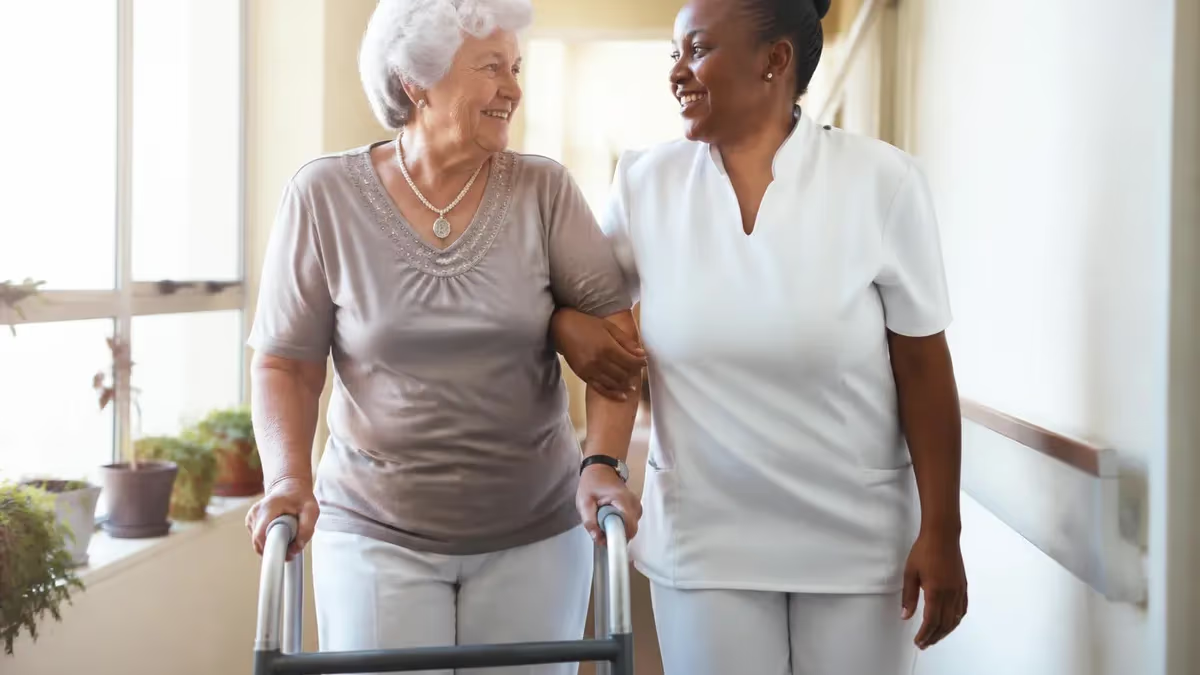
CNA Meaning: Certified Nursing Assistant Explained
CNA stands for Certified Nursing Assistant. In some states the title is Certified Nurse Aide; the role and scope are essentially identical. CNAs provide hands-on direct patient care under the supervision of licensed nurses (RNs and LPNs). They are the frontline of bedside care in nursing homes, hospitals, hospice settings, assisted living facilities, and home health. If you've ever seen a healthcare worker helping a patient bathe, eat, or move from bed to chair, you've almost certainly seen a CNA at work.
The CNA role is the most common entry point into a nursing career. Training is shorter and cheaper than nursing school, certification is achievable in under three months for full-time students, and the work itself provides valuable clinical experience for anyone considering a path to LPN, RN, or advanced practice nursing. This guide walks through what CNAs actually do, how the role compares with related healthcare workers, what training looks like, and the realistic path from certification through career growth. If you want to test the knowledge base, the CNA practice test is a useful starting point.
If you're researching what CNA means because you're considering the career, there's good news. CNAs are in demand almost everywhere in the US. The combination of an aging population, sustained hospital staffing pressures, and high turnover means most facilities are actively hiring. Many will pay for your training. Many offer signing bonuses. The hardest part of becoming a CNA is usually the work itself, not finding work.
The flip side of demand is intensity. CNA work is physically demanding — lifting, transferring, repositioning patients all day takes a toll on backs and knees. It's emotionally heavy — you witness suffering, decline, dementia behaviors, and patient deaths regularly. Burnout rates are high, particularly in nursing homes where ratios stretch staff thin. Going in with realistic expectations and a long-term plan (LPN bridge, RN bridge, specialty CNA) helps avoid the early-career exit that derails many.
The choice between immediate work and eventual upgrading depends on personal circumstances. CNAs who go straight to LPN or RN tracks within 1-2 years generally come out ahead financially over a career, but they need either savings or strong employer support to bridge the income gap during additional schooling.
Bottom Line
A CNA (Certified Nursing Assistant) provides direct hands-on patient care — bathing, dressing, toileting, feeding, vital signs, mobility assistance — under RN/LPN supervision. To become one, complete a state-approved 4-12 week training program (75-180 hours total), pass the state competency exam (written plus skills demonstration), and register with your state's Nurse Aide Registry. Median pay around $35,000-$40,000 annually with strong growth projected through 2032 driven by aging-population demand.
What CNAs Do Every Day
The CNA scope of practice centers on activities of daily living (ADLs) and basic clinical observation. A typical shift involves bathing patients, dressing them, helping with toileting and continence care, feeding those who need assistance, ambulating patients (walking with them), transferring patients between bed and chair, repositioning bedbound patients to prevent pressure ulcers, taking vital signs (blood pressure, pulse, respiration, temperature), measuring intake and output, and observing for changes that need reporting to nurses.
What CNAs do NOT do is equally important. CNAs do not administer medications (except in states with separate Medication Aide certifications), do not perform invasive procedures, do not interpret clinical data, do not develop care plans, and do not perform sterile procedures. The line between CNA scope and nursing scope matters — overstepping is a regulatory violation that can end a CNA's career and may put patients at risk. CNAs are the eyes and hands at the bedside; nurses are the clinical decision-makers and treatment administrators. The CNA training guide covers scope in detail.
Documentation is a quiet but constant part of the work. CNAs document everything they observe — vital signs taken, ADL completion, food and fluid intake, mood changes, skin observations, falls or near-falls, refusals of care, anything unusual. Good documentation protects the patient (gives nurses information to act on), the CNA (proves care was provided), and the facility (legal record of care). Sloppy documentation is one of the top reasons CNAs lose certifications.
Time management matters. A typical nursing-home CNA may have 8-15 residents during a shift, each needing bathing, dressing, feeding, vital signs, repositioning, and toileting on a schedule. The skill that separates good CNAs from struggling ones is workflow planning — chunking similar tasks across residents to minimize wasted trips and lost time.
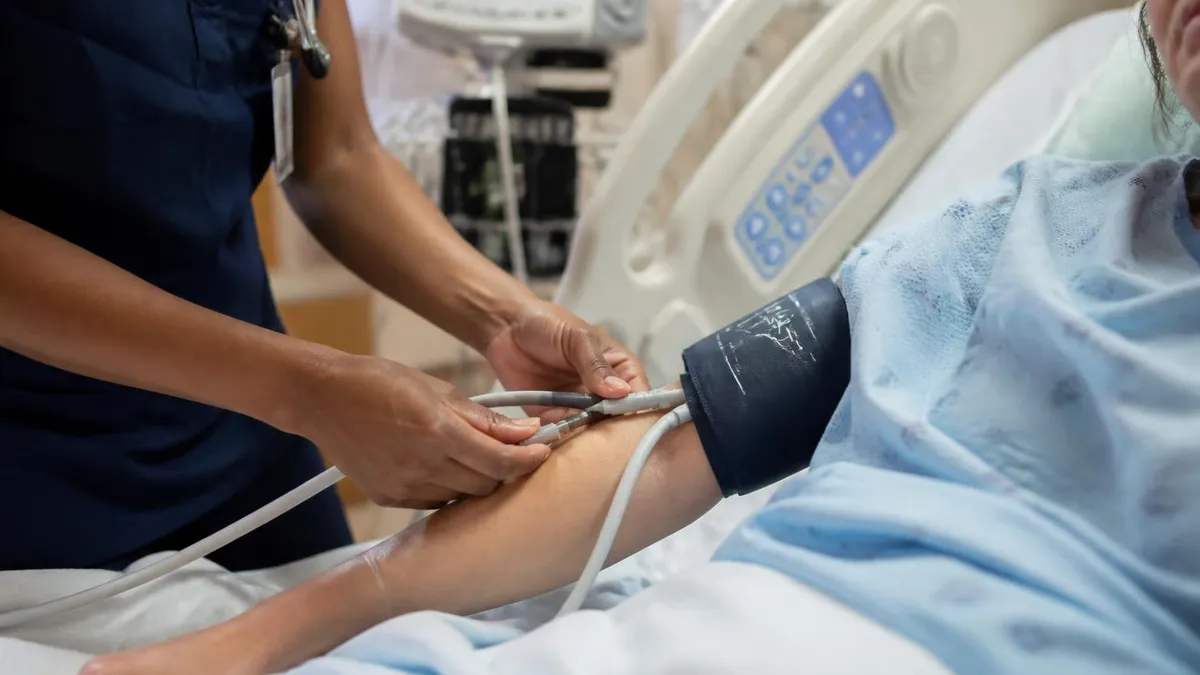
Where CNAs Work
The largest employer of CNAs. Long-term care facilities focus on chronically ill or elderly patients needing extended care. Higher patient-to-CNA ratios than hospitals (often 8-15 patients per CNA). Lower pay but stable work and lots of hands-on experience.
Second-largest employer. CNAs work in acute care, often called Patient Care Technicians (PCTs) or Nursing Assistants in hospital settings. Higher pay than nursing homes (often $2-5/hour more). Lower patient ratios but more medically complex patients.
CNAs provide end-of-life comfort care in patients' homes or hospice facilities. Emotionally demanding but deeply meaningful. Often involves longer shifts with fewer patients. Specialized hospice CNA training preferred.
Less medically intensive than nursing homes. Residents are more independent. CNAs focus on ADL assistance, medication reminders (not administration unless certified), and emergency response. Often appealing first-job environment.
Patient care in private homes. Independent travel between client homes. Combines CNA skills with home aide work. Schedule flexibility but lower base pay; mileage reimbursement helps in most agencies.
Smaller settings with disabled adults or seniors in supervised daytime care or residential group homes. Variety of duties from personal care to recreational support. Often calmer pace than hospital or nursing home work.
How to Become a CNA
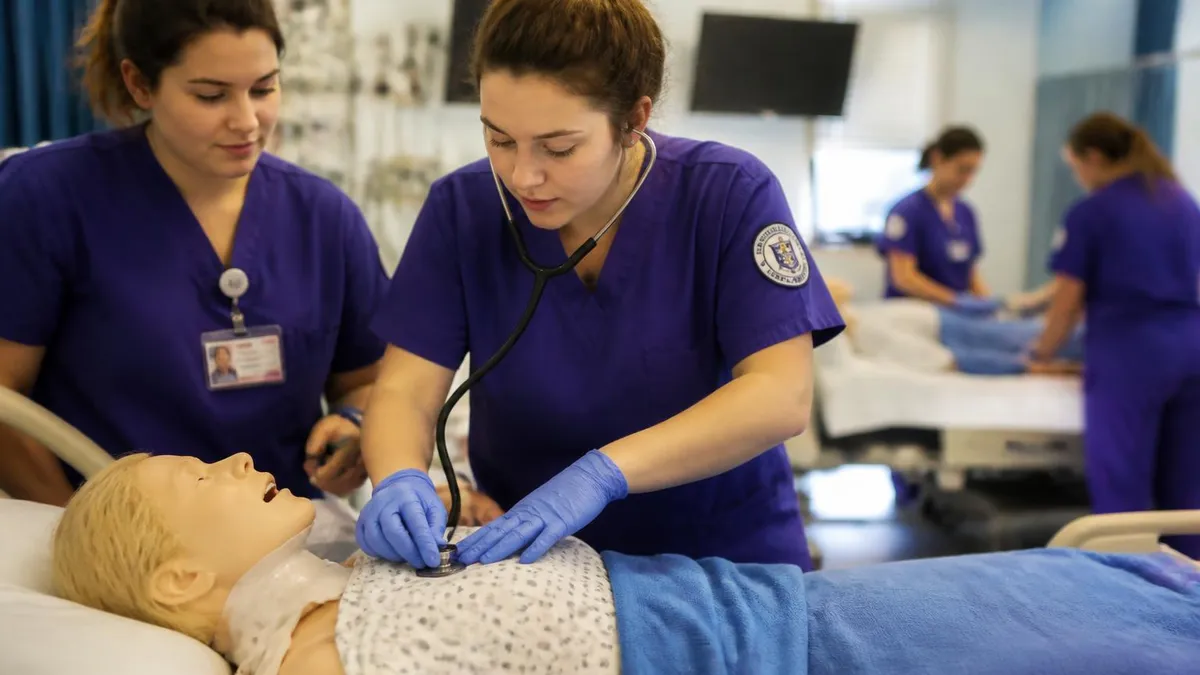
The path to CNA certification has three steps. First, complete a state-approved training program — typically 4 to 12 weeks of combined classroom instruction and supervised clinical practice. Federal regulations require minimum 75 hours of training (16 hours of which must be supervised clinical), but most states require more — 100 to 180 hours is common. Programs run at community colleges, vocational schools, hospitals (often free in exchange for employment commitments), nursing homes (also often free with hire commitments), and the American Red Cross.
Second, pass the state competency exam. Every state requires both a written/oral knowledge test and a skills demonstration. The written portion typically runs 60-100 multiple-choice questions covering nursing assistant fundamentals. The skills portion involves performing 3-5 randomly assigned skills (like measuring blood pressure, transferring a patient, perineal care, hand washing) in front of a state evaluator. Most candidates pass on first attempt — pass rates hover around 70-85 percent depending on the state. Third, after passing both portions, register with your state's Nurse Aide Registry. Registration is what makes you legally certified to work as a CNA.
Hospital-sponsored CNA training programs often double as job interviews. The facility funds your training in exchange for an employment commitment, typically 6-12 months at the hospital after certification. These programs have higher pass rates and stronger clinical components than commercial schools because the hospital has a vested interest in producing competent staff. The trade-off is the employment lock-in, but for many candidates this is a feature, not a bug.
Background checks happen at multiple points: training program admission, state competency exam registration, Nurse Aide Registry application, and employer hire. Disqualifying findings vary by state but generally include felony convictions, certain violent misdemeanors, abuse and neglect findings, and drug-related offenses. Address any concerns proactively with the receiving registry before committing to training.
CNA Training Curriculum
Patient rights, communication skills, the role of the CNA on the healthcare team, scope of practice, documentation basics, ethics, confidentiality (HIPAA basics), reporting and observation. Foundational chapters establish the framework all clinical skills sit within.
Patient rights education is heavily tested. Memorize the resident bill of rights — privacy, dignity, autonomy, access to information, freedom from abuse — these concepts appear in nearly every CNA exam.
The CNA Competency Exam in Detail
The written portion of the state competency exam is multiple-choice, typically 60-100 questions, with a passing score around 75-80 percent depending on state and provider (Pearson VUE Prometric, Headmaster, D&S Diversified are common test providers). Topics span the entire training curriculum — infection control, communication, patient rights, vital signs, body mechanics, range of motion, ADLs, special populations, and emergency response. Most candidates can complete the written portion in 1.5-2 hours of the 2.5-hour window allocated.
The skills portion is where many candidates feel anxious. You arrive at a testing center, are paired with a volunteer or trained patient (sometimes a mannequin for invasive skills), and are given 3-5 randomly selected skills to demonstrate from a list of 22 or more. The evaluator watches and grades based on specific critical action steps for each skill.
Hand washing is universal — every candidate performs it at the start of the skills test and within other skills as required. Other common skills include measuring blood pressure, transferring patient from bed to wheelchair, dressing a resident with a weak arm, providing oral care, perineal care, foot care, range of motion exercises, and changing an occupied bed.
Test anxiety is real for the skills portion. Many candidates know the material but freeze in front of the evaluator. Practice with classmates as evaluators during training, role-play the test environment, and rehearse the critical action steps until they're automatic. If you fail one skill, you can usually retake just that skill on a second attempt — not the entire skills test. Check your state's retake policy.

Each skills evaluation lists critical action steps — actions you must perform correctly to pass that skill. Missing one critical step means failing the entire skill regardless of how well you performed the rest. Examples: forgetting to identify the patient before starting any skill, skipping hand washing before or after a skill, failing to apply gloves before perineal care, or not lowering the bed at the end. Memorize the critical actions cold for every skill on your state's list — they are predictable and consistent across skills.
CNA Pay and Career Outlook
CNA pay varies meaningfully by setting, geography, and experience. BLS data for 2024 shows median annual pay around $38,000-$40,000 for nursing assistants nationwide. Entry-level CNAs at nursing homes typically earn $14-$18 per hour. Hospital CNAs and patient care technicians often earn $18-$25 per hour. Experienced CNAs in high-cost-of-living metros (San Francisco, Boston, Seattle, New York) can earn $25-$35 per hour with shift differentials and overtime. Hospice and home health CNAs vary widely.
The Bureau of Labor Statistics projects 4-5 percent job growth for nursing assistants through 2032 — slower than overall healthcare growth but driven by sustained demand from aging baby boomers and the long-term care sector. Demand is consistently high; most regions have ongoing CNA shortages, particularly at nursing homes where turnover is high. Many CNAs use the role as a stepping stone — within 2-5 years, large numbers transition to LPN, RN, or specialty roles like medication aide. The CNA certification guide covers the path-forward options in depth.
Shift differentials make a meaningful difference in CNA paychecks. Night shift typically pays 10-15 percent above day rate. Weekend shifts often add another 5-10 percent. Holiday shifts (Christmas, Thanksgiving, July 4) usually pay time-and-a-half or double-time. Many CNAs maximize earnings by working night/weekend rotations rather than traditional Monday-Friday daytime schedules.
Steps to Get CNA-Certified
- ✓Research your state's CNA training and exam requirements
- ✓Confirm the program you choose is state-approved (not just any 'nursing assistant' class)
- ✓Complete classroom instruction (typically 4-8 weeks)
- ✓Complete supervised clinical hours (typically 16-30 hours minimum)
- ✓Schedule the state competency exam after program completion
- ✓Study with state-specific practice materials before exam day
- ✓Pass the written exam (75-80% passing typical)
- ✓Pass the skills demonstration (3-5 random skills, critical actions matter)
- ✓Register with your state's Nurse Aide Registry
- ✓Apply for CNA jobs — most facilities will hire newly certified CNAs immediately
CNA vs LPN vs RN vs MA vs PCT
Healthcare titles confuse outsiders because related credentials look interchangeable from the outside. They are very different. A Medical Assistant (MA) typically works in ambulatory care (clinics, doctor's offices) doing administrative and basic clinical tasks like rooming patients, taking vitals, drawing labs in some states, and managing paperwork — different scope and setting from a CNA. A Patient Care Technician (PCT) or Patient Care Assistant (PCA) is often a hospital-specific title for a CNA who has added skills like phlebotomy, EKG, or specialty procedures — sometimes the same as a CNA, sometimes an expanded role depending on the hospital.
An LPN (Licensed Practical Nurse) or LVN (Licensed Vocational Nurse, the same role in California and Texas) is a nurse with 12-18 months of training who administers medications, performs basic clinical procedures, and provides direct patient care under RN supervision. An RN (Registered Nurse) holds an ADN (Associate Degree in Nursing, 2 years) or BSN (Bachelor of Science in Nursing, 4 years) and is the highest direct-patient-care credential before advanced practice. Each step up represents more clinical autonomy, broader scope, and higher pay — but also more education, time, and cost.
The bridge pathways between credentials matter strategically. CNA-to-LPN bridge programs typically run 12-18 months and accept your CNA experience as clinical credit. CNA-to-RN bridge programs (often called LVN-to-RN or LPN-to-RN if you've already advanced) accept the prior credential. Some hospitals subsidize these bridge programs in exchange for continued employment commitments. The CNA-to-RN path can cost half what a traditional RN pathway costs when employer-sponsored.
Medication Aide certification (sometimes called Certified Medication Aide CMA or QMAP depending on state) lets a CNA administer routine medications under nurse supervision. Bridge training typically runs 60-100 hours and adds $2-$5 per hour to typical CNA pay. Available in roughly 30 states with varying scope.
CNA Renewal and Continuing Education
CNA certification is not lifetime in most states. Renewal cycles run every 1-2 years depending on jurisdiction. To renew, most states require two things: documented work hours as a CNA during the renewal period (typically 8-12 hours per year minimum, though many states require more) and completion of continuing education credits (often 12 in-service hours per year). If you let your certification lapse, returning to active status may require retesting at the competency exam — particularly if you've been out of CNA practice for more than 24 months.
Continuing education is usually employer-provided. Most facilities offer the required in-service training as part of regular onboarding and ongoing development. Topics include infection control updates, dementia care, abuse and neglect prevention, body mechanics refresher, and emergency response. Tracking your CE hours and renewal date is your personal responsibility — facilities generally remind you but the certification clock is yours to manage. Some states also require background re-checks at renewal, particularly for CNAs working with vulnerable adults or children.
Some states impose mandatory continuing education topics. Federally required CE for CNAs working in Medicare-certified nursing facilities includes specific topics like Alzheimer's and dementia care, abuse and neglect prevention, infection control, resident rights, communication, and physical care. Topic-specific CE may need to be completed separately from your facility's general in-service training.
CNA Field By the Numbers
State Title Variations
Certified Nursing Assistant — the most common title nationwide. Used in California, Florida, Texas, Illinois, New York, and most other states.
Some states (North Carolina notably) offer a CNA II level with additional training and expanded scope. Permits limited skills like sterile dressing changes, ostomy care, and tracheostomy care under nurse supervision.
Same role as CNA, different wording. Common in Pennsylvania, Tennessee, and some southern states. Federally referenced as Nurse Aide in CMS regulations.
Hospital-specific title in many systems. May include CNA functions plus phlebotomy, EKG, telemetry monitoring, and specialty procedures. Pay typically higher than nursing home CNA roles.
Often a separate role focused on non-medical personal care in home settings. PCA scope is usually narrower than CNA — no vital signs, no clinical observation. Some states blur the line; verify locally.
Reciprocity: Moving Your CNA Across States
Most US states recognize CNA certifications from other states through a process called Reciprocity or Endorsement. To transfer your certification, you typically need a verification letter from your original state's Nurse Aide Registry, proof of valid current certification, sometimes proof of recent work hours, and a state-specific application with fees ranging from $25 to $100. The process takes 2-8 weeks depending on the receiving state's processing speed.
Some states are stricter about reciprocity. California, for example, requires additional verification steps and may not accept all out-of-state training programs at face value. New York and Florida are similarly demanding. If you're considering relocation, contact the receiving state's Nurse Aide Registry before moving to understand the specific requirements. In some cases, retesting at the destination state may be the fastest path forward, particularly if your current state's reciprocity recognition is limited. Plan for at least 4-6 weeks before you're cleared to work in a new state.
Travel CNA assignments are growing in popularity, similar to travel nursing. Agencies place CNAs on 13-week contracts in different states, paying premium hourly rates (often $25-$40 per hour) plus housing stipends and travel reimbursement. For CNAs without family obligations, travel work can produce significantly higher annual earnings than staying in one location. Reciprocity processes are typically handled by the travel agency.
Pros and Cons of CNA Work
- +Short training timeline — 4-12 weeks to certification
- +Low cost or free training at many facilities and hospitals
- +Strong demand — most areas have ongoing CNA shortages
- +Stepping stone to LPN, RN, or specialty nursing careers
- +Real clinical experience without years of schooling
- +Schedule flexibility — many shift options across settings
- −Pay is modest compared to other healthcare roles
- −Physically demanding — lifting, transferring, long shifts on feet
- −Emotionally challenging — patient suffering, deaths, dementia behaviors
- −Higher turnover and burnout than other healthcare roles
- −Limited autonomy — work always under nurse supervision
- −Career ceiling without additional training (LPN, RN)
Pros and Cons at a Glance
| Pros | Cons |
|---|---|
| Low cost or free training at many facilities and hospitals | Pay is modest compared to other healthcare roles |
| Strong demand — most areas have ongoing CNA shortages | Physically demanding — lifting, transferring, long shifts on feet |
| Stepping stone to LPN, RN, or specialty nursing careers | Emotionally challenging — patient suffering, deaths, dementia behaviors |
| Real clinical experience without years of schooling | Higher turnover and burnout than other healthcare roles |
| Schedule flexibility — many shift options across settings | Limited autonomy — work always under nurse supervision |
CNA Questions and Answers
About the Author

Registered Nurse & Healthcare Educator
Johns Hopkins University School of NursingDr. Sarah Mitchell is a board-certified registered nurse with over 15 years of clinical and academic experience. She completed her PhD in Nursing Science at Johns Hopkins University and has taught NCLEX preparation and clinical skills courses for nursing students across the United States. Her research focuses on evidence-based exam preparation strategies for healthcare certification candidates.
Join the Discussion
Connect with other students preparing for this exam. Share tips, ask questions, and get advice from people who have been there.
View discussion (8 replies)