
CNA Aide: Complete Guide to Becoming a Certified Nursing Aide 2026 October
🎯 Everything you need to know about becoming a CNA aide—training hours, exam format, daily duties, salary, and career advancement paths.

A CNA aide—short for Certified Nursing Aide, sometimes called a Certified Nursing Assistant—is the frontline caregiver in almost every healthcare setting you can think of. Nursing homes. Hospitals. Hospice units. Home care. Assisted living facilities. If a patient needs help bathing, eating, getting out of bed, or just someone to check on them every hour, there's a good chance a CNA is doing that work.
And here's the thing most people don't realize: CNAs spend more time with patients than any other member of the care team. That makes the role uniquely demanding—and uniquely rewarding. The doctor sees a resident for ten minutes. The nurse, maybe forty. The CNA? Hours, every single shift.
You might be considering this career because it's one of the fastest ways into healthcare. You're right about that. Training programs run anywhere from 75 to 180 hours depending on your state, and once you pass the competency exam you can start earning within a few months. But the path doesn't end there.
Plenty of CNAs use the role as a launchpad—stepping up to CNA II, then LPN, then RN, sometimes all the way to NP. Others build long careers as senior aides, mentors, or specialists in dementia care, restorative therapy, or hospice. There's no wrong way to do this. Some people find their calling and never leave. Others use it as a stepping stone. Both paths are valid.
This guide walks you through everything. What CNAs actually do day to day, how training works, what the state exam looks like, where the jobs are, how much you'll earn, and how to climb the ladder if that's where you want to go. We'll also cover the parts no one tells you about—the emotional load, the physical wear, the small daily wins that keep good aides coming back for another shift. Let's get into it.
CNA Aide By the Numbers
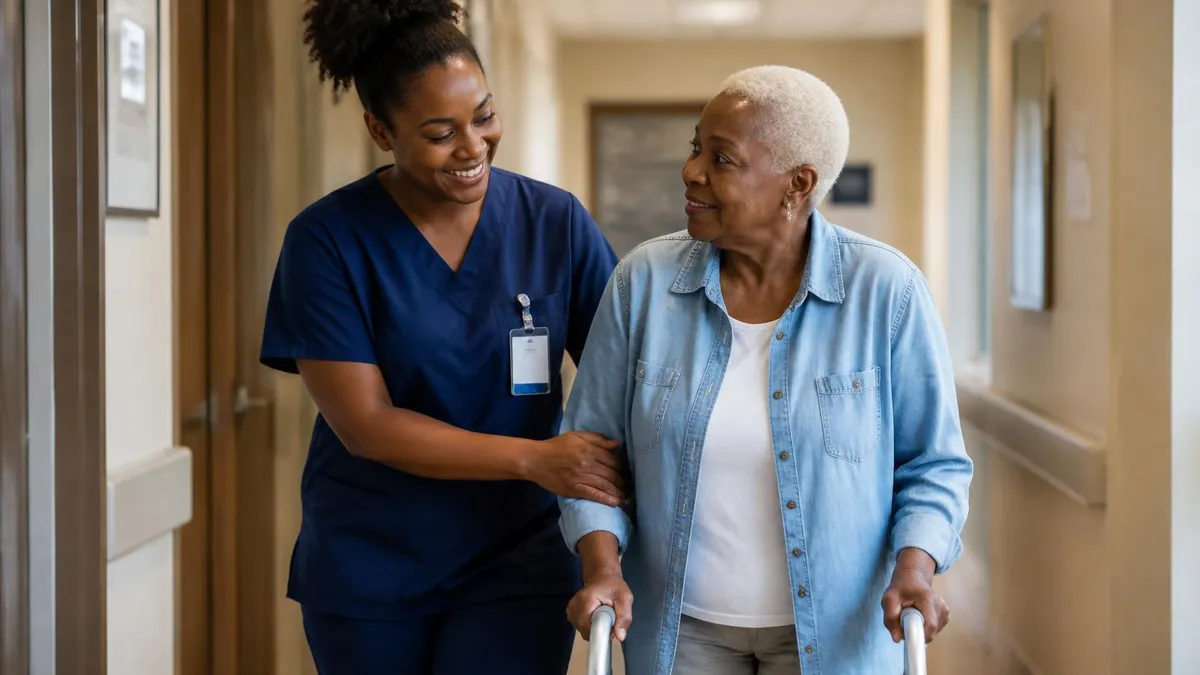
So what does a CNA aide actually do all day? The short answer—help patients with the things they can't do for themselves. The longer answer is more interesting. CNAs handle what nurses call ADLs, or activities of daily living. That covers bathing, dressing, grooming, toileting, feeding, and helping patients move from bed to chair or chair to walker.
Sounds simple. It isn't. A resident with advanced dementia might fight a shower for forty minutes. A post-surgical patient might need two aides just to reposition safely. You learn fast that patience isn't optional—it's the job. The aides who burn out fastest are usually the ones who came in expecting tasks to go smoothly. They rarely do.
Beyond personal care, CNAs take vital signs. Temperature, pulse, respiration, blood pressure, sometimes pulse oximetry and weight. You're the early-warning system. If a resident's blood pressure drops fifteen points between rounds, you're the one who notices and tells the nurse.
That observation skill—knowing what's normal for each patient and catching when something shifts—is what separates a good CNA from a great one. Documentation matters too. Every shower, every meal, every bowel movement gets charted. Auditors check this stuff. So does the family. So does the state surveyor who shows up unannounced once a year and can shut a facility down for paperwork gaps.
You'll also handle environmental tasks—making beds, changing linens, restocking supplies, answering call lights, escorting residents to activities or appointments. Some shifts you'll feel like a hotel housekeeper. Others you'll feel like an ER tech. The variety is part of what keeps the work from ever feeling stale, even after years on the same hall.
What "CNA Aide" Actually Means
The terms get confusing. CNA stands for Certified Nursing Assistant in most states, but you'll also hear Certified Nursing Aide, Nurse Aide, or just "aide" used interchangeably. Legally, in federal regulations, the official term is "Nurse Aide"—that's what the OBRA-87 law calls the role. In practice, employers and schools use CNA. They mean the same person. Don't get hung up on the wording. What matters is the certification on your state's Nurse Aide Registry, not the badge label on your scrubs.
Training is where it all starts. Federal law sets a floor at 75 hours of instruction—but that's just the federal minimum, and most states push past it. California requires 160 hours. Maine requires 180. Alaska and Oregon sit at 150. The hours split between classroom theory and supervised clinical practice, usually in a long-term care facility.
You'll learn anatomy basics, infection control, communication techniques, dementia care, body mechanics (lifting without wrecking your back), end-of-life care, and patient rights. The clinical portion gets you hands-on with real residents under instructor supervision. That clinical time is often when students realize whether the work is actually for them. Some quit after the first bedpan change. Most adjust within a week.
Programs run through community colleges, vocational schools, the Red Cross, and—increasingly—nursing homes themselves. Many facilities offer paid training in exchange for a work commitment of six months to a year. That's a solid option if you're tight on cash. Tuition at a paid program ranges from about $500 to $1,500.
Some states cover the cost entirely if you commit to working in a Medicaid-certified facility after passing the exam. Worth asking about before you write a check. Workforce development boards, state vocational rehab offices, and county social services sometimes have grants too. Don't assume you have to pay out of pocket. Ask around. The funding is out there if you dig.
How CNA Training Is Structured
Covers anatomy basics, infection control protocols, patient rights under federal law, therapeutic communication, dementia care strategies, and body mechanics for safe lifting. Usually 40-80 hours depending on state requirements, taught by an RN instructor with long-term care experience.
Hands-on practice on mannequins and with classmates—bed baths, transfers, vital signs, feeding techniques, perineal care, range-of-motion exercises. You'll repeat each skill until it becomes muscle memory and you can perform it under examiner pressure without skipping critical steps.
Supervised work in a real long-term care facility or hospital. Typically 16-100 hours where you care for actual residents under instructor oversight. This is where classroom theory meets reality, and where most students confirm whether the work is right for them.
Two-part test: a written (or oral) multiple-choice section covering nursing fundamentals and a hands-on clinical skills demonstration with five randomly selected procedures. Pass both within 24 months of training completion to land on your state's Nurse Aide Registry.

The state exam is the gatekeeper. Every state runs its own version, but the structure is nearly identical because federal law mandates it. You'll face a written exam—typically 60 to 80 multiple-choice questions covering everything from infection control to resident rights—and a clinical skills evaluation where an examiner watches you perform five randomly selected skills from a list of about 25. Handwashing is almost always one of them. So is taking a manual blood pressure. The others rotate. You won't know which five until you walk into the exam room.
Most candidates pass on the first try, but plenty don't. The clinical portion trips people up because nerves take over and small steps get skipped. Did you knock before entering the room? Did you identify the resident? Did you explain what you were doing? Did you put the call light within reach when you finished?
Miss the small stuff and you fail the skill. Practice with a friend playing the resident. Out loud. Talk through every step. That's the technique that works. The evaluator isn't trying to trick you—they're checking that you can do the job safely on day one. Slow down, follow the checklist, and you'll pass.
Inside the CNA State Exam
60-80 multiple-choice questions; 2 hours on the NNAAP, 90 minutes in Prometric states. Topics: basic nursing skills, personal care, mental health and social service needs, spiritual and cultural needs, basic restorative services, residents' rights. Passing score usually 70-75%. Some states allow oral exams for candidates who struggle with written English.
Once you're on the registry, where do you actually work? The biggest employer category by far is skilled nursing facilities—what most folks call nursing homes. Roughly 40% of all CNAs work there. Hospitals come next, employing around 25%. Then home cna agencies, assisted living, hospice, rehab centers, and adult day programs. Each setting has a different rhythm.
Nursing homes mean repeat patients, longer relationships, and heavier physical work. Hospitals mean faster turnover, more medical complexity, and often better pay. Home care means autonomy and one patient at a time—but also driving between visits and working solo without immediate backup. Hospice work is its own thing entirely—slower paced, deeply emotional, and not for everyone.
Pay varies a lot by setting and geography. The national average sits around $38,000 a year, but that hides a wide spread. New York, California, and Massachusetts CNAs often clear $45,000-$50,000. Rural Mississippi or Arkansas might top out at $28,000. Hospital CNAs typically out-earn nursing home CNAs by $3,000-$6,000.
Night shifts and weekend differentials add up fast—some aides bump their hourly by 15-20% just by working unpopular hours. PRN and per-diem agency work pays even more, sometimes $25-$35 an hour, though you trade benefits and stability for that bump. Travel CNA roles exist too, paying $1,200-$1,800 a week plus housing stipends in high-need regions.
CNAs work under the supervision of an RN or LPN. That isn't just a formality—it defines what you can and can't legally do. You CANNOT give medications (in most states), start IVs, perform sterile procedures, draw blood, or accept verbal orders from a physician. You CAN take vital signs, assist with personal care, document observations, and report changes. Crossing the scope line—even when asked by a nurse who's slammed—can cost you your certification. When in doubt, escalate.
Day-to-day responsibilities follow a pattern, but no two shifts look the same. A typical morning shift in long-term care might start with report from the night nurse—who's sick, who's confused, who fell. Then you launch into morning care. Eight to twelve residents, each needing some combination of bath, dressing, toileting, breakfast, and ambulation.
You're constantly moving. Knees, back, shoulders—they all take a beating. Body mechanics matter. So does pacing yourself, because burnout is real and the work doesn't stop. Veterans of the unit will tell you to eat your lunch sitting down, not standing at the nurses' station. Small habits like that protect your back and your sanity over the long haul.
Afternoons might bring activities, family visits, doctor rounds, and the steady drumbeat of toileting and repositioning. Bedridden residents need turning every two hours to prevent pressure sores. Diabetic residents need blood sugar checks before meals. Wandering residents need redirection—gently, every time, because shouting at someone with dementia just makes things worse.
You learn to read faces. To notice when Mrs. Patterson is unusually quiet, or Mr. Diaz is favoring his left side. Those small observations save lives. Sepsis can kill a frail resident within hours, and the only person who'll catch the earliest sign—maybe just confusion that wasn't there yesterday—is often the CNA who's been with them all morning.

Core CNA Aide Duties on Every Shift
- ✓Help residents with bathing, dressing, grooming, and toileting (the core ADL workload)
- ✓Take and record vital signs—temperature, pulse, respiration, blood pressure, sometimes oxygen saturation
- ✓Assist with feeding, including residents who need cueing, thickened liquids, or full feeds
- ✓Reposition bedridden residents every two hours to prevent pressure ulcers
- ✓Transfer residents safely between bed, chair, wheelchair, toilet, and shower
- ✓Document care provided, food intake, output, and any changes in condition
- ✓Report unusual observations—skin breakdown, behavior changes, complaints of pain—up the chain
Once you've worked a year or two as a CNA I, advancement opens up. Many states recognize CNA II and CNA III designations—sometimes called Advanced CNA or Restorative Aide. CNA II typically requires another 50-80 hours of training and lets you perform additional skills: simple wound care, basic respiratory tasks like suctioning, sterile dressing changes, or specialized restorative therapy.
North Carolina, Oregon, and Washington have well-established CNA II programs. Pay bumps up $2-$5 an hour at the next level. Some facilities also offer specialty add-ons like dementia care certification, hospice aide certification, or medication aide credentials that bump pay without leaving the CNA umbrella.
If you want bigger jumps, the LPN route takes about 12-18 months and roughly doubles your earning potential. RN—either through an ADN (two years) or BSN (four years)—pushes you into the $70,000-$90,000 range. Many CNAs work full-time while taking nursing classes at night, and most hospitals offer tuition reimbursement up to several thousand dollars a year. It's slow.
It's exhausting. But the path is well-worn and the demand for nurses isn't going anywhere. The bridge programs that take CNAs straight into LPN coursework—skipping prerequisites because of your clinical experience—are increasingly common at community colleges. Ask your employer's HR team about CNA-to-LPN partnerships before you start paying for classes elsewhere.
CNA Aide Career: Pros and Cons
- +Fast entry into healthcare—certified and working in 3-6 months
- +Low training cost compared to other medical careers; many free or paid-training options
- +Strong job security with consistent demand across every region
- +Clear advancement pathway—CNA II, LPN, RN, NP all build on this foundation
- +Genuine, meaningful work helping vulnerable people every shift
- −Physically demanding—back, knee, and shoulder injuries are common over time
- −Emotionally heavy—residents you love will die, and you'll grieve repeatedly
- −Pay is modest, especially at entry level and in rural areas
- −Understaffing is industry-wide—you'll often handle more residents than is reasonable
- −Shift work means weekends, holidays, and overnight rotations are standard
Pros and Cons at a Glance
| Pros | Cons |
|---|---|
| Low training cost compared to other medical careers; many free or paid-training options | Physically demanding—back, knee, and shoulder injuries are common over time |
| Strong job security with consistent demand across every region | Emotionally heavy—residents you love will die, and you'll grieve repeatedly |
| Clear advancement pathway—CNA II, LPN, RN, NP all build on this foundation | Pay is modest, especially at entry level and in rural areas |
| Genuine, meaningful work helping vulnerable people every shift | Understaffing is industry-wide—you'll often handle more residents than is reasonable |
The hardest part of being a CNA aide isn't the physical work, and it isn't the pay. It's the emotional weight. You'll care for someone for two years—learn their stories, their family, their preferences—and then one morning they're gone. You'll watch families struggle with end-of-life decisions. You'll hold hands during last breaths.
You'll go home some nights and cry in your car before driving away. Anyone telling you this job is just routine caregiving hasn't done it. Self-care isn't optional in this work. The aides who last decades have rituals—a long walk after shift, a journal, a faith community, a therapist on speed-dial. Find yours early.
But here's the other side. You'll also have residents who light up when you walk in the room. You'll learn things from people who lived through wars, civil rights movements, and seven decades of change. You'll be the reason someone gets to keep their dignity when they can no longer dress themselves. You'll catch the symptom that saves a life.
That tradeoff—the hard parts and the meaningful parts—is what makes CNA work different from almost any other entry-level career. Plenty of people don't last. Plenty stay for forty years. The ones who stay almost always say the same thing: the residents become family, and family is worth showing up for, even on the bad days.
If you're seriously considering this path, here's the practical sequence. First, check your state's specific requirements—training hours, fingerprinting, background check, immunizations, and TB testing. Then find an approved program. Your state Department of Health or Nurse Aide Registry website lists every approved school.
Don't sign up at an unaccredited program—your certification won't be valid. Once enrolled, attend every class. Skills you practice in lab show up on the exam. Skip lab and you'll feel it. A surprising number of students fail the clinical portion not because they're incapable but because they missed the lab where the proper handwashing sequence was drilled in.
After you finish training, register for the state competency exam. Most states use Prometric, Credentia (NNAAP), or Headmaster as testing vendors. Schedule within a few weeks of finishing the course while the material's fresh. Practice tests help enormously—work through them out loud, especially the clinical skills. On exam day, sleep well, eat breakfast, arrive early. Bring two forms of ID.
Stay calm during the skills portion. Talk to your evaluator like they're the resident—knock, identify, explain, perform, document. Then breathe, because by the time you're driving home, you're probably a CNA. Your name will hit the registry within a few business days, and you can apply for jobs the same week. Most aides have a position lined up before the ink dries on the certification card.
One last piece of practical advice. Don't take the first job you're offered just because it's the first. Tour the facility. Talk to current CNAs while management isn't watching—ask about staffing ratios, mandatory overtime, and how the charge nurses treat aides. A bad facility will burn you out in six months and sour you on the whole profession.
A good one will teach you, back you up when things go sideways, and give you room to grow. The difference between those two workplaces is the difference between a thirty-year career and quitting nursing altogether before you ever start. Choose carefully. You're worth a good employer.
The CNA aide role isn't glamorous. Nobody hands out trophies for changing briefs at 3 a.m. or coaxing a confused resident back into bed for the fourth time in an hour. But the people who do this work right—who treat residents with dignity, who notice the small changes, who show up shift after shift—they're holding the entire long-term care system together. Whether you stay one year or forty, that contribution counts. Start with good training, pass the exam, find a decent employer, and the rest of your career will take care of itself one shift at a time.
Sample CNA Practice Questions
Try these questions from our free CNA practice tests. The correct answer and an explanation follow each question.
What does the right to privacy mean for a nursing home resident?
- A. Residents have the right to refuse all care
- B. Residents cannot have visitors without staff supervision
- C. Residents have the right to private communications, closed doors during care, and control over their personal information
- D. Privacy only applies to financial information
Answer: C. Residents have the right to private communications, closed doors during care, and control over their personal information
Privacy rights include the right to private conversations, closed doors during care, control over who visits, and protection of personal information. CNAs must knock before entering a resident's room, close curtains during care, and avoid discussing resident information in public areas.
Which of the following demonstrates the nurse aide maintaining professional boundaries?
- A. Accepting a large monetary gift from a grateful resident
- B. Sharing personal phone number with a resident who seems lonely
- C. Maintaining a professional and caring relationship without personal entanglement or accepting significant gifts
- D. Becoming the resident's primary decision-maker for financial matters
Answer: C. Maintaining a professional and caring relationship without personal entanglement or accepting significant gifts
Professional boundaries protect both the resident and the CNA. A nurse aide maintains professional boundaries by not forming personal romantic relationships with residents, not accepting significant gifts, keeping personal information confidential, and maintaining a caring but professional demeanor.
The nurse aide is administering a bed bath when all of a sudden they hear a scream coming from the next room. What should the nurse aide do?
- A. Secure the safety of the patient first before leaving the room.
- B. Focus on the patient and ignore anything else.
- C. Finish the bed bath before checking on what happened.
- D. Shout for help from the nurses nearby and continue the bath.
Answer: A. Secure the safety of the patient first before leaving the room.
When a nurse aide hears a scream from another room while administering a bed bath, their primary responsibility is to secure the safety of their current patient before leaving the room. This means ensuring the patient is not in a position of immediate danger, such as being left alone on a raised bed or with water, and then immediately checking on the source of the scream. Patient safety is paramount, and the CNA must prioritize both patients' well-being.
There is an order to give a female patient a shower, but she refuses. The nurse aide should
- A. take the patient to the shower anyway.
- B. threaten to use restraints if she does not cooperate.
- C. document in the chart that the patient refused to shower.
- D. tell her that she must do what is ordered.
Answer: C. document in the chart that the patient refused to shower.
Patients have the right to refuse care, and a nurse aide must respect this right. Forcing a patient to shower against their will is a violation of their rights and could be considered assault. The correct action is to document the refusal, inform the nurse, and allow the nurse to assess the situation and determine the next steps, ensuring the patient's autonomy is respected.
CNA Questions and Answers
About the Author

Registered Nurse & Healthcare Educator
Johns Hopkins University School of NursingDr. Sarah Mitchell is a board-certified registered nurse with over 15 years of clinical and academic experience. She completed her PhD in Nursing Science at Johns Hopkins University and has taught NCLEX preparation and clinical skills courses for nursing students across the United States. Her research focuses on evidence-based exam preparation strategies for healthcare certification candidates.
Join the Discussion
Connect with other students preparing for this exam. Share tips, ask questions, and get advice from people who have been there.
View discussion (8 replies)